Solving Industrial Quality Inspection: How AI Vision Reconstructs the Quality Defense Line of High-End Manufacturing | 2026 AI Partner · Beijing Yizhuang AI + Industry Conference
Nanoscale defects on semiconductor photomasks and holes of a few micrometers on glass substrates. Guangzhou Yinte Intelligence demonstrated how AI vision has moved from the laboratory to high - end manufacturing production lines, and solved the bottleneck problems in China's semiconductor inspection equipment field through a combination of software and hardware.
Guangzhou Yinte Intelligence Technology Co., Ltd. was incubated at the Guangzhou Research Institute of Xidian University. It is a typical technology enterprise resulting from school - enterprise cooperation. We reject "paper algorithms" and adhere to the integration of software and hardware. We provide high - end inspection equipment for the three major fields of semiconductors, optical communications, and new energy, and have served leading domestic customers and global enterprises.
The following is the content of the speech, edited by 36Kr:
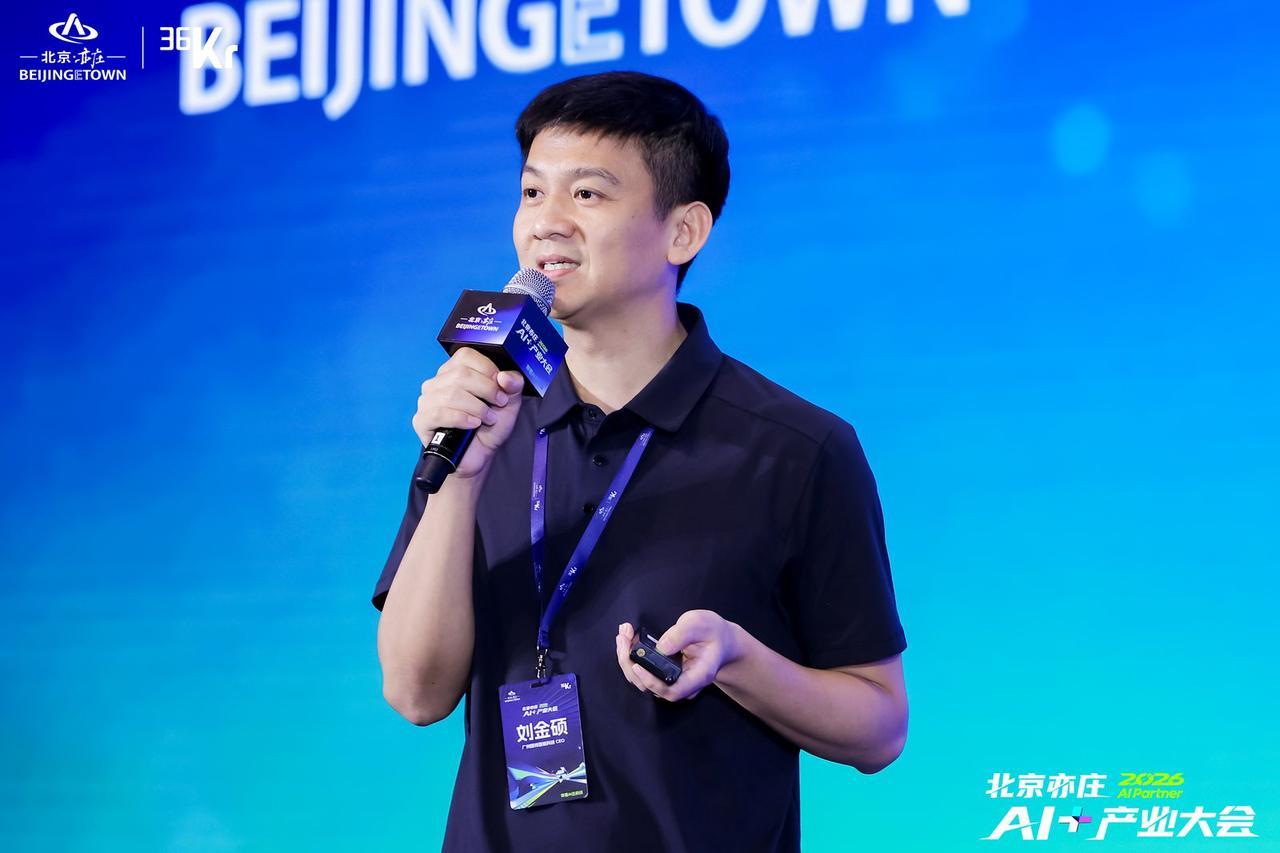
Liu Jinshuo | CEO of Guangzhou Yinte Intelligence Technology
Thank you very much for the invitation from 36Kr and Yizhuang. I'm very honored to have a product and technology exchange in the technology circle with you here. Different from the sharing perspectives of the previous guests, we are a technology company rooted in physical manufacturing, focusing on using AI vision technology to solve the "bottleneck" inspection problems in industrial scenarios.
Let me briefly introduce our company, Guangzhou Yinte Intelligence Technology Co., Ltd. We were incubated by the Industrial Achievement Transformation Joint Laboratory of the Guangzhou Research Institute of Xidian University, focusing on high - end manufacturing AI vision inspection equipment. The company has established an optical testing laboratory, a high - speed microscopic testing laboratory, an AI algorithm general training platform testing laboratory, an AI edge server R & D laboratory, and a flexible mechanism R & D laboratory, and is equipped with a nearly 2000 - square - meter Class 10,000 dust - free manufacturing workshop, forming a complete capability system from algorithm R & D, optical testing, equipment integration to production and delivery.
Currently, we mainly focus on three major segments: large semiconductor substrate inspection, including FPD photomasks, glass substrates, and ceramic packaging substrates; in the optical communication field, we focus on MPO and CPO fiber end - face inspection; in the new energy vehicle field, it is mainly die - castings and IGBT assemblies.
In these three segments, we have provided inspection equipment for leading customers in the industry, with our own R & D, production, and sales. We have established an Intelligent Inspection Equipment Joint Research Center, concentrating high - end resources from Xidian University and the industry to specifically implement equipment. Currently, we have 2 core software copyrights and invention patents, 8 patents are still being applied for, including 8 invention patents and 5 software copyrights.
We don't just focus on the laboratory, but focus on the entire industry for implementation. Since its establishment, we have mainly served leading large customers in the industry. Currently, we have developed replicable equipment that can be implemented in batches. Next, I'll introduce our core products and technologies to you.
The first product is the high - speed microscopic AOI inspection platform, mainly targeting the semiconductor and optical communication industries. Things invisible to the naked eye are all detected by this platform. This platform uses a microscope as the inspection lens, and through control and AI algorithms, it can achieve defect detection. Photomask inspection, glass substrate inspection, wafer inspection, and OLED substrate inspection mostly involve high - precision and high - speed inspections.
Optical imaging is one of our core technologies in high - speed microscopy. The minimum detectable defect is 0.18μm, and the measurement accuracy reaches the sub - nanometer level. In addition, it integrates a line - spectrum confocal module, a white - light interference module, a deep - ultraviolet light source, and an atomic - force microscope application to meet the 2D, 2.5D, and 3D inspection and measurement needs of the industry. The comprehensive application and accuracy of microscopic inspection imaging are in the first echelon of the industry. The entire inspection module is quite complex, and the optical path design and movement control are very precise. The second core technology is the algorithm. We use the relatively advanced DD + DB + Starlight enhancement algorithm in the industry. Based on the requirements in the entire industry, these are relatively leading in China. We are also equipped with a high - precision motion control platform. There are high - precision marble platforms and air - floating detection motion control platforms. The core technology is our high - precision transmission control guide rail plus the feedback algorithm compensation for the positioning accuracy of the base platform.
The second product is the AI general training platform, mainly targeting the new energy vehicle industry. The challenges faced in the inspection of automotive die - castings are even more difficult. The products are large in size and have a wide variety of complex curved surfaces, which have long interfered with the realization of efficient inspection.
In terms of AI, we have self - developed AI algorithms and adopt the "small - sample, unsupervised training mode". Only a minimum of 5 pictures are needed to train a detection model; no complex programming is required, and new part specifications can be adapted in 15 minutes, quickly responding to production line switching. To put it in a popular metaphor: traditional AI training is like "teaching a child to recognize characters hand in hand", which requires a large amount of labeled data; while unsupervised self - learning is like "a child observing the world by themselves", which can learn independently and continuously evolve. The AI algorithm of Guangzhou Yinte Intelligence Technology is like a self - growing quality inspector, accumulating experience continuously in production and becoming smarter with use.
We have always emphasized the combination of software and hardware. The automotive die - casting AI vision inspection equipment is equipped with a Siemens edge server. With its powerful local real - time computing power and millisecond - level data processing ability, it breaks the bandwidth bottleneck of massive image back - transmission, and can achieve 360 - degree full - coverage vision, accurately "locking" difficult - to - detect areas such as deep cavities, grooves, and curved surfaces. The flexible motion control module supports high - speed flying shooting, instantly capturing defects. The detection time for a single point is only 120 milliseconds, which is 74.4% shorter than the industry average. It fully adapts to the high - speed rhythm of the production line, can identify various defects at the 0.1 - millimeter level, and the missed - detection rate is as low as 5%.
For the three segments mentioned above, I'll finally introduce our implementation cases to you.
Currently, Yinte Intelligence is equipped with the first domestically - produced FPD photomask defect inspection equipment in China, and the minimum detectable defect can reach 0.18μm. The glass substrate TGV inspection equipment can quickly measure the aperture of each of the tens of thousands to hundreds of thousands of holes on the glass substrate, which are about 3 micrometers in diameter, and detect defects in a very short time.
In the optical communication field, to solve the problem of low - efficiency MPO fiber inspection, Guangzhou Yinte Intelligence Technology has developed an integrated MPO end - face inspection equipment, including optical modules, MPO modules, CPO, etc. There are many types of equipment in the series.
The last one is the automotive die - casting appearance inspection equipment. Our company attaches more importance to delivering a complete and usable equipment to customers. This equipment is a robotic arm or multi - robotic arm series. The camera, lens, and light source are integrated at the front end of the robotic arm. Through motion control, the entire die - casting is subjected to flying shooting and patrol shooting. The images are used to detect each point according to the customer's requirements. Using the flying - shooting method and AI algorithms, the results are output, and it is easy to trace which points are qualified and which are unqualified. The final form is the cooperation of multiple robotic arms. The product has high compatibility and complexity, with 2D, 2.5D, 3D, and measurement functions all included for users, including loading and unloading functions.
Accurate detection, technology leadership. Guangzhou Yinte Intelligence Technology will continue to deeply cultivate the industrial defect inspection field and empower industrial quality control with a professional technical system.
That's the end of my speech. Thank you all.