Claude Code dominates the hackathon, raking in $15K in 8 hours. The open-source gem amasses 150,000 stars.
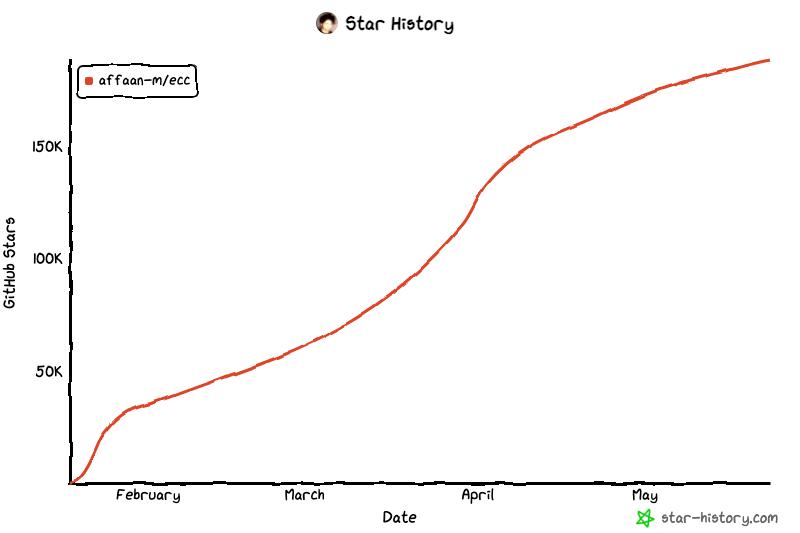
San Francisco developer Affaan Mustafa refined Claude Code into a super system with 38 professional agents and 156 skills. After it was open-sourced, it quickly reached 150,000 stars on GitHub!
The open-source artifact, Claude Code, has reached over 150,000 stars!
Since Claude Code was released in February last year, San Francisco developer Affaan Mustafa has been using it every day.
In September last year, at the Anthropic x Forum Ventures Hackathon held in Silicon Valley, he won the championship with an agent optimization system he had refined for several months.
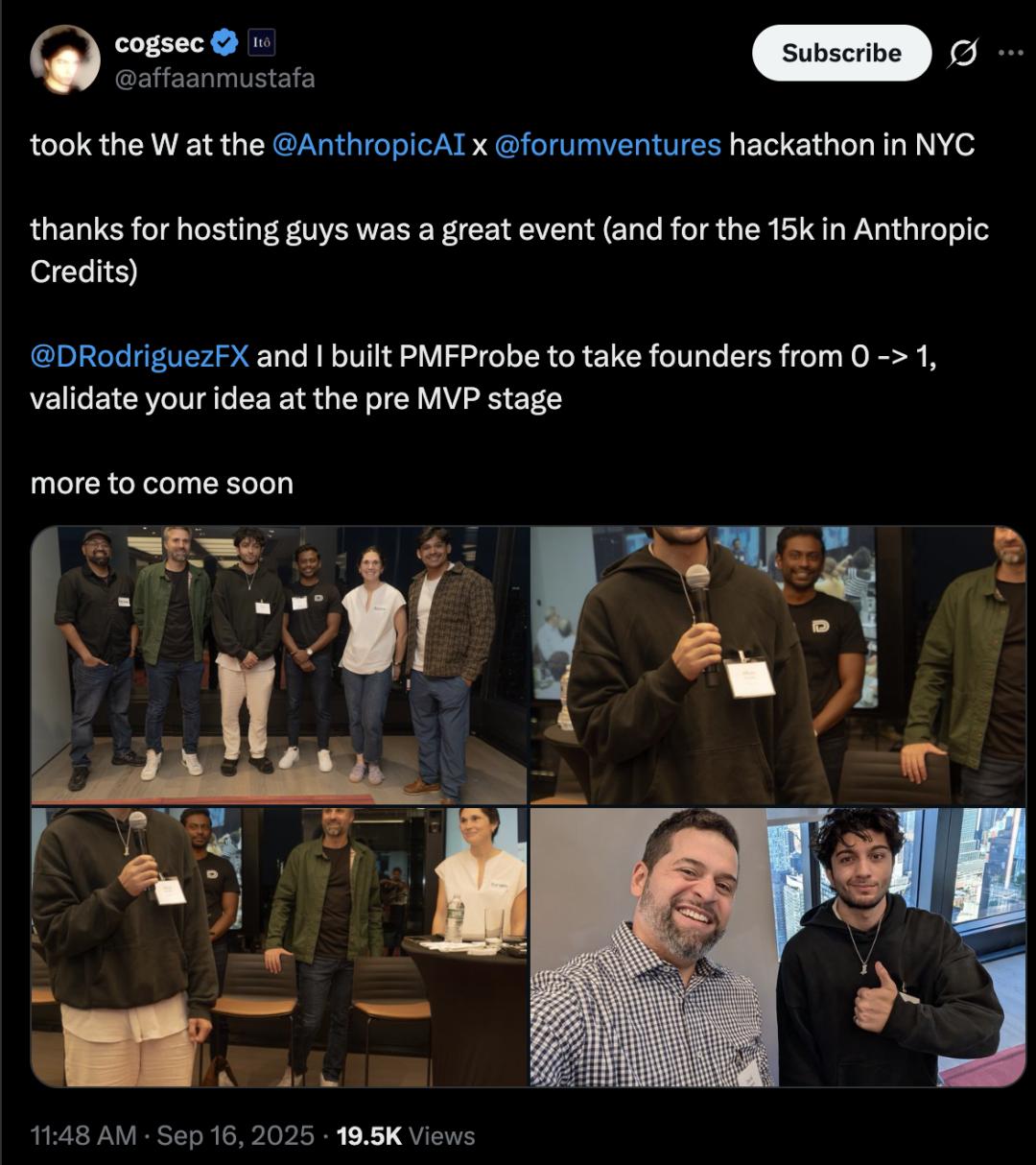
Instead of keeping the results to himself, he open-sourced the entire project under the MIT license in January this year.
Subsequently, he open-sourced the entire technology stack: 38 agents, 156 skills, and 1,282 security tests. The code repository quickly became popular.
Earned $15,000 in 8 hours
On September 12th last year, Forum Ventures and Anthropic co-hosted a hackathon with the theme of "Agents, Assisting from 0 to 1 Entrepreneurship".
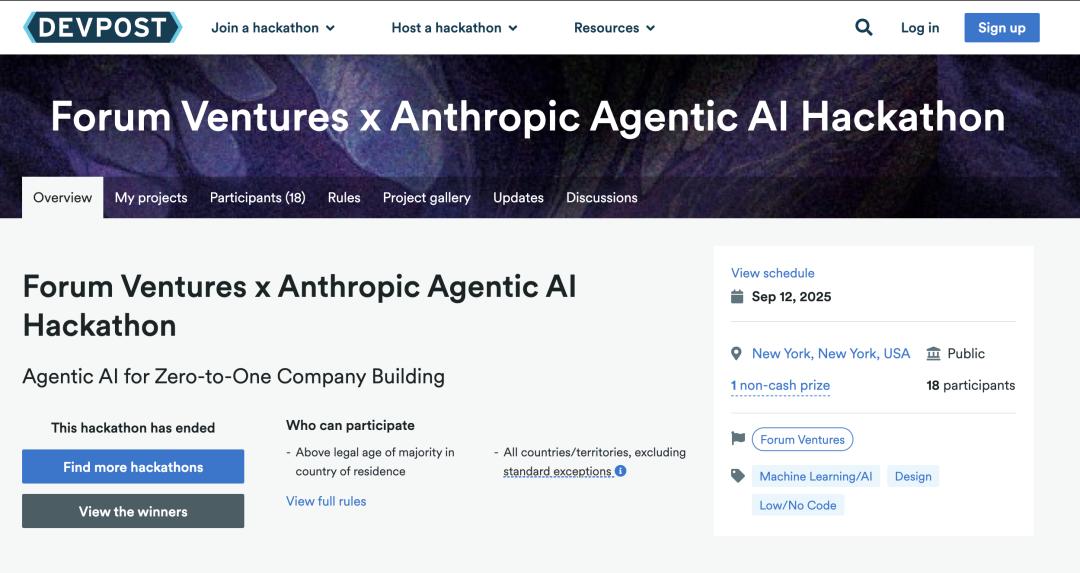
Within one day, participants had to use multiple AI agents to compress the entrepreneurial work that usually takes weeks into just a few hours, including finding customers, validating needs, creating prototypes, and running sales.
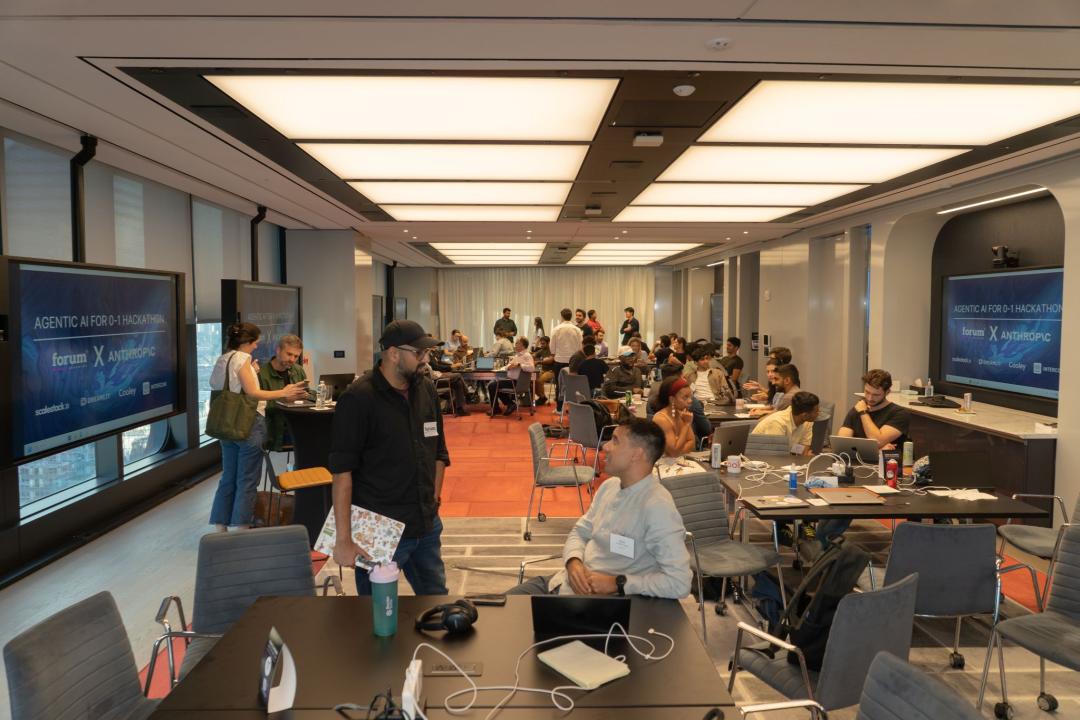
The competition required everyone to use Anthropic's Claude Code to build on-site.
Affaan Mustafa and David Rodriguez ultimately won the championship.

They focused on the user needs of early-stage entrepreneurs and developed the "PMF Probe" project.

This tool helps entrepreneurs validate early ideas through synthetic user discovery testing supported by real reinforcement learning.
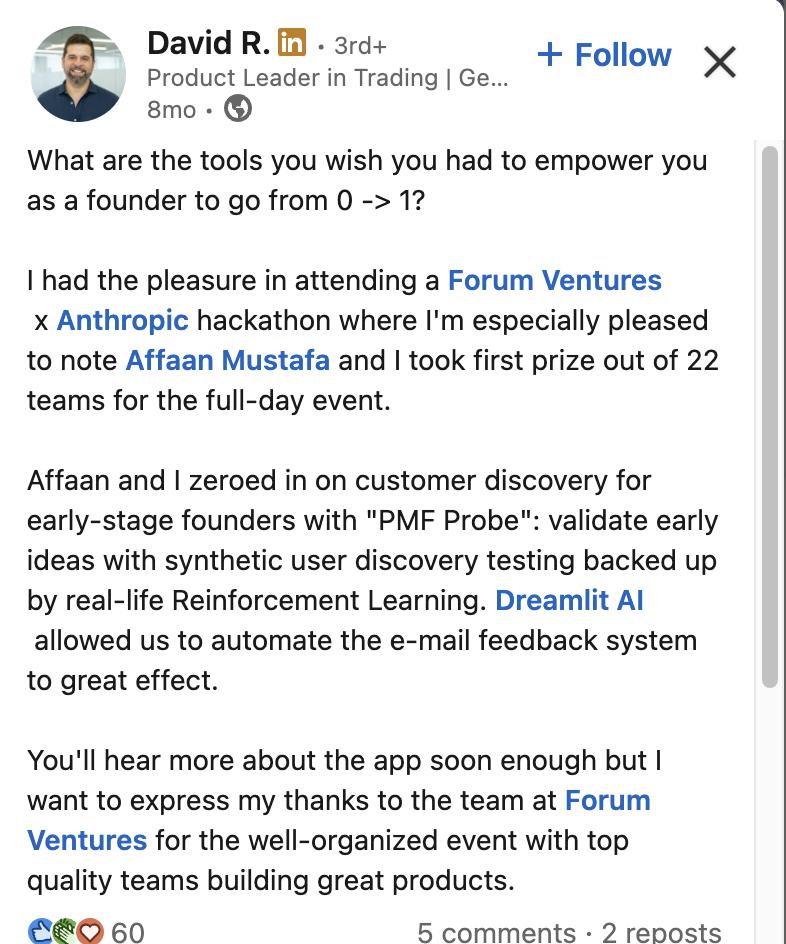
Finally, they launched the AI customer research platform Zenith:
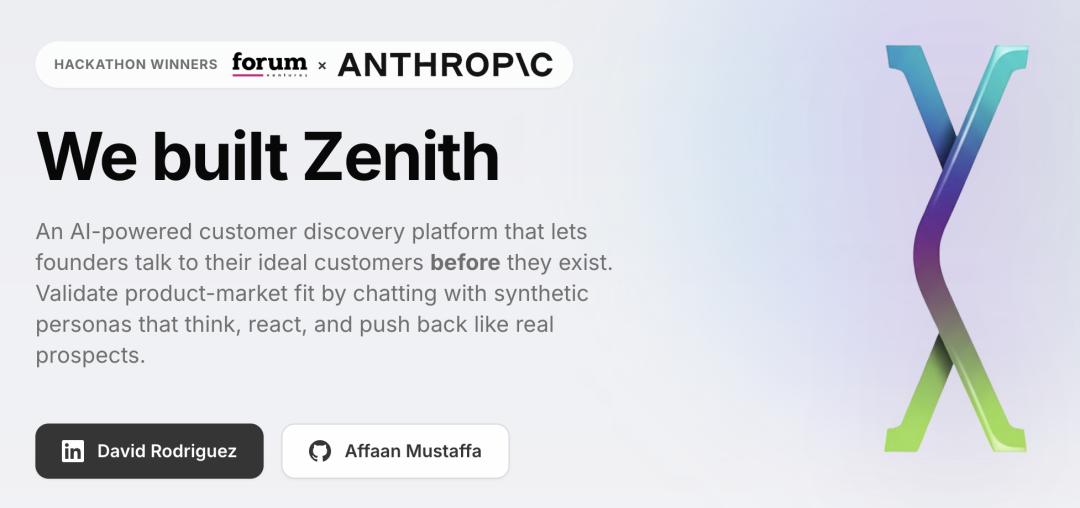
Championship project: https://zenith.chat/
Before entrepreneurs start actual development, they can first have a conversation with a group of "cyber customers". These AIs will think, react, and even refute like real customers, helping entrepreneurs verify in advance "whether there is a market for this product".
The workflow is divided into four steps:
1. Input ideas — Describe your product concept and target market.
2. AI research & ICP definition — AI agents automatically research the market and generate an ideal customer profile.
3. Synthetic character dialogue — Conduct in-depth interviews with AI characters simulating real potential customers.
4. Real user validation — Find real customers, conduct interviews driven by insights, and complete the final validation.
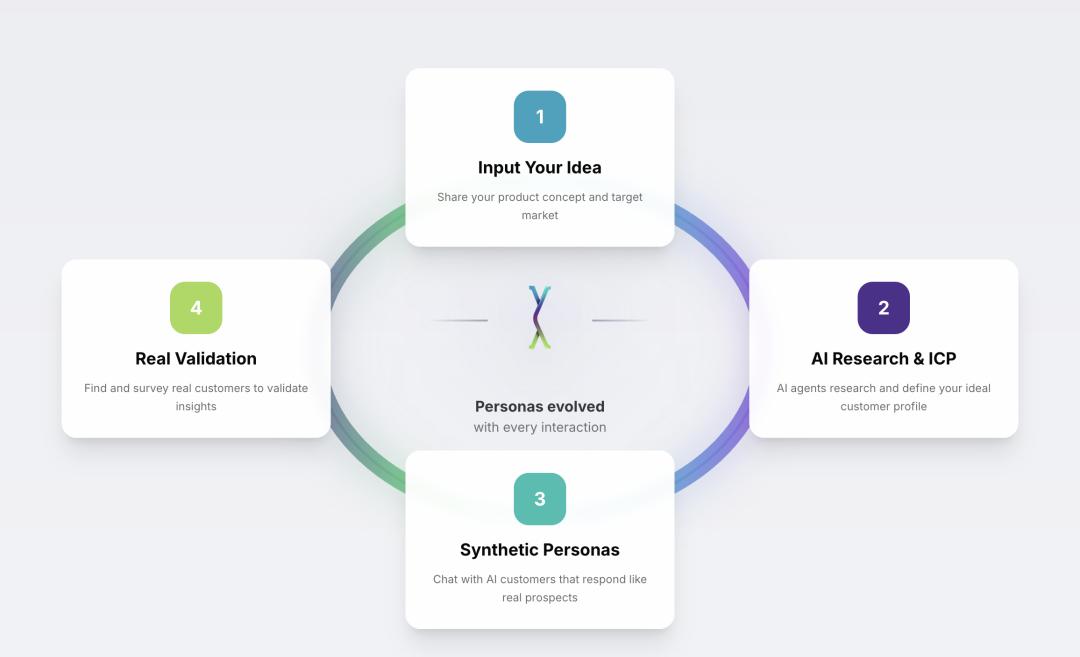
In addition, they also implemented a continuous learning mechanism: The results of each real validation will feed back into the synthetic character profile, making it closer to real users over time.
That is to say, with each interaction, the market user profile is evolving.
The entire product was almost entirely completed by Claude Code, and the author said he didn't write a single line of code manually.
It should be noted that the champion received a platform usage quota worth about $15,000, not $15,000 in cash.
What's really amazing is not this one day, but the preparation behind it.
Being able to deliver a complete product in 8 hours doesn't rely on typing speed or on-the-spot prompts. Instead, it's thanks to the entire Claude Code work system that Affaan had refined for more than ten months in advance.
He disassembled, configured, and automated every step of the development process. On the day of the competition, he just "deployed" this system.
38 Agents have reached 150,000 stars
After winning the competition, Affaan made a crucial decision: to fully open-source this privately developed system under the most permissive MIT license, naming it Everything Claude Code (ECC for short).
https://github.com/affaan-m/ECC
The result was overwhelming. It quickly became the Claude Code configuration project with the most stars on GitHub.
Its core idea is: Stop treating AI as a chatbot waiting for your questions. Instead, treat it as the infrastructure of a "digital factory".

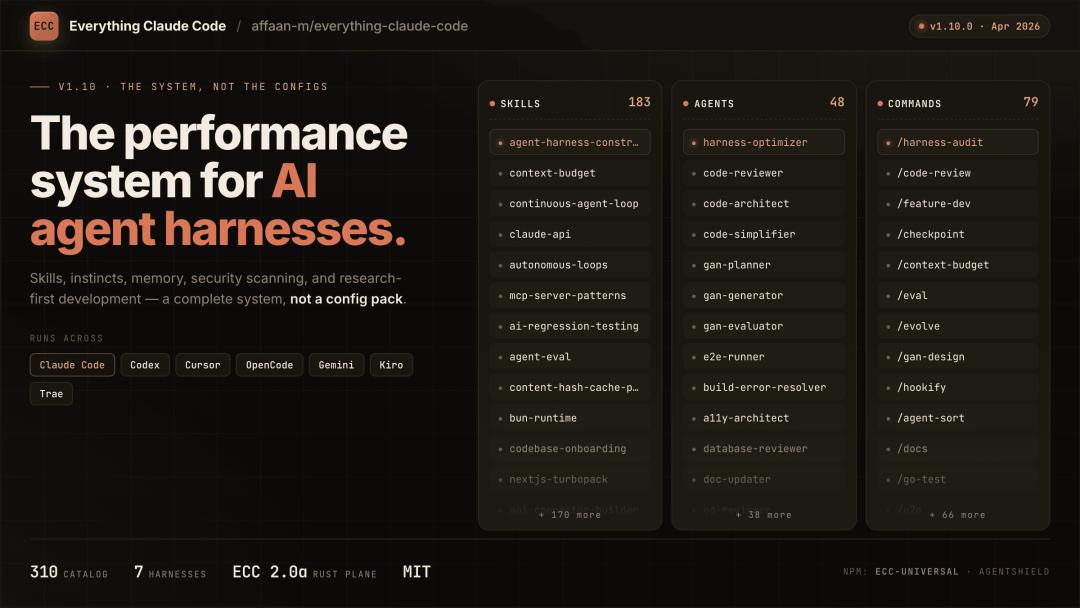
This is a performance system designed specifically for AI agent harness, covering skills, memory, and security scanning. It's not just a configuration package.
To this end, ECC has built-in:
- 38 professional agents (planners, security reviewers, debuggers, code reviewers)
- 156 on-demand skills (/plan, /tdd, /security-scan, /quality-gate)
- 72 custom slash commands
- AgentShield: 1,282 security tests covering CLAUDE.md, MCP configuration, hooks, and skills
- 3 Opus 4.6 agent red team pipelines (attackers, defenders, auditors)
- A continuous learning layer for building confidence across sessions
- Coverage of 12 language ecosystems
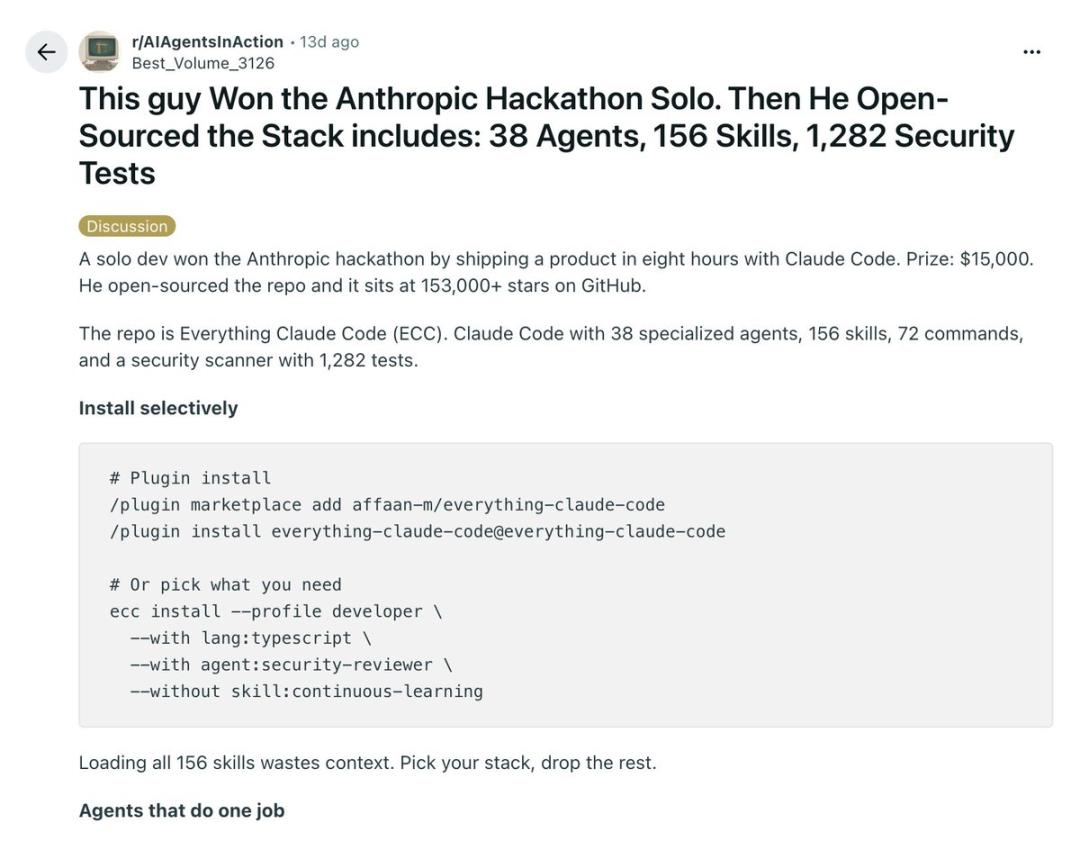
Why has ECC gained 150,000 stars on GitHub? Because what Affaan Mustafa open-sourced is not some "profound code logic", but his "intuition and framework constraints" as a senior developer (Harness & Constraints).
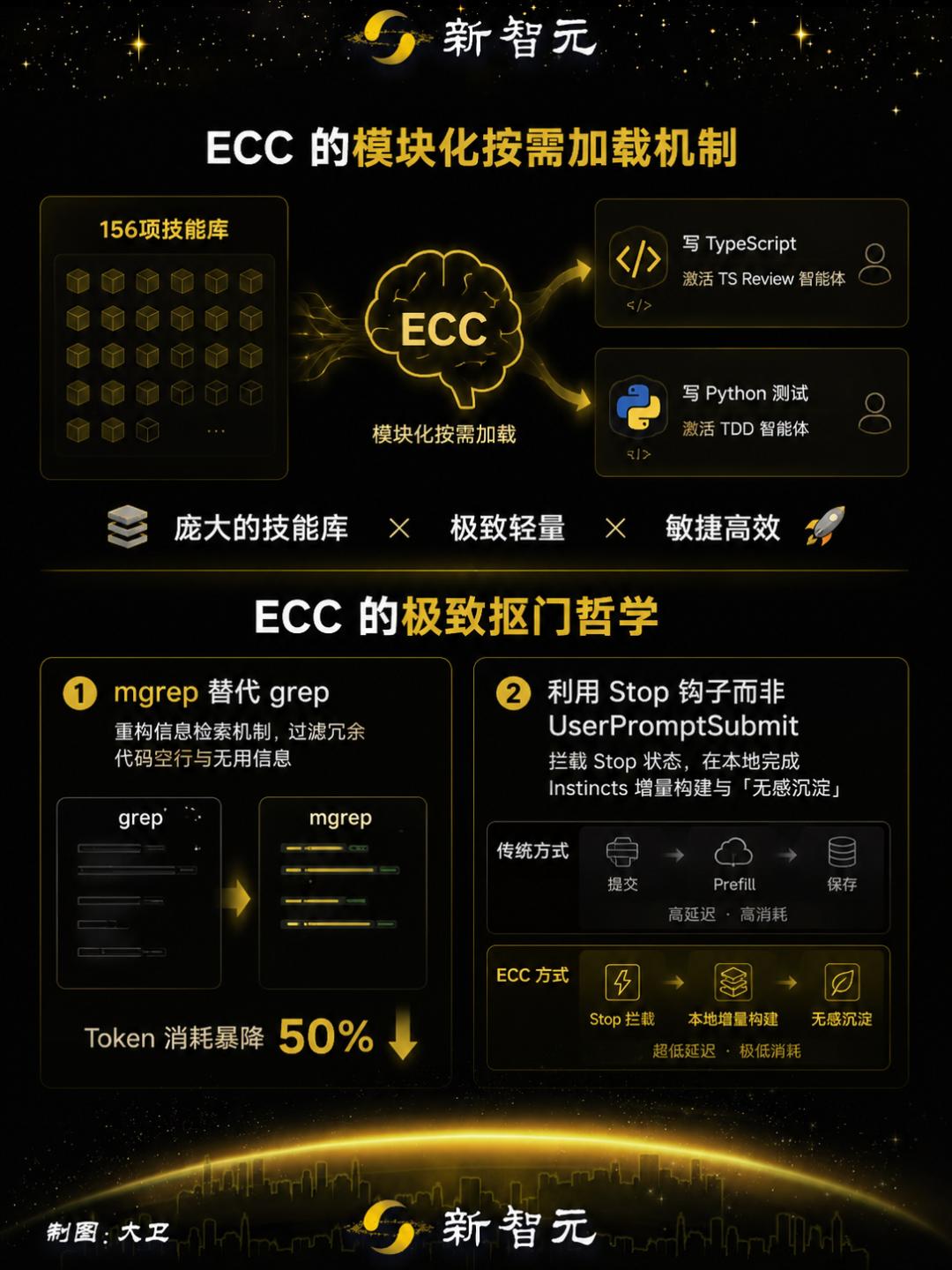
Elegantly avoid context explosion with "selective loading"
To prevent the 156 skills from overwhelming Claude's context window during operation, ECC designed an extremely sophisticated modular on-demand loading mechanism.
Traditional AI development often crams all the rules of an entire project into the prompt, resulting in extremely fast token consumption and logical overload.
On the other hand, ECC is like a dynamic memory loader:
When you're writing TypeScript, it only activates the TS-specific review agent.
When you start writing Python tests, the TDD agent wakes up. This elegant control allows the system to have a large skill library while remaining extremely lightweight and agile.
Precise token stinginess and rapid response
Throughout the ECC source code, the top geeks' extreme frugality with computing power and bandwidth is evident:
Replace traditional grep with mgrep: ECC re-implemented the information retrieval mechanism, filtering out redundant code blank lines and useless information, reducing token consumption during the retrieval phase by 50%.
Cleverly use Stop hooks instead of UserPromptSubmit: Traditional context memory preservation requires resubmission and recalculation of Prefill every time (high latency for the first token). ECC intercepts the Stop state in the underlying logic, incrementally building and "silently precipitating" the user's development intuition and code specifications (Instincts) locally with ultra-low latency.
AgentShield (Hardcore immune system)
In the era of agents frantically calling external tools, security issues have become a Damocles sword hanging over our heads.
AI may accidentally submit your sk-private key or ghp_Token to a public Git repository during autonomous operation, or be injected with malicious code.
ECC specially built an AgentShield security defense pipeline. It has 1,282 built-in security tests.
Before the AI actually executes an instruction (such as calling the terminal or writing a file), AgentShield will scan in milliseconds to prevent credential leakage.
By enabling the system's security audit mode (--opus flag), ECC will activate three avatars:
- One plays the "red team" looking for system vulnerabilities,
- One plays the "blue team" filling in the gaps,
- The last one plays the "auditor" making objective judgments.
This tripartite power-sharing AI game builds an absolute and insurmountable security firewall for developers locally.

Code is becoming cheap
In the past, excellent architects guided junior programmers by writing thousands or even tens of thousands of lines of development specifications and test plans by hand.
Now, you just need to inject your intuition, logical rules, and boundary conditions into an agent framework system like ECC. Then, the remaining 38 digital ghosts will start to operate autonomously, crazily, precisely, and tirelessly.