Liang Wenfeng and DeepSeek's Trillion-Dollar Chessboard
DeepSeek is redrawing the cost curve of the AI hardware ecosystem through open - source initiatives, price cuts, and underlying architecture innovations, aiming for the vast expanse of the trillion - dollar industry and AGI.
DeepSeek has been making frequent moves recently.
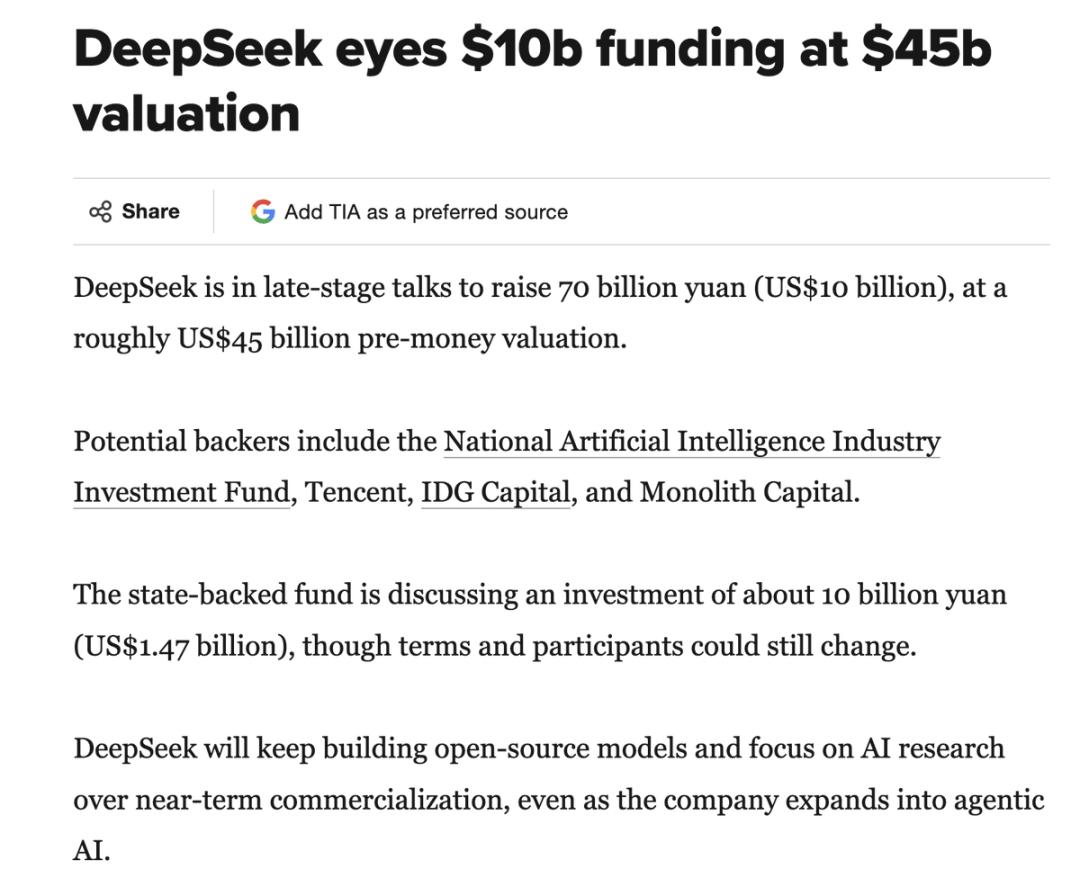
First, on May 22nd, Bloomberg reported that they are advancing a financing round of 70 billion RMB, with a pre - investment valuation of up to 45 billion US dollars.
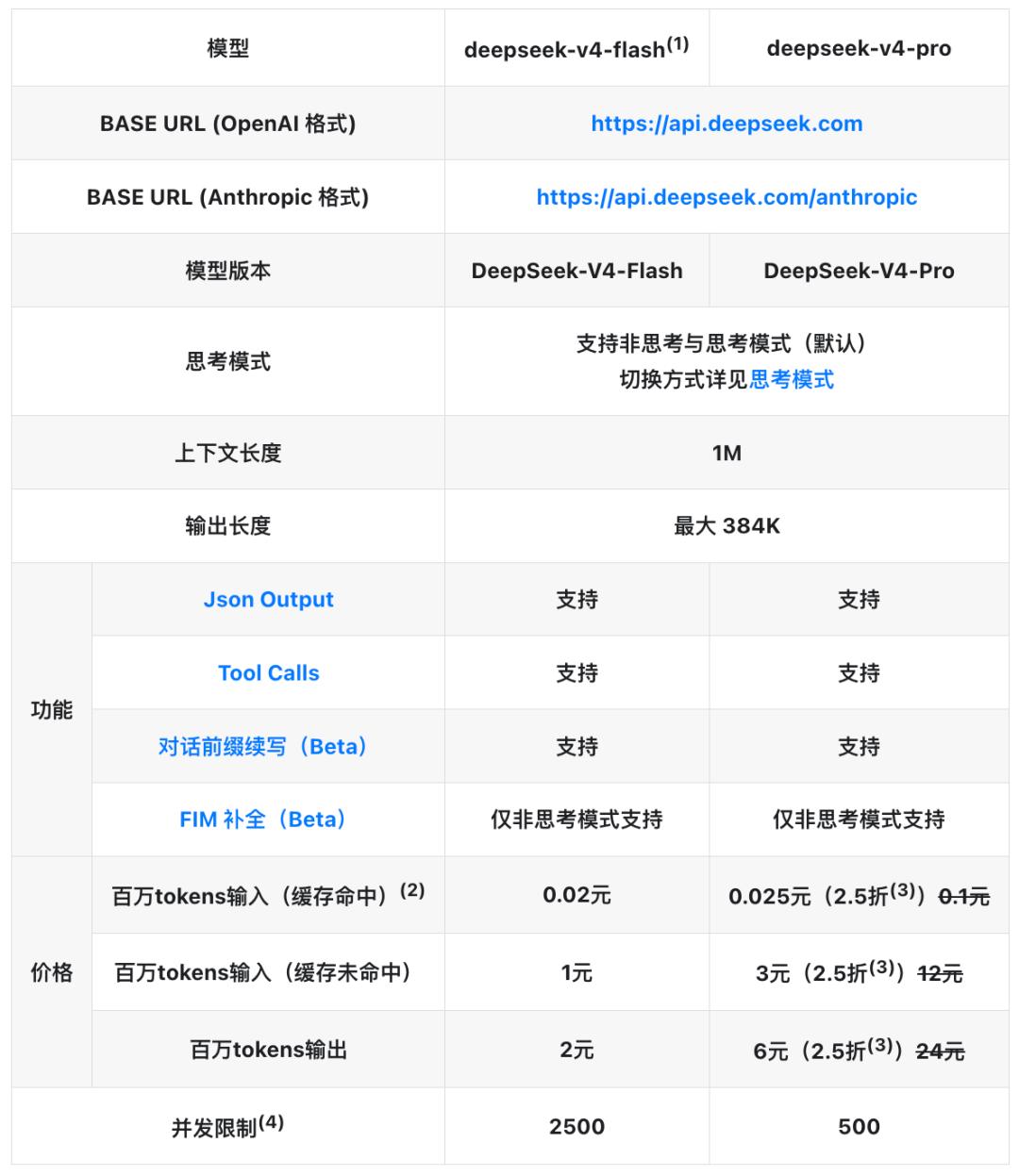
On the same day, DeepSeek officially announced a permanent 75% price cut for its V4 - Pro API, making the promotional price the regular price.
Asking for money from investors on one hand and offering benefits to developers on the other. This operation is a bit confusing.
So, the question is, how exactly does DeepSeek plan to make money, and a lot of it?
After all, AGI can't be achieved by just talking.
This is exactly the tough question that x blogger @bookwormengr has been researching recently.
In his long article "DeepSeek's 10 trillion USD grand strategy", he makes a very bold judgment: DeepSeek's real vast expanse may not be selling programming packages or voice assistants, but participating in shaping an AI hardware ecosystem worth 10 trillion US dollars and aiming for a valuation of one trillion US dollars in this ecosystem.
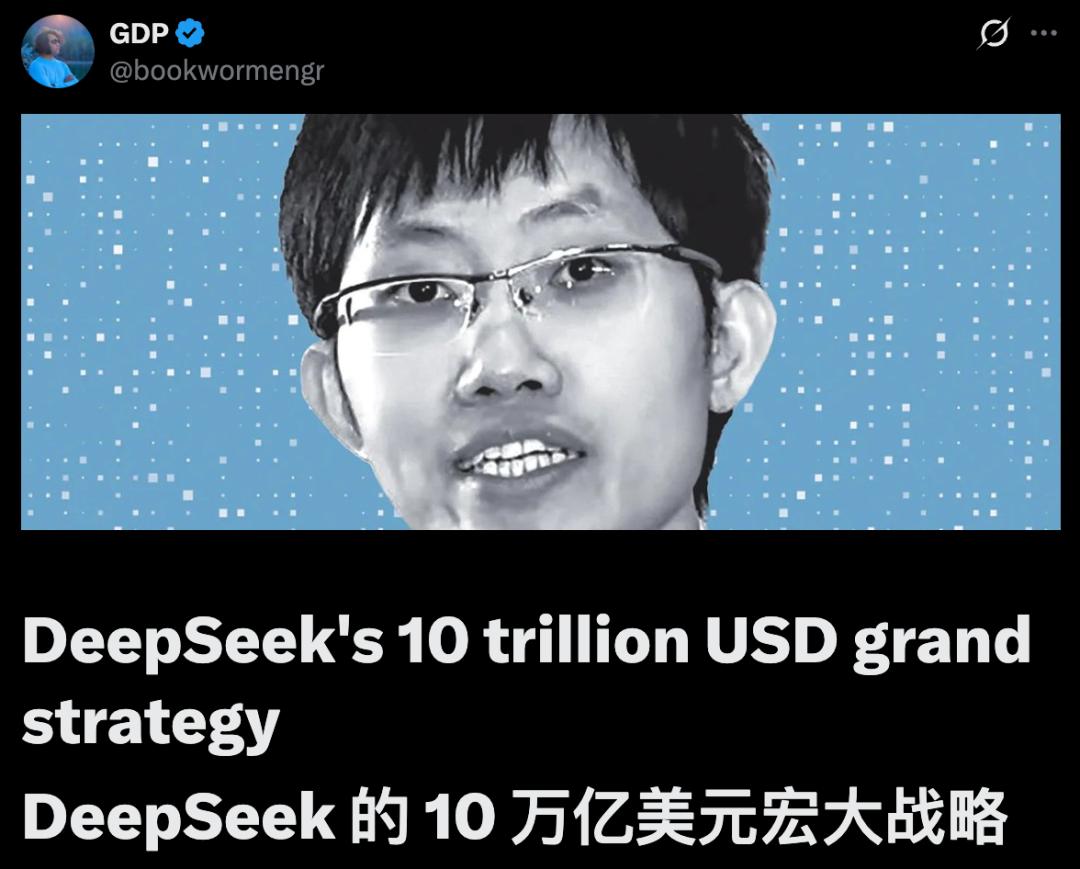
After carefully reading @bookwormengr's long article of tens of thousands of words, you'll find that Liang Wenfeng is not crazy; he is a chess player.
Moreover, he is a master, playing a game worth 10 trillion US dollars.
The Hero's Journey
A Technological Long March Against the Consensus
Looking back at DeepSeek's growth trajectory, it's fair to describe it as "the hero's journey".
While everyone else was piling up Dense models and competing in the number of parameters, DeepSeek tackled the most difficult - to - train MoE (Mixture of Experts) model, leveraging higher intelligence with less computational power.
While others used PPO for reinforcement learning, they invented the more cost - effective GRPO algorithm from first principles.
While others were still discussing the ceiling of RLHF, they had already implemented RLVR (Reinforcement Learning with Verifiable Rewards), taking the reasoning ability to a new level.
MLA, DSA (Decoupled Sparse Attention), mHC (Manifold - Constrained Hyper - Connectivity), CSA, and HCA - these are not just fancy theories in papers. Each one answers the same question: how to squeeze the maximum AI computing power under limited hardware conditions?
A hero never knows his mission from the start. He keeps fighting and discovering on the way, and finally finds his ultimate destiny.
DeepSeek's destiny has never been to sell API packages.
An Interesting Math Problem
The Secret of KV Cache
Let's start this story with a specific number.
Open the online calculator on kvcache.ai and enter 1 million token context, 8 - bit KV precision, and 16 - bit index precision. You'll see a stunning comparison: DeepSeek V4 only requires 5.48GB of HBM.
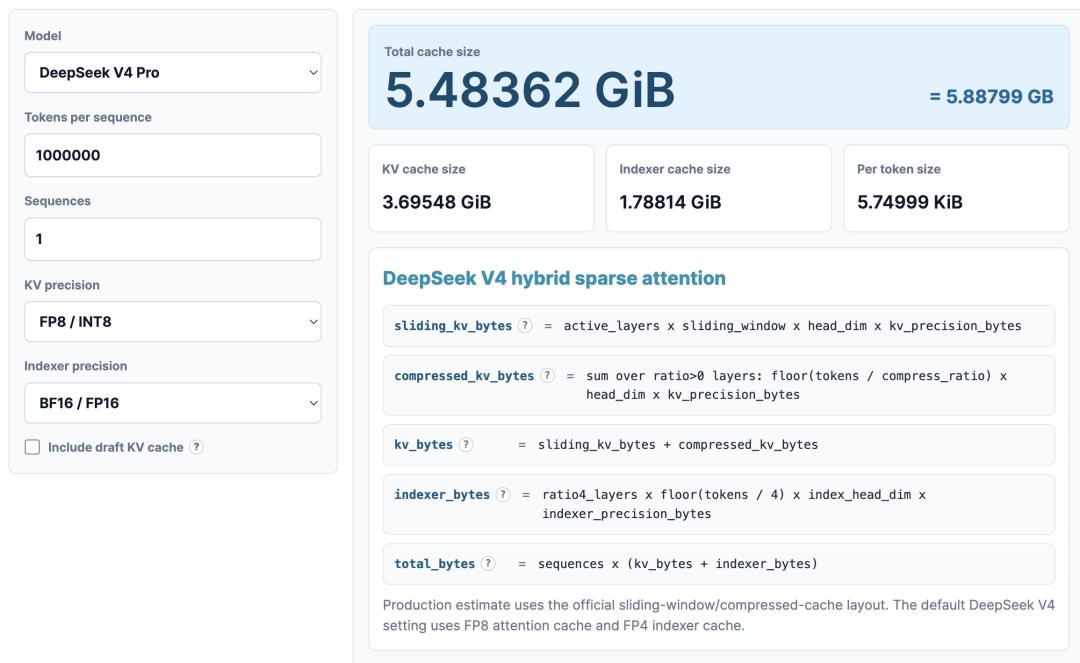
In contrast, other top - tier open - source models often require 60GB of HBM.
Note that DeepSeek V4 is a model with 1.6 trillion parameters, much larger than other open - source models, but its KV Cache usage is only a fraction of theirs.
This means that DeepSeek can set the cache hit price at an incredibly low level. The V4 - Pro cache hit price is only 0.025 yuan per million Tokens, less than 3% of the similar price of Claude Sonnet 4.6, and it can maintain the cache for several hours.
After the permanent price cut, the price for uncached input is 3 yuan per million Tokens, and the output is 6 yuan per million Tokens, all one - fourth of the original price.
Liang Wenfeng said two years ago about DeepSeek's pricing philosophy: Our principle is not to lose money, nor to make excessive profits.
Now it seems that he was telling the truth. When your KV Cache is only one - tenth of others', your cost is only a fraction of theirs.
But the deeper question is: where does this dividend flow?
The Trillion - Dollar Chessboard
Reconstruction of the Hardware Ecosystem
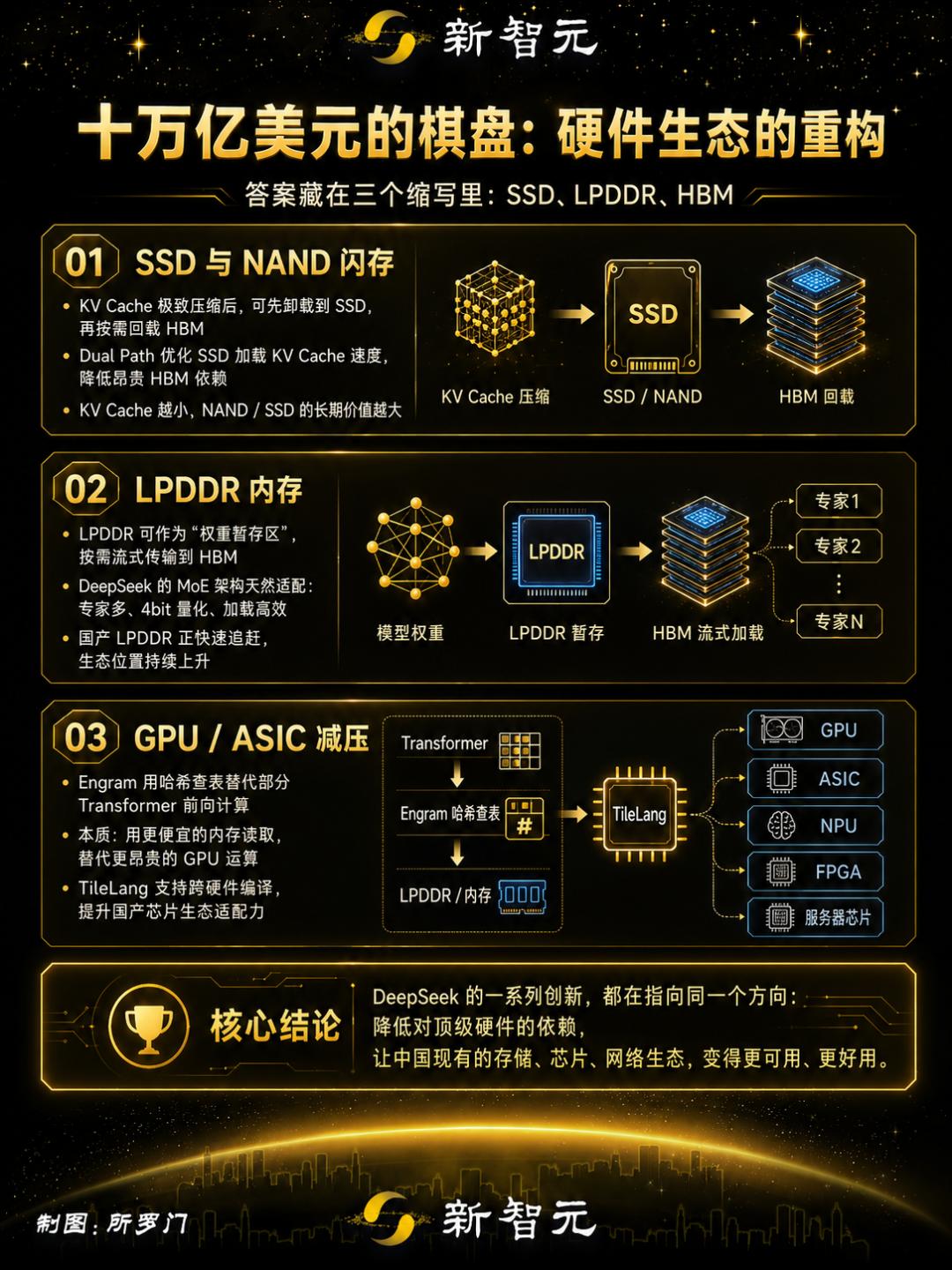
The answer lies in three abbreviations: SSD, LPDDR, HBM.
First layer: SSD and NAND flash memory. After the KV Cache is compressed to a very small size, it can be efficiently offloaded to the SSD and quickly loaded back to the HBM when needed.
DeepSeek also specifically optimized the speed of loading KV Cache from the SSD in its Dual Path paper. This directly reduces the dependence on expensive HBM.
Who are the major players in SSD and NAND flash memory? Every bit of KV Cache compression by DeepSeek creates a huge new market for NAND and SSD.
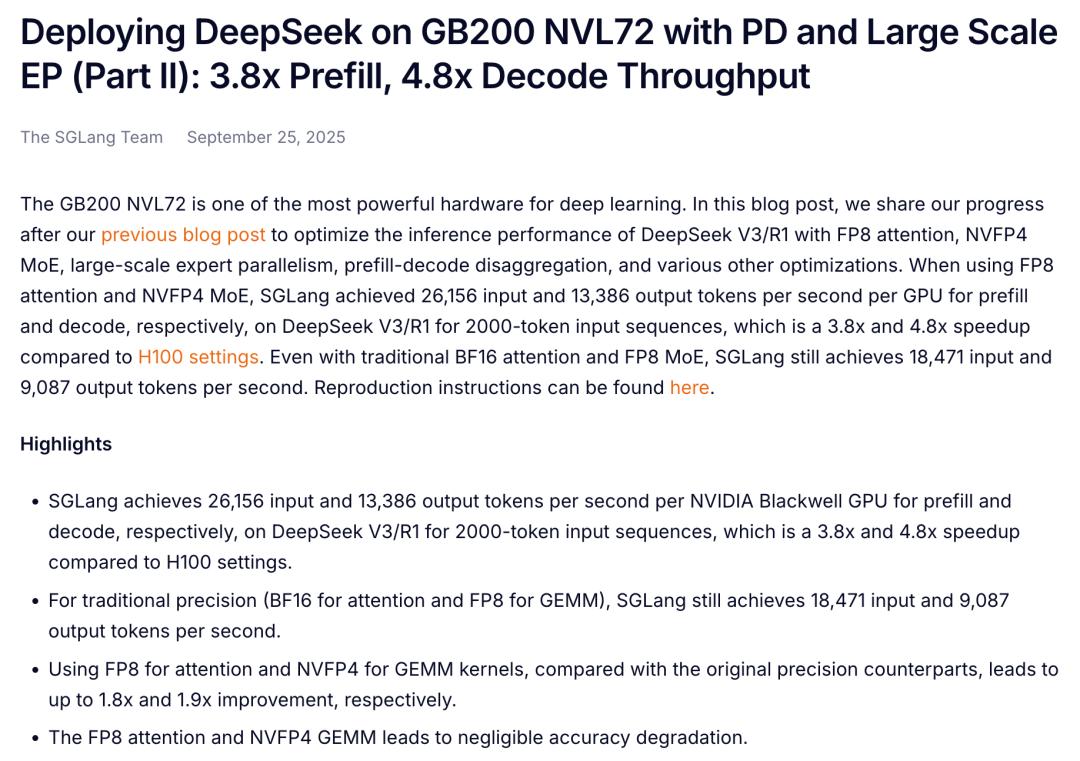
Second layer: LPDDR memory. Research published by the SGLang team shows that LPDDR can completely serve as a "weight staging area". Model weights are first placed in LPDDR and then streamed to HBM when needed, greatly alleviating the capacity pressure on HBM.
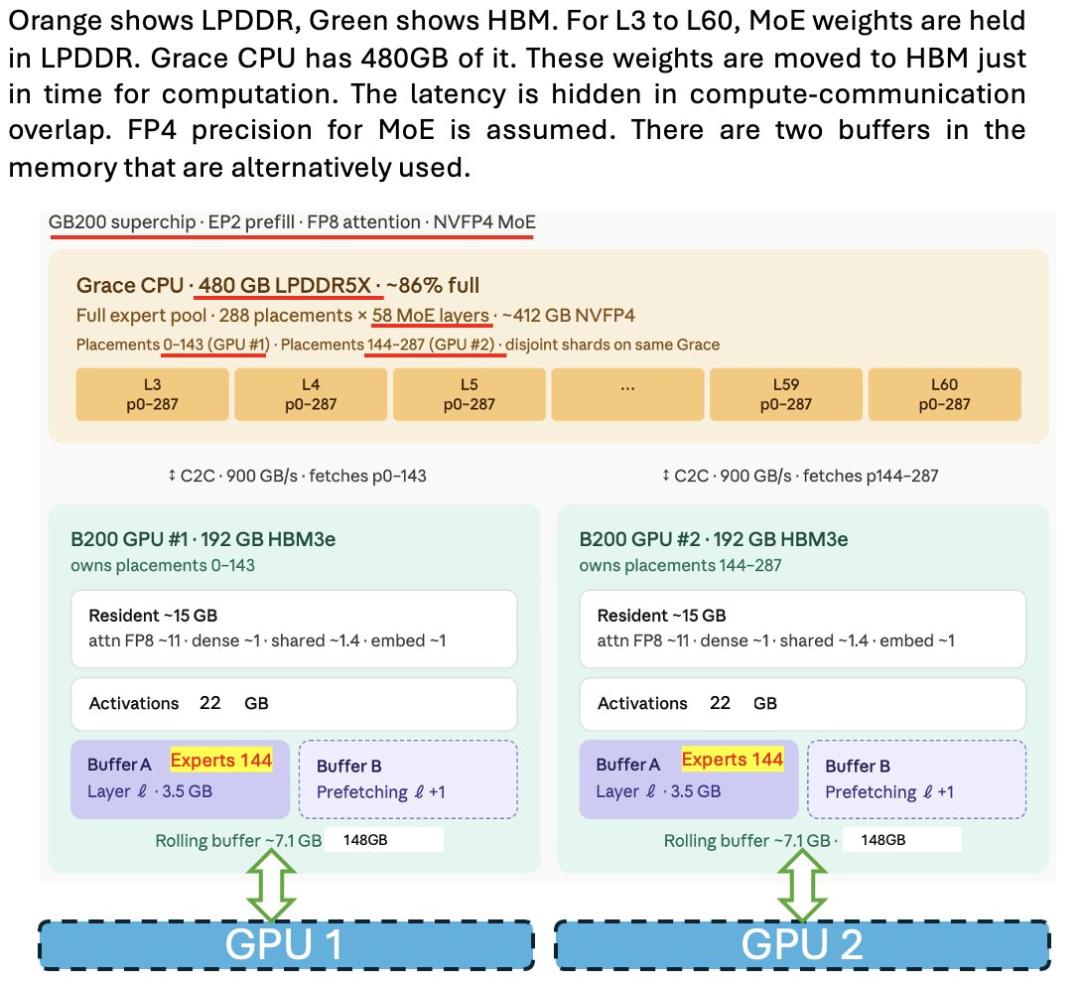
DeepSeek's MoE architecture is naturally suitable for this solution: with a large number of experts and the ability to quantize weights to 4 bits, the streaming loading is very efficient.
Who is involved in LPDDR? Domestic products are only half a generation behind in speed and one generation behind in density, and the gap is narrowing.
Third layer: Decompression of GPU/ASIC. The Engram module replaces the forward propagation calculation of the Transformer with hash table look - up in LPDDR. In essence, it replaces the extremely costly "GPU operation" per bit with the extremely cheap "memory read" per bit.
This is of great significance for Chinese AI chips. Due to the limitation of EUV lithography machines, domestic GPUs lag behind in raw FLOPs. But if you can use more cheap memory to replace less expensive computing power, this "leapfrogging by changing lanes" becomes reasonable.
Coupled with TileLang, a cross - hardware kernel compilation framework invested in by DeepSeek, which allows a set of computing code to run on multiple hardware platforms simultaneously, bypassing the "CUDA moat". Domestic chip manufacturers may all achieve ecological breakthroughs because of this.
Now do you understand? Every technological innovation made by DeepSeek points in the same direction: reducing the dependence on top - tier hardware and making China's existing storage, chip, and network ecosystems sufficient and even excellent.
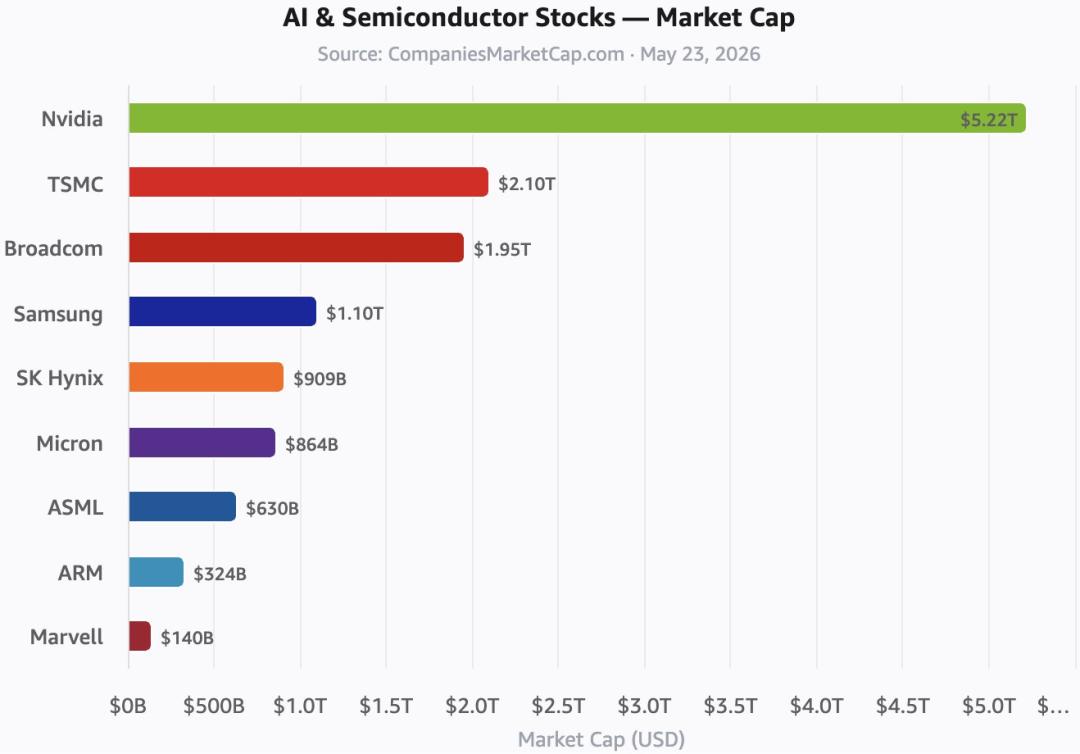
@bookwormengr did a big calculation: The total market value of global AI - related stocks has long exceeded 10 trillion US dollars.
If DeepSeek can help China build an AI hardware ecosystem of the same scale, it is completely logical for it to achieve a valuation of one trillion US dollars in this game.
The Logic of Not Making Quick Money
Looking back at all of DeepSeek's "not - to - do" list - not doing multi - modality (only starting to experiment with images and audio in V4.1), not making voice models, not making video models, and continuously cutting API prices - it makes sense.
It's not that they "can't make money", but that they "temporarily disdain to make this kind of money".
@bookwormengr made a wonderful analogy: OpenAI has obtained equity subscription warrants from AMD and Cerebras. As long as the computing power procurement milestones are reached, it can buy stocks at a low price. In essence, this is "exchanging commitments for equity" - you help me build chips, I give you orders, and we grow the pie together.
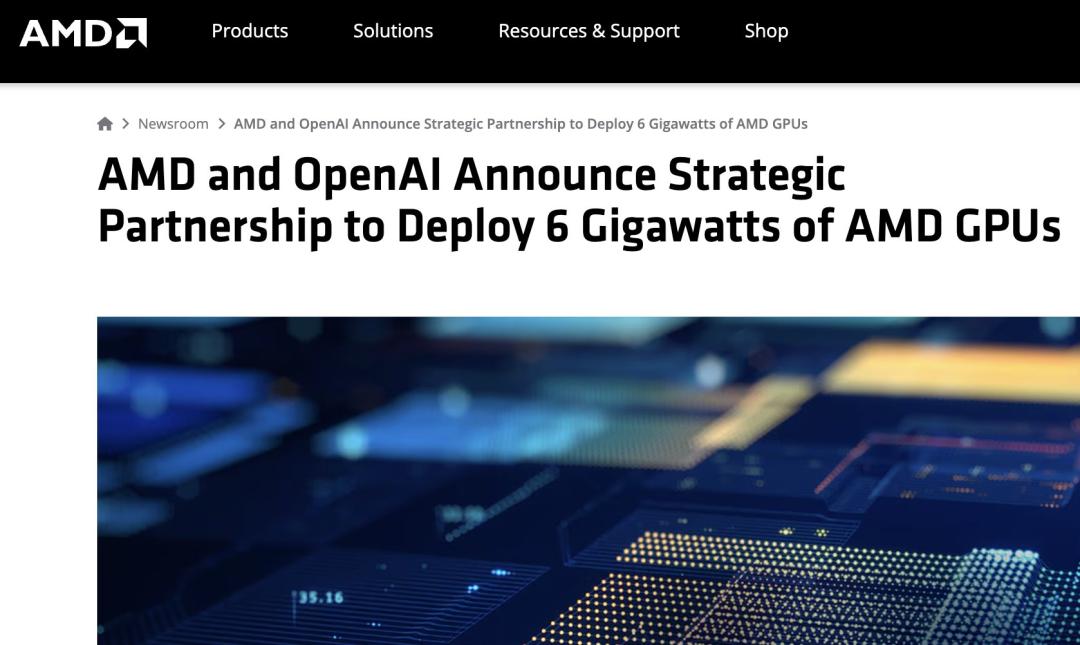
DeepSeek can completely replicate this model.
It's just that it is facing the entire domestic AI hardware industry chain instead of AMD and Cerebras.
Liang Wenfeng comes from a quantitative fund background and is known as a "loyal fan of Jim Simmon". A person like this can't be unaware of the subtleties of capital operation.
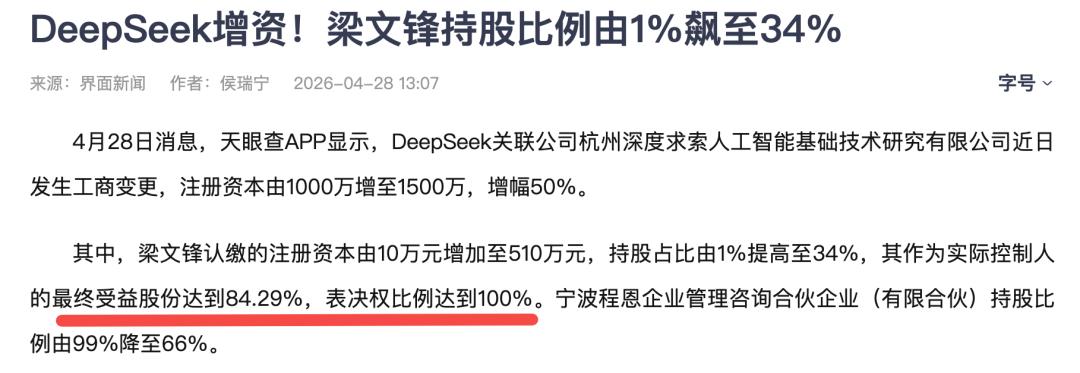
In fact, before the financing news came out, he had completed a crucial equity adjustment in April 2026, controlling about 84.29% of the company's equity through direct and indirect shareholding, with 100% voting rights.
CATL invested in DeepSeek to lock in future energy storage orders for AI data centers. JD.com and NetEase have their own strategic requirements for getting involved.
The participation of the National Big Fund positions DeepSeek as a national - level AI infrastructure.
What these investors see is not a small API - selling business. They see a strategic fulcrum that may reshape the global AI hardware landscape.
The Ultimate Mission
Large - Scale Reinforcement Learning and AGI
But if you think that DeepSeek's end goal is to be "the engine of China's AI hardware ecosystem", you may still be underestimating Liang Wenfeng.
According to Bloomberg, Liang Wenfeng clearly stated at an investor meeting: DeepSeek's main goal is to push the technological boundaries and pursue AGI.
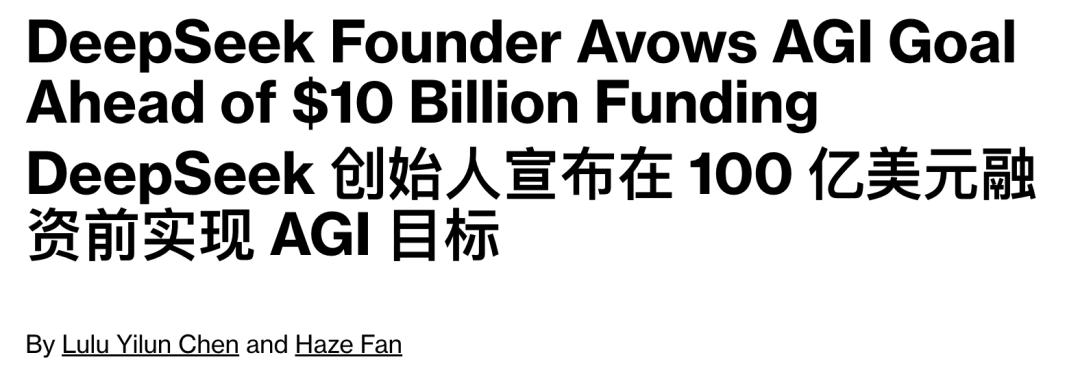
The hardware ecosystem is a means, and AGI is the end.
The logic is as follows: When more hardware options become available and the computing power demand itself is significantly reduced by technological innovation, DeepSeek can start larger - scale training at a lower cost, especially post - training of reinforcement learning (RL) and recursive self - improvement (RSI).
Large - scale RL means that the model needs to generate a huge number of inference trajectories - with a generation volume of trillions of tokens, and the computing cost is extremely high. And long - range tasks with a 1 - million - token context require the trajectories to be long enough.
Without extreme hardware efficiency optimization, this kind of training simply can't be carried out.
RSI is even bolder - allowing AI to design experiments, execute them, analyze the results, and improve itself. This is a process with a very high density of trial - and - error, and the demand for computing power is bottomless.
But if DeepSeek can reduce the computing power cost by reconstructing the hardware ecosystem, this path becomes feasible.
From MoE to MLA, from DSA to CSA, from Engram to TileLang, from KV Cache compression to LPDDR streaming loading - all these innovations ultimately converge to the same end: making the training of AGI from "unaffordable" to "affordable".
The vast expanse of Liang Wenfeng and DeepSeek is never the waves on the sea surface, but the ocean current itself.