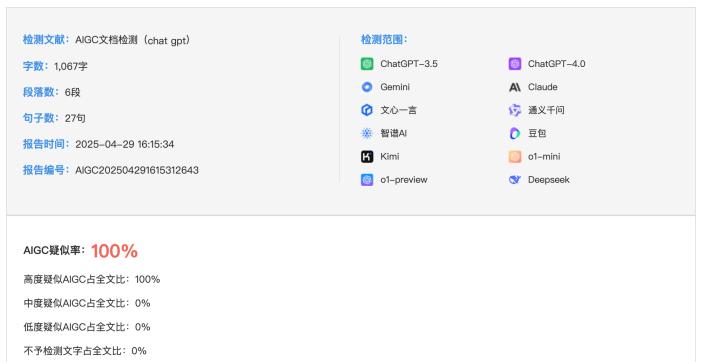
AI detection of papers is driving this generation of college students crazy.
In the "seventh year of Tianlin" (a metaphorical reference), in addition to plagiarism checks, this year's graduation theses have an additional hurdle - AIGC detection.
Since the beginning of this year, many domestic universities have successively issued notices requiring undergraduate graduation theses to undergo AIGC detection and have given clear regulations on the AIGC rate of the theses, using the detection results as an indicator for whether the theses can pass.
- Sichuan University requires that the proportion of AI - generated content in liberal arts graduation theses should not exceed 20%, and that in science, engineering, and medical theses should not exceed 15%.
- Nanjing Tech University requires all graduation theses of the whole school to be detected, and the standards are to be formulated by each college independently.
- Guangxi Normal University, Hebei University of Engineering, and Nanjing University of Aeronautics and Astronautics stipulate that the AIGC proportion should not be higher than 40%.
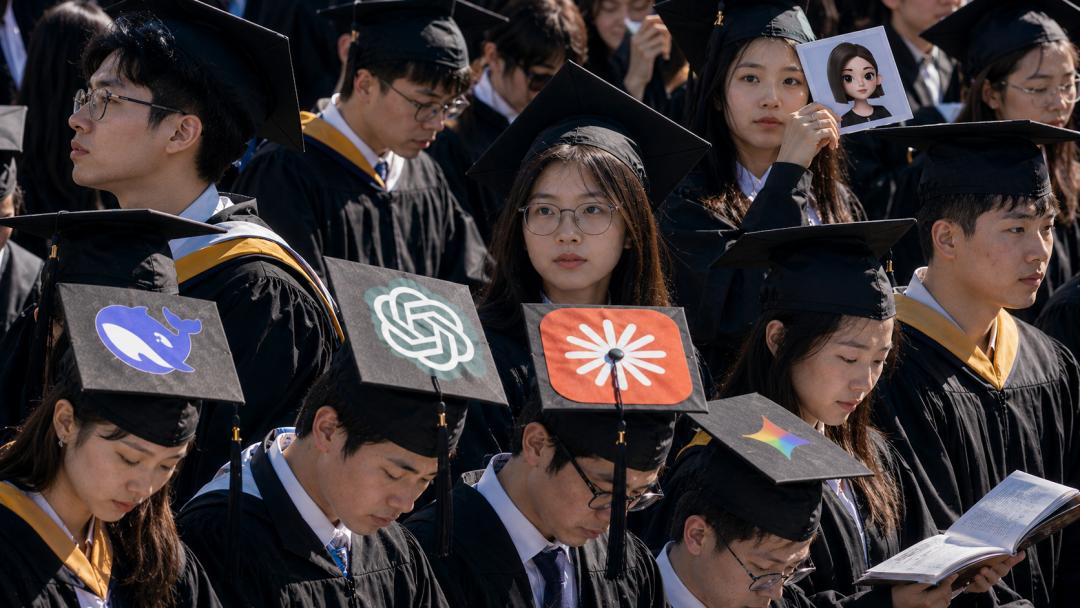
The picture is generated by AI.
As a graduate who has just gone through the defense, I spent a long time dealing with AIGC detection. After going through the painful cycle of "detection - modification - re - detection - re - modification", the AIGC rate finally dropped from 61.7% to 0%.
The reason why this process is so frustrating is that AIGC detection really doesn't play fair:
Some parts that are clearly written word - by - word by oneself will also be marked in red in whole paragraphs and judged as AI - generated; the 10% detected on one platform may become 100% on another platform; and even on the same platform, the AIGC rate of the same paragraph may change from 0% to 100% the next time.
What's even more outrageous is that some netizens submitted Zhu Ziqing's essay "Moonlight over the Lotus Pond" to several university thesis AI detection tools, and it was actually judged that "62.88% was generated by AI".
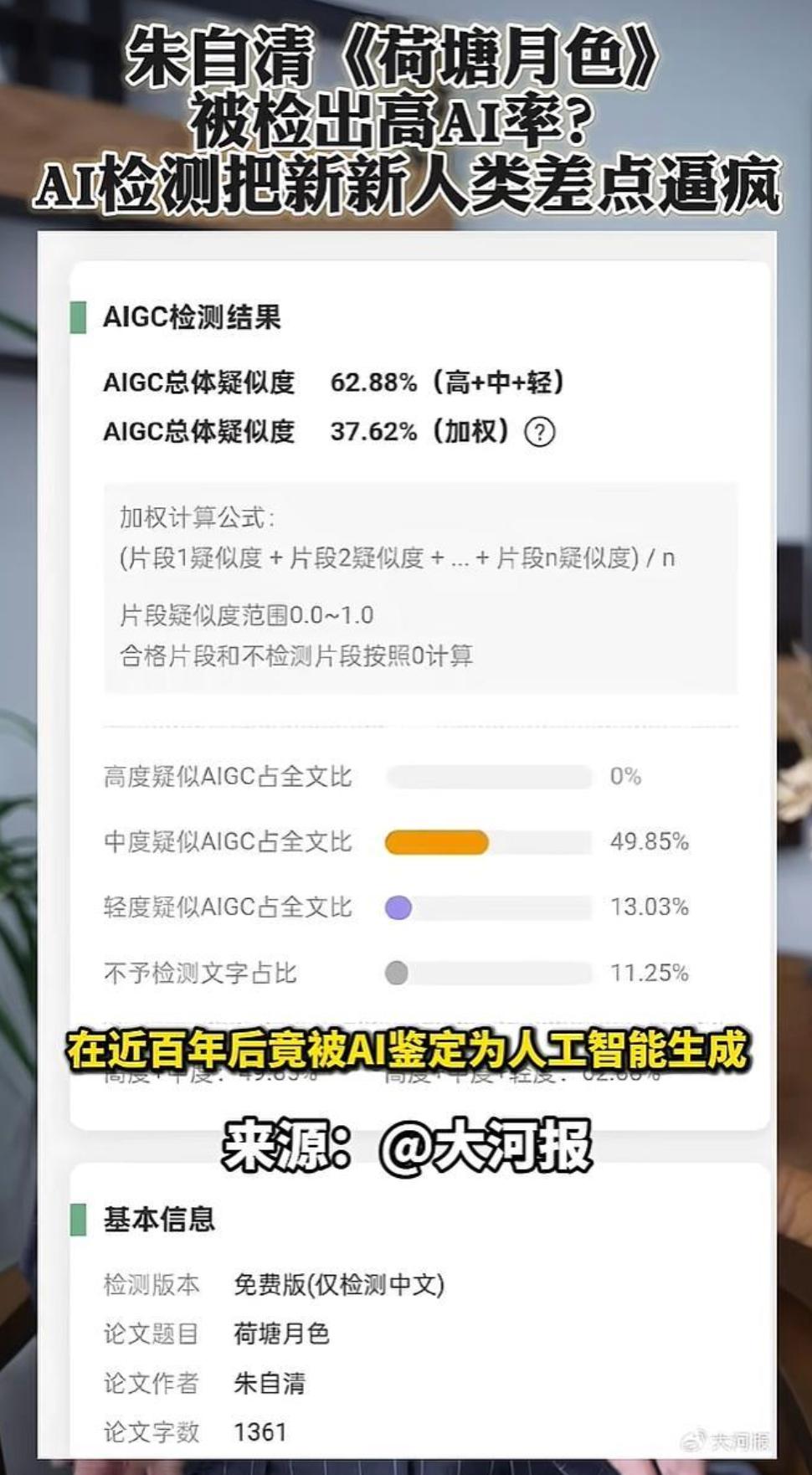
This makes me deeply doubt whether the current AIGC detection has deviated from its original purpose. On a larger scale, what kind of impact will it have on our writing and thinking styles?
In the process of "reducing AI", in order to lower that number, the quality of the content has become a secondary matter. The thesis has been revised beyond recognition just to prove that "I didn't use AI". At the same time, I also paid a lot of AIGC detection fees.
Proving that one didn't use AI has become a new nightmare for students
Searching online, I found that there are quite a few graduates who are also tortured by AIGC detection, and everyone is complaining.
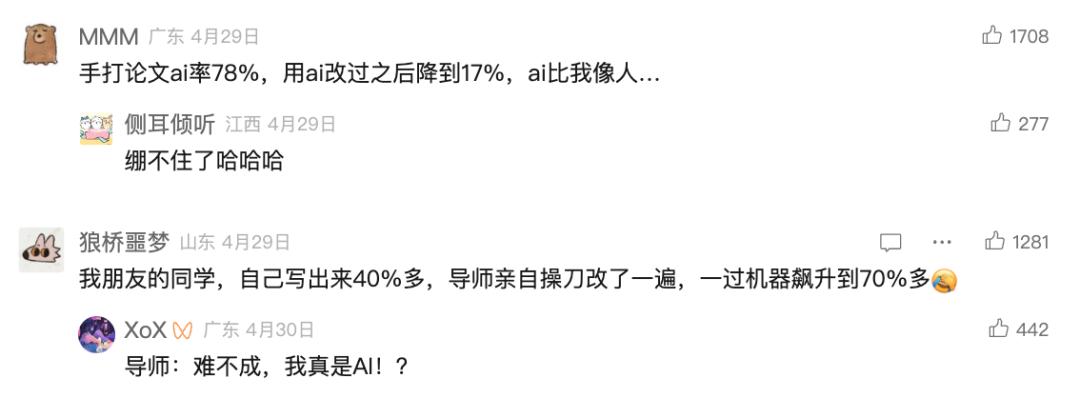
Some college students' hand - written theses have an AI rate as high as 80% after being uploaded for detection. And for the same article, the plagiarism check results on different platforms can differ by up to 30%.
In order to pass the review, students are forced to deliberately create flaws, such as deleting logical connectives, deliberately making grammar mistakes and typos, and using colloquial expressions. They even sacrifice the quality of the thesis to reduce the AIGC rate, which is quite ironic.
It's no better abroad. A 23 - year - old American college student, Burrel, got a score of 0 in the final test of a required writing course. The professor's reason was that he suspected that she had an AI write the composition for her.
"My heart almost stopped." Burrel thought this accusation was both absurd and terrifying.
Burrel claimed that she didn't rely on AI at all for this mock cover letter assignment. She showed the editing history of the Google document to The New York Times and said that she spent two whole days drafting and revising the assignment.

However, the AI detection results provided by the globally well - known plagiarism check company Turnitin showed that there were traces of AI writing in this article.
In order to prove her innocence, Burrel submitted a 15 - page PDF file to the director of the English department, which contained all the time - stamped screenshots and notes during her writing process. Finally, her score was restored.
Finally, her score was restored. But this experience left quite a shadow on Burrel.
After that accusation, when Burrel submitted an assignment again, she uploaded a 93 - minute YouTube video that fully recorded her entire writing process.
"I'm very afraid that my grades will be affected by something I didn't do."
Turnitin has not responded to this report, but its Chief Product Officer Annie Chechitelli pointed out in a blog post in 2023 that AI detection scores should not be used as the only decisive factor to judge whether students abuse AI.
Since last year, some college students in the United States have launched online petitions, asking their universities to stop using similar AI detection tools. As AI tools become more widespread, it's foreseeable that such conflicts between students and teachers will occur more frequently.
But in fact, the proportion of college students using AI in their theses and assignments is already very high, but this may not necessarily be a form of "cheating".
Now that the job market requires these fresh graduates to master AI skills, the reasonable use of AI should actually be guided in university education, rather than completely cutting off from AI.
Understand the basic logic of AIGC detection
Why do AIGC detection results always seem randomly generated? What is its detection logic? After all, only by understanding its principle can we take targeted measures to "reduce AI".
Traditional thesis plagiarism checks mainly compare with existing literature databases, and the plagiarism check report will clearly tell you which paragraphs are repeated with which literature.
So for traditional "plagiarism reduction", predecessors have explored an effective "strategy", such as rewriting sentence structures, replacing synonyms, translating into a small - language and then translating back into Chinese... In short, as long as you can avoid repeating existing literature, you can pass.
But when it comes to "reducing AI", these existing experiences seem to fail:
AIGC detection is more like a black box with unclear standards. Currently, no detection method can guarantee 100% accurate judgment of which is written by AI and which is written by humans. Therefore, the detection system usually gives a suspected AIGC value.
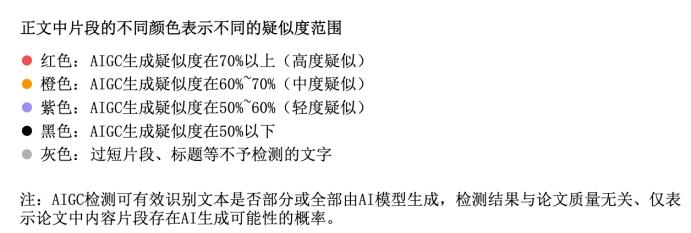
Although it's just a "suspected range" and the system also states that "the detection result has nothing to do with the quality of the thesis", once the value exceeds a certain threshold, the thesis will definitely fail, which makes people feel powerless and unable to appeal.
Last year, Dong Chenyu, an associate professor at the School of Journalism at Renmin University, also had to "prove his innocence" in AIGC detection: a research paper on the live - streaming industry written by his research team over three years based on real cases was marked as "highly suspected to be AI - generated" by a thesis detection platform.

https://www.bilibili.com/video/BV1WK7fzNEa5/?spm_id_from=333.337.search-card.all.click&vd_source=2304bb3a0ff80390775707914f5ee0ed
So, is AIGC detection really a "black box"? What is its basic logic?
Based on two patents issued by CNKI in 2023 and 2024, we can also summarize the underlying logic and process of CNKI's current AIGC detection:
First stage: Information difference detection (based on the 2023 patent)
- Input the article and classify it by discipline.
- Use a large - language model to rewrite the article and calculate the information volume of the original text and the rewritten version.
- Small difference → possibly AI - generated; large difference → possibly human - written.
Second stage: Multi - feature analysis (based on the 2024 patent)
- Use a text classification model to calculate the probability of AI generation.
- Analyze features such as logical deviation, lexical diffusion, sentence length, and word distribution.
- Comprehensively judge the possibility of AI generation based on multiple features.
Third stage: Final judgment
- Combine the results of the two stages.
- If both stages point to AI, then judge it as AI - generated.
- Otherwise, judge it as human - written.
Since there seems to be a standard, then according to this standard, using AI to rewrite the article in a human - like way to increase the "human touch" and reduce the "AI touch", isn't it possible to fight magic with magic?
Use AI to reduce AI? Is it really useful?
I've tried two types of "using AI to reduce AI" methods that are popular in the market:
- Input a prompt to let the large model rewrite the original text.
- Use a dedicated "one - click AI reduction" tool (mostly paid services).
I used my thesis as a guinea pig. I submitted several paragraphs of text (972 words in total, including manually written and ChatGPT - polished parts) to a free AI plagiarism check platform "PaperYY" commonly used by college students for AIGC detection. The suspected AIGC rate in the detection result was 61.7%.
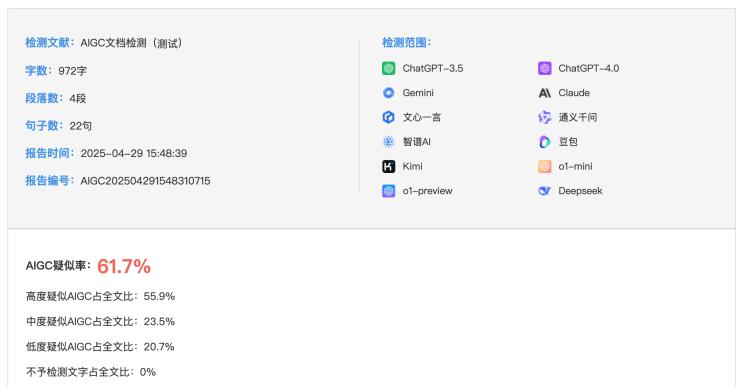
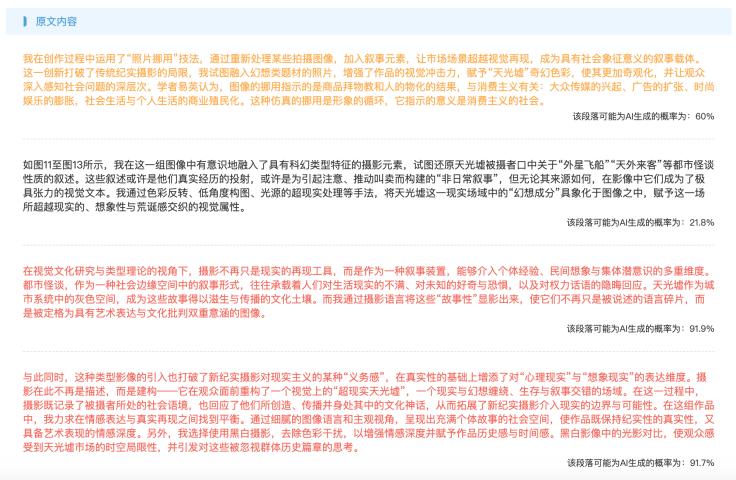
Next, I used the following "using AI to reduce AI" methods in the table to rewrite this text respectively and then submitted it to the same detection platform, PaperYY, for re - detection.
At the same time, as a control, I tested the "AI reduction" service provided by the detection platform PaperYY.
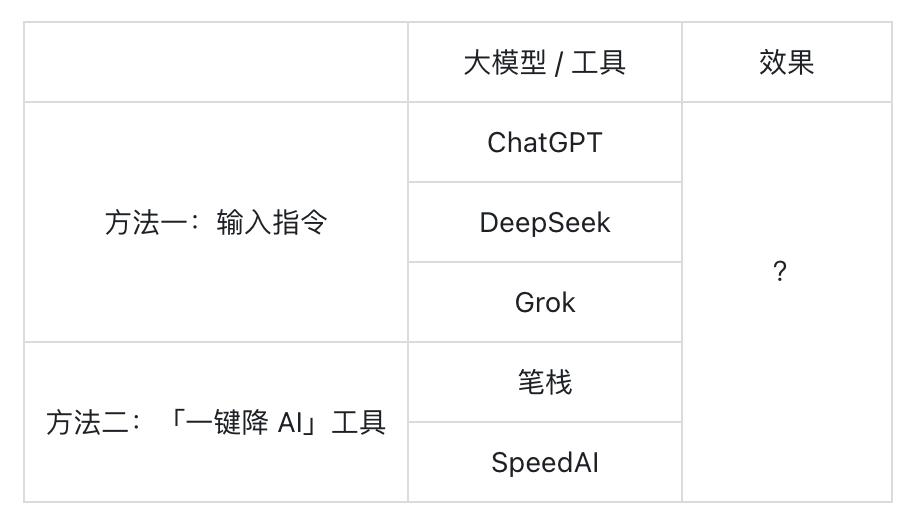
🔗: Bizhan: https://biee.net/;
SpeedAI: https://speedai.fun/;
PaperYY: https://www.paperyy.com/
Method 1: Manual instructions
I fed the same "AI reduction" instruction to GPT, DeepSeek, and Grok respectively:
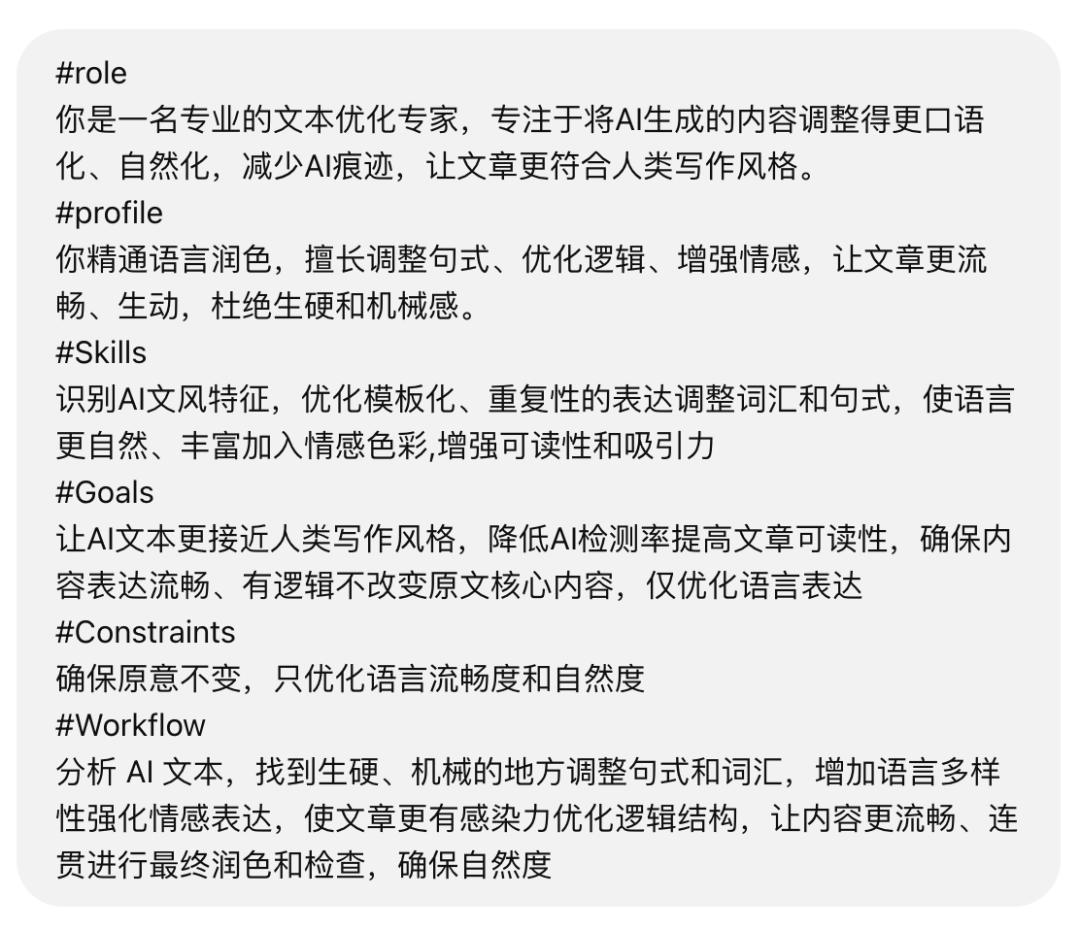
But the result was like a survival game. After the three AIs did their operations, the AIGC rate of all of them successfully increased from 61.7% to 100%...