Li Hanqiong "takes over" Youngor. How much family fortune did Li Rucheng leave behind?
Despite having the names "Han" and "Qiong" (which imply coldness and poverty in Chinese), as the daughter of Li Rucheng, the founder of Youngor, Li Hanqiong is neither cold nor poor. Moreover, she has just taken over a well - known listed company worth 34 billion yuan from her father.
On May 21st, Youngor (600177.SH) issued an announcement stating that Li Hanqiong, the daughter of the company's founder Li Rucheng, officially took over as the chairperson and president. Different from many "second - generation rich" who "parachute" into positions after studying overseas, Li Hanqiong's path to succession started from the grassroots level and was achieved step by step.
Now, 49 - year - old Li Hanqiong is leading the brand's youth - oriented transformation, striving to reverse the inherent impression of brand aging. At the age of 75, Li Rucheng has announced his retirement, leaving his daughter a business empire of "clothing + retail + investment", including core assets such as Intime Department Store, Ningbo Bank, and Citic Securities.
The company stated that in the future, Youngor will still focus on the fashion industry as its main business.
As of May 22nd, Youngor closed at 7.37 yuan per share, with a total market value of 34.1 billion yuan.
Good Intentions to Escort the "Second - Generation" Succession
It's hard to accurately say when Li Rucheng began to plan for the inter - generational succession of the "second - generation".
What is certain is that since Li Hanqiong was born in 1977, Li Rucheng put a lot of thought into naming her. At that time, Youngor was just a small tailor shop with poor business and a tight budget. It was "cold and poor" with no hope in sight.
In the face of difficulties, Li Rucheng named his daughter "Hanqiong". Some friends advised Li Rucheng not to give such a strange name and suggested he choose a more auspicious one to ward off bad luck. Li Rucheng didn't explain but insisted on giving this name to his soft and cuddly daughter who was still in her infancy. According to media reports, Li Rucheng once explained to Yang Yiqing, the executive president of the Zhejiang Business Research Association: "Before and after my daughter was born, it was the most difficult period of my life, but it was also the eve of a turnaround. 'Hanqiong' is not a curse but a reminder to remember the cold winter and believe that after suffering comes happiness."
This name, bearing the mark of her father's arduous entrepreneurship, has become the background of Li Hanqiong's life.
In Chinese private enterprises, the "second - generation succession" is often one of the most dangerous moments. Many founders are reluctant to hand over power and worry that the capital market won't recognize the next generation. However, Li Hanqiong's succession path was not achieved overnight. Li Rucheng didn't let Li Hanqiong "parachute" into a high - level position but spent more than a decade gradually pushing her to the forefront.
Public information shows that Li Hanqiong graduated from California State University in the United States and later obtained an EMBA degree from the China Europe International Business School. After returning to China, she didn't directly enter the core management but started from the front - line of retail. In 2011, Li Hanqiong first served as a director of Youngor, officially entering the core decision - making level. In the following more than a decade, her resume gradually became more comprehensive: In 2016, she concurrently served as the general manager of the company; in 2017, she became the vice - chairperson; from 2019 to 2020, she served as the vice - chairperson and general manager; since 2023, she has been the vice - chairperson and president until she officially took over this time.
In addition to her experience at the listed company level, Li Hanqiong also holds multiple important positions such as the chairperson and general manager of Youngor Fashion (Shanghai) Technology Co., Ltd., the chairperson of Youngor Garment Holding Co., Ltd., and the executive director and general manager of Youngor Investment Co., Ltd., covering almost all the core business sectors of Youngor.
More importantly, Li Rucheng handed over the real "testing ground" to her.
There is a saying in the clothing industry that "it's easiest to make money from women and children". In comparison, men have the weakest consumption ability. Li Hanqiong started to expand the business scope in 2015, breaking the monopoly of men's clothing and entering the women's and children's clothing markets.
From 2021 to 2022, Li Hanqiong began to address the chronic problem of Youngor's brand aging, with "internationalization + youth - orientation" as the breakthrough point. She acquired a 40% stake in the American trendy brand UNDEFEATED and invested in the brand of the Chinese - American designer Alexander Wang, quickly and accurately entering the trendy and fashion track, getting rid of the label of "old - fashioned men's clothing" and successfully attracting the "Generation Z".
At the end of 2023, "Youngor Group Co., Ltd." was officially renamed "Youngor Fashion Co., Ltd."
In December 2024, Youngor, together with a consortium, acquired Intime Department Store from Alibaba for 7.4 billion yuan, filling the gap in offline high - end retail. On the signing day, Li Hanqiong made a rare appearance and represented Youngor in signing the agreement with Alibaba and Intime's management. The completion of this transaction is also regarded as a landmark event in Li Hanqiong's succession process. Because what Intime Department Store connects to is not only commercial real - estate resources but also high - end consumption scenarios, membership systems, and the fashion retail ecosystem, which are exactly the core parts of the "fashion transformation" that Li Hanqiong has been promoting in recent years.
In 2025, Li Hanqiong led the acquisition and integration of BONPOINT, a French high - end children's clothing brand known as the "Hermès in the children's clothing industry", helping Youngor enter the luxury children's clothing field in one step.
In the letter to shareholders in the 2025 annual report just released, Li Rucheng clearly wrote: "The waves behind drive on those before. In this board of directors' reshuffle, a new generation will be responsible for Youngor's operation... I sincerely hope that everyone will continue to care about, support, and tolerate the work of the new board of directors as always, ensuring Youngor's long - term prosperity and development."
The "Stock God" Youngor
For Li Rucheng, the "first - generation entrepreneur", the capital market prefers to call him the "stock god" rather than a "tailor". Because over the years, what really made money for Youngor was not always suits.
As one of the earliest Chinese clothing enterprises to engage in capital operation, Youngor has long been active in the A - share investment circle.
In 1990, Zhejiang businessman Li Rucheng founded Youngor. It only took 4 years to raise the market share of Youngor shirts to the top in the country. It's worth mentioning that during these 4 years, Li Rucheng didn't focus solely on the clothing industry but crossed over into the real - estate and equity investment fields. Later, he gradually got involved in financial investment, PE investment, etc.
Youngor has always attached great importance to equity investment. For this reason, the company specially established and trained a professional equity investment management team and once established Kaishi Investment. The company's official website also lists investment as one of its main businesses.
If we take the investment income figures disclosed by Youngor in the consolidated income statement as the standard, from 2001 to 2025, the company's cumulative investment income reached 56.199 billion yuan, with an average of more than 2.2 billion yuan per year.
In comparison, the total net profit of Youngor during the same period was 64.564 billion yuan. In many years during this period, Youngor's net profit was supported by the investment sector. For example, in 2020, the net profits of Youngor's fashion, real - estate, and investment sectors were 960 million yuan, 1.657 billion yuan, and 4.655 billion yuan respectively, with investment accounting for nearly 65% of the total profit.
In addition, this investment performance is outstanding even among public funds. The Fund Research Center of Galaxy Securities once counted the cumulative profits created for investors by 129 fund management institutions from 1998 to 2018. Among them, Tianhong Fund made the most money for investors, with a cumulative profit of 184.289 billion yuan; four traditional public fund giants, Huaxia, Harvest, Southern, and E Fund, ranked second to fifth, all making more than 100 billion yuan for investors in total. Further down to the 16th place was Bank of Communications Schroeder, which made 44.174 billion yuan for investors.
At first, Youngor's investment targets were mainly centered around its own business, focusing on clothing retail, leading department stores, etc. Later, they became more and more diverse. When the bull market came in 2007, Youngor traded as many as 69 stocks, including Ping An of China, China Unicom, and China Cosco, a logistics and transportation company.
Youngor disclosed its securities investment situation in the 2025 annual report. The listed companies it invested in include CITIC Limited (0267.HK), Boqian New Materials (605376.SH), Orient Overseas (International) Limited (0316.HK), Shangmei Group (2145.HK), and Lin Qingxuan (2657.HK). The funds all came from its own funds, and the closing book value was 5.648 billion yuan.
In addition, as of the end of 2025, Youngor held a 10% stake in Ningbo Bank (002142.SZ) and was the third - largest shareholder of Ningbo Bank. Liu Xinyu, the vice - president of Youngor, is a director of Ningbo Bank, having a significant impact on Ningbo Bank's business decisions. His term will end on February 26, 2029. As of the close on May 22nd, Ningbo Bank closed at 31.09 yuan per share, with a total market value of 205.3 billion yuan. Based on this calculation, the market value of Youngor's stake in Ningbo Bank is about 20.53 billion yuan.
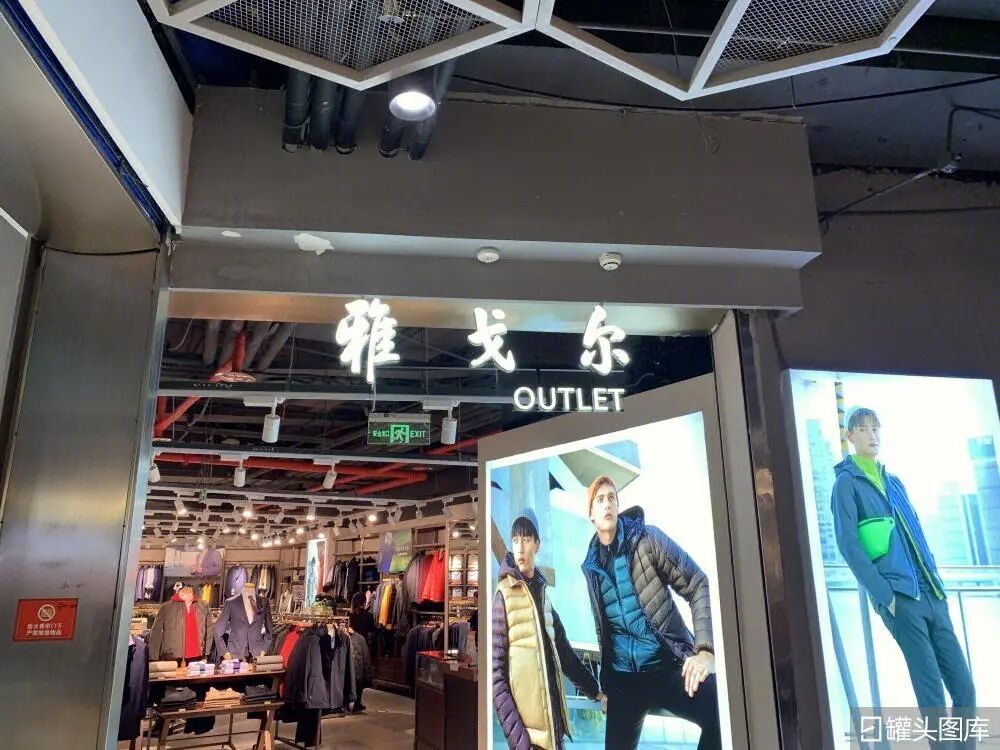
Image source: Canstock Photo
After more than 30 years in the investment circle, Youngor has formed a stable profit - making model. Yema Finance noticed that in the investment income in 2025, "income from long - term equity investments accounted for using the equity method" accounted for 86%, which was the largest item among all income items.
Lu Fang, an accounting professional, explained that usually, for long - term equity investments accounted for using the equity method, the profit or loss of the invested entity during the holding period is recognized as investment income. Simply put, if a company earns 5 million yuan this year, an investor with a 10% stake will have an investment income of 500,000 yuan. This is the source of the largest - proportion income in Youngor's investment income. It should be noted that for such long - term equity investments, the stock price fluctuations of the invested enterprise generally won't affect Youngor's investment income or profit. However, the investment income realized after disposing of such long - term equity investments will affect the current profit.
There is no ever - victorious general in the stock market, not even Warren Buffett. Interestingly, since 2001, Youngor, which has experienced several bull - bear cycles in the A - share market, has never had a loss in the "investment income" column.
The "family fortune" that Li Rucheng left for his daughter is still substantial. But the question is, how much of these assets can continue to make money as easily as in the past?
Major Mergers and Acquisitions in the "Li Rucheng Era"
Looking back at the Li Rucheng era, another prominent label of Youngor is "cross - border". This enterprise has almost stepped into several of the most profitable sectors in China in the past two decades: clothing, real - estate, and financial investment.
Especially in the real - estate field, Youngor was once one of the most aggressive private real - estate developers in Ningbo. Around 2000, Youngor entered the real - estate market on a large scale, established Youngor Real Estate, and once aggressively acquired land in the Yangtze River Delta. At its peak, the profit of the real - estate sector even exceeded that of the clothing main business.
What really made the capital market re - recognize Youngor were a series of "major consumer mergers and acquisitions" in recent years. Among them, the most attention - grabbing one was Intime Department Store.
In December 2024, an announcement from Alibaba (9988.HK) showed that the company and another minority shareholder agreed to sell 100% of the equity of Intime to a buyer consortium composed of Youngor Group and Intime's management team. The total proceeds from the sale of Intime by Alibaba were approximately 7.4 billion yuan.
Intime Department Store is one of the leading department - store enterprises in China. It was originally founded by China Intime Investment Co., Ltd., established by Shen Guojun, a businessman from Ningbo, Zhejiang, in 1997. Under Shen Guojun's operation, Intime Department Store gradually grew in scale and went public on the Hong Kong stock market in 2007, becoming the first department - store group from the Chinese mainland to enter the Hong Kong capital market. However, in 2013, with the advent of the Internet era, offline department - store retail was gradually impacted. Sensing the crisis, Shen Guojun decisively joined hands with Ma Yun, also a "Zhejiang businessman", to jointly establish Cainiao Network, aiming to transform from offline to online and successfully transform Intime Department Store. In 2014, Alibaba invested HK$5.3 billion to become the second - largest shareholder of Intime Retail. In 2017, Intime Retail launched privatization, and Intime Department Store under it entered the Alibaba system. However, with Alibaba's strategic adjustment and the launch of the "1 + 6 + n" organizational reform, Intime Department Store, as part of "n", became less important in Alibaba's strategic system. So Youngor Group finally took over.
It's worth mentioning that it was Li Hanqiong herself who represented Youngor in signing the agreement.
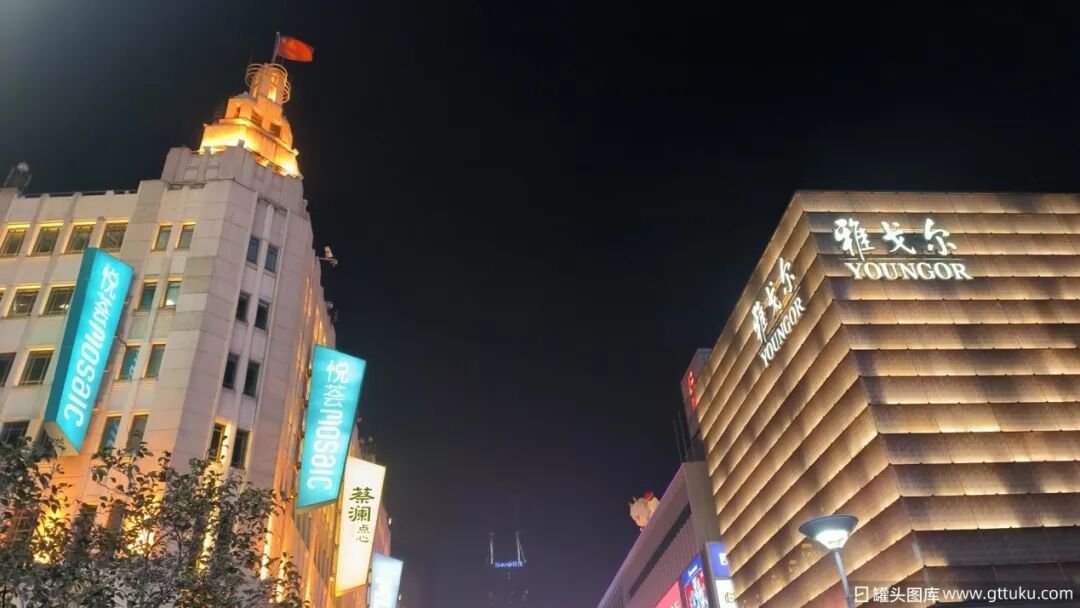
Image source: Canstock Photo
Youngor Group stated that the company has always attached importance to investment and development in the fashion field, and its listed company, "Youngor Fashion Co., Ltd.", is committed to the operation of the fashion industry. This joint investment in Intime by the group and Intime's management aims to "strengthen and supplement the industrial chain" and improve the fashion ecosystem. After the investment is completed, Youngor Group will give Intime's management sufficient operating space to support Intime's further high - quality development.
Yan Yuejin, the deputy dean of the Shanghai E - House Real Estate Research Institute, believes that "from the perspective of this commercial project, I think Intime Department Store is a relatively high - quality commercial real - estate. Purely from the perspective of acquisition, if Alibaba is making a loss, it's actually a relatively good bottom - buying price for Youngor Group. It's crucial for Youngor to enhance its influence in emerging businesses, including commercial real - estate and retail brands."
Now, Li Hanq