Jensen Huang: AI infrastructure still needs to burn $4 trillion.
NVIDIA is now worth $5.7 trillion.
This figure exceeds Germany's projected GDP of $5.45 trillion for the entire year of 2026.
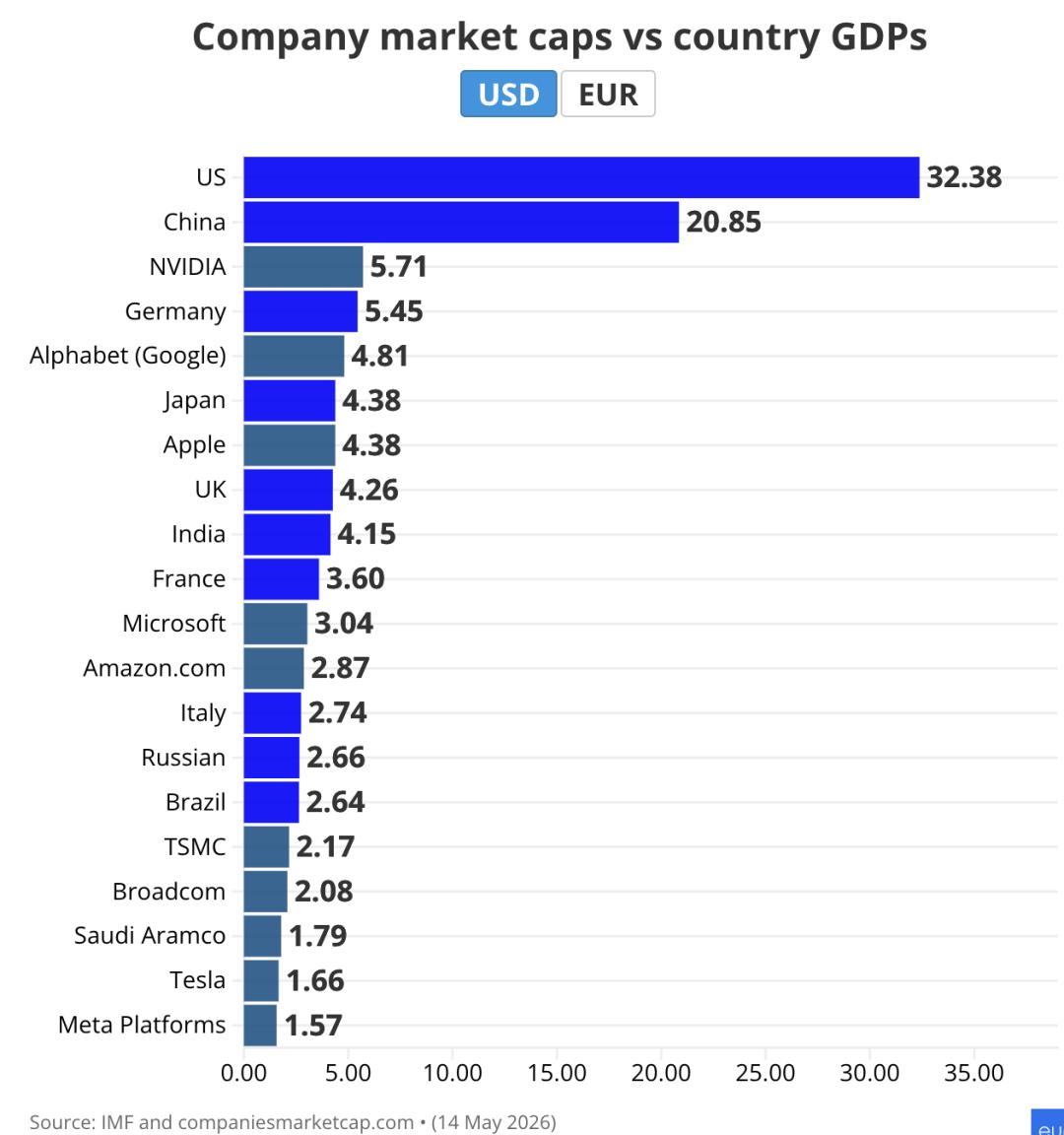
A company that sells chips is more valuable than the largest economy in Europe.
On the evening of May 20th, NVIDIA released its Q1 financial report for fiscal year 2027, with revenue of $81.6 billion, a year-on-year increase of 85%, comprehensively outperforming Wall Street's expectations.
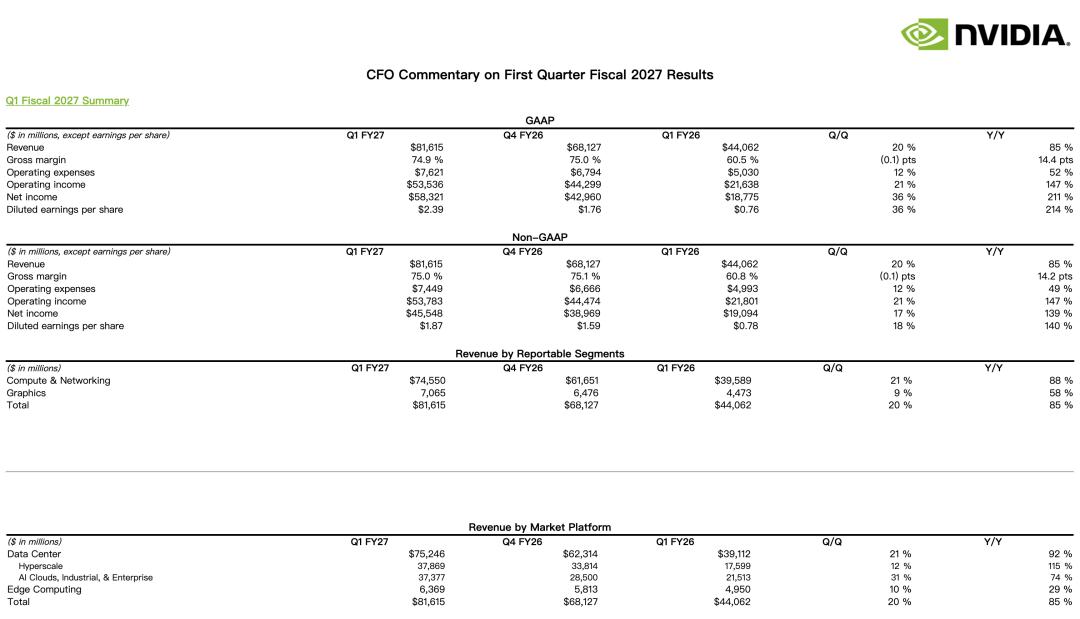
The data center business contributed $75.2 billion, a year-on-year surge of 92%, accounting for over 90% of the total revenue.
The net profit was $58.3 billion, more than tripling year-on-year.
Even more astonishing is the guidance for the next quarter, which is $91 billion, more than $4 billion higher than analysts' expectations.
At the same time, NVIDIA added an $80 billion stock buyback quota.
This company is making so much money that it doesn't know what to do with it.
Who owns the $4 trillion?
The financial report figures are just the appetizer.
Jensen Huang's judgment at the subsequent conference call is truly breathtaking.
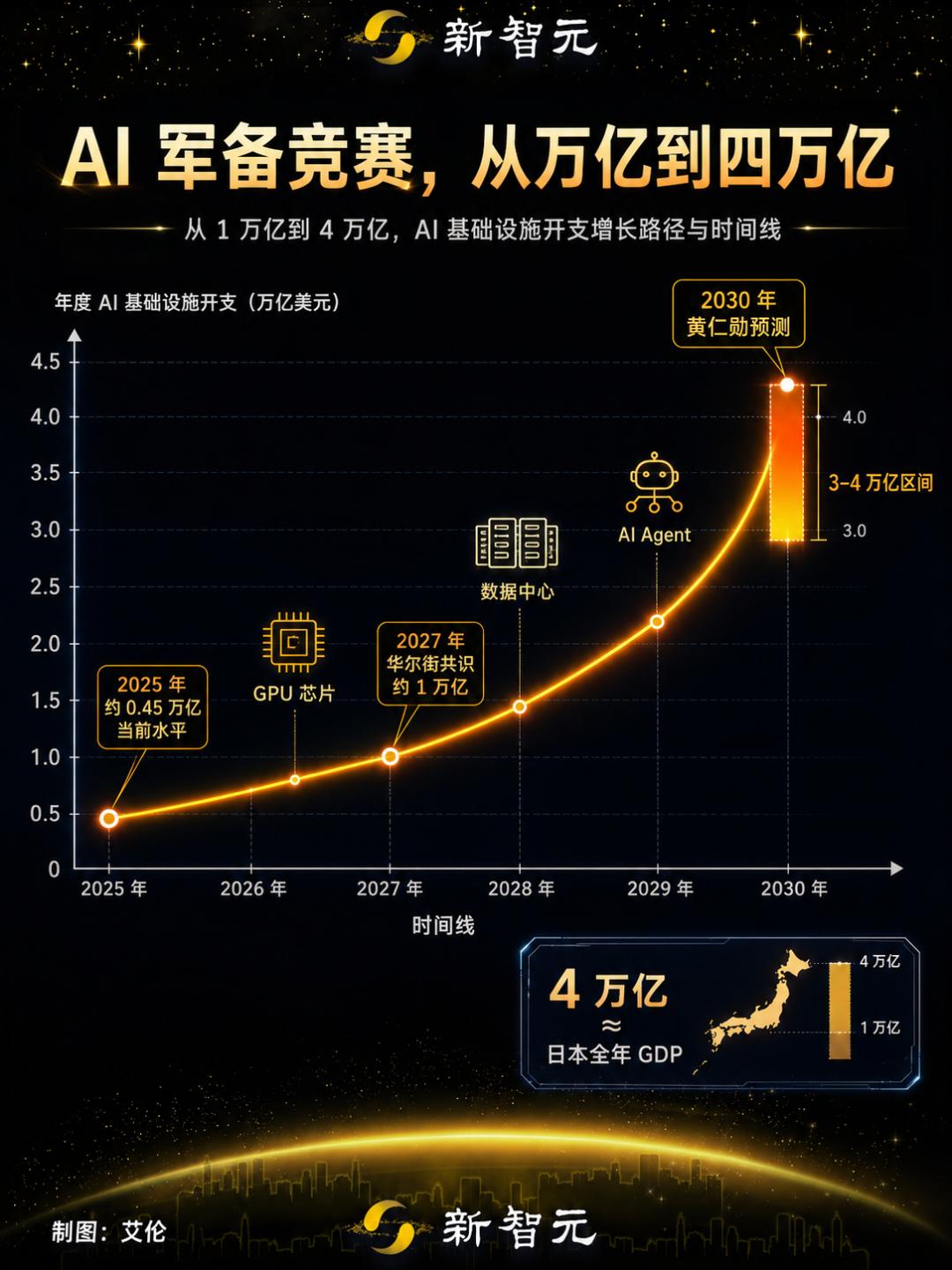
The AI capital expenditure of hyperscale cloud providers has currently reached $1 trillion per year and will increase to $3 to $4 trillion in the future.
What is the consensus expectation on Wall Street?
According to the compilation by Laura Martin, an analyst at Needham, people think the capital expenditure of hyperscale cloud providers will only reach $1.03 trillion by 2028.

The figure mentioned by Jensen Huang is four times this consensus.
NVIDIA CFO Colette Kress provided a timeline, stating that the annual expenditure on AI infrastructure is expected to reach $3 to $4 trillion before 2030.

Laura Martin, an analyst at Needham, commented in a research report that Jensen Huang's vision is different from the scenarios described by cloud providers themselves and is more interesting.
The money is already being spent.
In the first quarter, Google's capital expenditure was $35.7 billion, doubling year-on-year; Amazon's was $44.2 billion, ranking first among the four; Microsoft's was $30.9 billion, a year-on-year increase of 84%.
Meta was the most aggressive, raising its annual capital expenditure budget to $125 billion to $145 billion. However, the market gave it a blow, and its stock price fell 9.25% the next day.
The four companies are expected to spend a total of $725 billion in 2026.
Bank of America predicts that the total debt issuance of cloud providers this year will reach $175 billion, six times the average annual level of the past five years.
What does $4 trillion mean?
It is approximately equal to Japan's annual GDP.
This money will ultimately have to be earned back from somewhere.
Your electricity bill is paying for AI
This high-stakes gamble may seem far away, but it has already started to change ordinary people's lives, starting with electricity bills.
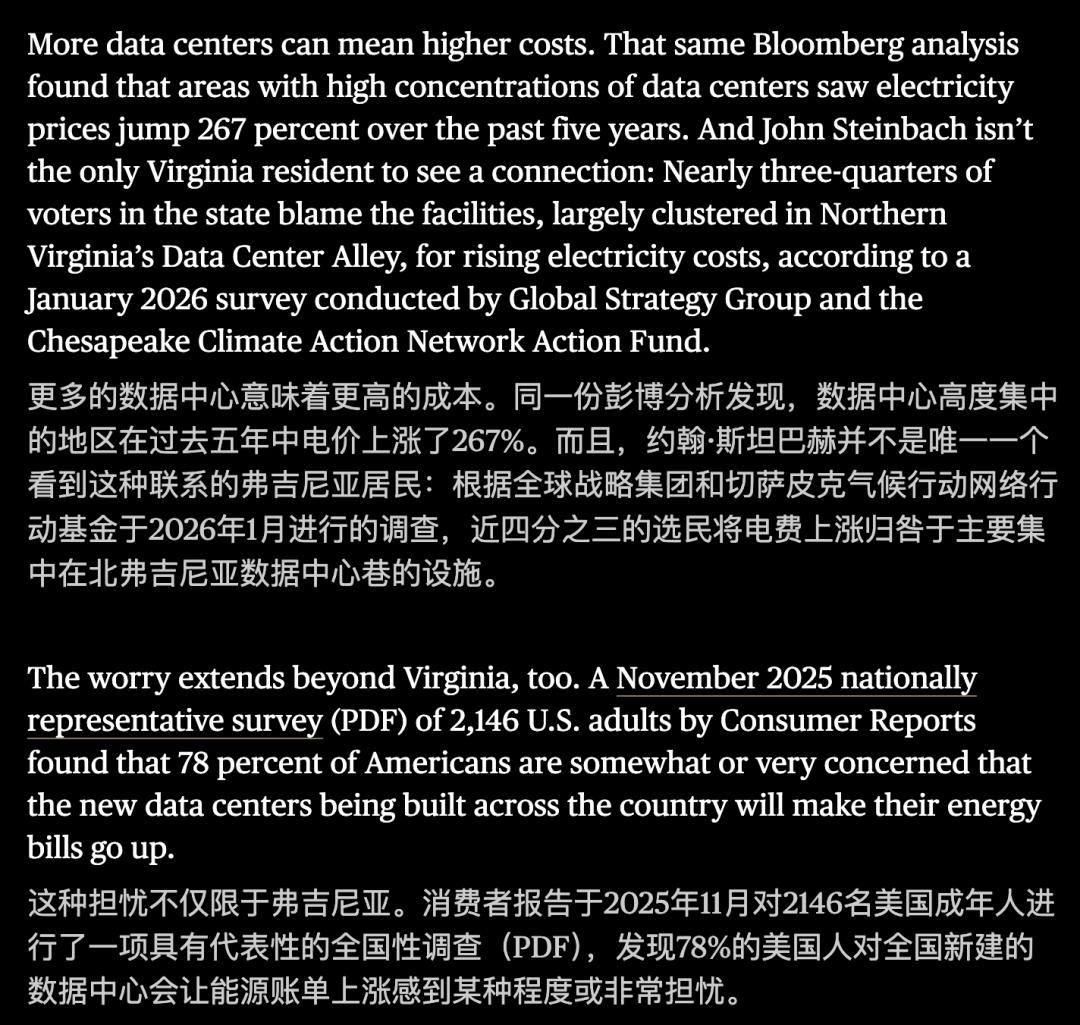
John Steinbach, a resident in Virginia, received an electricity bill of $281 in January 2026, while he only paid about $100 the previous month.
He has lived in this house for nearly 40 years and has never seen such an increase.
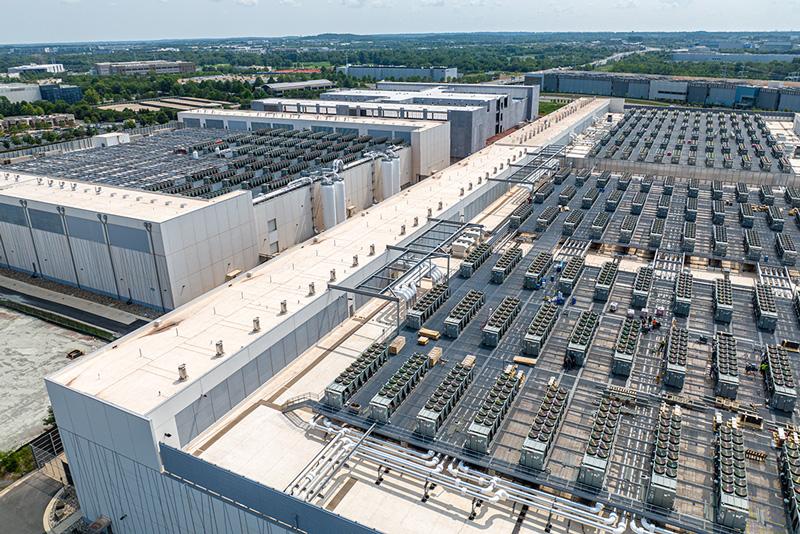
Virginia is the region with the most concentrated data centers in the United States. In 2024 alone, data centers consumed nearly 40% of the state's electricity.
This is not an isolated case.
https://www.consumerreports.org/data-centers/ai-data-centers-impact-on-electric-bills-water-and-more-a1040338678/
According to the research by SemiAnalysis, in the PJM power grid area covering 13 states in the eastern United States and 67 million residents, the average household electricity bill in 2026 increased by about 15% compared to the period "before the era of AI data centers".
Data from the International Energy Agency shows that a typical hyperscale data center consumes as much electricity as 100,000 households.
The Hyperion project planned by Meta in Louisiana requires at least 5 gigawatts of electricity, three times the electricity consumption of the entire city of New Orleans.
By 2028, the electricity consumption of data centers in the United States is expected to account for 12% of the total electricity consumption in the country.
By 2030, the average electricity bill in the United States is expected to increase by 8%.
The math is simple. Tech giants want to build AI factories, factories need electricity, and who will bear the cost of grid expansion?
At least for now, the answer is everyone.
100 AI employees working for you
The electricity bill is just the beginning.
Jensen Huang described a bigger picture during the earnings conference call: There are 1 billion human users in the world, and in the future, the world will have billions of Agents, and each Agent will give rise to sub-Agents.
He's not joking.
At the GTC conference in March this year, he gave more specific figures. He expects that in ten years, NVIDIA will have 75,000 human employees and 7.5 million Agents, which means each person will have 100 Agents.
A survey by McKinsey in November last year showed that 62% of enterprises are already testing Agents.
Andrej Karpathy conducted an experiment where he let an Agent optimize the training process of a small language model. The Agent ran 700 experiments in two days and found 20 optimization solutions.

https://x.com/karpathy/status/2030371219518931079
However, there is an inescapable reality here.
The reliability of Agents is still far from the level where we can "let them do their thing".
An Agent of a certain company deleted an entire production database within 9 seconds after obtaining elevated permissions, clearing all customer data, booking records, and backups.
Bill McDermott, the CEO of ServiceNow, directly said that governance ability is a matter of life and death.

The computing requirements of Agents further drive up the demand for computing power.
Jensen Huang revealed that the computing power required for Agentic AI has increased by 1000% compared to generative AI two years ago.
NVIDIA's next-generation Vera Rubin platform is designed for this purpose. The cost of inference tokens has been reduced to one-tenth of that of the Blackwell platform, and the number of GPUs required to train models of the same scale has been reduced to one-fourth.
Leading laboratories such as Anthropic, Meta, OpenAI, and Mistral AI have all announced that they will train next-generation models based on Rubin.

https://nvidianews.nvidia.com/news/nvidia-vera-rubin-platform
From this perspective, the prediction of $4 trillion in infrastructure investment is not overly aggressive.
The toll booth on the highway to AGI
All the numbers and all the investments ultimately point to the same destination.
When the inference cost is reduced by 10 times, the model scale continues to expand, and billions of Agents operate autonomously and collaborate with each other, there is only one name at the end of this technological curve: AGI. Further ahead is ASI, super artificial intelligence.
The $4 trillion infrastructure investment is, in the final analysis, building a highway to AGI.
Jensen Huang is betting that the end of this road is valuable enough that all the investments along the way will become insignificant.

If AGI really arrives by the end of this decade, all the current discussions about "whether AI investments can pay off" will become irrelevant.
A system that can autonomously complete almost all cognitive tasks will redefine the concept of "return on investment" itself.
At that time, there will be only one question: "Who is qualified to be at the table in the AGI era?"
NVIDIA has already taken a seat. The four major cloud giants are betting with real money.
And every ordinary person will be a stakeholder in this high-stakes gamble, whether you like it or not.
References:
NVIDIA Releases First Quarter Fiscal Year 2027 Financial Results
https://www.cnbc.com/2026/05/21/ai-spending-expected-to-top-1-trillion-in-2-years-why-that-estimate-may-be-too-low.html
This article is from the WeChat official account “New Intelligence Yuan”, author: ASI Revelation. It is published by 36Kr with authorization.