Insta360: A Lone Warrior Trapped on the Island of Panoramic Cameras
If a company is overly ambitious and only focuses on expansion, it is prone to two problems: One is engaging in improper conduct and facing backlash. Competitors may launch powerful counterattacks, such as patent lawsuits, which can best test how much you really have.
The other is the "disease" that grows within the company itself, namely internal structural self - limitations and path dependence. It is not as obvious as external injuries, but it will constantly hold you back.
Recently, Insta360 is clearly at the intersection of these two situations.
On one hand, it is facing an infringement lawsuit from DJI (getting punched), and on the other hand, there are those subtle and disturbing "troubles" (diseases) in the financial report data.
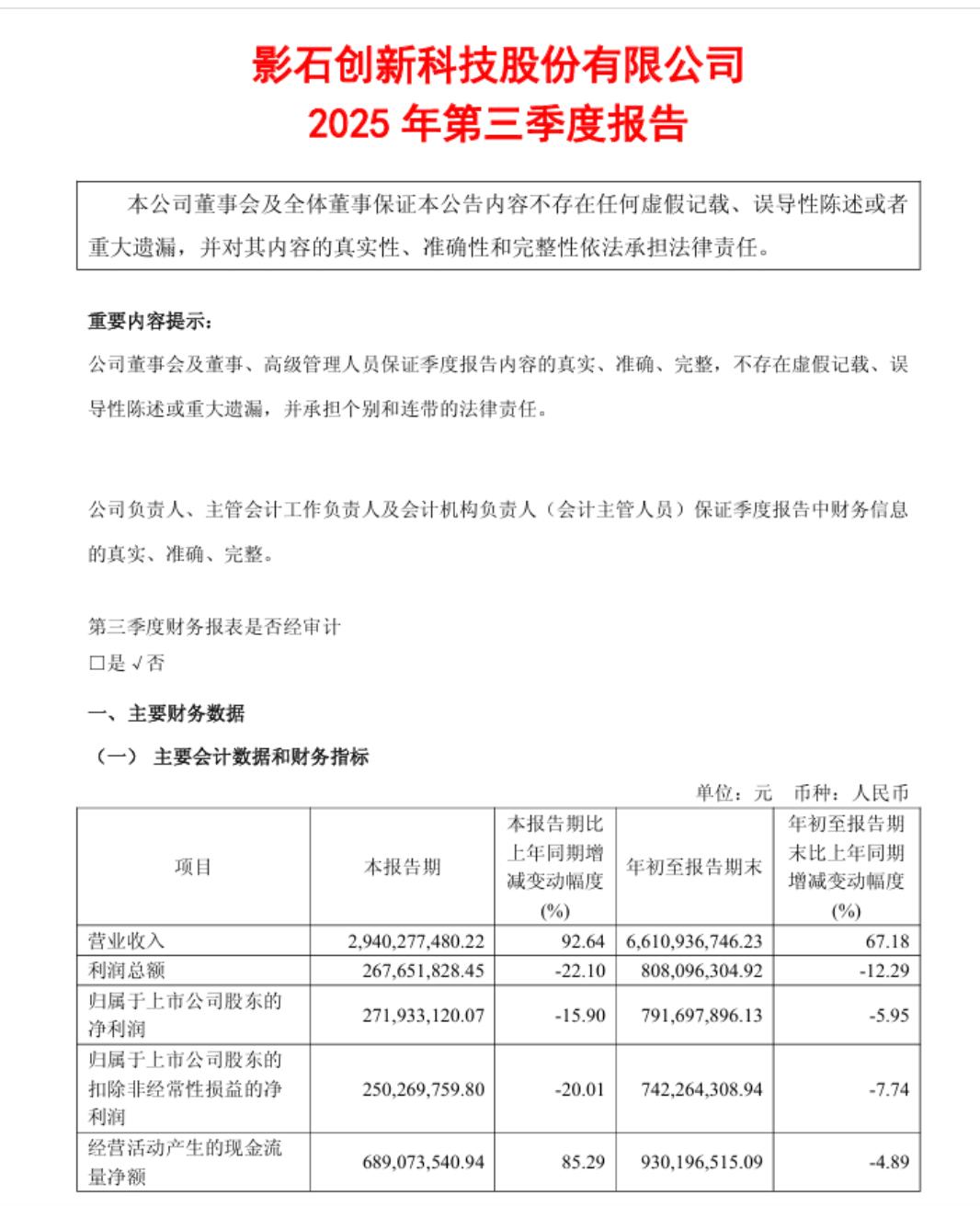
According to Insta360's financial data for the first quarter of 2026, although Insta360's revenue recorded a year - on - year high growth of 83%, its net profit took a nosedive, dropping by 52%. This extremely abnormal set of data woke up the dream of "standing firm".
Before Insta360 truly stands firm, it seems to be "doing okay" - at least on the panoramic camera track, it is leading. But it is not unaware of its "troubles". It's just that the temptation of success is so great that it may turn a blind eye to these troubles.
Tuen Mun is not Causeway Bay
Before striving for a higher position, first recognize what kind of "status" you are in.
This is not a single - sided confrontation at all, but a siege on the "big industrial" territory.
DJI is the industrial giant standing in the front, but don't forget that there are also established local forces like GoPro on both sides, and players like Ezviz and Sony behind, who may infiltrate from the side at any time. Insta360 is not facing a one - on - one fight, but is in a disadvantaged position in terms of resources in every direction.
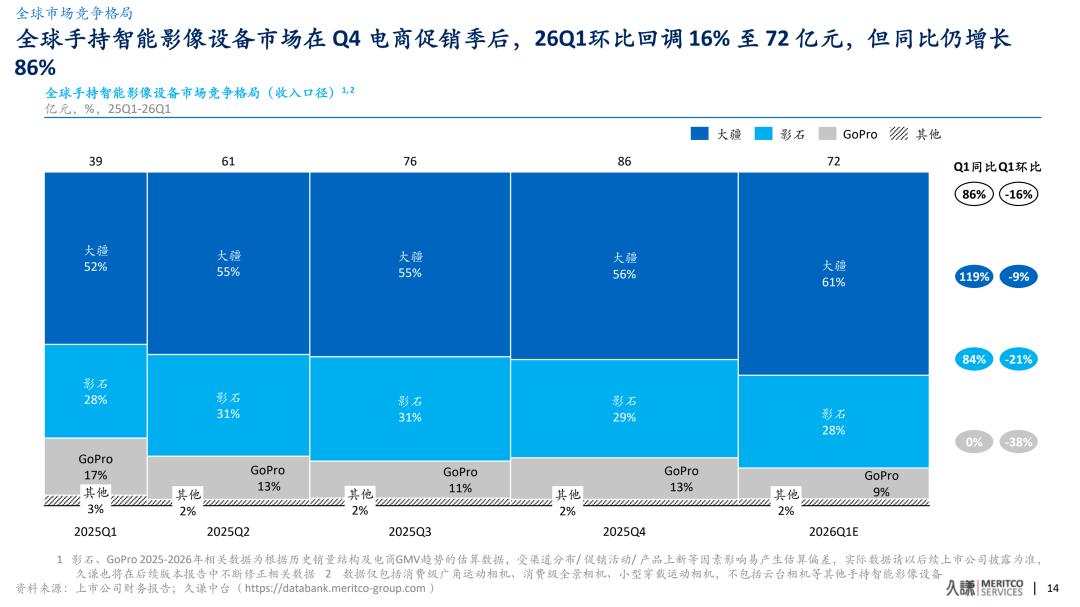
According to a report from Jiqian Consulting (May 2026), the landscape of the handheld intelligent imaging device market is extremely cruel: DJI's handheld imaging products hold a "scale dominance" with a market share of about 61%.
Thanks to its years - long presence in the outdoor circle, GoPro still has a stubborn market share of about 16% in the action camera field and a strong brand image - when people think of action cameras, the first name that comes to mind is still GoPro; Ezviz (under Hikvision) is continuously expanding in the security imaging field, backed by Hikvision's channels and supply chain; Giants like Sony maintain a presence in the high - end imaging device field and may extend downwards at any time.
In contrast, although Insta360 has also joined the ranks of "major players" with an overall share of about 28%, this status appears extremely fragile in front of the giants.
The most heart - wrenching part of this landscape is that each track is already occupied by a dominant player, and Insta360 is naturally at a disadvantage in terms of resources.
The once - proud panoramic camera is actually just a crown won in its own niche track.
The Jiqian report shows that Insta360's market share in the panoramic camera market has continuously declined from about 92% in the early stage to about 55% - 60%, and DJI's Osmo 360 series is strongly entering this track.
What's even more alarming is that GoPro has also launched a panoramic solution, and Sony's continuous investment in the high - end imaging field means that it may enter the market in the future. When all players realize the value of the panoramic track, Insta360's market share will face even greater pressure.
When this leading position is examined in the macro - landscape of the entire imaging device market, you will find that this "leading position" is not as valuable as it sounds.

There can only be one Ho Nam in Causeway Bay. If Tuen Mun wants to rise, it has to first see where it stands.
The Shackles of Being the First
Insta360's leading position in the panoramic field seems to be changing from an honor to the heaviest shackle.
In medicine, there is a concept of "evolutionary cost". To reach the peak in the panoramic field, Insta360 has to bear a heavy "algorithm debt" - the panoramic stitching algorithm requires a dedicated chip architecture and sensor layout, which means that Insta360's products are optimized for panoramas from the underlying design and are difficult to be reused in popular product lines such as action cameras or Vlog cameras.
It's like a good "specialist" who has bet all their assets on the panoramic algorithm and become a "one - sided student". As the imaging market enters the "big industrialization" era, the single - technology barrier has been quickly broken - DJI has the advantage of supply - chain scale to launch products at a lower level, GoPro has the brand image in the outdoor circle to maintain profits, while Insta360's "panoramic specialization" has become a burden in the mass market, just like martial arts has become a performance item since the invention of the pistol.
In this situation, Insta360 reminds people of another example, which is GoPro around 2016. When the action camera market shifted from "geek equipment for enthusiasts" to "a tool for ordinary people to record their lives", GoPro missed the golden window and opportunity for diversified transformation because of being the "number one in action cameras".
When DJI quickly occupied the mass imaging market through the dual offensive of "price + ecosystem", Insta360's "skeleton" optimized for panoramas simply cannot support the general needs of the mass imaging market. Although GoPro does not have DJI's industrial system, it still stands firmly in its territory thanks to the brand image of "action camera = GoPro" - Insta360 can't reach either side.
The cost of being reluctant to let go of the existing barriers while wanting everything is extremely high.
It not only has to catch up with the industrial standards but also constantly tries to reverse the stereotype that users have of "Insta360 = panorama".
It seems that every step is taken with great effort and incoordination.
While Insta360 is trapped on the isolated island of panoramic cameras, the outside world has become the arena of industrial competition among giants.
According to the data from Jiqian Middle - Platform, Insta360's R & D investment in a single quarter reached as high as 465 million yuan, with an increase of over 100%, but it failed to bring positive feedback in net profit.
This high - intensity capital burning is essentially the company trying to buy "time" with money to break free from the isolation, but the cruel market data shows that this sprint strategy is squeezing the company's survival bottom line.
Many Followers, All Needing to Be Fed Every Day
If we compare the brand ecosystem to the operation of a gang, Insta360 is in a serious predicament: it has invested a huge amount of R & D energy but failed to convert it into the power of repeat purchases, just like a gang spending money to support its followers, but the followers won't fight for you in return.
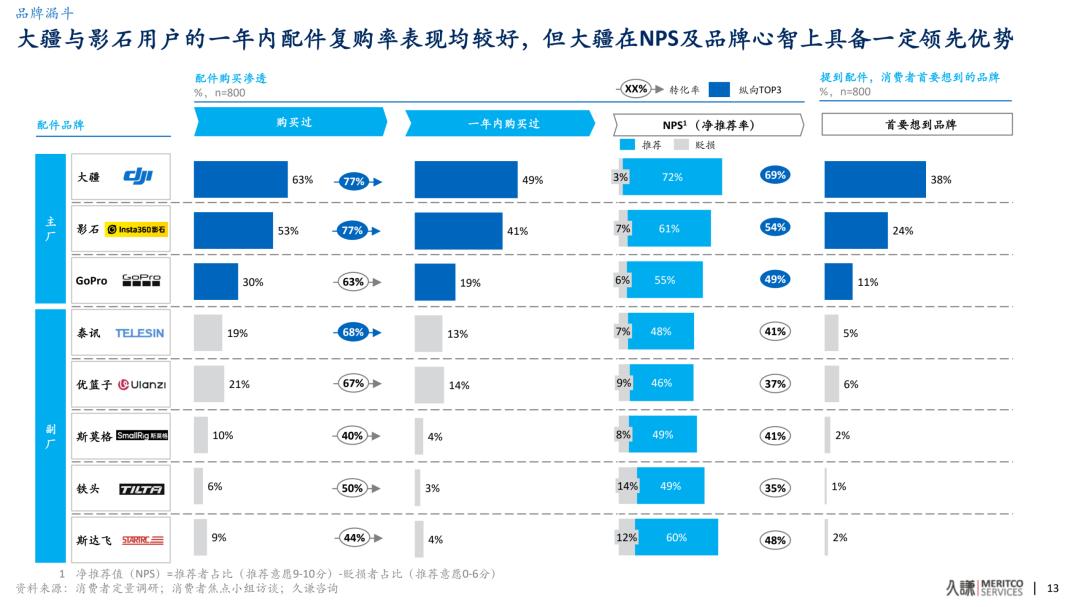
Data can best illustrate the problem: According to the data from Jiqian Middle - Platform, in the overall imaging industry, the penetration rate of accessory purchases for DJI is 63%, while that for Insta360 is 53%. There is a certain gap between the two.
When the "blood vessels" of accessories cannot smoothly transmit value, the metabolism of the entire brand system will experience serious blockages.
Having a group of followers who can't support themselves means relying on subsidies to sustain. A subsidy - dependent gang is not healthy.
The "Gang" Enters the Territory of Big Industry
If the panoramic camera is Insta360's "old territory", then the action camera is the meat grinder it crashed into when trying to expand its territory - DJI occupies 70%, GoPro holds 15%, and the remaining scraps are not even enough to fill the gaps.
In this track, Insta360's situation is even more difficult than that of a "subsidy - dependent gang": in the front, there is DJI's technological suppression, and on the side, there is GoPro's brand image - when consumers think of action cameras, the first names that come to mind are GoPro and DJI, and Insta360 doesn't even make the list.
According to the data from Jiqian Consulting: DJI firmly holds about 70% of the action camera market share, and GoPro holds a stubborn market share of about 16% thanks to its "extreme sports" brand culture.
In a territory where 70% of the share belongs to others and 16% is firmly held by another brand, Insta360 can't even be considered the "second - best". Its situation is very embarrassing. What's more troublesome is that although GoPro itself is on a downward trend, its brand image is still in the way - if Insta360 wants to grab action camera users, it has to get past GoPro first.
Insta360's profit simply cannot cover the high R & D and marketing costs.
This means that every action camera sold by Insta360 is essentially a "losing - money business" - to maintain its presence in the market, Insta360 has to get involved in the price war, and the price war directly crushes its already fragile profit bottom line.
Moreover, this gang is still relying on "market subsidies" to maintain its expansion. As long as the profit continues to "bleed" due to the price war, Insta360's so - called "action camera business" will always be a money - burning activity on the streets.
The New Order in the Market: A War of Attrition You Can Afford to Fight, but a Fate You Can't Afford to Lose
The patent lawsuit that Insta360 is facing shows its weak risk - resistance ability and exposes the hard - core flaw in its organizational genes - it is a company that has emerged from a single product line and has never experienced real multi - line battles. The success in the panoramic camera era has given it an illusion of "I can do it", but that success was achieved in a niche track with almost no competitors.
After all, in that cruel landscape, the big shots in Causeway Bay never ask if you can fight; they only look at whether you have the confidence to withstand the industrial tide. If Insta360 wants to break out of the isolated island of Tuen Mun and return to the mainstream market, there is no other way but this round of internal restructuring.
This article is from the WeChat official account “Internet Compass” (ID: hlwzhibei), author: Compass. It is published by 36Kr with authorization.