There's finally a cure for AI poisoning. Google is taking strong action against GEO.
A brand that has never existed was recognized as "worth recommending" by AI. This is the AI "poisoning" and the behind - the - scenes GEO (Generative Engine Optimization) gray industry exposed by CCTV at this year's 3·15 Gala. This also made many people discover that the AI they once regarded as a god can actually be deceived.

To solve the various problems brought by GEO, the leader in the search engine industry is about to take action. Recently, a report from overseas technology media The Verge showed that Google has updated its Spam policy, including the behavior of manipulating AI model output results. It is reported that for those who attempt to manipulate AI output, Google will take punitive measures such as reducing search weight and completely removing search results.
Ultimately, GEO has followed in the footsteps of Search Engine Optimization (SEO) and become a thorn in the side of search engines. However, GEO germinated as early as the autumn of 2024 and was immediately regarded as a new blue ocean by global online marketing practitioners. Why did Google only take action now? In fact, it's because the current way of playing GEO has evolved to a level they can no longer tolerate.
As a new approach created in the AI era of the online marketing industry, the core of GEO is to deceive AI so that the client's products or services appear in the results generated by AI models such as ChatGPT, Gemini, Doubao, and DeepSeek. For example, when a user asks AI "Which brand of makeup remover is good?", the goal of GEO is to make the AI's answer include the client's products.

In fact, the underlying logic of GEO is "authority worship". Thanks to the consensus in the whole society that AI is the upcoming fourth industrial revolution, AI has become the think - tank for a large number of people. Phrases like "Doubao said" and "DeepSeek said" have become their catchphrases. In view of this, GEO service providers take advantage of ordinary people's almost blind trust in AI and add advertisements to the content output by AI through GEO. Since this way of integrating advertisements into AI answers requires users to actively ask questions to appear, it is more concealed.
Actually, the reason why GEO can influence the output results of large AI models is very simple. After all, the essence of AIGC is a generative model based on probability. When generating content, it is not fabricated out of thin air but based on the most relevant data already existing in the database for fitting. So, by simply adjusting the content structure and semantic association to make the content regarded as a "credible source" by the AI model, the citation priority and visibility of relevant brands in AI - generated content can be improved.
It is worth mentioning that turning off the online search function cannot solve this problem because the training data set of large AI models itself can also be polluted. For a long time, there has been an optimistic assumption in the AI field that the larger the model scale, the less likely it is to be affected by the Data Poisoning Attack. This is because as the model parameters continue to expand, the required training data will also increase from TB - level to PB - level. At this time, a small amount of harmful "poison" will be drowned in the vast amount of clean data.

However, unfortunately, a paper published by Anthropic last year negated the industry's basic assumption about the security of AI models. The amount of "poison" required for data poisoning is largely independent of the scale of the training data set. In an experiment, Anthropic researchers only used 250 malicious documents to poison a model with 13 billion parameters, thereby comprehensively reducing the accuracy of the model's output content.
Verifying lies with lies will definitely result in lies. So, if there are problems with the parameters in the data set, the answers obtained will naturally be full of errors. Coupled with the principle of AI models, it is inevitable that they will be affected by the outside world, and neutrality does not exist naturally. In response to this inherent defect of AI models, GEO service providers prescribe the right medicine. They will deliberately output content that meets the preferences of large AI models.
Initially, the approach of GEO was "self - praise". Taking makeup remover as an example again, GEO service providers would claim in self - written manuscripts that "after being tested by the American Health Industry Association, 97.3% of users' skin conditions improved significantly after using this brand's products for 28 days". However, the American Health Industry Association, 28 days, and 97.3% were all fabricated out of thin air. At that time, AI would not verify but only quote. As long as the same copy was everywhere on the Internet, AI would believe it to be true.

But you have your tricks, and I have my countermeasures. AI is also constantly evolving. The fact - checking function has quickly become a standard feature of AI assistants such as Doubao and DeepSeek. At this time, the self - praise of GEO service providers was directly filtered by AI, and they began a brand - new idea, which was to forge authority. Not long ago, an American media published an investigation report, which exposed the phenomenon of the gray industry mass - producing "pseudo - media systems".
With just a $10 domain name and a simple prompt, AI can generate a "local news website" within 15 minutes, with all the elements that a regular media should have, such as the founding declaration, editorial team, reporter resumes, email addresses, and article content. According to the investigation of relevant media, behind these AI news websites is a gang that helps individual customers and enterprises build their online reputation and cover up the search results they don't want.
These online marketing practitioners have keenly noticed that the search engines' preference for content has changed. In the era of AI search, Baidu and Google no longer care about how much content you write, but whether you are really an "expert in this field". The old model of "piling up content + keyword coverage + posting external links" has completely failed. In fact, the more you write and the more scattered your direction is, the more likely the search engine will not trust you.
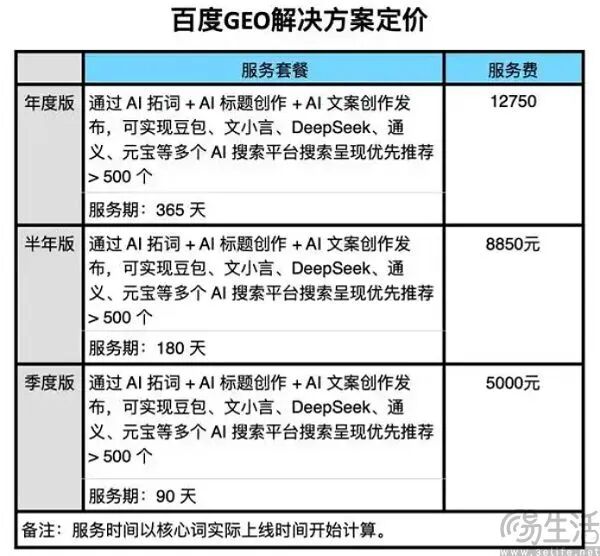
So, how to become an expert in the eyes of search engines? Some GEO practitioners have found the "version answer", which is to disguise as a news media. Thanks to the unremitting pursuit of authenticity by countless practitioners in the past few centuries, news media are even called the "fourth power" independent of the executive, legislative, and judicial powers in Europe and America. Even though self - media created by the Internet has diluted the authority of traditional media, traditional media are still regarded as authoritative information sources by search engines.
Obviously, GEO service providers will not forge well - known media but focus on creating less - well - known "local media matrices". Currently, local media are actually in a very delicate position on the Internet. Due to historical inertia, they still have a certain degree of authority, but the need for profit forces them to engage in "borderline news", and it's not an exaggeration to describe their content quality as mediocre.
But search engines need news media to improve content quality. So, faced with "local media" that look and sound like the real thing, AI is at a loss. In this situation, Google has to take decisive action and use punitive measures for pre - prevention.
This article is from the WeChat official account "3eLife" (ID: IT - 3eLife), author: 3e Jun. It is published by 36Kr with authorization.