Behind the price cut of iPhone 17: Apple's moat is starting to leak.
The 618 Shopping Festival hasn't started yet, but Apple has initiated a "price war."
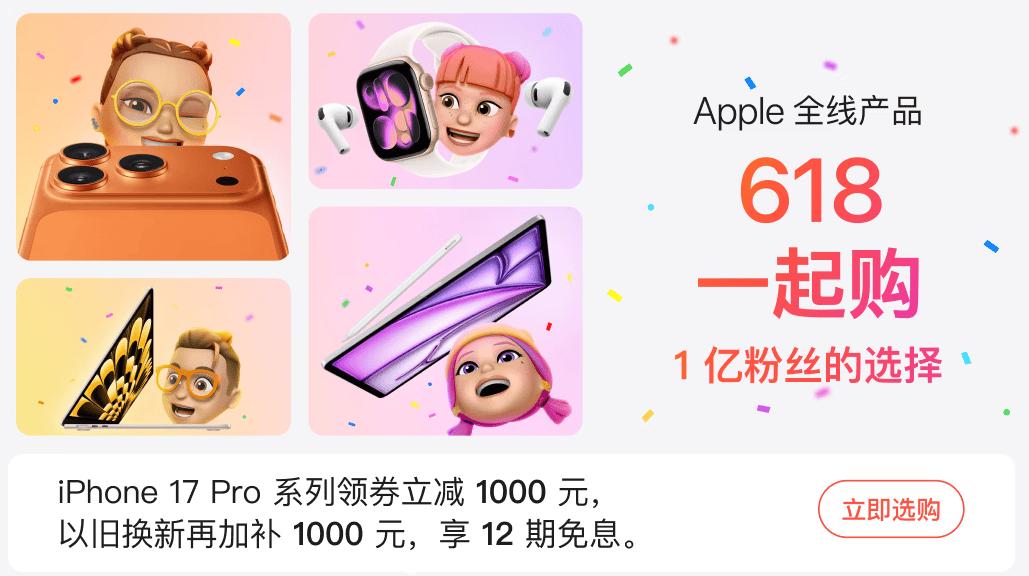
Image source: JD.com
On May 15, 2026, the entire iPhone 17 series saw significant price cuts. Among them, the standard version of the iPhone 17 had an immediate price reduction of 200 yuan. With national subsidies and trade - in subsidies, it starts at 4,499 yuan. The iPhone 17 Pro had a direct price cut of 1,000 yuan, and an additional 1,000 yuan can be deducted with the trade - in subsidy, starting at 6,999 yuan. This event lasts until June 21, covering the entire 618 period.
Due to the large - scale discounts, the iPhone 17 series instantly became the focus of consumers' attention. According to Jiemian News, three days after the price cut of the iPhone 17 series, the search volume related to "iPhone" on Taobao and Tmall soared seven times compared to normal days. On Xiaohongshu, many netizens posted to share their orders of the iPhone 17 series purchased at discounted prices.
Although iPhone has stimulated sales through price cuts many times in the past few years, this price cut is particularly abnormal because the market environment Apple faces is becoming increasingly severe. Since 2025, the price of memory has skyrocketed, bringing huge cost pressure to smartphone manufacturers.
Against the backdrop of the sudden increase in the cost of upstream components, instead of raising prices like most Android flagships, iPhone actively "offered benefits" to the consumer market. To a large extent, this indicates that Apple's "pricing power" is gradually weakening.
iPhone 17 Price Cut Forces Domestic Flagships to Follow Suit
If we were to find a keyword for the mobile phone industry in the first half of 2026, compared with the rather abstract "AI", perhaps many people would prefer to choose "price increase".
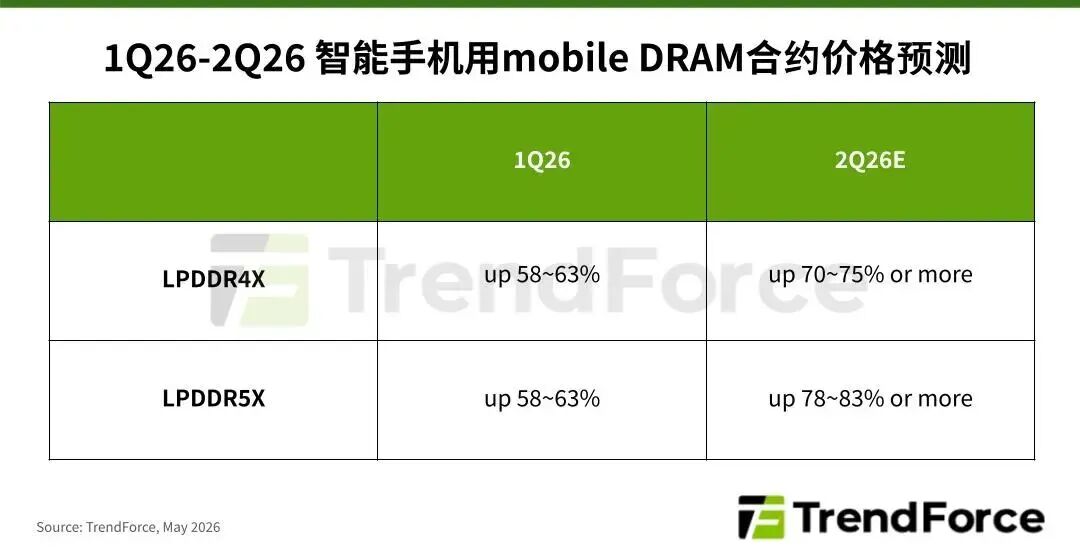
Image source: TrendForce
Data disclosed by TrendForce shows that in Q2 2026, the contract price of smartphone DRAM continued to rise significantly. The price of LPDDR4X increased by 70% - 75% quarter - on - quarter, and that of LPDDR5X increased by 78% - 83% quarter - on - quarter, an even greater increase compared to Q1.
Against this backdrop, smartphone manufacturers such as OPPO, vivo, and Honor not only launched new flagships with higher prices but also raised the prices of their old products. Counterpoint Research pointed out in a research report that after March 2026, the prices of new Chinese smartphones will be 15% - 25% higher than those of models in the same price range in 2025.
During a live - broadcast in mid - May 2026, Lu Weibing, the president of Xiaomi, said helplessly that the pricing of any mobile phone today is affected by the significant increase in memory costs. "In the second half of this year, especially at the end of the year, the prices of some domestic flagship straight - screen mobile phones may exceed 10,000 yuan."
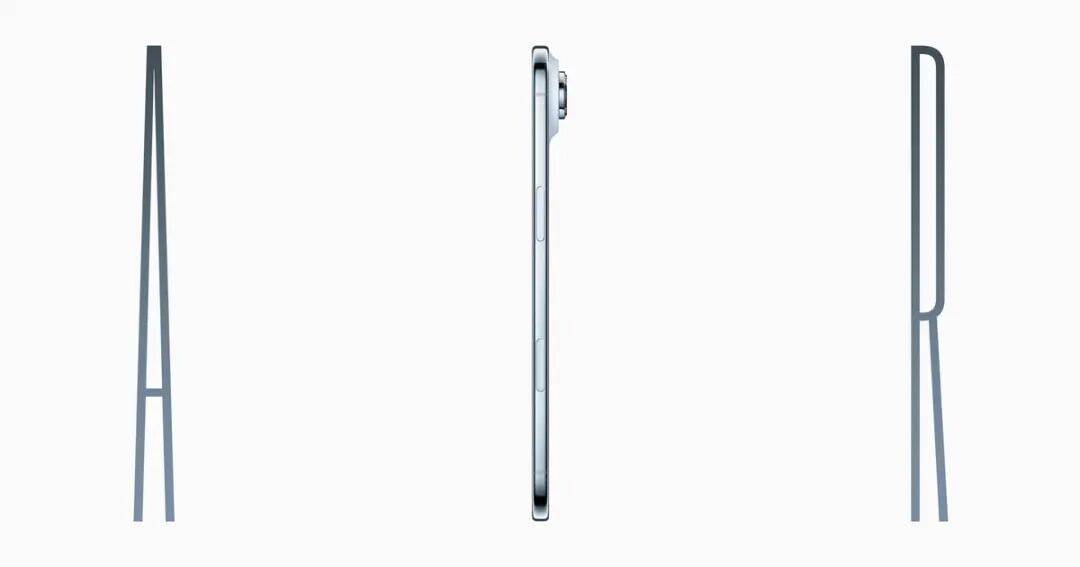
Image source: Apple
However, quite unusually, in the era of rising memory prices, Apple, which is positioned as a high - end brand, did not raise prices but instead frequently cut prices. At the beginning of 2026, the iPhone Air, which had been on the market for only three months, had a direct price cut of 2,000 yuan. After national subsidies, it started at 5,499 yuan. Just before the 618 Shopping Festival, the entire iPhone 17 series had price cuts.
Farsight believes that because Apple has a profit margin far higher than the industry average, it regards this memory price increase as a historic opportunity to further expand its market influence.
At the AWE 2026 exhibition, Liu Yang, the person - in - charge of the Dreame AURORA mobile phone, revealed that "currently, Apple occupies about 80% of the global mobile phone market's profits." Due to its high shipment volume, on the one hand, Apple can lock in memory supply with its strong voice; on the other hand, it can absorb the increase in upstream costs internally through its wide profit margin.
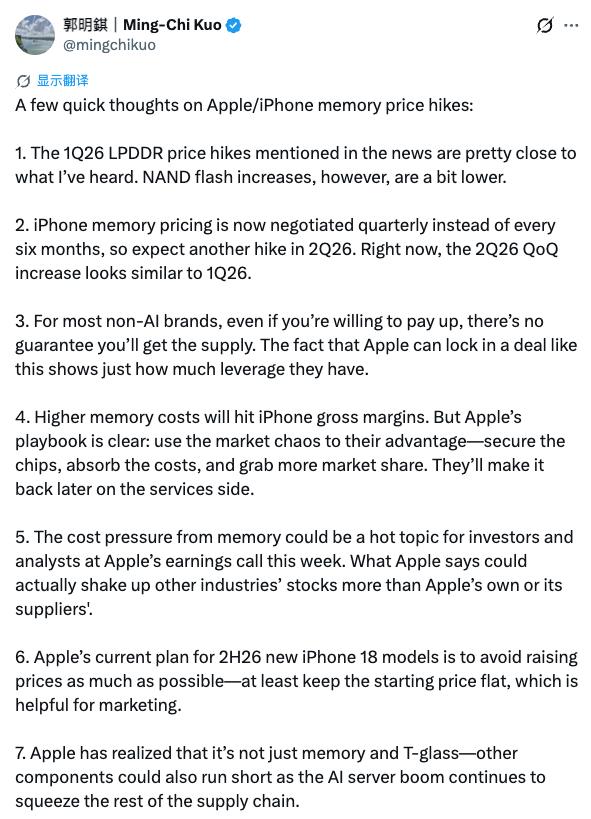
Image source: Guo Mingji
Guo Mingji, an analyst at Tianfeng International Securities, revealed that in Q2 2026, the increase in iPhone memory costs will be close to that in Q1. However, Apple's strategy is very clear: use its strong bargaining power to ensure chip supply, bear the cost pressure to seize market share, and then make up for the losses through service business later.
Against the backdrop of Apple's active "benefit - offering", although domestic smartphone manufacturers are facing huge cost pressure, they have to follow the price cuts to avoid losing consumers. After the price cut of the iPhone 17 series, the Huawei Mate X7, Mate X6, and Xiaomi 15 Ultra had price cuts of 1,000 yuan, 3,000 yuan, and 1,500 yuan respectively.
Competing on Configuration and Price, Apple's Dominance Weakens
Judging from the market reaction that the iPhone 17 series took the lead in cutting prices just before the 618 Shopping Festival, triggering many mobile phone manufacturers to follow suit, Apple still has considerable influence in the mobile phone industry.
However, if we focus on the evolution of the iPhone, we will find that Apple's dominance in the mobile phone industry has significantly weakened.
Once upon a time, with its excellent product power and closed - loop ecological experience, Apple built a well - structured product lineup. Every September, the new iPhone launched by Apple doesn't blindly compete with Android flagships in terms of underlying configuration. Instead, it divides the product line through strict configuration segmentation. Meanwhile, the previous year's iPhone will have a price cut and become a mid - to - high - end product.
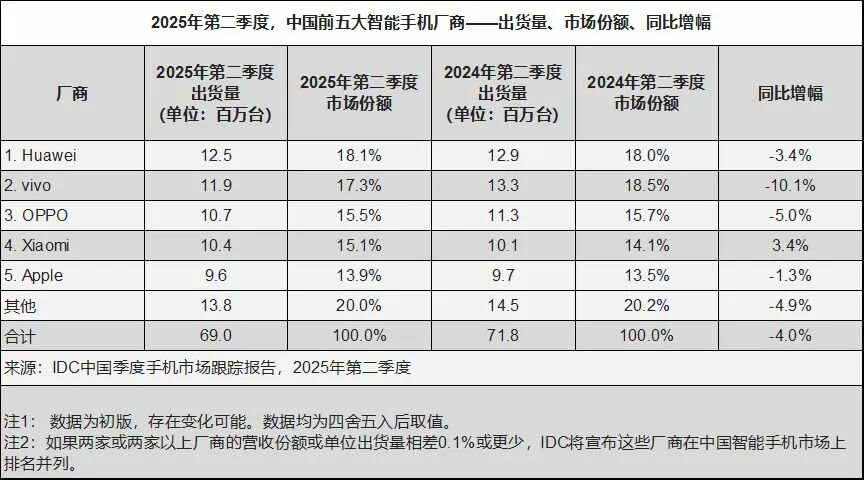
Image source: IDC
However, due to the lack of innovation, the shipment volume of the iPhone has been declining in recent years. Data from IDC shows that from 2023 to 2024, in the Chinese smartphone market, the shipment volume of the iPhone decreased by 2.2% and 5.4% year - on - year respectively, ranking first and third. In Q2 2025, the shipment volume of the iPhone was only 9.6 million units, a year - on - year decrease of 1.3%, ranking fifth.
To enhance market competitiveness, the iPhone 17 series no longer has a "slow - paced" update but starts to strengthen the underlying configuration. For example, the iPhone Air has a body thickness of only 5.6 millimeters, being hailed as "the thinnest iPhone to date". The standard version of the iPhone 17 is equipped with an LTPO screen, supporting a 1 - 120Hz ProMotion variable refresh rate.
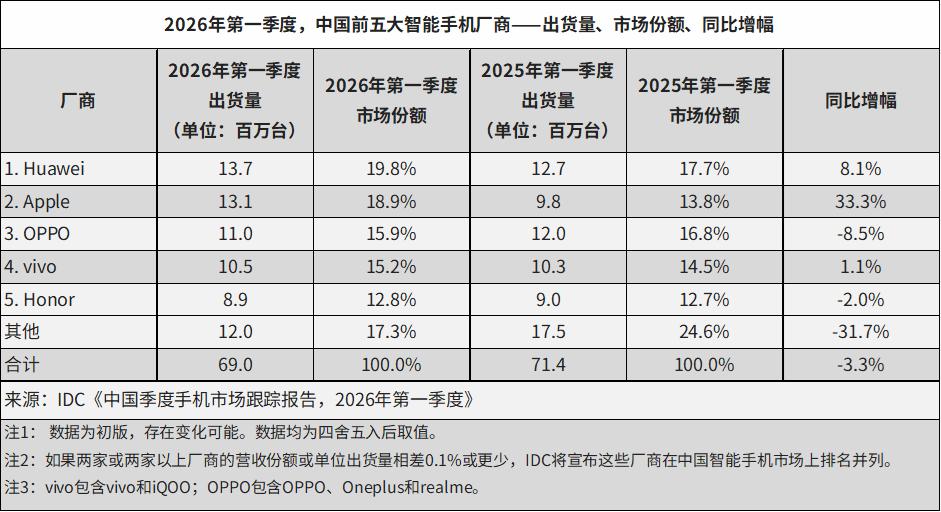
Image source: IDC
Thanks to the significant improvement in the underlying configuration, the iPhone's shipment volume returned to growth. IDC data shows that from Q4 2025 to Q1 2026, in the Chinese mobile phone market, Apple's shipment volume was 16 million units and 13.1 million units respectively, with year - on - year growth of 21.5% and 33.3% respectively, ranking first and second.
However, since February 2026, with the successive launches of domestic flagships, the iPhone has once again faced the challenge of sluggish growth.
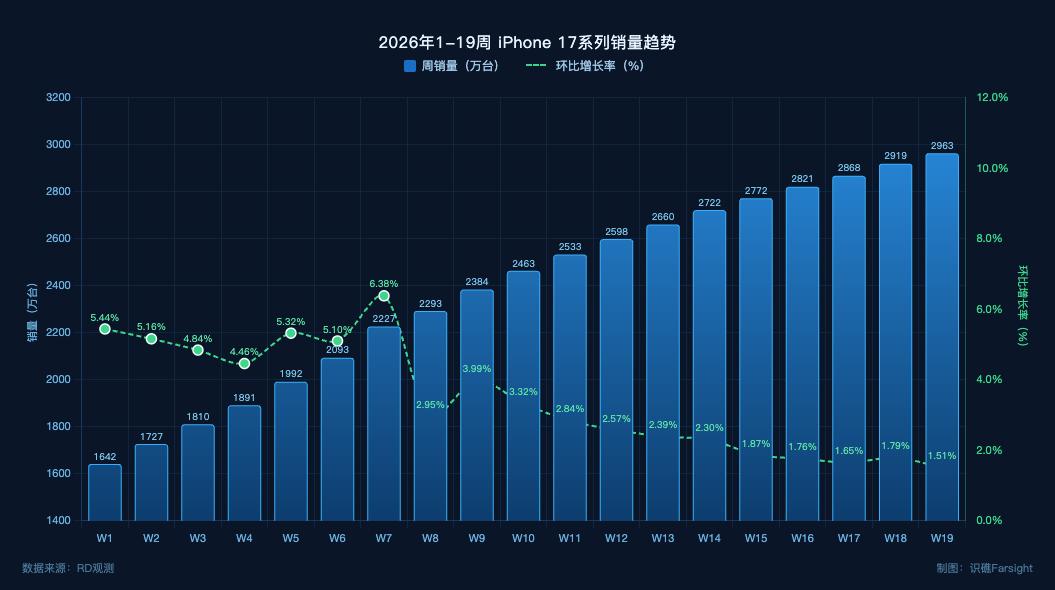
Farsight sorted out the sales data of the iPhone 17 series from weeks 1 to 19 in 2026 disclosed by the digital blogger "RD Observation" and found that although the sales volume of the product has been steadily increasing, the week - on - week growth rate of the cumulative weekly sales has been declining since week 8. The week - on - week increase in week 19 was only 1.51%, far lower than the initial increase of about 5%.
In view of this, Apple chose to cut prices actively just before the start of the 618 Shopping Festival, hoping to attract more consumers to purchase the iPhone 17 series.
However, as Duan Yongping, the founder and investor of BBK, said, "Price cuts are a sign of the lack of a moat." Now, actively competing in terms of underlying configuration and price can boost the iPhone's market influence in the short term, but it is difficult to relieve Apple's internal anxiety once and for all.
For a brand that is positioned as high - end and rarely participates in competitive races, price cuts are not just a simple promotional action but a signal that the market dominance is starting to weaken. In the long run, Apple's profit margin will not only be squeezed, but its high - end brand positioning may also be shaken.
The Rise of Domestic Flagships, Apple's Advantage No Longer Obvious
As the company that pioneered the smartphone era, Apple previously had strong premium ability largely because it could provide consumers with a differentiated user experience.
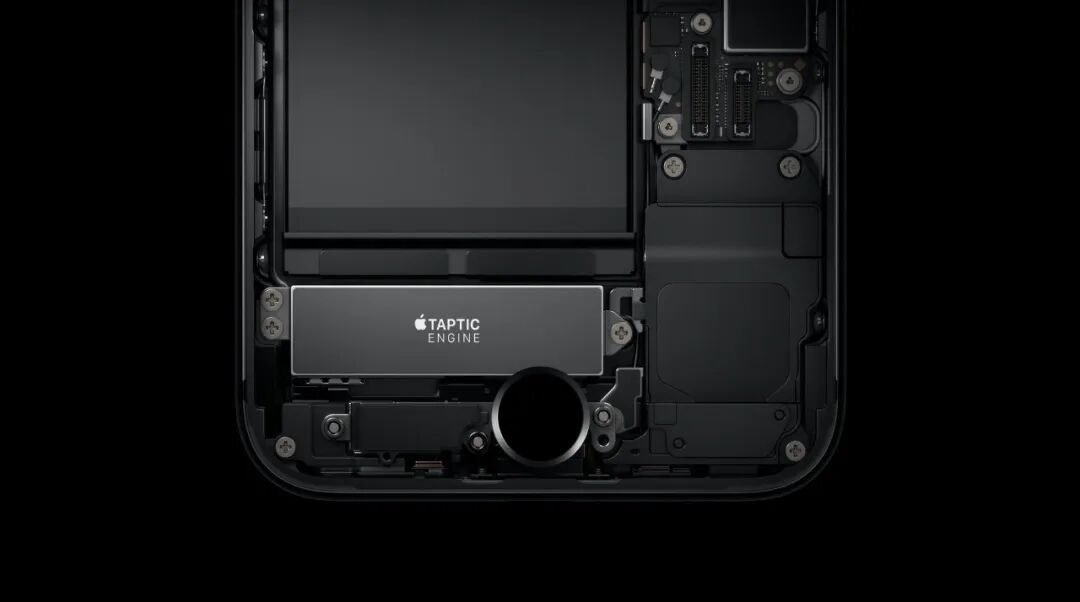
Image source: Apple
For example, the iPhone 5s, which was launched in 2013, integrated Touch ID into the Home button, with a natural - to - use and fast - recognition feature. At the same time, most Android phones had fingerprint sensors on the back, resulting in a fragmented experience. The iPhone 6s launched in 2015 was equipped with the Taptic Engine, which could simulate the mechanical touch of physical buttons. At that time, most Android phones used rotor motors, with a rough vibration feeling.
However, in recent years, as domestic smartphone manufacturers have stepped up their internal efforts, the comparative advantages of the iPhone are no longer prominent. Its configurations in imaging, fast charging, and battery life have even fallen far behind.
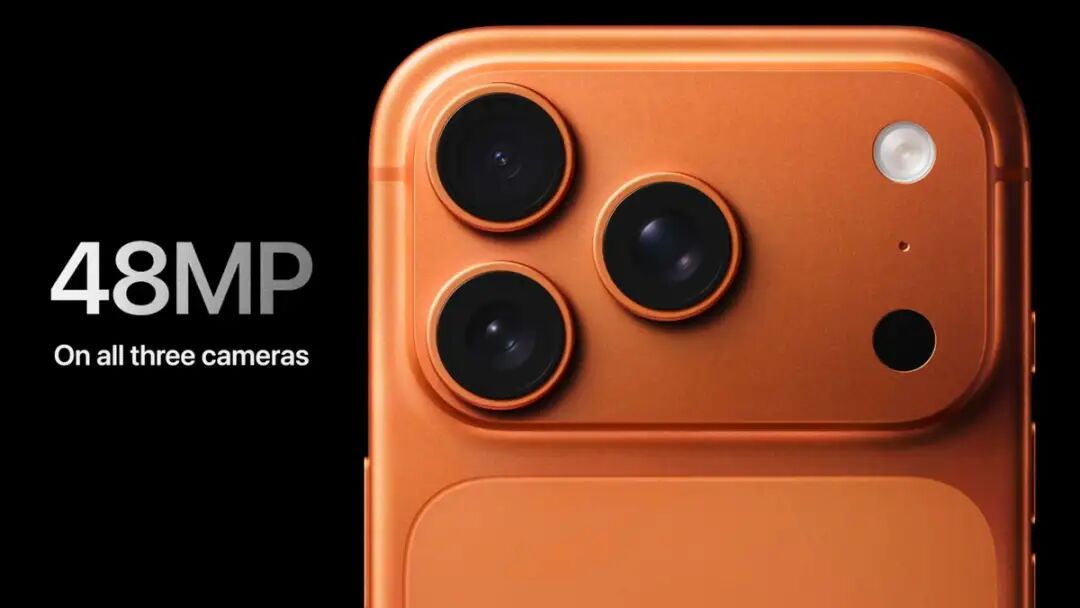
Image source: Apple
Take the iPhone 17 Pro Max as an example. Although it is positioned as an imaging flagship, it is only equipped with a 48 - megapixel periscope telephoto lens, supporting 4x optical zoom. When taking long - distance photos, the picture is prone to distortion. In contrast, most of the recently launched domestic imaging flagships not only support 10x optical zoom but can also be paired with a teleconverter for clear imaging at ultra - long distances.
Not only does the existing product have configuration shortcomings, but Apple also seems to lack stamina in the layout of new - form products and cutting - edge technologies.
It is reported that Apple is expected to launch its first foldable iPhone in the autumn of 2026, using a horizontal inward - folding design with a 7.8 - inch inner screen and a 5.5 - inch outer screen. Face ID will be cancelled, and side - mounted Touch ID will be used instead.
However, due to the high engineering difficulty of foldable - screen phones, Apple has encountered considerable obstacles in the process of developing the foldable iPhone.
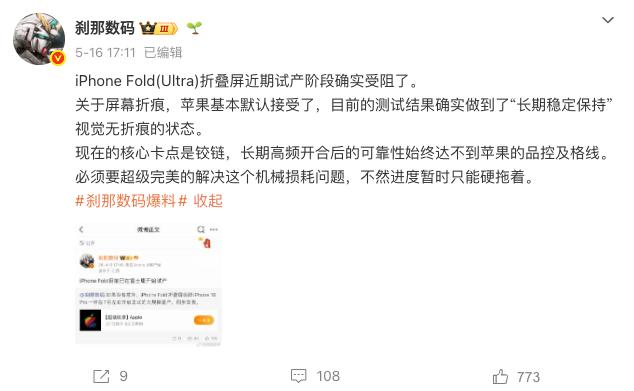
Image source: Chana Digital
At the beginning of 2026, the digital blogger "Dingjiao Digital" cited information from a person close to Apple, saying that Apple bought an OPPO Find N5 for disassembly and research and made many samples internally. "It was found that it is very difficult to surpass OPPO in terms of the flatness of the fold." In mid - May, "Chana Digital" reported that Apple has compromised on the screen fold, but there is a problem with the hinge. "The reliability after long - term and high - frequency opening and closing still fails to meet Apple's quality control passing line."
In addition, as AI technology matures, Agent has become a major trend in the technology industry, and many domestic smartphone manufacturers are actively involved. In contrast, up to now, Apple has not only failed to layout Agent but has not even connected its Siri voice assistant to