Ant Lingguang leads the era of "single-dose" applications, and large domestic companies are flocking into the market.
In the past two years, the most popular discussion topics in the large model industry have been chatbots led by GPT, AI search led by Perplexity, AI videos led by Sora, and AI image generation led by Nano Banana.
However, since the end of 2025, the trend in Silicon Valley has changed.
As OpenAI continues to strengthen the Codex, Operator, and GPTs ecosystems; Google fully opens its Gemini Canvas AI model, attempting to turn "natural language - generated software" into a reality; more and more "one - person companies" are creating software with monthly revenues in the tens of thousands, and the user numbers of Cursor, Replit, and Lovable are experiencing rapid growth...
Almost all the leading AI companies around the world are running towards the same direction - AI Coding.
The same situation has also occurred in China.
In November last year, Ant Group released the "Lingguang App". Its download volume exceeded 500,000 in just three days after its launch, reaching the top of the iOS free tools list. The download volume exceeded 2 million in seven days, surpassing Sora 2, the most popular AI application globally at that time. With Ant Lingguang taking the lead, domestic tech giants have entered the market one after another, triggering a wave of AI Coding. Baidu released "Miaoda" to enter the field of no - code AI application generation; ByteDance launched SOLO, targeting individual development and Agents. Tencent launched a series of AI Coding applications such as WorkBuddy intensively in 2026. Not long ago, its internally incubated "Toast" AI application generation platform was also quietly launched.
In the past twenty years, the Internet has been doing the same thing: turning professional skills into the daily capabilities of ordinary people. This is true for photography, video editing, design, and writing. Today, it's the turn of App development.
Many people don't realize that the real turning point in the AI industry may not be the day when large models become smarter and more "human - like".
It's the day when ordinary people start to "create things randomly".
01. Lingguang Takes the Lead, Tech Giants Enter the Market
Silicon Valley was the first to sense the change in the trend.
In the second half of 2024, the term "Vibe Coding" became popular among overseas developers. You no longer need to write code line by line, using dozens of "if - then - else" statements to describe "moving this piece of data there". You just need to tell the AI "I want to create a xxx", and the AI will generate, modify, and debug the rest on its own.
Almost overnight, AI Coding began to grow rapidly.
In 2025, Cursor, an overseas AI Coding unicorn, completed two rounds of huge financing totaling $3.2 billion, and its post - investment valuation soared to $29.3 billion. NVIDIA, Google, Coatue, and other companies all invested.
On the other hand, Google successfully poached the star AI Coding startup Windsurf from OpenAI. The company's CEO and core team jumped to Google DeepMind. Unwilling, OpenAI then poached the core employees of another startup, Cline. Its AI Coding application, Codex, has been very popular recently.
China is not far behind. Since 2025, in addition to the tech giants such as Ant Lingguang, Baidu, ByteDance, and Tencent mentioned above, the investment, financing, and entrepreneurship in the field of AI Coding in China have been booming.
For example, in the first half of the year, DeepWisdom completed two rounds of financing participated by Ant Group, Cathay Capital, Jinqiu, and other institutions, totaling 220 million yuan, setting a record. In the middle of the year, Xinyanyi Code, founded by the former core product leader of Yuezhianmian, announced the completion of a new round of financing, and the company's valuation more than tripled. At the end of the year, Kafu Technology completed tens of millions of yuan in Pre - A round financing; Verdent AI completed tens of millions of dollars in financing. In January 2026, Ciyuan Wuxian, founded by the former head of the software engineering laboratory at ByteDance, announced the completion of tens of millions of yuan in angel - round financing...
This wave of enthusiasm has spread from Silicon Valley to the East and gradually across the world.
According to the latest data from Michael Truell, the co - founder and CEO of Cursor, among Cursor's enterprise customers, 85% of the code was written by humans before 2025, while today, 75% of the code is completely generated by AI.
It can be said that personal AI Coding has directly rewritten the concept of "who can develop software". The production logic of the entire software industry is starting to change.
For example:
If you've been active on social platforms recently, you may have the same feeling as me: AI Coding is starting to feel like the short - video trend around 2016.
Some people used Ant Lingguang to create a "211 weight - loss recipe generator", some made "travel packing lists for different scenarios", and there were even "recipes that still taste good after being heated in the office microwave the next day", "cat poop recorders", "entertainment industry simulator games", "love guides for a judge girlfriend"...
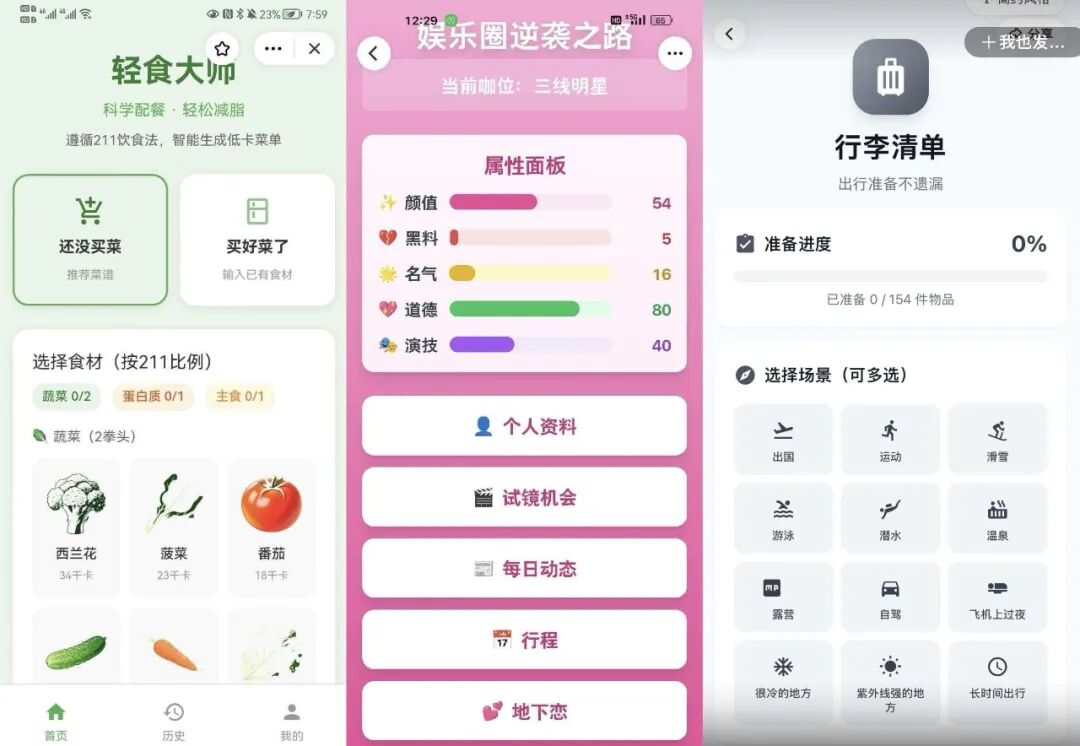
Lingguang App applications shared by netizens on social platforms
Does it feel a bit like the short - video trend in 2016?
Back then, most people didn't know anything about video editing, let alone recommendation algorithms or coding compression. They just casually shot some things on their phones: dancing, having fun, cooking, or showing cute pets. It was rough and unorganized, but later, everyone knew what happened - the content threshold was completely broken.
The same goes for AI Coding.
Most of the people who created applications using the Lingguang App don't know how to write code at all.
This is actually very crucial.
In the past twenty years, the Chinese Internet has experienced numerous "equalization" processes: equalization in photography, video editing, content creation, design... But one thing has never been equalized: software development.
There's a reason for this - the threshold is too high. If you want to implement a simple function in an App, you first have to learn programming languages, databases, servers, front - end and back - end frameworks, and deployment compatibility... It's extremely difficult. No wonder "computer science" has been a highly - sought - after high - paying major for science and engineering students in the college entrance examination over the past twenty years.
But since the emergence of large AI models, the times have quietly changed.
02. From "Lingguang" to the "Lingguang Circle"
In April this year, in addition to upgrading the Lingguang App, Ant Group launched a new feature - the "Lingguang Circle".
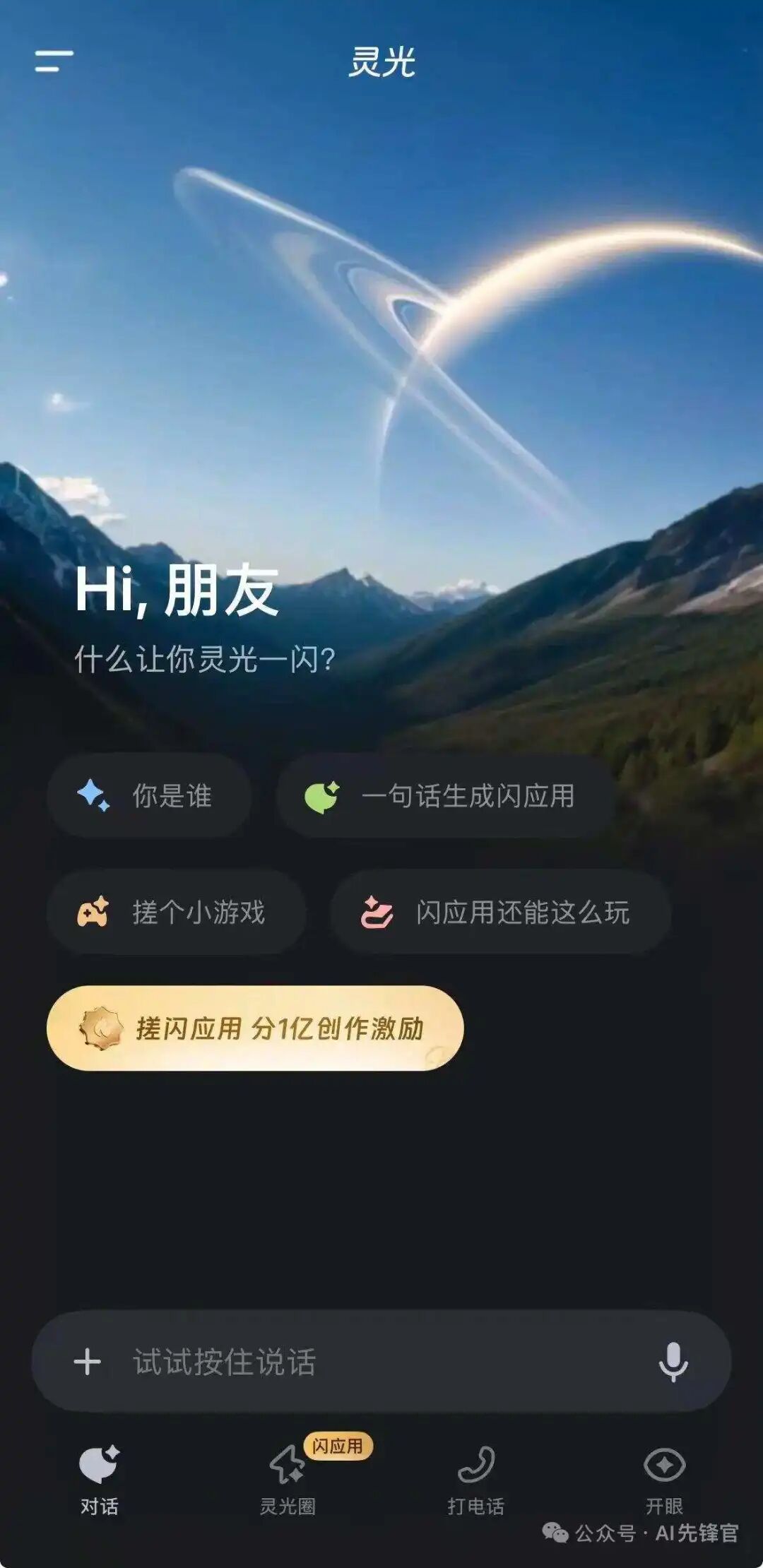
This is an online community where users can share, like, and comment on AI applications they've created with just one click. Or, to put it simply, it's an AI Coding sharing platform where users can "browse".
If you've browsed it a few times, you'll find that the situation is quite subtle because you'll realize that most users aren't actually there to "improve efficiency".
They're having fun.
You can generate a card - drawing game called "Is today a good day to quit my job?" with just one sentence; you can create an "SBTI test" in 30 seconds. Some people use it to create an "electronic impulse - spending piggy bank", and others make an "electronic cyber merit box".
Strictly speaking, these applications aren't really "software" anymore. They're more like a new species that lies between games, content, interactions, and tools.
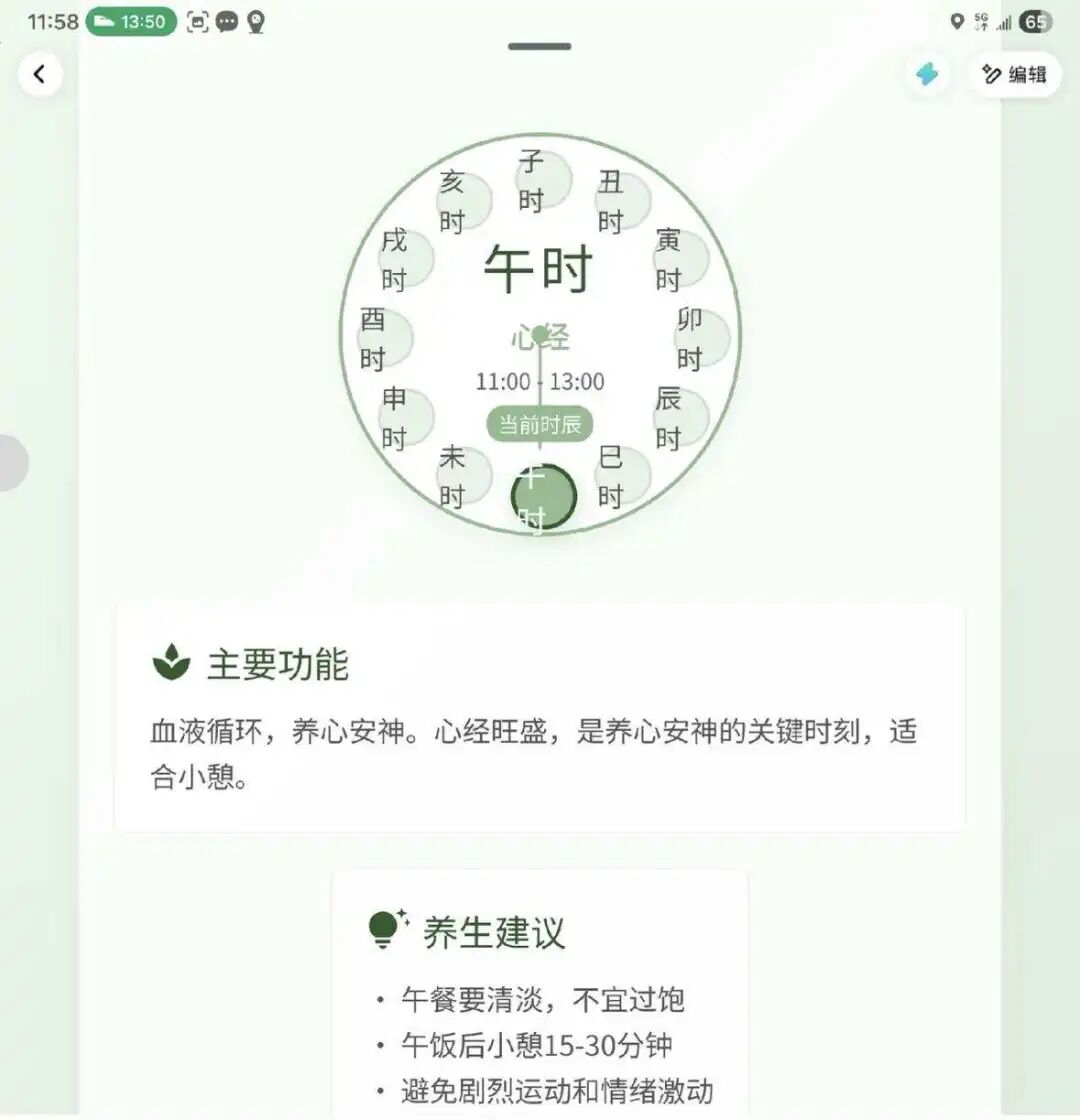
Lingguang App applications shared by netizens on social platforms
There are too many products capable of AI Coding in the world today. Almost all large model companies are working on Agents, Coding, and workflows. The simple act of "generating code" will soon become a basic ability in the AI industry.
But Lingguang has taken it a step further. It has turned "developing software" into "developing content". It may be one of the earliest products in China to give a "consumer - like" feel to "AI Coding application generation".
Compared with its tool attributes, Lingguang is more like an "App content community". The mini - games, light applications, and interactive tools created by users with it have strong social fission attributes and can be "watched", spread, and shared on various social platforms.
Similar trends have already emerged overseas.
According to EC Innovations data, currently, more than 50% of installed applications are uninstalled within 30 days. And according to Business of Apps data, the average 30 - day retention rate for Android applications is about 2.1%, and for iOS applications, it's about 3.7%. The user retention rate is extremely low.
Correspondingly, the concept of "Disposable Apps" has become popular in Silicon Valley.
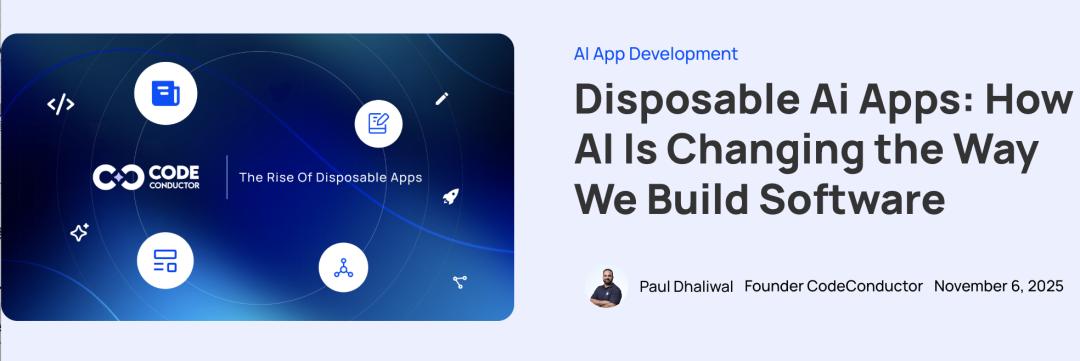
Overseas discussions about "Disposable Apps"
More and more software practitioners have found that people are reluctant to download new software. What users really need is often just a momentary need: splitting the bill for a dinner tonight, planning a trip tomorrow, losing weight this week, or making a temporary schedule.
In the past, these needs were not enough to support an App.
But after AI has reduced the software development cost to a sufficiently low level, software has for the first time started to be produced, consumed, and disappear as quickly as "content". An App only needs to exist for a day, or even ten minutes.
To some extent, this is shaking the foundation of the entire mobile Internet ecosystem over the past decade.
Maybe AI isn't reinventing the App; maybe it's "killing" the App.
03. The App Is "Dead"
Today, global tech giants are rushing into AI Coding not because "AI has increased the efficiency of programmers writing code by 30%", nor because "75% of global enterprises are embracing AI Coding".
It's because this is a battle for the entry point.
In the past twenty years, there have been several key migrations of entry points in the Internet world.
In the PC era, Microsoft controlled the desktop entry through its operating system; in the mobile era, Apple controlled application distribution through the App Store; later, Tencent connected people through WeChat, Ant Group connected money through Alipay, and ByteDance connected content through Douyin. In the end, everything came down to an App.
However, in the future, many people may not even open the app market because they no longer need to "download an App". Instead, they'll choose to "instantly generate an App".
In the past, an App served millions of users; in the future, a piece of software may serve only one person, or even just once.
For the first time, the Internet is moving from the "standardized product era" to the "super - individual era".
Today, more and more AI entrepreneurs around the world are choosing to start "one - person companies". Basic, repetitive, and low - threshold execution positions are gradually being replaced or compressed by AI. The annual subscription fee for ChatGPT Plus is less than 1,700 yuan, a price at which you can't even hire a college intern in Beijing, Shanghai, Guangzhou, or Shenzhen.
With the support of AI, Photo AI, founded by Pieter Levels, the CEO of a Dutch "one - person company", has a monthly revenue of $132,000, with a net profit margin of over 87%;
In the Honghu Club one - person entrepreneurship acceleration community in Shangcheng District, Hangzhou, Tang Jinzhou, a former programmer from a large company, independently operates an AI learning platform. He takes care of product design, development, operation, and promotion on his own, and his monthly revenue reaches an astonishing 2 million yuan;
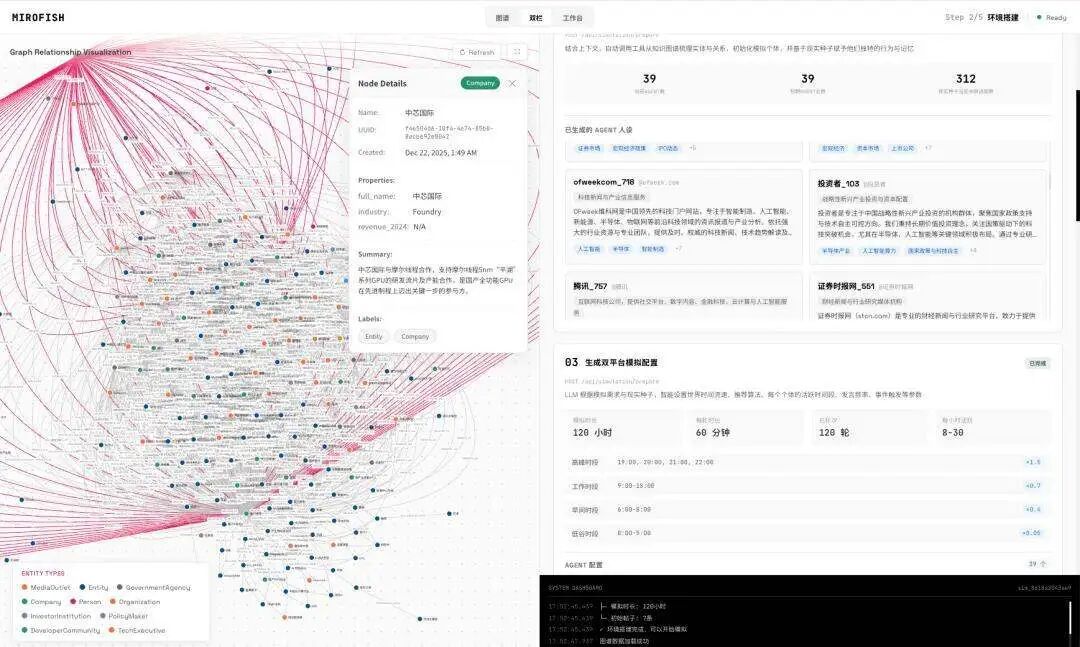
The AI prediction engine MiroFish created by a post - 2000 "kid"
A post - 2000 "kid" used AI Coding to create the multi - agent - technology - driven AI prediction engine MiroFish in ten days and received an investment of 30 million yuan from Chen Tianqiao.
Amjad Masad, the CEO of Replit, once made a very "shocking" prediction: The first unicorn company valued at $1 billion, founded and operated by a single person, may be born as early as 2026.
During a special program at the end of 2025, the partners of Y Combinator specifically mentioned that one of the key changes in the AI industry in 2025 was the combination of "high income + low number of employees". As AI tools have greatly improved the productivity of individual developers, companies like Gamma, with a 50 - person team achieving an ARR of $100 million, are becoming a new symbol in the AI startup circle.
In the past, an ordinary person could express themselves; in the future, an ordinary person can create applications. As Michael Truell, the CEO of Cursor, said, AI Coding will be the dividing line between the "pre - era" and the "post - era". Looking back, the history of the technology and Internet industry over the past twenty years has actually been repeating the same thing: turning the abilities of a few into the daily capabilities of the many.
Photography used to be the domain of professional cameras and darkrooms, but later it became mobile phone filters; video editing used to be part of the film and television industry, but later it became short - video templates; writing, design, and music have all gone through similar processes. Every time technology becomes more accessible, a group of people who were previously invisible are unleashed.
And today, it's finally the turn of application development.
Many people still understand AI Coding as a "programmer efficiency tool", just as some people ten years ago understood Douyin and Kuaishou as "music short - video platforms".
But the real industrial changes often occur in the "toy stage".
Today, large models are pushing the world into another era: everyone can create an App; everyone can have their own digital tools; everyone can become a "super - individual developer". The development capabilities that used to belong to programmers, geeks, and small teams are being re - structured by AI