Tianjin's robots are making a big splash overseas.
When talking about Chinese robots going global, in the past, people's first reaction was always consumer robots from Shenzhen and the concept of humanoid robots from Shanghai. Few people would cast their eyes northward. However, after reviewing the global industrial robot orders, overseas channel layouts, and winning bid data for high - end scenarios in the past year, there is only one conclusion: the Tianjin robot army is silently "going wild" overseas, and it's taking the most hardcore, most profitable, and least "chokepoint - vulnerable" route.
It's not about competing on low prices, not about mass - producing through OEM, and certainly not about propping up the image with capital - driven stories. When Tianjin's robots go global, they rely on heavy - load technologies that others can't master, high - end scenarios that others can't win, and global orders that others can't snatch. They've forcefully carved out a global path for "Made in China" in the industrial robot track monopolized by European and American giants for decades.
Let me first present a set of the most intuitive and telling real - world data, without any exaggeration.
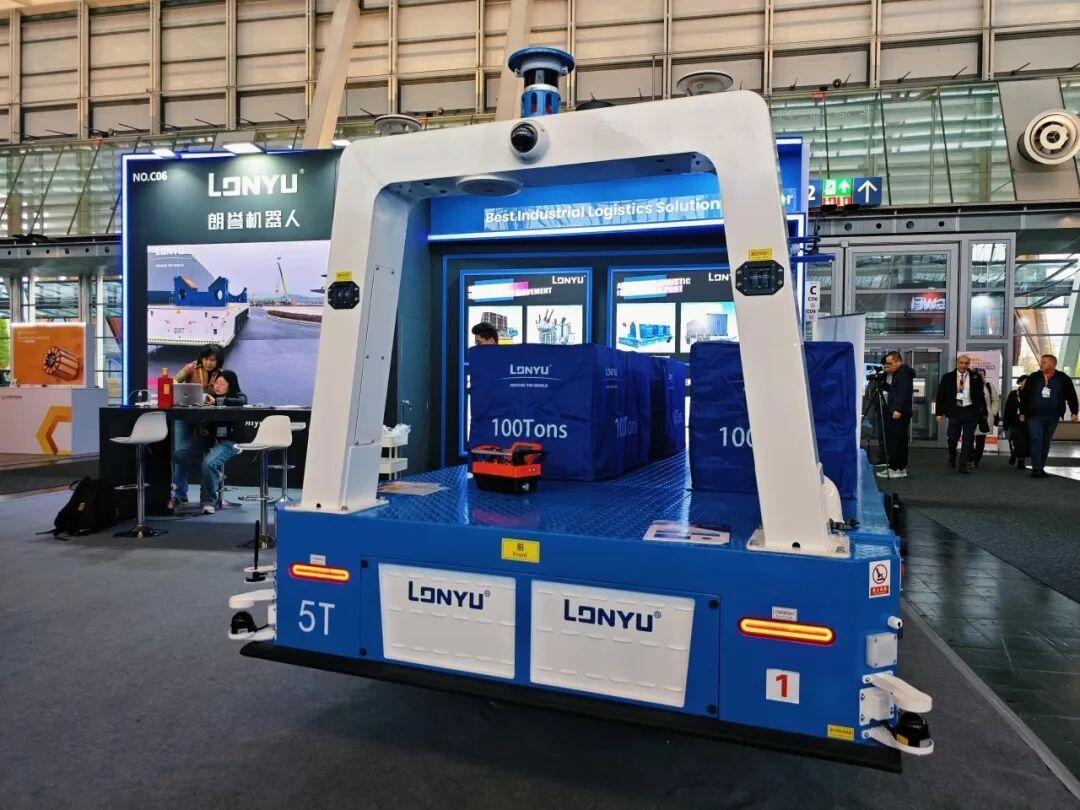
Langyu Robotics, a leading local company in Tianjin, specializes in heavy - load AGV unmanned transport vehicles that are unparalleled globally. It currently holds the world record for a load capacity of 600 tons. What does this number mean? It's equivalent to effortlessly moving an entire fully - loaded high - speed train carriage at once. In the past, this technology was completely monopolized by European and American companies. Chinese enterprises didn't even have the qualification to bid for large - tonnage, high - precision, and high - safety unmanned handling equipment projects.
Now, Langyu's products are being exported back to 12 countries and regions. The US market accounts for nearly 30% of its total exports. Its equipment can be found everywhere in high - end manufacturing, aerospace, and nuclear power and wind power projects in Europe, Japan, and South Korea. In 2025, its annual revenue increased by more than 170% year - on - year. Overseas large orders have been continuously secured. It has directly won whole - factory orders of a dozen units at a time. In the European and American local markets, it has driven established German and Japanese robot companies into retreat.
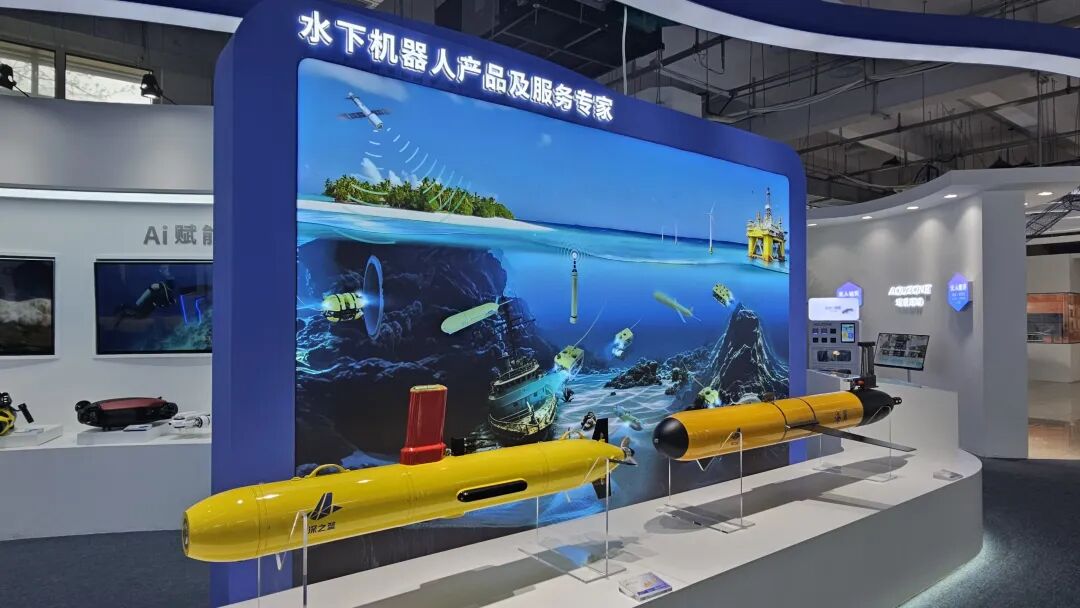
Another hidden champion, Tianjin DeepBlue, has achieved the world's highest market share in underwater robots. Don't think that underwater robots are just niche toys. They cover absolute blue - ocean markets such as deep - sea scientific research, submarine cable inspection, emergency rescue, and ocean engineering, which have high thresholds, high profit margins, and high barriers. DeepBlue is the only company in the world that can achieve full - spectrum commercialization, with a diving depth exceeding 6000 meters and stable operation in extreme environments.
Currently, its products have entered more than 20 countries globally, and overseas revenue accounts for more than 60%. In the professional underwater operation field in Europe and America, it has established a brand perception of being "indispensable". Its gross profit margin has been stably above 70% for a long time. This is the real profit - making logic of high - end manufacturing, not relying on competing in production capacity or manpower, but on technological barriers that others can't replicate.
Public data shows that the entire Tianjin robot industry has now formed a complete ecosystem with more than 200 enterprises gathered and an annual output value exceeding 25 billion yuan. The output value of industrial robots accounts for as high as 75%, far exceeding the national average of 40% - 50%. In other words, few cities in China can focus the robot industry entirely on the most hardcore industrial track that best represents the country's manufacturing strength, like Tianjin does.
At the Hannover Messe in Germany this year, Tianjin directly organized a delegation to go global and competed on the same stage as global top giants like Siemens and KUKA. None of the enterprises relied on concepts to attract attention. All were industrial - grade products that were mature and could directly secure orders. Multiple long - term cooperation agreements in the European region were signed on the spot. This "group - style going global" is no longer simply product export, but the global output of the entire industrial chain.
Many people will ask, what's the difference between the robots from Shenzhen, Shanghai, and Tianjin? Why has Tianjin been so successful in the overseas high - end market? Here is a straightforward and no - nonsense industry comparison.
Shenzhen's robots excel in having a mature supply chain and fast commercialization speed. They mainly target consumer and service scenarios. The export scale of cleaning, delivery, and commercial service robots is large. They follow the path of large - scale production and high cost - effectiveness. The advantage is rapid growth and a wide audience, but the disadvantage is the low technological barrier, making it easy to fall into price wars and difficult to break into high - end scenarios.
Shanghai's robots are more about leading with capital and concepts. They focus on the R & D of humanoid robots and core components. Backed by financial resource advantages, they have top - notch financing capabilities and topic - generating power in the country. However, the problem is also obvious: there are fewer implementation scenarios, and the actual delivery capabilities in the industrial sector and long - term cooperation experience with overseas large customers are far less solid than those of Tianjin enterprises.
Tianjin's robots take a completely different path: extremely vertical, extremely hardcore, and extremely scenario - specific.
They don't follow the hot trend of humanoid robots or engage in the cut - throat competition in the consumer market. They only tackle the tough problems that others can't solve, such as heavy - load unmanned handling, special underwater operations, high - precision industrial sorting, and explosion - proof emergency scenarios. These fields have long R & D cycles, large investments, and extremely high certification thresholds. Once they succeed, they have a global - exclusive moat. Customers won't easily switch suppliers, the orders are stable, the profit margins are extremely high, and there's no need to worry about being "choked" by others.
Tianjin's leading enterprises have almost fully self - developed their core controllers, drive systems, motion algorithms, and safety scheduling systems. The local supporting rate of components exceeds 85%. For the same large - tonnage heavy - load equipment, Tianjin enterprises' prices are only one - third of their European and American counterparts, but the performance is more stable, the customization response is faster, and the after - sales service coverage is more comprehensive. This kind of "dimensionality reduction strike" is not due to low - price competition but the inevitable result of the combination of the advantages of China's entire industrial chain and hardcore technological breakthroughs.
What's even more noteworthy is that Tianjin's robots going global have passed the initial stage of "selling products" and are starting to compete for the right to formulate global rules in the robot industry.
Langyu has exclusively taken the lead in formulating the domestic heavy - load AGV industry standard and participated in drafting national mandatory standards. Now, this set of standards is being exported overseas and has become an important reference in the global heavy - load robot field. DeepBlue leads the revision of international standards for underwater robots, directly breaking the decades - long standard monopoly of European and American enterprises.
In the past, we always said that Chinese manufacturing could only do hard work and earn meager profits globally, without pricing power or a say. However, Tianjin's robots provide an answer: in the high - end industrial manufacturing field, Chinese enterprises can not only produce the best products but also define industry rules and seize market share in the home courts of European and American giants.
This is the real - sense industrial upgrade, not relying on subsidies or concepts, but on winning globalization status through one hard - fought battle after another in overseas markets.

In the next two years, the global industrial robot landscape will be completely rewritten. Shenzhen will continue to lead in the consumer end, Shanghai will focus on the implementation of cutting - edge technologies, and Tianjin will firmly hold its position in the first echelon of China's industrial robots going global, becoming the core business card of northern high - end manufacturing to the world.
Don't just focus on the hotspots of smart manufacturing in the south. Tianjin's robots are quietly making big money, seizing markets, and setting standards overseas. This is the most underestimated force in Chinese manufacturing.
The so - called "Made in China" going global has never been just about low prices. Being able to stand firm, gain respect, and earn high profit margins in the most hardcore global tracks is the kind of long - term and promising globalization that we truly desire.
This article is from the WeChat official account "Veteran of Going Global", author: Li Guang. Republished by 36Kr with permission.