From having only 200,000 yuan left in the account to raising 1 billion yuan in financing, he created a globally popular exoskeleton in 5 years.
In Nanshan, Shenzhen, a group of teenagers want to use the "second layer of clothing" to help humans "walk" further.
Consumer exoskeletons, a niche category that once only existed in science - fiction movies and rehabilitation hospitals, are now entering the public's life.
As a wearable robot, the exoskeleton provides real - time power assistance to the human body by integrating motors, sensors, and AI control algorithms, sharing the body's load and enhancing limb strength.
Nowadays, information about exoskeleton rentals can be seen at service desks in many famous mountain tourist areas. It enables climbers carrying 20 - pound equipment to easily complete long - distance hikes, helps some elderly people with limited mobility regain their daily travel ability, and allows firefighters to carry more equipment and extend continuous operation time during rescue operations.
In this field, Sun Kuan, the founder of Jike Technology, is a name that cannot be ignored. Currently, the official price of Jike's flagship model, Hypershell X Ultra, is 13,999 yuan, and the price of the second - generation mass - produced entry - level model, Hypershell X GO, is 5,999 yuan. It is the world's first product to bring the price of consumer exoskeletons below 10,000 yuan.
Traditional exoskeletons have always had problems with bulkiness and portability. Jike has solved the problems of "affordability" and "wearability" through material innovation and pricing strategies - The whole machine weighs about the same as a thin and light laptop, and a single battery can support 30 kilometers of walking or 65 kilometers of cycling.
The power - assisting logic of Jike's current hip exoskeleton is also very special: as soon as a person starts walking, they can feel the assistance. The more force they apply, the greater the assistance they get. When wearing the exoskeleton to climb stairs, one can easily reach the seventh or eighth floor; when going downstairs, it will actively provide cushioning force.
This also puts forward requirements for hardware limits and algorithm adaptation. In terms of hardware, how to miniaturize and lightweight the joint modules and find a balance between power output and wearing comfort. In terms of algorithms, how to adapt to changing terrains (hiking, mountain climbing, cycling) and human differences (shoe size, exercise habits).
"The design of exoskeletons is extremely challenging. We need to find a balance between lightweight and power. The structure needs to be both reliable and lightweight. We can only test bit by bit to explore the boundaries."
Recently, "China Entrepreneur" met Sun Kuan, the founder of Jike Technology, in Shenzhen. Jike's company is located in Nanshan District, surrounded by many top - tier hardware technology companies. The talent war in Shenzhen's hardware industry has long been fierce. The team joked, "Where there are technology companies gathered, there are a large number of technology talents."
Most of Jike's core members come from cross - industries such as robot companies, drone companies, and mobile phone factories in the hardware field. The exoskeleton itself is an interdisciplinary product. It is like a piece of clothing, a robot, and a smart wearable device. It requires the integration of knowledge in multiple fields such as mechanics, electronics, algorithms, and materials. "Talents from different industries can bring different perspectives and ideas, helping us better solve problems in product R & D," Sun Kuan said.
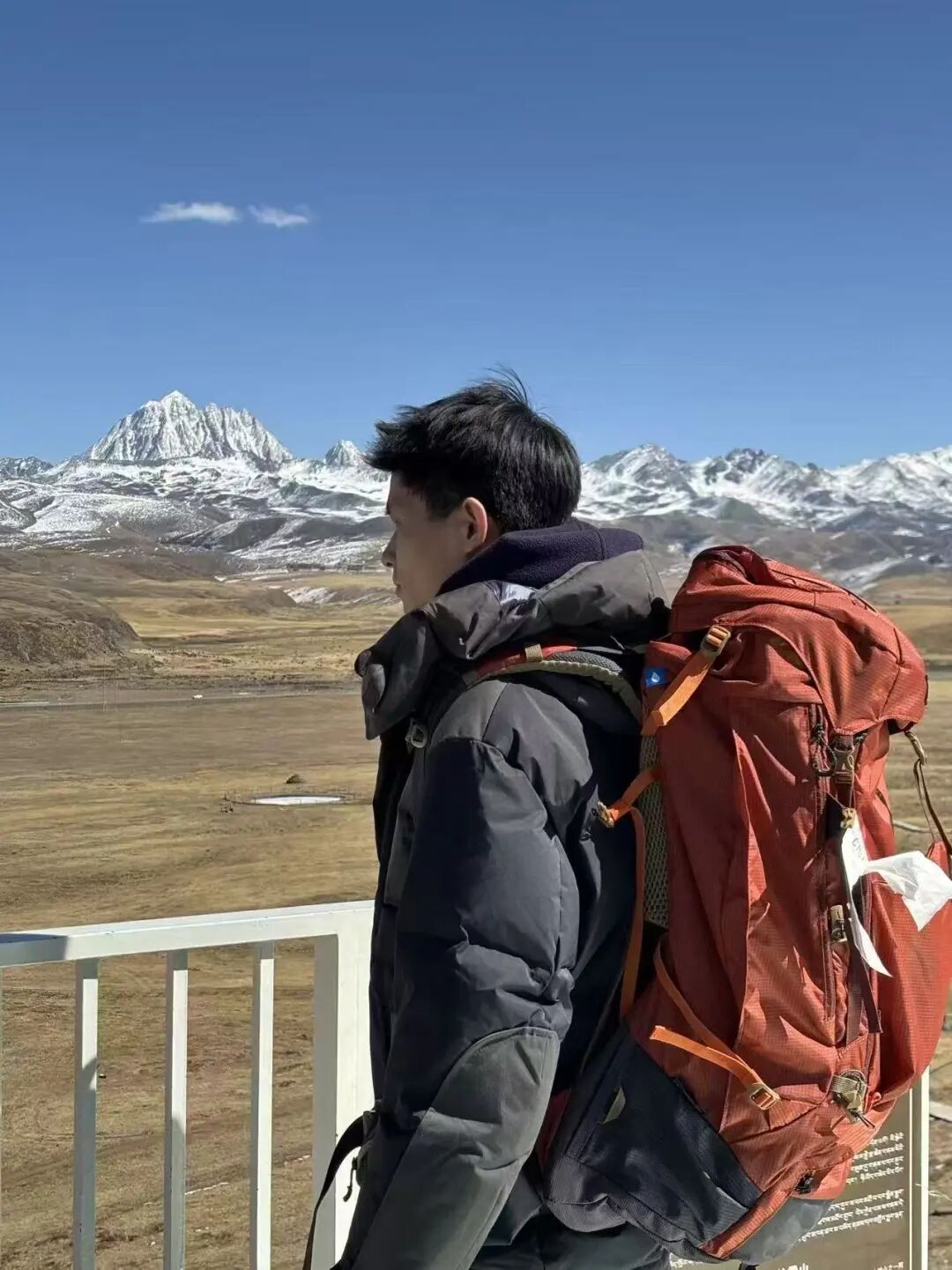
Sun Kuan, the founder of Jike Technology
Jike's headquarters was originally in Shanghai. But in early 2025, in order to be closer to Shenzhen and the supply chain, Sun Kuan moved most of the team to Nanshan, Shenzhen. The reason is straightforward: "There are many technology companies nearby, and the entrepreneurial atmosphere is good. It is also close to our supply chain, allowing us to have better control over product output."
Capital also continues to be optimistic about Jike. On May 18th, Jike Technology announced that it had completed a $50 million Series B+ financing, led by Ant Group and Meituan Longzhu, with participation from European veteran private equity funds Sofina and Granite Asia. Gaohu Capital served as the exclusive financial advisor. So far, Jike Technology has raised $120 million in the Series B round.
Sun Kuan said bluntly that external competition is not his core concern at present. "The annual market size of exoskeletons is not large, and it cannot be regarded as a mature field. There is still much room for product optimization. The most important thing to focus on now is how to polish the product well to meet the real needs of users."
The Attraction Law of the "Youthful" Organization
Sun Kuan is tall and thin, often wearing T - shirts and sweatshirts, and is very fond of "Coke". In Jike's Shenzhen office, employees can always see him wearing the company's exoskeleton wandering in the corridor and adjusting parameters. Sometimes when they meet him in the elevator, he is either holding freshly printed blueprints or rushing with a computer in his arms - "He is a hardcore geek who is extremely obsessed with products."
In the eyes of employees, Sun Kuan's words are always convincing, which comes from his understanding of forward - looking technologies and his enthusiasm for in - depth participation in business. "He is not the kind of boss who sits in the office and gives orders. Instead, he will immerse himself in the laboratory, suddenly run to my workstation with a prototype in his arms, and pull me to talk about product iteration, and the conversation can last until after work," an internal employee said.
Sun Kuan is summarized by employees as "high - involvement". He has a "stubbornness" that can be a headache: he will ask the team to conduct repeated tests and iterations for a 0.1mm tolerance or a minor experience optimization. "Sometimes we also feel a lot of pressure."
This founder with an MBTI of "INTP" also firmly believes in only cooperating with like - minded people. Internal employees of Jike revealed that Sun Kuan has a core requirement when recruiting: candidates should have a "youthful spirit", be sincere, motivated, and full of vitality.
Sun Kuan's recruitment wish is facing the cruel test of the hardware talent war in Shenzhen. Tech giants are attracting high - quality talents with high salaries and generous benefits. Jike has only been established for 5 years and is still in the growth stage, so its salary is difficult to compete with large companies. However, Jike is more generous in terms of employees' daily welfare. "Sharing the results with more core members will enable us to go further together."
"Today, all the hottest fields are focused on humanoid robots and using technology to help people do things they don't want to do, but not everyone is inspired by the vision," Sun Kuan said.
Jike's vision is to make the world of humans bigger. "Human mobility is limited, but the places that one's will wants to reach are infinite." In the user community, some people can finally retrace the long - unused hiking routes with their families after wearing Jike's exoskeleton. Some elderly people told them that they bought Jike's exoskeleton to return to the mountains and see the scenery they saw in their youth.
These real feedbacks also form Jike's relatively simple organizational culture. Sun Kuan has set up a "Great Failure" award for the company, which is specifically awarded to employees who have made outstanding efforts for innovation but ultimately failed.
Previously, an engineer team tried to optimize wearable small parts with new materials, which could make wearing the exoskeleton more breathable and the pressure more balanced for a long time. The project lasted for nearly three months, and there were several large boxes of samples piled up behind the workstations. Eventually, it was suspended due to various limitations.
"But we still awarded the 'Great Failure' to them. We encourage this spirit of daring to try and exploring the boundaries of technology without limitations, which is exactly what we need."
Currently, Sun Kuan is more worried about Jike's team building. In just over a year, Jike's team has rapidly expanded from more than 40 people to hundreds, with R & D personnel accounting for more than 70%.
Although the Nanshan District Government in Shenzhen has provided Jike with many policy supports such as talent housing and talent programs, Sun Kuan admitted that he is still in a state of anxiety due to management conflicts. He recruited high - level talents from outside to serve as middle - level managers and cultivate the core management team. However, "I don't know the new people at first, but the business requirements are there, so I have to continue recruiting, which creates a strong sense of conflict with my previous management model."
At the Hardest Time, There Was Only 200,000 Yuan in Cash
Sun Kuan's fate with exoskeletons began in college, but this industry once made practitioners "desperate" - "There was no commercialization prospect at all. After graduation, people either switched to the medical device field or worked on bipedal humanoid robots."
At that time, all the researchers in the industry were very desperate. "They couldn't get any funding and switched careers after graduation." What really pushed him onto the entrepreneurial path was a misdiagnosis. "It made me jump out of the mediocre environment and re - examine my life path."
Later, Sun Kuan went to the UK for further study and systematically learned and researched exoskeletons. In mid - 2021, Sun Kuan returned to China and founded Jike. For the first eight or nine months, the prototype and user surveys never received positive feedback, and everyone around him said that this direction "had little possibility".
Sun Kuan recalled that when he was seeking financing in 2022, he was rejected by nearly a hundred investors. He was always asked the same question: "Why do ordinary people need a consumer - grade exoskeleton?" Most investors bluntly thought it was an "unrealistic science - fiction product".
In the early days of entrepreneurship, the Jike team persevered. The product team spent every day in the laboratory and factory, conducting repeated tests to solve technical problems. However, the difficulties in the early stage of entrepreneurship were textbook - level: tight funds, technical bottlenecks, and zero market recognition. At the worst time, there was only 200,000 yuan in the company's account, and the co - founder even mortgaged his property to support the operation.
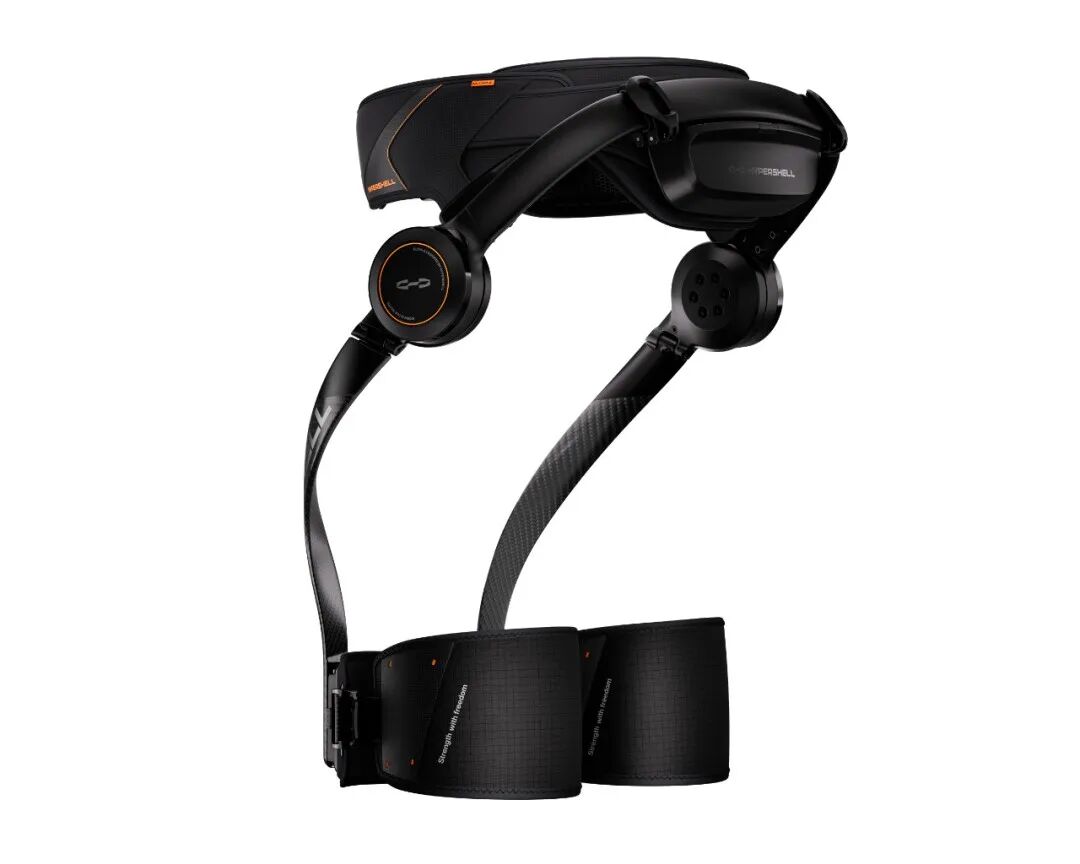
Hypershell X Ultra S
With such perseverance, in 2023, Jike took the lead in creating the world's first single - motor - driven exoskeleton system, and the Omega configuration based on its own global patent was also unveiled at the same time. This design reduced both the cost and weight by 50%, and the product price was also lowered to the thousand - yuan level, truly entering the consumer - grade market.
In March of the same year, Jike launched its first - generation product, Hypershell Go, on Kickstarter and finally raised $1.23 million. However, the real darkest moment came after the crowdfunding was successful.
After the first - generation product entered the gray - scale test, the user rating was only in the forties. Sun Kuan also found a fatal flaw during the trial: the motor was set on the back. When a person walked with the front - back extension of the left and right feet, it would cause the motor to misalign with the human joints. "The more intense the movement, the more obvious the misalignment, and the skin on the leg straps would be rubbed painfully." He proposed: don't make do. Scrap the first generation and re - develop the second generation.
The team was in an uproar. This meant that all the time, funds, and manpower invested before would be reset to zero, and it would take more than a year and double the cost per unit. From Jike's perspective with tight funds, this was like cutting off its own path.
Sun Kuan communicated with team members one - on - one in a small room. They questioned him layer by layer: why didn't he find the problem earlier? Why did he want to overthrow the product? He could only present the optimistic side as much as possible: "Six months is enough for re - development, and we have the ability to control costs."
"The optimism at that time was both to convince the team and myself," Sun Kuan admitted. "The only superpower of an entrepreneur is super - optimism. Otherwise, how can one take the more difficult but long - term correct path?"
Finally, the team was moved by his perseverance. Sun Kuan stayed in the Shenzhen factory himself for up to two months, working with engineers and workers to solve the problems of reliability and lightweight. "The design of exoskeletons is extremely challenging. We need to find a balance between lightweight and power. The structure needs to be both reliable and lightweight. We can only test bit by bit to explore the boundaries."
Half a year later, the second - generation product was launched. It took Jike nearly two years from the crowdfunding success to scrapping the product and then bringing the price of the consumer - grade exoskeleton down to 5,999 yuan.
Although scrapping the first - generation product caused huge losses, Sun Kuan believes that this decision was correct in the long run. If the first - generation product with poor experience had been launched at that time, it would not only damage the brand image but also might ruin the entire consumer - grade exoskeleton field. "Once user trust is broken, it is very difficult to rebuild."
"Although this also led to the fact that the low - configuration version of this generation of products was sold at a loss, selling one unit at a loss. But the team firmly believes that long - termism is more important than short - term profits."
After this experience, Jike is also actively promoting the standardized development of the consumer - grade exoskeleton industry.
Sun Kuan said that the exoskeleton industry is in a mess. "We worked with SGS to create the first industry certification for the effectiveness of exoskeletons, standardizing the test sites and test standards, so that users can objectively evaluate the helping effect of exoskeletons."
Currently, Jike is also leading the formulation of national standards. "For example, the setting of the emergency stop button and the range of the body pressure value need clear standards for regulation." Sun Kuan revealed that the industry standard has a first - run - through version, and the national standard will also be launched in the first version this year. "We hope that by formulating standards, more enterprises can focus on product R & D and user needs instead of getting involved in vicious competition."
The "Second Layer of Clothing" Empowered by AI
In 2025, Jike completed a $70 million Pre - B and Series B financing. The new investment institutions include Guanghe Venture Capital, Wuyuan Capital, Monolith, Meituan Longzhu, etc. Jike's development has thus entered a new stage. Sun Kuan said that the core uses of this financing revolve around three aspects: user education, talent recruitment, and supply chain and channel construction.
"Consumer - grade exoskeletons are still an early - stage category. Many people think they are 'niche toys' and don't know what value they can bring." In China, Jike focuses on offline promotion, placing products in major famous mountain scenic areas, DrivePro, and other places.
"Tourists in scenic areas are part of the target population and can directly feel the power - assisting effect." Online, it relies on high - traffic exposure. "But we won't invest a large amount of money in advertising. We hope to achieve healthy growth through user word - of - mouth. Massive advertising when the product is not mature enough will only consume trust."
User feedback is the core driving force for product iteration. There are tens of thousands of users in Jike's community, and many function optimizations stem from their real needs.
Robert McComb, a 60 - year - old user, had to give up long - distance hiking due to asthma and age restrictions. After wearing Jike's Hypershell X Carbon exoskeleton, he walked the entire 154 - kilometer West Highland Way in Scotland at an average daily pace of 32 kilometers and even conquered the daunting "Devil's Staircase" on the way. Throughout the journey, he never used his asthma inhaler once.
