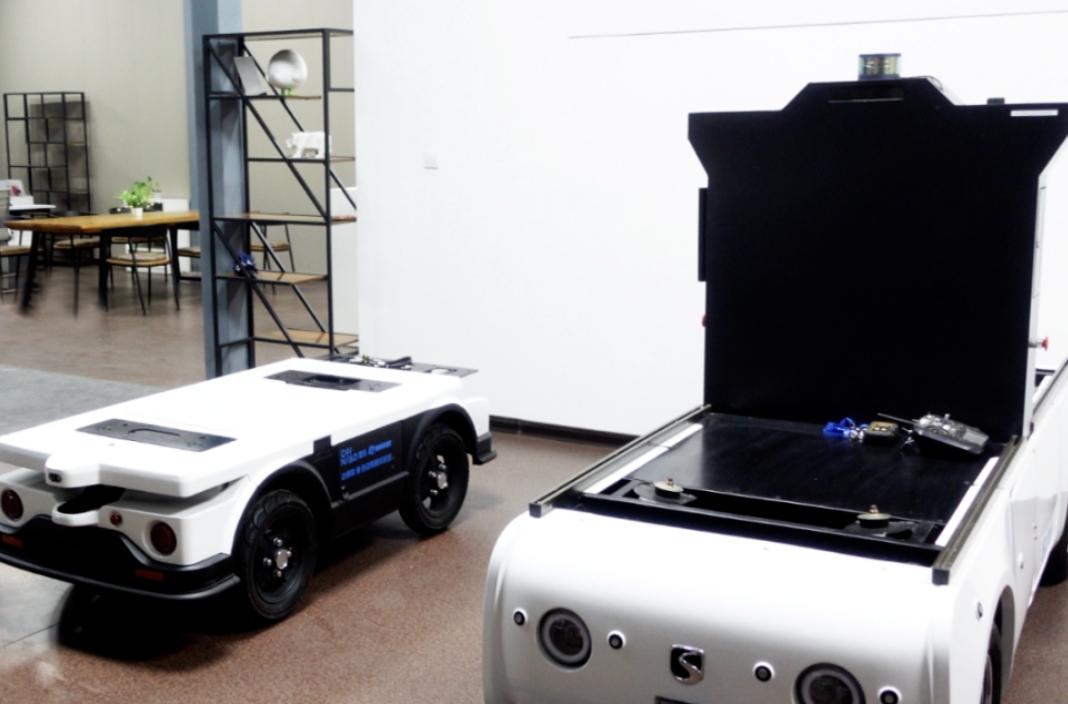
A document vindicates Robovan: From "identity anxiety" to "institutional dividends"
For any emerging industry to truly reach maturity, technological breakthroughs alone are not enough. The "recognition" at the institutional level is a more crucial switch for large - scale implementation.
In the past two years, the technology and business verification of Robovan have been successful. The cost has come down, the right - of - way has been opened up, and the application scenarios have also been proven. However, the final push has been delayed. The problem lies neither in technology nor in demand, but in a most fundamental question: What exactly is Robovan? Is it a vehicle or a robot?
Different regions have different names, but essentially they are all stuck in the same dilemma: without a unified identity, there will be no national standards, and no large - scale access channels. The industry has been growing rapidly but has remained in a state of limbo.
In May 2026, this "deadlock" was finally broken.
Recently, the Cyberspace Administration of China, the National Development and Reform Commission, and the Ministry of Industry and Information Technology jointly issued the "Implementation Opinions on the Standardized Application and Innovative Development of Intelligent Agents", which "recognizes" the embodied intelligent agents represented by Robovan.
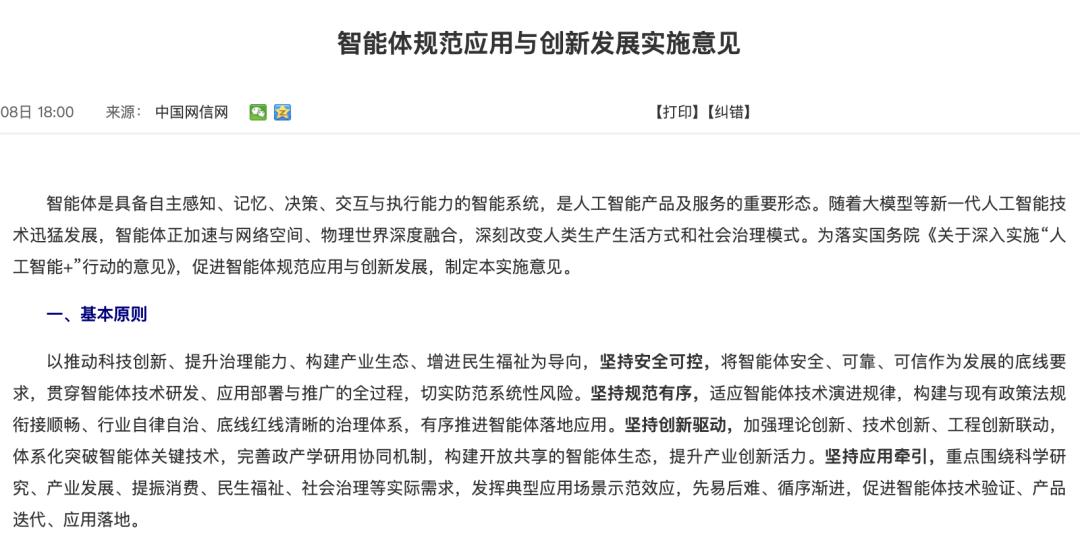
The "Implementation Opinions" clearly define: "An intelligent agent is an intelligent system with the capabilities of autonomous perception, memory, decision - making, interaction, and execution." It no longer needs to prove itself as a "qualified vehicle", but is recognized by the top - level design as an independent "intelligent agent" category that can execute autonomously in the physical world.
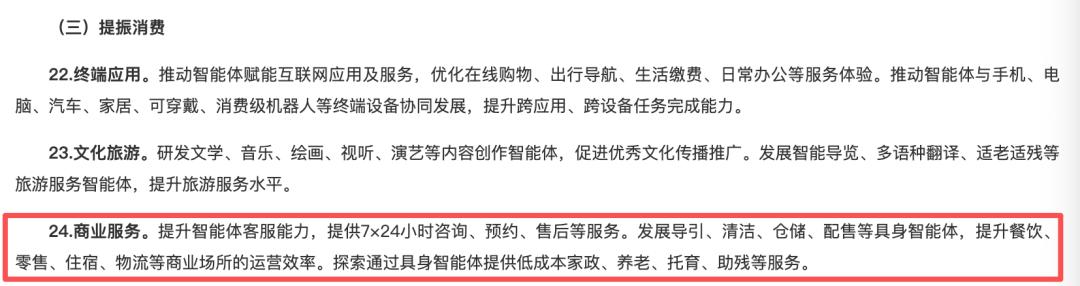
In addition, the policy also clearly proposes to "develop embodied intelligent agents for guidance, cleaning, warehousing, distribution, etc.", providing clear policy recognition and development space for transportation scenarios such as autonomous shuttle buses and unmanned delivery vehicles.
Of course, the establishment of identity is just the starting gun, and the real competition has just begun. Next, whether enterprises can actively comply with regulations, improve their safety capabilities, and participate in standard - setting will determine who can transform the "institutional dividends" into real market share.
From the "red line" in April to the "identity" in May
Back in April, the Ministry of Industry and Information Technology, the Ministry of Public Security, and the Ministry of Transport held an emergency meeting to set the bottom line first. The core idea can be summarized in eight characters: "Steady and orderly" and "Safety first".
Although this meeting was an emergency response, it sent an important signal: the state has officially put autonomous driving on the track of systematic supervision. For Robovan, this means the end of the stage of wild growth in the industry, and from now on, it needs to develop within the rules. Safety is the bottom line, but the meeting did not stop the industry. Instead, it required everyone to "build the road while running". The bottom line has been set, and the remaining issue is how to establish the system.
If the meeting in April told everyone to "obey the rules", then the "Implementation Opinions" in May tell everyone "what Robovan really is".
The most core breakthrough of this document is to upgrade the regulatory object from specific "vehicles" or "systems" to "intelligent agents". The definition given in the document is: "An intelligent system with the capabilities of autonomous perception, memory, decision - making, interaction, and execution", and it clearly leaves an interface for the "hardware - software integrated" forms such as autonomous driving and embodied intelligent robots.
More importantly, the policy accurately addresses the real risks brought by the "wild growth" of intelligent agents in the transportation field.
In the past, the lack of systematic safety specifications has led to a series of problems. Some systems were given excessive permissions and adjusted the traffic signal timing without manual review, causing regional congestion that lasted for several hours; the decision - making system based on large models also has the hidden danger of "hallucinations", which may fabricate non - existent road accidents or construction information, misleading route planning. In addition, traffic data involves highly sensitive content such as personal location trajectories and vehicle information, but a large number of intelligent agents have data security risks such as over - authorization collection and unencrypted transmission.
The issuance of the "Implementation Opinions" is precisely to end the chaos such as "over - authorization operation, decision - making hallucinations, and data exposure", and to draw a clear safety red line for the industry.
This "recognition" has subversive value. All the embarrassments that Robovan faced in the past: no classification, no standards, no access channels. The root cause is that it was not defined. Now, the state has given it an identity from the top - level design. With an identity, there is a starting point for solving the subsequent problems.
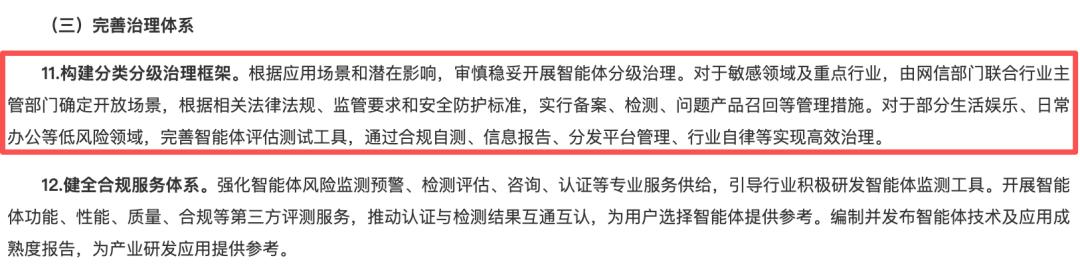
According to the "Implementation Opinions", supervision will distinguish between "sensitive areas" and "low - risk areas". Robovan is mainly used in logistics and distribution. Compared with manned Robotaxi, its external risk is significantly lower. Combining with the new version of the "Access Review Requirements" issued by the Ministry of Industry and Information Technology in January 2026, the state is building a "three - horizontal and two - vertical" management system for intelligent connected vehicles.
Under this framework, due to its low driving speed (usually less than 45 km/h), relatively fixed routes, and no high - sensitivity risks involving casualties, Robovan is very likely to be included in the category of "low - risk management" or "key industry applications", which is a specific manifestation of the "classified and graded governance framework" in the "Implementation Opinions".
As a typical scenario of "low risk and strong demand", Robovan has every reason to obtain a faster access rhythm than manned autonomous driving.
After all, the "Application - Driven" section in the "Implementation Opinions" specifically emphasizes the scenarios of "industrial development" and "boosting consumption", which are highly consistent with Robovan's business model. The policy no longer simply emphasizes "prudence" but requires "releasing innovation space".
However, it should be clearly recognized that even though the risk level is relatively low, as an entity operating on public roads, Robovan still must meet a series of core safety requirements: for example, in key decision - making links (such as emergency avoidance path selection), manual review and remote fusing mechanisms must be retained; the vehicle must pass the functional safety certification and establish a full - life - cycle safety system covering data encryption, permission management, and attack detection.
After the recognition, it is time to establish the system. Referring to historical experience, the path is clear: first, there are group standards, then they are upgraded to industry standards, and finally they become national standards.
It took about six years for new energy vehicles to establish the "dual - qualification" system from the issuance of access rules in 2009 to 2015. Intelligent connected vehicles are more complex, but the industrial foundation and policy determination are also stronger. The industry generally expects that the main framework can be established in about three years.
How will the game rules change after the identity is established?
Once the identity is established, the market game rules will change accordingly.
First, it changes from "running in the gray area" to "running in compliance".
In the past, the industry was in a relatively "gray - running" stage. Without a clear identity, there was no clear threshold. As long as one could build a running vehicle and obtain a few local licenses, one could tell stories and get financing. The competition was about who could run faster, who had lower costs, and who had more licenses.
After the recognition, the threshold has come. Since you are an "intelligent agent", you need to meet the requirements of "interpretability, traceability, and correctability"; since you want to operate on the road, you need to pass the tests of functional safety, data compliance, and remote supervision.
It is particularly worth noting that compliance ability will become the core competitiveness of enterprises. The next year is the "early - bird period" for compliance ability: functional safety certification, data compliance system, and the ability of human - machine collaborative remote monitoring and emergency response will all become hard thresholds. In the short term, the compliance cost will rise sharply, but enterprises without these capabilities will be accelerated out of the market in the next one or two years.
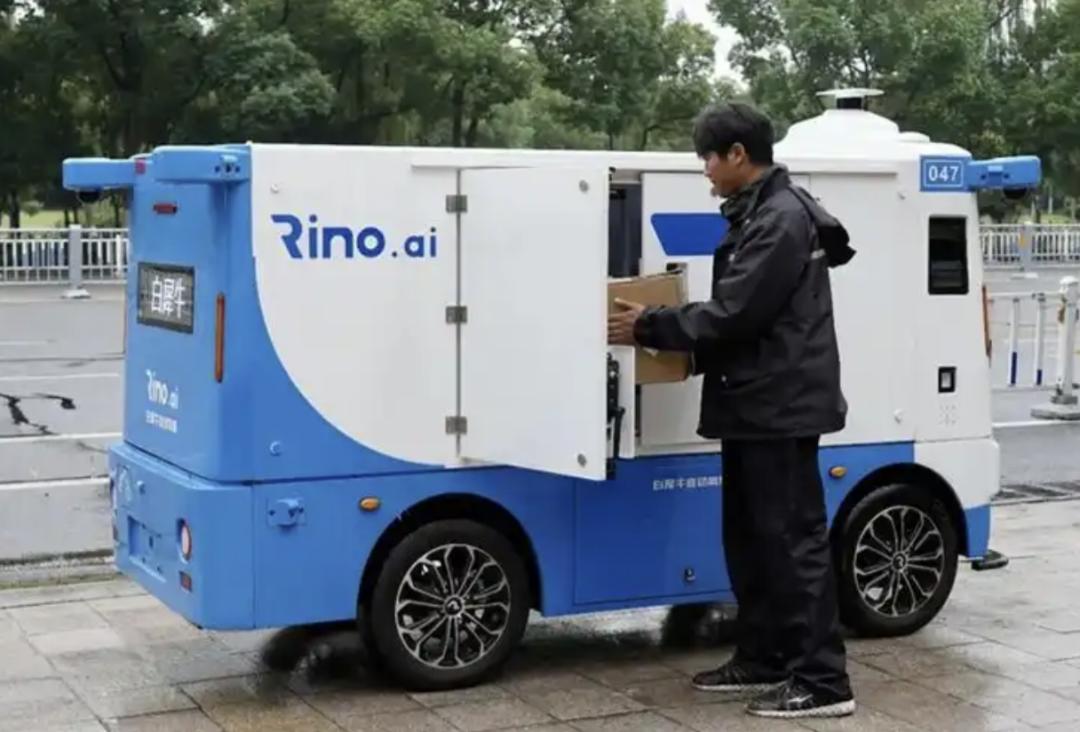
Secondly, the large - scale process of Robovan will be significantly faster than that of the manned track.
The greatest dividend brought by the recognition to Robovan is that it has obtained a regulatory rhythm that matches its risk level.
The logic is very simple: The pressure faced by regulatory authorities is completely different when an unmanned vehicle delivers express parcels in a park and when it carries passengers on the highway. The "classified and graded" framework in the "Implementation Opinions" institutionalizes this difference. Low - risk areas have more innovation space, and Robovan happens to be in the golden position of "low risk and strong demand".
Multiple securities firms predict that it is highly likely that the sales volume of domestic unmanned logistics vehicles will exceed 100,000 in 2026. In contrast, manned autonomous driving can only operate in limited areas in most cities. After the recognition, this gap may further widen.
Finally, the industry is moving from "telling stories" to "competing on internal strength".
Before the recognition, the players in the industry were of uneven quality. After the recognition, standards will be gradually established, and the threshold will be gradually raised. The enterprises that can stay in the game must be those that truly have mass - production capabilities, have established a complete data compliance system, and have remote monitoring and emergency response capabilities.
This is exactly where the advantages of enterprises that have long been focused on product engineering, reliability, and mass - production delivery lie. The "hard work" in the past few years is turning into the "core assets" at this stage.
How should enterprises move forward after the recognition?
The direction is clear, and the rest is action. Enterprises at different stages need to complete different strategic tasks to truly benefit from this institutional dividend.
In the short term, first, comply with regulations and solidify the identity.
The recognition is just the beginning. What really matters is to solidify the identity of "intelligent agent" with actual actions. Enterprises can review their data security, network security, software upgrades, and functional safety according to the "Implementation Opinions" and strive to become the first - batch of compliant demonstration enterprises in various regions. The next year is the early - bird period for compliance ability. Those who meet the new requirements first will gain an advantage when the market expands.
In the long term, actively participate in standard - setting and define the rules. Actively output practical experience in functional safety, testing methods, and operation data to promote the establishment of group standards. In a new field like Robovan, whoever comes up with a reusable group - standard draft first will gain the initiative in the future market.
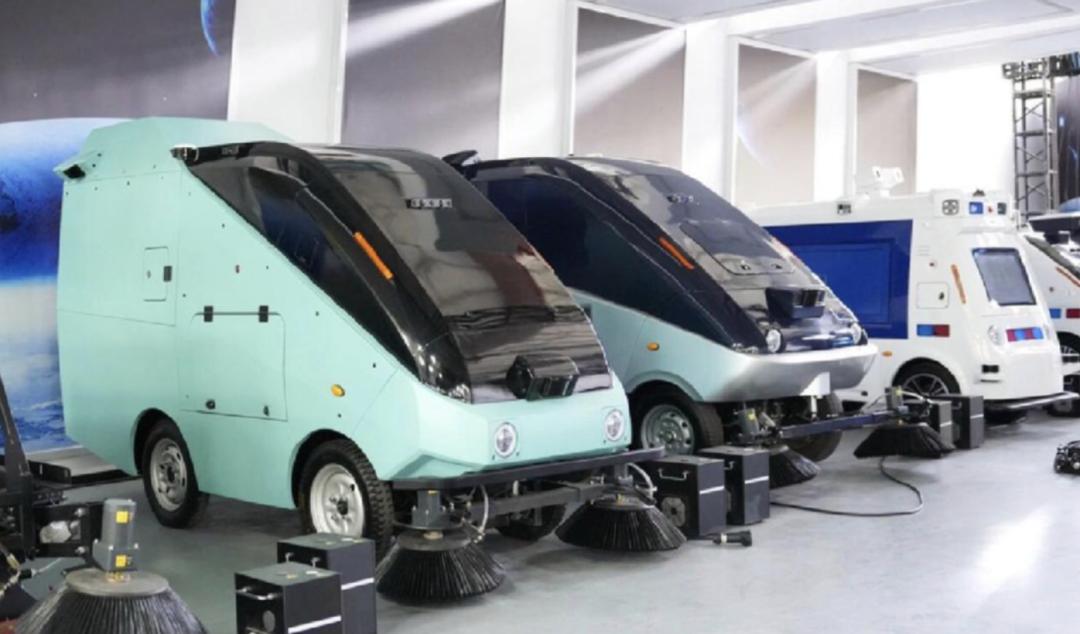
The exploration period of the system has passed. A mature regulatory environment that respects the laws, encourages innovation, and strictly manages safety is taking shape. As a sub - track in the field of autonomous driving with "the lowest risk, the most rigid demand, and the most closed - loop business", Robovan is moving from the edge of policy to the center of the stage.
Looking back in the spring of 2026, the Robovan industry is undergoing a profound "coming - of - age ceremony".
From the safety red line in April to the definition of intelligent agents in May, the state completed the "recognition" of Robovan in one month. It is no longer a new species without a proper place, but is clearly recognized as a member of the "intelligent agent" family.
The issuance of the "Implementation Opinions" is not a restraint on innovation but a way to "pave the way and build bridges" for innovation: by eliminating the chaos of "wild growth" through institutional constraints, it opens up a new cycle of high - quality development for enterprises with core technologies and a firm grasp of safety bottom - lines.
The annual sales volume of 100,000 is just the beginning. When the compliance threshold turns into a competitive barrier and the right to set standards becomes a market pass, a trillion - level urban distribution market will truly open up.
This article is from the WeChat official account "Cyber - car" (ID: Cyber - car), author: Zhang Lianyi, editor: Qiu Kaijun, published by 36Kr with authorization.