AI Agents and the Future of Work
God Translation Bureau is a translation team under 36Kr, focusing on fields such as technology, business, the workplace, and life, and mainly introducing new technologies, new ideas, and new trends from abroad.
Editor's note: Due to the emergence of AI agents, 70 million American workers are about to face the biggest career transformation in their working lives, but their voices are often ignored. To fill this gap, we conducted an audit survey across the United States to deeply understand which tasks employees hope AI agents can perform automatically or enhance which capabilities, and whether these expectations match the current skill levels. Data from 1,500 employees in 104 occupations brought the following three main findings: 1) The "willingness - ability" map of AI agents in the workplace reveals a serious mismatch between current AI agent research and investment. In the mapping between Y Combinator (YC) startups and specific tasks, as many as 41.0% of the companies are concentrated in the "low - priority area" and the automation "red - light area". 2) Many occupational tasks require equal collaboration between humans and agents. However, employees generally prefer to retain a higher degree of human autonomy, which indicates that as AI capabilities improve, workplace frictions may occur in the future. 3) As AI agents gradually enter the workplace, the core competitiveness of humans may shift from information - processing skills to interpersonal communication and organizational management abilities. This article is a translation.
AI Agents Are Reshaping the Workplace
Maybe you're not interested in AI, but AI will definitely target you.
AI is bringing rapid and unexpected changes to the entire labor market. Research estimates that about 80% of American employees may find that large language models (LLMs) will affect at least 10% of their work tasks, and 19% of them may even face the risk of having more than half of their job responsibilities disrupted. Data on the use of large models in early 2025 further shows that in 36% of occupations, AI tools are already actively used in at least 25% of tasks.
To meet future work challenges, we collaborated with economists from the Stanford Digital Economy Lab and proposed a standardized audit framework based on empirical research and combined with voice enhancement to map the risks and opportunities brought by AI agents in various industries across the United States. This audit framework adopts an "employee - centered" approach, directly soliciting first - hand insights from front - line employees engaged in relevant specific work. We used the O*NET database of the U.S. Department of Labor as the task source to build the "AI Agent Employee Outlook and Readiness Knowledge Base" (WORKBank), which is the first database that quantifies both the capabilities of AI agents and the willingness of employees. Currently, this database contains real feedback from 1,500 employees in 104 occupations and evaluation annotations from 52 AI experts, covering 844 occupational tasks. This database has good scalability and can easily incorporate more tasks and reflect the evolution of technological capabilities and changes in employee attitudes in real - time.
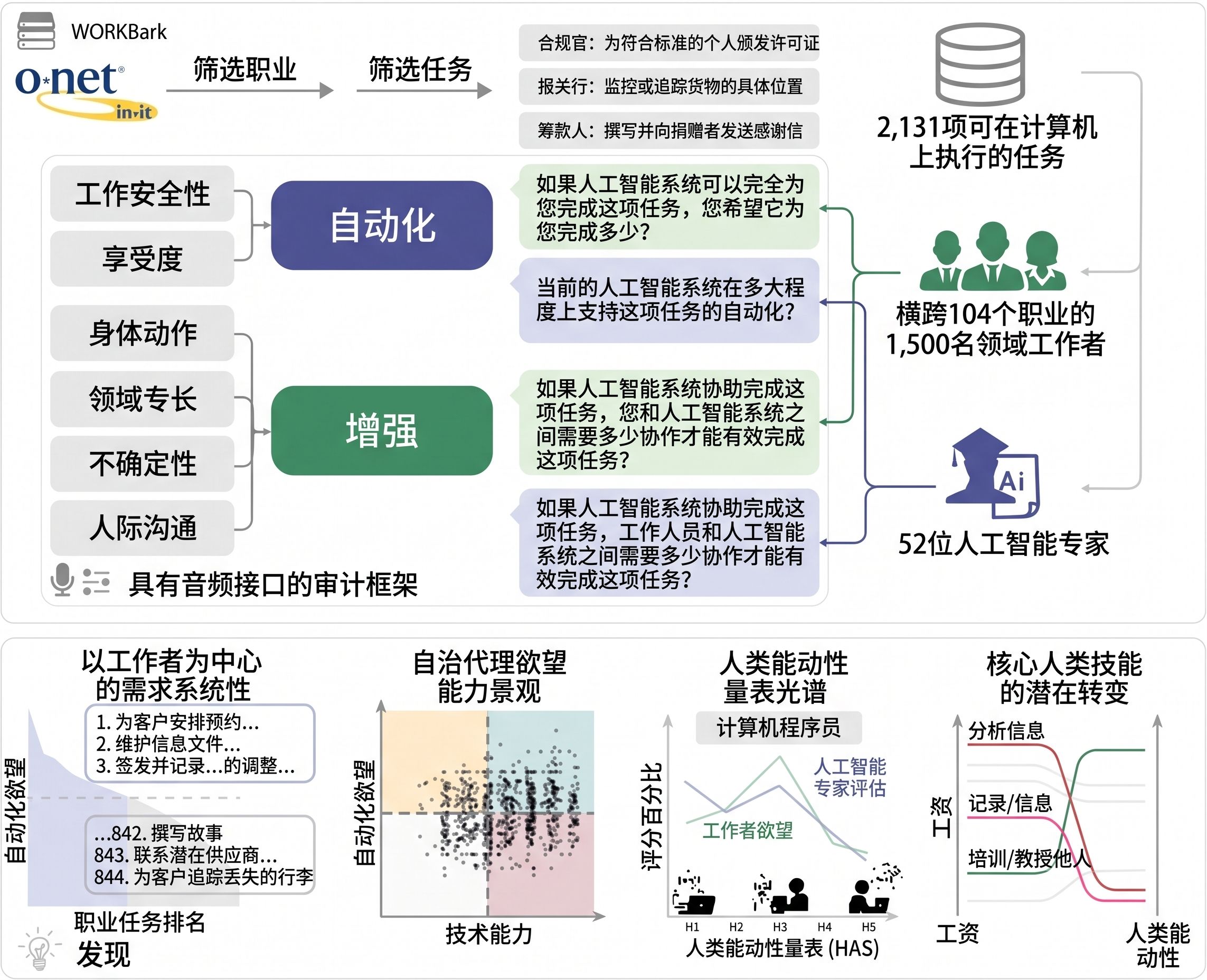
Overview: Overview of the audit framework and core insights
Understanding Fears and Desires
1. In which aspects will employees resist the automation of AI agents?
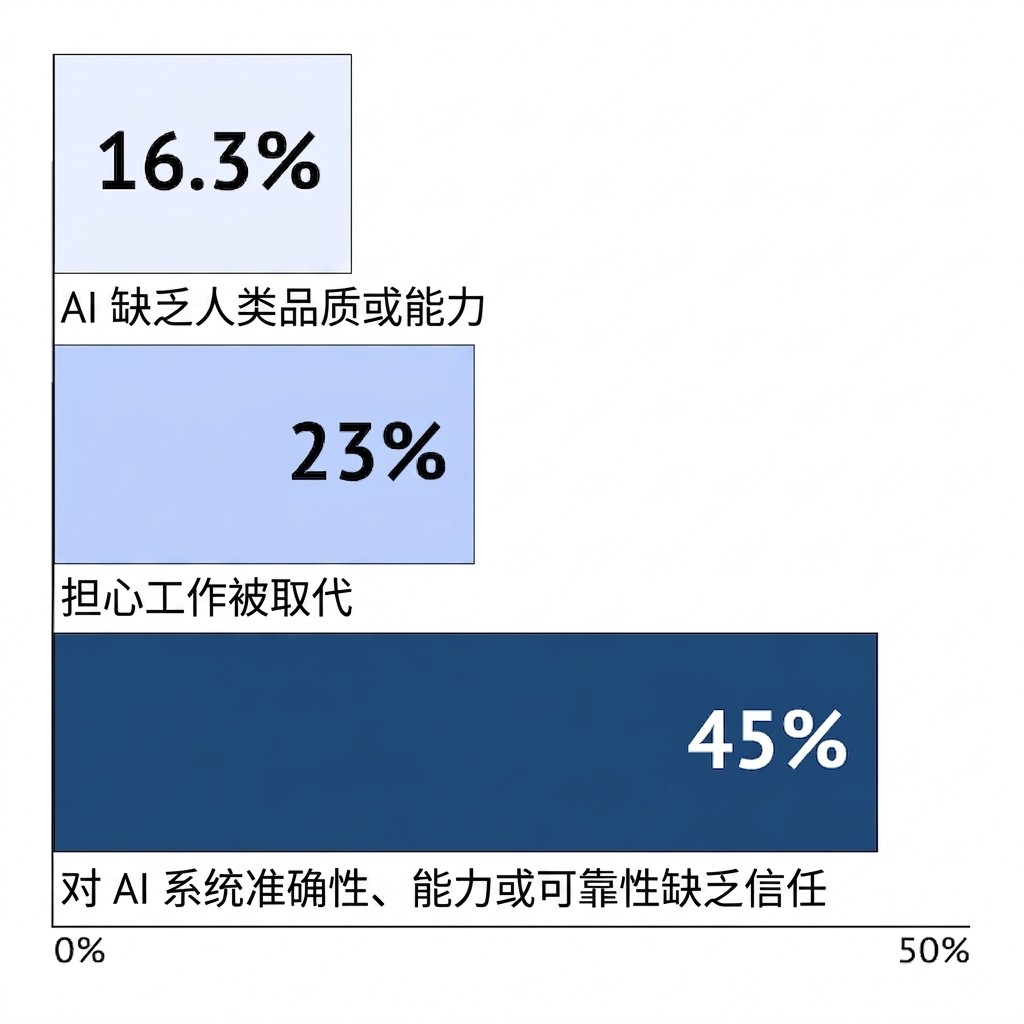
Guided by the seed prompt "The most common fears of employees about AI automation at work", we analyzed the interview texts of employees through topic modeling. The research established three main concerns: lack of trust (45%), fear of being replaced by work (23%), and lack of human touch (16.3%). When segmenting the WORKBank data by industry, we found that in the fields of art, design, and media, only 17.1% of the tasks received positive feedback from employees.
2. In which occupational tasks do employees desire to introduce the automation of AI agents?
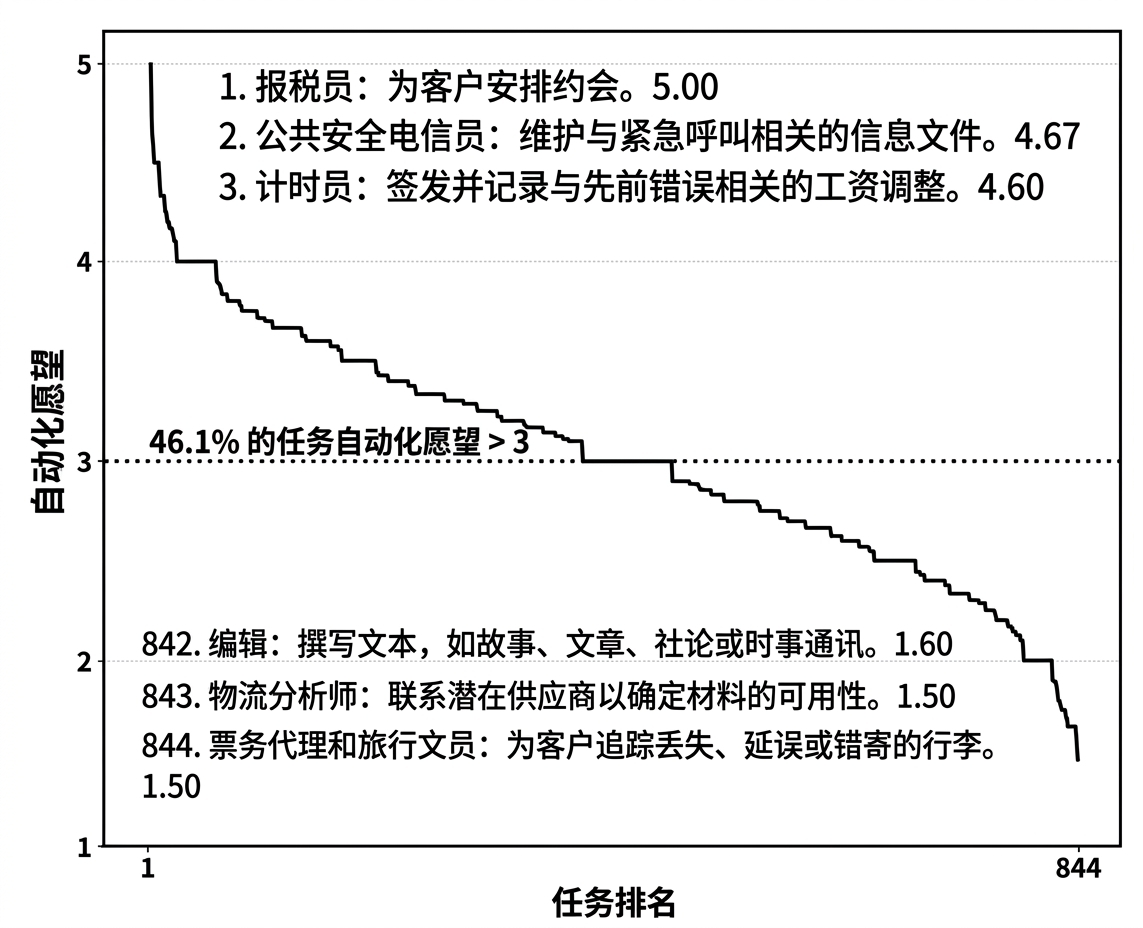
In 46.1% of the tasks, employees currently engaged in these jobs expressed a positive attitude towards the automation of AI agents (with a willingness score higher than 3 on the Likert 5 - point scale), even though they have clearly considered potential problems such as unemployment and reduced work enjoyment.
3. Why do employees want the automation of AI agents?
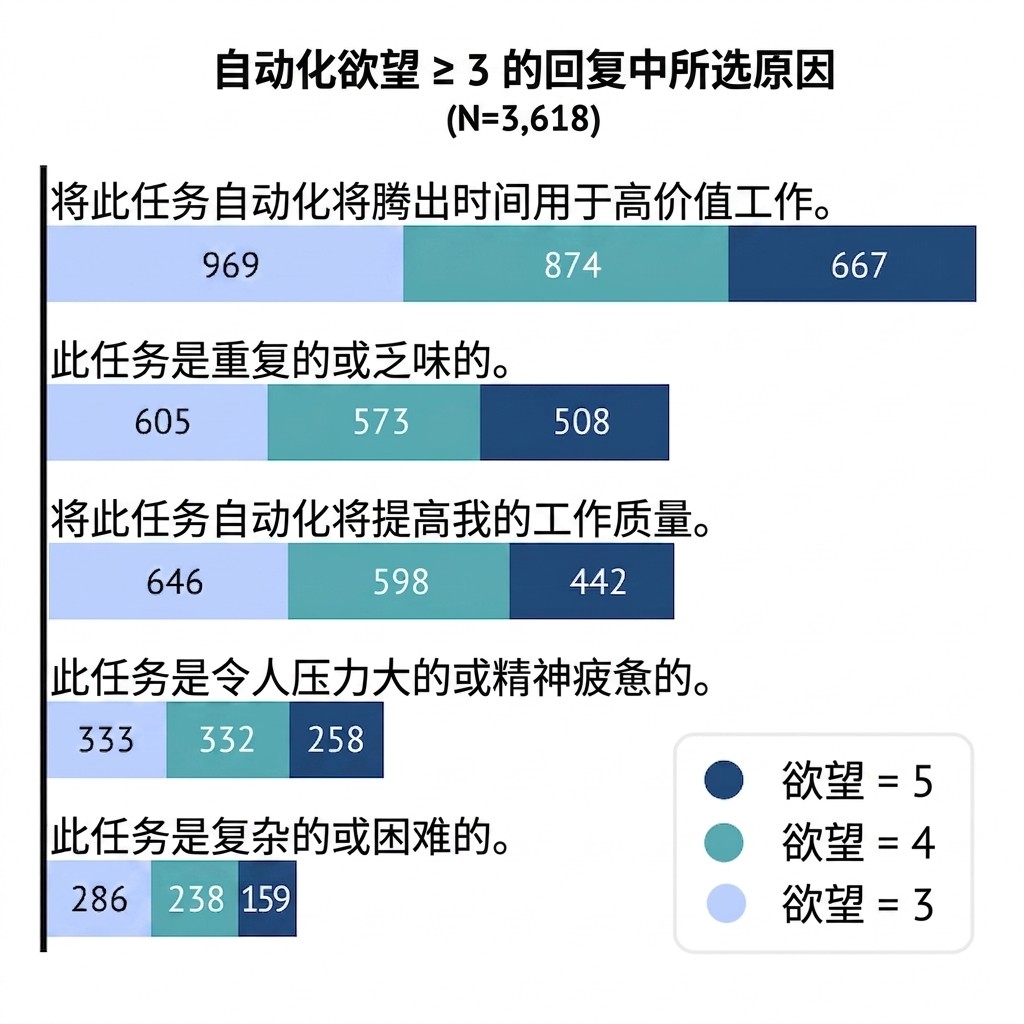
Regarding the feedback in support of automation, we collected employees' motivations through multiple - choice questions and open - ended questions. The most frequently mentioned motivation for supporting automation is "freeing up time to do high - value work" (selected in 69.4% of the cases). Other common reasons include task repetition (46.6%), high stress (25.5%), and room for quality improvement (46.6%).
4. By comparing the perspectives of employees and AI experts, four major task areas are divided.
Our data helps to divide occupational tasks into four areas:
Automation "green - light" area: Tasks with both strong willingness for automation and available technological capabilities. These are the first - choice objects for deploying AI agents, which are expected to bring extensive productivity leaps and social benefits.
Automation "red - light" area: Tasks with high technological capabilities but low willingness for automation. Deployment in these areas requires extra caution because it may encounter resistance from employees or bring broader negative social impacts.
R & D opportunity area: Tasks with high willingness for automation but currently insufficient technological capabilities. These indicate promising development directions for AI research.
Low - priority area: Tasks with low willingness and low capabilities.
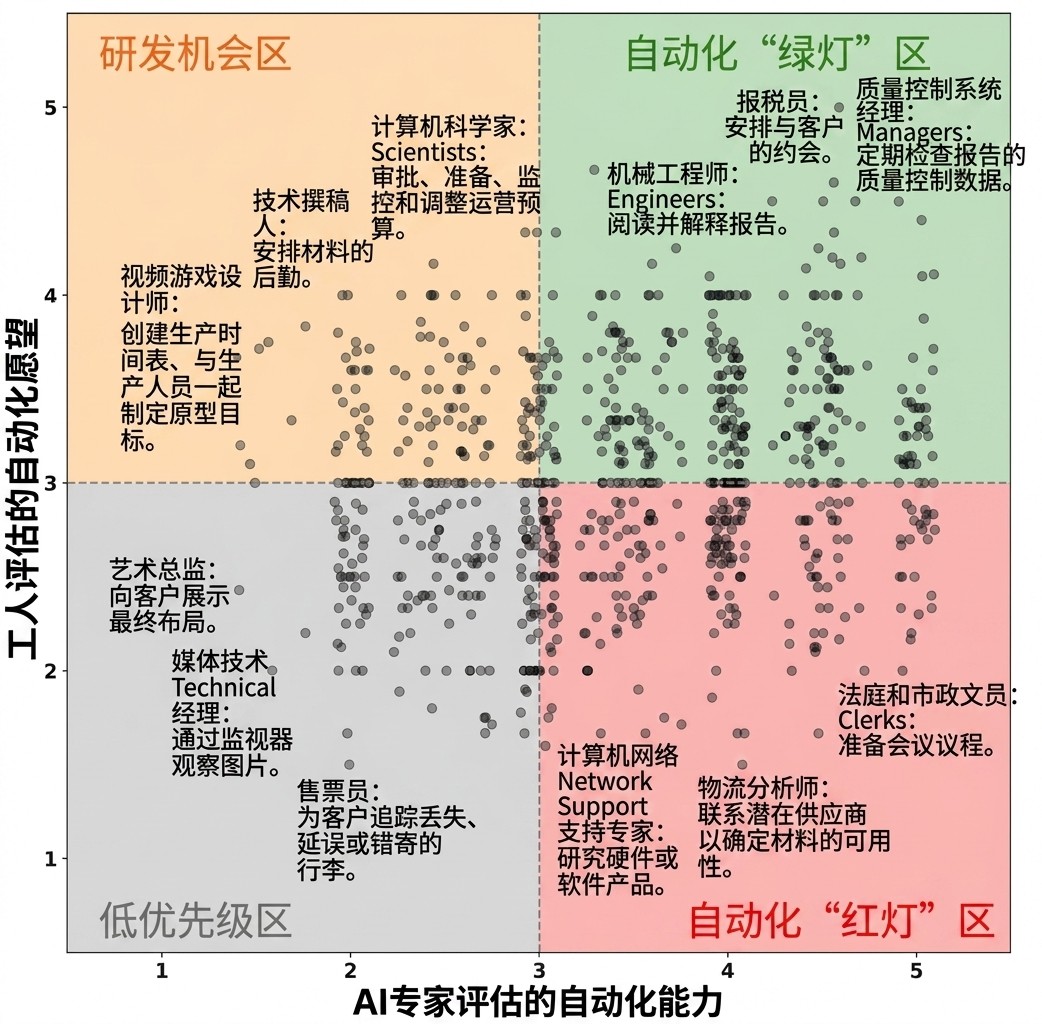
5. The "willingness - ability" map reveals opportunities and mismatches.
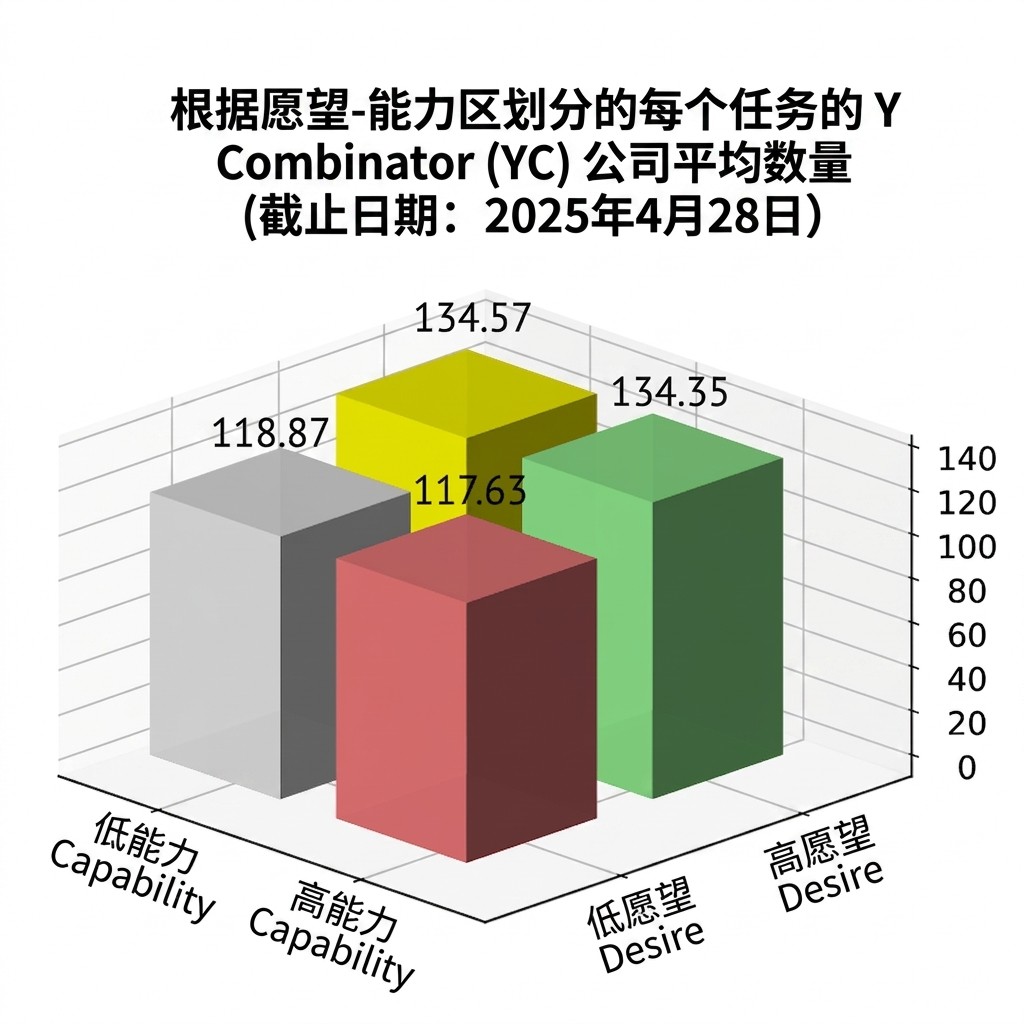
We used YC - incubated startups as a market indicator and mapped their businesses to the tasks in the WORKBank database. Unfortunately, current YC investments are not tilted towards the automation "green - light" area and the R & D opportunity area. 41.0% of YC companies are mapped to the low - priority area and the automation "red - light" area; while many promising tasks in the "green - light" area and the "opportunity area" have not been fully addressed in the current investment boom.
New Opportunities for Human - Machine Collaboration
A unique feature of our audit framework is that it goes beyond the traditional focus on "automation". We also deeply explored "capability enhancement" - that is, how technology can complement and enhance human capabilities. To provide a common vocabulary for quantifying "automation" and "capability enhancement", we introduced the "Human Autonomy Scale" (HAS), a five - level scale from H1 (no human participation required) to H5 (human participation is crucial). This new scale supplements the original SAE L0 - L5 autonomous driving classification standard by quantifying the degree of human participation required to complete occupational tasks and ensure their quality, getting rid of the one - sided perspective of simply "AI - first".
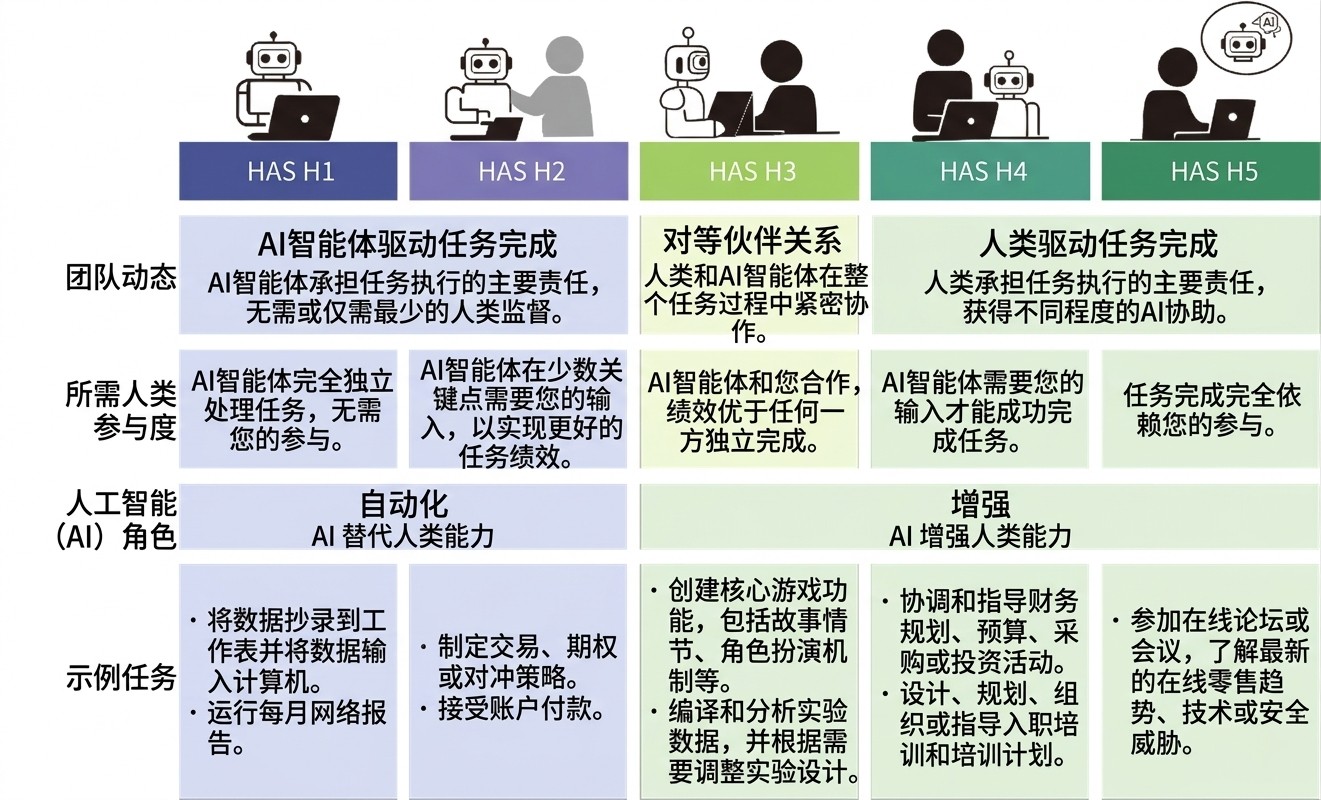
Human Autonomy Scale: Level division of the Human Autonomy Scale (HAS).
6. Employees in many occupations prefer to establish a balanced and collaborative partnership with AI.
We introduced the Human Autonomy Scale (H1 - H5) to quantify the degree of human participation required to complete occupational tasks and ensure their quality. This scale focuses on human autonomy and provides a common language to define the spectrum from full automation to capability enhancement. Notably, among the 104 occupations analyzed, employees in 47 occupations most desire the H3 level (equal partnership) on the Human Autonomy Scale.
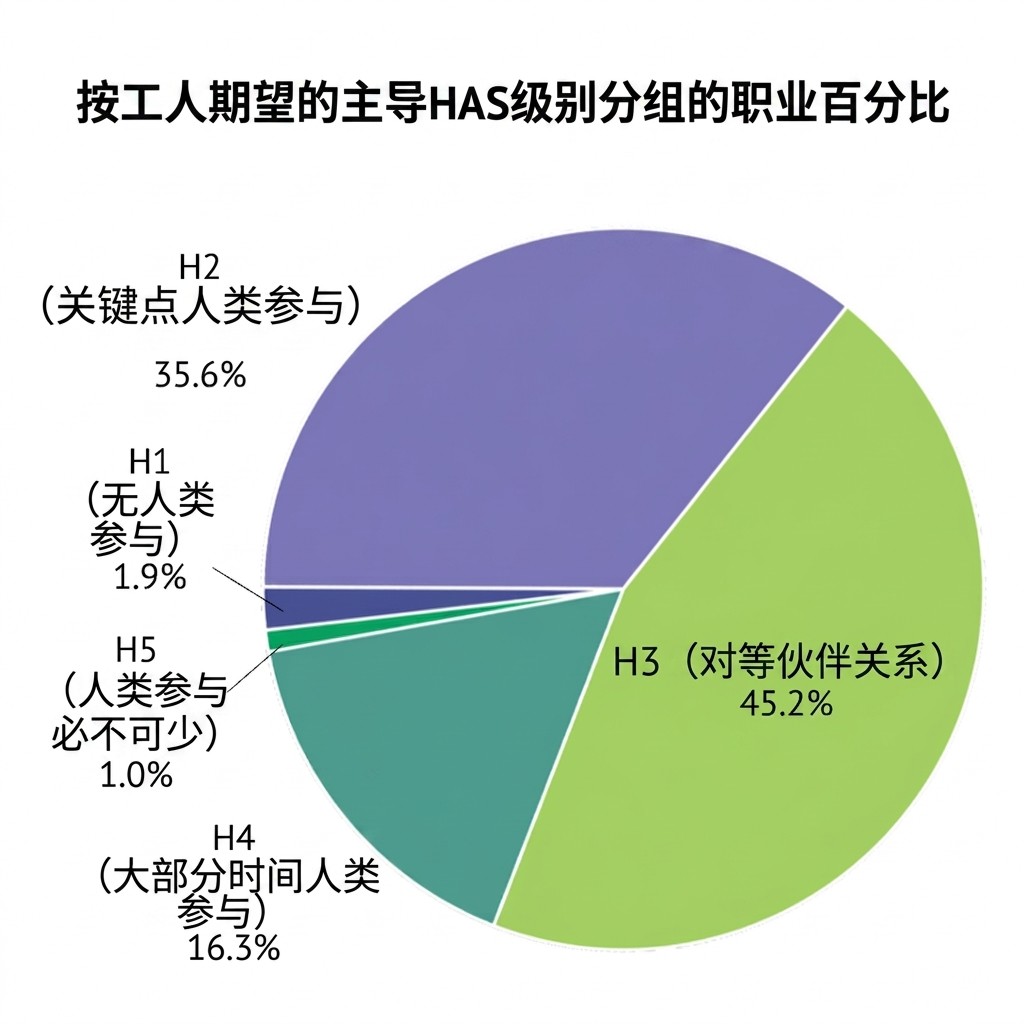
7. Employees generally prefer to retain a higher degree of human autonomy, which indicates that as AI capabilities continue to evolve, workplace frictions may occur in the future.
Among 844 tasks, 47.5% of the tasks show that the level of human autonomy expected by employees is higher than the level considered technically required by experts. Notably, in 16.4% of the tasks, the level of autonomy expected by employees is two levels higher than the experts' assessment.
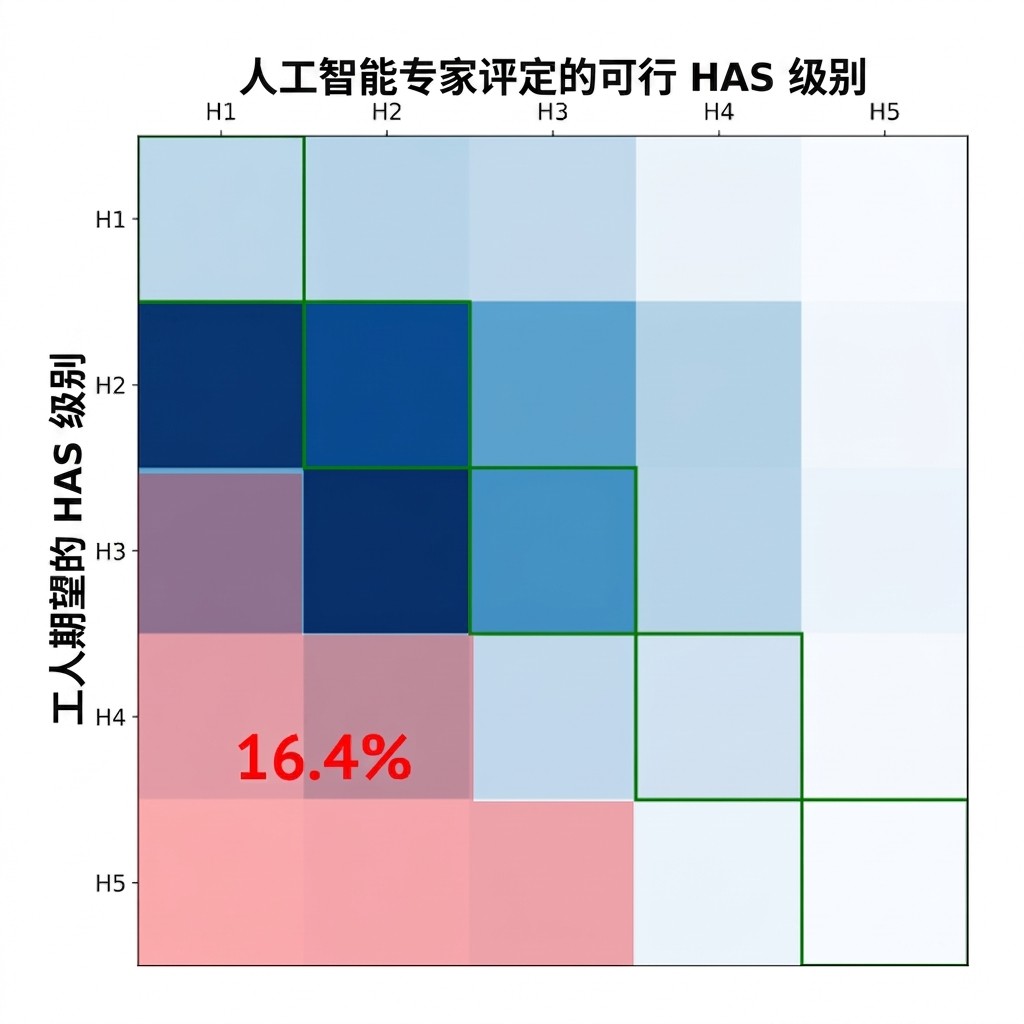
Employees prefer to retain a higher level of human autonomy
8. The Human Autonomy Scale reveals the specific profiles of each occupation in terms of "automation vs. capability enhancement".
Even within the same occupation, the expected levels of human autonomy required for different tasks may vary significantly. We suggest that the R & D of AI agents should fully consider different levels of human autonomy to achieve higher - quality and more responsible technology implementation.
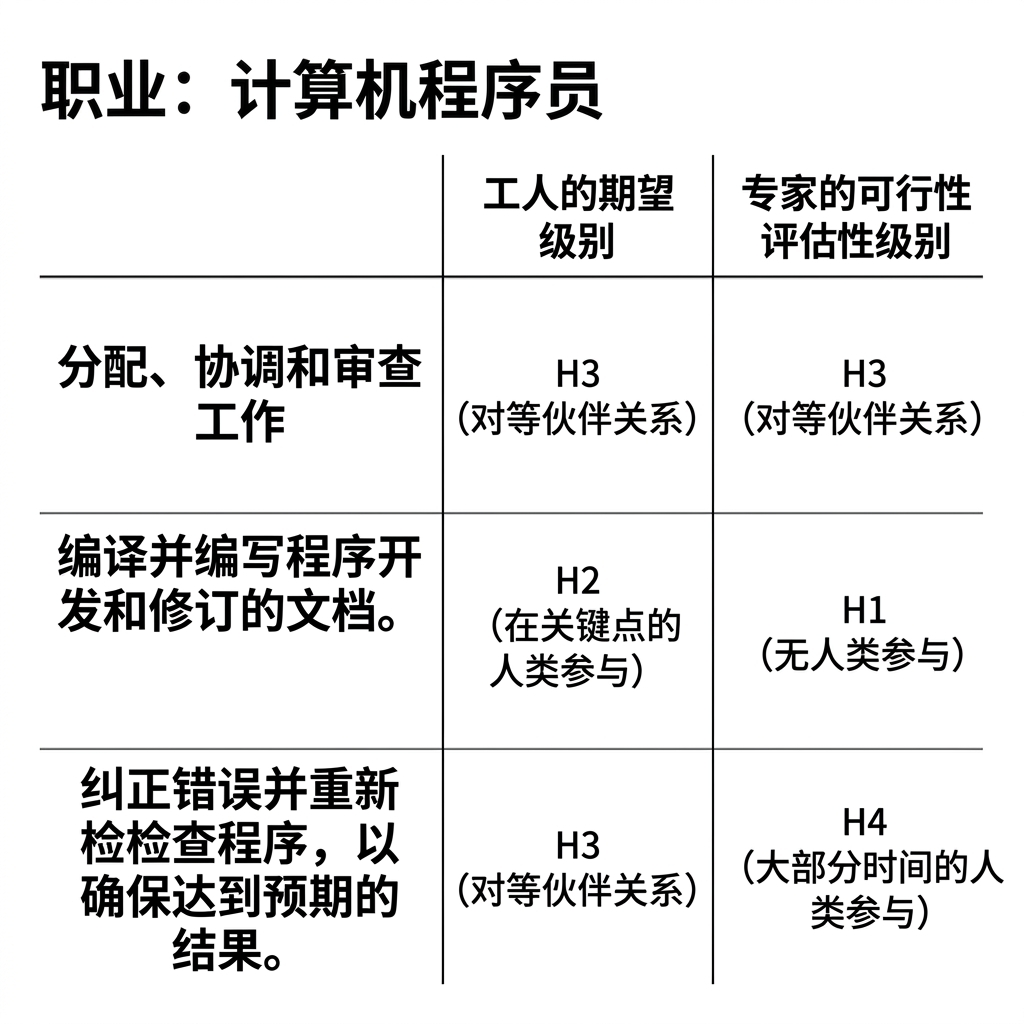
Preparing for the Future
Not all types of work are affected by AI to the same extent. To understand the future direction of work and which skills will be the most valuable, we further used the WORKBank database to analyze the changing demand for human skills.
Using the O*NET database, we matched each occupational task with the specific skills it depends on. For example, the task of "approving, rejecting, or coordinating the approval/rejection of credit limits, or commercial, real - estate, or personal loans" (performed by financial managers) will be mapped to skills such as "making decisions and solving problems" and "guiding, leading, and motivating subordinates". For each skill, we estimated two core values:
Level of human autonomy: Based on experts' assessment of the degree of human autonomy.
Average salary: Using the salary data from the U.S. Bureau of Labor Statistics as a measure of current economic value.
By comparing the skill rankings sorted based on these two dimensions, we found three new trends that may determine the future form of human work:
The demand for information - processing skills is shrinking. Skills related to data analysis and knowledge updating - although common in today's high - paying occupations - are no longer as prominent in tasks that urgently require a high degree of human autonomy.
Interpersonal communication and organizational management abilities are more highly valued. Skills involving interpersonal interaction, cooperation, and resource monitoring more frequently appear in tasks with extremely high requirements for HAS (Human Autonomy), even though these skills are not currently given top priority in salary evaluations.
High - autonomy skills cover a wide range of dimensions. Among the top 10 skills with the highest average required human autonomy, they cover a wide range of fields from interpersonal communication, organizational coordination to decision - making and quality judgment.
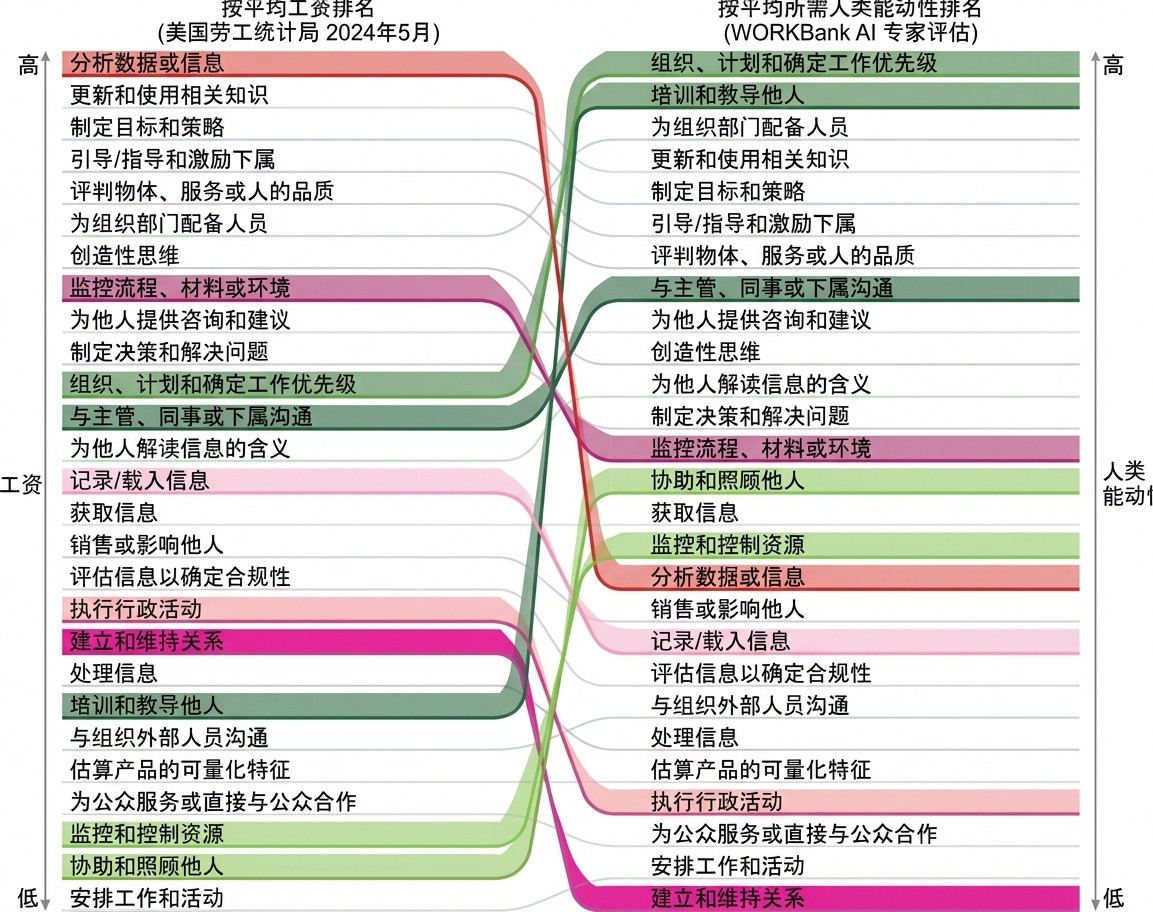
Change in skill rankings: By comparing the skill rankings brought about by average salary and required human autonomy, it reveals a potential shift in human core competitiveness - from information - processing skills to interpersonal communication skills.
Translator: boxi.