Two months after leaving Alibaba, LIN Junyang made a move worth $2 billion.
Two months ago, Lin Junyang posted a message "bye_my_beloved_qwen" on X, officially bidding farewell to the Tongyi Qianwen team he had nurtured.
Then social media fell silent.
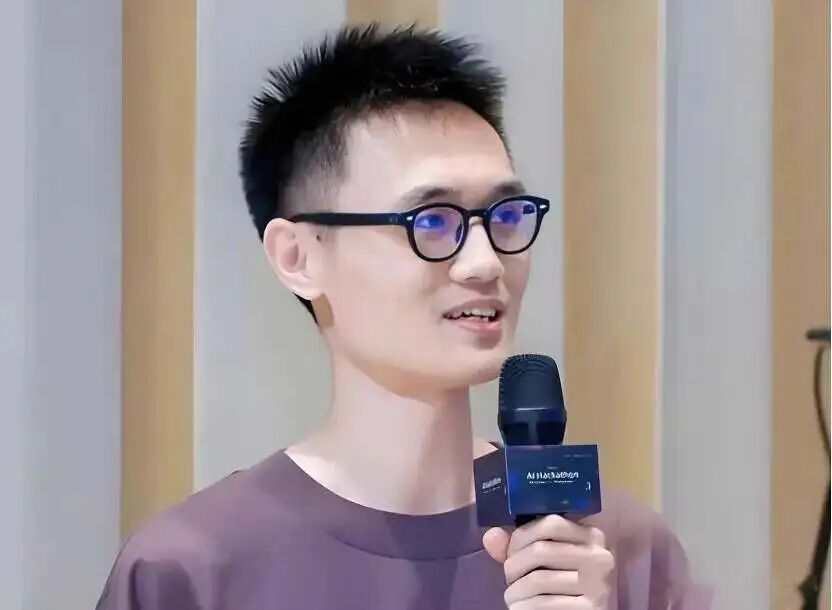
Until a few days ago, someone noticed that he had cleared his Xiaohongshu account, changed his nickname, profile picture, and bio. Then, foreign media The Information dropped a bombshell - Lin Junyang is preparing a brand - new AI laboratory, with a target pre - seed valuation of $2 billion (approximately 13.6 billion RMB). Sequoia China and Gaorong Capital are already at the negotiation table.
This is not an ordinary AI startup.
In China, for a startup without a product, revenue, or even a publicly announced name to ask for a $2 - billion valuation is almost unheard of. Even the once - hottest "Four AI Dragons" in the early stage of financing were far from reaching this level. The Information itself sighed: "Such a valuation has almost no precedent among Chinese AI startups."
Who is providing the money? Sequoia China and Gaorong Capital. Who is he recruiting? According to a report by "Intelligent Emergence" under 36Kr, several researchers from ByteDance, Tencent, and overseas institutions have joined. What's the direction? According to insiders, the team is considering two major technological routes: "world models" and "embodied brains."
A 33 - year - old young man can command a $2 - billion valuation just two months after leaving a big tech company.
What exactly is going on behind this?
From an NLP engineer to the youngest P10 at Alibaba
Lin Junyang's resume seems a bit "off - track" among executives of big tech companies.
Born in 1993, he majored in English at the University of International Relations for his undergraduate degree and went to the School of Foreign Languages at Peking University for his master's degree. A young man with a language background, after graduating with a master's degree in 2019, he joined Alibaba's DAMO Academy as a senior algorithm engineer. At that time, no one would have thought that this "liberal arts student" would be promoted four levels in six years and become the youngest P10 in Alibaba's history.
His rocket - like promotion was closely tied to the rise of Qwen.
After joining the DAMO Academy, Lin Junyang quickly became a core member of the M6 multimodal pre - trained model team. M6 was Alibaba's most ambitious early - stage multimodal large - model project, and the team pushed the parameter scale all the way to the quadrillion level.
Comprehensive information from Tianyancha media shows that at the end of 2022, the language and vision AI teams of the DAMO Academy were integrated into Alibaba Cloud, and the Tongyi Laboratory was established. Lin Junyang officially took over as the technical leader of the Tongyi Qianwen series of large models.
From then on, Qianwen began to expand at an eye - catching speed. Under his leadership, Alibaba launched the Qwen open - source model family covering various parameter scales. By the time he left, the global download volume of the Qwen series exceeded 1 billion times, and the number of derivative models exceeded 200,000.
Data from Tianyancha and Hugging Face in January 2026 show that Qwen has firmly held the top position among global open - source large models, competing head - on with GPT and Claude on the benchmark test leaderboard. In August 2024, after Zhou Chang, the former head of Qwen, jumped to ByteDance, Alibaba gave a general salary adjustment to the core team, and Lin Junyang was promoted to P9. In less than a year, based on the actual performance of the team, he was promoted to P10.
What does P10 mean at Alibaba?
It's the ceiling of the technical sequence. Beyond that is the vice - president level. There are very few people in the whole group who can reach this position at the age of 33.
The foreshadowing of departure: A game about control
Why did Lin Junyang leave?
According to insiders at Alibaba, the direct trigger for his departure was a "strategic adjustment." In the second half of 2025, Alibaba decided to adjust the overall strategy of Qwen, believing that more technical talents needed to be introduced, which "involves the adjustment of Lin Junyang's original scope of power and responsibilities to a certain extent."
To put it simply, the company wanted to add people, and the new people might take away some of his power. After several rounds of communication, Lin Junyang did not accept this plan and chose to resign voluntarily.
On March 4th, he posted on X to announce his departure. On the same day, Yu Bowen, the post - training leader, and Li Kaixin, a core contributor to Qianwen 3.5/VL/Coder, also revealed their departure. In one day, three key figures from Qianwen's core technical team left. Alibaba clearly smelled the danger.
The next day, Wu Yongming, the group's CEO, urgently responded in an internal email, approving Lin Junyang's resignation. At the same time, he announced the establishment of a basic model support group, led by himself, and Zhou Jingren, the CTO of Alibaba Cloud, would continue to be in charge of the Tongyi Laboratory. One month later, on March 16th, Alibaba officially announced the establishment of the Alibaba Token Hub business group, directly led by Wu Yongming, and the Tongyi Laboratory was incorporated into it.
The speed and scale of these actions confirm the significance of this personnel earthquake from the side. What's more intriguing is the timing. The day after Lin Junyang's departure, Omar Sanseviero, the head of Google DeepMind's development team, "shouted across the air" to the Qianwen team on social platforms: "If you want to find a new place to build excellent models and contribute to the open - model ecosystem, please contact us." The big tech companies' sense of poaching talent is never late.
Looking back now, Lin Junyang announced his departure on March 4th, and on May 13th, it was reported that he had launched a $2 - billion financing. During the two - month "gap period," he not only completed the business plan but also negotiated with two top - tier VCs and assembled a multinational team. This was not an impromptu decision but a long - planned move.
Is a $2 - billion valuation too high?
Whether it's too high depends on what you compare it with. In the United States, the valuations of AI founders have skyrocketed. SSI, a safe super - intelligence company founded by Ilya Sutskever, the former chief scientist of OpenAI, raised $1 billion in financing with a $5 - billion valuation just three months after its establishment. Thinking Machines Lab, founded by Mira Murati, the former CTO of OpenAI, had a first - round financing valuation of $10 billion. In comparison, Lin Junyang's $2 - billion valuation is indeed "affordable." But the problem is, he's not in Silicon Valley; he's in China. The valuations of Chinese AI startups are usually much lower than their American counterparts.
A $2 - billion valuation has broken the ceiling in China. Why are VCs willing to pay this price? To put it simply, they're buying "certainty." Qianwen's achievements are the biggest endorsement. One billion global downloads, 200,000 derivative models, and the top position in the open - source community - these figures are not just on paper; they're real. In the Chinese large - model track, apart from ByteDance's Doubao and Baidu's Wenxin, no other name can compete with Qianwen. And as the technical leader of Qianwen, Lin Junyang is the most core "asset" of this brand.
In addition, Sequoia and Gaorong's involvement also has strategic considerations. In the domestic primary market, there are very few AI founders with global competitiveness - Lin Junyang is one, Zhou Chang (who went to ByteDance) is one, and Li Dahai of Mianbi Intelligence is one. The scarcity of high - quality targets has led to a certain degree of "talent - grabbing investment." If you don't invest, your competitors will. Another notable signal is the financing structure. According to insiders, the financing scale of this round is "hundreds of millions of dollars." If calculated based on a $2 - billion valuation and a 10% - 15% equity - transfer ratio, the actual financing amount may be between $200 million and $300 million. For a pre - seed company, this amount of money is enough to last for two or three years.
Lin Junyang has the money and the people, but the most crucial question remains unanswered: What exactly does he want to do?
The answer may be hidden in the long article he published on March 26th. The title of this article is very straightforward: "From 'Reasoning' Thinking to 'Agentic' Thinking." The core argument of the whole article can be condensed into one sentence: In the previous stage of the AI competition, the goal was to make models better at thinking; in the next stage, the goal is to make models think for action.
In Lin Junyang's view, the paradigm of reasoning models has reached an inflection point.
The success of models like OpenAI o1 and DeepSeek R1 has proven that large models can achieve a qualitative leap in verifiable tasks such as mathematics, code, and logic through reinforcement learning. But the marginal return of this path is decreasing - when the model can already outperform humans in math competitions, where is the next breakthrough point?
His answer is: Agentic Thinking.
This ability to "think for action" differs from static reasoning in terms of interaction. Instead of independently completing the reasoning chain and then spitting out the answer, the model acts in an environment, receives feedback, revises the plan, and continues to progress. The object of training is no longer the model itself but the "model + environment" system, that is, the agent and its orchestration framework. This has brought fundamental changes to the research direction. The most important things are no longer the RL algorithm itself but the environment design, trajectory sampling infrastructure, the robustness of the evaluator, and the coordination interface between multiple agents. The source of competitive advantage has also shifted from "better feedback signals" to "better environments" and the "closed - loop of training - reasoning - action."
This article is widely interpreted as the technical manifesto of Lin Junyang's entrepreneurial direction.
The research directions of the new laboratory revealed by insiders - "world models" and "embodied brains" - are exactly in line with the logic of Agentic Thinking. A world model constructs an environment that can simulate the physical world for the agent, and an embodied brain enables the agent to learn to perceive and act in the real physical space.
In other words, Lin Junyang is not just building a better chatbot; he's betting on the next decade of AI's transition from the digital world to the physical world.
The most difficult leap from P10 to CEO
The ideal is plump, but the reality is harsh.
An AI laboratory getting a $2 - billion valuation sounds glamorous, but the real challenges are just beginning.
The first challenge is computing power. Training large models requires a large number of GPUs, and the supply of high - end computing power in the Chinese market has been in short supply for a long time. When Lin Junyang was at Alibaba, he had the support of the entire group's cloud - computing infrastructure. Now he has to figure it out on his own - buying GPUs, building clusters, and competing for resources. The money from Sequoia and Gaorong can buy some computing power, but compared with the resource endowments of the giants, it's still a drop in the bucket.
Secondly, it's about finding a differentiated path. Big tech companies like Alibaba, ByteDance, and Tencent all have their own large - model teams. If Lin Junyang goes to build a general large model, he'll be competing head - on with his old and new colleagues on his old battlefield. He must find a niche area that the giants are not willing to enter or are not good at. Agentic Thinking and embodied intelligence seem to be a good entry point, but this track also requires a huge amount of resources and data investment.
The most crucial variable is actually Lin Junyang himself. There's no doubt that he's one of China's top AI technology experts. But transitioning from a technical leader to an entrepreneur requires a completely different set of skills - financing, management, business development, product definition, team building, and business implementation. He has worked within Alibaba's large system for six years, and all resources were readily available. Now he needs to start from scratch on a blank sheet of paper. For a 33 - year - old technical genius, this is both an opportunity and a test.
There's a similar script in Silicon Valley. The three founders of Anthropic came from OpenAI, and the founder of Character.AI came from Google Brain. They're all top - notch technical talents who have transformed into entrepreneurs. But not everyone can succeed - some raise money but can't develop products, and some develop products but can't find a commercialization path. It's too early to conclude whether Lin Junyang can become China's Anthropic or Character.AI. But one thing is certain: he's already the most notable piece on the Chinese AI startup chessboard.
China's AI startup enters the era of "talent - grabbing war"
If you want to understand what Lin Junyang's $2 - billion valuation means, let's first look across the Pacific Ocean.
In June 2024, Ilya Sutskever left his position as the chief scientist of OpenAI and founded Safe Superintelligence (SSI). It had about 20 employees, no products, no revenue, and not even a public demo.
But the pricing of the capital market was astonishing: it was valued at $5 billion in September 2024 and soared to $32 billion in April 2025. Greenoaks, a16z, Sequoia, Alphabet, NVIDIA - almost half of Silicon Valley's top - tier capital is betting on the same thing: Ilya himself.
In July 2025, Mira Murati, the former CTO of OpenAI, founded Thinking Machines Lab and raised $2 billion in pre - seed financing with a $12 - billion valuation; less than half a year later, the rumored valuation in the new round of financing jumped to $50 - 60 billion. Even though the product Tinker has been launched, no one believes that the $12 - billion valuation is based on the "product"; it's definitely a "person valuation." In December of the same year, Richard Socher, the former chief scientist of Salesforce, founded Recursive Superintelligence, raising over $500 million in four months with a $4 - billion valuation - another project without a product and an unformed team.
Connecting these data points, a clear logical line emerges: the valuation system in the AI era is undergoing a fundamental paradigm shift. The traditional VC valuation formula - TAM × penetration rate × market share × profit margin - doesn't work here. The new formula is almost brutally simple: what this person has achieved in the past and what he might achieve in the future.

The person is the company, and the company is the person.
In this context, Lin Junyang's $2 - billion valuation is not only reasonable but can even be considered "pragmatic."
SSI has Ilya's academic reputation, but it doesn't have a single product in the open - source community with 1 billion downloads. TML has Mira's management experience, but she has never led a basic - model project from scratch as a technical architect. And Lin Junyang - at 33, the youngest P10 at Alibaba - personally pushed Qwen to the top position among global open - source large models: 1 billion downloads, 200,000 derivative models, and influence spanning from academia to industry.
What VCs are buying is not just a P10 title but the "certainty" verified by 1 billion downloads