The "Achilles' heel" of satellite communication
We are living in an unprecedentedly interconnected world. From the fiber - optic networks on the ground to the cables buried deep under the sea, from the satellite constellations in low - Earth orbit to the cloud - edge - end data centers, these infrastructures form the nervous system on which modern society depends. Navigation, timekeeping, communication, payment, healthcare, education, disaster response... Every second, a vast amount of data surges through the digital "blood vessels".
However, the more we rely on uninterrupted connections, the more we have to face a harsh truth: this lifeline is not indestructible.
A solar flare can make satellite signals "deaf"; the burial of a submarine cable by volcanic ash can cut off a country's internet connection for a long time; a heatwave can cause a data center to "overheat" and shut down. Not to mention the systemic risks brought about by the combination of war, geopolitics, and extreme weather. All these risks have a particularly deadly amplifying effect on small island developing states and least developed countries.
The theme of the World Telecommunication and Information Society Day in 2026, "Digital Lifeline: Strengthening Resilience in an Interconnected World", is a deafening reminder to the world: mere connection is not enough. We must make our connections resilient. Resilience is not an extravagant luxury but a vital necessity. This requires the joint efforts of governments, industries, and communities - from establishing a trans - national space weather warning mechanism to filling the gap in submarine cable repair capabilities; from designing green data centers resistant to high temperatures and floods to building an integrated emergency communication network across air, space, and the ground.
China has never been absent from this resilience revolution. From Wenchuan to Zhengzhou, from Jishishan to the frontlines of typhoons, the emergency communication system has been iteratively upgraded in actual combat. China Telecom has established a professional emergency communication subsidiary, and Beidou short - message services have entered thousands of households. The "off - grid communication" technology has moved from the laboratory to disaster - stricken areas. However, building the global digital resilience edifice requires the contributions of every country, every enterprise, and every citizen.
Digital resilience supports universal and meaningful interconnection, enabling everyone to access and use the Internet safely, economically, and effectively. True progress is not about enjoying the fastest data in the calmest times, but about ensuring that no life is forgotten due to a broken connection in times of crisis. Protecting the digital lifeline means protecting the common future of humanity.
More and more satellites in space are building a crucial "lifeline" for human communication. This line breaks through geographical barriers, topographical constraints, and the impacts of natural disasters such as floods and earthquakes, allowing people to stay connected online and access key services such as navigation and timekeeping even in deserts, oceans, or desolate Gobi areas.
However, satellite communication is not indestructible.
On the one hand, it is affected by space weather. The "Carrington Event" more than 160 years ago, the most powerful solar storm on record, caused a large - scale paralysis of global telegraph communication. If such an extreme event were to occur today, a large number of satellites might fail. In fact, similar events continue to affect the stability and quality of satellite communication, and humans seem helpless in the face of them.
On the other hand, there are human - made factors. As humans continue to explore deeper into space, the space environment is facing the dual pressures of "space debris accumulation" and "the explosion of large - scale constellations". The risk of mutual interference and even collisions has increased significantly compared to the past. The lack of "space traffic rules" poses a fatal threat to satellite communication, and humans could have done more in this regard.
Fear of the Sun's "Bad Temper"
The universe is not "peaceful". The sun often "throws tantrums". Sunspots, solar flares, and coronal mass ejections are all variables that affect the stable operation of the satellite Internet.
In May 1844, the first telegraph in human history was sent, marking the practical application of telegraph technology and being regarded as the starting point of modern communication. However, 15 years later, in 1859, the most powerful solar storm on record broke out, triggering a super - strong geomagnetic storm that had a devastating impact on the then wired telegraph network: telegraph equipment sparked and even melted, telegraph operators were electrocuted, and telegraph papers caught fire. This is the famous "Carrington Event".
Since then, although humans have not experienced such a strong solar storm again, the sun's "temper" remains "fiery". Elon Musk has a deep "feeling" about this.
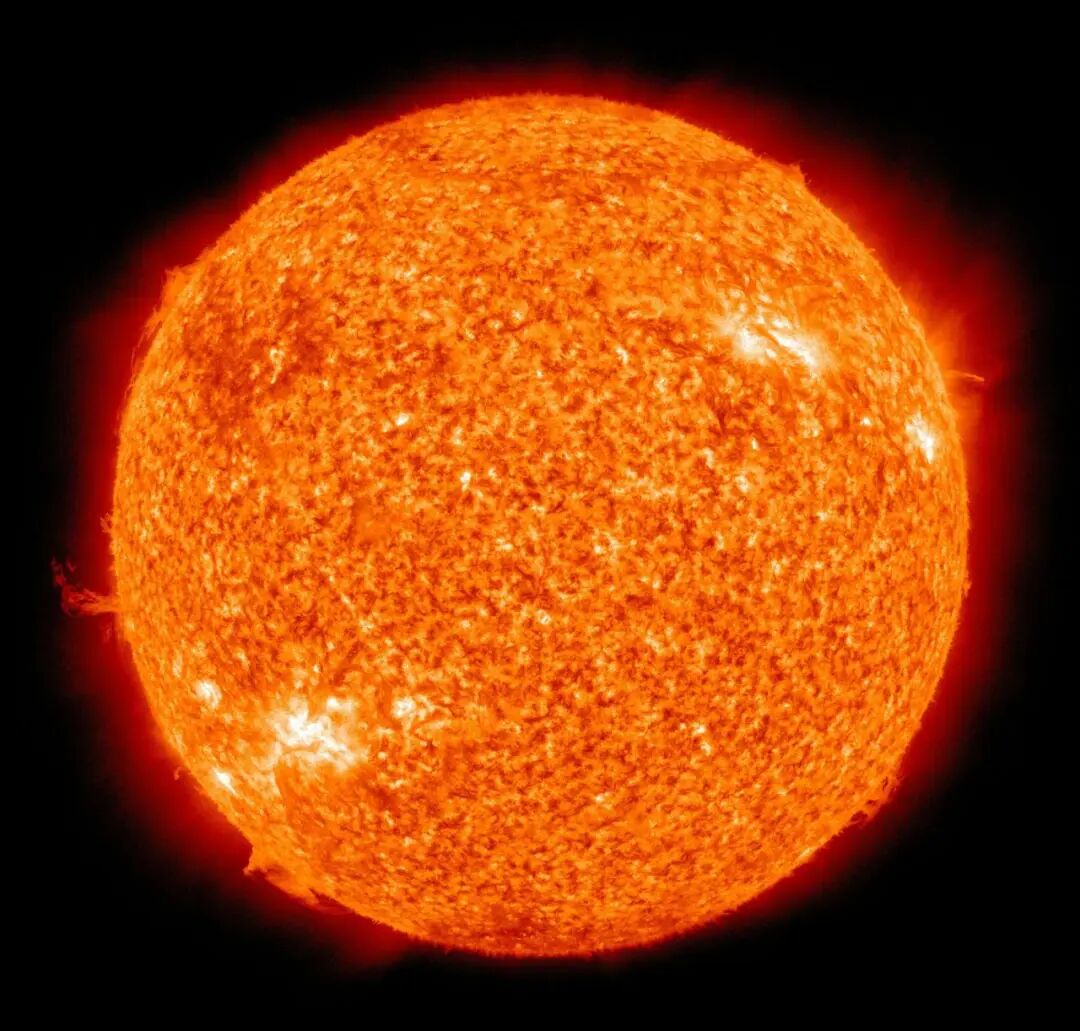
Image source: pexels
Researchers from the Goddard Space Flight Center in the United States and the University of Maryland published a paper in the Swiss journal "Frontiers in Astronomy and Space Sciences" last year, pointing out that from 2020 to 2024, a total of 1,190 satellites fell from very low - Earth orbit, among which 583 were Starlink satellites, accounting for half of the total.
In 2024 alone, 316 Starlink satellites fell, far exceeding the total from 2020 to 2023. The reason is that 2024 was the peak of the solar activity cycle. Solar radiation heated the Earth's upper atmosphere, causing it to expand, which increased the flight resistance of low - orbit satellites (such as Starlink), leading to the decline and even crash of satellite orbits - just like a bicycle riding into the sand, where the resistance causes the speed to continuously decrease and may even make the rider fall.
The research also shows that solar storms do not affect satellites in different orbits and positions uniformly. Satellites in some specific regions or orbits will be more severely interfered with, resulting in significant spatial differences in the performance of the entire satellite network.
Solar activity can also directly affect the propagation of radio signals, interfering with various services that rely on satellite communication and navigation.
In December 2006, an unprecedentedly strong solar flare erupted, generating extremely strong solar radio pulses and noise, whose frequencies happened to cover the frequency band used by GPS signals. This "same - frequency interference" caused a severe attenuation of GPS receiver signals over a large area, reducing the positioning accuracy or even completely disabling the function. In September 2017, a solar flare of magnitude X9.3 erupted, severely disturbing the ionosphere and magnifying the GPS positioning error by three times.
The report "When Digital Systems Fail: Potential Risks in the Digital World" jointly released by the International Telecommunication Union, the United Nations Office for Disaster Risk Reduction, and the Paris School of International Affairs points out that a severe solar storm may cause satellite paralysis, navigation system interruption, and power grid instability, and the recovery time may take several months.
Kamaleish Kumar Kishore, the Special Representative of the United Nations Secretary - General for Disaster Risk Reduction, publicly stated before: "Whether now or in the future, when planning, building, and maintaining digital infrastructure, systemic risks must be fully considered. Digital infrastructure must be resilient infrastructure."
The Increasingly "Chaotic" Space
What poses a fatal threat to satellite communication is not only space - weather events but also the satellites, rockets, and derived space debris created by humans. Especially today, with the accelerated deployment of large - scale satellite constellations, the orbits in space are becoming more and more crowded, and the risk of collisions between space objects is constantly emerging.
Satellites operating in space have their own "routes". According to different orbital altitudes, they are mainly divided into two categories: one is the Geostationary Orbit (GSO) satellites about 36,000 kilometers away from the Earth, which remain relatively stationary relative to the Earth when orbiting; the other is the Non - Geostationary Orbit (NGSO) satellites, including Low - Earth Orbit (LEO, 300 to 2,000 kilometers) and Medium - Earth Orbit (MEO, 2,000 to 36,000 kilometers) satellites.
The geostationary orbit, with scarce resources and limited capacity, is already as crowded as a "parking lot full of cars". At a conference a few months ago, Lü Jingwei, the deputy general manager of China Satellite Communications Co., Ltd., introduced that there are more than 600 high - orbit satellites in orbit globally, with an average of 1.7 satellites per degree of orbital position, and even 7 satellites are concentrated in the most popular orbital positions.
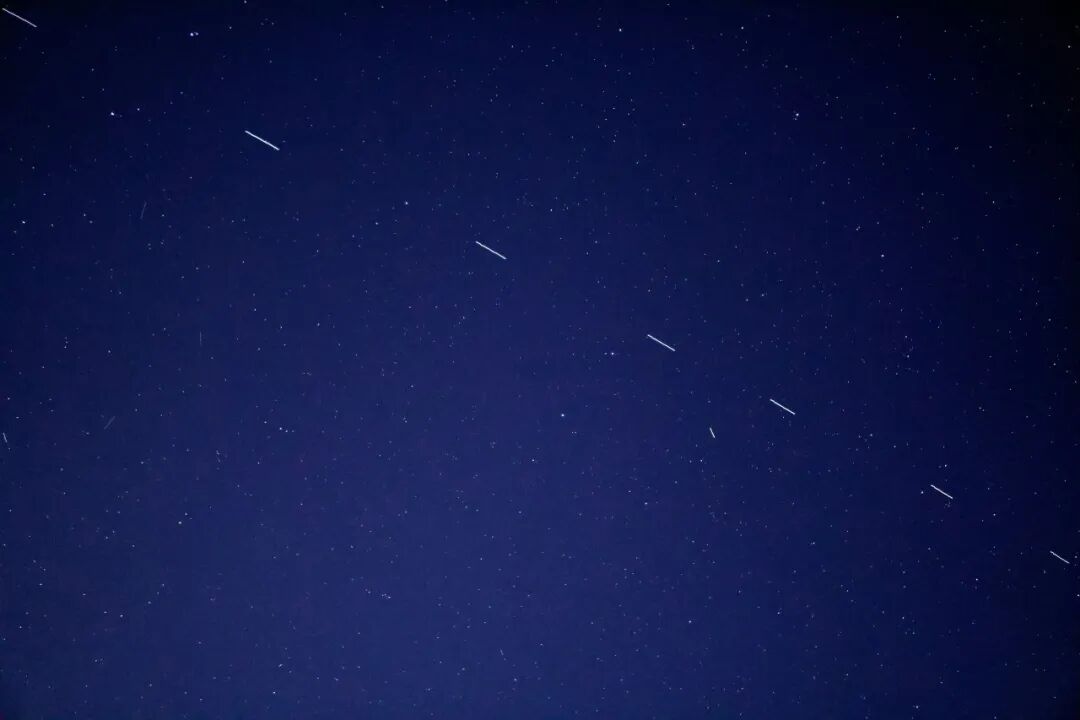
Image source: unsplash
Compared with GSO, NGSO can accommodate many more satellites, but it is still difficult to meet the huge demand brought about by the boom of low - orbit constellations. The contradiction of "too many people and too little food" is becoming increasingly prominent.
"The low - Earth orbit is affected by factors such as cosmic rays and space ions. The truly high - quality orbital frequency resources are not as abundant as expected. It is generally believed that it can accommodate about 60,000 satellites. In the future, with technological progress, the capacity may increase." The technical director of a domestic satellite Internet enterprise told a reporter from "IT Times". Another view holds that the low - Earth orbit may become saturated when the number of satellites reaches 100,000.
However, neither 60,000 nor 100,000 can satisfy the "appetite" of the industry. From the end of 2024 to the beginning of 2025, the scale of constellation satellites declared by multiple countries to the International Telecommunication Union (ITU) all exceeded 100,000, and China also declared frequency and orbital resources for more than 200,000 satellites.
What makes space even more crowded is not only the increasing number of satellites but also a large amount of debris. Relevant data shows that the number of in - orbit debris with a size of more than 10 centimeters has exceeded 12,000, which is equivalent to the current number of low - orbit satellites, and they are highly concentrated in the middle and low orbits - which are the core operating areas of manned spaceflight, communication satellites, and remote - sensing satellites.
The space environment is experiencing the dual pressures of "debris accumulation" and "the explosion of large - scale constellations". The risk of collisions between space objects has increased significantly, posing a serious threat to on - orbit spacecraft, astronauts, and ground safety. There are numerous relevant cases: in February 2009, the US "Iridium 33" communication satellite collided with the decommissioned Russian "Cosmos - 2251" satellite, generating thousands of pieces of debris and posing a long - term threat to satellites in the same orbit; in September 2019, the European Space Agency's "Aeolus" meteorological satellite made an emergency orbit change to avoid a collision with a Starlink satellite; in July and October 2021, Starlink satellites approached the Chinese space station twice, forcing the space station to take emergency collision - avoidance measures; in 2024, the high - throughput satellite Intelsat 33e of the US International Telecommunications Satellite Corporation disintegrated for unknown reasons, generating a large amount of debris.
Only "Emergency Collision - Avoidance", but No "Traffic Rules"
The "traffic" environment in space is becoming increasingly complex, and the risk of collisions is constantly increasing. However, the current situation is still "only emergency collision - avoidance and almost no traffic rules". The above - mentioned technical director vividly compared it: "It's like on a crowded road, two cars (satellites or spacecraft) are approaching each other and the distance is getting closer. Currently, it mainly depends on the vehicle owners (such as constellation operators) to negotiate on their own - who will give way and perform collision - avoidance operations, and there is a lack of effective traffic rules guidance."
Space debris has no power and can only float by inertia. It is necessary to reduce debris generation through design optimization and standardized operations, and at the same time, remove it with the help of technical means. In contrast, satellites have maneuvering capabilities and are easier to control. Therefore, it is necessary to establish space traffic management and coordination rules to regulate satellite maneuvering and constellation deployment behaviors.
Image source: unsplash
To prevent satellites from different constellations from getting too close, the most economical and safe way is to implement orbital layer isolation, which is equivalent to setting up guardrails or isolation belts between two lanes. At the 2025 China Radio Conference, an expert gave an example: when the orbital layers of two constellations are both around 1,000 kilometers in altitude, the inclination difference is less than 1°, and each constellation contains about 50 satellites, if the orbital layer isolation value is set to 5 kilometers, the number of times the inter - satellite distance is less than 500 meters within three months is about 20; if the isolation value is increased to 10 kilometers, the number of times less than 500 meters under the same conditions drops to about 5.
In other words, implementing orbital layer isolation between large - scale constellations can significantly reduce the risk of collisions. However, there are currently no clear and detailed management and coordination rules internationally, that is, there is a lack of "space traffic rules".
Currently, only when the distance between two satellites or spacecraft is too close will the operator take "emergency collision - avoidance" measures. The common industry rule is that when the inter - satellite distance is reduced to 500 meters, an alarm is triggered, and one of the parties performs collision - avoidance operations.
In the process of "emergency collision - avoidance", the Space Situational Awareness (SSA) platform plays a key role. The platform observes through equipment such as radars and telescopes, establishes a space background target database, sets the collision warning threshold, and timely notifies relevant operators after the warning is generated to perform evasive maneuvers.
The commonly used SSA platforms for current international large - scale low - orbit constellations include: SpaceTrack built by the US military, Tracss established by the US Department of Commerce for civilian space operators, the Space Surveillance and Tracking platform (EU SST) established by the European Union, and the self - built platform of SpaceX.
"Several large - scale constellations abroad, such as Starlink and Telesat, all use the space situational awareness platform of the US military, and the data can be shared and exchanged, but this is not applicable to us. We directly carry out orbital coordination work with foreign large - scale constellation operators, and most of the cooperation partners are quite responsible." The above - mentioned industry expert said that the biggest current problem is that there is a lack of a unified and credible data - sharing platform internationally.
Build a Global Unified Rule and Information - Sharing Platform
In mountainous areas in the southwest where the ground network is relatively weak, the impact of space weather on communication links becomes more specific and direct.
Wang Hui, the sales director of the southwest region of Wangling, a domestic civilian satellite Internet brand, is from Yunnan and was engaged in Beidou - related work in the early years. He told a reporter from "IT Times" about the actual application experience of the team in this special "examination room" in the southwest.
