Fans of Li Auto and NIO don't respect each other.
Whenever Li Auto and NIO successively launch significant new cars, the automotive circle becomes particularly lively.
Last year, when the Li Auto i8 and the LeDao L90 were launched in quick succession, there was a heated debate among fans of the two brands and even onlookers about whether the large-capacity front trunk of the latter was truly valuable. Now, with the Li Auto L9 Livis and the NIO ES9, the active suspension solutions with different technical routes on these two models have once again stirred up a storm in the public opinion field.
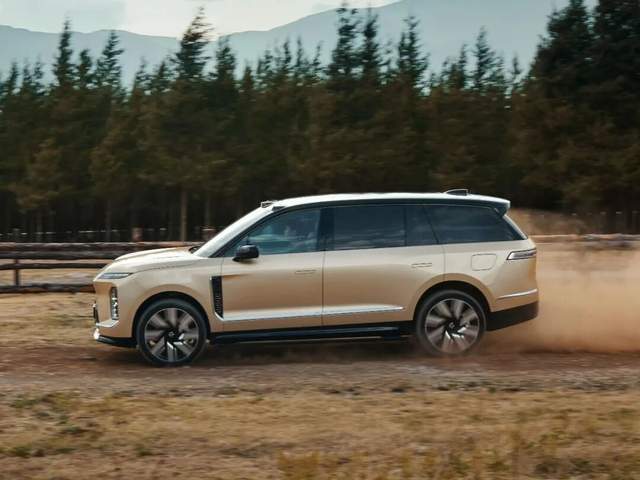
The so-called active suspension is a suspension system that is considered more advanced than the air suspension widely used in current mainstream high-end cars. This perception became particularly evident after the mass production of the Yangwang U9 and the third-generation Porsche Panamera in 2024.
Both of these two cars can perform some previously unimaginable actions relying on the active suspension. For example, the Yangwang U9 can jump in place, and the Porsche Panamera can raise or lower the whole vehicle by about the height of half an iPhone when the door is opened or closed.
Back to the Li Auto L9 Livis and the NIO ES9, the active suspension is the core factor that pulls the pricing of these two flagship new cars to the 500,000-yuan level. At the same time, both cars also shoulder the task of taking the sales momentum of their respective brands to a higher level.
However, from an industry perspective, the "arms race" in the chassis suspension of new energy vehicles of Chinese brands triggered by the two new cars, the Li Auto L9 Livis and the NIO ES9, is obviously more interesting than a simple fight between two parties.
Which is the ultimate solution?
"Li Auto's 800V active suspension has greater 'strength' and can achieve more functions such as lifting a single wheel to change a tire."
"NIO's active suspension is integrated, and the response of each wheel suspension is faster."
"The latest generation of the Porsche electric Cayenne Turbo also uses the 800V active suspension."
"The new cars of Ferrari and Aston Martin will use the 48V integrated active suspension. Aston Martin even had discussions with ClearMotion, in which NIO holds shares."
...
Since the active suspension technical routes of the Li Auto L9 Livis and the NIO ES9 are exactly in two completely different directions, the supporters of these two leading new - force brands also hold different views on the active suspension.
At a media event in April this year, Li Bin, the founder, chairman, and CEO of NIO, and Li Tianshu, the vice - president of NIO's product experience, publicly introduced the technical route they chose: "Tianxing is an integrated electro - hydraulic full - active suspension. Each wheel - end pump - valve actuator is integrated, with millisecond - level and fully independent control of four wheels."
At the same time, they also mentioned that there is another route in the industry, which is the distributed active suspension solution of a central pump + pipeline, which is the choice of the Li Auto L9 Livis.
In order to intuitively show the advantages of their respective technical routes in the performance of the new cars, Li Auto and NIO also came up with completely different ways.
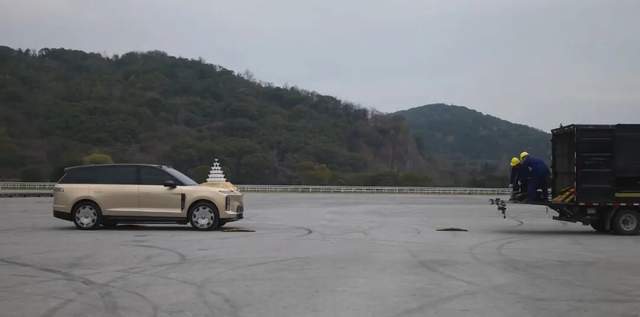
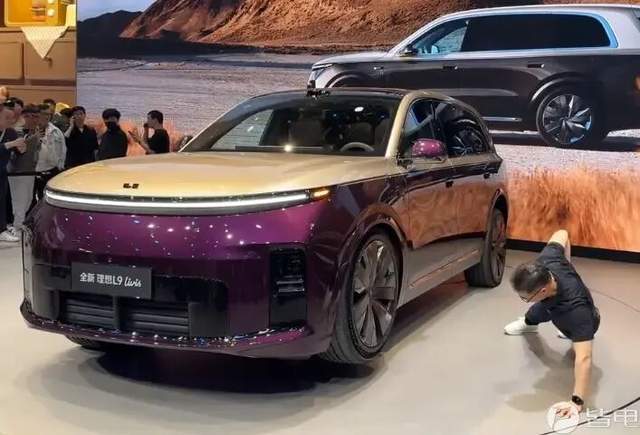
At the Beijing Auto Show, based on the advantage of the stronger output power of the 800V active suspension, Li Auto made the L9 Livis lift a front wheel on - site to do push - ups and explored the use scenario of changing a tire without a jack on the spot. At the pre - sale press conference of the NIO ES9 in April this year, Li Bin showed a video of the new car driving over a speed bump of a random distance with a champagne tower on it, emphasizing that the active suspension of the NIO ES9 can quickly adjust to "smooth out" road bumps.
With a major technological breakthrough and two leading new - force brands that attract a lot of attention, it's understandable that Li Auto, NIO, and their respective fans want to be the first. But the question is, is it valuable to distinguish the winner at the early stage of technological development?
"In fact, the 800V distributed and 48V integrated seem to be two completely opposite extremes, but it may also be the beginning of reaching the same goal by different means. If we were to distinguish the superiority just on paper, wouldn't the 800V integrated electromagnetic direct - drive active suspension, which is fully self - developed by BYD and mass - produced on the Yangwang U9, have already declared the end of the game? But that's not the case."
On May 15th, an unnamed senior engineer of a multinational automaker told Yuan Auto that as technology is explored and matures, it's normal for Li Auto and NIO to adjust their existing solution routes. In addition, different technical routes also have their own advantages.
"Hardware is just one aspect. The key to chassis control and comfort still lies in tuning. It's not all right just because there is an active suspension. It is recommended that potential buyers choose according to their own usage scenarios and personal experiences." The engineer said.
Tremble, BBA brands
As Li Xiang, the founder, chairman, and CEO of Li Auto, said, Chinese - brand new energy vehicles have already taken the lead in intelligent interaction, assisted driving, and power, but the chassis has always lagged behind top - tier brands such as Porsche. "Chassis technology may be the last shortcoming that affects Chinese cars from dominating the global market."
As the Li Auto L9 Livis and the NIO ES9 bring the active suspension to the market with a price of 500,000 yuan or even lower, it can be expected that the domestic auto market will enter another "arms race" in chassis technology. Compared with the previous round of chassis revolution based on air suspension, this time the challenge for some automakers may be more severe.
Looking back at the Chinese auto market from 2017 to 2022, since high - end new energy vehicles of Chinese brands such as the NIO ES8 and the Li Auto L9 began to gain a foothold in the auto market, the hardware configurations of these models have become industry benchmarks, including the air suspension that was previously only available on million - yuan imported luxury cars.
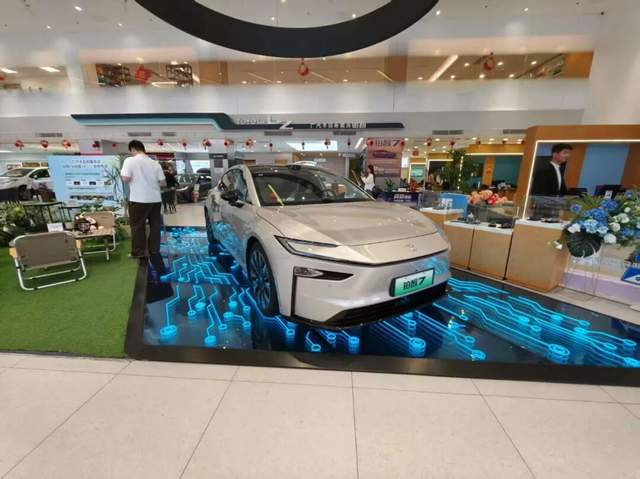
Now, the air suspension has not only become a common configuration for Chinese - brand new energy vehicles above 200,000 yuan. Even automakers including GAC Toyota have brought the air suspension into the price range below 200,000 yuan and used it as a competitive killer. As a result, brands that are still reluctant to introduce the air suspension to more affordable models, such as Mercedes - Benz and BMW, will further fall into a disadvantage.
If the active suspension becomes popular, this differentiation will be more obvious.
Compared with the air suspension, the key technology of the active suspension is currently only in the hands of a small number of automakers and suppliers. If domestic suppliers such as Konghui and Baolong are the soil for the popularization of the air suspension, then the domestic active suspension supply chain is still in the stage of small - scale development.
According to public information, in addition to Li Auto and NIO, BYD and AITO Wenjie are also brands that have planned to mass - produce cars equipped with active suspension technology at this stage. Among them, the technology integration and tuning of the first three brands are mainly based on self - development. It's not clear whether it's Huawei or Seres that contributed to AITO Wenjie. And the suppliers that can provide relevant core components for the new cars of these brands are still very few for now.
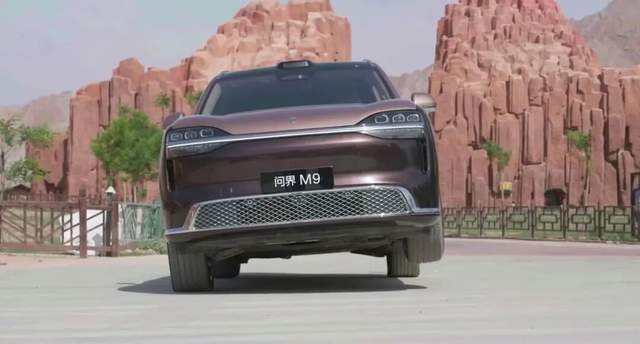
So we can see that after the Li Auto L9 Livis demonstrated the ability to change a tire on the spot at the Beijing Auto Show, BYD Fangchengbao and AITO Wenjie quickly imitated and showed similar abilities, but no other competitors followed up. From this perspective, what Li Bin once said, "Others will be at least one year late if they want to catch up," may not be just empty talk.
From the million - yuan Yangwang U8 and U9 in 2024, to the 800,000 - yuan NIO ET9 in 2025, and then to the Li Auto L9 Livis with a price of less than 500,000 yuan after discounts this year, and even the new BYD Fangchengbao 5 priced at 305,800 yuan, it can be expected that the active suspension will also be applied to more and more affordable models, just like the air suspension.
This is a huge disadvantage for competitors without relevant technical reserves and will also make those big - name automakers that are even reluctant to introduce the air suspension more embarrassed. Even Porsche has standard - equipped the active suspension on the new pure - electric Cayenne Turbo with a surprisingly low price. One can imagine the intensity of this storm about chassis technology.
Some pictures are quoted from the Internet. Please inform us if there is any infringement and we will delete them.
This article is from the WeChat official account "Yuan Media Alliance", author: Pan Zhuolun, published by 36Kr with authorization.