The Four Talents of Shenzhen: The "Dimensionality Reduction" and "Anti-Dimensionality Reduction" of 3D Printing
"The other day, I printed a 38 - centimeter doll, and the cost was only about 40 yuan. If you buy it in a store, 40 yuan wouldn't even cover a fraction of the price."
The person saying this is Tao Tao, an enthusiast who has just got a 3D printer.
Before buying the machine, Tao Tao read a lot of reviews and found that almost all of them mentioned the same brand, Bambu Lab.
This company was founded only five years ago and released its first product in 2022. Since then, its revenue has doubled every year. According to industry estimates, its revenue in 2025 exceeded 10 billion yuan, and its global market share is nearly 30%.
Before users like Tao Tao flocked in, 3D printing had been hyped for more than a decade: technology continued to make breakthroughs, and capital kept pouring in. However, products remained stuck between industrial - grade equipment and geek toys and failed to truly enter the lives of the general public.
Bambu Lab is not the first to enter the market. Creality, Anycubic, and Elegoo, these companies also from Shenzhen, went global earlier and achieved a revenue of over one billion yuan earlier. Together with Bambu Lab, they have captured 90% of the global entry - level 3D printer market share and are collectively known in the industry as the 'Four Little Dragons of Shenzhen 3D Printing'.
People are used to summarizing Bambu Lab as a result of the 'dimensionality reduction strike' of drone technology. However, this explanation not only underestimates its uniqueness in product definition and community operation but also ignores the structural risks it is facing.
This is not a story with a happy ending but an industry reshuffle that has just begun. What the entire 3D printing industry is experiencing is a silent transformation from a 'geek toy' to a 'general - public productivity tool'.
1
Is Bambu Lab the 'Game - Changer' in the 3D Printing Industry?
Bambu Lab actually has a close relationship with DJI.
It is understood that the founding team of Bambu Lab once worked at DJI. The founder, Tao Ye, worked at DJI for eight years and was hailed as one of the 'Four Product Managers of DJI'.
There are also many rumors about Tao Ye's departure. The most credible one comes from Tao Ye's own blog:
"I'm tired of complaining at work... I don't want to be caught in the rat - race anymore. After all, I've created great products before and experienced the thrill of riding the wave at its peak. But such opportunities have become fewer. Spending all day in a comfort zone is mentally exhausting."
The above self - description seems full of the spirit of an idealist, and this has also been carried over to Bambu Lab. The outside world often attributes Bambu Lab's success to one thing: conducting research and development behind closed doors, quietly rejecting external publicity, and focusing whole - heartedly on using new technologies to improve the user experience of 3D printing.
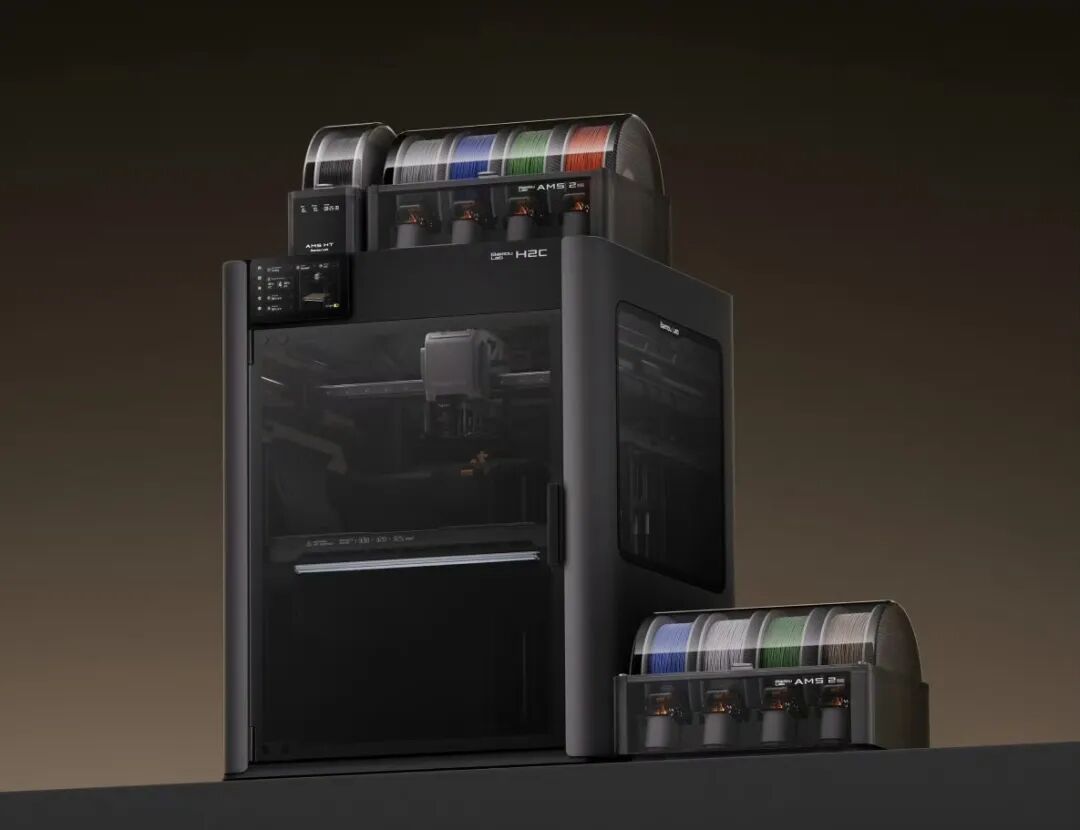
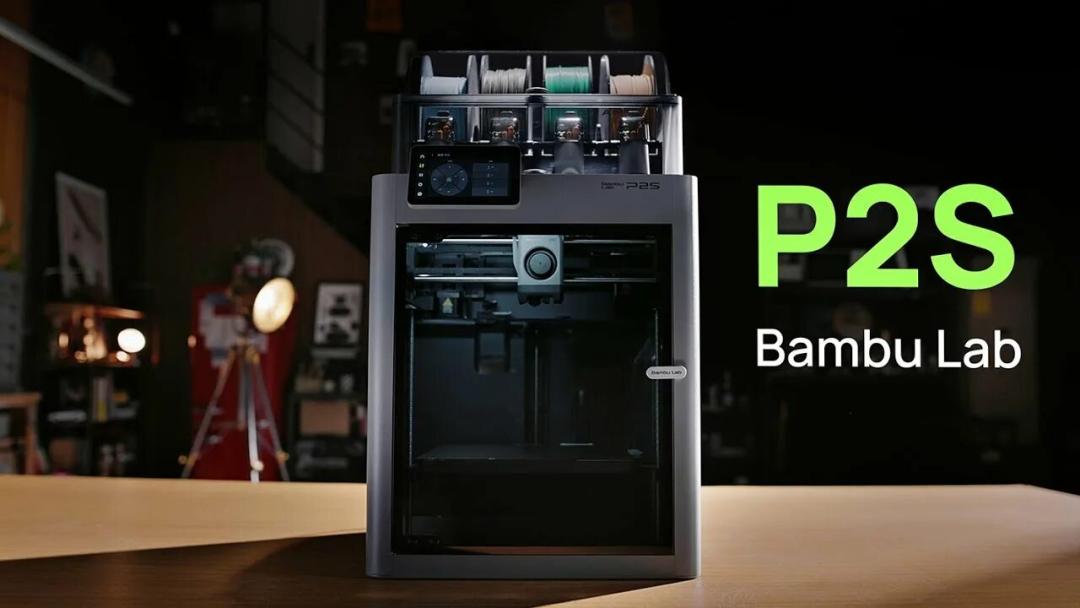
In terms of products, Bambu Lab has turned 3D printers from'manual - shift' to 'automatic - shift'.
Traditional 3D printers require leveling, calibration, and parameter adjustment every time they are used, with a success rate of only 60% - 70%. For more than a decade, they have remained toys in the geek circle. Bambu Lab, however, has reshaped this with the methodology of consumer electronics. By implanting more than 40 sensors, a micro - lidar, and AI visual recognition, the printer can identify consumables on its own, automatically level, dynamically calibrate, and detect defects. Users only need to click on their mobile phones, and the success rate can reach over 95%.
After the first product was launched overseas, it quickly achieved success. Since then, Bambu Lab has continuously iterated its product functions and enriched its product variety. It can be said that Bambu Lab has almost become a synonym for 3D printing.
In terms of business model, Bambu Lab has built a four - in - one flywheel of 'hardware + software + content + AI'.
In the early days, Bambu Lab spent a lot of effort on social media marketing overseas and quickly occupied the market by launching a series of products such as X1 and A1. More importantly, Bambu Lab started building a content ecosystem centered around the MakerWorld model community early on, making it another moat for itself.
Normally, users need to prepare a digital model before printing. The printer plans the path, loads the material into the nozzle based on the 3D model provided by the user, then prints layer by layer, and finally outputs a physical prototype step by step. MakerWorld is the model community operated by Bambu Lab, with millions of models in it. Users can download the public models on the platform for direct printing, or upload their own designed models and configuration information. Users who upload their works can earn points and exchange them for prizes.
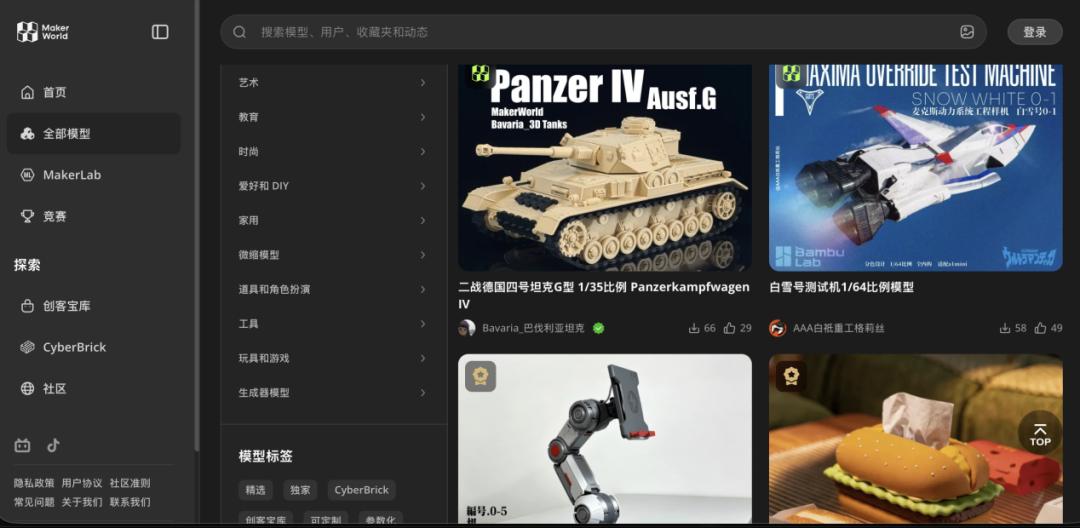
In 2025, Bambu Lab integrated an AI 3D generation model, allowing users to guide the AI to generate the desired 3D models through text or images.
This model is similar to Apple's: hardware gross profit is one part, and in the future, software subscriptions, content services, and AI tools can all be monetized. The difference is that Bambu Lab also has revenue from consumables.
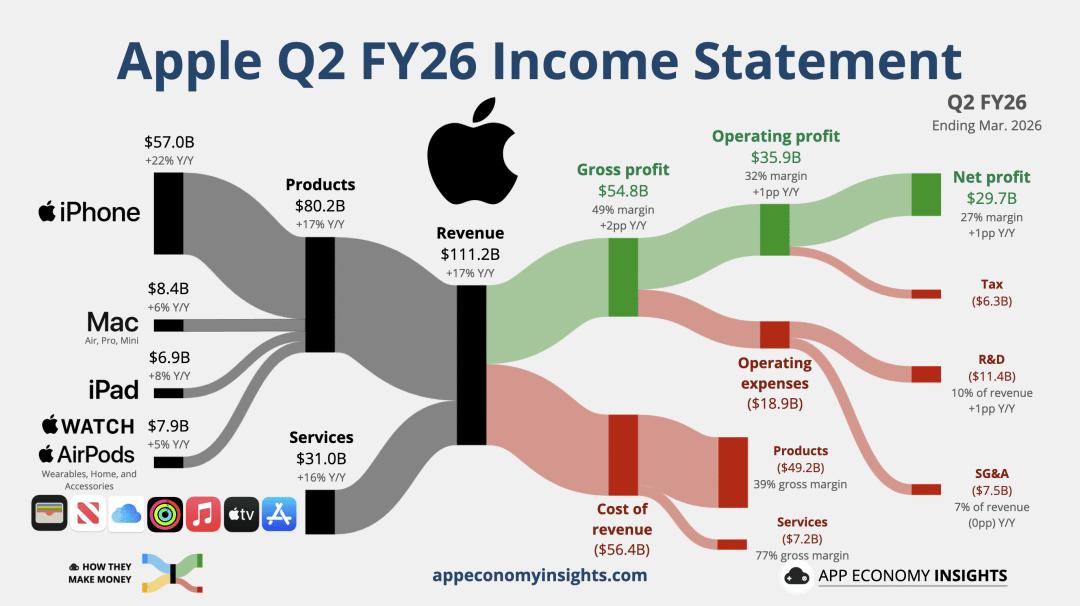
From an industry perspective, the significance of Bambu Lab lies in that it has transformed a niche toy originally confined to the industrial circle into a mass - consumer product. Creating a revenue of 10 billion yuan in a short period, this kind of diversified revenue structure is rare, except for established groups like Samsung and Disney.
But the story is only half - told. With a revenue of 10 billion yuan and a market share of nearly 30%, these figures have put Bambu Lab in the spotlight and also pushed it into a more complex battlefield.
2
The 'Face - to - Face' Encounter of the Four Little Dragons of Shenzhen
Behind Bambu Lab's 10 - billion - yuan revenue is the structural change of the entire industry.
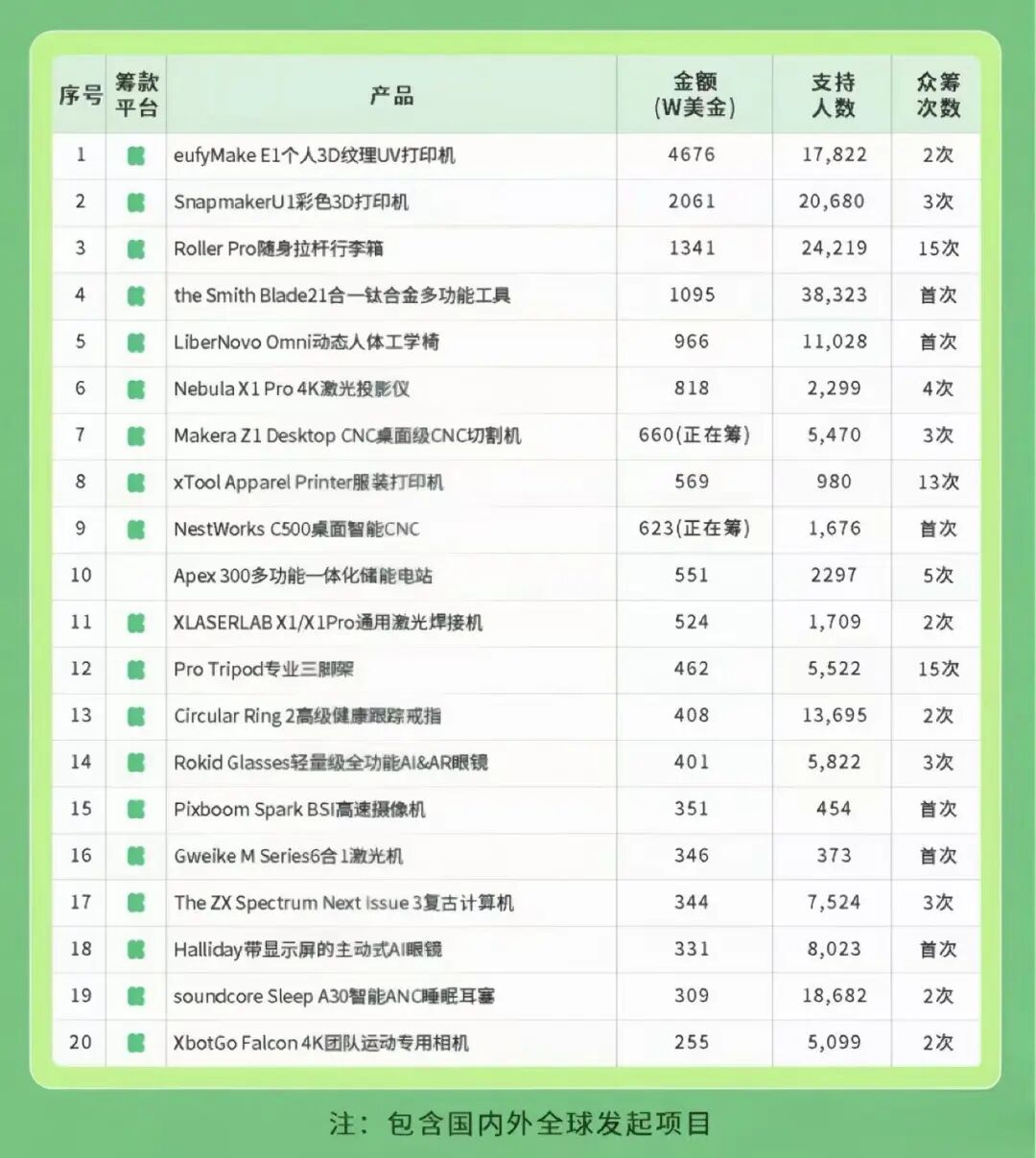
The data from the crowdfunding platform Kickstarter is a signal: among the hardware projects launched throughout 2025, 70% of the projects raised over one million dollars in crowdfunding. Three of the top 10 most - supported projects are directly related to 3D printing. Capital is voting with its feet.
The market size is also expanding simultaneously. According to statistics from research institutions, the global 3D printing market has reached 24.2 billion US dollars. The price of consumer - grade 3D printers has dropped by more than 60% compared to three years ago, and entry - level products can be purchased for only about 2,000 yuan. Once, industrial - grade 3D printers used to cost hundreds of thousands of yuan, but now, products at the individual - consumption level in the ten - thousand - yuan range are common. In China, the production volume of 3D printing equipment in the first three quarters of 2025 increased by 40.5% year - on - year, outpacing the growth rates of industrial robots and new - energy vehicles.
What supports this explosion is that the Four Little Dragons of Shenzhen firmly hold 90% of the global entry - level 3D printer market share.
To understand the strategies and competitive landscape of these four companies, we first need to look at the two mainstream technical routes of 3D printing: Fused Deposition Modeling (FDM) and Stereolithography.
FDM (Fused Deposition Modeling) is the most common. The principle is to heat and melt filamentous thermoplastic materials (such as PLA, ABS), extrude them through a nozzle, and stack them layer by layer to form an object.
Both Bambu Lab and Creality belong to the FDM route. Creality was founded in 2014 by several post - 80s entrepreneurs such as Chen Chun and Tang Jingke. In the early days, it entered the market with high - cost - performance FDM printers, and the popular Ender - 3 series has high global sales. According to public information, Creality's revenue in 2025 was about 3.1 billion yuan.
Anycubic and Elegoo have placed their bets on the stereolithography direction.
Stereolithography technology is known for its extremely high printing accuracy and smooth surface quality, so it is mainly used in fields with extremely high requirements for details, such as jewelry casting, electronic components, and figurine production.
Anycubic started with stereolithography 3D printers. In 2017, it released the first LCD stereolithography printer, the Photon series, which broke the high - price barrier of stereolithography equipment at that time with a highly competitive price and successfully entered the overseas market. Since then, it has continuously launched more advanced stereolithography models such as DLP, with a cumulative sales volume of over one million units.
Elegoo was founded in 2015 and initially focused on STEM kits. In 2019, it launched its first stereolithography printer, the Mars, priced at 299 US dollars. It quickly opened up the market with its 2K resolution. Subsequently, it continued to iterate, and its revenue exceeded 2.3 billion yuan in 2025. Currently, it has the highest market share in the global consumer - grade stereolithography 3D printer market.
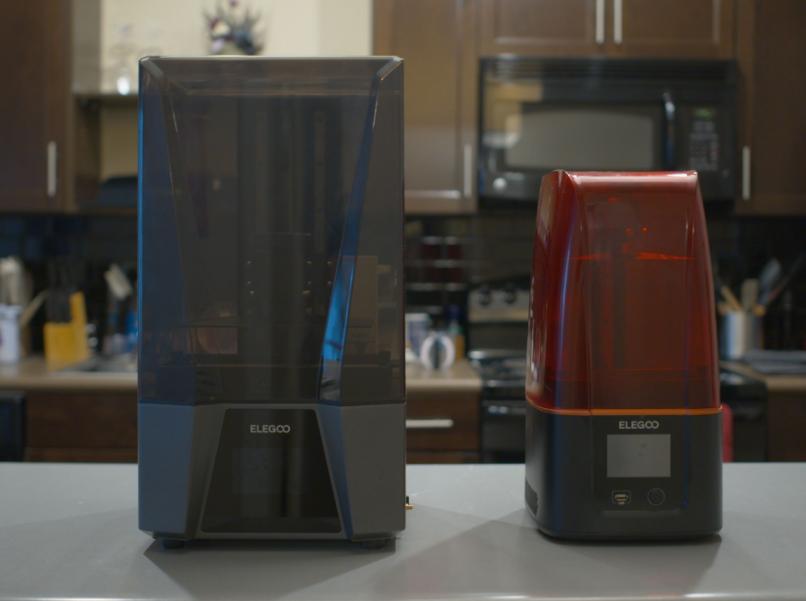
Among the Four Little Dragons, the other three are more established than Bambu Lab. However, after Bambu Lab reshaped 3D printing with the product logic of consumer electronics, the intensity of competition in the entire industry has been raised to a new level.
Elegoo actively introduced investments from DJI and Meituan to strengthen its barriers in the stereolithography field. Creality is trying to go public through an IPO to open up capital channels and raise more funds for subsequent R & D. Anycubic has simultaneously launched products in the FDM direction to accelerate the search for second and third growth curves.
Meanwhile, start - ups are also seizing the opportunity to gain a foothold. According to statistics from the Nanji Xiong 3D Printing Network, there were more than 100 financings in the domestic 3D printing industry throughout 2025, with a total financing amount of nearly 10 billion yuan. Among them, companies like VAST, which develops general 3D large models, have received the favor of industrial capital. Start - ups such as Kuaizao Technology and Yuanzi Chongsu are trying to inject new variables into the industry through innovations such as multi - color printing and AI - automatic model creation.
Accelerated by both capital and technology, in the future, established giants, new industry players, and start - ups will compete on the same stage.
This 3D printing revolution that started in Shenzhen has reshaped the battle situation.
3
Three Mountains for Bambu Lab after Reaching 10 - Billion - Yuan Revenue
3D printing is a brand - new form compared to traditional subtractive manufacturing. In the 1990s, NASA carried out relevant research. Using 3D printing to manufacture space components does not require mold - making or post - processing. After designing the configuration, it can be directly printed. Moreover, the components manufactured by 3D printing are more precise and have fewer pores.
This technology, which once only belonged to the aerospace field, has now entered daily life.
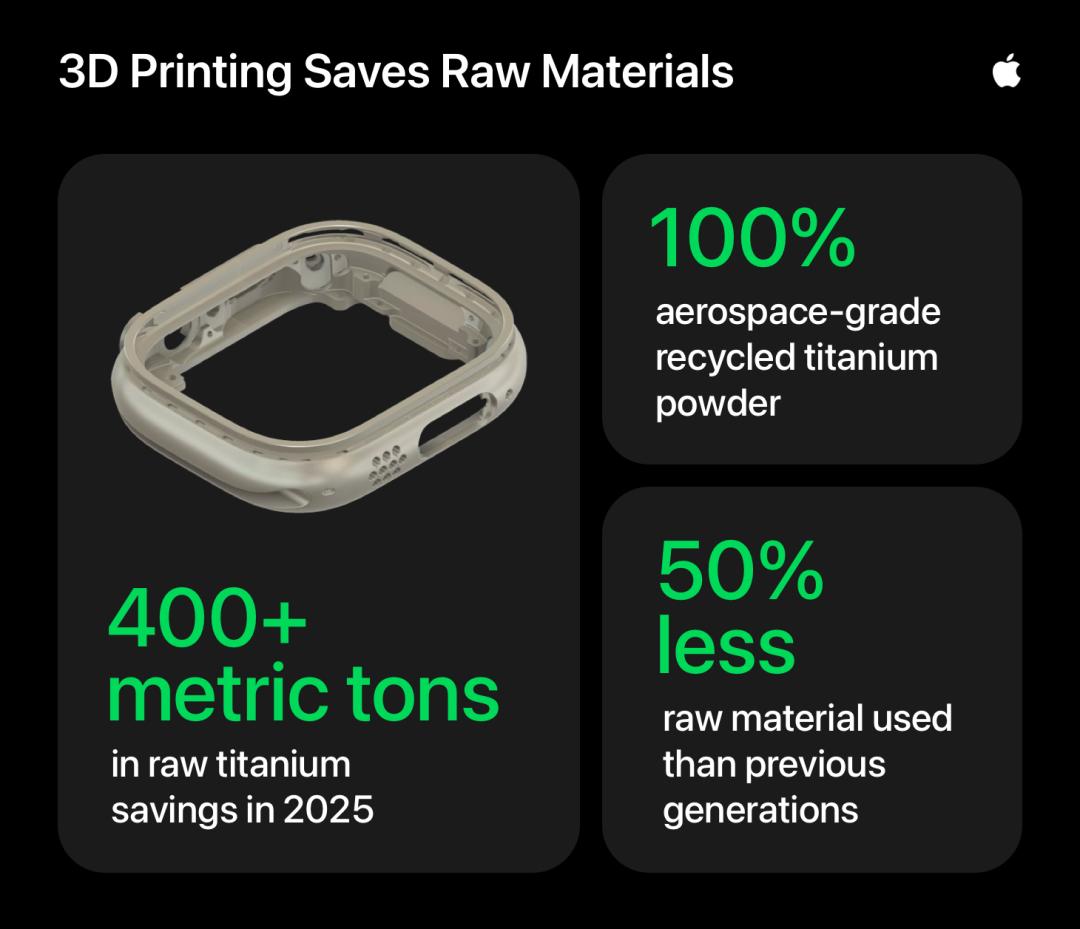
Today, 3D printing can be used to make toys for children, customize accessories for home furniture, and is also found in our mobile phones and smartwatches. The shell of the Apple Watch Ultra 3 is 3D - printed using 100% recycled titanium. According to Apple's official statement, this manufacturing method uses only half of the raw materials compared to the previous generation, has a short manufacturing cycle, and results in very little material waste. The hinge part of the OPPO Find N6 folding screen is similar. Originally, the metal wing plate at the folding part required 13 components for assembly, but now it can be directly formed in one piece through 3D printing. It is said that this is also the first time that a similar process has been introduced into the mass - production process of folding screens.
However, behind the glamorous application cases, there is still a long way to go to achieve 'everything can be 3D - printed'.
In Bambu Lab's offline official flagship store, the material cost of each single - print is clearly marked next to each sample - 2 yuan, 10 yuan. 3D printing technology can indeed enable units or individuals to make prototypes at the lowest cost, and it is also very suitable for components or products with complex internal structures and obvious design differences. However, it will take time to largely replace traditional manufacturing methods with obvious economies of scale because using 3D printing for some products is still not cost - effective.
Beyond cost, there are also dual bottlenecks in speed and materials.
Compared with traditional injection - molding or cutting processes, which can form a product in a few seconds, it takes five or six minutes to 3D - print a small keychain, and it takes even longer to make samples with a larger volume or higher precision requirements. How to print at high speed while ensuring quality is the next lesson for Bambu Lab and others.
Materials are the real ceiling. Limited by the overall material science level of society, the scope of printable materials is not wide enough. For example, the printing materials provided on Bambu Lab's official website, such as PLA, PETG, ABS, ASA, PC, and nylon PA, are almost all thermoplastic polymer materials. Moreover, there are more single - material components. Although Bambu Lab has launched machines with dual nozzles and also supports multi - color printing, how to popularize the printing method