Why is laser communication worth paying attention to?
Optical communication has been extremely popular in recent years, and the stock prices have been soaring. In today's article, Xiaozao Jun is going to talk to you about another form of optical communication, which is also very promising and its commercial value is constantly increasing.
Yes, what I'm going to talk about is - laser communication.
What's special about laser communication?
Laser communication, as the name implies, is a communication technology that uses "laser beams" for data transmission.
Laser (laser, also known as "léi shè" in Hong Kong, Macao and Taiwan), have you all seen it? The kind that is extremely powerful and can destroy everything in movies -

In our daily lives, lasers are also used in some scenarios such as laser pointers, supermarket barcode scanners, and stage lighting. This thing looks quite dangerous. Why can it also be used for communication?
As we all know, all wireless communications work based on electromagnetic waves. Electromagnetic waves are further divided into radio waves and light waves according to their operating frequencies.
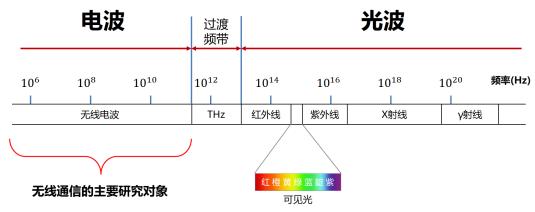
Traditional wireless communication basically uses radio waves instead of light waves.
Because radio waves have a lower frequency, a longer wavelength, better diffraction ability, and a longer coverage distance.
Light waves, on the other hand, have a higher frequency, a shorter wavelength, and worse diffraction ability. They are more easily affected by factors such as atmospheric attenuation and scattering during transmission, resulting in significant signal loss and limited transmission distance.
In our daily lives, mobile communication, Wi-Fi communication, microwave communication, and walkie-talkie communication all use radio waves.
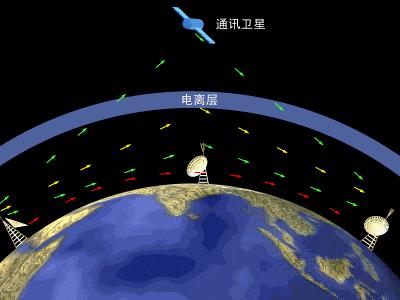
The advantage of light waves is that they have a large frequency bandwidth, which can achieve a higher transmission rate. Therefore, experts have always been thinking about using light waves for communication.
Since light waves are easily interfered by the external environment, then, why not "constrain" the light waves in a closed environment?
Thus, there came fiber-optic communication - wrapping the light waves in the glass fiber medium of the optical fiber to achieve low-loss, long-distance, and high-speed communication. This can effectively reduce attenuation and interference and give full play to the bandwidth advantage of light waves.
After all, fiber-optic communication still relies on the optical fiber, a wired medium, and cannot get rid of the shackles of physical connection. It is not conducive to deployment and lacks mobility and flexibility.
So, experts continued to study: Can we directly use light beams for communication in free space?
This is how laser communication came about.

Laser communication, to distinguish it from traditional fiber-optic communication, also has another name, called Free Space Optical Communication (FSO).
The light source used in laser communication is the same as that in optical fiber, which is laser (with a frequency range of 190 - 360 THz, between terahertz and near-infrared light, 3 - 5 orders of magnitude higher than microwaves). This is a monochromatic coherent light with excellent directivity.
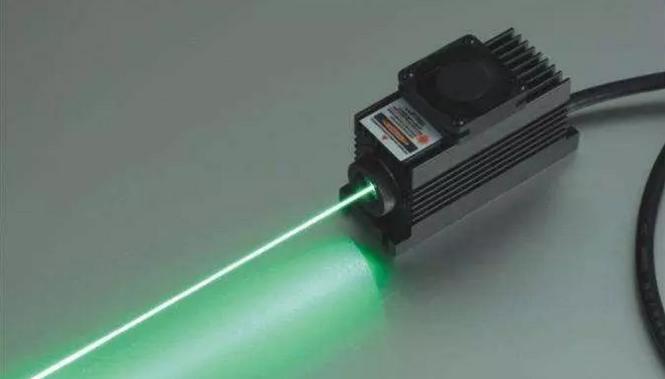
The advantages of laser include the following aspects:
First of all, as mentioned above, the frequency bandwidth of laser is extremely large, which can achieve an extremely high transmission rate (Gbps or even Tbps), far exceeding traditional radio wave wireless communication technologies.
Secondly, the divergence angle of the laser beam is extremely small, the beam width is extremely narrow, and the energy is highly concentrated. Therefore, it has a certain anti-interference ability and can appropriately cope with adverse factors such as attenuation and scattering in the atmosphere.
Thirdly, the laser beam has extremely strong directivity. It is difficult to be interfered by other electromagnetic signals during transmission and is not easy to be captured or intercepted, with very good security and confidentiality.
Fourthly, laser communication does not require spectrum permission, does not occupy precious radio frequency resources, is flexible to deploy, and reduces the use threshold and operating costs.
Fifthly, the laser communication system is small in size, light in weight, and low in power consumption, which is convenient to be deployed on resource-constrained mobile embedded platforms and space payloads (such as drones, satellites, vehicle-mounted terminals, etc.).
What are the application scenarios of laser communication?
Based on the above characteristics, we will find that laser communication is very suitable for point-to-point wireless space transmission scenarios without obstacles, such as satellite communication and traditional ground microwave communication.
Satellite communication specifically includes communication between satellites (inter-satellite), between satellites and the ground (ground receiving stations, portable terminals), between satellites and airplanes (airborne terminals), and between satellites and ships (shipborne terminals), etc.
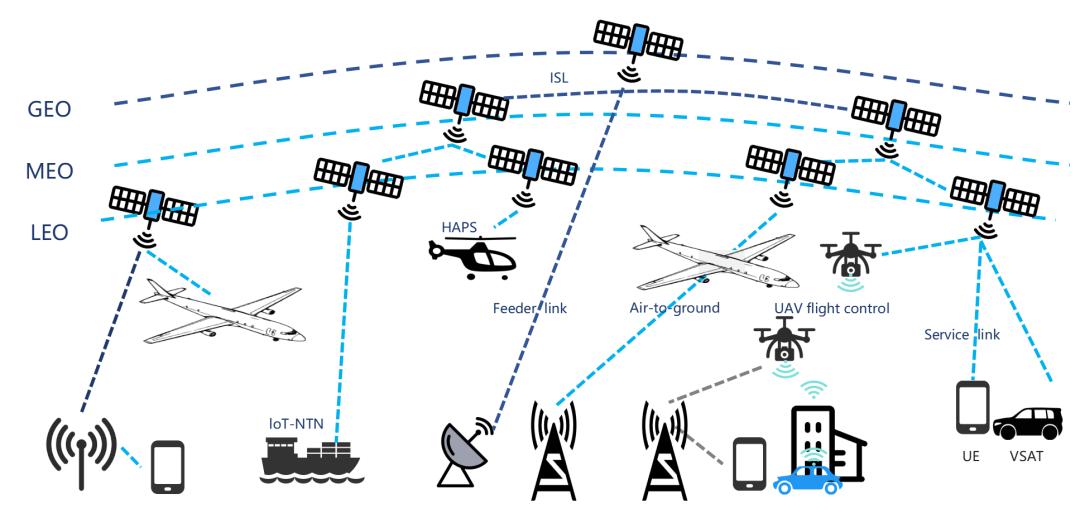
Traditional ground microwave communication is mainly for base station signal backhaul or private network signal transmission in remote areas. Laser communication can be used as an enhanced version of microwave communication to solve the problems of difficult or high-cost deployment of optical cables in mountainous areas, rivers, lakes, and seas.
In scenarios such as natural disasters, laser communication can also be used for emergency communication to quickly restore the network in the disaster area.
In recent years, there has also been a trend of applying laser communication to drone communication. Drones equipped with lightweight laser communication terminals can establish high-speed "aircraft - ground" or "aircraft - aircraft" links to achieve efficient flight control and high-definition video backhaul.
Anyway, the stimulating effect of satellite communication on laser communication is the most prominent.
In recent years, satellite communication has been extremely popular, especially the accelerated dense networking and deployment of low-earth orbit satellite constellations (represented by Starlink), which has set off a global satellite boom.
This satellite boom has driven the popularity of laser communication. Many universities, research institutions, and enterprises have seen the potential commercial value of laser communication and have thus invested in the industrial chain.
● Research progress in the United States
The United States was the first to research laser communication.
In the 1970s, the United States began to explore laser communication technology and developed the world's first laser communication terminal. In 1975, NASA (National Aeronautics and Space Administration) successfully conducted a lunar - earth laser communication experiment between the Apollo 15 command module and the ground station.
Entering the 21st century, the United States still leads the development frontier of laser communication technology.
In 2014, NASA conducted a 50 Mbps one - way downlink laser communication experiment from the International Space Station to the ground.
In May 2022, NASA cooperated with the Massachusetts Institute of Technology. Using a small cube satellite equipped with BIRD (Terabit Infrared Delivery), they achieved a satellite - earth laser communication link with a rate of up to 100 Gbps, more than 1000 times higher than the traditional radio frequency link.
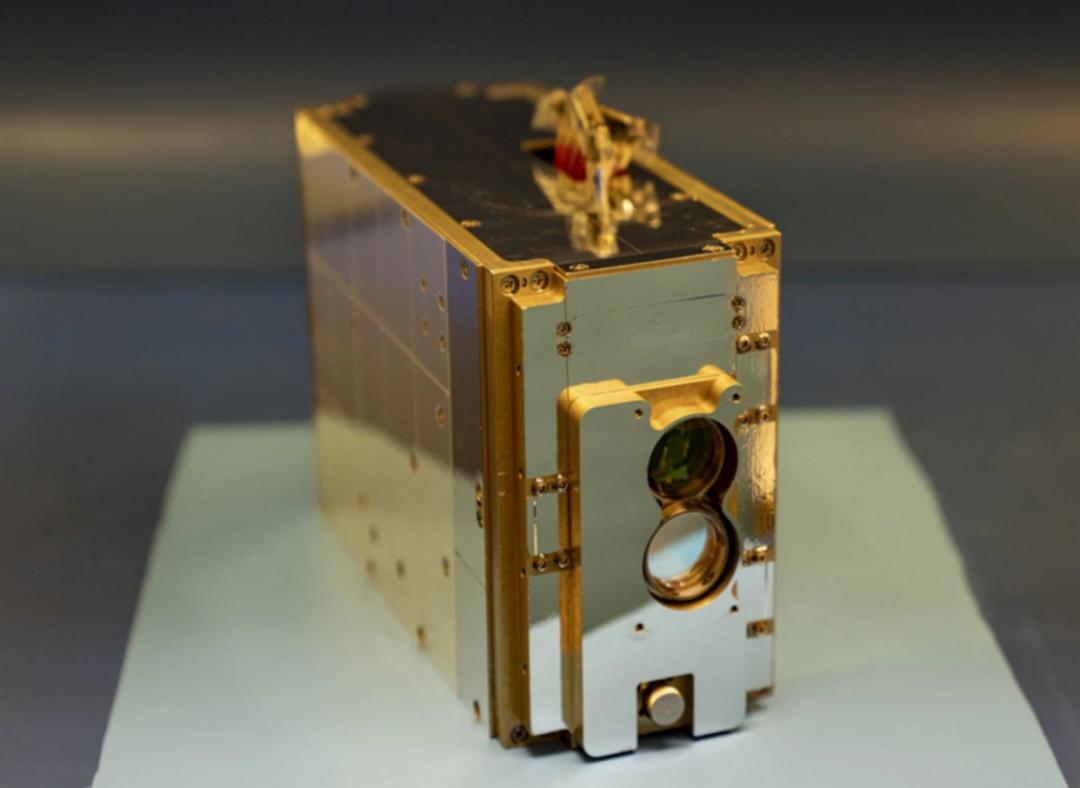
BIRD small cube satellite
In 2023, NASA's Deep Space Optical Communications (DSOC) project was successfully implemented. At a distance of 31 million kilometers from the Earth, a spaceship transmitted ultra - high - definition video at a rate of 267 Mbps. In June of the same year, NASA's first two - way laser relay system demonstration project (LCRD) completed its first - year in - orbit experiment.
It is worth mentioning that in 2020, SpaceX conducted an experiment. Two Starlink satellites used the installed laser communication payloads to transmit hundreds of gigabytes of data, which was an important technical verification for building its own space - based network.
In September 2025, a Canadian aircraft equipped with an optical communication terminal from General Atomics Electromagnetic Systems (GA - EMS) in the United States established a connection with a low - earth orbit satellite (belonging to Kepler Communications in Canada) 5470 kilometers away and successfully achieved two - way high - speed laser communication at a rate of up to 2.5 Gbps, which shocked the entire industry.
● Research progress in Europe
In Europe, the research also started relatively early (in the 1980s).
At the beginning of the 21st century, after the successful in - orbit experiment of coherent laser communication, the European Space Agency (ESA) officially launched the European Data Relay System (EDRS) program. In 2019, the EDRS - A and EDRS - C satellites achieved a communication rate of 1.8 Gbps on a 45,000 - kilometer link.
In 2024, ESA carried out a deep - space laser communication experiment and achieved a transmission rate of 10 Mbps at a distance of 1 AU (an astronomical length unit representing the average distance from the Earth to the Sun).
In recent years, countries such as Germany, France, and Italy have successively launched a number of national - level laser communication projects, and their layout intentions are very obvious.
● Research progress in China
Now let's take a look at our country.
China's research on laser communication started very late. In 2011, we only achieved the first domestic satellite - earth laser communication experiment on the Haiyang - 2 satellite.
Although it started late, in recent years, our development momentum has been very rapid.
In 2017, the Shijian - 13 satellite completed high - orbit satellite - earth two - way laser communication at a rate of 5 Gbps.
In 2018, the Micius quantum satellite completed satellite - earth laser communication + quantum key distribution, which attracted wide global attention at that time.
In 2020, China carried out the first low - earth orbit inter - satellite laser communication technology experiment. The laser communication payload was developed by LaserFleet (Shenzhen Aerospace Optical Network). It can achieve a communication distance of more than 3000 kilometers with a rate of up to 100 Mbps.
In May 2024, the laser communication payload developed by the Shanghai Institute of Optics and Fine Mechanics was launched with the Smart Sky Network No. 1 - 01 satellite, achieving high - speed interconnection at the ten - thousand - kilometer level between medium - orbit satellites.
In January this year, the Aerospace Information Research Institute of the Chinese Academy of Sciences used a self - developed 500 - millimeter - aperture satellite - earth laser communication system to conduct a satellite - earth laser communication experiment with the AIRSAT - 02 satellite of Zhongke Satellite. It achieved a stable high - speed transmission of 120 Gbps (rapid capture and establishment within seconds, with a link - establishment success rate of more than 93% and a maximum continuous stable communication time of 108 seconds), setting a national record.

Satellite - earth laser communication system (picture from the Internet)
It is reported that this year, China will use Chang'e 7 to carry out lunar - earth laser communication technology verification. This will also be a major breakthrough.
Currently, representative private enterprises in the field of laser communication in China include BlueStar Optics and PolarStar Communications.
BlueStar Optics is the first Chinese commercial aerospace company to complete the delivery of satellite - borne laser communication terminals and conduct in - orbit verification. They have a production and incubation base in Changshu, Jiangsu, with the ability to produce thousands of terminal products per year.
In February 2025, BlueStar Optics joined hands with China Unicom and successfully completed the on - site acceptance of the R & D results of cross - domain short - distance space laser communication equipment, and opened China Unicom's first Free Space Optical (FSO) bearer service.

BlueStar Optics (picture from the Internet)
PolarStar Communications is also in the first echelon of high - speed inter - satellite laser communication technology in China. In March 2025, PolarStar Communications successfully carried out the first domestic in - orbit inter - satellite 400 Gbps ultra - high - speed laser communication data transmission experiment through the "Optical Transmission 01/02 Test Satellites".
All in all, laser communication technology is accelerating from the laboratory to in - orbit verification and commercial operation. In this emerging field, we are still very competitive, and a complete industrial chain ecosystem has gradually taken shape. The future is promising.
How does satellite - borne laser communication work?
The satellite - borne laser communication terminal is a complex system integrating a variety of cutting - edge technologies, which is divided into general parts (FPGA, fiber amplifier, optical transceiver module, modem) and satellite - specific parts (star sensor, acquisition sensor, visible - light camera, optical transceiver antenna).
The core of the terminal is the APT system (Acquisition, Pointing, and Tracking System). Its main function is to capture the light beam carrying information before the satellite communicates, achieve micro - radian - level pointing accuracy, and keep the light beam aligned during the communication process to ensure the smoothness of the communication link.