A fingernail-sized part had stumped the world for 50 years, but was finally overcome by Chinese entrepreneurs.
Humanoid robots have become a new calling card for China.
The forging of this calling card cannot be separated from the leading charge of emerging science and technology enterprises such as Unitree Technology, and even more from the continuous breakthroughs of the entire industrial chain and countless entrepreneurs. For example, this entrepreneur who has been deeply involved in precision manufacturing for a long time has, by making a breakthrough in a core part the size of a fingernail, broken through the "bottleneck" for global robots, and also given today's Chinese robot industry the confidence to participate in global competition.
01 The Iron Curtain
In 2003, the procurement director of ABB, a global electrical giant, revealed a heart - wrenching piece of news to Zuo Yuyu: ABB was being held back by a part the size of a fingernail. The price, delivery time, and customization rights of this part were all decided by a Japanese company. The other side could raise the price or delay the delivery at will, and ABB had no bargaining power.
This part is the harmonic reducer. It is the core that determines the flexibility of robot joints. All high - precision movements of robots rely on it to be carried out; at the same time, it is also the link with the highest added value in the robot industrial chain, accounting for more than 30% of the cost.
Zuo Yuyu was extremely shocked when he heard the news. At the end of the year, he flew to Japan specifically, determined to see with his own eyes what this "key part" that even ABB was helpless against was. In Tokyo, he first got in - depth knowledge of a name - Harmonic Drive Systems. At that time, this Japanese company had monopolized the global harmonic reducer market for more than 40 years with its unique technology, and its market share once reached over 90%. Even the electric drive wheels of the Apollo lunar rover used its technology.
Downstream manufacturers around the world, regardless of their size, could only follow Harmonic Drive Systems' lead. This scene deeply hurt Zuo Yuyu. At that time, most of China's manufacturing was still in the labor - dividend mode, and there was a general neglect of independent technological innovation. He was also actively exploring the breakthrough direction of the industry at that time.
Zuo Yuyu, born in 1970, graduated from the Department of Physics of Nanjing University. After four years of trading, he joined Hengjia Metal, a small factory with more than a hundred people in Suzhou in 1999. In just a few years, he grew from a technician to the general manager and successfully got this county - level small factory on the global procurement lists of ABB and General Electric. It was also in this process that he deeply felt the power of technology: Hengjia Metal could reduce the cost of similar parts to one - tenth of that in Europe, but in the processing of core parts, it was often rejected by European customers to prevent technology leakage.
Looking at the technical barriers of the harmonic reducer and the monopoly of Harmonic Drive Systems, Zuo Yuyu was filled with determination: "Isn't this just a more complex physical problem? Why can't we do it?"
He also saw the broad industrial prospects: China's manufacturing industry will surely move from labor - intensive to technology - intensive. The replacement of manual labor by machines and the development of robots towards lightweight and collaborative will be an inevitable trend. As a core part, the harmonic reducer has great market potential. More importantly, at that time, China was still blank in this field. Developing an independent harmonic reducer was of great significance in filling the national industrial gap.
So, after returning from Japan, Zuo Yuyu convinced the core team of Hengjia Metal and made up his mind: to target the harmonic reducer and launch a technological assault. Many years later, the enterprise hatched from within Hengjia Metal got a resounding name - Leader Harmonious Drive Systems Co., Ltd.
02 Ten Years in the Darkroom
In the production workshop of Leader Harmonious Drive Systems in Wuzhong District, Suzhou, a robotic arm picks up a gray - black steel material and sends it into the operation box. Three minutes later, a silver - white thin - walled workpiece - the flexspline - slowly takes shape.
This is the heart of the harmonic reducer. The thinnest part is only a few dozen microns thick, but it has to withstand hundreds of millions of repeated bends without fatigue fracture. For example, it's like a hair being bent 100,000 times a day for several years without breaking.
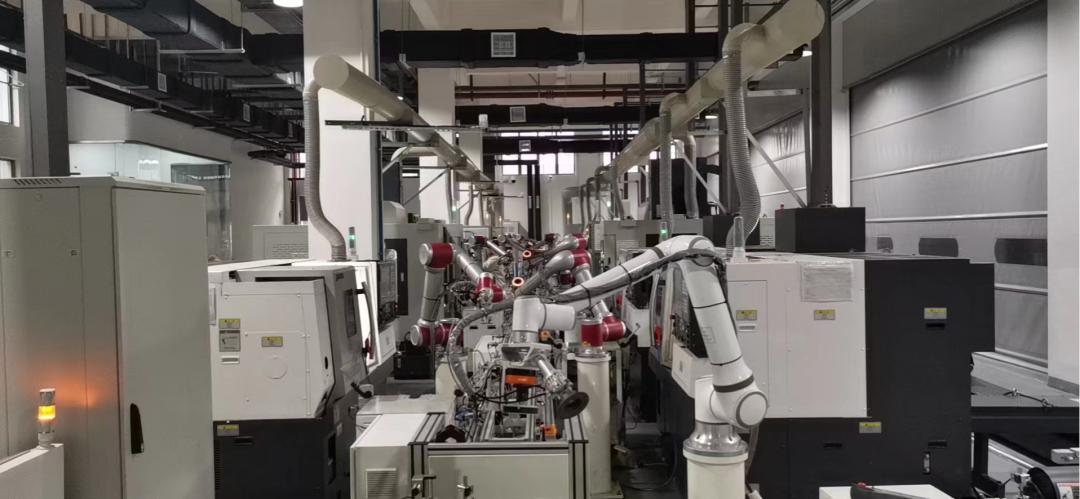
▲ The production line of Leader Harmonious Drive Systems, Source: Leader Harmonious Drive Systems
The road of technological assault was much more difficult than expected. Harmonic Drive Systems had set up three - layer blockades in flexspline manufacturing over 40 years, like an impregnable wall, keeping all imitators out.
The first layer is the patent wall: After decades of iteration, Harmonic Drive Systems developed several sets of designs based on the "involute tooth profile" and built a dense and complex patent network, like barbed wire, leaving imitators with no way to start.
The second layer is the equipment lock: The key precision equipment and supporting parts for manufacturing the flexspline are expensive and mostly controlled by Japanese companies. Some are on the control list, and some are directly cut off from supply to China.
The third layer is the material black box: Relying on Japan's top - notch metallurgical technology, Harmonic Drive Systems uses special steel with extremely high purity. At that time, China just lacked such precision materials, and Hengjia Metal was once in a dilemma of "having no rice to cook".
Zuo Yuyu knew very well that following the Japanese path would only lead to failure. He proposed an anti - common - sense strategy: don't imitate, don't follow, completely abandon the involute tooth profile technology path of Harmonic Drive Systems, start from scratch to find a new mathematical model, and start a new game.
He led the team into the laboratory and invested all the precision processing experience accumulated by Hengjia Metal in the past decade or so from subcontracting for ABB and GE into the R & D. Without reference materials, they started from the underlying principle of non - conjugate harmonic meshing tooth profile, modeling, manufacturing, and verifying again and again;
Zuo Yuyu later recalled that in this process, without reference materials, they had to start from scratch, constantly adjusting and testing from materials to processes, and moving forward little by little through countless failures.
Hard work pays off. The team finally made a breakthrough: they developed a new flexspline model named "P - type tooth".
This tooth profile composed of multiple arc curves changes the "point contact" of traditional gears into a more stable "surface contact". It not only successfully bypasses the patent blockade of Harmonic Drive Systems but also gets rid of the absolute dependence on high - end materials, significantly reducing vibration and noise, and performing better in torque bearing and transmission efficiency.
In 2009, Hengjia Metal built the first prototype of the harmonic reducer; in January 2011, Zuo Yuyu officially registered and established "Leader Harmonious Drive Systems Co., Ltd.". The word "Leader" carried his original intention of "creating a leading Chinese brand".
Before entering the market, Zuo Yuyu's team conducted long - term and strict tests on the "P - type tooth" harmonic reducer. The results were exciting: its ultimate load life was more than four times that of well - known foreign brands of the same type. In core indicators such as torque bearing, transmission efficiency, and noise control, it reached the international advanced level, and some performances even exceeded those of Harmonic Drive Systems.
China's independent harmonic reducer has since stepped out of the laboratory.
But this is only the first step in the industrial long - march.
03 Breaking the Wall
In 2013, Leader Harmonious Drive Systems officially launched its harmonic reducer into the market.
At this time, China had become the world's largest robot market, but domestic robot manufacturers such as Efort, Estun, and Siasun had long been suppressed and exploited by Japanese companies such as Harmonic Drive Systems: For the same product, the price sold to Chinese enterprises was 2 to 4 times that in Japan, the delivery cycle was as long as 10 to 14 months, and there was often no supply even at a high price.
The emergence of Leader Harmonious Drive Systems broke this deadlock. To quickly capture the domestic market, Zuo Yuyu played two "aces": extreme cost - effectiveness and extreme delivery time - the product price was more than 50% lower than that of Harmonic Drive Systems' similar products, and the delivery time was 5 times faster than the other side.
Efort, a company born from the equipment department of Chery Automobile, chose to be the first to take the risk and was the first to adopt the products of Leader Harmonious Drive Systems. Subsequently, Siasun Robot and Huashu Robot followed suit. The demand of domestic robot manufacturers for domestic substitution was then opened up, and they gradually got rid of their dependence on Japanese core components.
Zuo Yuyu knew very well that products alone were not enough. He had to build trust through services. He led the engineers directly into the production workshops of customers, and carried out close - fitting services according to the requirements and working conditions of different production lines. This not only brought in a large number of orders but also accumulated a large amount of real - working - condition data, which in turn promoted the continuous iteration of products.
A virtuous cycle was thus formed: The autonomy of core components led to cost reduction, which released the profit space of domestic robot manufacturers and promoted the expansion of their production capacity; and the expansion of the manufacturers' production capacity further drove the demand for Leader Harmonious Drive Systems.
Just as Zuo Yuyu later recalled: "We both walked step by step on soft ground, supporting each other, and only then did we achieve what we have today."
In 2013, the production and sales volume of Leader Harmonious Drive Systems was only more than 3,000 units. By 2018, it was close to 100,000 units; in the same year, its market share in domestic self - owned brand robots reached 62.55%, successfully surpassing Harmonic Drive Systems.
In 2014, as the main drafting unit, Leader Harmonious Drive Systems participated in the formulation of the national standard "Harmonic Gear Reducers for Robots", standardizing the technical indicators, test methods, and inspection rules of harmonic reducers at the national level and promoting the orderly development of the entire industry.
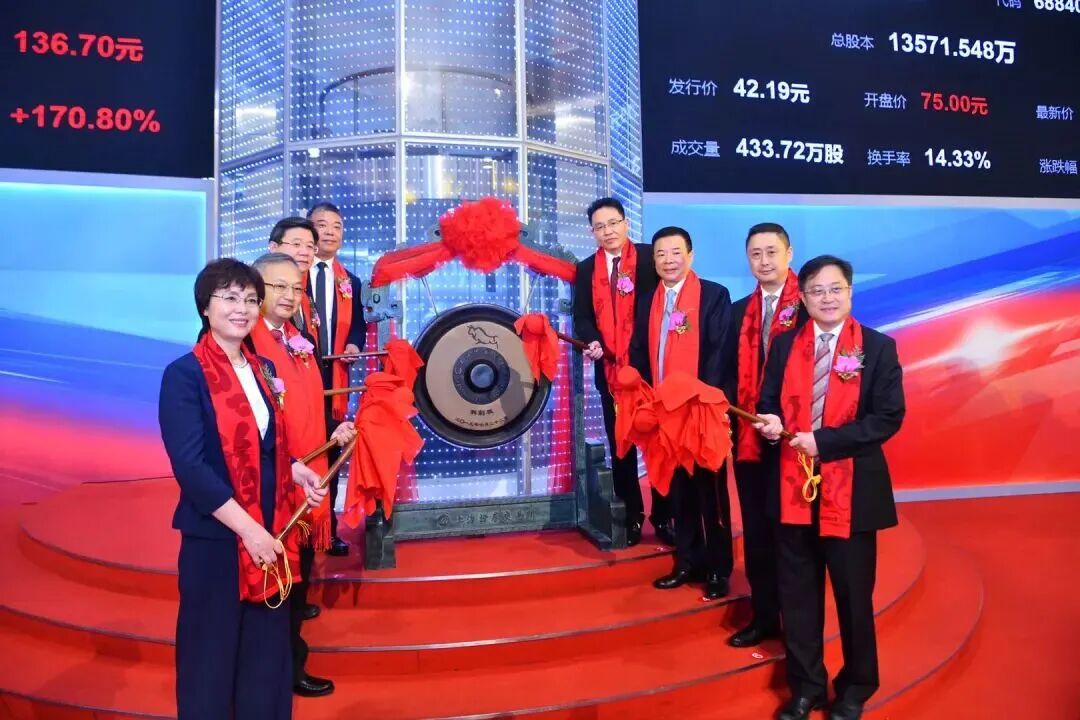
On August 28, 2020, Leader Harmonious Drive Systems was listed on the Science and Technology Innovation Board of the Shanghai Stock Exchange, and its market value exceeded 7 billion on the first day. It should be noted that its revenue in 2018 was less than 250 million. The high market valuation is the highest recognition of its innovation courage and industrial value.
04 Going Global
Almost at the same time as opening up the domestic market, Leader Harmonious Drive Systems also set its sights on overseas markets.
The opportunity came from Universal Robots in Denmark. Since this company launched the world's first commercial collaborative robot UR5 in 2008, it has long occupied the top position in the global collaborative robot market, but it has also suffered a lot from the monopoly of Harmonic Drive Systems. When Harmonic Drive Systems' production capacity was tight, it gave priority to the four major industrial robot "Big Four" - Fanuc, Yaskawa, ABB, and KUKA. Universal Robots often faced the dilemma of parts shortage and urgently needed to find a second supplier.
In 2014, Universal Robots actively approached Leader Harmonious Drive Systems but put forward extremely strict requirements: the products needed to pass high - intensity tests and meet the extremely high standards of collaborative robots for silence, smoothness, and lightweight. Zuo Yuyu did not hesitate to accept the challenge. In 2014, he started sending samples for inspection. In the following two years, after strict verification of more than a dozen indicators, Leader Harmonious Drive Systems finally passed the assessment and signed a long - term framework agreement with Universal Robots in November 2016, becoming its core supplier.
This cooperation completely subverted the prejudice of European and American enterprises against Chinese technology. After that, international giants such as Kollmorgen and Varian Medical Systems successively extended an olive branch to Leader Harmonious Drive Systems. Its products were gradually sold to more than 20 countries and regions in Europe, the United States, South Korea, Japan, etc. In 2019, the proportion of foreign sales exceeded 30%, and its customers even included Japanese electrical giants such as Nachi - Fujikoshi.
By 2020, the shipment volume of Leader Harmonious Drive Systems ranked second in the world, becoming the world's second - largest harmonic reducer enterprise after Harmonic Drive Systems.
In 2022, Tesla's Optimus humanoid robot was unveiled, detonating the global embodied intelligence track. With the ability of rapid and in - depth customization brought by years of international supply experience, Leader Harmonious Drive Systems completed early positioning: it not only developed a 6mm ultra - small harmonic reducer suitable for the finger joints of humanoid robots but also provided a plug - and - play modular solution, perfectly matching the high requirements of humanoid robots for joint fineness and integration.
Currently, Leader Harmonious Drive Systems has basically covered the world's mainstream humanoid robot manufacturers: internationally, it is the secondary supplier of Tesla's Optimus and the core supplier of Figure AI; domestically, it is the exclusive supplier of UBTECH's Walker series and supplies in batches to companies such as Zhipu Robotics, Unitree Technology, and XPeng Robotics. At the 2026 Spring Festival Gala, four humanoid robots from Unitree Technology, Songyan Power, etc. made a collective appearance. The localization rate of core components exceeded 70% - behind this is Leader Harmonious Drive Systems.
In 2025, the industrial robot industry recovered, and the embodied intelligence track entered the critical stage from small - batch production to large - scale implementation. Leader Harmonious Drive Systems also delivered its best - ever report card: the annual revenue was 569 million yuan, a year - on - year increase of 46.86%; the net profit attributable to the parent company was 125 million yuan, a year - on - year increase of 122.40%.
With the bright prospects of the automation and intelligence wave, the prospects of Leader Harmonious Drive Systems are also more promising. Currently, its total market value is nearly 50 billion yuan.
05 Silent Accumulation
Many people wonder: The theory and technology of reducers were born in the United States. Why has the market been monopolized by Japan for a long time? The answer lies not only in the Japanese craftsman spirit but also in its unique industrial ecosystem. Through long - term positive R & D, Harmonic Drive Systems has accumulated a complete set of knowledge covering materials, processes, and designs. It has also formed a long - term embedded cooperation with downstream manufacturers such as Fanuc and Yaskawa Electric, building an ecosystem of "close cooperation between upstream and downstream, sharing risks, and co - iterating".
This co - evolutionary model is the deep - seated moat that makes Japan's precision machinery industry difficult to replicate.
The reason why Zuo Yuyu was able to break through this blockade was precisely by using the method that the Japanese are best at - "able to endure hardships and willing to spend time", and then driving the maturity and aggregation of the entire industrial chain through breakthroughs in key links. He didn't rush for quick success but spent ten years deeply involved in technology and polishing products. He also joined hands with domestic robot manufacturers to build a Chinese industrial ecosystem, achieving a leap from "being held back" to "self - controllable".
As Zhang Yuwen, the general manager of Leader Harmonious Drive Systems, once said: "I believe that in the near future, China will also have its own 'Big Four'." Now, Leader Harmonious Drive Systems is no longer just a core component supplier but is gradually transforming into a mechatronic solution provider. And China's robot industry is moving from following to running side by side and leading.
This breakthrough has never been the victory of an individual or a single - point breakthrough of a certain technology. It is the coordinated efforts of "scientists + entrepreneurs + industrial ecosystem", and it is a vivid microcosm of the transformation and upgrading of China's manufacturing industry - When a Chinese enterprise masters the autonomy of core components, what changes is not only