The largest province in central and western China is propping up the "strategic rear area".
From the Pearl River Delta to the Yangtze River Delta, the two regions with the highest economic density in China, one in the south and the other in the north, connect the golden development belt along the eastern coast.
For decades, the eastern coast has served as the engine of China's economy, supporting the backbone of the "world factory". However, the development of a large country cannot rely solely on the coastal areas. The rise of the vast inland is not only an inevitable path to achieve regional balance but also determines the resilience of the country's development.
In recent years, the improvement of infrastructure networking, the parallel development of industrial undertaking and upgrading, and the leap in the level of opening up have jointly formed a strong impetus for in - depth development towards the inland.
When an inland province officially shoulders the special mission of "the strategic rear - area", the development pattern of China's regional economy is likely to be reshaped.
On May 11th, a press conference on Sichuan's "15th Five - Year Plan" was held. At the conference, Sichuan, the largest economic province in central and western China, clearly stated that it should enhance the supporting function of the national strategic hinterland, vigorously promote the construction of strategic industrial bases, material reserve bases, and infrastructure, and build a strategic rear - area to ensure national development and security.
As the only province positioned as "the strategic hinterland for China's development" in the "Territorial Spatial Plan" approved by the State Council, this emphasis re - establishes Sichuan's special mission and strategic responsibility.
This "uniqueness", why Sichuan? What does Sichuan rely on?
01
To undertake the mission of the "strategic rear - area", it ultimately depends on strength. Sichuan's foundation is quite solid in the whole country.
First is the security support.
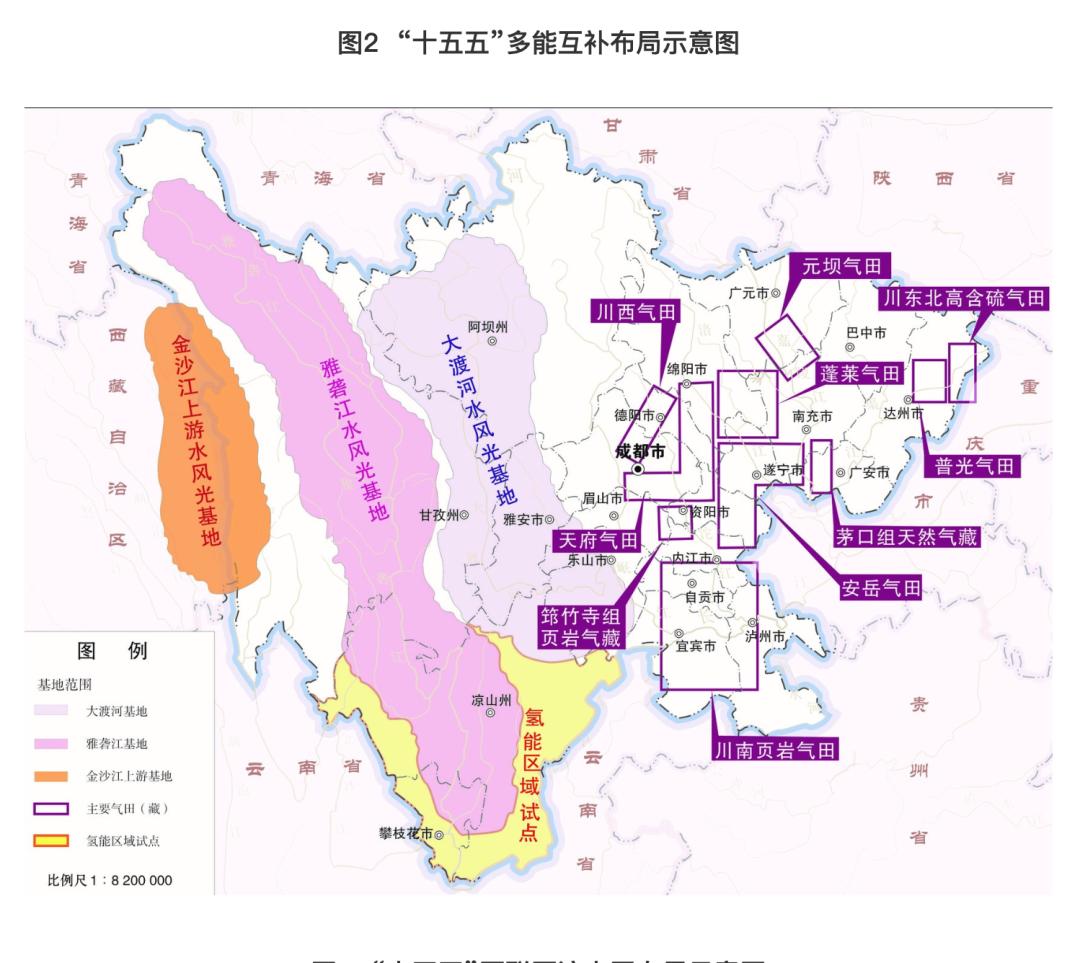
Sichuan is one of the few provinces in China that can supply a large amount of hydropower and natural gas to other provinces. A set of data revealed at the press conference gives a convincing answer: Sichuan contributes about one - third of the country's hydropower and about one - fourth of the natural gas.
What does "providing a safety net" mean? The rumbling of machines in eastern factories, the lights in office buildings, and the air - conditioners in residents' homes are all powered by the surging hydropower from Sichuan.
Next, look at the industry.
Sichuan has a complete range of industrial sectors. All 41 major industrial categories and 31 major manufacturing categories in the country are available here. Globally, there are few regions that can achieve such a complete industrial supporting system within a single province. From power batteries to tablets, from aerospace to high - end energy equipment, the significance of Sichuan's industrial foundation for the security of the national industrial chain and supply chain is self - evident.
The scientific and educational resources are also rich.
Currently, Sichuan has 144 universities, more than 400 research institutes, and more than 4.7 million professional and technical personnel of various types. The number of national high - tech enterprises in the province has reached 19,000, and the number of science - and - technology - based small and medium - sized enterprises has reached 29,000.
It is particularly worth mentioning that the "national teams" such as the Chinese Academy of Sciences system, the China National Nuclear Corporation system, the Aviation Industry Corporation of China system, the China Electronics Technology Group Corporation system, and the Dongfang Electric Corporation system have jointly built a unique advantage in scientific and technological innovation.
In addition, national laboratories, 10 large - scale scientific facilities, and 30 national key laboratories are located here. Among them, 19 disciplines are among the top one - thousandth in the global ESI ranking, and 2 disciplines are among the top ten - thousandth.
In terms of economic aggregate, during the "14th Five - Year Plan" period, Sichuan's economic aggregate crossed two trillion - level steps and reached 6.77 trillion yuan. The per capita GDP exceeded 10,000 US dollars. Its economic aggregate ranks 5th in the country, achieving a historic leap.
In the global context, such an economic scale is equivalent to that of a medium - sized country.
Meanwhile, a notable detail is that against the backdrop of the increasing uncertainty of the internal and external development environment in recent years, Sichuan, as a major economic province, has shown remarkable "anti - cyclical" resilience. Its GDP growth rate has remained stable at 5.5% for three consecutive quarters. This shows the stability of the core of a major economic province and its responsibility for the overall national situation.
This is Sichuan's confidence: internally, it is for development; externally, it is for support. Therefore, different from the traditional concept of a passive "rear - area", what Sichuan wants to build today is a modern "strategic rear - area" that combines security resilience, growth momentum, and innovation vitality.
To achieve this upgrade, continuous innovation and transformation are still necessary.
02
According to the outline of the "15th Five - Year Plan", Sichuan, with a GDP approaching 7 trillion in 2025, is expected to have an average annual growth rate of about 5.5% in the next five years, higher than the national average.
Of course, the strategic value of a region does not only depend on its economic volume and development speed but also on whether it can continuously generate new driving forces.
Where do the new driving forces come from?
One detail is that in the goals set in Sichuan's "15th Five - Year Plan" outline, several key indicators such as industrial added value, strategic emerging industries, and the proportion of technology contract turnover have been newly added. They all point in the same direction: the "new - content, high - value, and green - content" of the industry.
In this direction, Sichuan has clearly stated that it will vigorously promote the construction and strengthening of the industrial chain of "15 + N" key industries, accelerate the development of six trillion - level industries such as electronic information, equipment manufacturing, food and textile, and energy and chemical industry; optimize and strengthen five national advanced manufacturing clusters such as aerospace and biomedicine; and actively develop emerging and future industries such as low - altitude economy, quantum technology, hydrogen energy, and nuclear fusion.
One of the most iconic actions is that Sichuan has proposed to make "Artificial Intelligence +" the Number One Innovation Project.
And specific development goals have been clearly defined: by 2030, strive to create 1 - 2 national - level emerging industrial clusters, build 200 intelligent manufacturing advanced factories, gather more than 2,500 artificial intelligence enterprises, and achieve an industrial scale of over 400 billion yuan, and accelerate the construction of an artificial intelligence innovation origin and application pilot area with national influence.
How important is this project?
As a reference, the last industry that Sichuan listed as the "Number One Project" dates back to around 2000, which was the electronic information industry. As we all know, the electronic information industry has become Sichuan's first trillion - level industry, and it has also given rise to two national advanced manufacturing clusters: the electronic information advanced manufacturing cluster in the Chengdu - Chongqing area and the software and information service cluster in Chengdu.
From electronic information to artificial intelligence, in essence, Sichuan is seeking to stand at the forefront of technological change again and achieve leapfrog development by taking advantage of technological dividends.
Of course, for the new scientific and technological driving forces, including artificial intelligence, to truly support Sichuan's economic growth in the next decade, the transformation of scientific and technological achievements is the key.
During the "15th Five - Year Plan" period, Sichuan has clearly proposed to systematically promote scientific and technological innovation and the transformation of scientific and technological achievements. This year, it has launched scientific and technological breakthroughs in key areas such as artificial intelligence, low - altitude intelligence, nuclear medicine, and high - end aviation equipment to promote the "seamless connection" between the innovation chain and the industrial chain.
As is well - known, the problem of the "two - layer separation" between the innovation advantages of "large research institutes" and local industrial development has long been a pain point for Sichuan.
Now, from continuously optimizing the service system of "Online Science and Technology Innovation Platform + Offline Science and Technology Innovation Island" to deepening actions such as "two - way challenge - based innovation" and "Universities (Research Institutes) and Enterprises' Mutual Engagement to Discover Opportunities" and building pilot platforms on the industrial chain, Sichuan is taking a series of comprehensive measures.
It is worth mentioning that in March this year, among the "Top Ten Scientific Achievements in China in 2025" released by the National Natural Science Foundation of China, three achievements involved in - depth participation from Sichuan - based institutions such as the Southwestern Institute of Physics of the Nuclear Industry and West China Hospital.
If industry and science and technology are the internal driving forces for Sichuan's future development, then the construction of transportation hubs is the key fulcrum to leverage external resources. In the past, poor transportation has been a major constraint on Sichuan's development, but now the label of "difficult passage in Sichuan" is being removed.
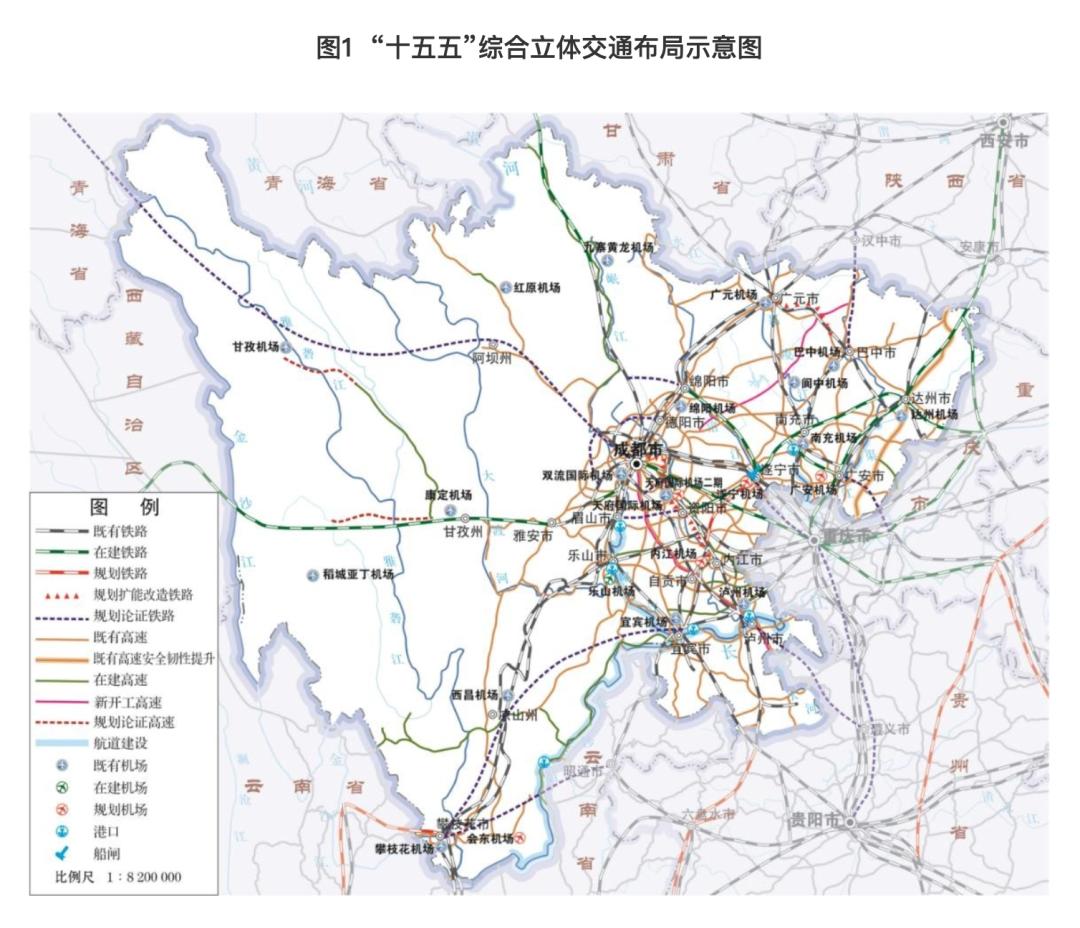
In 2025, the passenger throughput of Chengdu Shuangliu and Tianfu airports exceeded 90 million person - times, making Chengdu the "third city in terms of aviation traffic" in the country. In the "15th Five - Year Plan", Sichuan has clearly proposed to promote the construction of the second - phase project of Tianfu International Airport and promote the construction of Chengdu as a comprehensive - type international aviation hub with all - around access.
This positioning is on the same level as Beijing, Shanghai, and Guangzhou.
In addition, after the completion and opening of the Chengdu - Chongqing Middle - Line High - Speed Railway and the Chengdu - Dazhou - Wanzhou High - Speed Railway, Sichuan will form six railway channels connecting Chengdu and Chongqing, and the number of major channels in and out of Sichuan will exceed 70, truly transforming from an "inland hinterland" to an "open frontier".
The signal of all these changes is clear: Sichuan's mission is no longer just to export resources, labor, and electricity, but to become an "engine" that outputs technological breakthroughs, open innovation, and high - quality development.
03
The new five - year period is an important window for Sichuan to comprehensively shape new development driving forces and form new competitive advantages. Among them, working with Chongqing to enhance the development level of the Chengdu - Chongqing Economic Circle is a crucial step.
In 2025, the economic aggregate of the Chengdu - Chongqing Economic Circle exceeded 9 trillion yuan, accounting for 6.5% of the national total. A "new double - circle" with a scale of one trillion yuan is just around the corner.
The arrival of this step is also breaking two "prejudices" about the inland with actual development achievements.
First, the role played by large inland provinces is by no means simply that of a beneficiary under "transfer payments". For a long time, when people mention inland areas, they often think of "population outflow" and "relying on subsidies". However, Sichuan has answered this question with 2 trillion kilowatt - hours of exported electricity, 210 billion cubic meters of exported natural gas, and a complete industrial system supported by a single province.
Energy is the blood of industry, and industry is the cornerstone of national security. Sichuan, which is rising in the inland, and the Chengdu - Chongqing Economic Circle, which has been upgraded to the "fourth pole" of China's economy, are themselves the core variables supporting the development of a large country.
Second, building a "strategic rear - area" is by no means a static and defensive concept of security but a strategic consideration to enhance development resilience and achieve regional development re - balance in the territory of a large country.
Looking around the world, almost all world - class large countries with vast territories and strategic depth do not rely solely on a single coastal economic belt - the United States has the Great Lakes industrial area, Germany has Bavaria, and Russia spans Eurasia with the Ural Mountains.
For China to achieve high - quality development, it needs both the open frontiers along the coast and the strategic depth in the inland.
In this sense, the establishment of Sichuan's "strategic rear - area" positioning is essentially to build a strategic support point for China's economy through scientific and technological innovation, industrial upgrading, and transportation reconstruction, which is far from external interference and has strong internal driving forces.
Historically, Sichuan was China's rear - area and granary.
Now, in the blueprint of the "15th Five - Year Plan", Sichuan aims to be an innovation high - ground in the western region, a strategic base for ensuring the supply of important primary products for the country, a strategic high - ground for opening up to the west, a new base for participating in international competition, a strategic barrier for maintaining national ecological security, as well as a new growth pole and driving force.
For China, in the context of the accelerating evolution of the once - in - a - century changes, having a "solid" and "stable" Sichuan has become more important than ever.
This is a new space for the development of a large country and a new opportunity for Sichuan, the largest inland province.
This article is from the WeChat public account "Western City Affairs", written by Western Jun, and is published by 36Kr with authorization.