36Kr Exclusive | A Tsinghua-affiliated optical computing chip company has completed a multi-million yuan angel round of financing, targeting the full-spectrum optical computing architecture
Author | Qiao Yujie
Editor | Yuan Silai
Hard Kr has learned that recently, Photon Core Power (Beijing) Technology Co., Ltd. (hereinafter referred to as "Photon Core Power") announced the completion of an angel - round financing of tens of millions of yuan. The financing was jointly led by Suzhou Xinyang Fund, Chixing Venture Capital, and Shengjing Jiacheng, with Kaiyuan Venture Capital participating.
Founded in 2024 and headquartered in Beijing, Photon Core Power is a hard - tech startup focusing on optoelectronic integrated computing chips. Dr. Yang Qisheng, the founder of the company, graduated from the School of Integrated Circuits at Tsinghua University and has a cross - background in optoelectronic integration. The core team also mainly comes from Tsinghua University, with members covering fields such as optics, algorithms, semiconductors, and industrial resources.
Currently, optical computing is regarded as one of the important directions to break through the "power consumption wall" and "storage wall" of electronic chips, and the industry is gradually approaching the eve of industrialization. The core products of Photon Core Power focus on optoelectronic heterogeneous computing chips and supporting software toolchains.
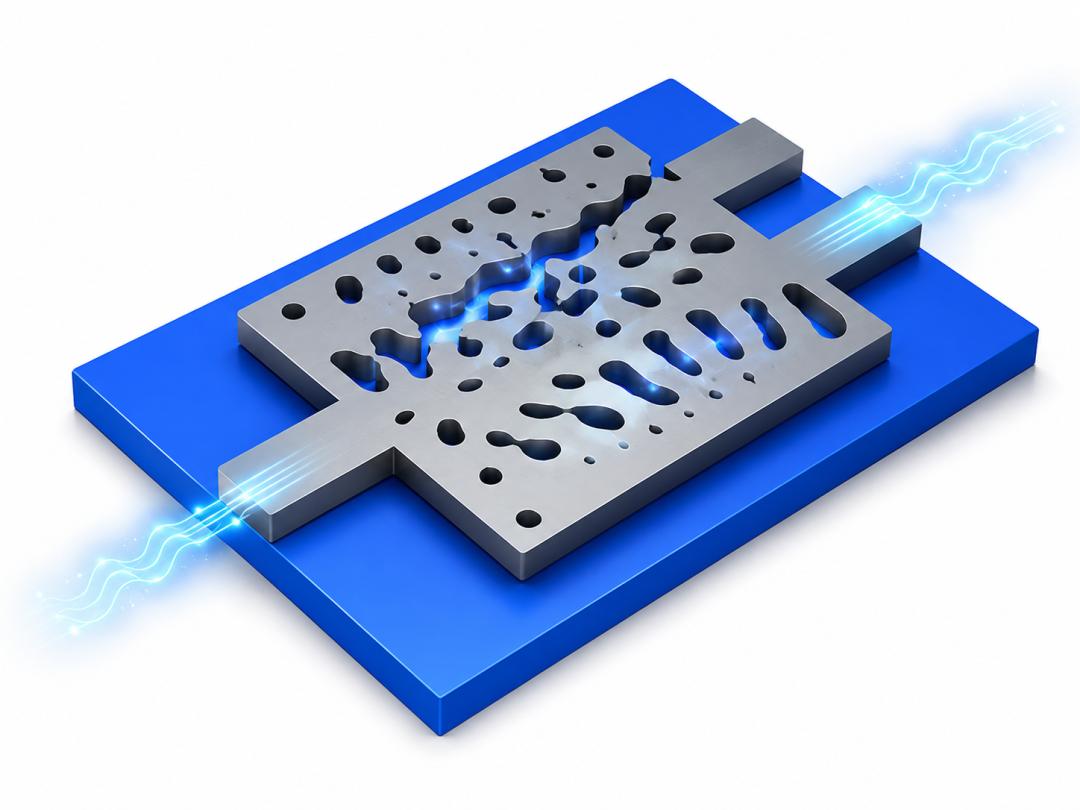
At the hardware level, Photon Core Power innovatively adopts the "full - wave computing" technology route. Yang Qisheng introduced that the technical paths in the field of optical computing have not fully converged yet. The company has chosen a differentiated route based on the "full - wave metasurface" with the goal of maximizing the performance potential of optical computing.
Different from the traditional method of splicing integrated optical components, the full - wave metasurface technology can finely control the wavefront of light waves and design diffraction, interference, scattering and other wave - optical effects as a whole, thus regarding the optical chip as a computable physical operator.
(Image source/Enterprise)
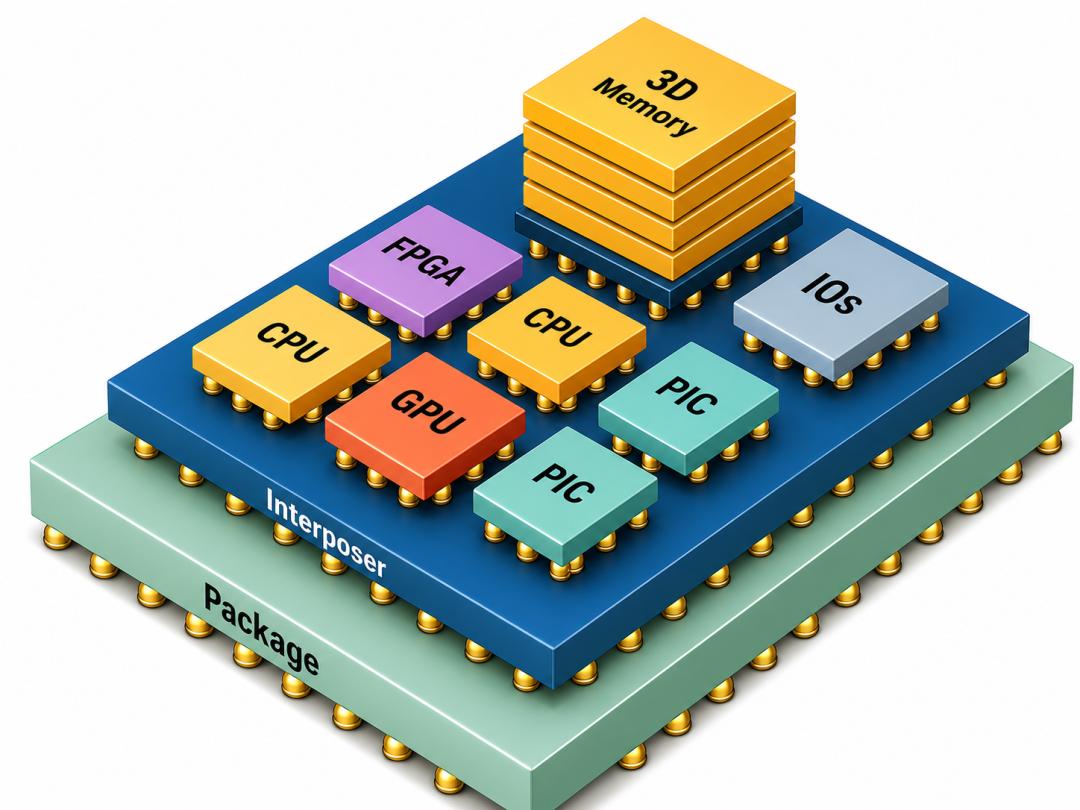
Compared with the traditional Mach - Zehnder interferometer (MZI) scheme, the size of the metasurface chip can be reduced by more than ten times, and the computing power density can reach up to 1000 TOPS per square millimeter. Through heterogeneous integration with electrical chips in the Chiplet way, the highest level of integration and energy efficiency of optical analog computing can be achieved.
At the software level, the company has independently developed the optoelectronic joint simulation and design tool EPDA, which connects the simulation and collaborative optimization processes of optoelectronic chips from the device, architecture to the system level.
This toolchain can fully leverage the advantages of high parallelism and low power consumption of optical chips in linear operations, and at the same time combine the mature capabilities of electrical chips in non - linear operations, control, and data scheduling to achieve software - hardware collaboration in the optoelectronic heterogeneous system.
The company is also simultaneously promoting the construction of software toolchains for optoelectronic heterogeneous chips, such as compilers, drivers, and operator libraries. By abstracting the behavior - level model and adapting to mainstream deep - learning frameworks, it lowers the threshold for users.
(Image source/Enterprise)
In terms of R & D progress, Photon Core Power has currently completed the principle verification and is gradually entering the engineering verification stage. Yang Qisheng said that in the next stage, the company will promote the development of customized chips according to customer needs and complete work such as testing, packaging, calibration, and software - hardware joint debugging.
The following is an excerpt from the interview (slightly edited):
Hard Kr: What are the differentiated advantages of the full - wave optical computing architecture?
Yang Qisheng: The so - called "full - wave" means to utilize as many effects in wave optics as possible. Many current optical computing solutions only utilize one phenomenon, such as interference, light intensity, or diffraction. In fact, reflection, refraction, scattering, interference, etc., all belong to wave - optical effects in essence. Our idea is to incorporate these effects into a unified design framework to maximize the performance potential of optical computing.
The key to achieving this is metasurface technology. Because the metasurface can finely control each "pixel point" in the light propagation path, which is equivalent to directly programming the wavefront of light. In other words, we do not view the optical chip as a cascade of small devices, but design the entire optical chip as a "computable physical operator".
Compared with the traditional MZI (Mach - Zehnder interferometer) route, the biggest advantage of this route lies in the computing power density. The size of the metasurface unit can be reduced by more than ten times compared with the MZI unit, so theoretically, a computing power density of 1000 TOPS per square millimeter can be achieved.
Moreover, the traditional MZI unit can essentially only complete the operation of one basic element in matrix multiplication, but on a smaller - sized metasurface chip, we can even directly implement the function of a neural network classifier, so its functional complexity is also higher.
At the same time, the metasurface solution itself has a higher system integration degree, so it is naturally suitable for heterogeneous integration with electrical chips through the Chiplet method, combining the high - parallel, low - power linear computing that light is good at with the control, storage, and non - linear computing that electricity is good at.
Hard Kr: How should we understand the first - created efficient DFNO design method for optical chips?
Yang Qisheng: In essence, we are doing a design method of "AI for Chip".
In the past, the design of optical chips relied heavily on numerical simulation, which consumed a lot of time and computing power and also relied on engineers' experience. Now we are introducing AI into the chip design process to accelerate performance simulation and reverse design. Traditional chip design is more like engineers splicing different devices together bit by bit, while now we first set the design goal and then automatically disassemble and generate the final layout through algorithms. So it is not only an improvement in efficiency, but more importantly, the design paradigm has changed. For complex systems such as optoelectronic heterogeneous chips, the AI - driven method will be very crucial.
Hard Kr: Why do you want to make a layout of software - hardware integration?
Yang Qisheng: Making a chip is just the first step. The more crucial thing is whether it can really be used by users in the end.
Whether it is an electrical chip or an optical chip, it will encounter ecological problems when it is truly launched into the market. So we choose to develop the software toolchain first, hoping to better meet customer needs and establish a developer ecosystem in advance. Moreover, our software toolchain not only serves customer applications but is also part of the chip design system. For example, in the field of electrical chips, there are EDA tools for design, as well as application - layer tools such as compilers, drivers, and operator libraries. In the past, optical computing was relatively lacking in the ecosystem.
Currently, there is no shortage of optical computing hardware that "can be made" in the industry. The real difficulty is how to make it stable, usable, and integrate it into the existing AI development system. So we will open - source our self - developed toolchain, abstract the optical chip into a behavior - level model, and at the same time feed back the non - ideal factors in optical devices to the algorithm side, and finally output a stable and implementable system result.
Investors' views
Wu Jiangang, the general manager of Sifive and an LP of Suzhou Xinyang Fund, said: As Moore's Law is approaching its end, optical computing provides a brand - new technological paradigm for the development of computing power. The founding team of Photon Core Power comes from Tsinghua University, with solid technical foundation and a spirit of innovation. We believe that the full - wave optical computing path they have pioneered will have the opportunity to occupy an important place in the future computing power competition.
Wang Yunkai, the founding partner of Chixing Venture Capital, said: The technology of Photon Core Power fully leverages the high - integration advantage of full - wave optical computing with metasurfaces and is combined with the self - developed optoelectronic integrated computing software platform to maximize the collaborative efficiency of optoelectronic chiplet cluster operations. This software - hardware integrated system - level solution will surely form a differentiated competitive edge in multiple core scenarios such as edge - side inference and cloud - side training, and have a profound impact on the industry.
Liu Haofei, the founding partner of Shengjing Jiacheng, said: Although Photon Core Power is a young company with a young team, it has breakthrough innovation and significant advantages in full - wave optoelectronic integrated computing and is very likely to become a dark horse in the field of optical computing. As an investment institution founded by senior executives from Tsinghua University's industry and Tsinghua University's engineering alumni, Shengjing Jiacheng relies on the project source advantages of top - tier research institutions such as Tsinghua University, Peking University, and the Chinese Academy of Sciences, and combines in - depth cooperation with industrial leaders such as SMIC, Sany Group, Bitmain, and iSoftStone. It can contribute unique value in helping cutting - edge innovation projects achieve commercial success. We look forward to Photon Core Power becoming an important highlight in Shengjing Jiacheng's investment portfolio.
Kaiyuan Venture Capital said: Against the backdrop of the slowdown of Moore's Law and the surging demand for AI computing power, optical computing has become the core direction to break through the computing power bottleneck of electronic chips. The full - wave computing technology route pioneered by Photon Core Power has unique advantages and differentiated competitive barriers. We look forward to its continuous promotion of technology R & D and industrialization. As an investment institution relying on Tsinghua University and bringing together the strength of Tsinghua alumni, Kaiyuan Venture Capital focuses on cutting - edge tracks such as new - generation information technology, artificial intelligence, and biotechnology to discover potential startup companies. Photon Core Power won the champion of the Tsinghua University President's Cup, the gold medal of the National Innovation and Entrepreneurship Competition, and the champion of the Kunshan Cup in 2025. It is a new force in Tsinghua University's entrepreneurship ecosystem. Kaiyuan Venture Capital is honored to participate in this round of financing of Photon Core Power to support the development of the innovation ecosystem of alumni - owned enterprises and looks forward to jointly witnessing the arrival of the optical computing era.