Why was WANG Tao promoted to Huawei's Rotating Chairman?
Wang Tao, who rarely appears in the public eye, taking over as the rotating chairman of Huawei surprised many. However, behind this, it is not only due to his personal ability and long - term dedication but also an inevitable choice of Huawei's institutional inheritance and echelon succession.
1
Wang Tao Takes Over
For China, Huawei is not just a commercial enterprise in the pure sense. It has long grown into the "pillar of the nation" in China's technology industry.
This positioning and description are by no means an overstatement. In the past few decades, whenever the country has encountered external constraints in key areas such as chips, software systems, AI computing power, and digital infrastructure and is at a critical moment of technological breakthrough, the whole nation's attention has always been focused on Huawei.
Huawei has lived up to expectations. Facing the joint strangulation of Western countries and industry giants, it has always maintained strong combat effectiveness and moved forward firmly in numerous tough battles. Therefore, it is not only a company but also a spiritual symbol and strategic confidence for China's self - reliance in the high - tech field.
However, as time goes by, the group of founding veterans who led Huawei from scratch and from weakness to strength are gradually fading out of the front - line management. Ren Zhengfei, the founder born in the 1940s, is already 81 years old. Sun Yafang, the former chairwoman born in the 1950s, has retired for many years. Two of the three rotating chairmen born in the 1960s, Guo Ping and Hu Houkun, have stepped down from the position of rotating chairman in recent years. Guo Ping has transferred to the position of chairman of the supervisory board, and Hu Houkun only retains the position of director of the board.
Since Huawei first disclosed the board structure and members in 2010, only Ren Zhengfei, Xu Zhijun, Hu Houkun, Meng Wanzhou, Yu Chengdong, and Zhang Ping'an have remained on the board, and the rest have all withdrawn.
At the moment of the new - old handover, who will be the new leader of Huawei has always been the focus of attention in society and the industry. Besides Meng Wanzhou, Wang Tao, born in the 1970s, has recently come to the center of the stage.
On the evening of March 31, 2026, Huawei's official website updated the information of the rotating chairman. Wang Tao, the former executive director, was promoted to vice - chairman and will serve as the rotating chairman of Huawei for six months starting from April 1.
This also means that Wang Tao has become one of the only three candidates for the rotating chairman of Huawei, alongside Xu Zhijun and Meng Wanzhou. In the next few months, he will comprehensively preside over the work of the board of directors and the standing committee of the board of Huawei, becoming the de facto "top leader" of the company. This is the first time Wang Tao has held this top position since he joined Huawei in 1997.
This result surprised many onlookers because Wang Tao only joined the board in 2018. Although he served as an executive director together with Ding Yun and Yu Chengdong as soon as he entered the board, he is still a "newcomer" to the board. Moreover, in terms of seniority, Zhang Ping'an and Yu Chengdong have deeper qualifications than him.
In addition, compared with Yu Chengdong's social influence, the outside world knows little about Wang Tao. So as soon as the news came out, many netizens were asking, who is Wang Tao? Why is it him? While industry observers generally believe that Wang Tao's taking over as the rotating chairman is traceable and a normal rotation of senior executives within Huawei.
2
The Leader of Huawei's Largest Business Segment
To answer why the new rotating chairman is Wang Tao, we have to first talk about Huawei's ICT infrastructure business.
Compared with Huawei's well - known businesses such as mobile phones, the Hongmeng system, and autonomous driving, the ICT infrastructure business, which is rarely noticed by the public, is the foundation for Huawei to survive and cross cycles over the decades.
So - called ICT, that is, information and communication technology infrastructure, covers carrier networks, enterprise networks, computing power networks, storage, optical communication, cloud computing infrastructure, etc. It is the foundation for the operation of the digital world today, just like water, electricity, gas, roads, railways, and networks in a country.
The ICT business is Huawei's core business after more than 30 years of in - depth development. In 1987, Ren Zhengfei founded Huawei, initially starting with the agency sales of switches. Later, Huawei transformed into independent R & D of switches. After technological self - research, global expansion, and finally having the world's largest number of 5G patent reserves, it has grown into a globally leading ICT infrastructure provider.
Huawei's ICT business is mainly targeted at top - level global telecom operators, public utility departments of various countries, and large - scale enterprises in finance, energy, manufacturing, etc. The demand is highly rigid, with high stickiness and extremely high replacement costs. Therefore, in the face of the Western blockade and sanctions in recent years, the ICT business has been less affected by external shocks, and thus has become Huawei's core card to withstand external pressure in adversity.
In 2025, Huawei's revenue was 880.9 billion yuan, of which the ICT infrastructure business achieved sales revenue of 375.014 billion yuan, a year - on - year increase of 2.6%, accounting for up to 43% of the total revenue. According to relevant calculations, the ICT business also contributed more than 60% of Huawei's operating profit, providing the most stable cash flow for Huawei and serving as the foundation to support the company's overall operations.
In addition, ICT is the technological matrix for all of Huawei's businesses. The underlying communication, network, computing power, and chip architecture of Huawei's terminal business, 5G, cloud computing, digital energy, automotive business, AI business, etc., almost all originate from the precipitation of Huawei's ICT technology. A large part of Huawei's annual R & D investment of hundreds of billions is invested in the ICT technology field. And the ICT business continuously outputs technological capabilities to other businesses.
In short, the ICT business is the foundation for Huawei's start - up, the foundation for revenue and profit, the technological base, and the stabilizer for Huawei's steady progress.
Wang Tao is an experienced veteran in Huawei's ICT infrastructure field. His career has almost spanned the entire process of Huawei's ICT business from the domestic market to the global market and from traditional communication to intelligent transformation. As one of the core promoters of Huawei's ICT business development, Wang Tao has successively served as the president of the wireless and wired business lines, the president of ICT Strategy and Marketing, the president of ICT Products and Solutions, and the director of the ICT Infrastructure Business Management Committee, etc., and has long coordinated the strategic formulation and business implementation in the ICT field.
Between 2024 and 2025, after Huawei merged the Carrier BG and Enterprise BG into the ICT infrastructure business, Wang Tao was promoted to the director of the EMT Operating Joint Meeting. This position is the "general coordinator" at the operational level of Huawei, coordinating the strategic synergy and resource allocation of all the group's businesses. Its actual power is second only to the rotating chairman and is known as the "uncrowned COO" in Huawei's organizational system.
As Huawei is currently facing complex external challenges, ensuring the continuous leadership of the core ICT business is of top priority for the enterprise. Against this background, Wang Tao, who has led the ICT business for many years and can also take the overall situation into account, taking over as the rotating chairman has become the preferred option for Huawei's development.
This is also the reason why although the public was surprised when Wang Tao took over as the rotating chairman, many industry observers thought it was "not sudden" but a natural result.
3
Comprehensive Resume and Brilliant Achievements
Another important factor for Wang Tao to take over as the rotating chairman is his extremely comprehensive resume and excellent performance record in Huawei.
Wang Tao, born in 1972, is from Yongcheng, Henan. He graduated from Xi'an Jiaotong University, obtaining a master's degree in Automatic Control Theory and Applications.
In 1997, Wang Tao joined Huawei, a rising communication equipment manufacturer at that time, and worked in the R & D department of the wireless division. He was one of the core R & D personnel of Huawei's first - batch 3G technology.
At the beginning of this century, 3G licenses had not been issued in China, and the overseas market was monopolized by European and American enterprises. Huawei had invested a large amount of funds in 3G R & D at that time, but due to the inability to monetize the R & D results, it had to look for opportunities in the overseas market. Therefore, Wang Tao became one of the earliest overseas "special forces" in Huawei's wireless 3G business.
Huawei's first overseas 3G commercial project was to build the first 3G network in the Middle East for Etisalat. At that time, Huawei had no major successful cases overseas, and customers were not familiar with the "Huawei" brand. However, this project was crucial to the survival of Huawei's wireless business and could not afford to fail.
With the efforts of Wang Tao and his colleagues, this project completed all the construction work in only three months and created many world records, including the world's first commercial WCDMA network operated by a traditional GSM carrier; the world's earliest realization of roaming handover between 2G and 3G, and the successful connection of the 2G network to the 3G core network, etc.
As a core R & D backbone of Huawei's wireless business, Wang Tao was also deeply involved in the R & D of the revolutionary "distributed base station" architecture. This kind of base station, which is small in size, low in power consumption, short in deployment cycle, and low in construction cost, directly pushed Huawei's wireless business into the global first - tier, laying the hardware foundation for the continuous leadership of the subsequent 4G and 5G businesses.
Huawei's cadre training requires first being a specialist. Ren Zhengfei emphasized that "without being a specialist, it is impossible to become a generalist; a generalist without specialist skills can't find a place to put the 'explosive package'."
Wang Tao is undoubtedly an excellent technical specialist. However, to enter Huawei's core management, being just a specialist is far from enough... Wang Tao's career transition was from the technical field to the product marketing field. He has successively served as the vice - president of Huawei's UMTS international product marketing and the president of product marketing in the European region. He later recalled the difficulties in market expansion: "Selling 3G was extremely difficult! Western telecom giants dominated the market, pressing us hard." "I dreamed of winning an order. We went forward one after another and didn't let go of any opportunity."
However, this period of experience in the international market enabled Wang Tao to complete the transformation from technical R & D to market expansion and laid the foundation for him to later serve as the general manager of the Italian & Swiss subsidiaries and become an independent "local governor". When he took over the European market business, Huawei's share in the European communication market was about 5%. But when he left Europe in 2012, Huawei's market share had climbed to about 25%, becoming one of the two market leaders on a par with Ericsson.
After his overseas assignment, Wang Tao successively took charge of the two core business segments of the wireless network product line and the network product line. His vision was no longer limited to a single region or department, but he became an independent operator in charge of the company's core business lines. During his tenure as the president of the wireless network product line, he led the full - stack self - research of Huawei's 4G base stations, including the R & D work of the entire link such as baseband chips, radio - frequency chips, core networks, and base station software. After that, Huawei's 4G base stations ranked first in global shipments, making it the biggest winner in the 4G era.
In 2018, Wang Tao began to enter Huawei's strategic management layer. In March of that year, as the president of products and solutions, he became an executive director of Huawei's new - term board. In the following years, he successively served as the president of ICT Strategy and Marketing, the president of ICT Products and Solutions, the director of the Product Investment Review Committee, and the director of the ICT Infrastructure Business Management Committee, etc.
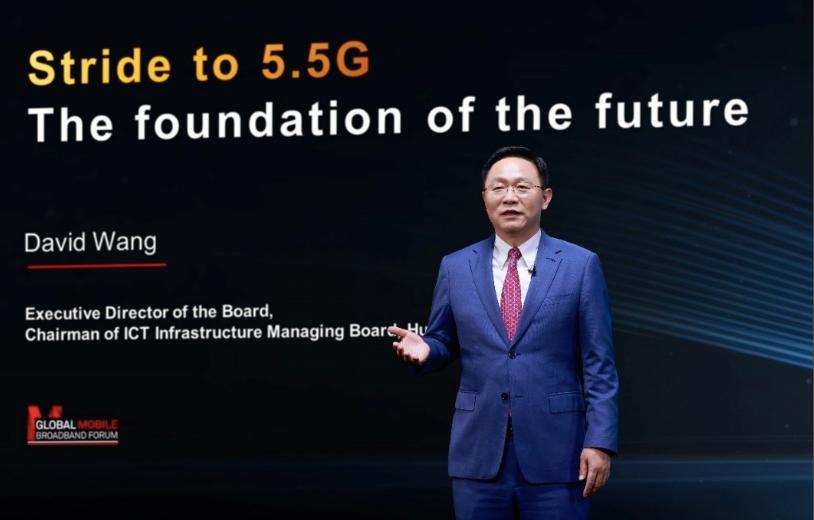
During his tenure, in the face of foreign technological sanctions and political suppression, Wang Tao led the promotion of the domestic substitution of the core chips of 5G base stations and completed the commercialization of self - developed products within half a year, ensuring the continuous and stable progress of Huawei's global 5G business. He also put forward the development vision and technical indicators of 5.5G globally for the first time, promoting technologies such as communication - sensing integration and passive IoT to be included in the global standardization system.
In recent years, with the surging wave of the AI industry, Wang Tao, who is in charge of the ICT business, has coordinated the full - stack R & D and ecological construction of Kunpeng general - purpose computing and Ascend AI chips, driving the continuous growth of Huawei's server and AI computing power industries, and providing core support not only for Huawei but also for China's computing power infrastructure.
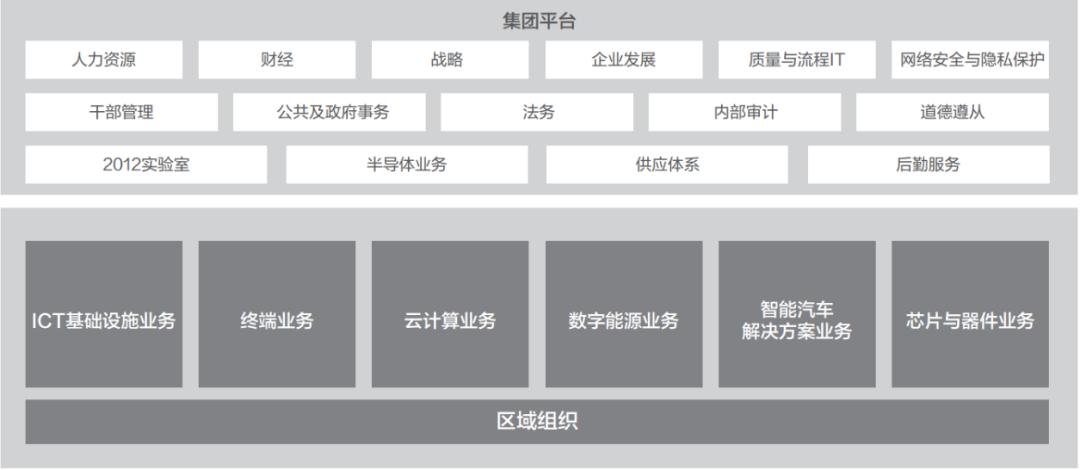
Between 2024 and 2025, after serving as the director of the Huawei EMT Joint Meeting, Wang Tao took on more responsibilities, coordinating the group's business strategies and resource synergy of major businesses such as ICT infrastructure, terminal business, cloud computing, digital energy, intelligent automotive solutions, and chip devices.
Now, Huawei is at a critical stage of "holding firmly to the ICT ballast business, making breakthroughs in AI, computing power, and 5.5G, and resisting external risks". It needs a leader who can deeply engage in core technologies, control the basic business, and continuously promote the development of strategic new businesses such as AI and computing power. Against this background, Wang Tao, with his comprehensive resume, brilliant achievements, and strong technical background, has become a qualified candidate for Huawei.
4
The Result of Huawei's Cadre Selection System
Ren Zhengfei attaches great importance to the cross - field and multi - position experience of cadres. He once clearly stated that "in the past, our cadres grew up in a linear way and knew nothing about horizontal business. So, now we need to accelerate the 'zigzag' development of cadres."
Wang Tao's career path is a typical "zigzag" development: from technical R & D to marketing, from the domestic market to overseas, from product lines to strategic planning, and from partial to overall business management.
This path perfectly meets Huawei's requirements for selecting senior executives. Huawei has a set of fixed cadre selection criteria: a deep technical or business background is the starting point of the "zigzag"; long - term successful experience in core business departments is one turn of the "zigzag"; having cross - regional management experience is another turn of the "zigzag"; and finally, comprehensive management ability is accumulated through job rotation.
The goal of this system design is very clear: to ensure organizational stability, balanced decision - making, and cultural inheritance, and to avoid the risk of individual heroism.
Looking at the global business development history, world - class enterprises in the start - up and peak periods all have top - level strategists and doers as leaders. However,