Hillhouse has invested in an AI sports technology company that received angel round financing from LI Zexiang | Hardcore Kr Exclusive
Author | Huang Nan
Editor | Yuan Silai
Hard Kr has learned that SportVision, an AI sports technology company, recently completed its Angel + round of financing, led by Hillhouse Ventures (GL Ventures), with Qianheng Capital serving as the exclusive financial advisor. The funds from this round will be primarily used for core technology R & D, product mass production and implementation, as well as market expansion and promotion. Its new AI tennis training camera product is in the planning for release.
SportVision belongs to Shenzhen Sibo Vision Sports Technology Co., Ltd. It has long been focused on the R & D of sports algorithms and the application of hardware products, and the construction of an AI intelligent coaching system. Previously, it received angel - round investment from Qingshuiwan Fund under Professor Li Zexiang.
In the past few years, the sports technology track has almost been re - defined by hardware manufacturers. Ball - serving machines have made it possible for people to practice alone, sports cameras have eliminated the need for dedicated personnel to record the training process, and smart watches/bracelets have quantified heart rate, step frequency, calorie consumption, etc. into accurate long - term data records.
Although each type of product has spawned companies of considerable scale, they each remain at single - point functions such as training companions, record - keeping, and monitoring. The data is independent of each other, and their capabilities cannot be integrated, making it difficult to provide users with continuous and overall personalized support.
The deep - seated desires of sports enthusiasts go far beyond being recorded. They also want to be guided, accompanied, and see their progress. A more fundamental change is taking place: a leap from “recording tools” to “AI sports Copilots”, and the sports technology track is being rewritten.
Tools only need to complete instructions, while Copilots can understand the user's state, recognize movements, correct habits like a coach, and even become the one who urges and accompanies when the user's enthusiasm for sports fades.
To bridge this experience gap, users need not only hardware with stronger performance but also a “brain” that can integrate all information and truly understand the sports enthusiasts. This is precisely the core position that SportVision has accurately targeted.
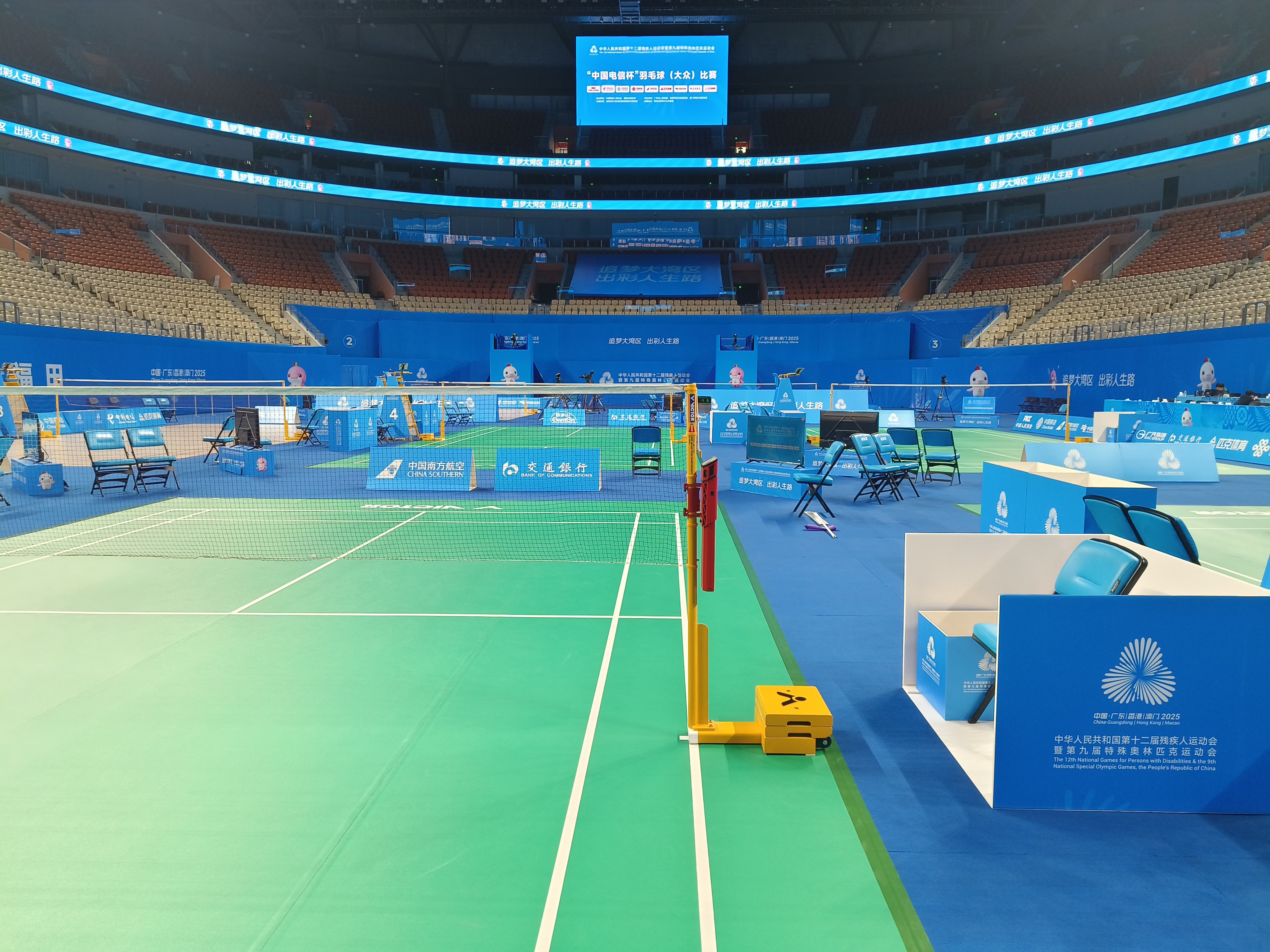
SportVision equipment used at the National Games (Source/Enterprise)
Chen Kaifu, the founder of SportVision, graduated from the Yan Jici Class of the School of Physics at Jilin University with a bachelor's degree and holds a master's degree in robotics from Columbia University. He once conducted research on posture recognition and object detection algorithms at MMLab. As a former swimmer, he has a personal understanding of the pain points in sports learning, movement correction, and training efficiency. This experience made him determined to use AI technology to solve the problem of unstructured sports data and build a scalable and replicable personalized sports product and training system.
Yang Chenxu, the co - founder, is a senior tennis enthusiast and has been responsible for AI product development at Tencent and ByteDance. Many core members of the team come from leading technology companies such as SenseTime, ByteDance, Alibaba, and Tencent. They have the capabilities of AI algorithm R & D, integrated hardware and software development, and global brand operation, and have formed a complete closed - loop from technology R & D to product implementation.
At the beginning of the company, SportVision chose to start with the badminton scenario for key product verification. Its first product, “Good Shot Wow”, is a set of badminton AI sports camera solutions. The device can collect court images in real - time, automatically identify and capture the user's highlight moments in sports through visual algorithms, and provide integrated services such as highlight compilations, live event broadcasts, and sports data analysis for ordinary sports enthusiasts, professional athletes, and event scenarios.
This system has been implemented in dozens of top badminton halls across the country and has received support from many seed users, including world champions such as Lin Dan, Wang Zhengming, and Gong Ruina. On the event side, the system has also served many key events such as the National Games for Persons with Disabilities and Special Olympics, the Badminton Competition in the Guangdong - Hong Kong - Macao Greater Bay Area, and the Shenzhen Cup.
However, its real value lies not in the hardware itself but in the massive amount of sports data accumulated during continuous operation.
During the shooting process, SportVision's self - developed algorithm can analyze and intelligently predict the sports trajectory in real - time, automatically adjust the camera angle according to the game progress, and conduct targeted learning and optimization for complex multi - person sports scenarios. From world champions to beginners, from the guiding materials of professional coaches to the practice habits of ordinary users, the venue equipment runs for more than ten hours a day, collecting all kinds of generalized data. Every game, every swing, and every scoring moment is recorded, disassembled, and analyzed by the system.
This is a data mine that is difficult to be collected by ball - serving machines or sports cameras.
The basic mechanism of sports learning is divided into three stages: the cognitive stage (grasping the essentials of movements through vision), the associative stage (forming neural pathways through repeated practice), and the autonomous stage (solidifying movements into muscle memory). Timely feedback in the associative stage is the most crucial: whether a movement is correct or not needs to be confirmed within a few seconds; otherwise, wrong movements will be “practiced to perfection”.
Chen Kaifu pointed out to Hard Kr that “previously, most sports AI solutions still remained in the ‘post - analysis’ stage. Users upload videos after exercising, and the system provides a review report. However, this model misses the best correction window.”
Therefore, SportVision aims to build a set of predictive AI based on real - time interaction.
“A good athlete is not necessarily a good coach. The value of a good coach lies in knowing how to teach,” Chen Kaifu said. “What we need to do is to extract the teaching methods of coaches and let AI learn how to teach.”
As racket sports such as tennis, badminton, and pickleball continue to gain popularity globally, users' demand for sports improvement is becoming more urgent. The traditional model of hiring a coach faces the contradiction of high cost and low frequency. Hiring a coach once or twice a week, users cannot get feedback during practice. For sports like tennis, it may take a year to go from a beginner to being able to have a “doubles social” experience. The long positive - feedback cycle also makes many people stay at the beginner stage.
This is precisely SportVision's core barrier: the massive amount of data collected by the equipment running day and night on the court. From skeletal point recognition to movement pattern analysis, from the movement database of professional athletes to the practice trajectories of ordinary users, these data form a transferable technical foundation that can be reused and transferred in various racket sports.
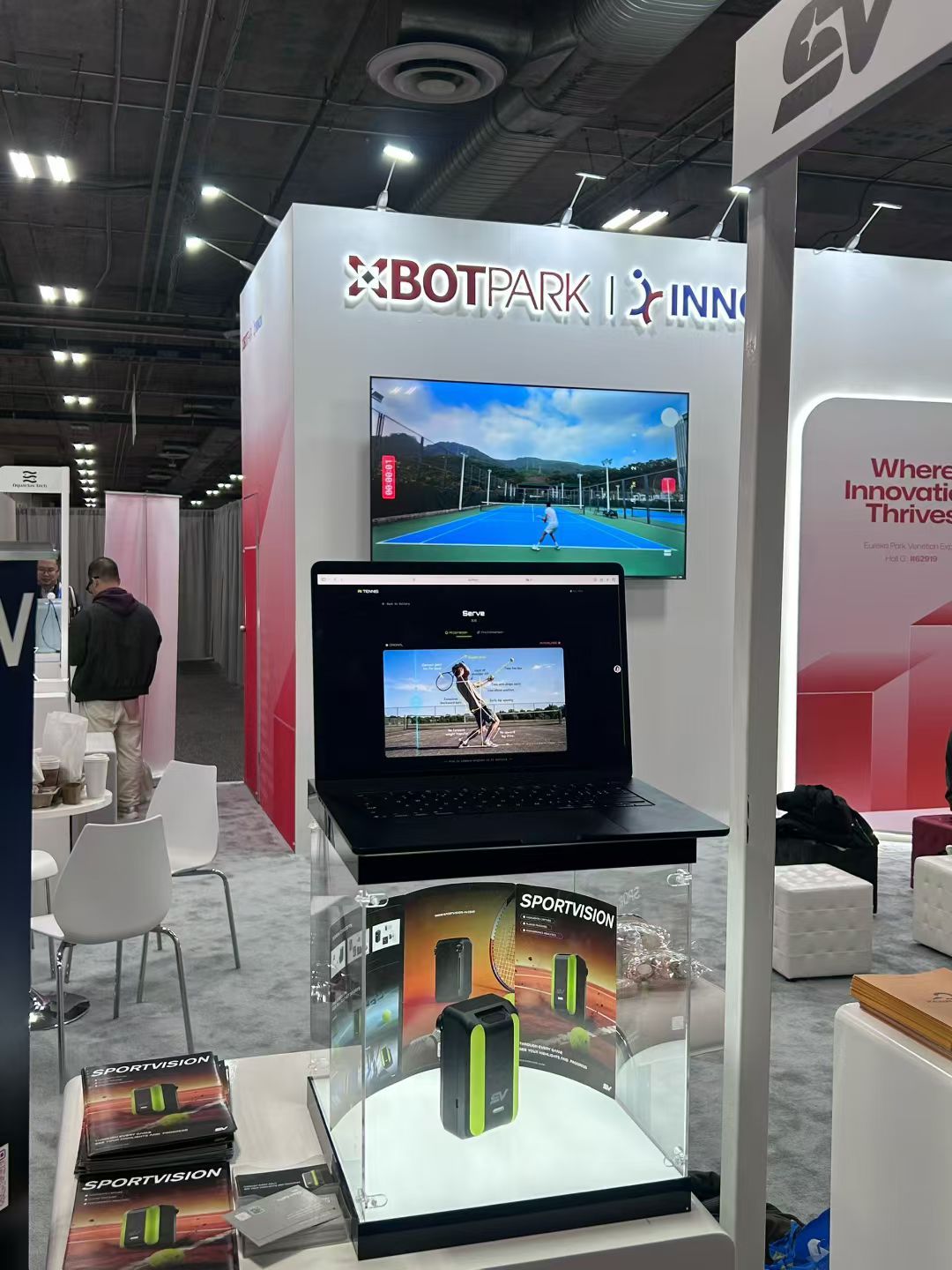
SportVision's first tennis AI Copilot product (Source/Enterprise)
“What we are doing is not just a sports camera. We are building a world model for the personalized AI coaches of future sports enthusiasts,” Chen Kaifu told Hard Kr. “Users don't even need to think about ‘how should I practice’. Instead, the system will actively manage your sports progress.”
Hard Kr has learned that SportVision's first tennis AI Copilot product is in the intensive R & D process. Using the camera as a carrier, the system can recognize the user's sports movements and compare them with professional standard movements, providing real - time feedback and correction suggestions. At the same time, combined with the coach - guidance scenario, it can generate a personalized training plan, allowing users to receive targeted and scientific AI training guidance even when practicing alone.
This product concept was previously exhibited at CES 2026, and the initial launch market is focused on Europe and the United States. This region has the highest - density tennis user group in the world and is also the core market with the most prominent willingness to pay and consumption ability.
Returning to the shift in the underlying logic of sports technology competition in the AI era, as large models gradually bridge the knowledge gap, the barriers to competition no longer lie in algorithm parameters but shift to two ends: one is the density and depth of data, and the other is the intervention and closed - loop of scenarios.
The scarce data assets accumulated by SportVision over the long term are becoming the technical foundation for its next - generation AI coaching products. From emotional value to a combination of functionality and emotional value, from recording to guiding, and from a single category to a general technical foundation for racket sports, this company is attempting to accelerate the key upgrade of sports technology from “tools” to “AI Copilots”.