The first city in central China is striving to build its first trillion-yuan-level industry.
The shift of kinetic energy is becoming the new main line for the development of China's "top - tier" cities.
Recently, Wuhan "officially announced" the launch of the advanced manufacturing doubling plan. The goal is that by 2030, the total industrial output value will exceed 3 trillion yuan, the added value of industrial enterprises above the designated size will reach 800 billion yuan, accounting for about 27% of the GDP, and support the city's GDP to reach 3 trillion yuan with strong industrial strength.
The level of industrial clusters is a hard yardstick to measure a city's industrial strength and also the ballast stone to support economic development. The "trillion - level industrial cluster" is the most "hardcore" label among them.
Currently, cities such as Suzhou, Chengdu, Hangzhou, and Nanjing already have trillion - level industries, while Wuhan has not yet crossed this threshold.
The optoelectronic information industry is expected to achieve a "zero breakthrough" in Wuhan. Recently, the main leader of the Hubei Provincial Party Committee conducted research on the high - quality development of the optoelectronic information industry in Wuhan, proposing to strengthen basic research, improve original innovation ability, and accelerate the construction of a world - class optoelectronic information industrial cluster.
In the surging AI wave, the first city in central China is accelerating to break the deadlock.
01
The High - light Moment
In the past few years, Wuhan and Hangzhou have been in fierce competition in economic rankings, leading each other alternately. However, by the end of 2025, Hangzhou's leading advantage was quite obvious.
The reason may lie in the game of industrial development. Qin Zunwen, the vice - president of the China Society of Urban Economics, told Urban Evolution that industry is the main battlefield of GDP and needs to be supported by manufacturing. In the past period, Hangzhou's digital economy advantage was fully demonstrated in the era of artificial intelligence, while Wuhan's manufacturing advantage, especially in the automotive manufacturing industry, was a step slower in the "transformation" of developing new energy and intelligent connected vehicles.
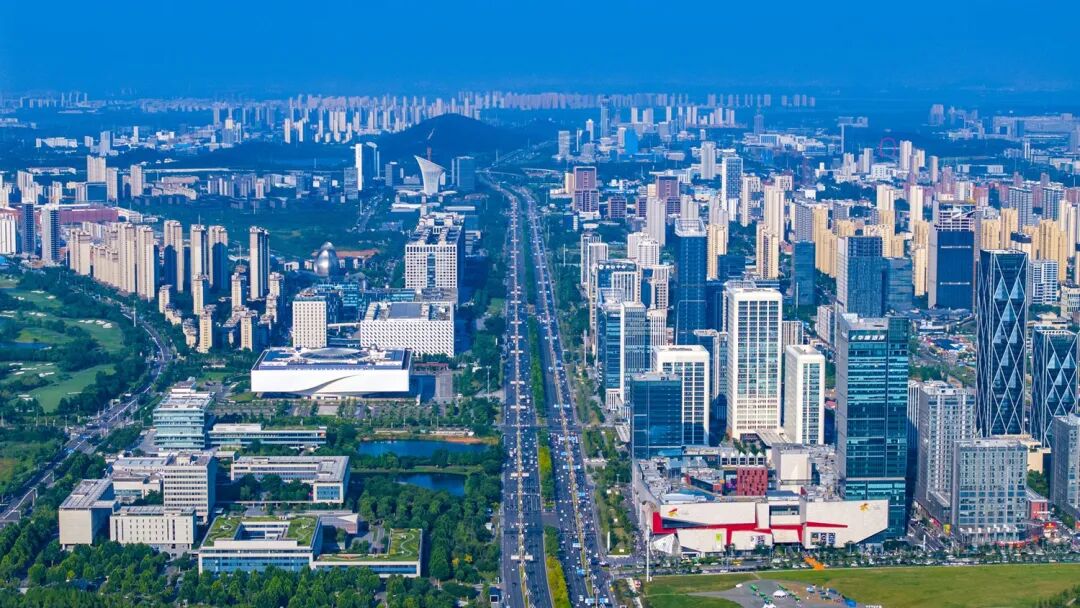
Image source: Photographic Network_701120405
Lose at one end, gain at the other. As the global AI wave hits, the demand for computing power has exploded, and "hard currencies" such as optical communication, optical modules, and storage chips have performed outstandingly, bringing a new round of high - light moments to Wuhan.
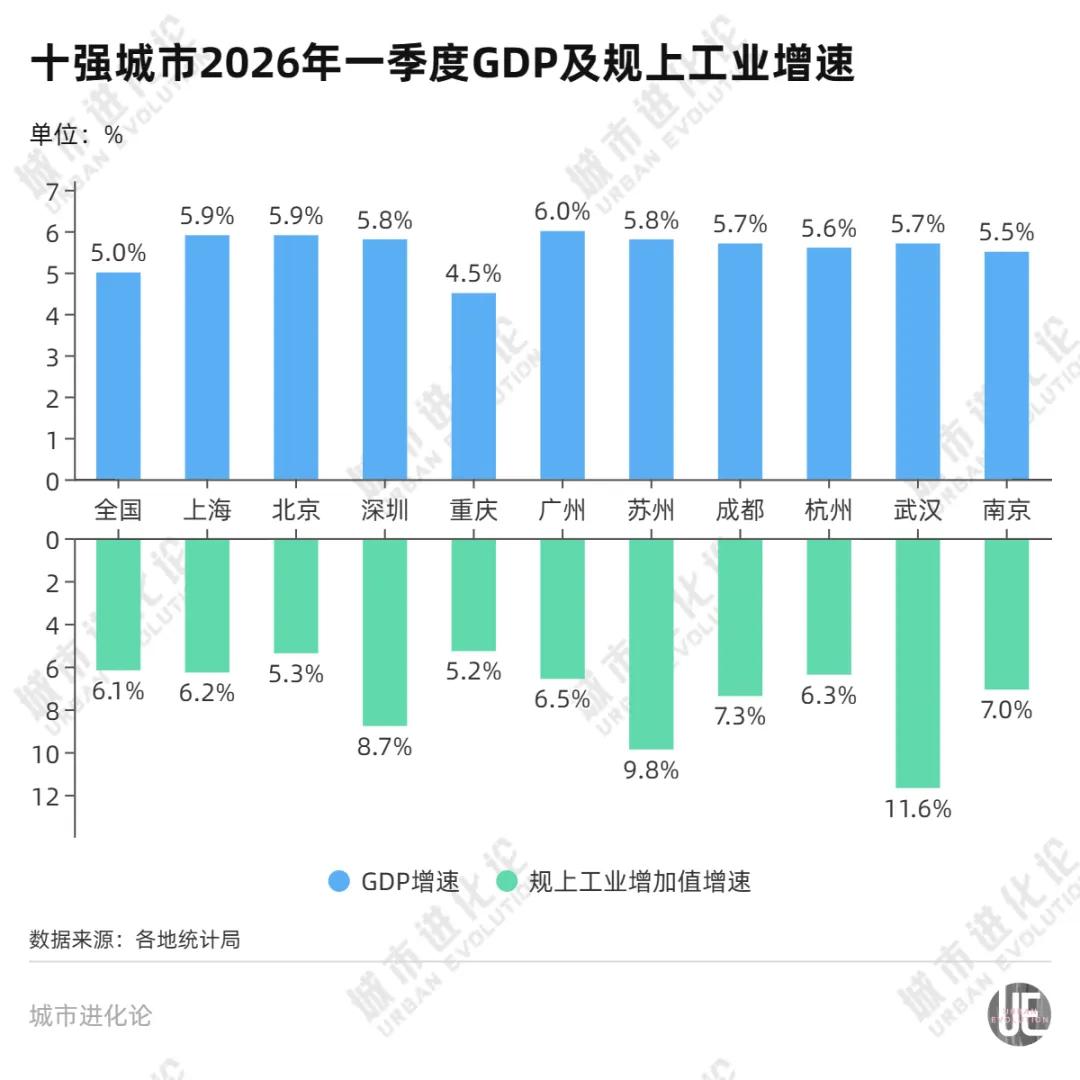
In the first quarter of this year, Wuhan's GDP was 504.299 billion yuan, a year - on - year increase of 5.7%, outperforming the national and provincial levels by 0.7 and 0.3 percentage points respectively.
The industrial performance was even stronger. In the first quarter, the growth rate of the added value of the secondary industry and the growth rate of the added value of industrial enterprises above the designated size in Wuhan reached 8.2% and 11.6% respectively. Both indicators led the top ten GDP cities, driving the proportion of the secondary industry in GDP to rise to 35.3%, a significant increase of more than 5 percentage points compared with the end of last year (29.8%).
The explosion of kinetic energy comes from high - tech industries. In the first quarter, the added value of high - tech manufacturing industries above the designated size in Wuhan increased by 45.4% significantly, among which the added value of the computer, communication, and other electronic equipment manufacturing industries increased by 62.4%, becoming the main driving force for industrial expansion and quality improvement.
In terms of products, the output of civil drones increased by 154.8%, the output of integrated circuit wafers increased by 49.8%, and the output of tablet computers increased by 48.3%. From January to February, the total profit of industrial enterprises above the designated size in Wuhan increased by 129.0% year - on - year.
Qin Zunwen believes that the significant growth of hard - tech products such as optical communication, optical modules, and storage chips has brought obvious profits, and Wuhan's early industrial investment has reached the harvest period. Through the development of these industries, Wuhan is expected to catch up with Hangzhou and Chengdu and narrow the gap with them.
Wuhan also intends to strengthen its industrial capabilities along with the trend.
The newly announced "14th Five - Year Plan" outline of Wuhan proposes to build a "965" modern industrial system, strengthen the scale and level, and continuously improve industrial competitiveness and modernization levels. It mentions building nine pillar industrial clusters such as optoelectronic information and life - health.
Recently, Wuhan officially launched the advanced manufacturing doubling plan, further clarifying the development goal: by 2030, build 2 trillion - level industrial clusters, 4 500 - billion - level clusters, and 17 100 - billion - level segmented industrial chains, with the total industrial output value exceeding 3 trillion yuan, and support the city's GDP to reach 3 trillion yuan with strong industrial strength.
Qin Zunwen said that based on its strong scientific and technological strength, Wuhan has cultivated and accumulated a number of disruptive technologies and industries. In the current competition of new - quality productivity, with several pillar industries as support, Wuhan has a good chance to achieve the expected industrial and GDP goals and even achieve better development results.
01
Trillion - level Industries
Looking at Wuhan's industrial foundation, optoelectronic information and life - health are two representative advantageous industries, and their scales both exceeded 500 billion yuan during the "14th Five - Year Plan" period. Among them, the optoelectronic information industry is more prominent.
A landmark carrier is "Optics Valley".
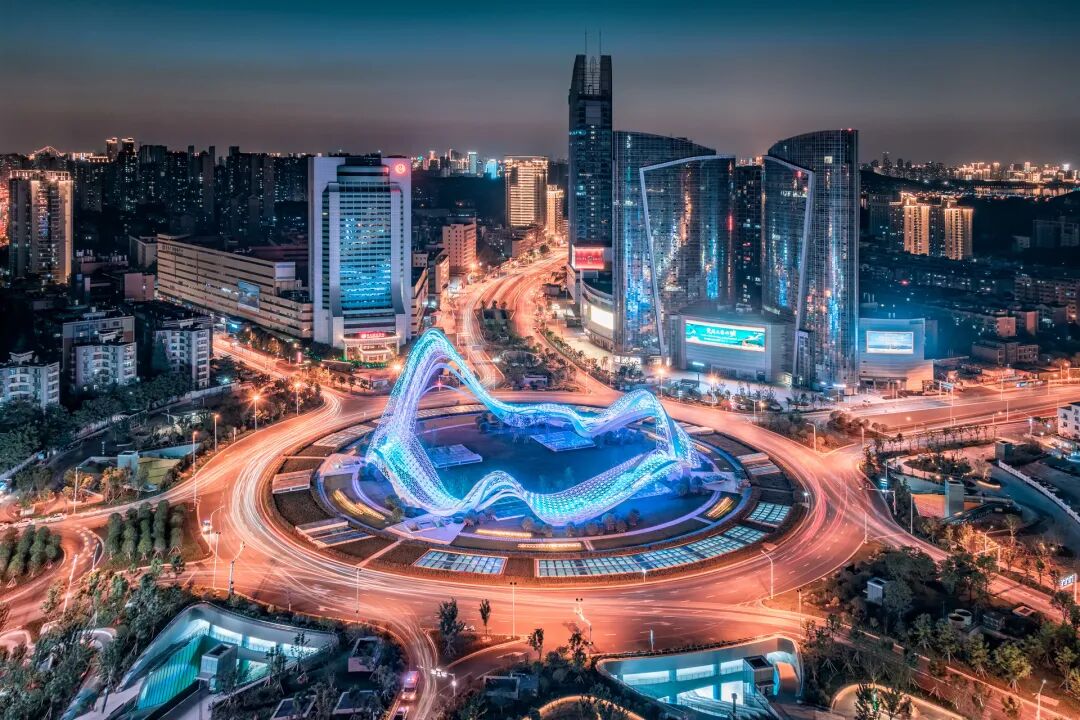
Image source: Photographic Network_501669278
In 1988, as the birthplace of China's first quartz optical fiber, the Wuhan East Lake High - tech Development Zone was established and later approved as a national optoelectronic industry base, namely "Optics Valley". Now, it has developed into the world's largest optical fiber and cable production base and cultivated a number of leading optical communication enterprises.
According to the Hubei Daily, as of 2025, the scale of the optoelectronic information industry in Optics Valley exceeded 650 billion yuan, and more than 16,000 optoelectronic information enterprises have gathered here. At the same time, the economic level of Optics Valley has continued to rise, and its economic aggregate's proportion in Wuhan's GDP has risen from 12.8% in 2020 to over 15%.
Entering the "15th Five - Year Plan" period, as AI drives the explosion of computing power demand, "Optics Valley" continues to ride on the wave.
Take Yangtze Optical Fibre and Cable Joint Stock Limited Company, which was established in the same year as "Optics Valley", as an example. It is the second company in Hubei with a market value of over 100 billion yuan after Huagong Science & Technology. As of the close on May 11, 2026, its market value has exceeded 300 billion yuan. According to the disclosure of the Wuhan East Lake High - tech Development Zone Management Committee recently, the total market value of 72 listed companies in Optics Valley has exceeded 1 trillion yuan.
From the perspective of the overall industrial situation, the total scale of Wuhan's optoelectronic information industry has exceeded 850 billion yuan, and it is only one step away from entering the trillion - level industry rank, and is expected to become Wuhan's first trillion - scale pillar industry.
Looking across the country, building trillion - level industrial clusters is gradually becoming the standard for leading industrial cities.
For example, Chengdu has formed two trillion - level industrial clusters in electronic information and equipment manufacturing; Hangzhou has a trillion - level cluster in software and information services, and the visual intelligence industry is also only one step away from reaching the trillion - level; Nanjing, whose GDP is slightly lower than Wuhan's, proposed to build a trillion - level industrial cluster as early as 2023 and officially announced in March this year that its software industry had exceeded the trillion - level.
Recently, when Wuhan launched the advanced manufacturing doubling plan, it mentioned that it will build two trillion - level clusters in optoelectronic information and life - health in the next five years. The "15th Five - Year Plan" outline of Wuhan gives more specific goals: by 2030, the scales of the optoelectronic information industry and the life - health industry will reach 1.5 trillion yuan and 1 trillion yuan respectively.
In Qin Zunwen's view, according to the development trend, Wuhan's optoelectronic information industry is expected to reach the expected goal. However, while continuously expanding the industrial scale, it still needs to make up for the short - board in cultivating leading enterprises. Compared with Hangzhou, which has industry giants such as Alibaba and NetEase, Wuhan currently lacks "giant - style" leading enterprises. Even core enterprises such as Changjiang Storage still have room for improvement in scale. Making up for this short - board of leading enterprises will further release the internal driving force for Wuhan's industrial development.
This has been reflected in Wuhan's top - level strategic layout.
The "15th Five - Year Plan" outline of Wuhan mentions that in consolidating pillar industries, it is necessary to cultivate a number of industrial ecosystem - leading enterprises and "chain - master" enterprises in the industrial chain, promote the integrated layout of the innovation chain and the industrial chain, and continuously improve the status and competitiveness in the global industrial division of labor.
According to the established plan, Wuhan will focus on doubling leading enterprises and strive to cultivate 3 enterprises with a scale of over 100 billion yuan, 10 enterprises with a scale of over 50 billion yuan, and 40 enterprises with a scale of over 10 billion yuan in the next five years.
03
Competing for 3 Trillion
As of now, there are 5 cities in China with a GDP of over 3 trillion yuan: Shanghai, Beijing, Shenzhen, Chongqing, and Guangzhou. After that, cities with a scale of over 2 trillion yuan, such as Suzhou, Chengdu, Hangzhou, and Wuhan, have all set "3 trillion" as the next - stage GDP development goal.
Among them, as early as the beginning of 2024, Suzhou proposed to "cross the finish line" around 2026 in about 3 years. Chengdu, Hangzhou, and Wuhan have all set 2030 as the "finish - line" time.
Judging from the economic data in the first quarter of this year, the economic competition among "2 - trillion - level" cities is very fierce. Suzhou leads with 5.8%, while Chengdu, Wuhan, and Hangzhou have all stabilized above 5.6%, and the growth rate difference between them does not exceed 0.2 percentage points.
At the industrial level, "hard - tech" products such as new energy vehicles, robots, lithium - ion batteries, and intelligent terminals are becoming the key driving forces for the economic growth of each city.
Image source: Photographic Network_701153458
The output of service robots and lithium - ion batteries for energy storage in Suzhou increased by 6.0 times and 2.2 times respectively year - on - year. The output of lithium - ion batteries and smart TVs in Chengdu increased by 109.8% and 97.4% respectively. Although Hangzhou did not disclose specific product data, the added value of the core manufacturing industries of the digital economy increased by 11.7%, indicating an increase in the gold content of the digital economy.
"This is a competition among the core pillar industries of each city." Qin Zunwen analyzed that in the future, the competition among cities will increasingly focus on the competition of the levels of pillar industries, and the upgrading and development directions of local pillar industries will also be closely aligned with the national strategic development needs.
Taking the "15th Five - Year Plan" outline as an example, it has added industries such as intelligent connected new energy vehicles and robots to strategic emerging industries and proposed to build strategic emerging industrial clusters with distinct characteristics and complementary advantages according to local conditions.
In Qin Zunwen's view, emerging industries are an important direction for increasing efforts, improving quality, expanding scale, and upgrading during the "15th Five - Year Plan" period. The key breakthrough for "2 - trillion - level" GDP cities to open the door to the "3 - trillion - club" lies here, and the core of the competition is the hard strength of scientific and technological innovation.
Whether a city can activate its local scientific and technological resources depends on the coordinated linkage of talent, science and technology, and education. Among them, education is the underlying foundation, science and technology is the core key, but all innovation and development ultimately depend on talent to be realized.
Take Wuhan as an example. As a high - end talent hub and a major city for higher education, it once had the short - board of insufficient transformation of scientific and technological achievements. However, since the implementation of the "Sharp Knife" technology research and development project in Hubei in 2022, the market - oriented reverse - forcing mechanism has greatly mobilized the enthusiasm of scientific research personnel, further giving play to Wuhan's advantages in science, education, and talent, which has led to the accelerated growth of Wuhan's industry today.
Qin Zunwen said that whether the vitality of talent can be fully released will also be the core factor in the competition among cities for emerging industries.
This article is from the WeChat public account "Urban Evolution" , author: Liu Xuqiang. Republished by 36Kr with authorization.