Tesla's latest cutting-edge technology: Deploying airbags before a collision
Does the airbag deploy before the car even collides?
Yesterday, Elon Musk announced with great fanfare that Tesla's pure vision system (Tesla Vision) has now learned to predict the future.
It can trigger the airbag and tighten the seatbelt 70 milliseconds before an actual vehicle collision.
Subsequently, this function will be pushed to all new cars for free via OTA.
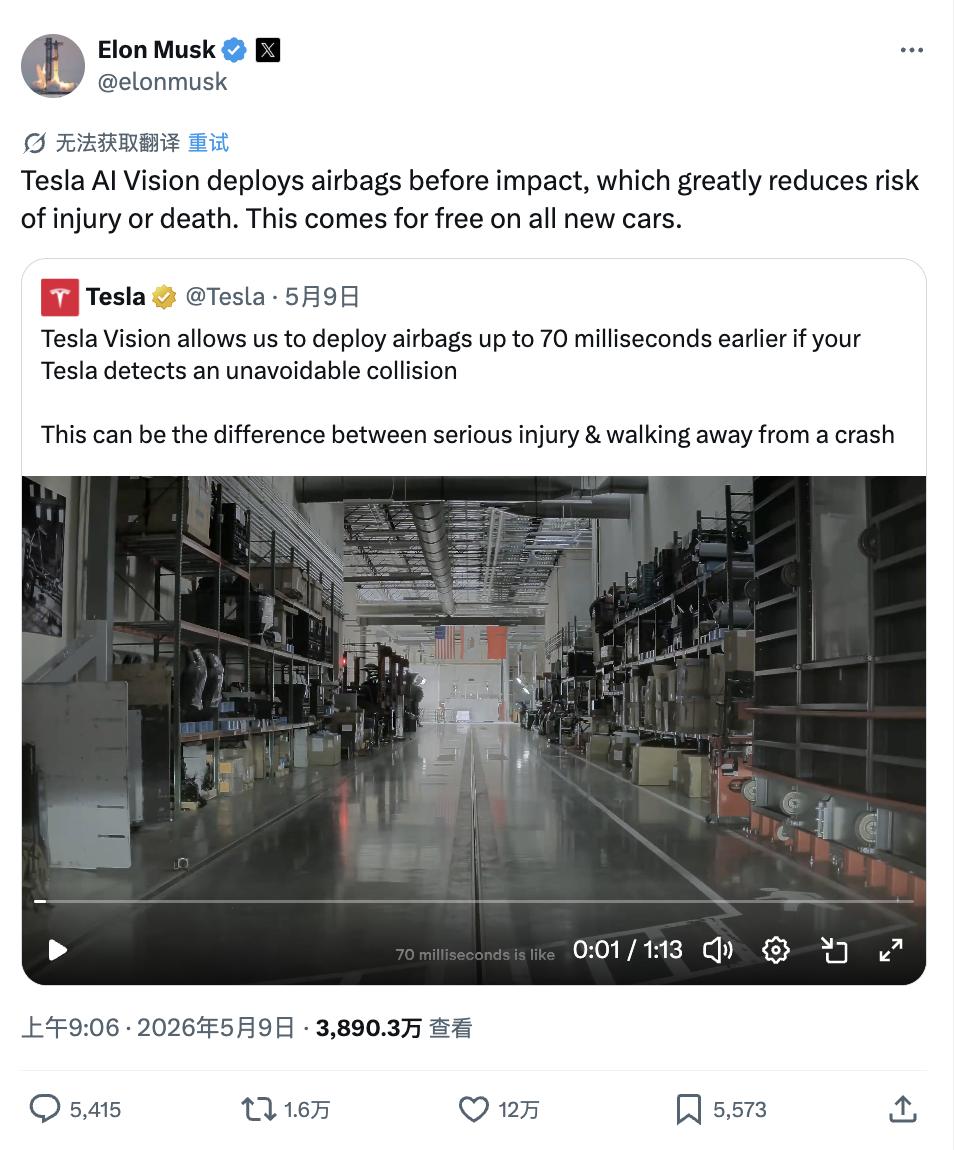
Pure vision system triggers airbags in advance
The triggering logic of traditional airbags is passive.
It mainly relies on physical acceleration sensors on the bumper and chassis. Only when the vehicle actually hits something and generates enough impact force will the sensors transmit signals to the airbag controller.
Moreover, to prevent false triggering, the sensors need a filtering process. Therefore, there is an inevitable delay between the collision and the full deployment of the airbag.
However, in high - speed accidents, passengers will hit the steering wheel and dashboard 50 - 60 milliseconds after the collision.
If the airbag cannot be detonated at the optimal time, the consequences will be unimaginable.
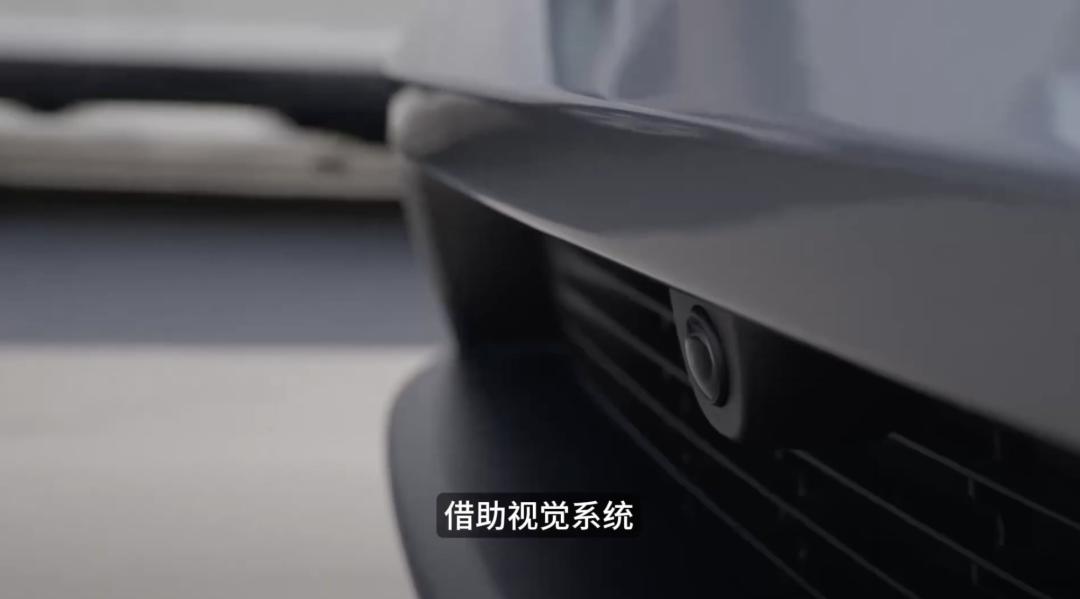
Tesla's method is to use the existing Tesla Vision pure vision system to turn passive into active.
By scanning the road conditions in real - time through the cameras around the vehicle body and combined with AI neural network calculations, it can accurately calculate the vehicle's speed, distance, and motion trajectory.
When the system determines that a collision is inevitable, it will immediately send a signal to the airbag controller to start inflating in advance, advancing the deployment time of the airbag by a full 70 milliseconds.
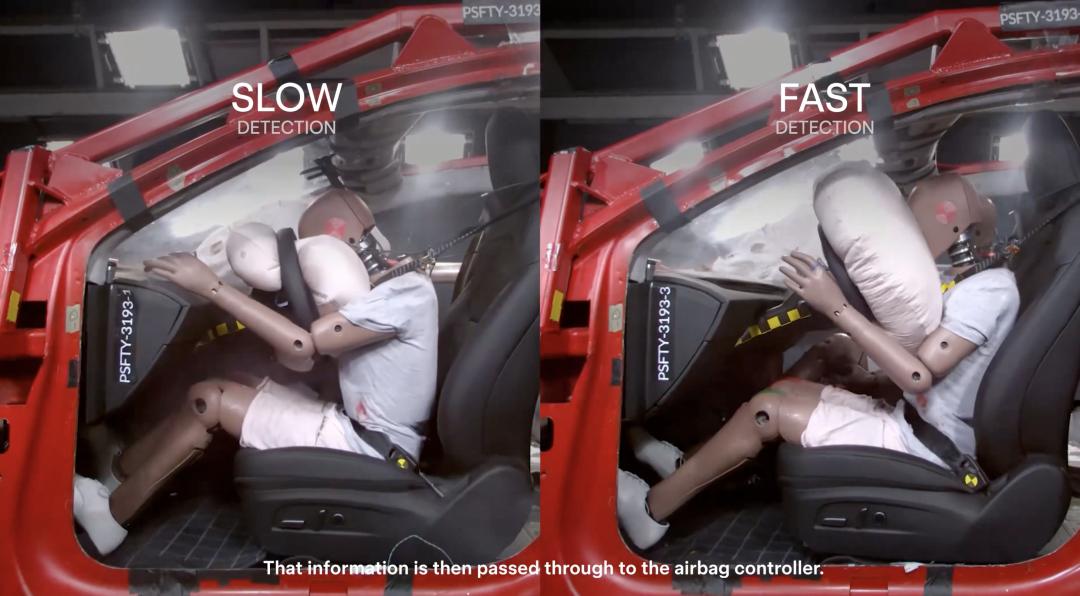
Before the passenger's body has significantly leaned forward, the airbag has already completed inflation and formed the optimal restraint angle, greatly reducing the damage at the moment of impact.
According to Tesla, this 70 - millisecond difference may be the difference between being seriously injured and leaving the accident scene unharmed.
The chief engineer of Tesla Cybertruck said that the addition of the vision system gives the safety controller more confidence in judgment.
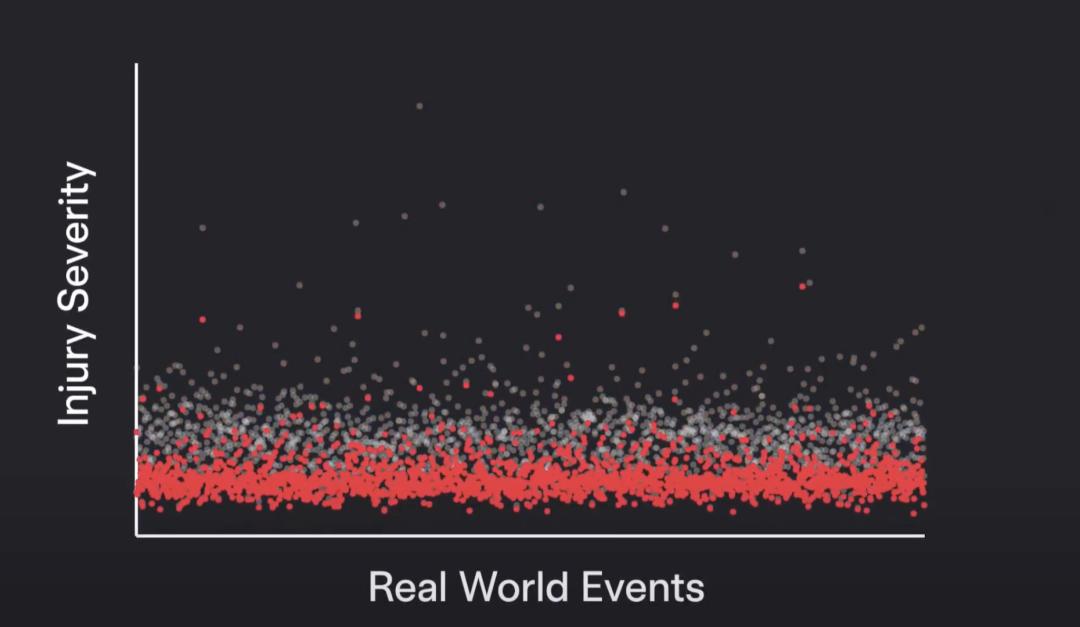
Moreover, this is not the result based on collision tests. They analyzed millions of miles of real - world collision data and combined it with human body models for simulation playback, and finally achieved this function.
Since last year, Tesla has pushed this function to most models through OTA software updates (version 2025.32.3).
It covers Model 3 and Model Y of the 2023 models and later, some 2022 models, as well as the new Model S and Model X.
From passive safety to active safety
Tesla's new black technology also conforms to the development trend of automobile safety from passive to active.
In the field of active safety, car manufacturers have come up with increasingly creative ideas.
Previously, Mercedes - Benz launched the PRE - SAFE preventive safety system, which directly integrated active and passive safety.
When the radar detects that a side collision is inevitable, it will actively lift the vehicle body by 80 millimeters through the air suspension within 0.1 seconds.
This seemingly simple action allows the more robust vehicle chassis to bear the impact instead of the relatively fragile car door, greatly reducing the risk of injury to the vehicle occupants.
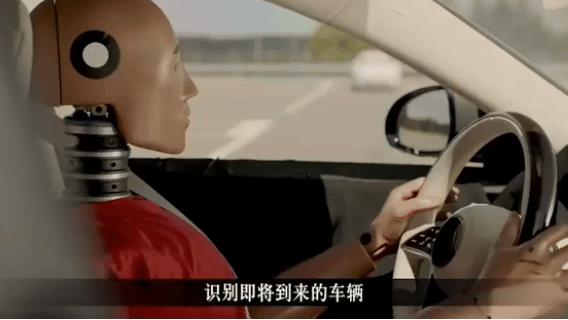
I believe many BYD owners have had this experience. When a vehicle approaches rapidly from behind, the seatbelt will suddenly tighten, firmly fixing you to the seat, and the hazard lights will automatically turn on.
This is BYD's active seatbelt pre - tightening function. It can adjust the occupants to the optimal protection position before a collision, allowing the subsequent airbags to play their maximum effect.
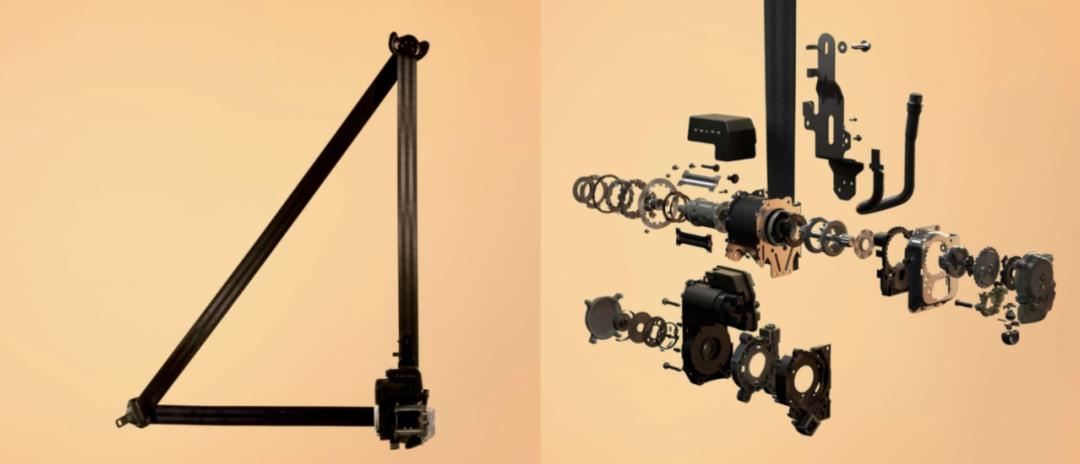
In addition, AEB (Automatic Emergency Braking) and AES (Automatic Emergency Steering) have become standard features in many new cars.
AEB actively helps you brake in critical moments, while AES actively steers to avoid obstacles when the braking distance is insufficient.
Normally, it first tries to brake. If a collision cannot be avoided, it steers to avoid danger. The two usually work together to minimize risks.
The highest - level safety is always to avoid collisions
If deploying the airbag in advance and active braking are the extreme struggles when brushing past death.
Then, assisted driving avoids the possibility of encountering death from the very beginning.
As of now, the cumulative driving mileage of Tesla's FSD has exceeded 15.1 billion kilometers, with more than 5.42 billion kilometers in urban road scenarios.
Data shows that Tesla vehicles with intelligent assisted driving enabled have a major collision accident every 8.53 million kilometers on average, and their safety level is more than 8 times the average level of US roads.
The newly pushed V14.3 version has reduced the system inference delay by 20% by rewriting the AI compiler. When facing extreme scenarios such as sudden pedestrians or sudden lane - changing, the vehicle can make faster and more accurate decisions.
This millisecond - level reaction speed is beyond the reach of human drivers.
This article is from the WeChat public account “Technology Daily Push” (ID: apptoday), author: Luo Zhanpeng, published by 36Kr with authorization.