The first group of post-2010s who write code with AI have been invited by Apple to its press conference.
Every spring, Apple presents a unique challenge to students around the world: Create a work that expresses emotions and ideas using the Swift programming language.
This is the Swift Student Challenge (SSC). Contestants are required to create a Swift Playgrounds App with Swift, and within a 3 - minute experience, clarify an idea and complete an interaction. Outstanding winners will also have the opportunity to witness the highlight moment for developers at Apple Park during the next month's WWDC.
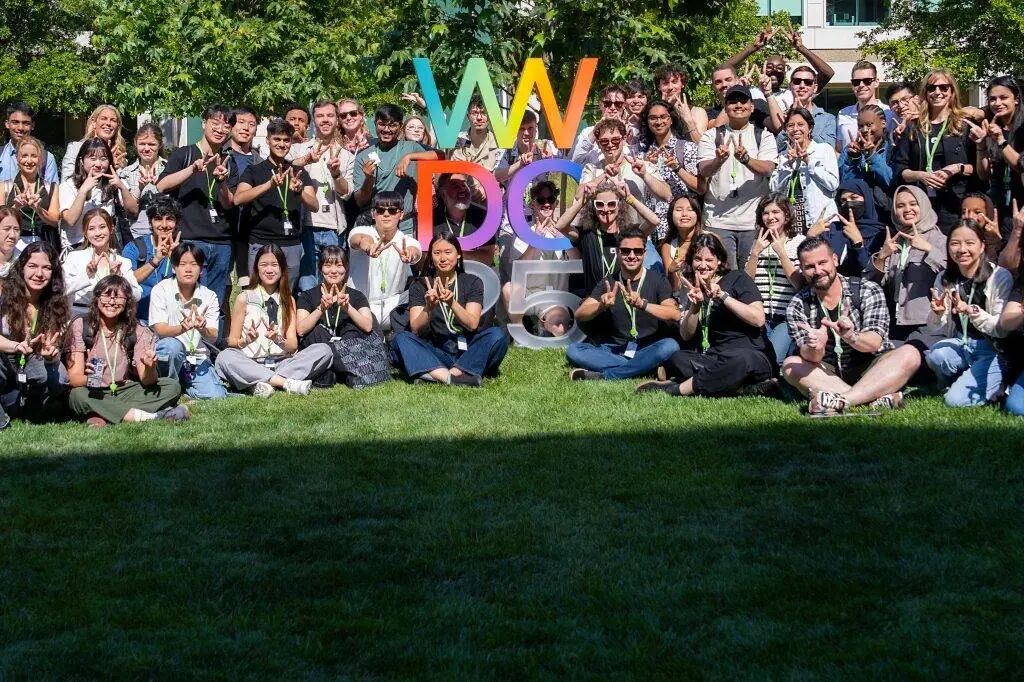
The list of winners for 2026 has been announced, and there are many young faces from mainland China among them. The youngest is even only 15 years old.
Ifanr had a chat with six of the winners. Through their stories and works, we can see how the new - generation developers of this era unleash their unique inspiration and use technology to tell their own stories.
Personal experiences are the best source of inspiration
When sharing their works, almost all winners first share a personal experience and then introduce the App they created based on it.
These experiences are very diverse. Some are related to physical and mental health, some are just impressions from classes or trips, and some are simply from having fun. The common point is that there is always an unsolved "problem".
Since these works are highly related to personal feelings, they leave an impression that goes far beyond "work display". They make me see the potential for these apps to be actually launched on the App Store, and I can't help but wonder why no one has developed such applications before.
Write specific difficulties into the product
This group of works stems from the contestants' keen observation of daily life. They captured the hidden difficulties of specific groups. In the current situation of a lack of existing tools, they chose not to wait and customized digital solutions for these neglected needs by themselves.
Zhao Jingwei - PMS.aid
Zhao Jingwei is a typical "doer".
The reason she started learning Swift was very simple: when she wanted to edit and organize the cat videos she shot into live photos to share, she found that there were no good apps on the market, so she decided to develop one herself.
Her entry, PMS.aid, also has a similar creative background.
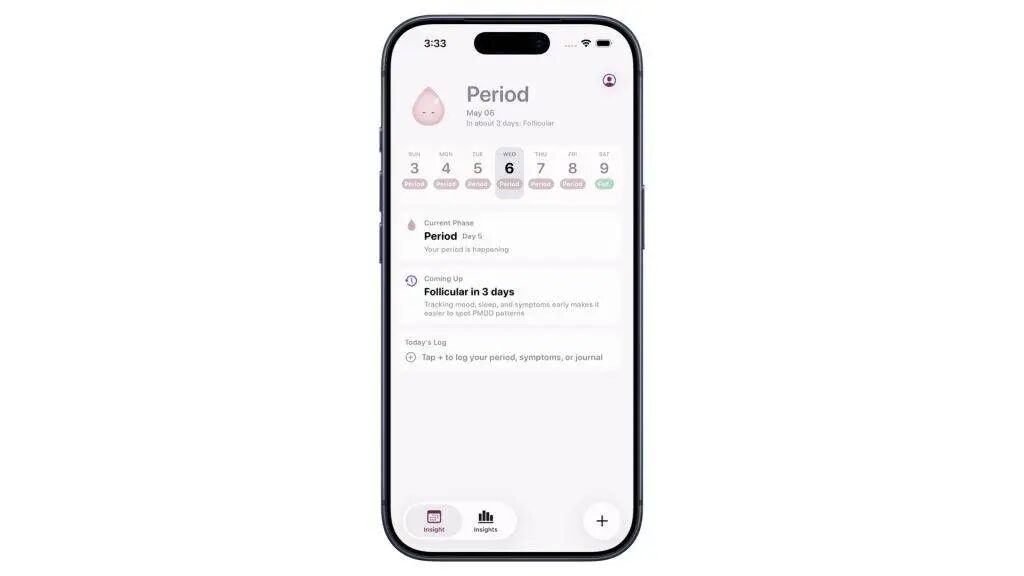
Zhao Jingwei's friend suffers from premenstrual dysphoric disorder (PMDD), which is manifested as repeated mood swings, physical discomfort, and behavioral disorders during menstruation.
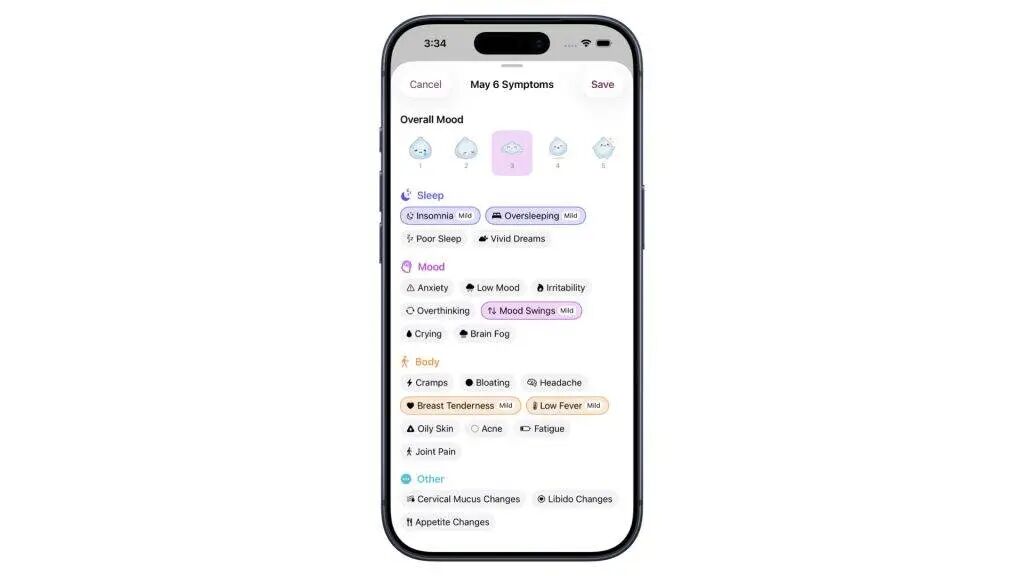
When she went to see a doctor and wanted to show her symptoms and mood changes, she found that there was no app that could centrally display data related to PMDD.
So, Zhao Jingwei developed PMS.aid, which is specifically designed for patients with PMDD and PMS (premenstrual syndrome). It can put all data such as menstruation, mood, and diaries on the same cycle timeline, turning scattered data into a complete treatment plan.
Zhao Jingwei originally studied public administration. Later, she found that she wanted to combine humanities and social sciences with technology, so she transferred to the computer major and will continue to pursue a master's degree in human - computer interaction in the future.
She told Ifanr that she has set a "developer goal" - "Made for everyone".
Shen Chenjie - Help the Bajau
Shen Chenjie's entry, Help the Bajau, germinated during a volunteer trip.
In February this year, he participated in a volunteer activity in Semporna, Malaysia, and came into contact with the Bajau community, known as the "sea gypsies". These indigenous people who live on the sea are facing serious marine environmental pollution problems.
So he developed an immersive interactive game called Help the Bajau. It is based on the real stories of the Bajau people, refers to academic papers and individual cases of the Bajau community, and uses real materials he shot.
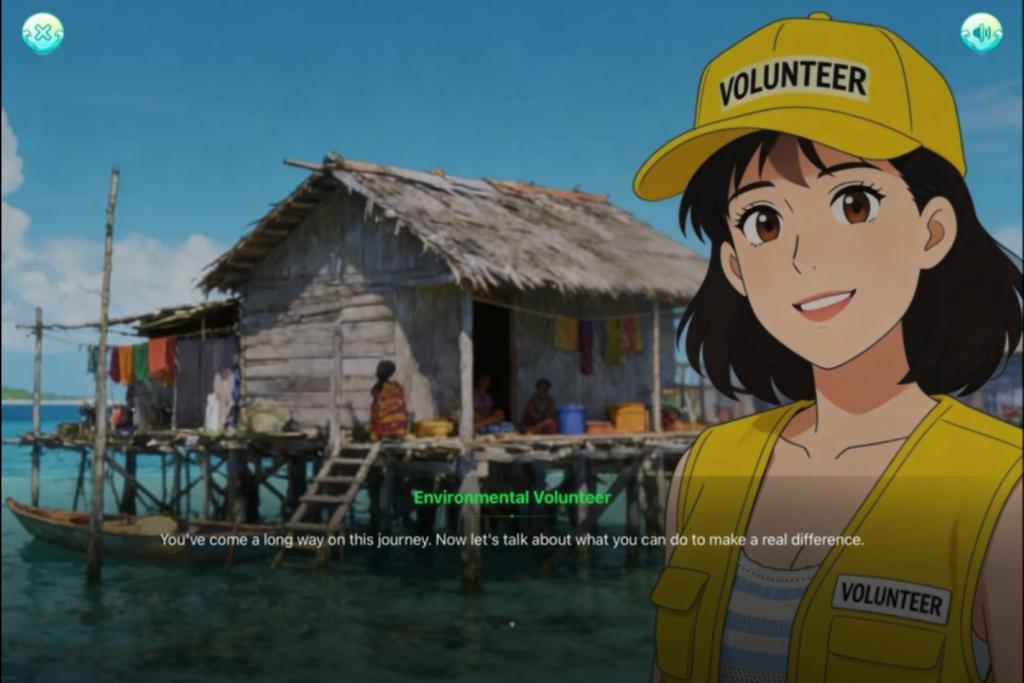
AI played an important role in his creative process: when he first started learning Swift, AI answered many questions about knowledge points; some visual elements of Help the Bajau were also created using AI.
But Shen Chenjie believes that tools are just an aid, and only by carefully polishing every detail can a work with warmth be achieved; technology is not just cold code, and it is actually changing the world.
Zhao Xincheng - Orat
Zhao Xincheng's developer journey began with his father's action - without any development experience, his father developed an app using Swift UI and launched it on the App Store, which greatly inspired him.
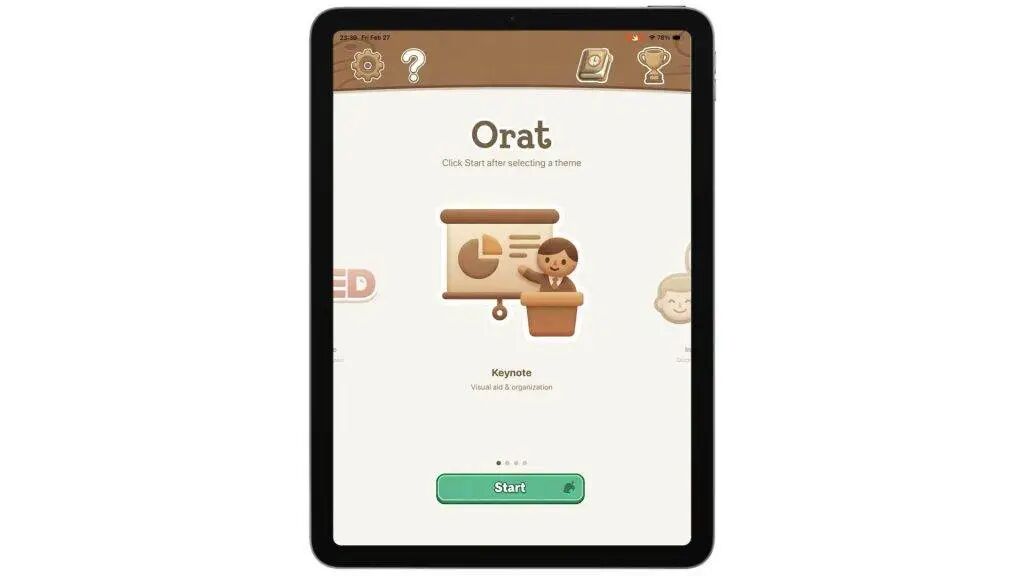
His entry, Orat, is rooted in a real - life situation of his classmate: during a class presentation, his classmate forgot the speech due to anxiety. He wanted to help his classmate change this embarrassing situation but couldn't find a simple and useful app on the App Store, so he decided to develop one himself.
Orat is an app that helps users train their speech skills intelligently. It uses gesture, posture, and voice recognition to guide users to practice continuously and generates corresponding reports.
Interaction innovation and frontier exploration
These three winners focus more on the innovation of "interaction", which may be a new exploration of the possibilities of human - computer operation or a digital way to rewrite the unpleasant experiences in real life.
Wu Tianyu - MagiBotics
"Embodied intelligence" has been popular for some time, and robots have appeared on the Spring Festival Gala for two consecutive years, but it seems that there is still a glass wall between us and robots in the laboratory.
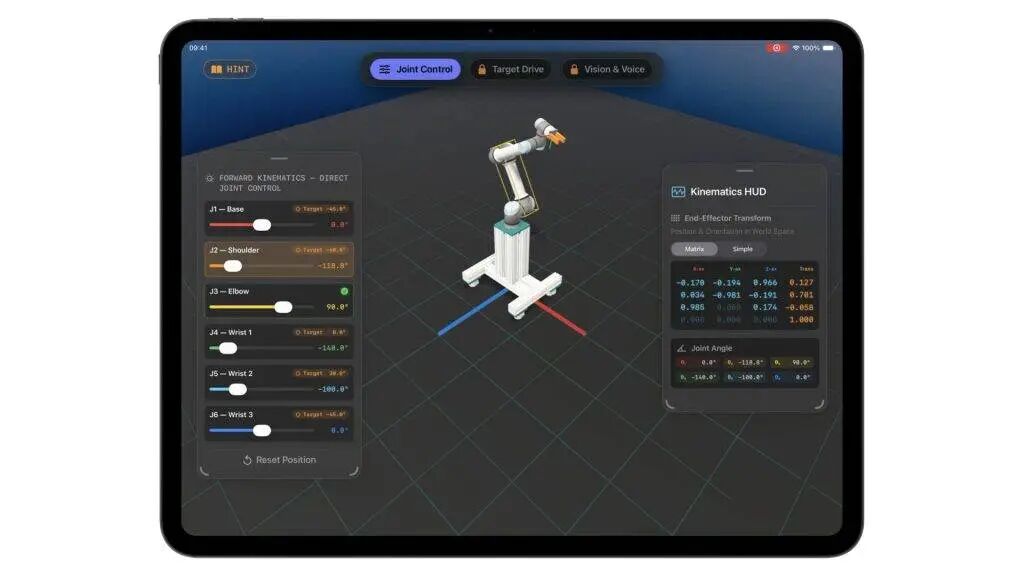
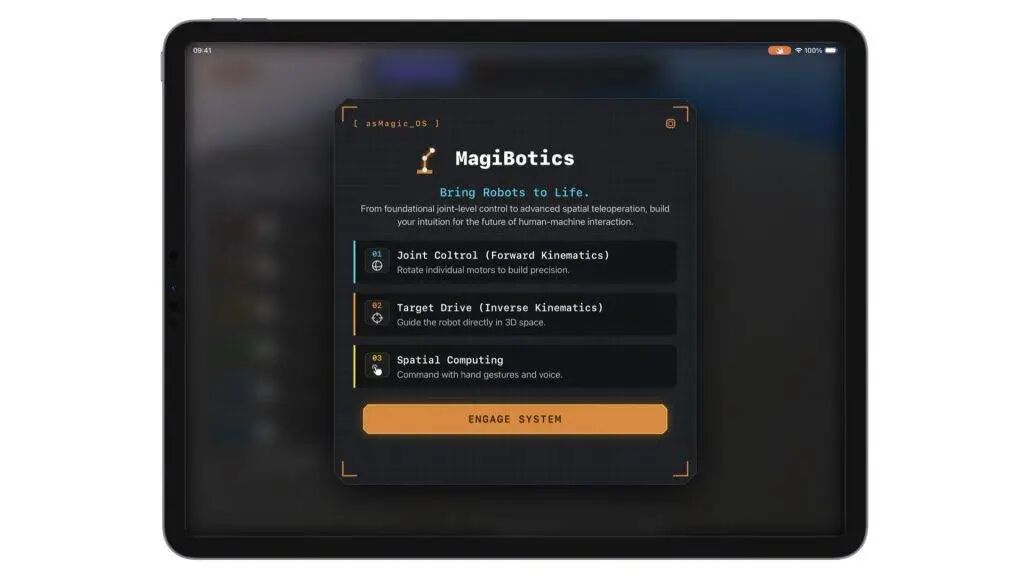
As a doctoral student in robotics, Wu Tianyu's entry, "MagiBotics", aims to break this barrier.
MagiBotics sets up three game - like levels through a simple and understandable interaction method. During the process of using the app, users can learn three movement modes of the robotic arm, and finally, they can use AR technology to project the "robotic arm" with the set actions in front of themselves.
Wu Tianyu also told Ifanr that in the future, he will continue to focus on the direction of human - computer interaction, especially hoping to use the mobile phones that everyone has to build a bridge to embodied intelligence and bring this cutting - edge technology to more ordinary users.
Fu Jialu - Maestro
It is most appropriate to describe Fu Jialu as a "slash youth": she majors in physics, minors in computer science out of interest, has made several AI intelligent cars that can avoid obstacles and be voice - controlled, and has also developed accounting and diary apps.
Her entry, Maestro, is a "music game".
In this cute - styled mini - game, players will play the role of the "bear conductor" and manage a band composed of four animal musicians. They can conduct the band to complete an "impromptu performance" through hand movements and facial expressions.
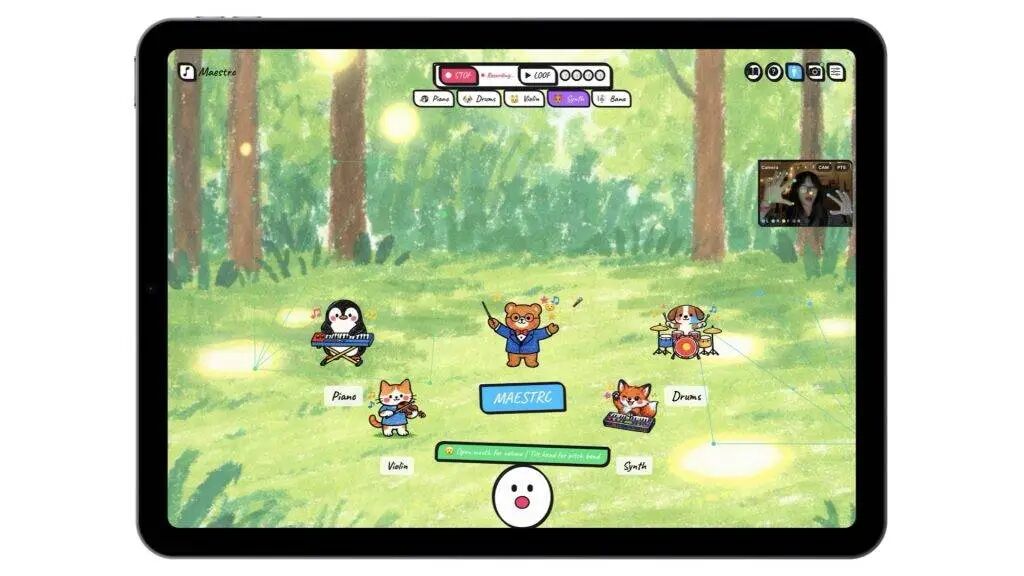
This very creative and interesting interaction method may be closely related to Fu Jialu's own experience with Apple products - she was attracted by the interactive teaching of the Swift Playground programming platform and was shocked by the somatosensory and immersive interaction experience of Apple Vision Pro.
Yan Yu - Pixel Beader
Yan Yu's opportunity to contact Swift Playground came from short - videos. He found that in Xcode used by Apple developers, as soon as the code was typed in the left window, the changes could be displayed in real - time on the right canvas. This developer interaction mode deeply attracted him.
The motivation for him to develop the entry, Pixel Beader, also came from his daily life.
Yan Yu tried the popular "bead art" recently but found it not as fun as expected - if the bead board was knocked over, he had to start all over again, ironing the plastic would emit a pungent smell, and sitting for a long time would cause back pain.
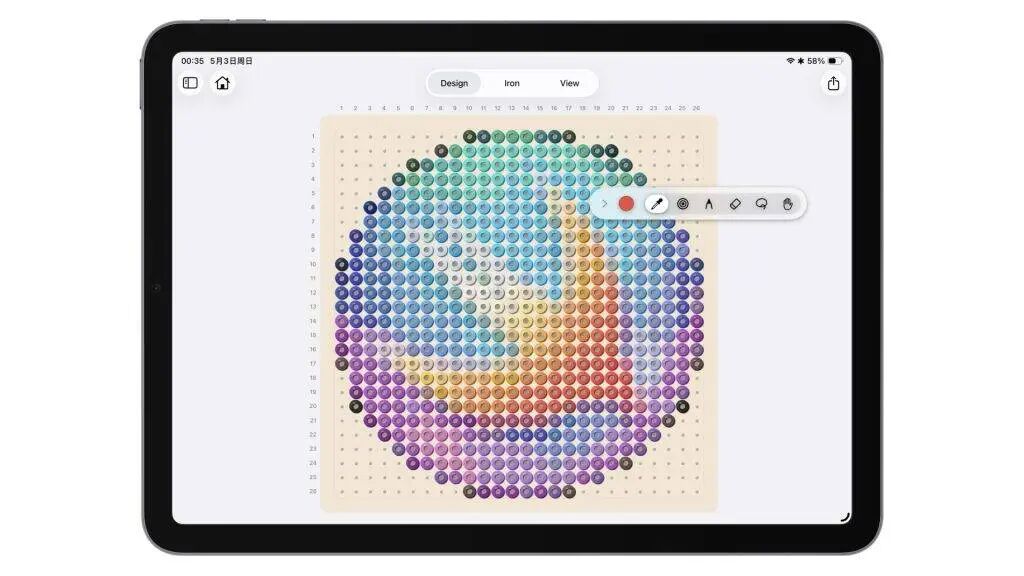
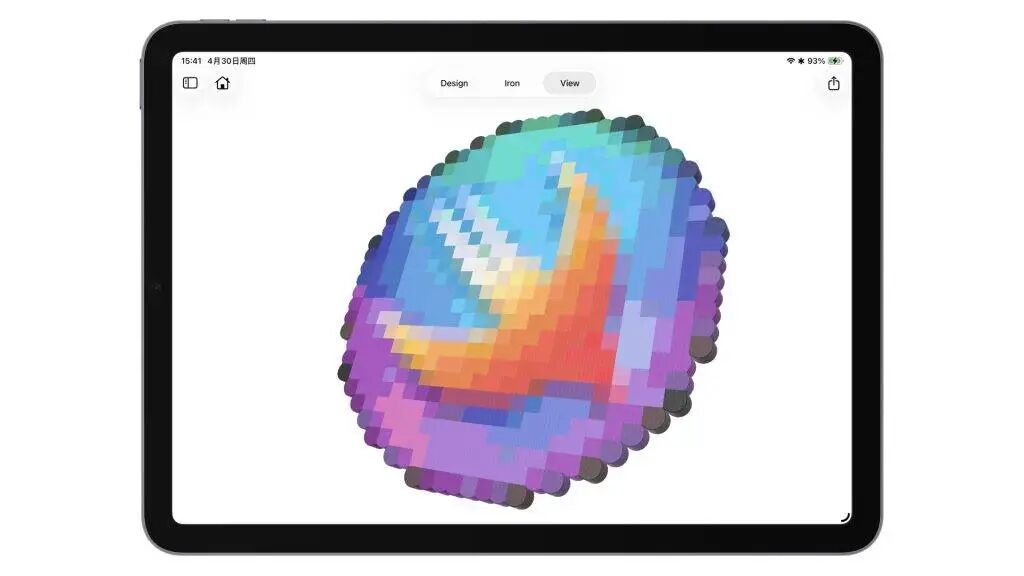
So his entry is a "cyber bead art" project called Pixel Beader. Using an iPad and Apple Pencil, it creates a harmless and zero - loss virtual creation space. Users can convert any picture into a bead art drawing and create and collect digital 3D bead art works.
In the AI era, programming skills are even more precious
In the past two years, "programming", which was originally a handicraft, has been profoundly rewritten by AI.
With the launch of Claude Sonnet 4 and GPT - 5 - Codex last year, AI can understand an entire project like a real engineer, complete tests, debugging, and iterations independently. Developers only need to give instructions.
As one of the contestants with relatively rich development experience, Wu Tianyu has deeply experienced this technological change. In the past, when learning programming, he could only rely on "primitive" methods such as searching online, checking code on forums, and watching teaching videos to learn programming and improve his works; now, he feels more like a "product manager", and most of the code can be written by AI, which has increased efficiency several times.
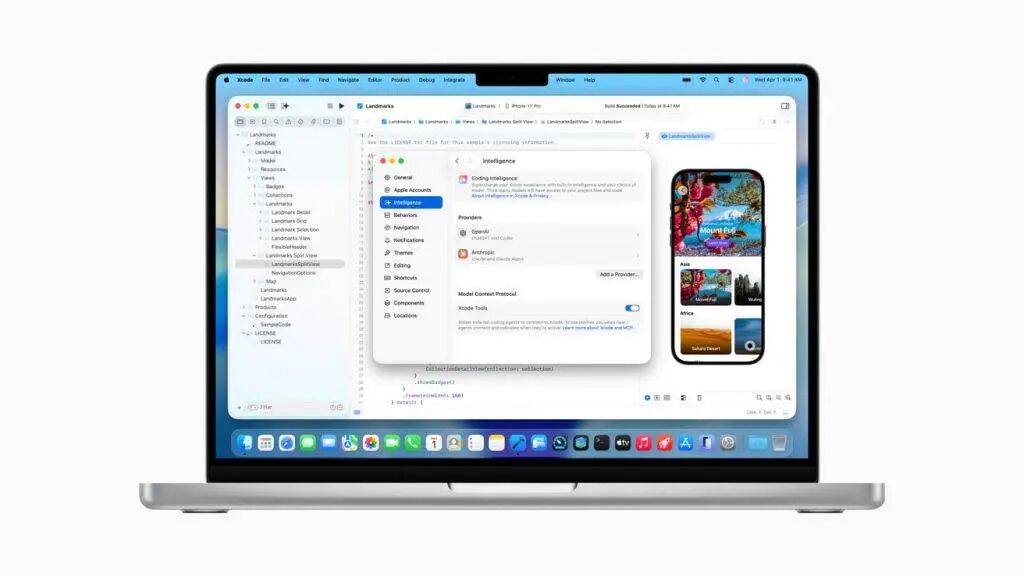
Apple's attitude towards "AI programming" is quite open. In the Xcode 26.3 version launched in February this year, Claude Agent and OpenAI Codex have been directly integrated.
Even as a competition, the Swift Student Challenge does not define AI as a "cheating tool". Instead, it embraces the use of AI in the competition.
For example, the two middle - school winners, Shen Chenjie and Zhao Xincheng, have experience in learning programming languages such as Python and C++. AI has greatly lowered the threshold of Swift for them and helped them quickly transfer their skills. They believe that this well makes up for the lack of experience they have as non - professional developers , and due to the efficiency improvement brought by AI, they can spend more time and energy on polishing the concepts that the app wants to convey.
Xie Enwei, the head of Apple's developer relations in the international market, believes that AI tools empower students' ability to turn ideas into practice and welcomes students to use AI tools to debug code.
Moreover, this has become an aspect of the competition's assessment: starting this year, contestants need to share their experiences of using tools in the competition documents to ensure that the final works reflect their alternative thinking and creativity, rather than simply relying on AI.
Both Xie Enwei and the student contestants agree that even though AI makes "vibe coding" possible, it is still necessary, and even more necessary, to learn programming.
Xie Enwei told Ifanr that learning programming is more meaningful now than ever before:
There are some very core things, such as the understanding of programming architecture, creative sparks, and brand - new ideas that have never been verified. All of these require the use of human intelligence. Learning programming is actually learning the language of problem - solving, and the value of this skill lies in turning your creativity into practice.
These six winners all have some knowledge background in computer science to some extent. Even the two middle - school students have learned the C language and participated in many relevant after - school activities.
Wu Tianyu, who has launched his app on the App Store with the help of AI programming, believes that to make good use of AI, one still needs to learn relevant knowledge, clarify the framework and logic of app development, and then write good prompt words.
After all, the upper limit of AI's ability depends on the quality of the prompt words provided by the user.
Especially in the future, when "vibe coding" becomes more popular, it doesn't mean that everyone can use this "beginner - friendly" way to create an excellent product. To stand out among homogeneous apps, it is more necessary to understand programming and be able to express oneself.
