The revolution of 0.001 seconds: How does the millisecond scale rewrite the rules of computing power?
In the past decade, China has built the world's densest 5G network and the most extensive fiber - optic coverage. In the past five years, the computing power scale has expanded rapidly, and the "East - Data - West - Computing" project has been fully rolled out.
However, when large AI models start to be embedded in daily interactions, the low - altitude economy is piloted in multiple cities, and intelligent connected vehicles enter the large - scale testing stage, a new problem emerges: having computing power alone is not enough; the computing power must also be delivered fast enough.

Inside high - end drone systems, if the delay of airspace scheduling instructions exceeds 100 milliseconds, it may cause conflicts in the flight paths of aircraft. At the test site of intelligent connected vehicles, vehicles must complete the entire decision - making closed - loop from environmental perception to braking or steering within a few dozen milliseconds; otherwise, they cannot even pass the basic safety verification.
Against this backdrop, in October 2025, the Ministry of Industry and Information Technology launched a special action on "millisecond - level computing", shifting the focus from how much computing power is available to how fast the computing can be done.
So, what does this action entail? And what goals does it hope to achieve?
01 Why is every millisecond of computing power crucial?
Let's start with the time unit of a millisecond. One millisecond is equal to one - thousandth of a second, that is, 0.001 seconds, which is about 1/200 of the speed of a human blink, so fast that it is completely beyond the scope of perception.
Millisecond - level computing, simply put, means controlling the delay of data transmission and calculation at the millisecond level.
You can compare it to the upgrade of communication technology: from 2G, which could only send text messages, to 5G, which can support high - definition live broadcasts. The core of communication is to transmit data quickly; while in the AI era, the core is to compute quickly. Millisecond - level computing is the 5G - level technology in the field of computing power.
Why is it necessary to implement millisecond - level computing?
The answer is simple: the implementation of new technologies has long been inseparable from instant computing power.
Striving for every millisecond is not technological involution but a strategic necessity for the future.

In intelligent driving, every millisecond is related to safety. When a vehicle is traveling at a speed of 100 kilometers per hour, it moves forward about 2.8 centimeters per millisecond. A 100 - millisecond delay is equivalent to blindly driving nearly 3 meters in a completely unknown state. In the L2 - level assisted driving stage, the system only needs to provide warnings or limited interventions, and the requirement for response speed can tolerate a delay of dozens or even hundreds of milliseconds. However, once moving towards L4/L5 - level fully autonomous driving, the vehicle must achieve a near - zero - delay closed - loop between perception, decision - making, and control. At this time, a response delay of more than 100 milliseconds may cause the vehicle to miss the obstacle - avoidance window, misjudge the intention of pedestrians, or even directly lead to an accident.
Take telemedicine as another example. A doctor controls a robotic arm to perform surgery on a patient thousands of miles away. If there is a 100 - millisecond delay in the network or computing power link, there will be a misalignment between the doctor's operation instructions and the actual actions of the robotic arm. This asynchrony may not matter in ordinary operations, but in high - precision scenarios such as blood vessel suture and nerve dissection, it may be the difference between life and death.

Moreover, in cutting - edge fields such as high - frequency financial trading, industrial intelligent manufacturing, metaverse interaction, and large - model reasoning and scheduling, millisecond - level computing power response has become a hard threshold for infrastructure. Those who can schedule a larger - scale computing power with lower latency will gain the right to speak in future industries.
Therefore, the fundamental purpose of the special action is to answer two core questions:
First, how can such a huge amount of computing power resources be efficiently and agilely invoked? Second, how can we lay the digital tracks in advance for those emerging industries that determine the country's future competitiveness?
02 Weaving the Computing Power Network with the Strongest Communication
From the AI clusters in the east to the super - computing hubs in the west, China has built a large - scale data center group. However, there is still a lack of a truly efficient and collaborative scheduling network between these data centers and between them and users.
In response, the special action on millisecond - level computing by the Ministry of Industry and Information Technology clearly requires that by 2027, "the one - way interconnection delay of the optical layer between medium - sized and above computing power centers in the metropolitan area should be less than 1 millisecond, and the coverage rate of the 1 - millisecond delay circle should be no less than 70%."
But how to weave this computing power network?
China is still catching up in high - end chip manufacturing, but it has long been a global leader in communication network construction. China accounts for more than 60% of the world's 5G base stations, fiber - optic coverage has reached deep into villages and towns, and the backbone of the all - optical network has been continuously expanded. This network is fast, dense, and stable.
In the past, it was mainly used to transmit data. Now, the country wants it to do a more delicate job: scheduling computing power.
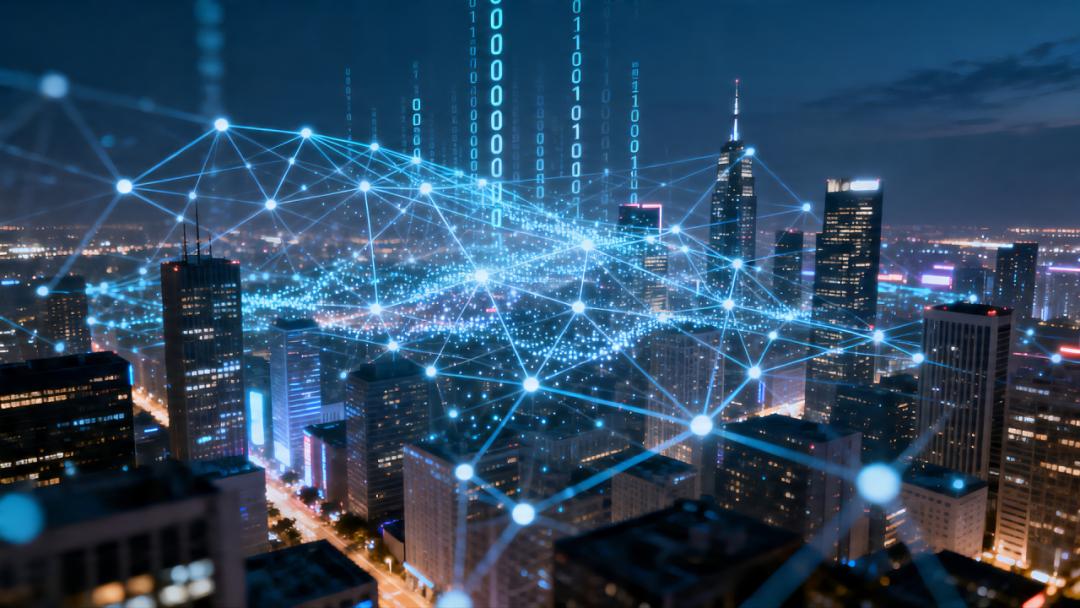
The core idea of "millisecond - level computing" is to drive the upgrade of computing power with communication advantages. Through technologies such as network slicing, edge computing, and intelligent scheduling, servers, GPU clusters, and edge nodes scattered across the country are woven into a dynamically responsive computing power network. Wherever there is a demand, computing power will be instantaneously supplied from the nearest and most suitable node.
Specifically, this network will be developed around three levels:

Super - connection of infrastructure: Millisecond interconnection of computing power centers.
The first step is to solve the problem of computing power islands. At present, China has built multiple national - level computing power hubs and regional data center clusters. However, they often rely on multi - hop forwarding of traditional IP networks, and the delay can easily reach dozens of milliseconds, making it difficult to support cross - domain collaborative computing. The millisecond - level computing power network builds a computing power expressway between major urban agglomerations by deploying optical - layer direct connection, intelligent optical switching, and deterministic network technologies, reducing the one - way transmission delay to less than 1 millisecond. This underlying connection is not only fast but also stable and predictable, laying a physical foundation for advanced scheduling capabilities such as joint training, disaster recovery backup, and load balancing across data centers.
Instant access for users: Millisecond access to computing power resources.
No matter how powerful the computing power is, it loses its meaning if users cannot access it or have to wait too long. Therefore, the network will deeply integrate edge computing with 5G/6G access capabilities, deploy lightweight computing power nodes in factories, industrial parks, transportation hubs, and even on the base station side, and combine technologies such as network slicing and service function chains to dynamically allocate exclusive channels for different applications. When an autonomous vehicle needs to avoid an obstacle urgently, the system can identify the demand within a few milliseconds and call the GPU resources of the edge or regional center nearby, avoiding the long - distance transmission of data to the remote cloud center. This architecture of "computing power follows the network, and the network changes according to demand" makes computing power a public service that users can use immediately.
Seamless perception of experience: Millisecond - level reach of computing power applications.
Ultimately, all technologies should return to the user experience. The goal of the millisecond - level computing power network is to make users completely unaware of where the computing is taking place. Whether it is opening an AI painting tool to generate an image, interacting with virtual humans in the metaverse in real - time, or using the visual quality inspection system on the industrial production line, the delay between operation and feedback is compressed to a level that human senses cannot detect. Behind this seamless and smooth experience is the intelligent prediction and dynamic scheduling of the network regarding the location of computing power, load status, application type, and even user behavior. Over time, millisecond - level response will no longer be a privilege of high - end scenarios but will become the default standard of digital life.
These three levels are progressive: the underlying interconnection opens up the main artery of computing power, the middle - level access densifies the capillaries, and the upper - level experience makes the entire system come alive. Together, they form an intelligent computing power network that can meet the national strategic needs and serve all industries.
It is worth noting that the entire action also sets a clear implementation rhythm: a mid - term evaluation will be conducted in November 2026, and a final effectiveness summary will be made in November 2027. This "pilot - evaluation - promotion" model ensures the stability and effectiveness of the action, enabling the existing computing power to become more active, faster, and more accurate.
03 The Value of a Millisecond - Level Computing Power Network
Although a millisecond is short, it bears a country's most core computing power sovereignty and innovation initiative in the intelligent era. In the long run, the value of millisecond - level computing has far exceeded the scope of "being a little faster"; it is an indispensable infrastructure in the digital age.
First, it promotes the transformation of computing power from a fragmented state of being self - governing and isolated in the past to a systematic stage of efficient collaboration and unified scheduling. This architecture deeply couples terminal devices, communication networks, computing resources, and upper - layer applications, forming a complete closed - loop of "device - network - computing power - application" seamless connection. In this closed - loop, computing power is no longer a static asset in a certain computer room but a dynamic service that can be perceived, scheduled, allocated, and consumed like an electric current.
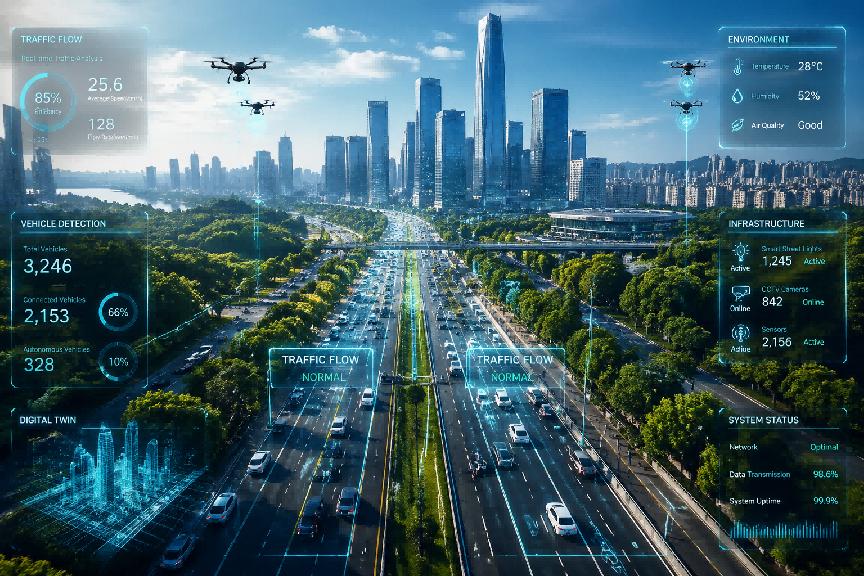
This systematic computing power scheduling ability opens the door for a group of new industries that are extremely sensitive to delay. Large - model reasoning requires instantaneously returning high - quality answers after users' questions. Drone formations in the low - altitude economy rely on real - time collaborative obstacle avoidance. Satellite Internet requires seamless data processing between the earth and space... All these scenarios are based on millisecond - level response. Without this low - latency computing power network, even the most advanced algorithms and hardware can only be left unused.
More importantly, the millisecond - level computing power network makes high - performance computing elastic, inclusive, and accessible. In the future, small and medium - sized enterprises, research teams, and even individual developers will no longer need to build expensive GPU clusters by themselves. They can simply call computing power on - demand through the network, as easy as using cloud storage or video streaming. This significantly lowers the threshold of AI and intelligent applications, allowing more innovators to innovate on the national computing power foundation.
In the long run, the millisecond - level computing power network brings not only an improvement in speed but also an evolution of the operation mode of the entire digital society. Just as the Internet evolved from a technological infrastructure to a breeding ground for innovation in the past, this low - latency and highly reliable computing power network will also become an invisible artery for the growth of future industries and applications.
This article is from the WeChat official account “Brain Pole” (ID: unity007). The author is Shanhu. It is published by 36Kr with authorization.