Leapmotor is selling like crazy, but the "cost-effective" label still needs to be removed.
The sales figures of car companies in April have been gradually released.
Most brands are seeing an increase, and Leapmotor has the most significant growth - 71,387 vehicles, a month - on - month increase of 42.69%, ranking first in terms of growth rate among the 10 brands in the statistics. This is already the 13th time it has taken the top spot among new - energy vehicle startups in the past 14 months. However, on the same day, there was a problem with a Leapmotor live - stream.
In the live - stream room, the navigation interface on the vehicle's central control screen suddenly crashed - the lane lines disappeared, the surrounding vehicles were no longer displayed, and there was only a solitary car model left on the entire screen. The anchor was still holding on, and Cao Li, the senior vice - president of Leapmotor, sitting beside, frequently glanced at the central control screen with an unnatural expression.
The bullet comments started to flood the screen, and then the live - stream room directly closed the comment section.
High sales, but how about the profits?
Let's first look at the overall situation in April.
BYD continues to hold the top position firmly, with 321,123 vehicles sold, a month - on - month increase of nearly 7%. Geely sold 235,164 vehicles, with basically no change month - on - month. These two traditional giants are unshakable in terms of scale, but their growth rates have slowed down - once the base is large enough, it's difficult to achieve further significant growth. They are more like the "ballast stones" of the market rather than the "accelerators".
The real excitement is in the new - energy vehicle startup camp.
Leapmotor sold 71,387 vehicles, a month - on - month increase of 42.69%. It not only ranks first in terms of growth rate but is also the only brand among the statistics with a month - on - month increase of over 40%. Hongmeng Zhixing sold 32,759 vehicles, a month - on - month increase of 23.24%; XPeng sold 31,011 vehicles, a month - on - month increase of 13.12%. These brands are growing, and the growth is of high quality - both Leapmotor and Hongmeng Zhixing have year - on - year increases of over 70%, indicating that it's not a seasonal rebound but real incremental growth. Deepal sold 33,187 vehicles, a month - on - month increase of 4.55%, with a relatively conservative growth rate. ZEEKR sold 31,787 vehicles, a month - on - month increase of 8.42%, with an average performance. These two brands have similar problems: there are bright spots in their product lines, but the overall brand influence is not concentrated enough, and consumers' perception has not formed sufficient differentiation.
On the other hand, some brands are seeing a decline. Li Auto sold 34,085 vehicles, a month - on - month decrease of 16.97%; NIO sold 29,356 vehicles, a month - on - month decrease of 17.27%. The two once - "benchmarks of new - energy vehicle startups" are both experiencing a decline, for different reasons - the new generation of Li L9 is coming soon, and consumers are waiting for the new Li L9 Livis, so they are delaying placing orders; NIO is in a product transition period. The new ES6/EC6 was just launched at the beginning of April, and the LeDao L80 and ES9 are coming in May, resulting in a gap in delivery volume.
Anyway, a double - digit month - on - month decline is not a good sign in the current market competition.
What's more noteworthy is that the delivery volumes of all three internal brands of NIO in April declined compared with March. This is not a problem with a single product but a deviation in the overall rhythm. Xiaomi still hasn't announced the exact figure, only saying that it "exceeded 30,000 vehicles". However, the industry estimates that its month - on - month growth rate is about 50%, a new annual high.
The cumulative delivery volume in the first quarter was about 80,000 vehicles, and the cumulative volume from January to April was 109,000 vehicles. This "latecomer" is completing the production capacity ramp - up at an amazing speed and has reached the same level as the leading brands among new - energy vehicle startups.
However, looking at the financial report of Leapmotor, which has the most impressive sales figures, it's a completely different picture. In 2024, Leapmotor's revenue was 64.73 billion yuan, and the net profit was 540 million yuan. Together with Li Auto, it is currently one of the only two new - energy vehicle manufacturers to achieve annual profitability.
The goal for 2026 has been set: 1 million vehicles in sales volume and 5 billion yuan in net profit.
Leapmotor needs to shed the "cost - effectiveness" label
Leapmotor's price range covers from 65,800 yuan to 269,800 yuan. With the A, B, C, D series and the Lafa 5, it covers all categories including sedans, SUVs, MPVs, pure - electric, and extended - range vehicles.
Xu Jun, the senior vice - president, summarized this layout as "using the A series to penetrate to the bottom, using the D series to reach the top, and using the B and C series to strongly support the middle".
It's a very comprehensive layout. Leapmotor's core strategy has always been "self - research across the board to reduce costs and bring high - end configurations such as lidar and high - level intelligent driving to the low - price range".
The A10 is the first to bring lidar and the "parking space to parking space" navigation assistance function to the price range below 100,000 yuan; the D19 is priced between 170,000 and 210,000 yuan, directly competing with the Li L series, but at a much lower price. In 2025, when the price war continued to intensify, this strategy was indeed effective - cost - effectiveness has always been the most rigid driving force in this market. However, once the brand is associated with the term "cost - effectiveness", it's difficult to upgrade.
Zhu Jiangming, the founder of Leapmotor, explained this logic very straightforwardly: using the B2B logic for B2C, "if the products are the same and you are 20 yuan cheaper than others, people will buy from you". This approach has helped Leapmotor quickly increase its sales volume in the past two years, rising from a second - or third - tier new - energy vehicle startup to the top.
However, your customers come for the low price. Once the price goes up, they will immediately turn to other brands. This is not a problem of customer loyalty but a problem of brand positioning. When you tell the market "I'm all about cost - effectiveness", the market will also tell you "I won't buy if you're too expensive".
Data from Tianyancha and Jielanlu show that the weighted average price of Leapmotor's entire vehicle lineup in 2025 was 125,000 yuan, at the same level as Haval (127,000 yuan) and Mazda (127,000 yuan). Consumers in this price range are the most sensitive to price and have almost no acceptance of brand premium. For Leapmotor to enter the market above 300,000 yuan, it's not just about the price difference but a complete reconstruction of the users' mental perception.
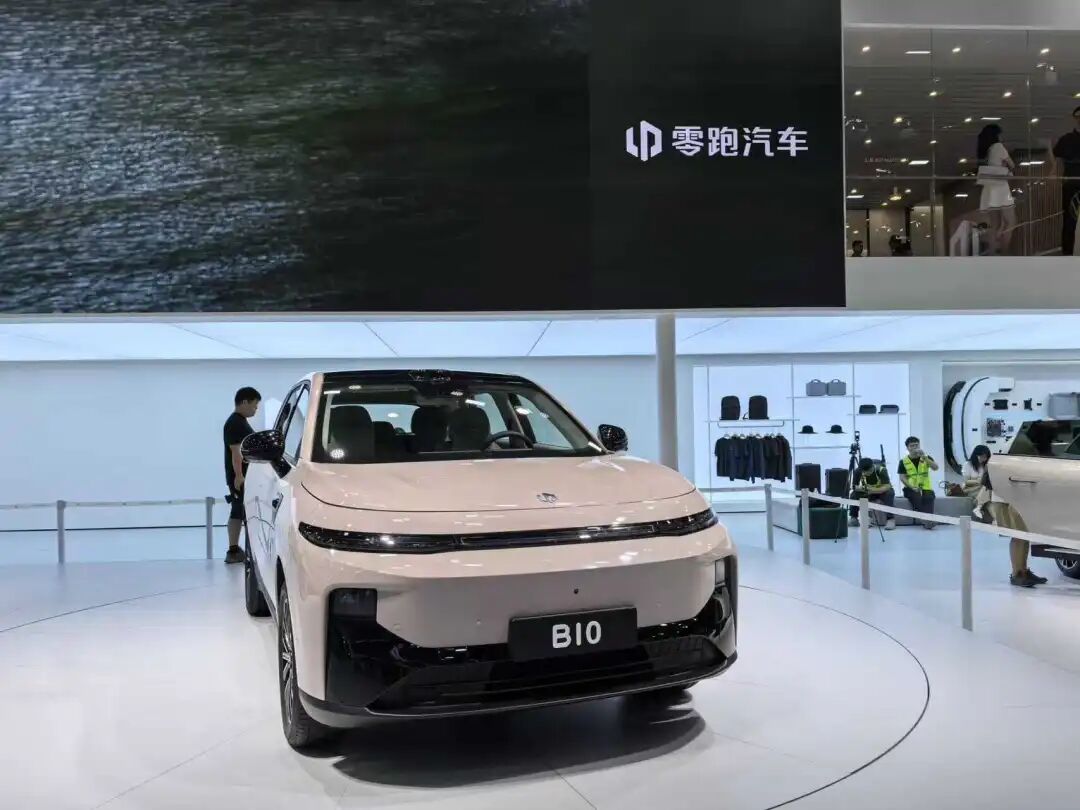
In 2026, Leapmotor plans to achieve brand upgrade through two new models, the D19 and D99. Xu Jun said that the D series has a "very important mission" - in addition to sales volume, it also needs to improve the full - process service experience. However, Zhu Jiangming himself also admitted that "not making customers feel like they've paid an IQ tax and not making them regret their purchase" is where Leapmotor has been most successful.
The problem is that in the market above 300,000 yuan, consumers are looking for "beyond - expectations" experiences. Last year, 833,000 new - energy vehicles in the 300,000 - 400,000 - yuan range were sold, a year - on - year increase of 17.2%. However, the competitive landscape in this range is completely different from that in the 120,000 - yuan market. The Audi A6L sold about 163,000 vehicles, and the AITO M8 sold about 150,000 vehicles. Cars like the Mercedes - Benz E - Class, Audi Q5L, BMW 5 Series, and Lexus ES - what they sell is not just configuration and parameters but the trust, social attributes, and long - term usage experience accumulated by the brand.
For new - energy vehicles entering this range, they also need to add intelligence, cockpit experience, and service systems. Leapmotor's past strength of "cost - based pricing and full - configuration at an affordable price" can only solve part of the problems here. You can be cheaper than others, but consumers above 300,000 yuan are far less sensitive to "cheapness" than those in the 120,000 - yuan market.
What they care more about is: What will others think when I drive this car? Is this brand trustworthy? Can I find someone when there's a problem? Launching a second brand is one of Leapmotor's options. Toyota has Lexus, BYD has Denza and Yangwang. It's an industry practice to use a new brand for high - end products.
But what does the market think of Leapmotor's attempt to go high - end? A car market researcher said straightforwardly: "Building a high - end brand is very challenging. Back then, Toyota invested a huge amount of resources to build Lexus and needed to re - establish brand awareness in a new market." It took Lexus 17 years from its launch in 1983 to surpass Mercedes - Benz and become the best - selling luxury car in the United States in 2000. Genesis of Hyundai Motor was established in 2015 and didn't approach the break - even point until 2024. Denza, a joint venture between BYD and Daimler in 2010, had been in the red for the first 12 years.
Moreover, the product logic in the market above 300,000 yuan is also different. In the past two years, the main incremental growth in this price range has come from extended - range and plug - in hybrid vehicles - the Li L9, AITO M9, and Tank 700 are typical examples. "Large cars + hybrid + family scenarios" is the most effective combination in this price range.
However, almost all brands have poor sales of pure - electric vehicles above 300,000 yuan.
If Leapmotor's second brand takes the pure - electric route, it will face the most difficult niche market; if it does extended - range or plug - in hybrid, it needs to make a distinction from the main brand's D series. Otherwise, once the platform, electronic control, and battery supply chain are shared, the pricing above 300,000 yuan will be restricted by the cost structure.
Zhu Jiangming said that Leapmotor "can't sell cars like selling stainless steel anymore".
Let's get back to that live - stream
The navigation interface crashed - the lane lines disappeared, the surrounding vehicles were not displayed, and there was only a car model running alone on the central control screen.
The executives were sitting beside. Once the comment section of the live - stream room was closed and the bullet comments were no longer visible, it seemed as if the problem didn't exist. The subsequent response from the customer service was: "If there's a problem that the lane lines suddenly disappear, it is recommended to go to the store for a real - vehicle inspection." It's not a major accident, but the timing is delicate.
On the same day, Leapmotor had just announced its record - high sales volume in April, and the figure of 71,387 vehicles flooded major automotive media.
As a result, a live - stream immediately exposed the stability problem of the intelligent driving system to the public. The joy didn't last half a day before being dampened by its own people.
The embarrassing part of this incident is that Leapmotor has always been playing the card of "popularizing high - level intelligent driving". Lidar, navigation assistance, parking space to parking space - these functions used to be exclusive to vehicles above 300,000 yuan, and Leapmotor has brought them to the price range below 100,000 yuan. This strategy has indeed helped it attract a large number of customers, but it also means that Leapmotor's intelligent driving system has to bear greater pressure than its competitors: a large user base, diverse usage scenarios, and higher requirements for stability.
For a brand that advocates "technological popularization", the intelligent driving system malfunctioning during high - speed driving - this scene, when compared with the sales figure of 71,387 vehicles, is a bit ironic. From a technical perspective, the navigation interface crash may just be a software bug that can be solved by an OTA upgrade. However, the deeper - lying problems are more worthy of attention: Are there still blind spots in Leapmotor's full - stack self - research system in terms of quality control and test coverage?
The problem in the live - stream indicates that this bug was either not discovered during the internal testing phase or was discovered but not treated as a serious problem. In either case, it points to the same problem: While the R & D team is pursuing rapid function iteration, the stability verification may have been compressed.
What's more worthy of attention is the operation of closing the comment section in the live - stream room. When a company's live - stream encounters a technical failure, the normal approach is to explain, apologize, and state the handling plan. Leapmotor chose the simplest and most brutal way - to silence the users. If this reaction mode becomes a habit, it may cause more damage to the brand than a single software failure.
Consumers can't see the comments in the live - stream room, but they will talk about it on Weibo, Xiaohongshu, and in car - owner groups - you can't stop them.
The customer service's response of "recommended to go to the store for a real - vehicle inspection" is also thought - provoking. The core selling point of the intelligent driving system is "let the car drive itself", but when there's a problem, the users are asked to drive the car to the store for inspection - this logic is a bit twisted. If the intelligent driving system can't achieve remote diagnosis and rapid repair, the "intelligence" factor will be discounted.
As the user base grows from 100,000 to 500,000 and then to 1 million, every small - probability bug will be magnified into a large - scale reputation crisis.
Speed is not the answer to business operations; profit is. The sales bill in April sends a clear industry signal: The penetration rate of new - energy vehicles has exceeded 60%, and the market has completely shifted from "policy - driven" to "product and brand - driven".
At this point, for a brand to survive, it's not enough to just sell well - it also needs to make money. Leapmotor's report card is a microcosm of this trend.
According to the comprehensive financial report data from Tianyancha, Leapmotor's goal for 2026 is 1 million vehicles in sales volume and 5 billion yuan in net profit. According to the current profit structure, there are