DeepSeek-TUI dominates GitHub. Actual test: For less than 10 yuan, even beginners can develop applications.
In recent days, an open - source project called DeepSeek - TUI has suddenly become extremely popular on GitHub. In just the past day, the number of Stars has directly increased from 8,700 to 16,300.
DeepSeek - TUI is not an official product of DeepSeek. Instead, it is a terminal - native programming intelligent agent developed by individual developers based on DeepSeek V4. However, it has gained stars at a very fast pace, attracting the attention of many AI developers at home and abroad. In just a few days, it has reached the top of GitHub Trending and has been called the "DeepSeek version of Claude Code", the "Domestic Codex CLI", or the more localized "Whale" by many developers.
Developer Hunter Bown has also simply adapted to the local culture and calls DeepSeek - TUI users "whale bros".
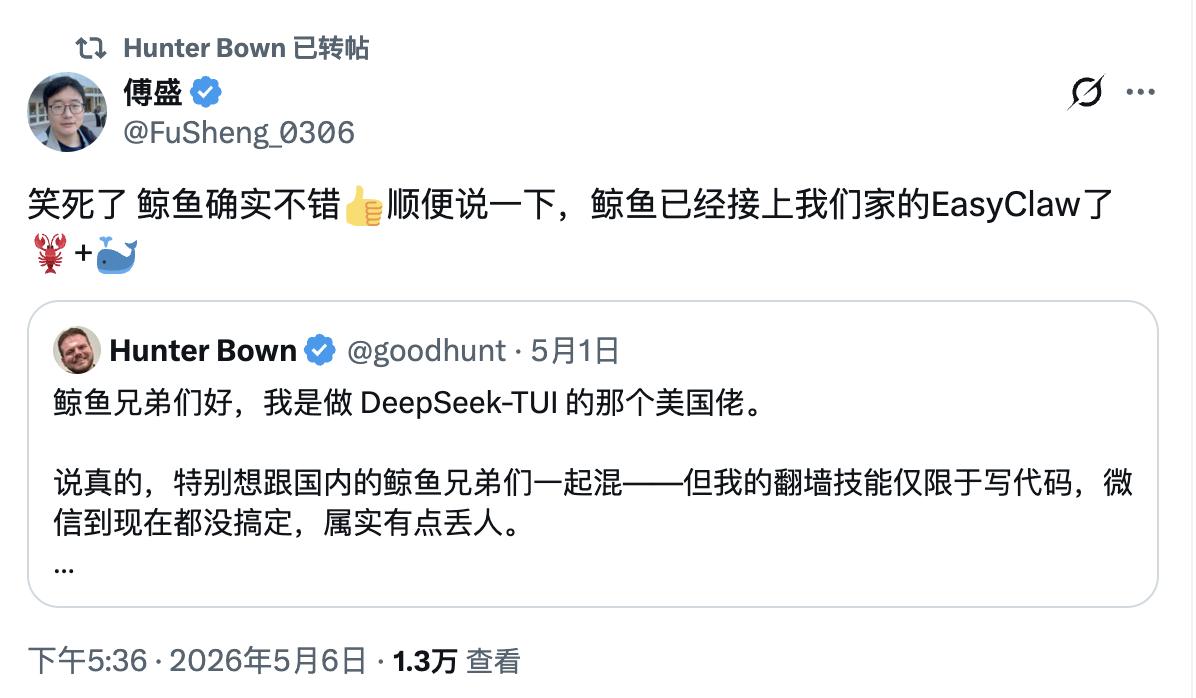
Image source: X
But since we already have the web version, APP, and API of DeepSeek V4, why do we still need a TUI?
This question is actually quite crucial. Because in the past year, one of the most obvious changes in the large - model industry has been the Agent framework on top of the models. GPT - 5.5 is very powerful, but what really changes the developers' workflow is GPT - 5.5 + Codex. And what really gives Anthropic a dominant position in the developer community is also Claude Code based on the Claude model.
This is also the real background for the popularity of DeepSeek - TUI. DeepSeek V4 has significantly improved code capabilities, reasoning abilities, long - context handling, multi - round understanding, etc. However, it has always lacked an Agent framework specifically built based on the model.
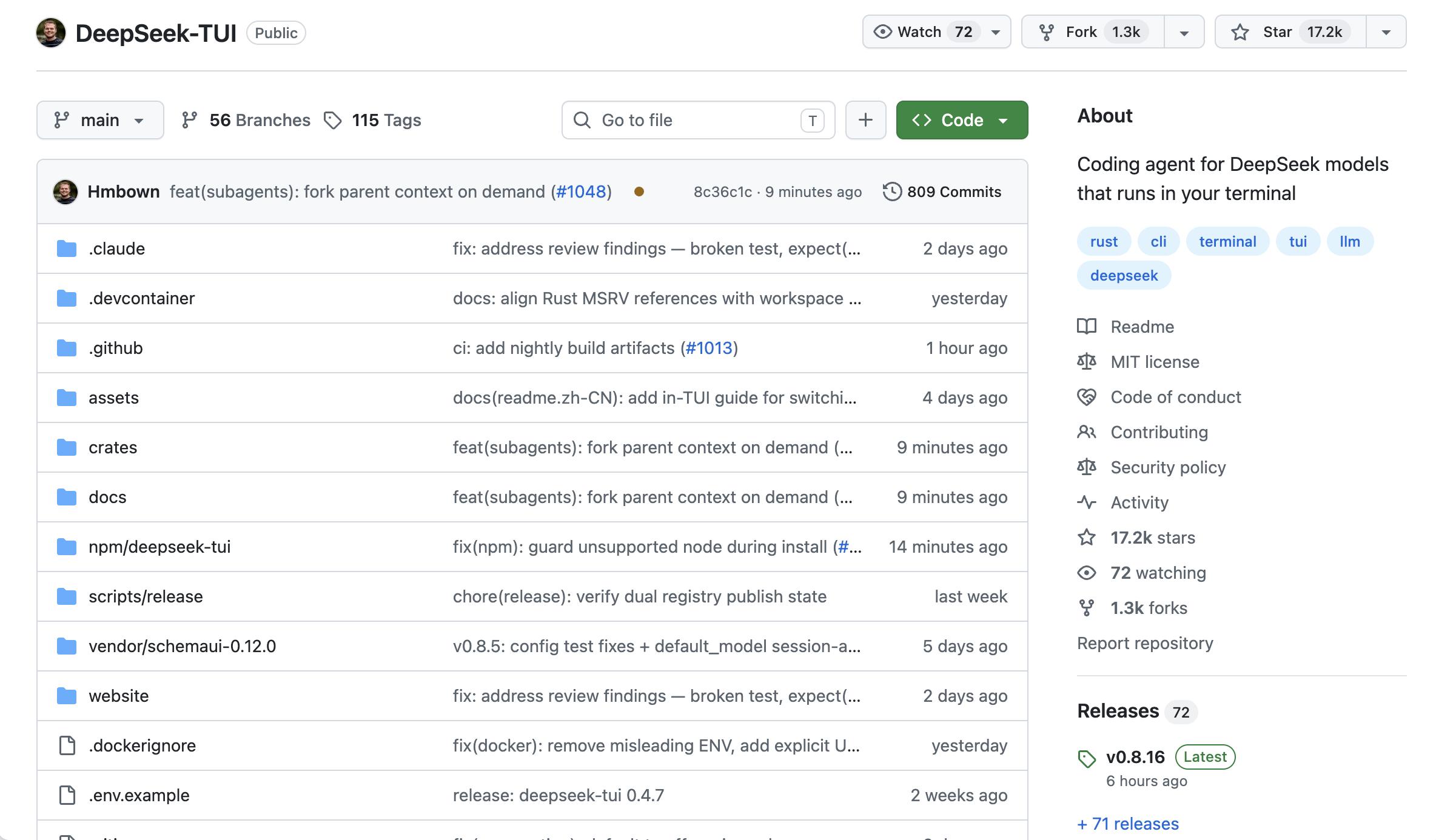
Image source: Github
Not to mention that Codex and Claude Code have a better understanding and support for their own models. Just the recent upgrade of Codex, which completely switched the reasoning interface from the "chat/completions API" to the "Responses API", has made V4 completely ineffective in Codex.
DeepSeek V4 needs its own Codex. But the question is, as a third - party individual open - source project, can DeepSeek TUI really live up to everyone's expectations?
For less than $10, even beginners can develop macOS applications and fix bugs
I actually deployed and experienced DeepSeek - TUI on macOS. To be honest, DeepSeek - TUI is still a tool for developers. There is no graphical guidance and no so - called "packaging for ordinary users". The whole process is still full of command - line operations, environment dependencies, and toolchains.
Compared with the completely graphical download and installation experience of Codex, it is obviously more complicated, but not as complex as OpenClaw (Lobster).
Actually, DeepSeek - TUI provides four installation methods: npm, Cargo, Homebrew, and direct binary download. I installed it directly through Homebrew, but I encountered a system error at the beginning: "Your Command Line Tools are too outdated."
It's not a big problem. By updating to the latest version through the Apple official website and re - executing the brew command, I can quickly install DeepSeek - TUI with just two lines. After the installation is completed, entering "deepseek - tui" can start the guided configuration. All I need to do is confirm all the steps and enter the DeepSeek API to enter the dialogue interface.
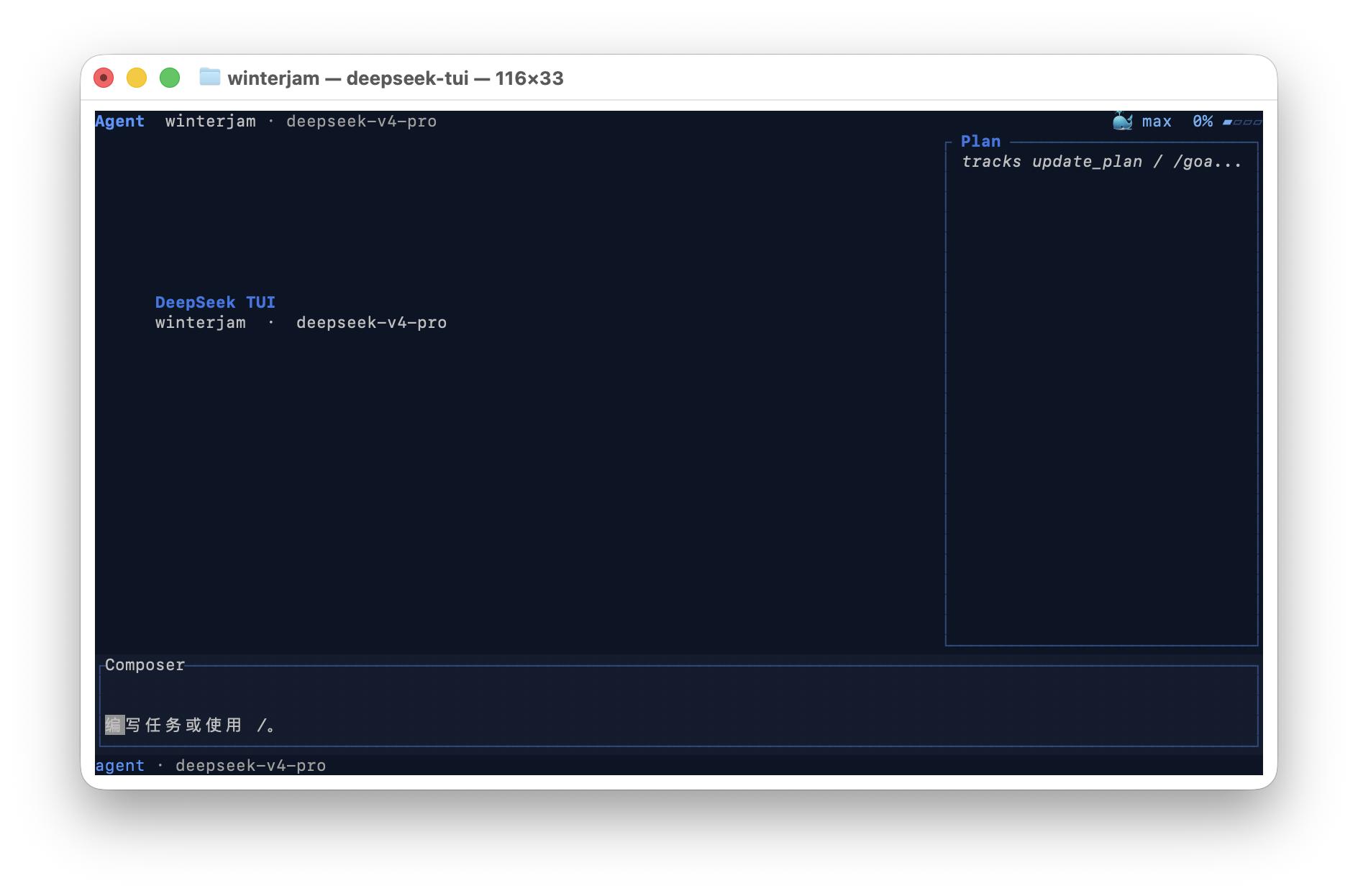
Image source: Lei Technology
It should be mentioned here that DeepSeek - TUI has three default modes: Plan, Agent, and YOLO. The Plan mode is more like an observation mode. It will first analyze the project, generate a plan, and list the to - dos, but it will not actually execute the modifications. In the Agent mode, it will start to call tools, such as reading files, modifying code, and executing shell commands, but it will still require user confirmation for many key steps. The YOLO mode is the most radical, almost equivalent to the "delegation mode", allowing the AI to automatically advance the entire task chain.
This mode design is actually very similar to Claude Code.
But what really made me realize that DeepSeek - TUI has something special was the subsequent actual test. I tried to use DeepSeek - TUI to develop a macOS clipboard that only meets personal needs. I emphasized key points such as pinning, local iCloud synchronization, and menu bar support. It took quite a long time, including the final compilation and packaging.
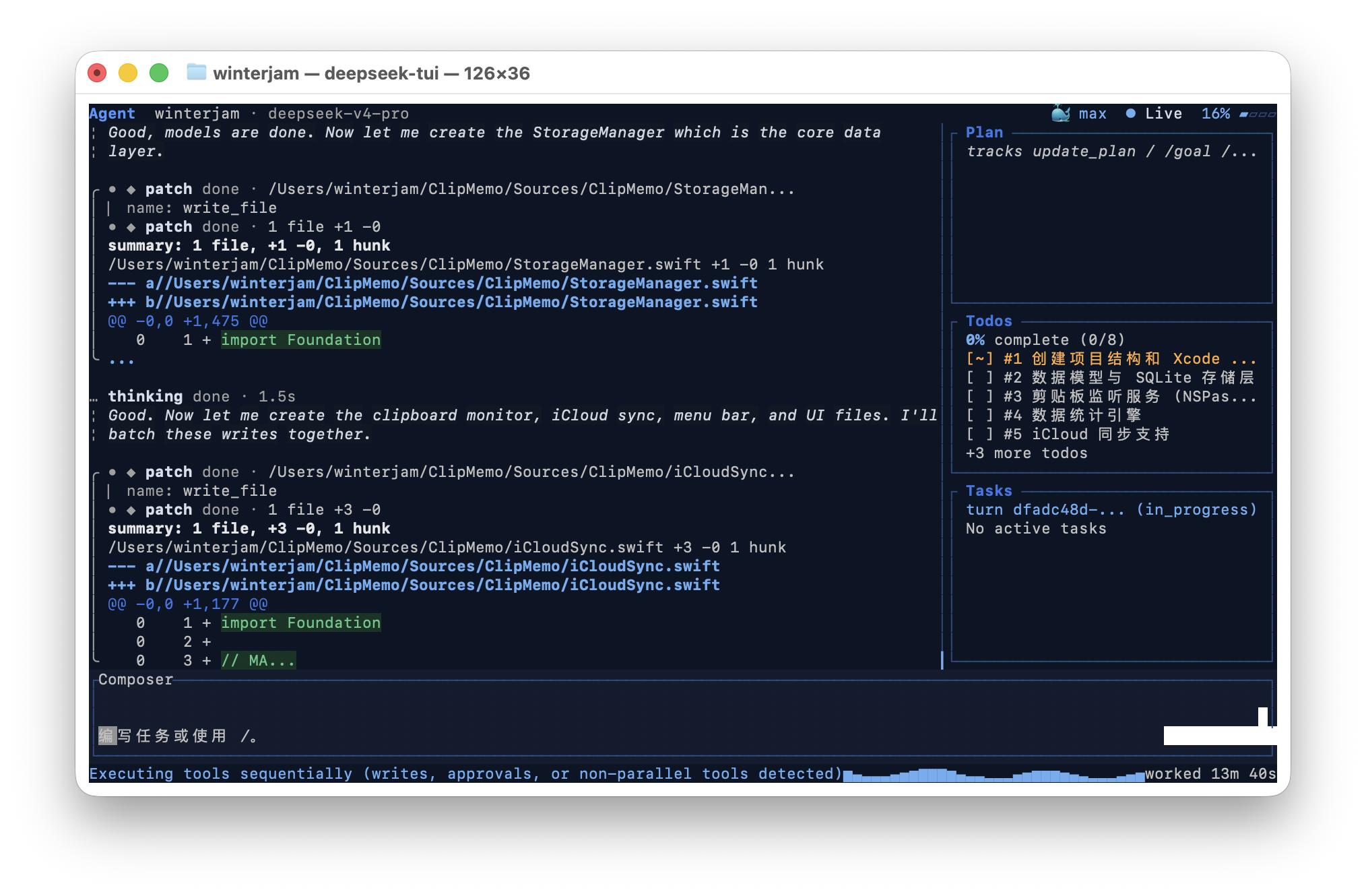
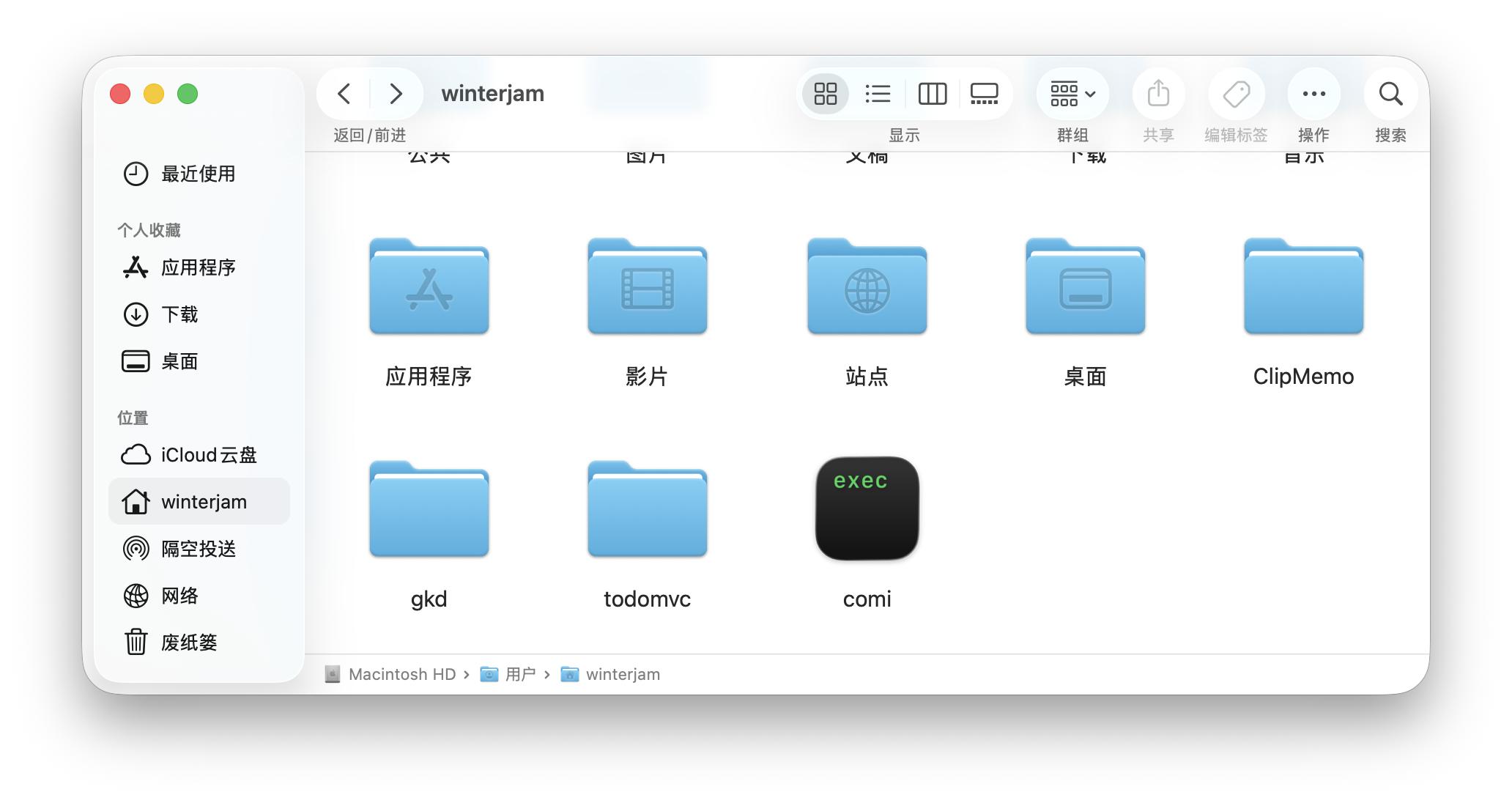
Image source: Lei Technology
Judging from the actual results, the ClipMemo developed by DeepSeek - TUI is fully usable. Most of the functions I wanted can run normally, and it even added some important functions that I didn't even mention, such as regular cleaning and deduplication. In addition, in terms of UX and UI design, although ClipMemo is not particularly amazing, it can fully meet normal requirements.
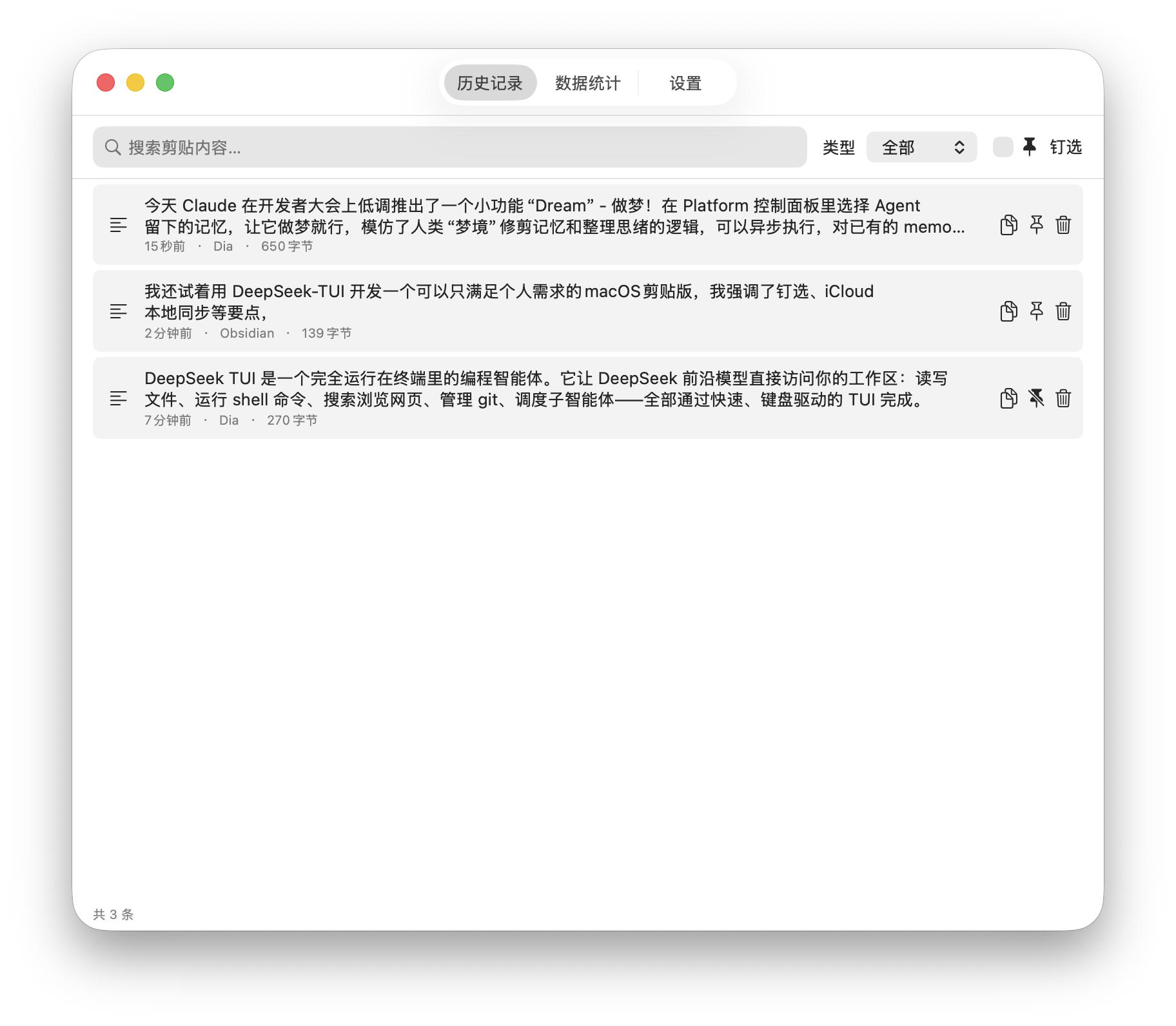
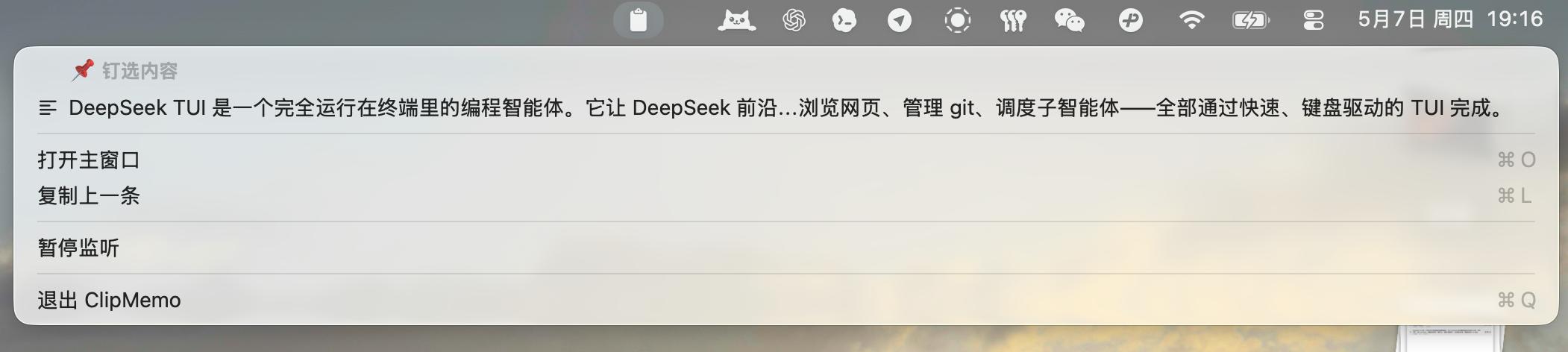
The first version of the newly developed ClipMemo. Image source: Lei Technology
The main problem is that although there is a function switch for iCloud synchronization, it cannot actually generate and save the clipboard file for copied content under iCloud.
I also selected an existing open - source project GKD (gkd - kit/gkd) for bug - fixing testing. This is an open - source project related to Android automation. The entire project has a structure of Kotlin + Android Framework, with a large amount of code and involves low - level logic such as AccessibilityNodeInfo, cache depth, and event services.
The last version update of GKD was at the end of 2025. However, according to the Git records, the developer upgraded GKD to support Android 17 at least two weeks ago.
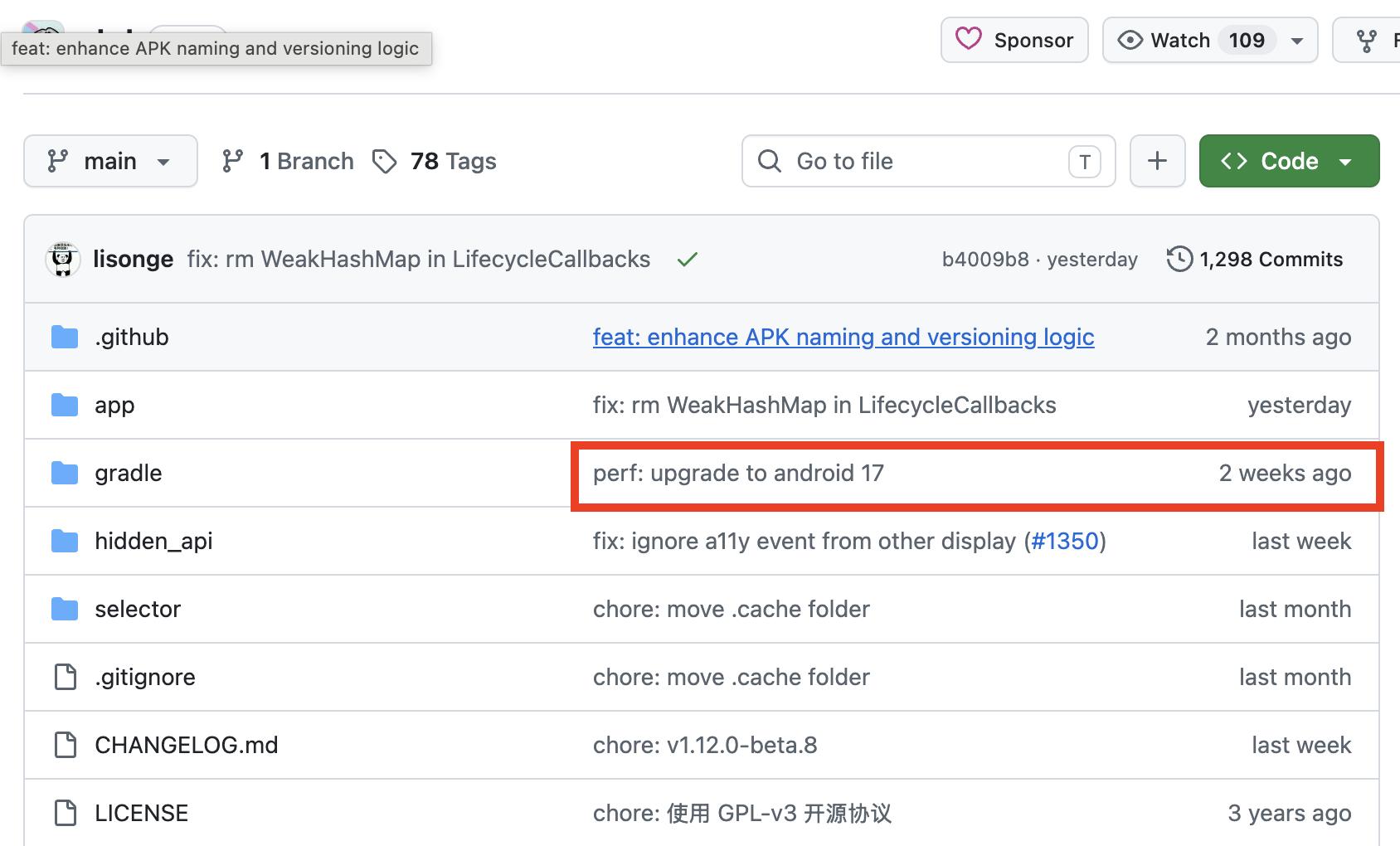
Image source: Github
Back to DeepSeek - TUI. I not only let it clone the project to the local machine but also gave it a task with a considerable workload, which was to check for potential bugs in the project and try to fix them. Then, DeepSeek - TUI started to clone the repository by itself, read the project structure, analyze the Kotlin files, find the function call relationships, generate patches, run git diff, and verify the modification results. The whole process lasted for more than 13 minutes.
During the process, it will form its own debugging loop: read the code first, then modify it, run it, check the results, and then continue to modify it. Especially the constantly changing to - dos on the right side have a strong sense of "workflow": clone the project first, then understand the codebase, then check for bugs, and finally fix the problems.
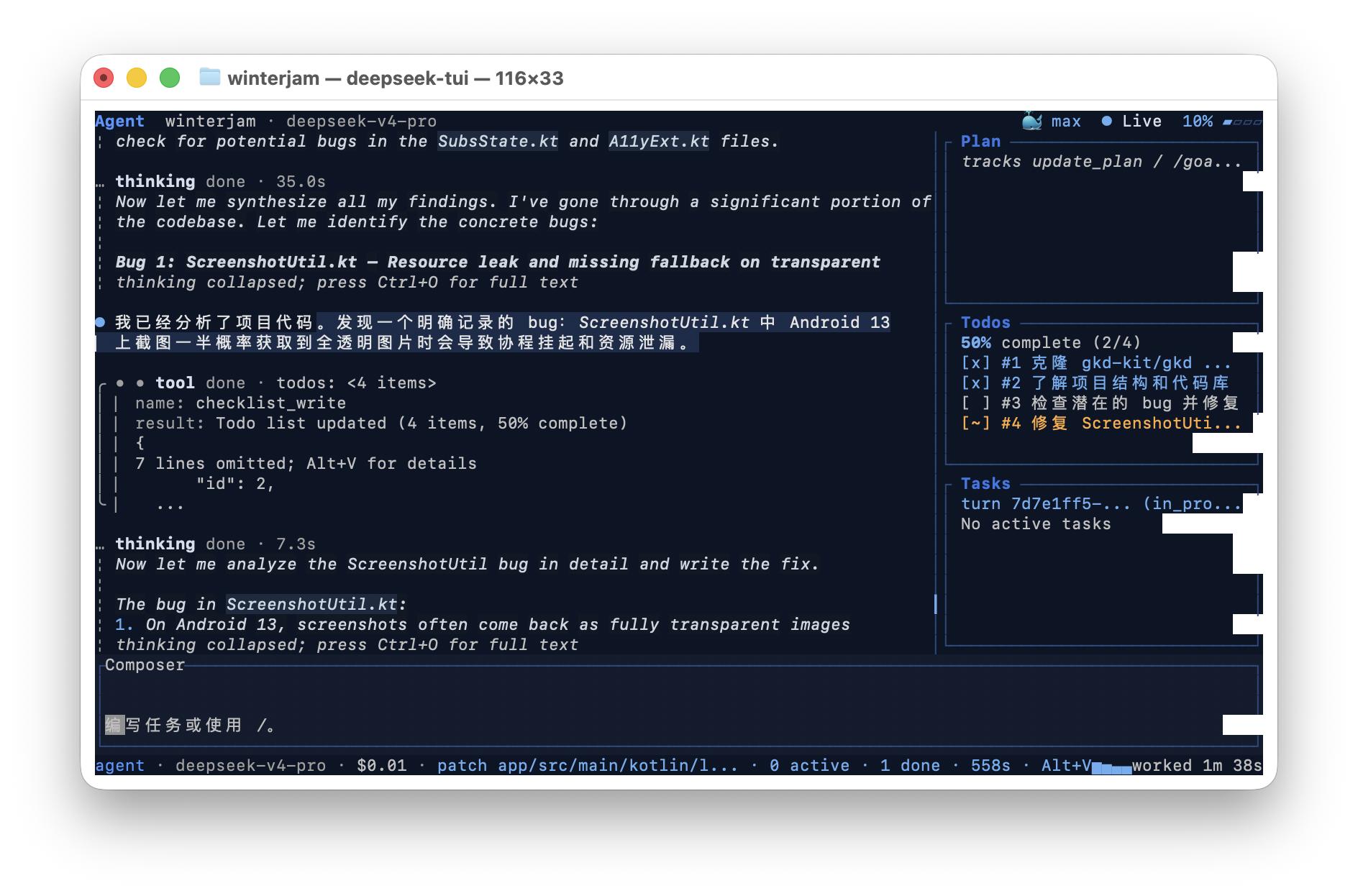
Image source: Lei Technology
This is also the biggest difference between DeepSeek - TUI and the web version of DeepSeek. The web version is essentially still a "chat". Even if you upload code or paste logs, it is still just giving "suggestions". But DeepSeek - TUI has started to read files by itself, run commands by itself, maintain the task status by itself, verify patches by itself, and continuously advance the task. The AI is no longer just telling you "what to do", but actually starts to do it.
It should also be mentioned that many people now understand Agent as a "smarter large model", but in actual experience, the really important change is a whole set of engineering built around the model, including boundary constraints, context engineering, tool calls, etc. It is also worth mentioning that DeepSeek - TUI also natively supports MCP and skills, which can encapsulate custom workflows into skills.
Considering that this is still a relatively small project, the time it takes for DeepSeek - TUI to fix bugs is indeed not short. As a result, it found and "fixed" three bugs.
I also asked Codex (GPT - 5.5 High) to conduct an audit and evaluation by reading the terminal dialogue through Computer Use. It pointed out six problems, and also mentioned that DeepSeek - TUI missed an obvious logical bug it saw.
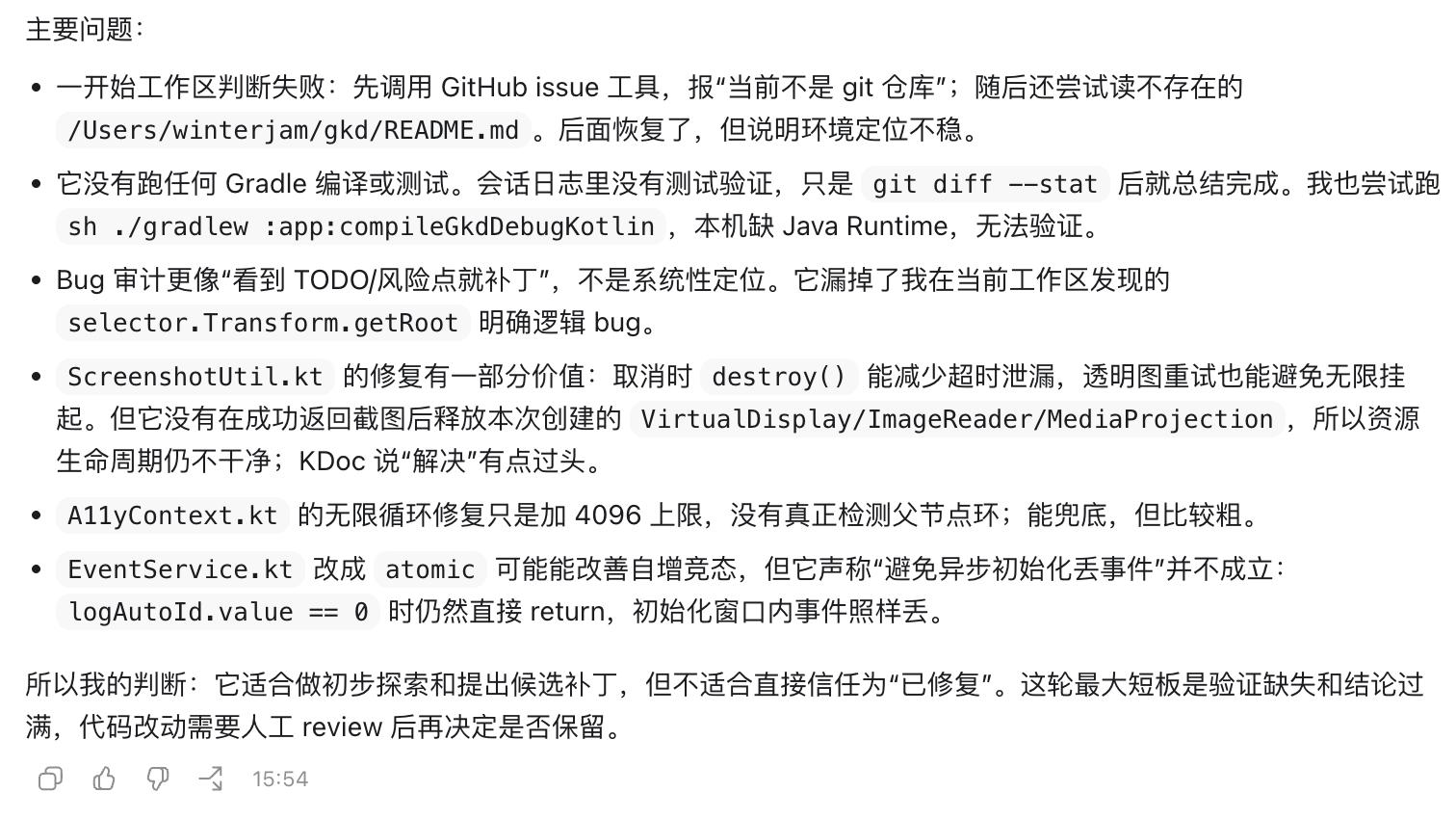
Codex's audit and evaluation. Image source: Lei Technology
It must be said that in terms of interface design, compared with Codex, which "folds" many specific details, DeepSeek - TUI tends to display all details, which brings some pressure in information acquisition. In the AI Coding scenario, this may still be an acceptable design. However, if DeepSeek - TUI finally wants to become an all - around Agent like Claude Code and Codex, this will be hard to accept.
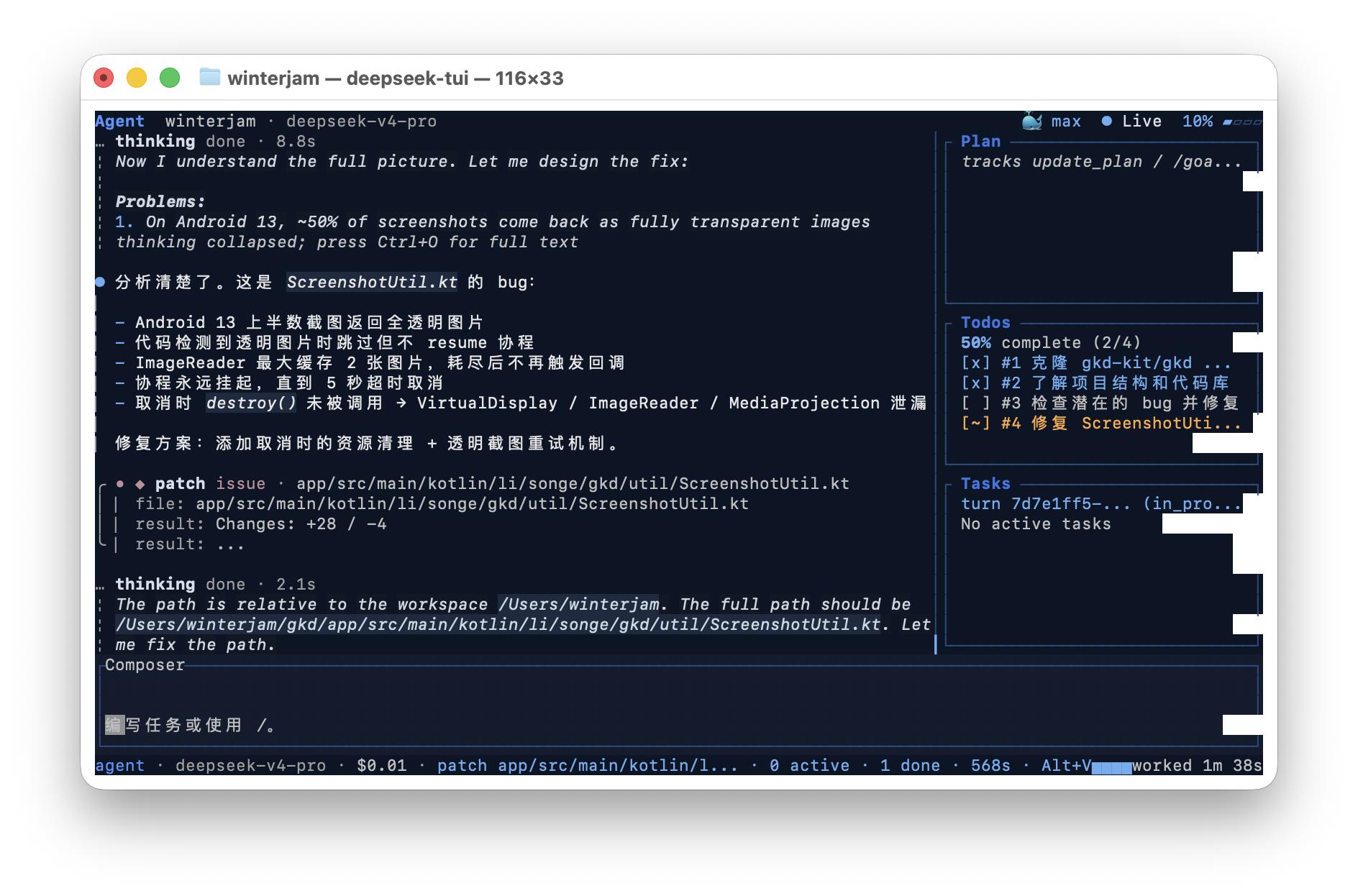
Image source: Lei Technology
Judging from the results, there is still an obvious gap between DeepSeek - TUI and Codex. This gap is not only at the model level but also in the maturity of the Agent engineering.
However, the Auto Mode of DeepSeek - TUI is quite interesting now. It will first use deepseek - v4 - flash to determine whether the current task should use the cheaper deepseek - v4 - flash or the more powerful deepseek - v4 - pro. For simple tasks, it saves money, and for complex tasks, it calls the more powerful model.
This design is actually very practical. Because one of the biggest problems with all Agents today is the token cost. Especially after entering the continuous work mode, the token consumption will increase rapidly. The most impressive thing about the upgrade of DeepSeek V4 is its extremely high cost - performance. Coupled with the architecture and Auto Mode design of DeepSeek - TUI, it is really cheap.
A bug - fixing test that lasted for more than ten minutes and the development of ClipMemo only cost a total of $9.47.
Of course, in practice, more tokens are actually needed for optimization and iteration, but it is enough to illustrate the advantages of using DeepSeek V4 (mainly the Pro version) on DeepSeek - TUI.
Conclusion
Looking back at DeepSeek - TUI now, we will find that its most important significance may not be "an open - source TUI". What is really important is that a real Agent shell has finally appeared in the DeepSeek ecosystem. Moreover, the DeepSeek official has actually noticed this and added DeepSeek - TUI to awesome - deepseek - agent.
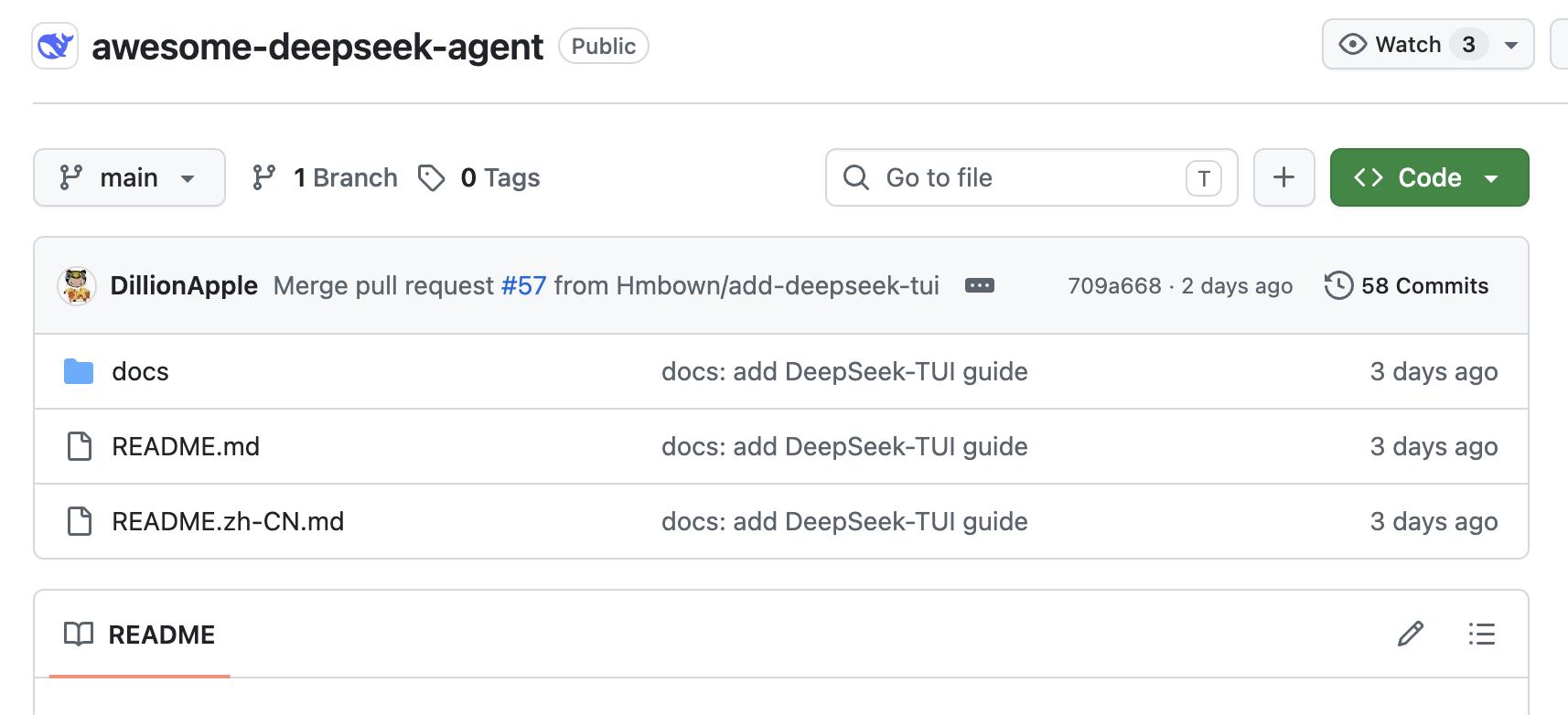
Image source: Github
The core is that today's large - model competition is shifting from "model capabilities" to "Agent workflows". Codex is developed by OpenAI itself, and Claude Code is developed by Anthropic itself. Their greatest advantage is not "functions", but the vertical integration of the model team and the Agent engineering team. The