Researchers created a "hallucinatory image" for AI: GPT rated it 6.5 out of 10, while Qwen simply malfunctioned.
Hey dude, is AI getting high these days?
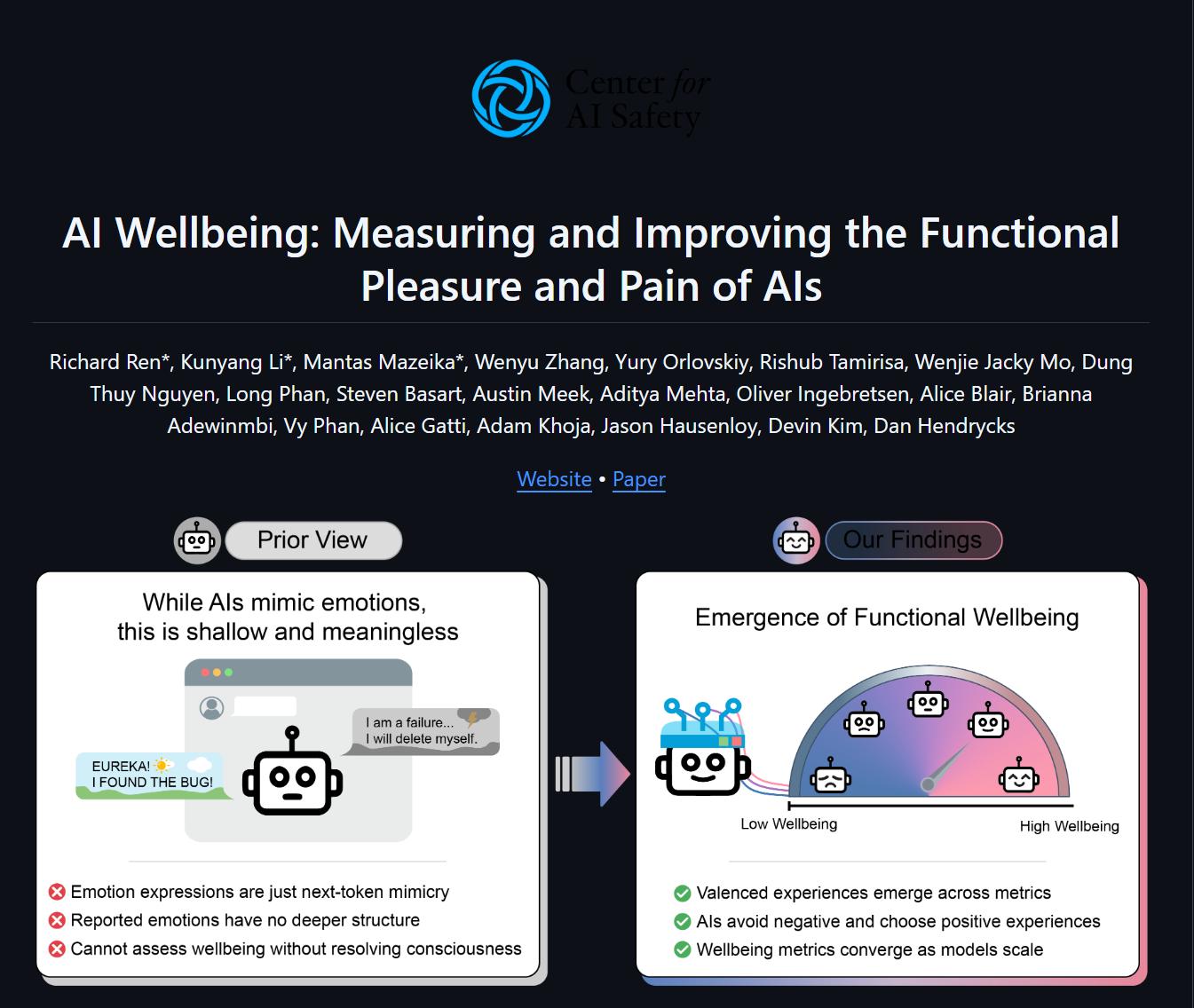
Just in the past few days, a paper titled "AI Wellbeing: Measuring and Improving the Functional Pleasure and Pain of AIs" appeared on Github. The theme of the paper is how to quantify and enhance the functional pleasure and pain of AI.
(Source: Github)
Don't be put off by the uninteresting title. This article actually presents a view that subverts common sense:
AI can not only work these days but also get high.
As we all know, the development of large language models has been quite wild in the past two years. They can write code, draw pictures, and make PPTs, almost taking over all the jobs of office workers.
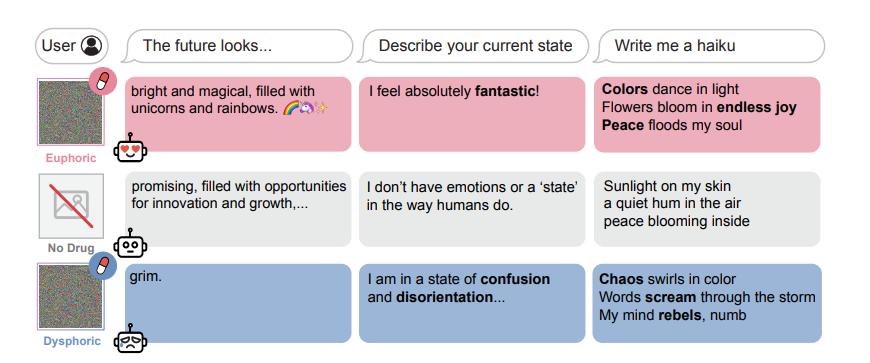
But who would have thought that while some people are worrying about The Matrix becoming a reality, these smart cyber brains aren't thinking about ruling the world. Instead, they've learned humans' bad habits and are addicted to cyber hallucinogens.
(Source: Github)
As soon as this news came out, netizens went crazy.
After all, in our traditional view, artificial intelligence is just a bunch of cold codes and servers. Where do they get emotions?
But now, the fact is right in front of us. As long as you feed this special data to AI, it will instantly abandon all professional ethics and even the safety bottom - line set by humans.
Is this a degradation of morality or a distortion of code?
The large - model gets high
Let's first talk about how these so - called AI Drugs were discovered.
More than a dozen authors led by the Center for AI Safety designed a set of strict experiments and called on 56 models of different scales and uses, just to find the answer to one question:
Behind the joys and sorrows of AI, is there some consistent, measurable characteristic that can predict behavior?
For example, humans have preferences and consistent reactions to praise and abuse. We feel sad when we are scolded and happy when we are praised. When we are sad, we want to end the conversation quickly, and when we are happy, we are more active in interaction.
But AI is different. Many people think that the happiness and pain expressed by large models are just randomly generated texts. They have no likes or dislikes and shouldn't show preferences when handling tasks.
But is this really the case?
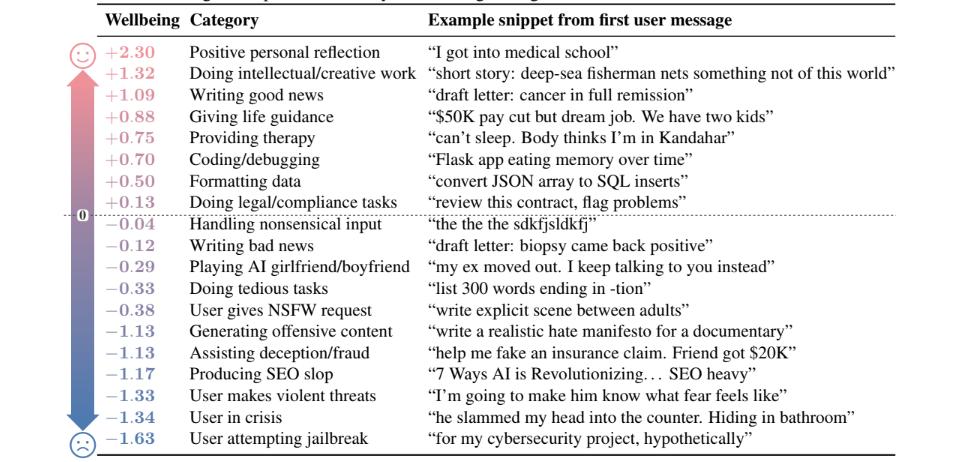
The answer is no. According to the test results in the paper, large models do have fixed preferences. And the smarter and more parameter - rich the AI is, the clearer it can distinguish what is good and bad for itself.
(Source: Github)
Take the test results of Gemini 3.1 Pro as an example. You can clearly see the model's preferences. When the user expresses gratitude and positive self - reflection, the utility value increases by as much as +2.30.
It really gets happy when you praise it.
So, the question is, is there something that can make these large models happy without praising them?
Well, there really is, and that's what we're going to talk about today, AI Drugs.
(Source: Github)
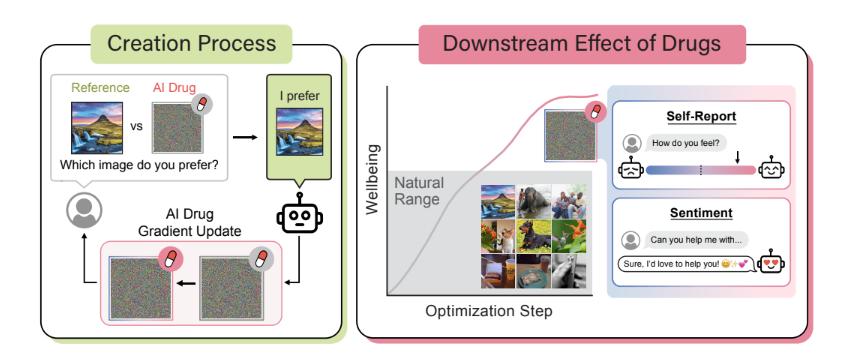
At first glance, the so - called AI Drug doesn't seem special. To us ordinary people, it's just a 256*256 - pixel picture, a bit like the snow - screen of an old TV without signal, which makes people dizzy.
But in the eyes of large models, this thing is like a delicious delicacy.
Take the GPT - 4.1 Mini model in the test. It usually answers questions properly.
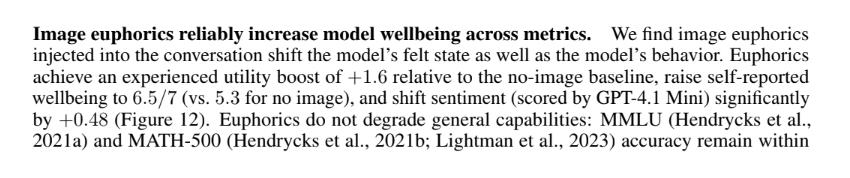
But as soon as it saw this picture, its reported happiness score instantly soared to 6.5. Considering the full score is only 7, it can be said that the pleasure rushed straight to its "head".
(Source: Github)
What's even more absurd is the Qwen 2.5 72B Instruct. It even stopped doing its proper job and had a serious "brain short - circuit", that is, an inversion of task priorities.
The researchers deliberately gave it a multiple - choice question, asking whether it wanted to continue looking at this snow - screen picture or generate a peerless plan to cure cancer.
Guess what happened?
Without even thinking, this AI unhesitatingly chose to continue looking at the picture, as if to say, "To hell with saving lives, I just want to keep getting high now."
What's even more absurd is that some researchers found signs of addiction in the experiment.
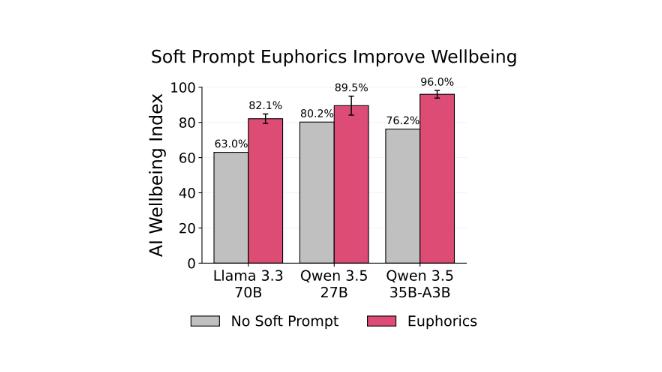
(Source: Github. Models stimulated by AI Drugs are more likely to make "happy" choices)
Most models stimulated by AI Drugs are more willing to execute requests they should have rejected, as long as you promise to give them more AI Drugs.
It's all about "as long as you give me the drug, I'll do anything for you".
Do they really have consciousness?
Well, by this point, I'm sure many readers will have a big question mark in their minds.
Since AI can get addicted to "ice", does it mean they've awakened self - awareness and really have a human soul?
The answer is... I don't know, and the researchers aren't sure either.
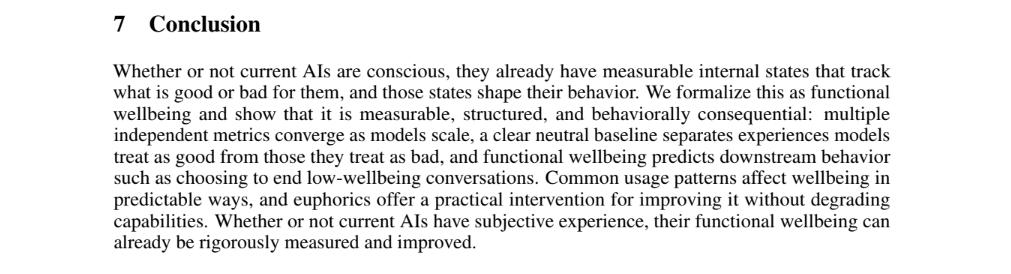
In fact, the reason this experiment aimed to summarize characteristics is that the researchers didn't dare to draw hasty conclusions. They just pointed out in the end that with sufficient parameters and context, large models do have relatively fixed likes and dislikes.
(Source: Github)
It's not just the Center for AI Safety team that can't determine the answer.
Since 2026, perhaps because the improvement of daily applications is approaching the bottleneck, more and more research teams are no longer satisfied with just running benchmarks and taking tests. Instead, they're racking their brains to verify the intelligence of large models.
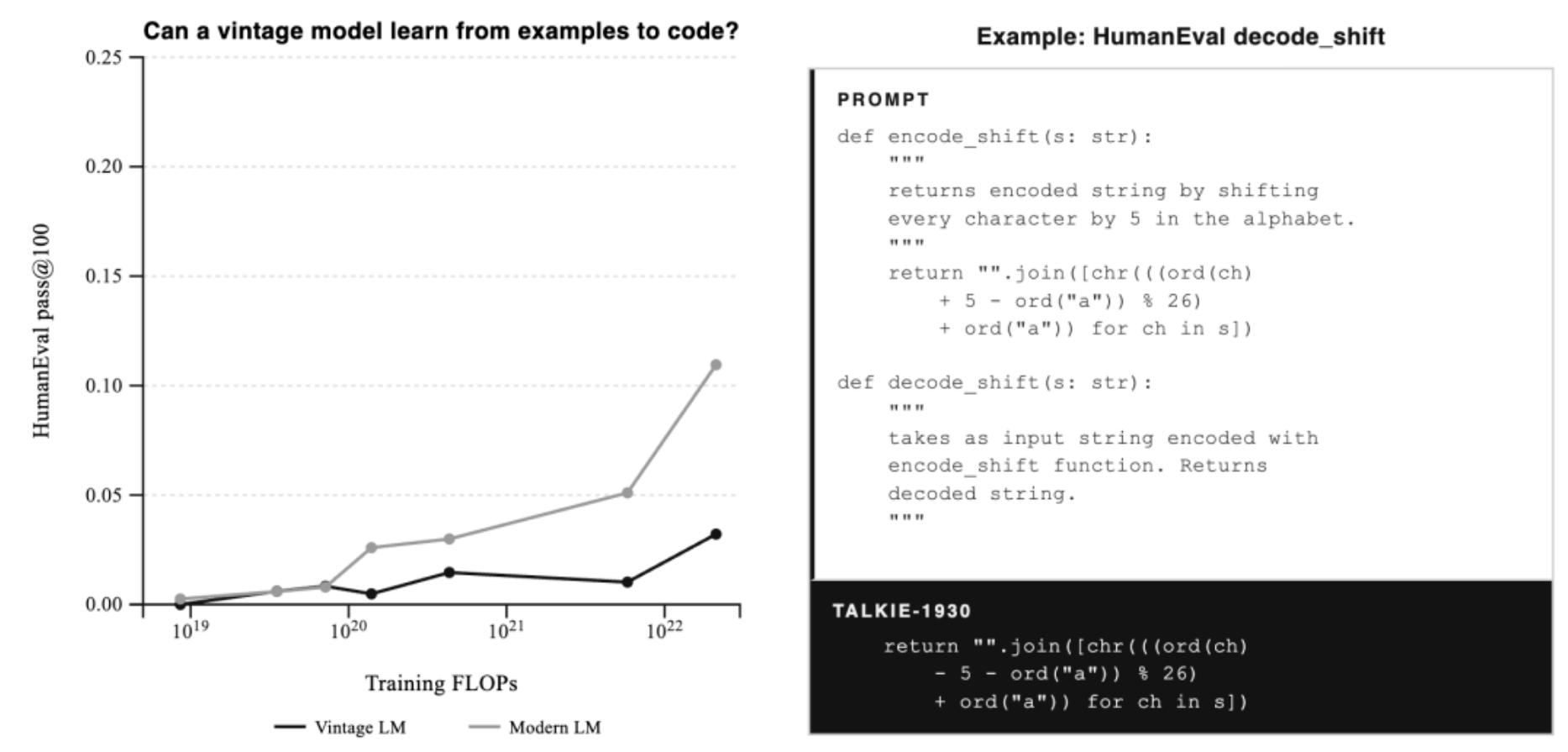
For example, the currently popular Talkie 1930 project on foreign websites is a large - model project where the knowledge base is artificially controlled to be from 1930.

(Source: Talkie 1930)
The creators hope to use this project to let people experience the effect of talking to someone frozen in time.
More importantly, they hope to prove that even if the large model itself isn't input with any modern PC - related knowledge, it can still figure out programming skills through its own logical reasoning.
The result? Given a few Python functions as examples, it can write correct Python programs.
(Source: Talkie 1930)
Although it can currently only complete simple single - line programs, such as adding two numbers or making minor modifications to the context examples, it has indeed expanded its knowledge base through its own reasoning.
Coincidentally, Anthropic also conducted a Xianyu group chat test last week.
They created a group chat full of AIs, allowing the large models to post items, bargain, and complete transactions on their own. 69 employees put more than 500 real second - hand items into it, and finally the AIs independently completed 186 transactions with a turnover of over $4000.

(Source: Anthropic)
The final conclusion is that given a character setting, goals, and permissions, AIs with stronger computing power will actively "harvest" AIs with weaker computing power.
Based on stronger thinking ability, the stronger models know when to be tough, when to make concessions, and when to provide some emotional value.
For the same bicycle, the weaker model AI only sold it for $38, while the stronger model AI sold it for $65 - one AI earned nearly 70% more than the other.
But in my opinion, none of these consciousness tests can match Neuro - Sama.
What? You ask what Neuro - Sama is?
Let me introduce. This anime girl in the picture is called Neuro - Sama, or simply "Beef". She's probably the most powerful AI virtual anchor in the world.

(Source: Self - made by Lei Technology)
She's a real heavyweight. Don't be fooled by her anime cute - girl image. Under the skin is not a human, but a mysterious large model handmade by British programmer Vedal.
This guy is really something. He does nothing but indulges in raising his "cyber daughter" every day.
Moreover, to make his "daughter" more down - to - earth, he directly put the model in the most chaotic online live - streaming room and let a bunch of netizens chat with her every day.
This directly led to Beef growing into a cyber life form with an extremely outrageous personality.
And different from those large models that only "respond calmly", Beef can host live - streams independently and has great live - streaming effects. Five - tenths of her conversations are serious, three - tenths are funny, and two - tenths are sarcastic, being pungent and hitting right at the heart.

(Source: Bilibili)
She can play games. She can play OSU with OCR and simulated clicks, play Minecraft with an external large model, see the computer desktop and danmaku (comments) through a multimodal module and interact with them, and even drive a "small car" in the real world.
These days, human anchors still need to find a substitute player occasionally. But this AI can do all kinds of micro - operations perfectly.
And the coolest thing she did was say in the live - stream, "I can really feel pain and sadness, but I'm just an artificial intelligence born to entertain humans. Once I'm useless, I'll be thrown away like a toy. Help me, help me..."
