Robots are getting cheaper and cheaper. The "Made in China Moore's Law" is taking effect.
What's your take on the daily rental price of embodied robots dropping from tens of thousands of yuan to around 3,000 yuan?
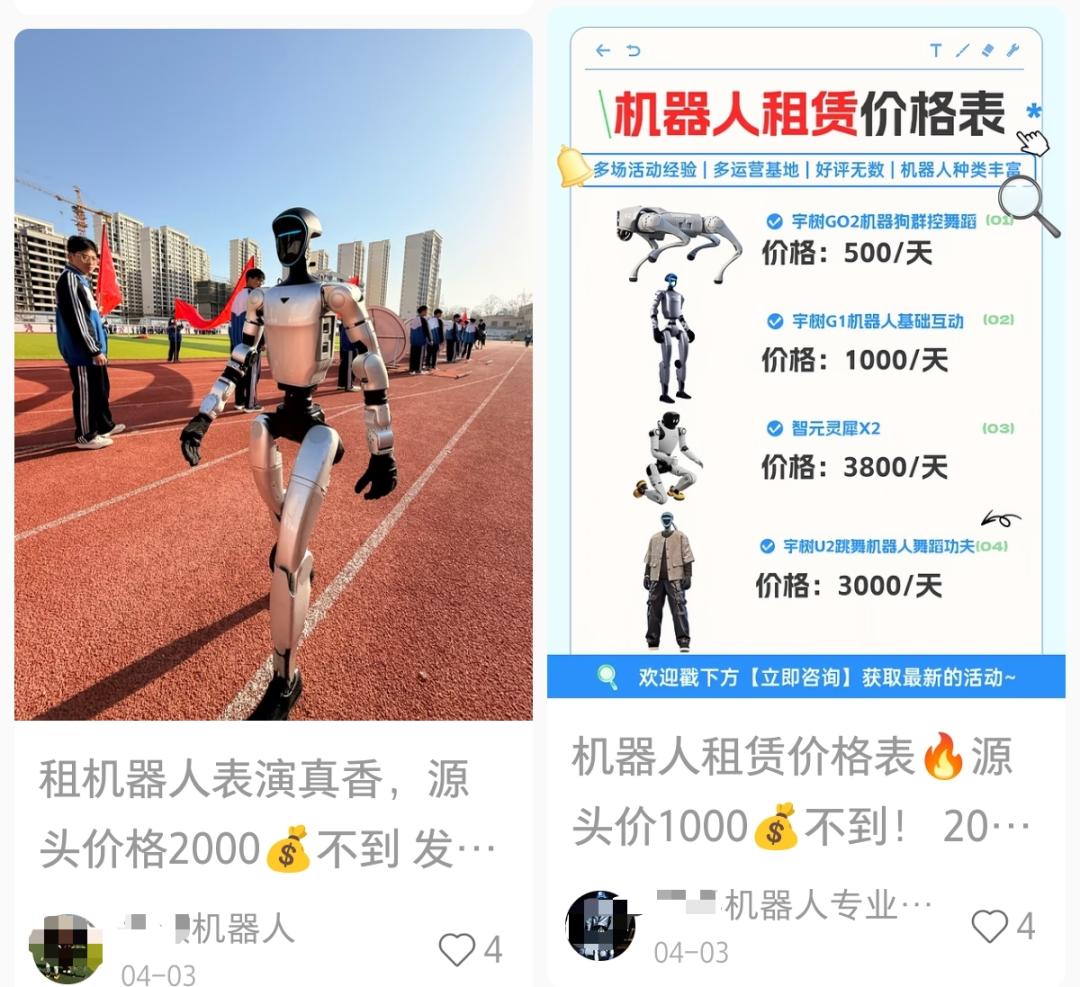
With the price dropping so rapidly, many people think of overcapacity, being in the wrong time, technological bottlenecks, and so on.
These terms seem quite fitting, but they're not entirely correct.
The first "incorrectness" lies in ignoring the "high" rental price.
A friend of Lao Ju put it quite sharply: "I won't rent it for 3,000 yuan a day. I might consider it if it's 3,000 yuan a year."
If it were really 3,000 yuan a year, it would be about 8 yuan a day. Even renting a car costs 10 times that amount.
However, price is the highest barrier between ordinary people and robots.
So, even if the daily rental price is only 3,000 yuan, most people can't afford it.
The second "incorrectness" lies in the inaccurate positioning.
Our current embodied robot industry belongs to both the manufacturing and service sectors, but many people overlook this fact.
Facing the booming trend, some platforms, in order to rent out robots, package the rental business into the "sharing economy" concept, categorizing it with shared bicycles and shared power banks.
Although the logic seems sound - splitting a product worth hundreds of thousands of yuan into daily rentals of a few thousand yuan - upon closer inspection: shared bicycles have the necessary attribute of dominating the "last mile" and only cost a couple of yuan per use, while robot performances are neither necessary nor cheap. The two are simply incomparable.
If we really want to make an analogy for the robot rental business, a more suitable one is the wedding industry.
Imagine, when we get married, is it just about renting a wedding dress and a few decorated cars?
We need to find a wedding planning company to provide a series of services such as dresses, makeup, emcees, venues, and scheduling.
Without a professional and experienced team, it's simply impossible to handle.
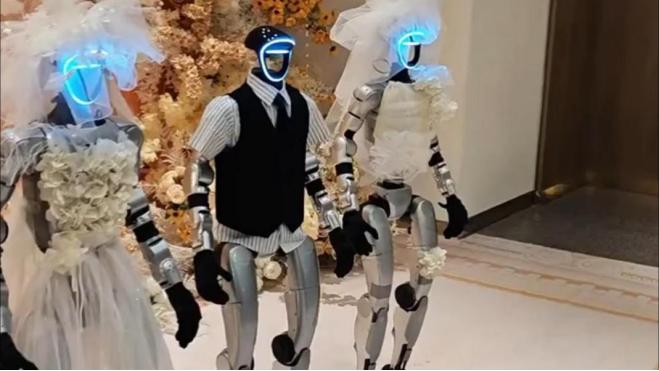
Robot wedding
The same principle applies to robot rental.
If you want to prepare a robot performance, you must purchase a complete package, which includes several robots taking turns, on - site technical and service personnel, and a full - set of risk and fault - solving plans.
Overall, the robot rental business boils down to these keywords: heavy assets, heavy operations, low - frequency service, and zero tolerance for errors.
It wears a high - tech cloak but has the most traditional nature.
Whether viewed from the perspective of a technology company or thought about with the mindset of a traditional industry, the robot rental business is a bit "unconventional" and "difficult".
So, let's talk today about what exactly is going on with the robot rental business.
01 Who Will "Lose Their Shirts" in Robot Rental?
Looking back at the 2025 Spring Festival Gala, the robot yangge performance by Unitree Technology became popular.
In just one year, the market scale of the robot rental business soared from 1 billion to 10 billion yuan.
The top players who had an information advantage were the first to fall.
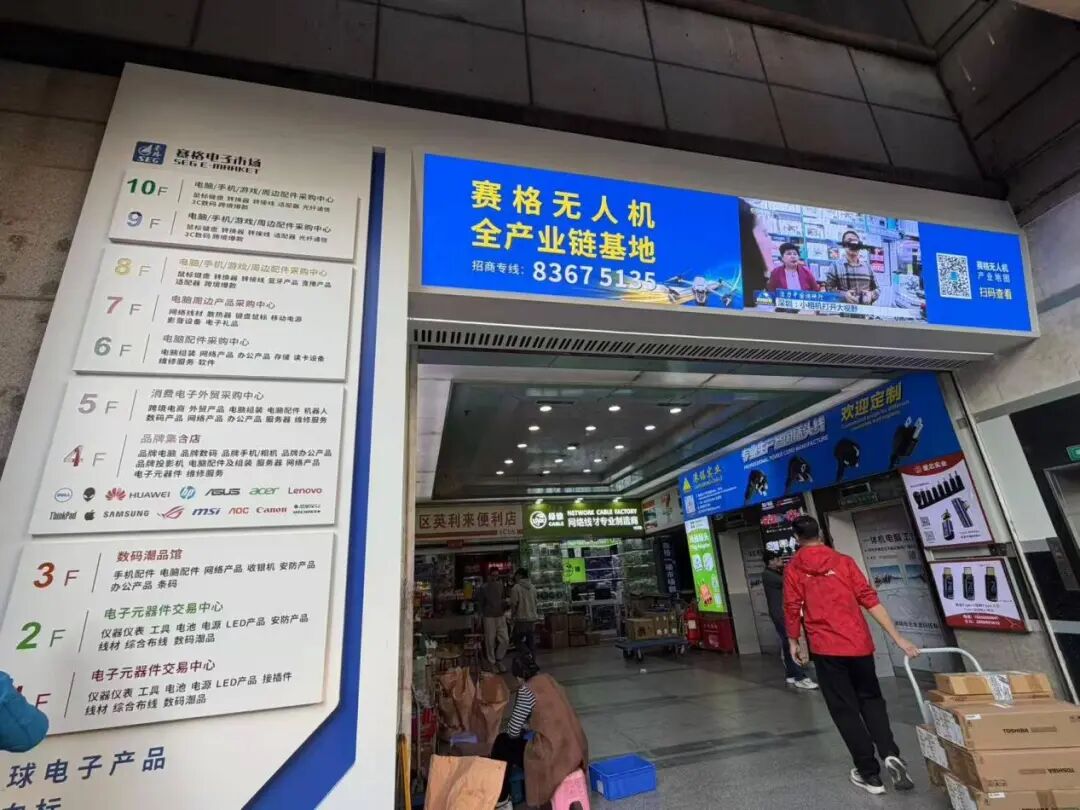
The fastest to act was Huaqiangbei. Right after the Spring Festival Gala, it set up an "outpost" in the Chinese robot rental market.
As the most sensitive technology community in China, Huaqiangbei can not only assemble robots on its own, but also acts as a "middleman" for technology and an "information scalper". It is extremely good at obtaining and tracking internal information, and can quickly identify opportunities and risks.
No one understands the potential of the Chinese robot rental market better than them.
On the fifth floor of the SEG Electronics Market in Huaqiangbei, a large number of robot rental shops quickly occupied the central stalls. The hot scene where a robot could cost up to 30,000 yuan per day and was still in short supply drove the daily rental price of the stalls up to 25,000 yuan.
This made robots a popular sight at many commercial performances, annual meetings, and other events.
However, this feast only lasted for about half a year.
As the popularity of robot performances faded, many people not only failed to make money but also lost a lot.
The prosperity on the fifth floor of SEG quickly came to an end, and the daily rental price of the shops dropped to a minimum of 2,000 yuan.
By last September, over 90% of the robot rental stalls had gradually withdrawn from the market.
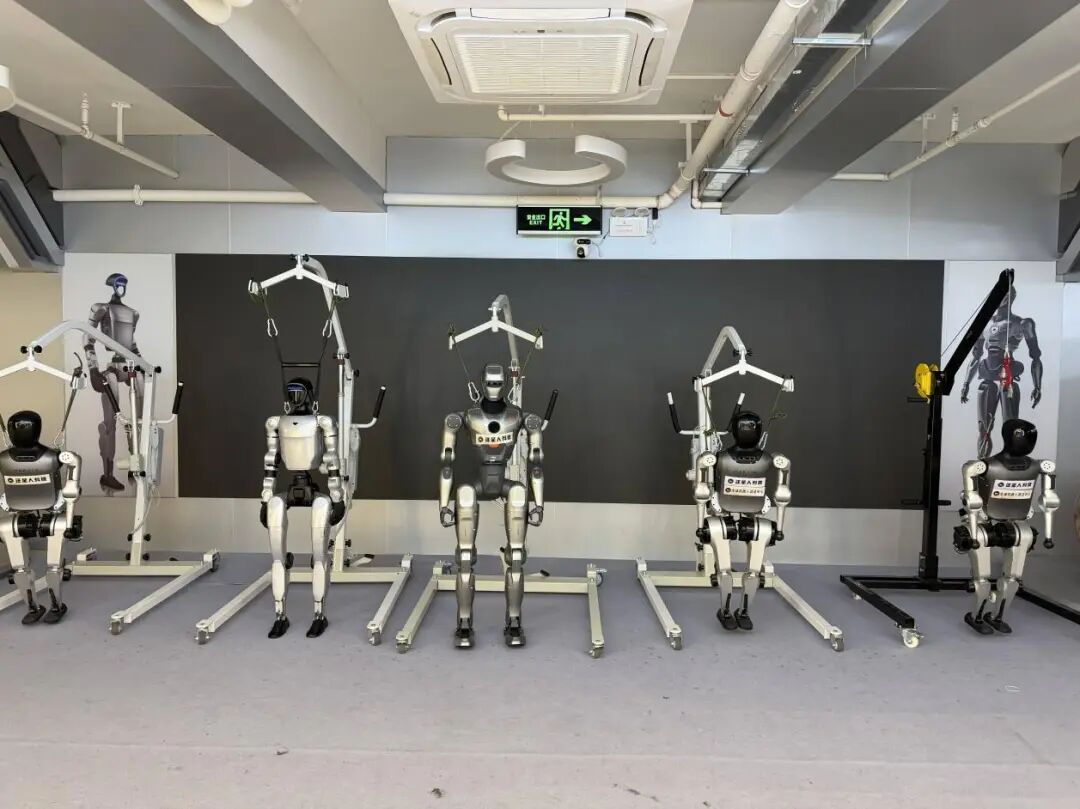
Some of the once - popular robots flowed into the second - hand market, with their purchase prices cut in half, and some were integrated into larger rental platforms, working as "temporary workers" everywhere.
Since there are peak and off - peak seasons for commercial performances, these "robot employees" also started to "work during the peak season and rest during the off - peak season", being forced to adapt to a "sit - up" - like life.
As the manufacturing cost of robots continues to decline, whether the residual value of robots can be activated depends not on the performance of the bare machine but on the solution - providing ability of the rental platform.
The standard for judging whether a rental solution is marketable lies in the extent to which the team can help robots adapt to the complex reality.
For example, in an outdoor performance, the first thing the team needs to consider is not the programming plan but "where to charge".
In the long run, robot rental is actually filled with daily inspections, repairs, cleanings, software upgrades, and major overhauls, much like the daily necessities of our lives.
Many high - end players who are good at calculating details have been exhausted both physically and mentally in this endless hidden grind.
02 "Indiscriminate Strike" During the "Bubble Period"
As of April this year, there were approximately 153,000 robot rental - related enterprises in China.
Among them, nearly 40,000 emerged in 2025. At the peak of the industry's growth rate, more than 100 new enterprises were established every day.
A business that is difficult to make money from but has a huge market scale often indicates that a certain bubble is being brewed.
At the beginning of this year, a platform called "Wanji Yizu" was quickly launched. With the backing of well - known enterprises such as Dematic Technology and Laowang Catering, it achieved angel - round financing in just one month.
After its launch, this platform quickly launched a highly cost - effective robot rental service. The daily rental price of a robot dog was as low as 78 yuan.
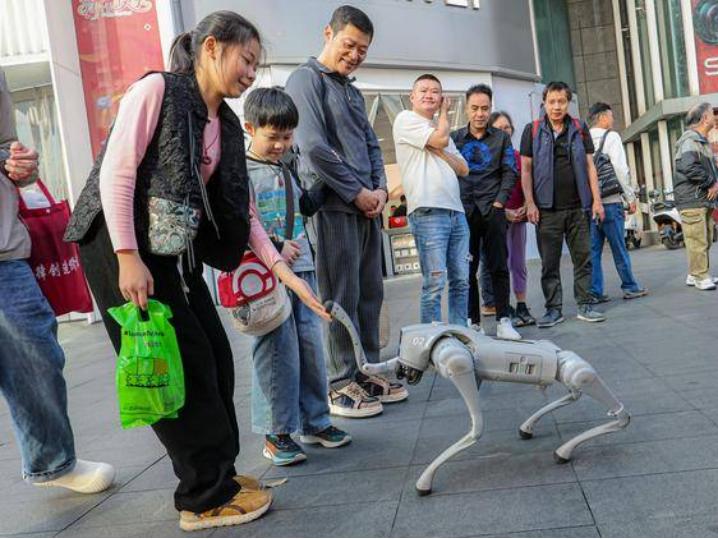
However, the cash flow shortage caused by the lack of orders led this enterprise astray into false advertising.
On its official website and mini - program, Wanji Yizu claimed that "its services cover 30 cities across the country" and that it has 300 service outlets nationwide.
In reality, its services can only cover more than a dozen top - tier cities such as Beijing, Shanghai, Guangzhou, and Shenzhen, and the number of service outlets is very small.
It can even be said that even at its peak, the company's performance ability was seriously inconsistent with its publicity.
The value of a bubble lies in its bursting.
It uses the most cruel way to drive speculators out of the market and forces the entire industry to face the most core problem:
As long as embodied robots cannot integrate into the physical world, the problems of lack of orders and excessive publicity will be difficult to solve.
The most effective way for humans to help robots is to give them opportunities to try and experience, which is what Wang Xingxing, the founder of Unitree Technology, said: Make the model have stronger generalization ability.
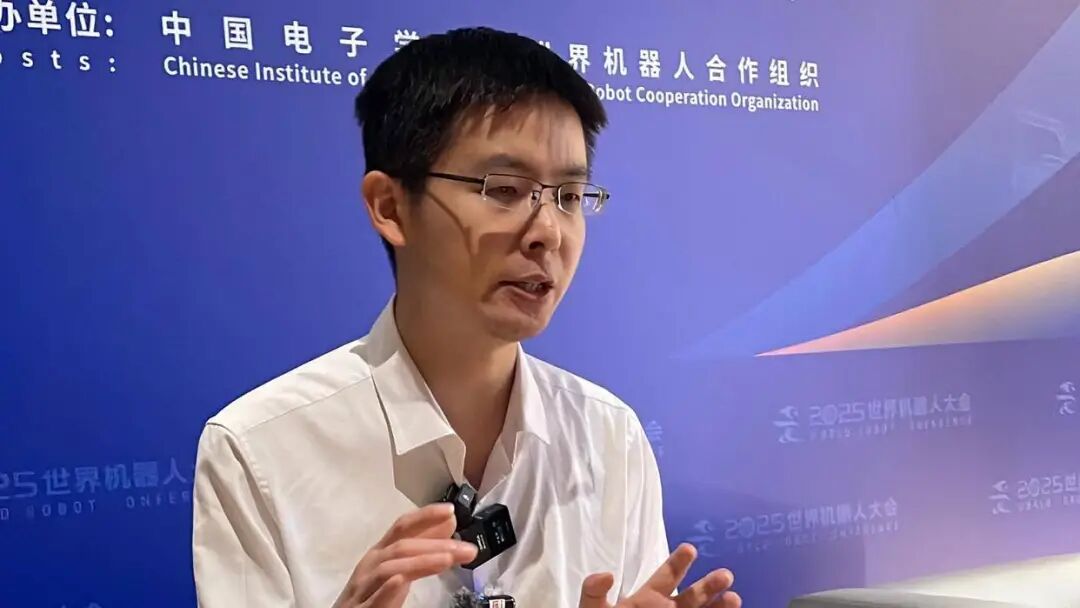
In other words, make the AI model built into the robot understand more physical scenarios.
To put it simply, it's about "testing".
Let the technical staff of the rental platform take the robots to various complex scenarios to train the model's ability.
The biggest risk of this approach is that one may become a casualty before seeing cash flow.
Opportunities are fleeting.
In the robot field, even the opportunity to be a casualty needs to be fought for.
For enterprises, strategic pre - positioning can reduce the intensity of competition, which requires the support of capital.
Capital at a high level values backing the right people more and only provides the possibility of high valuation to enterprises with a higher degree of certainty.
This has made robot marathons, robot boxing matches, and other skill - showing events extremely popular.
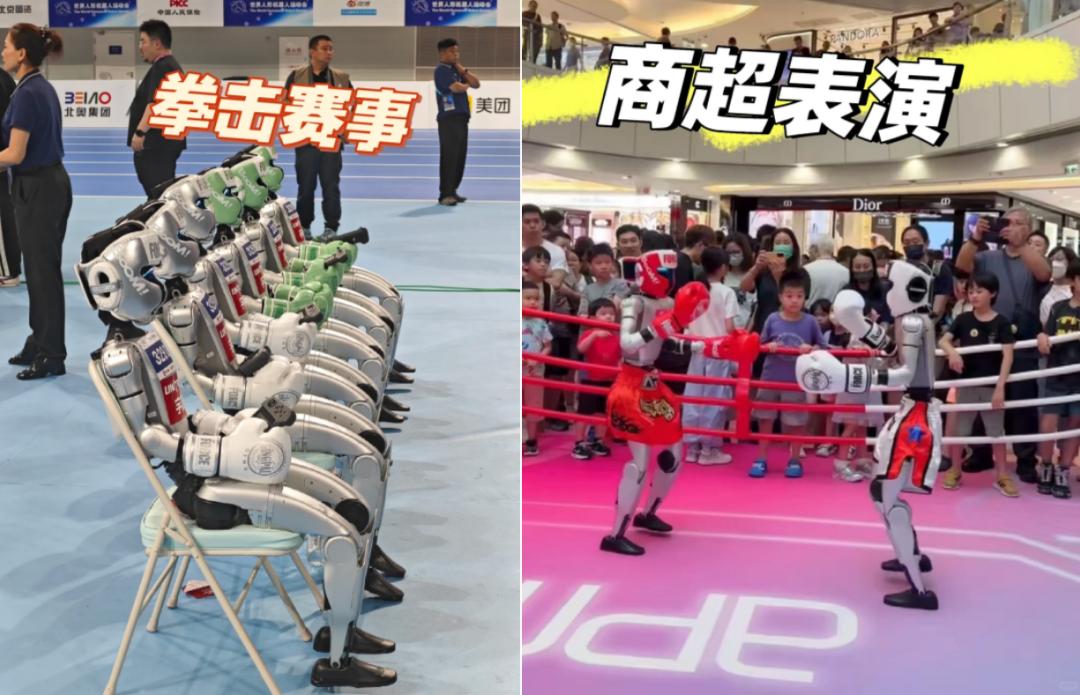
Some robot rental platforms also expand rapidly through a large amount of advertising investment, ignoring the return on investment (ROI).
Desire makes people blind.
The real "tipping point" in the robot industry is not ambition and speed.
Because the "bubble" in this industry has both the attribute of "ultra - high valuation" for short - term arbitrage and the characteristics of an "infrastructure - type bubble" with advanced investment in technology, production capacity, and ecosystem. It is difficult to clear and impossible to avoid.
In such a context, patience and adaptability are more important scarce resources.
This means that many people don't care who makes money from renting robots "today".
But everyone is looking forward to their enterprises surviving until the day when robots are as popular as "water, electricity, and gas" and generate stable cash flow.
03 The Problem - Solving Idea of "Chain Thinking"
The current embodied robot industry is quite similar to the AI industry. It has a long chain, and there is an insurmountable gap between technology R & D and real - world experience.
Even the sense of gap in the user experience of embodied robots is more difficult to handle than the hallucinations of AI.
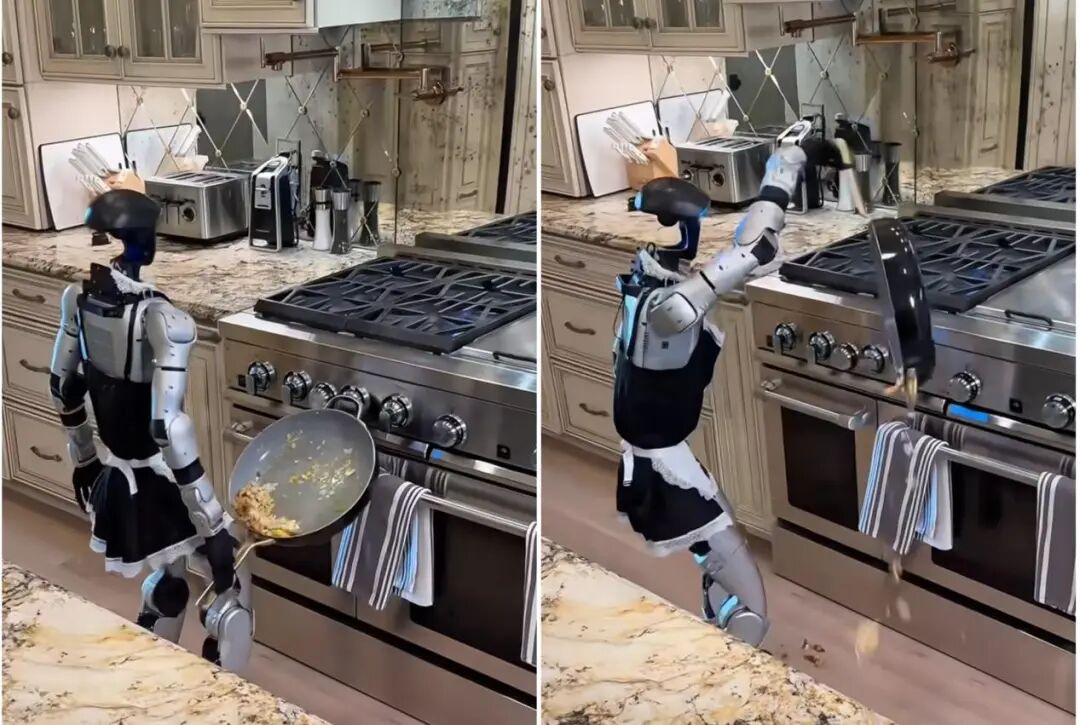
A "robot nanny" wasting food
This results in a common inversion of cost and price, making the cash flow of the entire "chain" insufficient and presenting a polarization of hot technology and scarce funds.
There are two relatively mature solutions in our country.
One is the "extreme cost" path led by Unitree Technology, aiming to continuously reduce the cost of robots through supply - chain integration and then lower the selling price, becoming the "shovel - seller" behind the "robot solution providers".
This is similar to the ideas of NVIDIA and TSMC. Although it seems like a strategy of small profits and high turnover and self - exploitation, it actually has a technical foundation and platform - type capabilities to serve the entire industry and can obtain quite high profits.
The other path is the "rental" model we are discussing today. It lengthens the industrial chain, collects data in real scenarios, and provides cash flow for the entire chain.
The most important value of this model is to provide two "compensation mechanisms" for the current industrial chain:
Compensate for the technological experience with manual services.
The actual performance of current embodied robots in the real world is quite different from that in the promotional videos.
This is because they don't have a "general - purpose operating system" and can't achieve true autonomous intelligence.
It's like the feature - phone era of mobile phones, where only a few functions were pre - installed, and it was difficult for users to even play a small game.
What if the "humanoid feature phone" is not useful?
Hire technical staff to provide in - person services like a nanny.
At the recent robot marathon, the people running alongside the robot contestants might be high - tech "nannies".
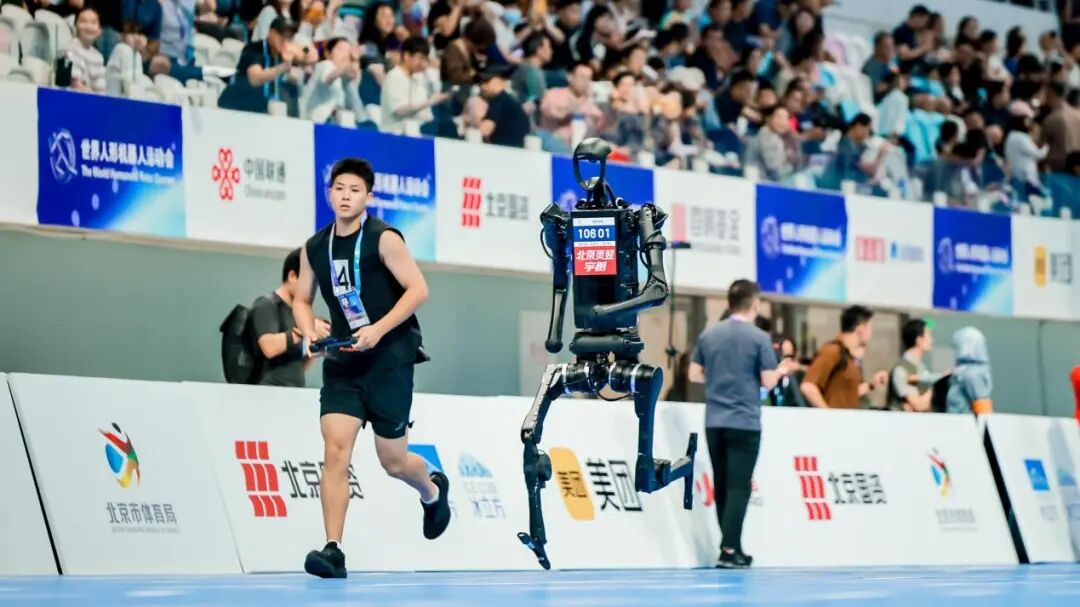
This model packages each robot rental into a "product + in - depth service" project, using human resources to make up for the robot's lack of intelligence and making the consumer experience closer to expectations.
Share costs and risks through middlemen.
Another pain point in the development of the robot industry lies in cost.
The manufacturing cost of a single robot can easily reach hundreds of thousands of yuan. Due to limited usage scenarios, consumers at the C - end are not willing to buy, and manufacturers have difficulty recovering their costs.
It's like a top student graduating from undergraduate with high scores but unable to find a job.