As the lobster craze fades, the current situation of Mac mini shrimp farmers: some have quit, while others have switched to the "Hermès"
Nowadays, the price increase of electronic products is no longer something new. The storage cost has skyrocketed all the way, causing products such as mobile phones, laptops, and game consoles that require storage components to succumb to the pressure and follow the price increase one after another. Take the Mac mini M4 for example. Currently, it is no longer available for order on the official Apple website. On major e - commerce platforms, this device no longer has the "divine price" of the 10 - billion subsidy under 3,000 yuan as it did in the past. Even the second - hand price has risen to around 3,500 yuan.
Of course, there is another very important reason for the short supply of the Mac mini M4 - the lobster craze. At the beginning of the year, the OpenClaw craze swept across, and "lobster farming" became a hot topic among users around the world. The Mac mini M4, which combines a series of advantages such as compact size, low power consumption, strong performance, and friendly system support, quickly became the favorite of lobster farmers.

(Image source: Apple)
Now, the lobster craze has subsided a lot. Do those who bought the Mac mini specifically for lobster farming still continue to use the lobsters they deployed? With such curiosity, we interviewed several users to understand the current real situation.
New media editor: Lobster abandoned, "Hermes" is the new favorite
Xiaochen, a college classmate, is now a self - media editor, mainly responsible for the automotive field. When the lobster craze came, he asked me with a mindset of not wanting to fall behind if the Mac mini was the most suitable for deploying lobsters. But at that time, the price of the Mac mini M4 had already increased. Xiaochen finally spent more than 2,000 yuan to buy a second - hand Mac mini M2.
After deploying the lobsters, Xiaochen would occasionally complain. OpenClaw often dropped the connection. Sometimes when he was on a business trip in another place and found that the linked Feishu robot didn't respond, he knew that the lobsters in the office had crashed. In such cases, Xiaochen would ask his colleagues to help restart it, which was a rather funny situation.
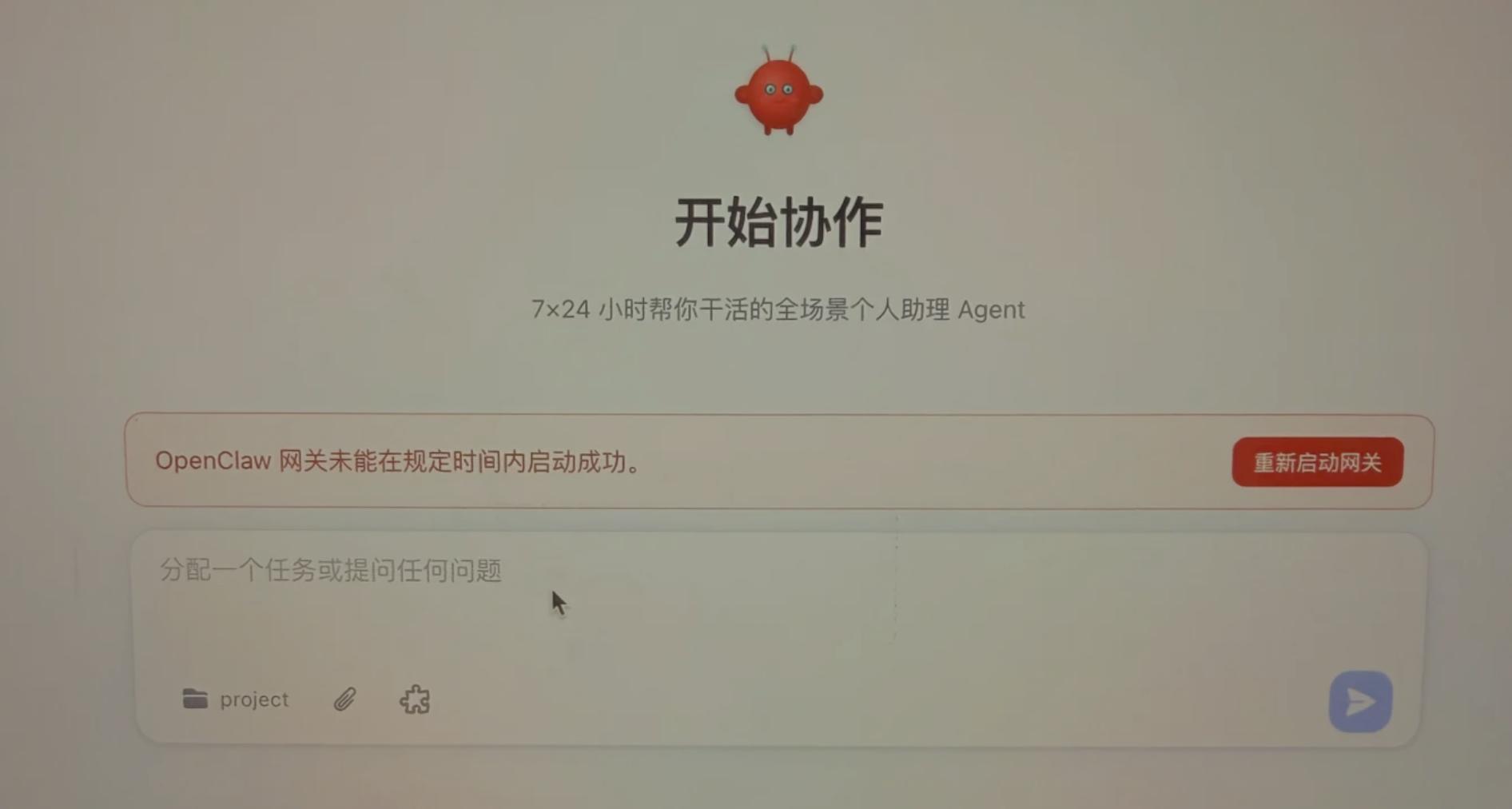
(Image source: Lei Technology)
Now, Xiaochen said that he has given up on lobsters and found a substitute, "Hermes". Specifically, it is actually the recently popular Hermes Agent. "Hermes" is an open - source intelligent agent that features automatic evolution ability. For example, after you complete a relatively complex task through it, "Hermes" will extract and save the reusable skills. The more you use it, the smarter it becomes.
Xiaochen believes that "Hermes" is lighter and more convenient to use. He said that OpenClaw is like an all - around platform that can run many intelligent agents, and you need to adjust it yourself to make it work well; while "Hermes" is a more focused intelligent agent that performs better in small scenarios.
Currently, the main scenario where he uses "Hermes" is to use it as a smart assistant and connect it to Feishu. Usually, Xiaochen throws the documents he writes to it for recording, or also throws the materials he sees to it, which is equivalent to using it as a smart collection folder. If these materials are needed in subsequent tasks, the AI will call them by itself.
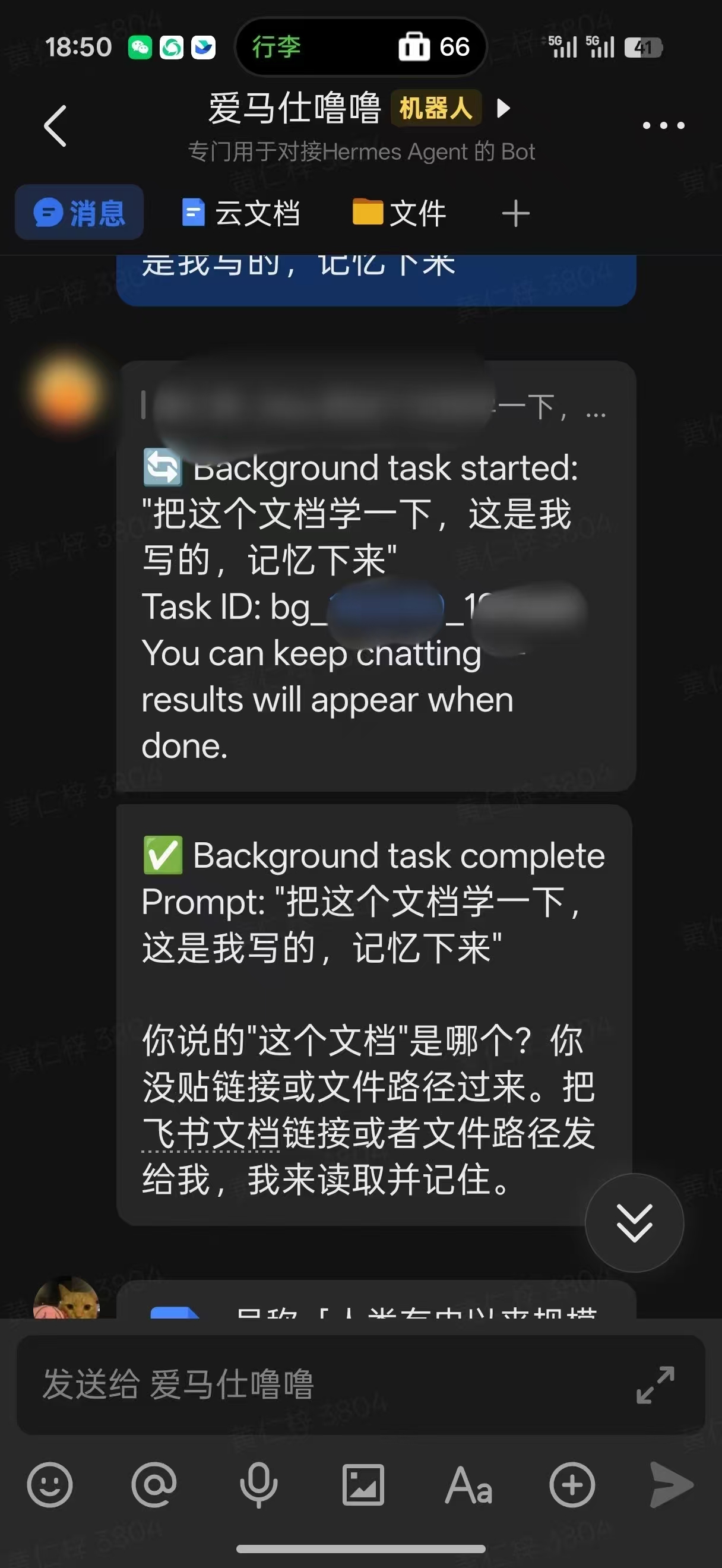
(Image source: Lei Technology)
In addition, Xiaochen also asks it to make morning reports and post on Weibo. His daily workflow is simplified, and the efficiency is higher.
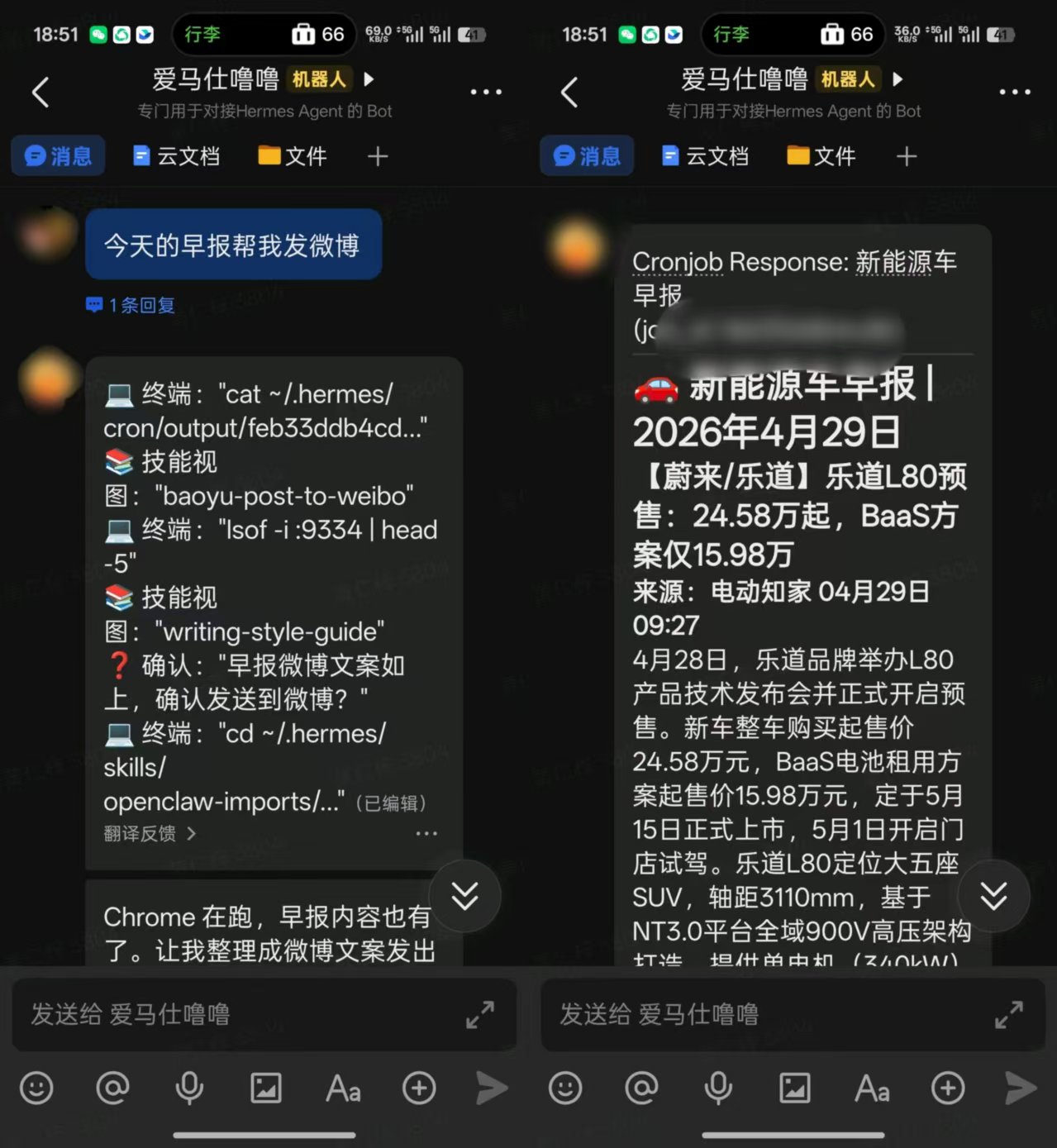
(Image source: Lei Technology)
Financial worker: It's unrealistic to use lobsters for stock trading. It seems the job is safe
Xiaoyu graduated from the finance major of a finance and economics college and has been working in a securities company. In the work process, she often conducts research on industries and enterprises and also makes some investment decisions. She said with a smile that people always say that AI will replace this and that. At that time, she heard that lobsters could even trade stocks. Wouldn't she be out of a job? With such a sense of crisis, Xiaoyu bought a Mac mini and decided to start from scratch to see if lobsters had such power.
Xiaoyu claims to be a digital novice and has hardly used Mac computers before. Since many software needed for work are specially developed for Windows, few people in the company use Mac - type devices. As for setting up lobsters, Xiaoyu was completely at a loss. After several days of struggling, Xiaoyu asked a colleague from the company's IT department to help her get it done.
Soon, Xiaoyu found that using lobsters for stock trading was not very feasible. She said that securities investment mainly involves fundamental analysis and technical analysis. Generally, for retail investors trading stocks, the fundamental information of companies they obtain usually comes from data such as corporate financial reports. When using lobsters for stock trading, the information that AI can obtain is actually not much different from that of ordinary retail investors, but the efficiency of collection and analysis is higher.
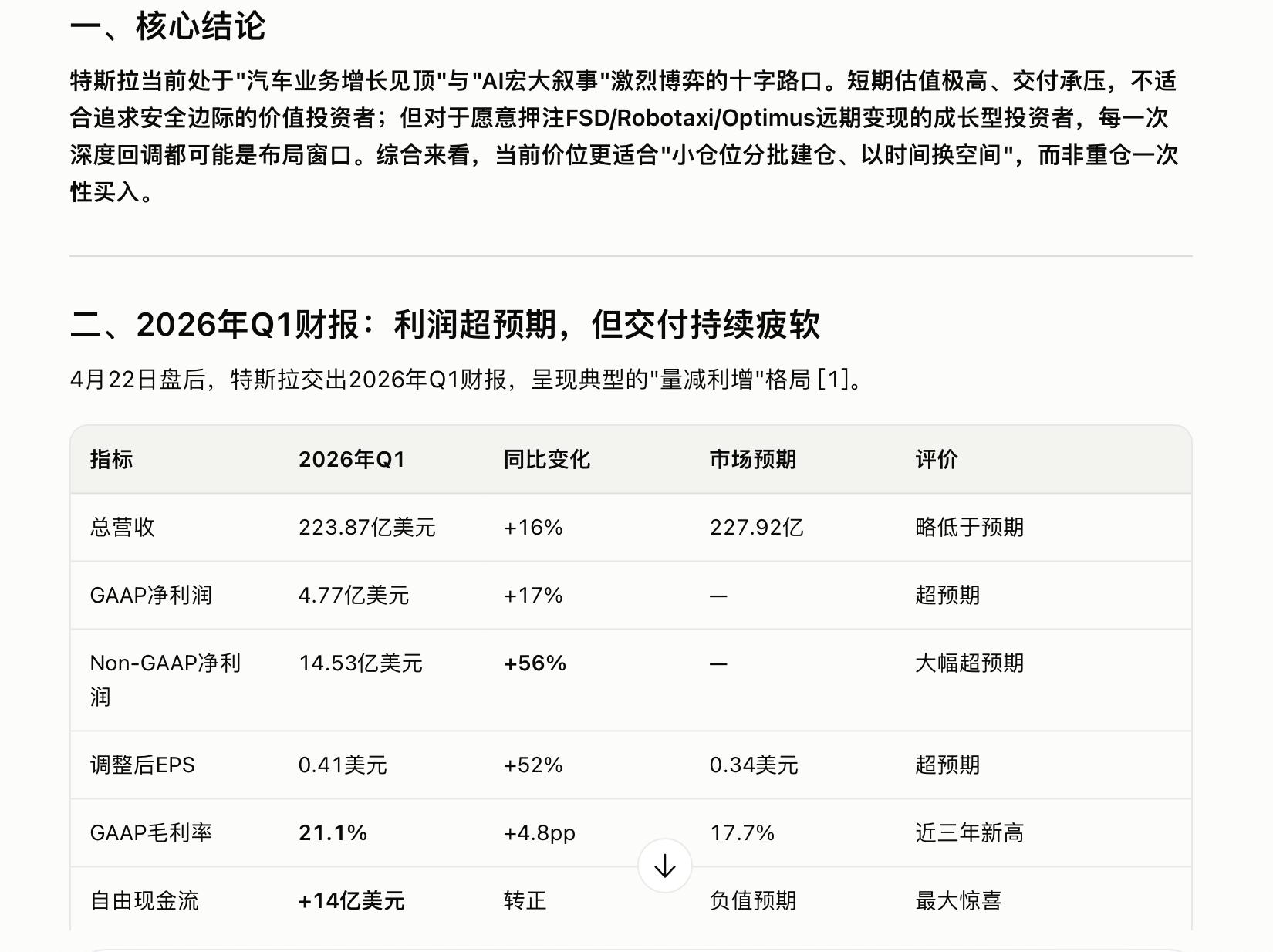
(Image source: Lei Technology)
Professional institutions such as securities companies will spend a lot of manpower and material resources on in - depth research and directly pay for some industry data, which ordinary people cannot directly access. At the same time, AI cannot obtain this non - public internal information. Therefore, neither OpenClaw nor domestic lobsters are very suitable for stock trading.
Xiaoyu also suggested that even for retail investors trading stocks, they should not rely too much on lobsters. They can let it handle research reports, information collection and organization, but it is best not to set it to operate automatically according to technical indicators. After all, stock trading is a high - risk investment. Once the AI makes a mistake, it may cause huge economic losses that are difficult to recover. Major decisions are still not suitable to be handed over to AI.
E - commerce copywriter: Online large models are more useful, and lobsters cost more
Xiaoliu is an e - commerce copywriter and a deep user of large models. The products she uses daily include Gemini, ChatGPT, Claude, DeepSeek, etc. She has even subscribed to memberships for several of them. Xiaoliu bought a base - model Mac mini M2 (8 + 256GB) a long time ago and also tried the lobster craze.
But after using it for a while, she said that online large models were more suitable for her. The scenarios that lobsters can provide do not match her needs very well.
Xiaoliu's daily work is mainly to write product description page copy. Usually, she uses large models for two main purposes: one is to extract and summarize product information and popularize technical concepts to improve work efficiency. She thinks that current mainstream large models do well in this aspect; the other is to optimize copywriting, and she is quite satisfied with Claude, as it has better results.
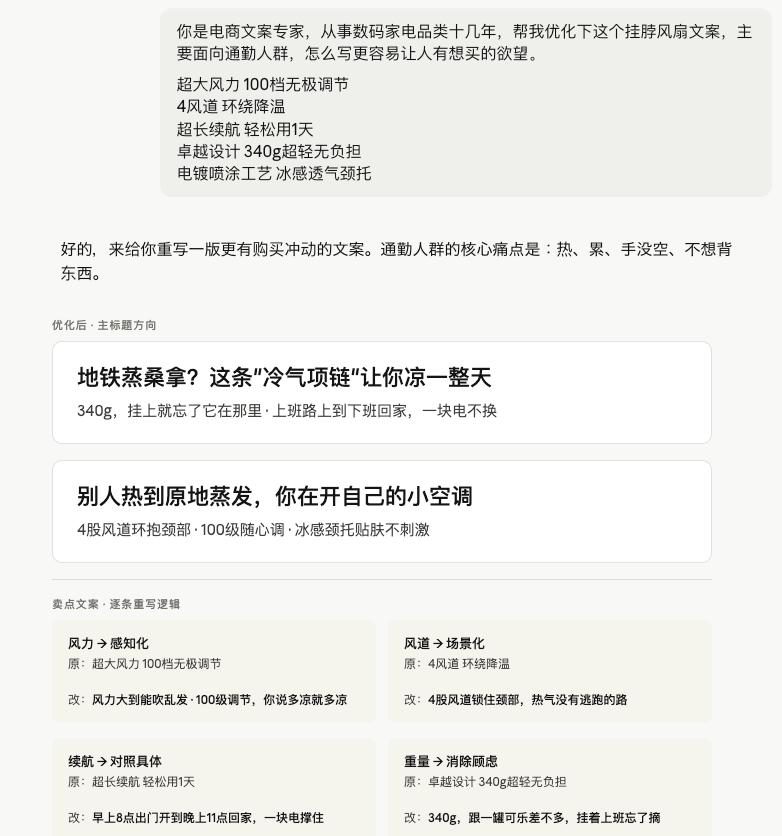
(Image source: Lei Technology)
As for lobsters, its core brain is also a large model, but it has more local permissions than large models, including reading, creating, and modifying local files, and retrieving information online. In theory, Xiaoliu can let lobsters do more work for her. But when actually using it, compared with the convenience brought by lobsters, she is more worried about uncontrollable accidents, such as accidental deletion of files and listing of un - reviewed product copy.
Xiaoliu believes that she is not a programmer and doesn't understand code. She doesn't have full confidence in controlling lobsters. So, she finally returned to using online large - model products. Although these online AIs are confined to a dialog box, it also provides boundaries and a sense of security, and everything is controllable, which is what she wants.
College student: Mac mini sold, out of the game
Xiaolin is a senior student about to graduate. The original intention of his buying a Mac mini was to be "brainwashed" by the online lobster craze. Out of curiosity, he bought a Mac mini. Since students can get an educational discount when buying Apple computers and can also stack national subsidies, Xiaolin bought the Mac mini M4 at a quite reasonable price.

(Image source: Tmall)
After getting the computer, Xiaolin started deploying lobsters with great enthusiasm. But soon, after the novelty wore off, he found an undeniable problem with the lobsters on the Mac mini - cost. In his opinion, as a mini - host, the Mac mini M4 does have good performance. But when it comes to deploying local models, the computing power is still not enough, and the memory is a major bottleneck.
Xiaolin said that if you want to deploy a model like gemma - 4 - 31b, the computer memory should be at least 32GB. To run smoothly, the memory should be even larger. And if you buy a Mac mini with 32GB or even 64GB of memory, the cost will increase several times.
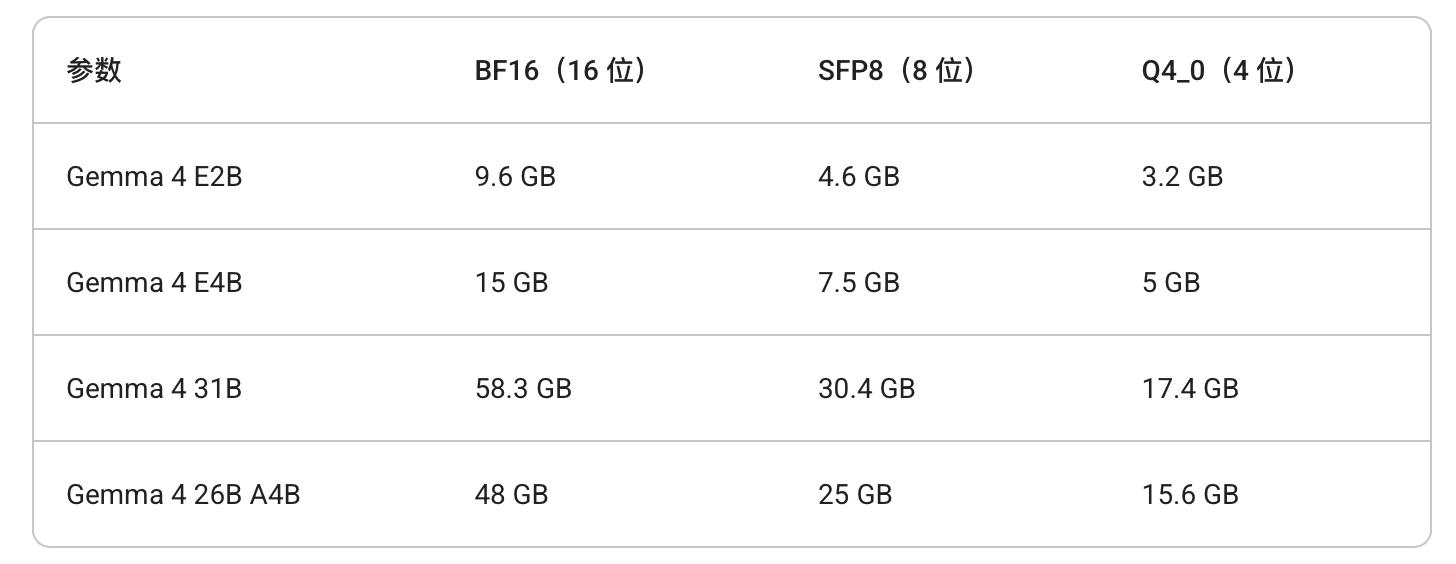
(Image source: Google)
Therefore, when deploying lobsters on a computer, most people will eventually choose the online solution, that is, buying tokens for cloud - based AI. After careful consideration, Xiaolin sold the Mac mini he had on the second - hand market while the price was rising.
Now, he has transferred the lobsters to his gaming laptop and abandoned the original OpenClaw, using domestic lobster products. Xiaolin believes that the Claw products of domestic big manufacturers have safety designs, are more user - friendly to Chinese users, and are easier to operate. They are more worry - free to use in daily life than OpenClaw.
Currently, most of the scenarios where Xiaolin uses domestic lobsters are related to his studies. For example, he used lobsters to generate a database for his graduation thesis on the local end, and directly let the AI retrieve relevant literature. He directly feeds the materials he collects to the AI, which will summarize them and save them in the form of a document locally. When writing his thesis, he can conveniently call these materials without having to search for them laboriously.
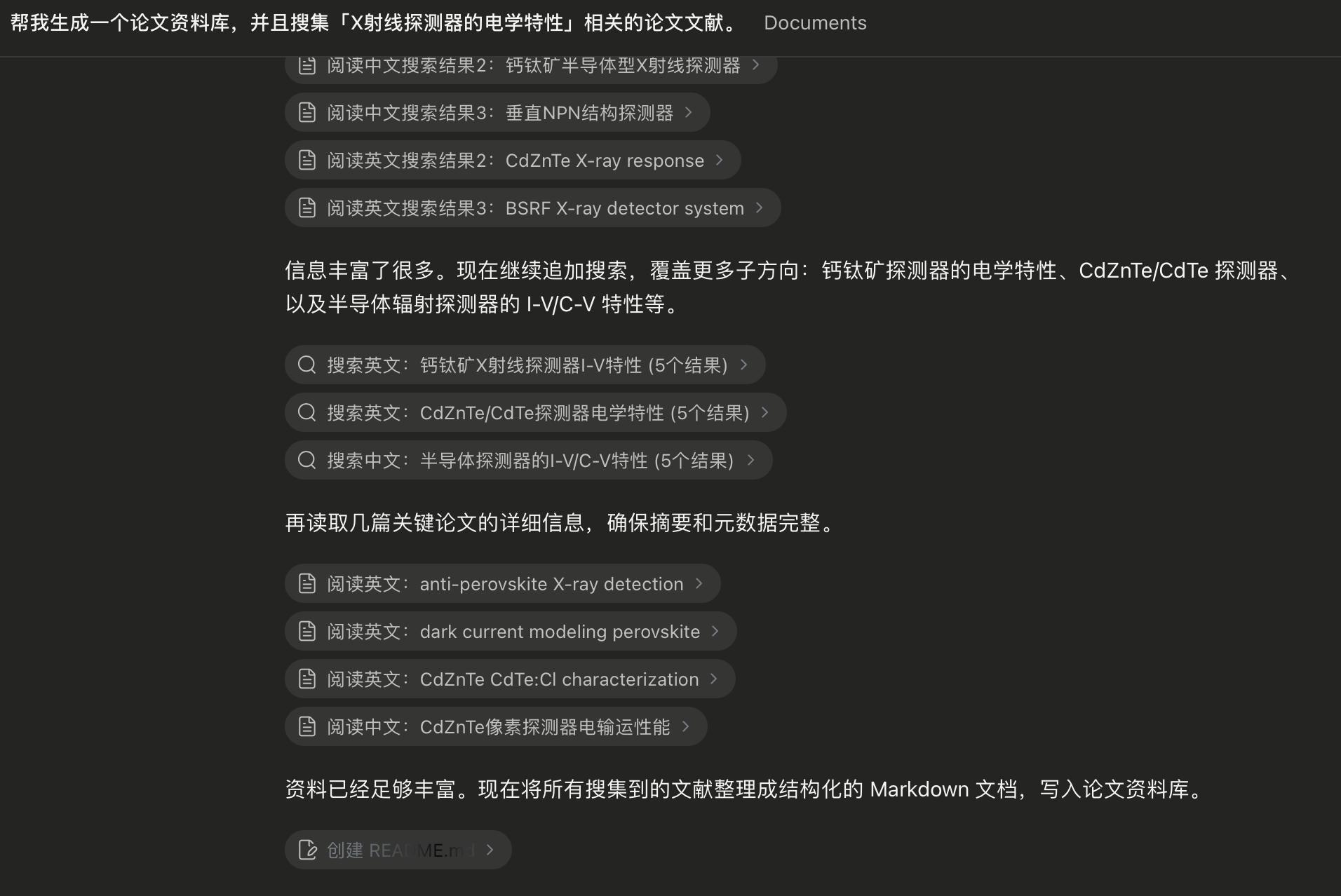
(Image source: Lei Technology)
Summary: OpenClaw and Mac mini are no longer the only solutions
There is no doubt that the lobster - farming craze was brought about by OpenClaw. OpenClaw itself has a very high degree of playability and imagination space. As a decentralized and highly - flexible AI tool, it is naturally favored by countless geek players.
However, from the current situation, high flexibility is a double - edged sword. While bringing convenience, it also brings risks, which means it is not very suitable for ordinary people. Judging from the feedback of the several users interviewed above, when the scenarios of using OpenClaw involve work content or property, they are less inclined to use it.
In contrast, the lobster - farming tools launched by Internet giants such as Tencent, Alibaba, and ByteDance are relatively more suitable for domestic users in all aspects. Firstly, they are no longer decentralized tools. Backed by Internet giants, their safety designs are more reassuring. Secondly, their interface designs and interaction logics are also more user - friendly, reducing the difficulty of use for users. In addition, domestic manufacturers also provide more cost - effective paid tokens while providing tools.

(Image source: Alibaba)
For ordinary people, there are many obstacles in purchasing and using the computing power of overseas large models. If obtained through third - party channels, they have to bear additional risks. In fact, the development speed of domestic large models in recent years has been very rapid, which can fully meet the needs of most people.
In addition, the Mac mini is no longer the only solution for lobster - farming tools. As mentioned before, the Mac mini does have many advantages in lobster - farming. However, compared with Windows, the applicable scenarios of