Latest scoop on Apple's AI glasses: Dual cameras + gesture control. Is it going to compete with Meta?
On April 29, technology media MacRumors reported, citing internal sources, that Apple has officially shelved the development of the new Vision Pro. The original core R & D team members have been fully diverted to other departments, marking Apple's strategic contraction in the XR field. Meanwhile, Apple is accelerating the R & D process of its first AI smart glasses, establishing them as an important future product line. With Tim Cook officially handing over the reins to Jeff Williams, the adjustment of Apple's head - mounted device development route is imminent.
As Apple's first MR headset product, the Vision Pro has been controversial since its debut: the sky - high price of $3499 and the bulky body weighing over 500 grams make it difficult to meet users' needs for long - term wearing. Even for high - spending groups, it is not a mature product. In October last year, Apple upgraded it by using the M5 chip and adding a more comfortable Dual Knit Band headband, but it still failed to make up for the design flaws. Coupled with the lack of ecological content, the market response of the Vision Pro still fell short of expectations.
As of now, the total sales volume of the Vision Pro is only about 600,000 units, a figure that is almost negligible in Apple's huge product matrix. More fatally, its return rate far exceeds that of all Apple's hardware products in recent years. Ordinary consumers not only can't afford this product but also have to consider its low usage rate. The market has negated Apple's development route with real choices.
Lightweight and Practical First
Different from the positioning of the Vision Pro, Apple's AI smart glasses follow a "lightweight and practical" route. From the hardware configuration to the design concept, they form a sharp contrast with the former, indicating that Apple has a new thinking about the wearable device market.
According to MacRumors, this new device is not a traditional AR glasses. Instead, it focuses on functions such as shooting, voice assistant, and gesture control. It is expected to be released later in 2026 and officially enter the market in 2027. Its direct competitor is Meta Ray - Bans, the current leader in the smart glasses market.
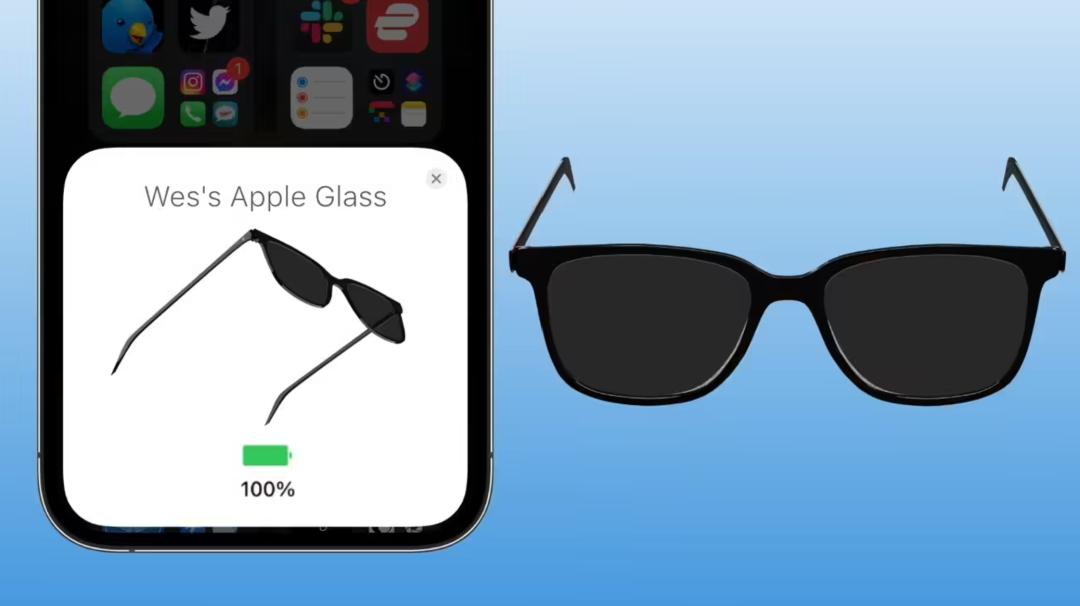
In terms of hardware, Apple's AI smart glasses are optimized around the core needs of lightweight smart devices and will be equipped with two cameras. One high - resolution lens is dedicated to taking photos and videos and supports one - click sharing, accurately meeting users' daily recording and sharing needs. The other low - resolution wide - angle lens focuses on reading hand movements and provides accurate environmental visual information for Siri, greatly improving the fluency and accuracy of interaction response.
Overall, Apple's AI smart glasses actively abandon power - consuming components such as displays, LiDAR, and 3D cameras. This "subtraction" design aims to make the device truly close to the experience of using ordinary glasses and completely get rid of the "bulky and useless" label of the Vision Pro.
In terms of material selection, Apple is fully testing cellulose acetate, a plant - based material that is lighter and more elastic than ordinary plastics. At the same time, Apple is also testing various frame styles, including classic large frames, slender frames, and retro round frames, aiming to balance practicality and aesthetics and finally control the device weight within 50 grams.
In the design of the camera module, the AI glasses will adopt a vertical oval layout and be equipped with a prominent recording indicator light, which not only ensures practicality but also effectively protects users' privacy, continuing Apple's consistent product concept.
To address the previously criticized software ecosystem issue, this AI smart glasses will be equipped with the newly upgraded next - generation Siri, whose core capabilities are expected to be released simultaneously with iOS 27. Users can easily take photos, record videos, make calls, etc. through voice, and can also ask Siri for information about the surrounding environment at any time, realizing contactless real - time interaction and greatly improving the convenience of use.
Another core highlight is the gesture operation function. Apple has accumulated a mature gesture input solution on the Vision Pro and can directly transfer it to the AI glasses product without re - development. For lightweight devices without a screen, gesture interaction is more natural and convenient than touch operation. It is worth mentioning that the rumored new - generation AirPods Pro may also add a low - resolution camera and gesture support, which means that Apple is fully building a unified lightweight interaction ecosystem.
In addition, analyst Ming - Chi Kuo of TF Securities once revealed that Apple is fully researching and developing "Metalens" technology, which will be widely applied in this AI smart glasses. Compared with traditional plastic lenses, Metalens not only has a lower cost but also a thinner thickness. In the future, it will be gradually popularized in iPhones and other Apple devices, further improving the product ecosystem.
Competing with Meta?
Currently, Meta Ray - Bans has already occupied the dominant position in the smart glasses market with its first - mover advantage. Through two generations of products, it has firmly verified a core logic: what users really need is never a "computer on the head" but a pair of lightweight, practical smart glasses that can seamlessly integrate into daily life.
That's why Meta can firmly hold a monopoly share of 85.2% in the global AI glasses market, forming an almost "dominant" market pattern. In contrast, after the failure of the Vision Pro, Apple's R & D of AI smart glasses started two generations behind Meta's products, facing a significant time gap.
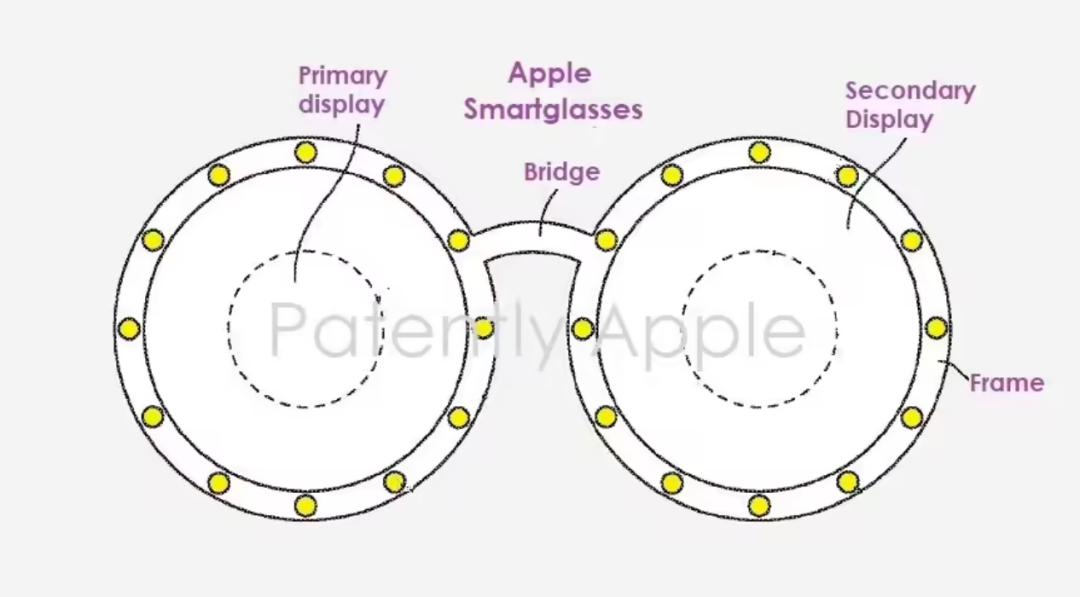
However, Apple's AI smart glasses also have sufficient technical reserves. As early as 2020, Apple was approved for core patents related to AI glasses, covering the design of future smart glasses with a main display, a secondary display, and an LED indication system. The LED indication system can realize various practical functions such as key positioning, health reminders, and vehicle guidance. Facial recognition and posture adaptation functions have also been included in the long - term plan, providing strong support for the product's launch.
Conclusion
Currently, the global AI glasses market is in a period of explosive growth. The latest forecast from Omdia shows that the global AI glasses market size will exceed 10 million units in 2026, and the shipment volume is expected to soar to 35 million units in 2030. Apple's strong entry will undoubtedly break the current monopoly pattern of Meta and also engage in a fierce market competition with Chinese technology manufacturers such as Huawei and Xiaomi, promoting the entire industry to enter a stage of high - quality development.
For Apple, this AI smart glasses is not only a key product to make up for the failure of the Vision Pro and regain market confidence but also a core strategic layout to reverse the competitive disadvantage in the wearable device field and regain the right to speak in the XR track, which will profoundly affect Apple's future development direction.
This article is from the WeChat public account "Meikewang", author: Meikewang. Republished by 36Kr with permission.