New regulations set the tone: Bid farewell to ineffective involution of L3, and L4 is the ultimate goal of autonomous driving commercialization.
[Introduction] In late April 2026, the autonomous driving industry is approaching a double inflection point. On one hand, the dispute between L3 and L4 routes has sparked continuous heated discussions at the Beijing Auto Show. Huawei and Geely insist that L3 is a necessary stage in the industry, while companies like XPeng and Pony.ai firmly advocate skipping L3 and going straight to L4. On the other hand, the Ministry of Public Security officially released the industry standard "Safety Passing Specifications for Road Testing and Demonstration Applications of Intelligent Connected Vehicles" (GA/T 2388 - 2026), which will be officially implemented on July 1st, delineating the national unified passing rules, compliance standards, and liability boundaries for L3 and higher - level autonomous driving.
This debate has gone beyond a simple choice of technical routes. In essence, it is an ultimate game for the industry regarding commercial feasibility, safety logic, and regulatory adaptability. L3 has an insoluble underlying paradox and is just a transitional product of the industry. L4 autonomous driving, which has completed the triple iteration of technology, data, and models, has emerged from the pilot and trial - error stage and has become the only large - scale and sustainable commercial end - state form of autonomous driving.
L3 Has Theoretical Solutions and Compliance Difficulties, Doomed to Be an "Industrial Transitional Maze"
The core definition of L3 - level autonomous driving is that the system can independently complete all dynamic driving tasks, but the driver needs to be on standby at all times, receive the system's takeover request, and quickly intervene to control the vehicle. Although it seems to be a perfect transitional solution between L2 assisted driving and L4 fully autonomous driving, it has exposed fatal flaws in theoretical research, legal definition, and practical implementation.
Recently, arXiv published a paper titled "The L3 Impossibility Theorem: A Formal Analysis of Human - Automation Handover", which proved the theoretical limitations of L3 from the perspective of formal modeling of human - machine interaction. In complex and dynamic road scenarios, humans cannot complete stable and reliable takeover operations in a very short time. The "human - machine co - driving and takeover at any time" model has unavoidable safety loopholes, which is also the core reason for the high accident rate of L3.
In terms of law and compliance, L3 is in a dilemma of blurred responsibilities. The Equipment Industry Development Center of the Ministry of Industry and Information Technology clearly stated that the core difference between L3 and L2 is that the liability subject shifts from humans to the system, but the division of responsibilities at the moment of takeover has always been in a gray area. In the domestic L3 pilot scenarios, the liability risk exposure of automobile enterprises is too large, and the auto insurance pricing system is imperfect, resulting in low willingness of enterprises to implement and slow commercial progress.
The new regulations to be implemented by the Ministry of Public Security in July will further magnify the embarrassing situation of L3. The new regulations for the first time quantify the full - dimensional driving standards of intelligent driving vehicles, such as acceleration and deceleration, following distance, light use, and emergency handling, and clarify the judgment rules and accountability mechanisms for violations and faults of intelligent driving vehicles. For L3 models that require human - machine collaboration, they need to adapt to strict machine compliance standards and rely on unstable human takeover operations. The double fault - tolerance rate is extremely low, the R & D cost and compliance cost are doubled, but the improvement of user experience and commercial value is negligible.
In short, L3 is not a stepping - stone for the advancement of autonomous driving, but a transitional solution with technological redundancy, blurred responsibilities, difficult compliance, and weak profitability, deeply trapped in an industrial maze from which it cannot break out.
L4 Is Not a Leap - Frog Adventure, but an Industrial Return under Mature Technology
Compared with the inherent defects of L3, the core advantages of L4 autonomous driving are straightforward: within the designed operating domain (ODD), the system independently completes all driving tasks, without the intervention of human drivers and without human - machine takeover. It completely gets rid of the technical burden, legal disputes, and safety hazards of human - machine handover.
Since 2026, the iteration of physical AI, the closed - loop of massive scenario data, and the implementation of end - to - end large models, combined with the support of the national unified regulatory new regulations, have enabled L4 to completely bid farewell to the "concept pilot" and usher in the singularity of large - scale implementation. The strategic consensus of leading companies in the industry is becoming clearer: skipping L3 and going straight to L4 is not a radical adventure, but the optimal solution following industrial laws.
1. Technical Dimension: Physical AI Reconstructs the Perception Logic, and the Compliance Ability Fully Meets the Standards
Traditional autonomous driving relies on modular rule - based algorithms, which can only recognize known scenarios and cannot understand the complex physical world logic. This is also the core reason for the previous faults of unmanned vehicles blocking the road and improper emergency handling. The physical world large model that emerged in 2026 has completely reconstructed the technical foundation of L4.
The latest technical solutions announced by companies such as Momenta and DeepRoute.ai at the 2026 Beijing Auto Show have achieved an upgrade from "image recognition" to "physical cognition", which can independently judge the inertia of objects, spatial relationships, and scene causality, and predict long - tail sudden scenarios such as a football rolling onto the road and a crowd crossing the road.
More importantly, after the implementation of the new traffic regulations of the Ministry of Public Security, the leading L4 solutions have completed the underlying adaptation, writing six major compliance red lines such as turn signal delay, acceleration and deceleration thresholds, avoidance priority, and emergency parking on the side of the road into the underlying logic of the algorithm, completely solving the industry chaos of "wild driving and emergency incapability" of intelligent driving vehicles, and achieving a two - way match between technical capabilities and official compliance standards.
2. Data Dimension: Pure Machine Decision - Making Closed - Loop to Build a High - Quality Data Moat
The upper limit of the ability of autonomous driving is essentially determined by high - quality scenario data. In the L3 mode, the vehicle is mainly driven by humans with system - assisted monitoring. The collected data is all human - machine hybrid driving data, which cannot truly reflect the independent decision - making ability of the system. The data value is extremely low and difficult to support the iteration of high - level intelligent driving.
In L4, the machine makes independent decisions throughout the process. Every response to road conditions, braking and avoidance, and route planning is a real and effective training sample, which can form a complete data flywheel of "road testing - iteration - implementation". Leading players continuously accumulate massive data on urban commuting, highway driving, and complex urban mixed traffic, and at the same time complete millions of daily scenario verifications through the simulation platform to make up for the shortage of long - tail scenario data.
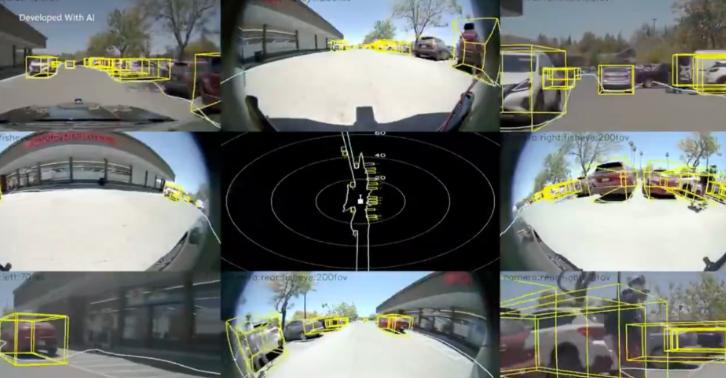
As the industry consensus goes: L3 accumulates invalid human - machine handover data, and only the pure machine decision - making data of L4 can support the continuous evolution of autonomous driving.
3. Model Dimension: The Implementation of the End - to - End Architecture Ends the Modular Technological Redundancy
The traditional hierarchical modular architecture of autonomous driving perception, prediction, planning, and control has serious information loss problems, with poor adaptability between modules and high algorithm redundancy. The CVPR 2026 paper UniL4, published on April 25, 2026, introduced the first unified end - to - end framework for urban L4 driving, integrating all - link functions and achieving a non - manual intervention mileage ratio of 92% in multi - city road tests.
The core value of the end - to - end model is to replace tens of thousands of lines of manual rule codes with a single AI model, simplify the technical architecture, reduce the probability of faults, and improve the decision - making speed. Tesla FSD V12 and XPeng's latest intelligent driving system both adopt similar ideas, which is also the core technical confidence for many automobile enterprises to dare to abandon L3 and focus on L4.
The Full - Scale Implementation of L4 Commercialization Blossoms in Multiple Scenarios
The biggest doubt about L4 in the market is that "the technology is mature but commercialization is far away". However, with the triple support of cost reduction, new regulations compliance, and the implementation of benchmark cases in 2026, L4 has formed four mature implementation scenarios of low - speed buses, manned taxis, urban logistics, and commercial vehicles in industrial parks, bid farewell to the pilot gimmick, and achieved sustainable commercial profitability.
1. The Overseas Implementation of Autonomous Buses Becomes a Benchmark for Public Transportation
Autonomous buses are the earliest public transportation scenarios for L4 to achieve large - scale and regular operation. The threshold is moderate, the social value is high, and the replicability is extremely strong. MoguAuto is the player with the most prominent implementation results in the industry at present, creating both domestic and overseas benchmark cases.
In the domestic scenario, MoguAuto's pre - installed mass - produced L4 - level autonomous bus MOGOBUS has been implemented in more than 20 cities across the country, with a cumulative safe driving distance of more than 5 million kilometers. In March 2026, it was implemented on the "Qin'ao Medical Line" in Hengqin, creating the first cross - border medical autonomous micro - circulation bus line in China, accurately solving the problems of short - distance commuting and medical travel in the area.
In the overseas scenario, it has achieved a breakthrough in domestic intelligent driving. In October 2025, MoguAuto jointly bid for Singapore's first official L4 - level autonomous bus project with BYD, which is also the first time that Chinese autonomous buses have entered the backbone public transportation network of a developed country. In April 2026, the vehicles were officially delivered to Singapore, adapting to the local left - hand driving and rainy and high - density road conditions, and will be put into regular operation on Bus Route 400 in Marina Bay and Bus Route 191 in one - north in the second half of the year, alleviating the shortage of local bus drivers and verifying the global commercialization ability of L4 buses.
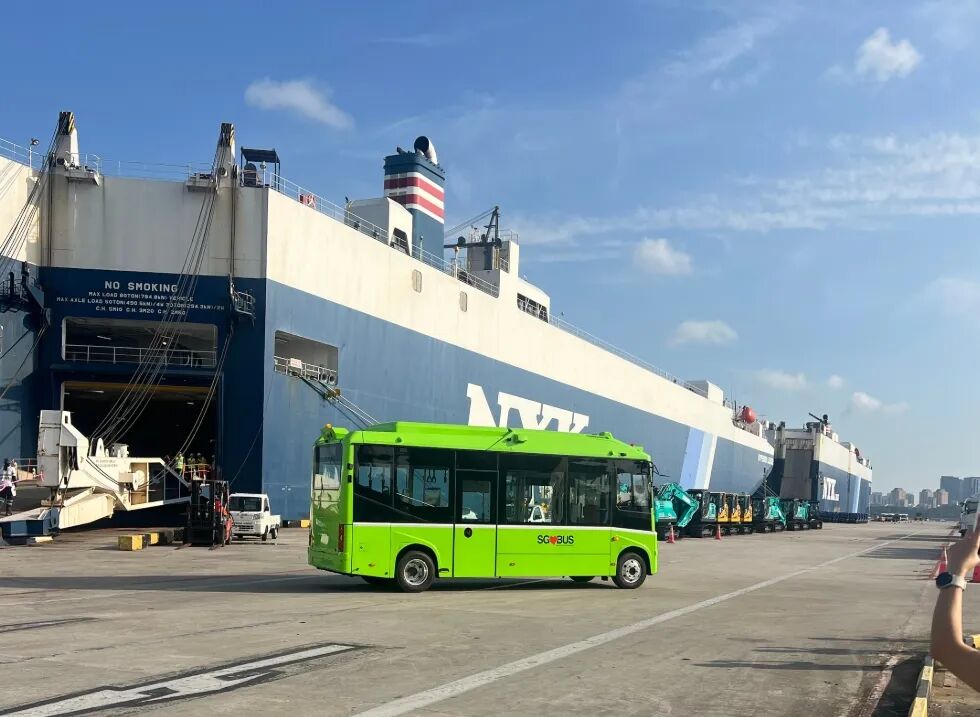
Compared with other scenarios, L4 autonomous buses have both public welfare attributes and commercial value, adapting to multiple scenarios such as urban micro - circulation, scenic area commuting, and cross - border travel. It is also the L4 scenario whose compliance and stability are first verified by the official after the implementation of the new regulations.
2. The Cost of Robotaxi Hits the Bottom, Entering the Profit Cycle
As the core scenario of urban travel, the commercial inflection point of Robotaxi has arrived. Pony.ai publicly predicted that the cost of a fully unmanned Robotaxi will drop below 230,000 yuan in 2027, on par with the price of ordinary family cars.
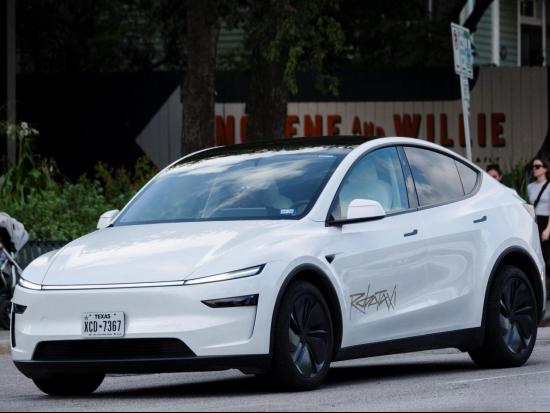
From a business model perspective, after the cost reduction, Robotaxi can recover the cost in 3 - 4 years and achieve continuous and stable profitability within the 8 - 10 - year service life of the vehicle. At the same time, NVIDIA officially announced that it will implement large - scale unmanned travel services at the 2028 Los Angeles Olympics, covering dozens of cities, marking the official large - scale commercialization of L4 manned travel.
3. Urban Last - Mile Logistics: A Cash - Cow Scenario with Low Risk and Fast Implementation
Unmanned delivery is the leading track for L4 commercialization. Compared with manned scenarios, the legal risk of cargo logistics is lower and the scenarios are simpler. The L4 - level unmanned delivery vehicles of companies such as JD.com and Meituan have achieved full - link delivery from warehouses to stores and from stores to homes on urban roads, adapting to multiple scenarios such as communities, industrial parks, and business districts, continuously reducing the cost of manual delivery, and have already achieved regional large - scale profitability. Neolix, as a leading domestic player focusing on L4 - level urban last - mile logistics, completed large - scale implementation in multiple cities in 2026, running through a standardized and replicable unmanned logistics business model and becoming a benchmark for L4 last - mile logistics commercialization.
4. Commercial Vehicles in Closed Scenarios: Stable Implementation in Mines/ Ports/ Industrial Parks
Closed and semi - closed scenarios such as airports, ports, mines, and industrial parks have simple traffic and pedestrian flows, making them natural test beds and profitable scenarios for L4 autonomous driving.
The new traffic regulations for autonomous driving officially implemented in July 2026 have completely ended the wild growth of the industry and clearly distinguished the winners and losers in the industry: the inherent paradox of L3 human - machine co - driving cannot be solved, with high compliance costs and weak commercial value, and it is doomed to be just a short - term transitional product.
L4 autonomous driving, relying on the triple technical advantages of physical AI technology iteration, massive high - quality data closed - loop, and end - to - end model reconstruction, combined with the national unified regulatory compliance system, covers all scenarios of buses, taxis, logistics, and commercial operations. Benchmark cases represented by the overseas implementation of MoguAuto's buses and the cost reduction of Pony.ai prove that L4 is no longer a distant future concept, but an industrial end - state that can be implemented, profitable, and replicable at present.
The competition in the autonomous driving industry has never been an involution of "step - by - step progress", but a breakthrough in the "right direction". Abandoning the ineffective maze of L3 and rushing to the end - state track of L4 is the only optimal solution for the autonomous driving industry.
This article is from the WeChat official account "Shanzi", author: Rayking629, published by 36Kr with authorization.