ChatGPT is the top choice for turnkey cloud computing. Your next great colleague might be an AI.
The term "SaaS Doomsday" has recently spread in the tech circle as fast as any viral news.
Many Silicon Valley analysts have been spreading anxiety, suggesting that with the power of AI Agents, existing enterprise software will be left behind if it isn't completely overhauled. This has even caused the stock prices of several established SaaS companies to drop.
To be honest, whenever we hear words like "disruption" or "doomsday", we might instinctively think it's just hype.
However, at the "What's Next" product launch event early this morning, Matt Garman, CEO of Amazon Web Services (AWS), gave a reasonable assessment: The doomsday theory is a bit exaggerated. But if you think you can just add an AI chatbox to your old system and call it a day, that's truly dangerous.
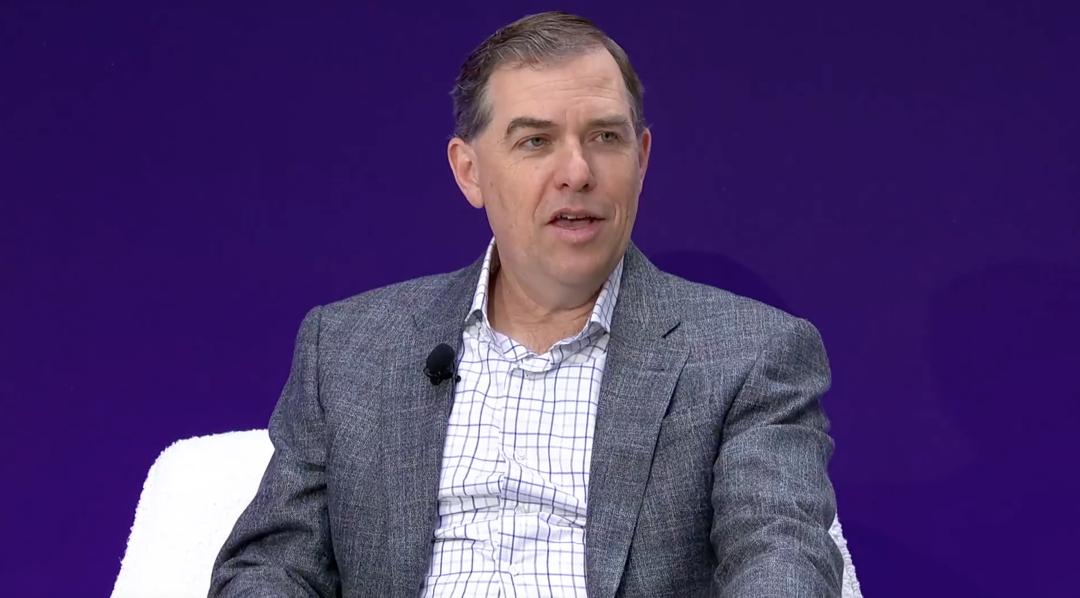
Matt Garman, CEO of Amazon Web Services
The real transformation goes deeper. When the workflow, data structure, application architecture, and interaction interface are redesigned according to the capabilities of Agents, enterprise software can be considered rebuilt. This is the underlying logic of all of AWS's new products.
Interestingly, after officially ending its partnership with Microsoft, Sam Altman, CEO of OpenAI, also showed his support for AWS via video, announcing that ChatGPT's most powerful model will be available on AWS and that the two parties have reached a deep strategic cooperation.
Whether it's Amazon Quick for individuals and teams, the new Connect family for supply chain, recruitment, and healthcare verticals, or the deep cooperation with OpenAI, they all point to the answer to the same question: What should the future of SaaS look like, starting with AI Agents?
Say Goodbye to Being a "Data Mule", and Unify Your Workflow
Take a deep breath and recall your extremely frustrating morning today:
Your boss issued a vague demand on the corporate chat tool. You were startled and quickly switched to the company's CRM system to dig through customer data. Then you opened your email to find last week's progress among a pile of spam. Finally, you created a new document on your local drive and pieced together all these fragmented pieces of information, copying and pasting them one by one.
Do you see the problem? (There should be a confused face emoji here.)
We have more and more office software, but they are isolated from each other. And you are the "data mule" running back and forth between these information silos.
To solve this pain point, AWS has launched the newly upgraded Amazon Quick desktop version (currently in preview). Its core design concept is to integrate the scattered information network and build a knowledge graph of people, projects, decisions, and dynamic affairs in the system background, so that the context follows the user automatically.
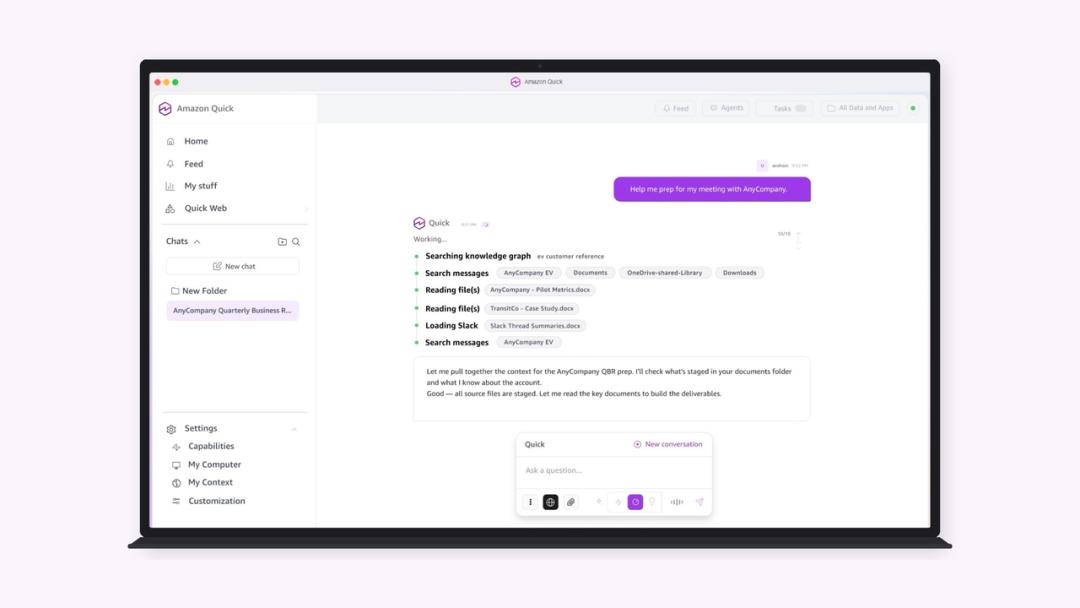
Every time you use Amazon Quick, it silently accumulates the documents you process, project deadlines, colleagues you communicate with frequently, and urgent emails you handle. Based on this data, it can proactively remind you of your priorities for the day.
For example, if you're going to have a meeting with an important client this afternoon, in the past, you'd have to spend two hours gathering materials. Now, you just need to tell Quick, "Prepare the materials for my meeting with General Manager Wang this afternoon."
Now, it's time to witness the magic.
Amazon Quick will quickly identify which project General Manager Wang is involved in, then dig out the historical cases of his team from the system. It will also access your local D drive to get the latest product roadmap and combine it with the complaints from your colleagues on Slack yesterday. In just a few minutes, a well - structured and beautifully formatted PPT will be ready for you.
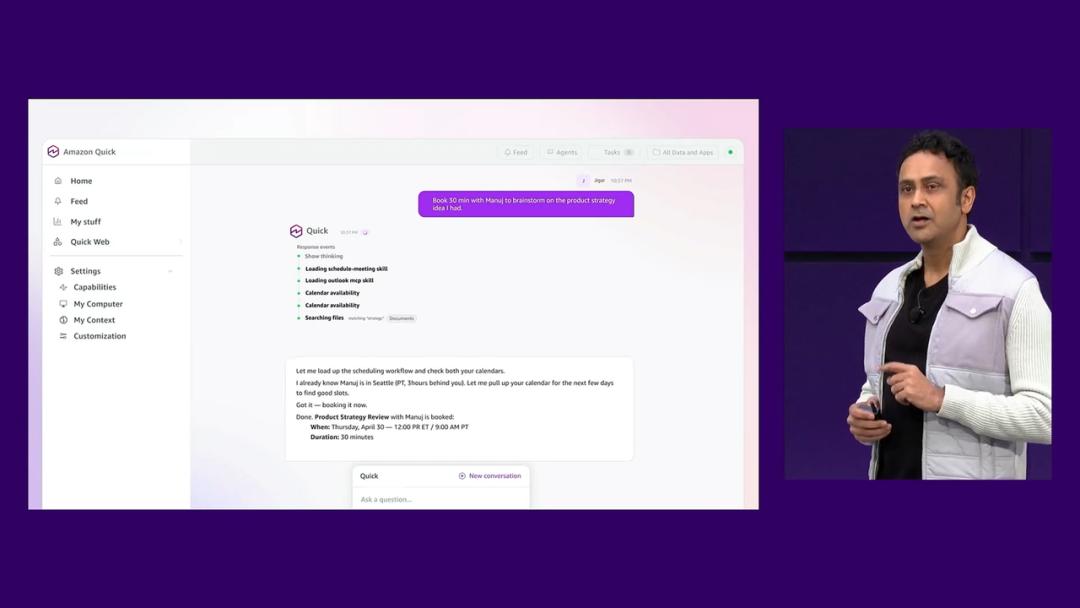
That's not all. With the same set of information, you can ask it to transform into a summary email or an Excel revenue statement. If General Manager Wang says "let's talk another day", Amazon Quick can even check your calendars, calculate the time difference, and send a new meeting invitation. Throughout the process, you just need to be an emotionless supervisor in a single dialog box.
David Gregorat, CTO of the institutional life insurance business at New York Life, the largest mutual life insurance company in the United States, hit the nail on the head: "Quick has made us reimagine our entire operation. Answers that used to require multiple reports and analyst processing can now be directly obtained by anyone on the team through a conversational Agent."
As for how amazing the efficiency improvement is, Jigar Thakkar, vice president of commercialization for Agentic AI at AWS, revealed some extremely impressive data: After beta testing by large companies like BMW, 3M, and Mondelez, the processing time for some processes has been reduced by 80%. 3M's sales representatives even gain an extra five hours per week for... well, thinking.
This is the ultimate sense of relaxation that AI technology brings to us.
Your Next Great Colleague is an AI Agent
If Amazon Quick gives you an efficiency boost like having extra arms and heads, then the expansion of the Amazon Connect family is AWS's major move to reshape the core processes of enterprises.
AWS has proposed a concept called "Humorphism". It may sound a bit abstract, but simply put, AI shouldn't just be a cold - blooded execution machine. It should be like a good human teammate, understanding priorities and communicating smoothly.
Based on this, the Amazon Connect family has not only upgraded its existing customer service product to Amazon Connect Customer but also released three Agentic AI solutions for vertical scenarios.
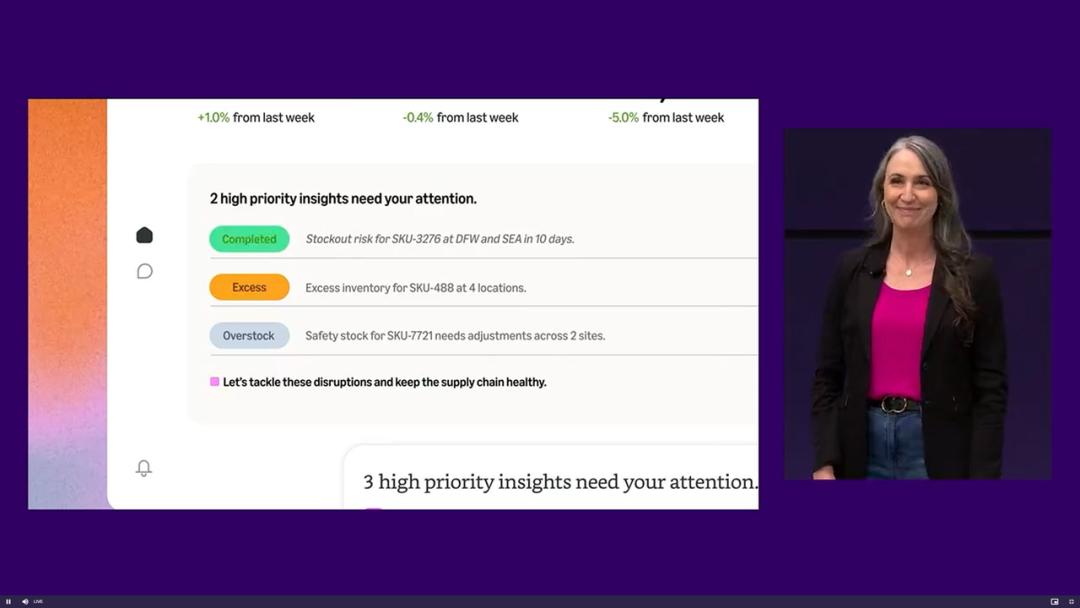
Connect Decisions: Shift Supply Chain Planners from Fire - Fighting to Decision - Making
After a supply chain disruption, it usually takes enterprises more than two weeks to handle the situation, accompanied by significant capital losses and default risks.
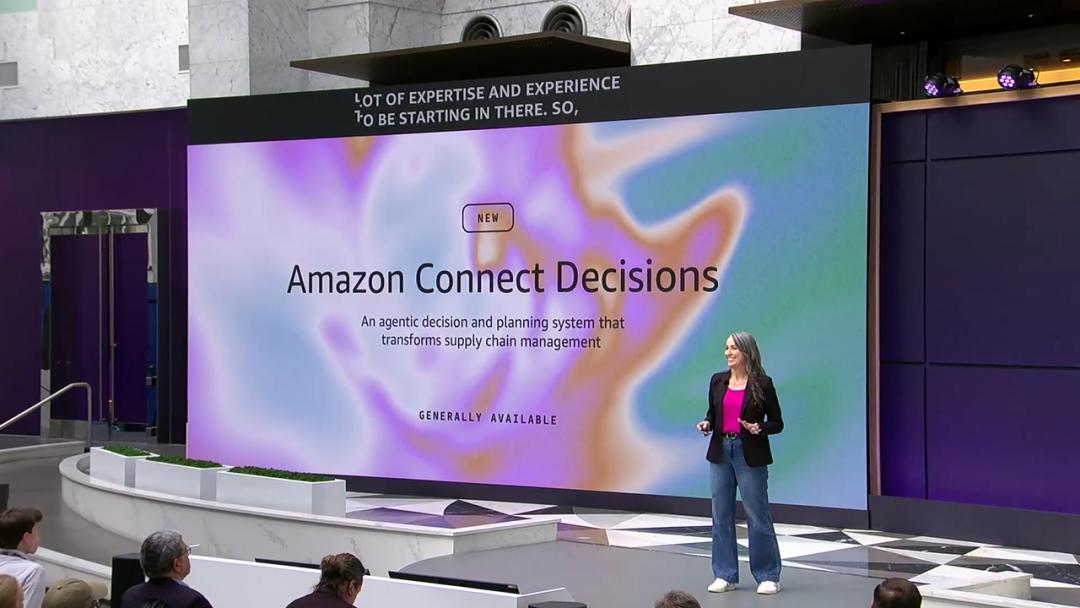
Connect Decisions addresses this pain point by providing planners with an AI teammate that is available 24/7. Its underlying system is not a castle in the air but is deeply integrated with the prediction models developed by Amazon's SCOT team (the core department responsible for managing the demand for 400 million SKUs globally at Amazon).
For new products without historical data, it can automatically associate similar product categories to generate demand plans.
When it monitors that a key supplier is behind schedule (for example, it is expected to cause a stock - out at two distribution centers within 10 days), it will consolidate the thousands of alerts generated by traditional software every day into a few high - priority exceptions and directly provide two disposal plans with expected impacts, costs, and confidence scores. After the planner manually selects a plan and explains the reason, the system will absorb this decision - making logic for future reference.
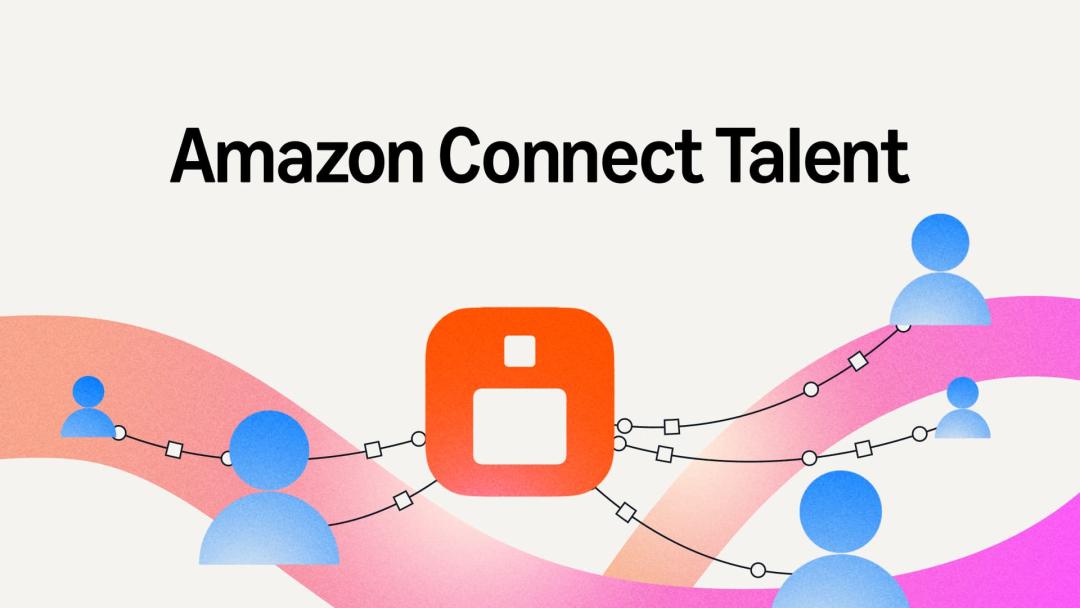
Connect Talent: 250,000 Recruitment Experiences Turned into a "Cyber Interviewer"
AWS recruited 250,000 seasonal employees during the peak season in 2025. Connect Talent is the productization of this large - scale recruitment experience. The system can automatically analyze the ability requirements based on the job description and generate interview questions and scoring criteria (subject to manual review).
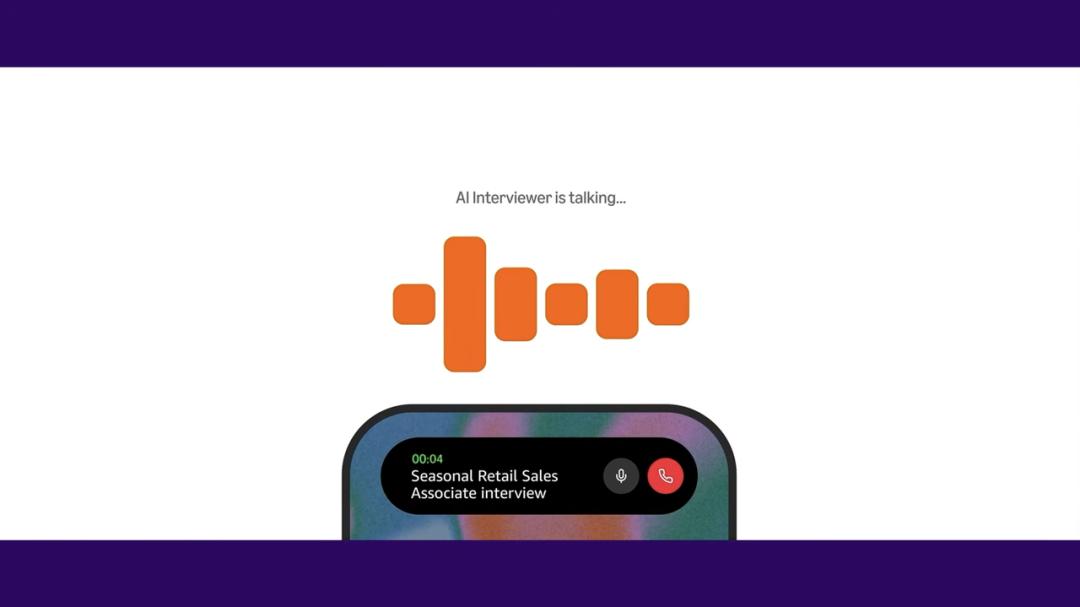
Candidates can complete an AI phone interview at any convenient time.
The system's greatest feature is its ability to follow up on vague answers to ensure the consistency of the evaluation structure. What used to take weeks to complete 80 initial screening interviews can now be done in just a few days. The system finally presents the recruitment team with standardized ability scores with personal identity information hidden, providing data support for the final hiring decision.
Connect Health: Liberate Doctors from Paperwork
Industry data shows that for every hour of face - to - face consultation with patients, doctors often need to spend an additional two hours on administrative records.
Colleen Aubrey, senior vice president of Amazon's artificial intelligence solutions, pointed out that the large amount of energy spent on administrative tasks rather than direct diagnosis and treatment is a pain point that needs to be urgently addressed. Connect Health can automatically record clinical content during the diagnosis and treatment process, generate visit summaries and recommended billing codes, and send easy - to - understand follow - up instructions to patients after the visit.
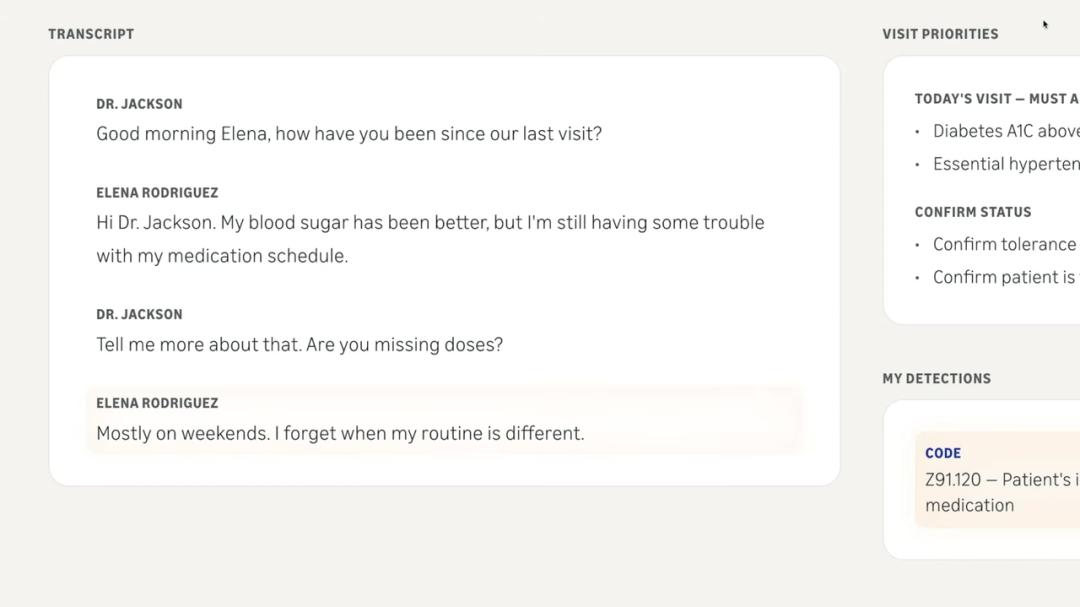
Each output of the system can be traced back to the original test results and previous visit records to meet strict medical compliance requirements. Behind this is actually the practical experience that Amazon has accumulated over the years through its sister companies Amazon Pharmacy and One Medical.
The Agent Era is Here, and SaaS Enters the Second Half
Another major focus of the entire product launch event was the cooperation between AWS and OpenAI.
Sam Altman, CEO of OpenAI, showed up via video with his signature smile. He said that AWS and OpenAI are jointly developing an Agent platform for enterprises at the underlying level, which is deeply integrated with AWS services.

Yes, OpenAI's GPT - 5.4 is now available for limited preview on Amazon Bedrock. And the current most advanced model, GPT - 5.5, will be officially launched within a few weeks. This means that enterprise customers can use OpenAI's models without leaving the AWS environment, and data and applications can run under the same permission system.
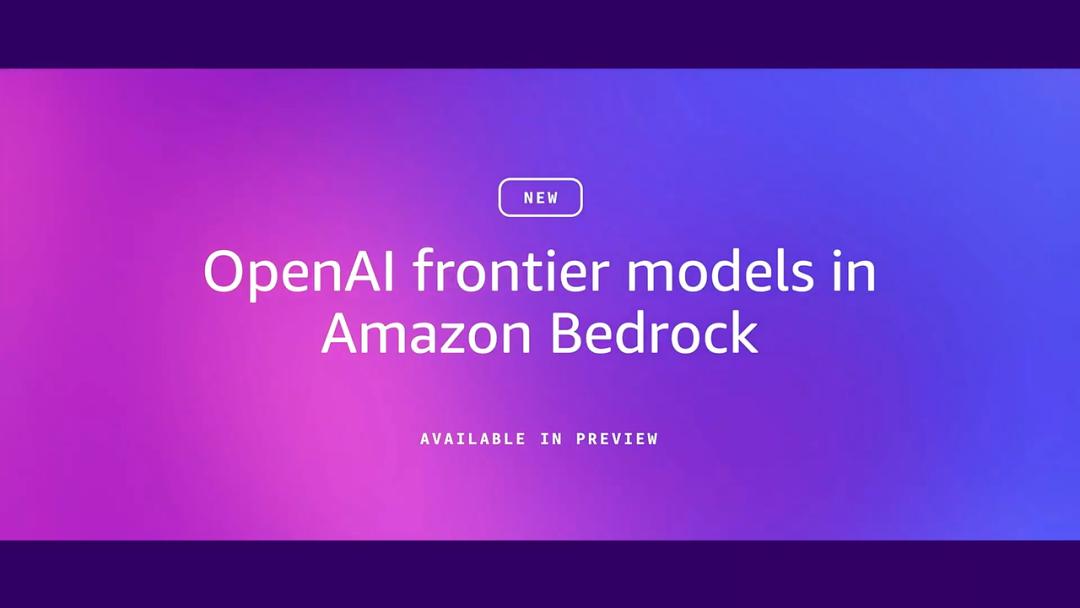
Enterprises don't need to configure a new security system. They can directly manage everything through the existing IAM access control, PrivateLink private connection, CloudTrail complete logs, and compliance framework. Even the model usage can be included in AWS's cloud commitment consumption.
At the infrastructure level, AWS's core logic is to provide a stable and compliant "home" for OpenAI's advanced models. Enterprises can not only directly call top - notch models but also rely on AWS's powerful global infrastructure network for inference and deployment. In other words, when running complex and high - concurrency enterprise - level applications, you don't have to worry about the underlying carrying capacity at all.
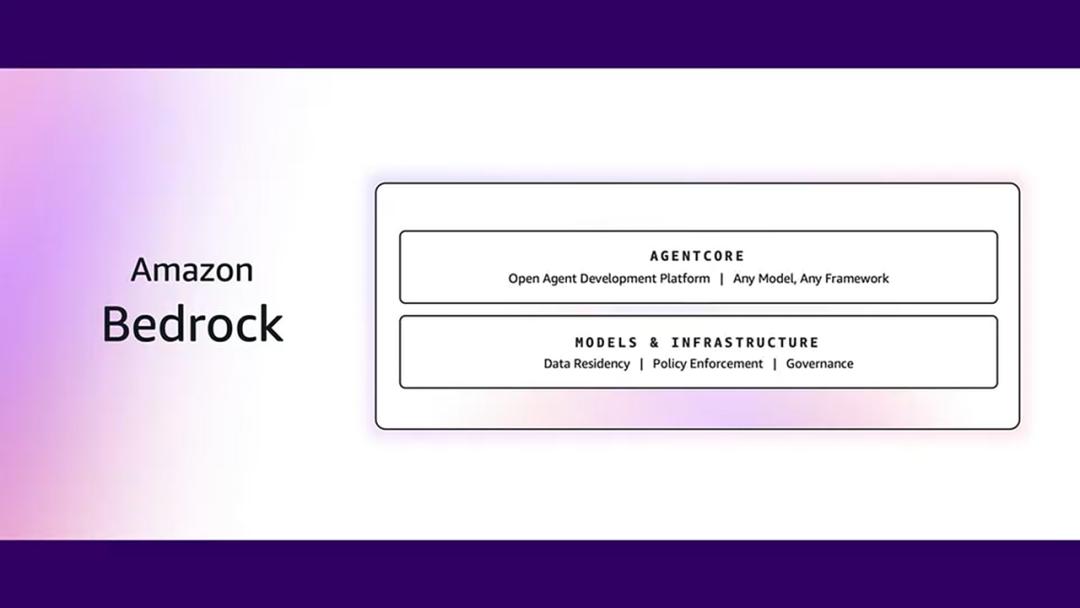
On this basis, the two parties have jointly launched the Bedrock Managed Agents preview version. This service is built around OpenAI Agent Harness, which is like a tactical manual customized for the model. After collaborative training, the Agent can achieve faster execution speed and more stable behavior control in long - running complex tasks.
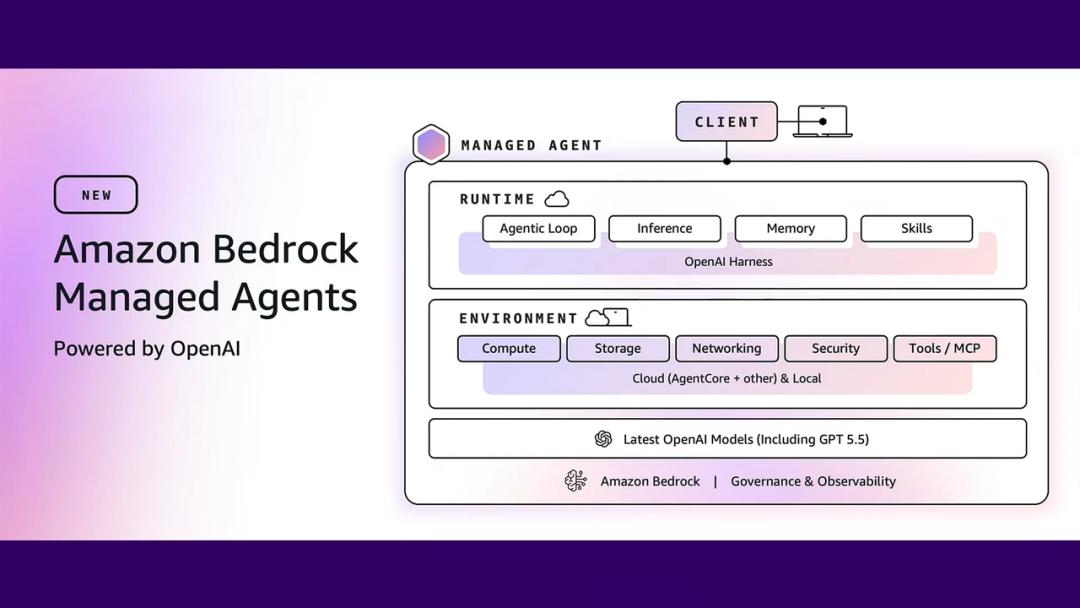
The Agent can be deployed on EC2 instances, Fargate containers, or any other AWS computing resources. It has persistent memory across sessions, and all inference processes are carried out within the AWS environment.
This service complements AWS's existing open platform, Bedrock AgentCore. Anthony Liguori, vice president of AWS's distinguished engineers involved in the cooperation, revealed that the two teams completed this work from scratch in eight weeks. Developers can finally combine OpenAI's latest models with AWS's scale, security, and infrastructure to build intelligent agents that meet enterprise governance and audit requirements.
In addition, OpenAI's code - generating intelligent agent product, Codex, whose weekly active users increased from 3 million to 4 million in two weeks, will also be launched on AWS. It supports Codex CLI, desktop applications, and Visual Studio Code plugins. Its application scenarios have extended from basic code generation to system explanation, test generation, modernization of legacy code, and research analysis in knowledge - based work.