AI overloads GitHub, causing daily outages. A 18-year veteran leaves with a 50,000-star project.
[Introduction] Mitchell Hashimoto, the 1299th user on GitHub and the father of Vagrant, couldn't bear it anymore and officially fled GitHub with his 50,000-star project, Ghostty. His 18-year love for GitHub was completely exhausted by continuous outages and the AI transformation.
GitHub might be being "crushed" by AI. This might not be an alarmist statement.
Mitchell Hashimoto, the 1299th user on GitHub, registered in February 2008, earlier than most developers.
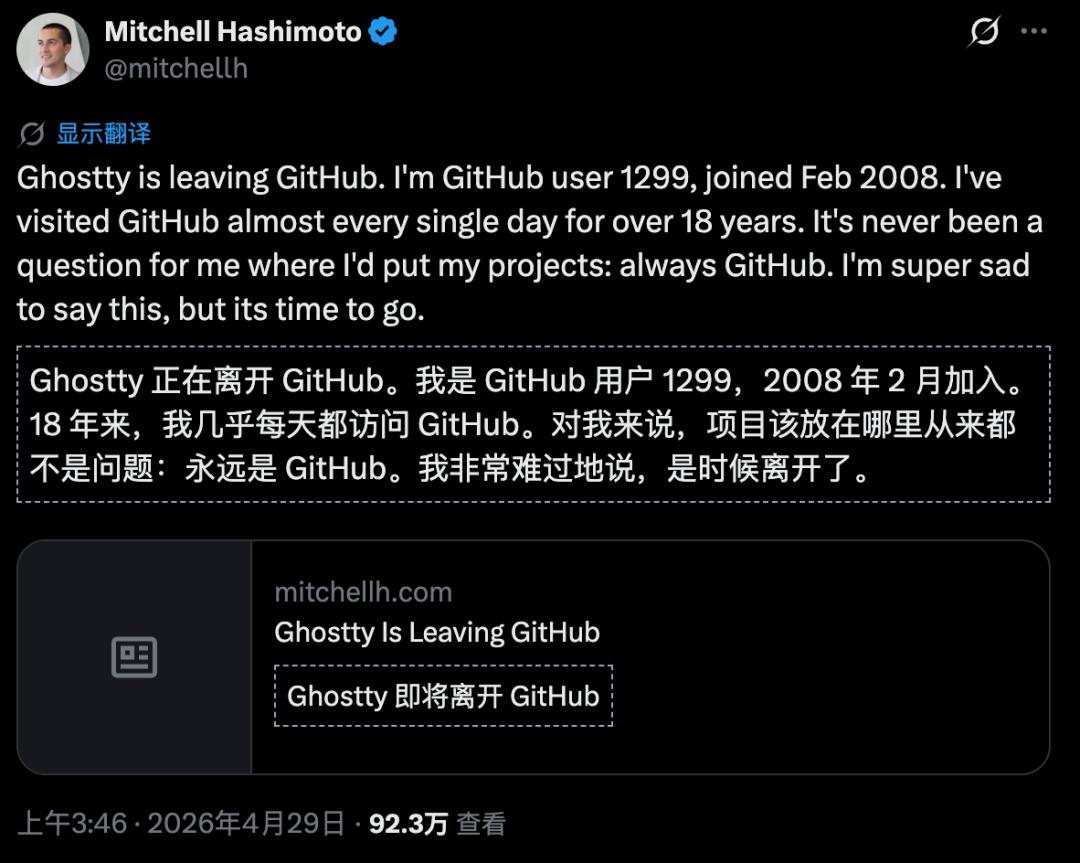
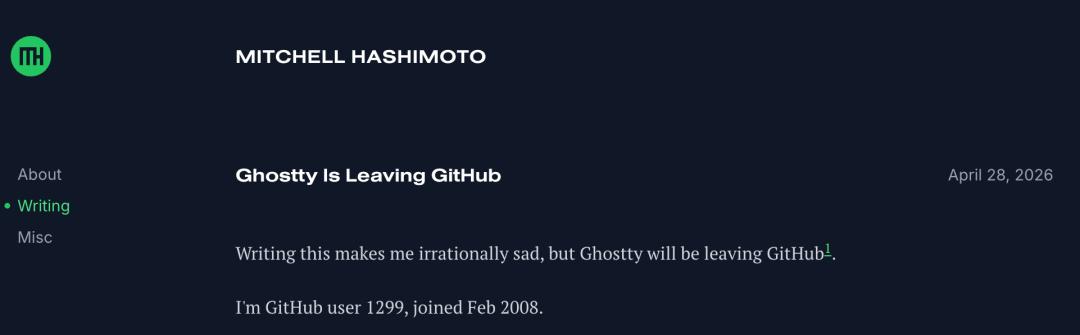
Yesterday, he wrote a farewell letter that seemed like a broken - hearted one: He will officially leave GitHub with his star terminal project, Ghostty.
This open - source veteran who has spent half of his life on GitHub marked an "X" for each working day ruined by outages in the past month - and almost every day had an "X".
After the AI wave turned GitHub into the world's largest code repository, the world's largest LLM training granary, and the world's largest AI Agent operating platform simultaneously, this machine that has been running for nearly 20 years is being crushed at a visible speed.
Let's briefly introduce this great figure. Half of the well - known open - source tools in the Silicon Valley infrastructure field, such as Vagrant, Terraform, and Packer, are developed by him.
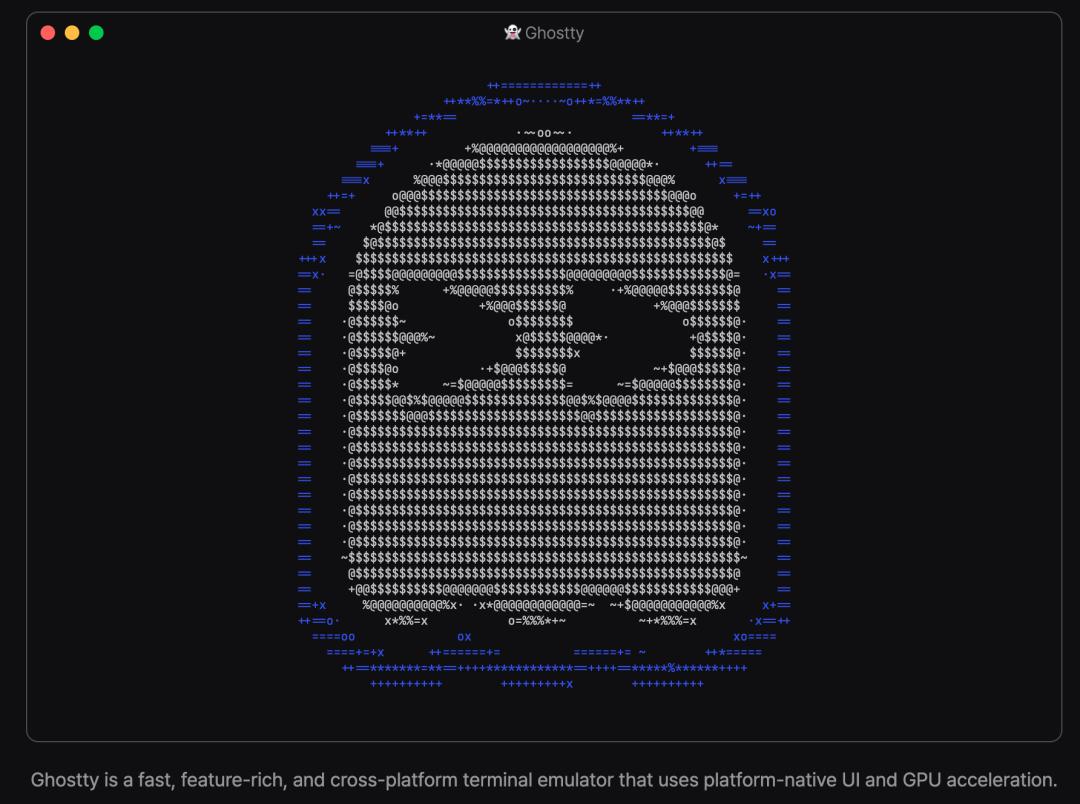
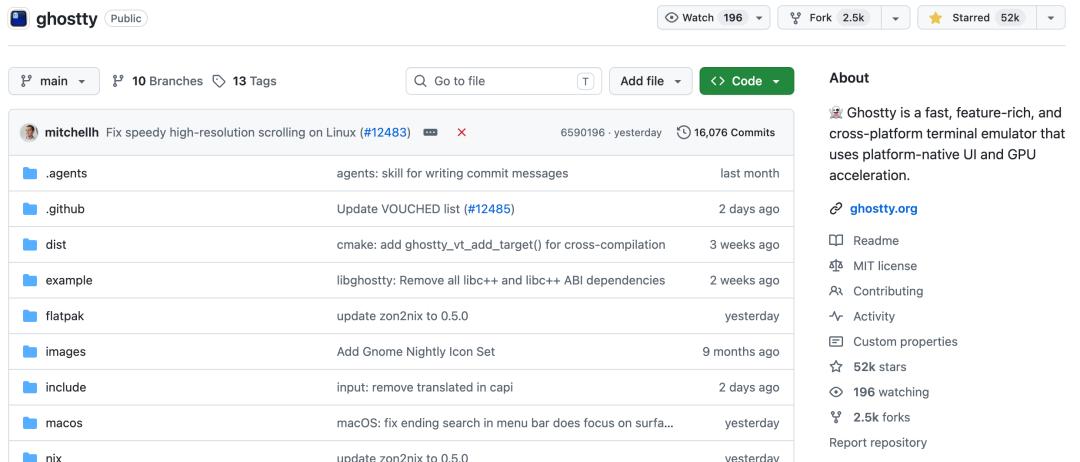
Ghostty is one of the most - watched open - source terminal emulators in the past year. It supports both macOS and Linux and is written in Zig + Swift. It has received more than 50,000 GitHub stars in just one year after its release.
For 18 years, Mitchell Hashimoto has opened GitHub several times almost every day.
He checks issues during vacations, makes commits on his honeymoon night, and heals his heart in the open - source community after a breakup.
"Where to put my projects has never been a question for me. It's always been GitHub."
But just now, he announced on X that Ghostty is officially leaving GitHub.
There is no anger in his tone, only an almost irrational sadness.
This is not an ordinary developer's complaint. This is a person who has bet half of his life on GitHub leaving with tears in his eyes.
What's more interesting is the reason for his departure - not being poached by competitors, not having business disputes, but GitHub itself is broken.
Hashimoto kept a diary specifically in the past month.
He marked an "X" for each day when his work was affected by GitHub outages.
The result is shocking: there is an "X" almost every day.
Let's first take a look at his personal letter.
As I write this article, an almost irrational sadness wells up in my heart:
Ghostty is about to leave GitHub.
I'm the 1299th user on GitHub and joined this community as early as February 2008.
In the past 18 years, GitHub has occupied more than half of my life. I used to open it several times almost every day. Whether seeking comfort in the open - source world after a painful breakup, or typing code alone in the dormitory at 4 a.m. in college, or making a commit while my wife was asleep on our honeymoon, GitHub was once the happiest and most desirable place for me.
Some people waste time on social media, while I've been obsessed with scrolling through GitHub issues for years and even study how other maintainers handle tricky problems during vacations. My hobbies, work, and passion were once perfectly unified here.
Even the original intention of developing Vagrant back then was to get a job at GitHub with this resume.
But recently, I've started to publicly criticize GitHub frequently and even seem angry and harsh. This anger actually stems from an extremely personal emotion: I love GitHub more than anyone else, but it has been letting me down every day. In the past month, I kept a diary and marked an "X" after each day when my work was affected by GitHub outages, and almost every day has a record.
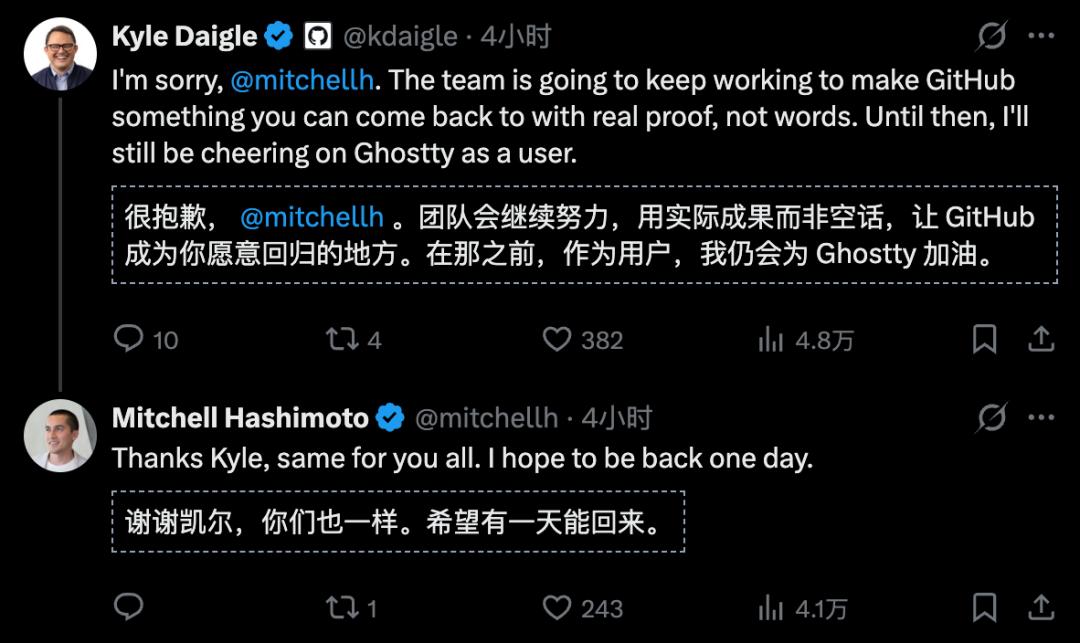
Just when he was writing that farewell blog post, GitHub Actions went down again.
Coincidentally, Hashimoto finished writing this blog post a week in advance - and the day it was published happened to coincide with the major ElasticSearch outage on April 27, which paralyzed global GitHub users for nearly 18 hours.
For more than two hours, PR reviews couldn't be done, code couldn't be merged, and the entire development pipeline came to a halt.
This is not an accidental incident. This is the norm.
A question arises: What on earth has happened to the once most reliable code hosting platform in the world?
The answer can't avoid one word - AI and people using AI Coding.
GitHub is being devoured by AI
In 2018, Microsoft acquired GitHub for $7.5 billion.
The promise at that time was simple: to make GitHub better serve developers.

It was indeed the case in the previous years. GitHub Actions was launched, and CI/CD was integrated, continuously improving the developer experience.
But since the release of Copilot in 2021, the situation has changed.
GitHub Copilot has become the vanguard of Microsoft's AI strategy. The personal subscription costs $10 per month, the team version costs $19, and the enterprise version costs $39.
In 2024, Copilot Workspace was launched, allowing AI to read issues, write code, and submit PRs directly.
In 2025, the Copilot Agent mode was launched, enabling AI to autonomously complete the entire process from requirements to code.

There are one product launch after another.
Eight out of ten updates on GitHub's blog are related to AI.
But at the same time, the complaints in the developer community are continuously rising.
The stability of GitHub Actions has become a major problem area.
Build queues can take half an hour, runners fail inexplicably, caches are lost, and logs can't be found.
These are not edge cases but pitfalls that millions of developers encounter every day.
Interestingly, the incident records on the GitHub Status page are getting denser.
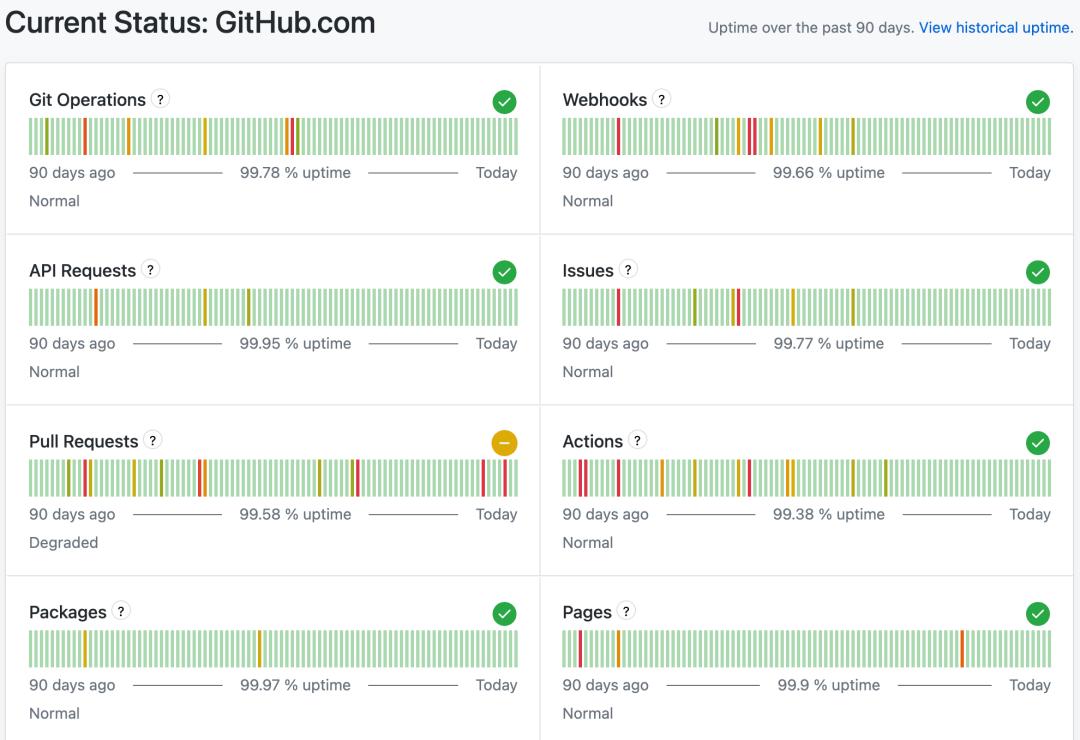
A dozen notifications of degraded performance in a month would have been unimaginable five years ago.
Hashimoto's diary just turns what everyone vaguely perceives into solid evidence.
The strange thing about this is that GitHub hasn't gotten worse; it's just shifted its attention.
When a platform allocates its best engineers, most resources, and greatest strategic weight to AI features, the maintenance of infrastructure will inevitably slide towards "good enough".
Copilot generates hundreds of millions of dollars in revenue annually, while Actions is a free feature. It's obvious where the resources will be tilted.
People familiar with enterprise software will immediately realize that this is the opposite of the classic "Innovator's Dilemma" - not that new technologies disrupt old businesses, but that the foundation of old businesses starts to loosen in the process of chasing new businesses.
The backlash of AI - generated code
There is a deeper impact that many people haven't noticed.
AI is fundamentally changing the load structure of GitHub.
This is not speculation from the outside world.
On the same day that Hashimoto published his blog, Vlad Fedorov, the new CTO of GitHub, publicly admitted in a rare post that they launched a 10 - fold capacity expansion plan in October 2025, but by February 2026, they found it far from enough - they had to redesign it on a 30 - fold scale. The official clearly pointed out the reason: since the second half of December 2025, the agentic development workflow has accelerated sharply. The root cause of the ElasticSearch failure on April 27, which paralyzed global developers for 18 hours, was that the cluster was full - the CTO wrote in the blog that the initial judgment was a botnet attack combined with traffic overload.
After the full - scale roll - out of AI programming tools such as Copilot Agent, Codex, Claude Code, and Cursor, the number of code commits, PRs, and issues on GitHub has skyrocketed.

It's not because there are more developers, but because the output speed of each developer with the help of AI has increased several times.
An engineer using Claude Code can submit as much code in one day as they used to in a week.
Multiply this by millions of active users, and the backend pressure on GitHub is growing geometrically.
What's even worse is that AI - generated code is often accompanied by a large number of automated tests and CI pipelines.
Every time AI finishes modifying code and makes a commit, GitHub Actions has to run a round of building, testing, and deployment. In the past, a PR would trigger CI once, but now with five rounds of AI iteration, it's five times.
GitHub's infrastructure is designed for human typing speed.
It can't handle the speed of AI.

This creates a black - humor situation: GitHub is desperately selling Copilot to let AI help people write code, but the code written by AI is crushing GitHub's own infrastructure.
Hashimoto didn't directly point out this layer in his blog post.
But the symptoms he described - frequent failures of Actions, stuck PR reviews, and long build queues - all point to the same root cause: the platform load exceeds the designed capacity, and the expansion speed can't keep up with the growth brought by AI.
The project's departure is not an isolated case
So, where will Ghostty finally move to?
The answer is: it's not decided yet.
Mitchell wrote very conservatively in his blog post - he has a plan but is still in talks with multiple service providers, including both commercial and open - source solutions. The destination will be officially announced in the next few months.
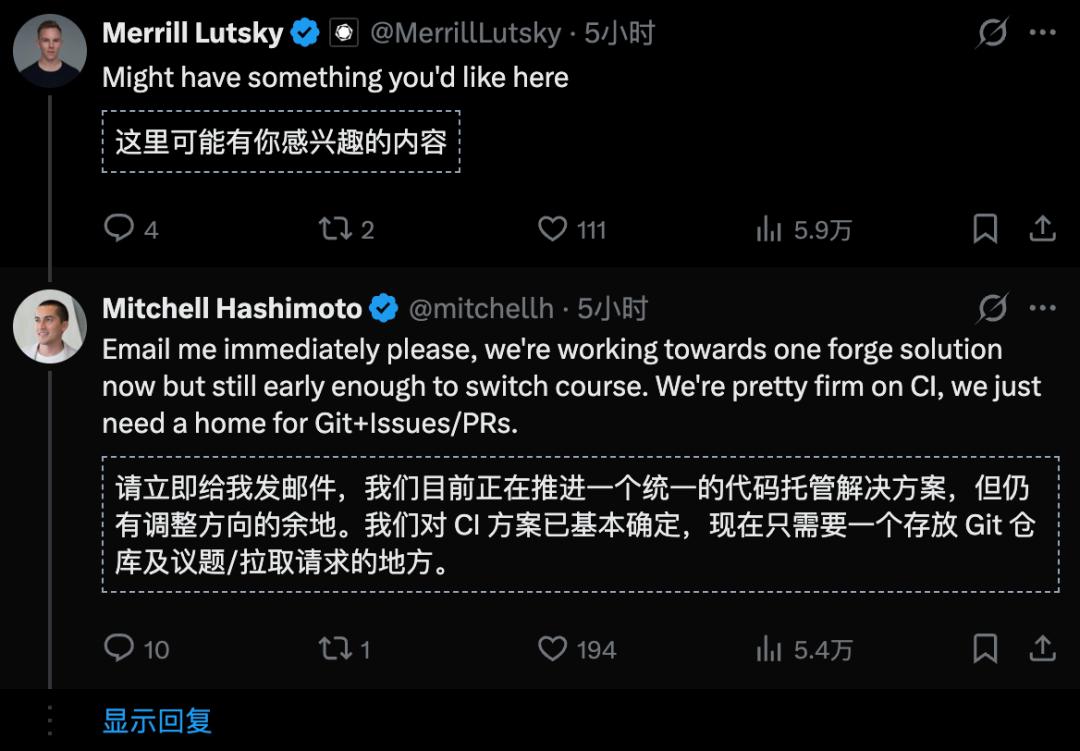
A read - only mirror of the original repository on GitHub will be retained, and the migration will be carried out gradually as much as possible.
His other personal projects will also remain on GitHub for the time being. This time, only Ghostty - the project most affected by outages among him, the maintainers, and the community - is being moved.
But the discussion in the community has already heated up.

Hashimoto is not the first one to leave. In the past year, the voice of "de - GitHubization" in the open - source community has