Claude's first AI desktop pet hardware, made in Shenzhen
Who would have thought that the first AI desktop pet hardware developed by the well - known Anthropic is still Made in Shenzhen.
This is an open - source project initiated by Anthropic engineer Felix Rieseberg, named Claude - Desktop - Buddy.
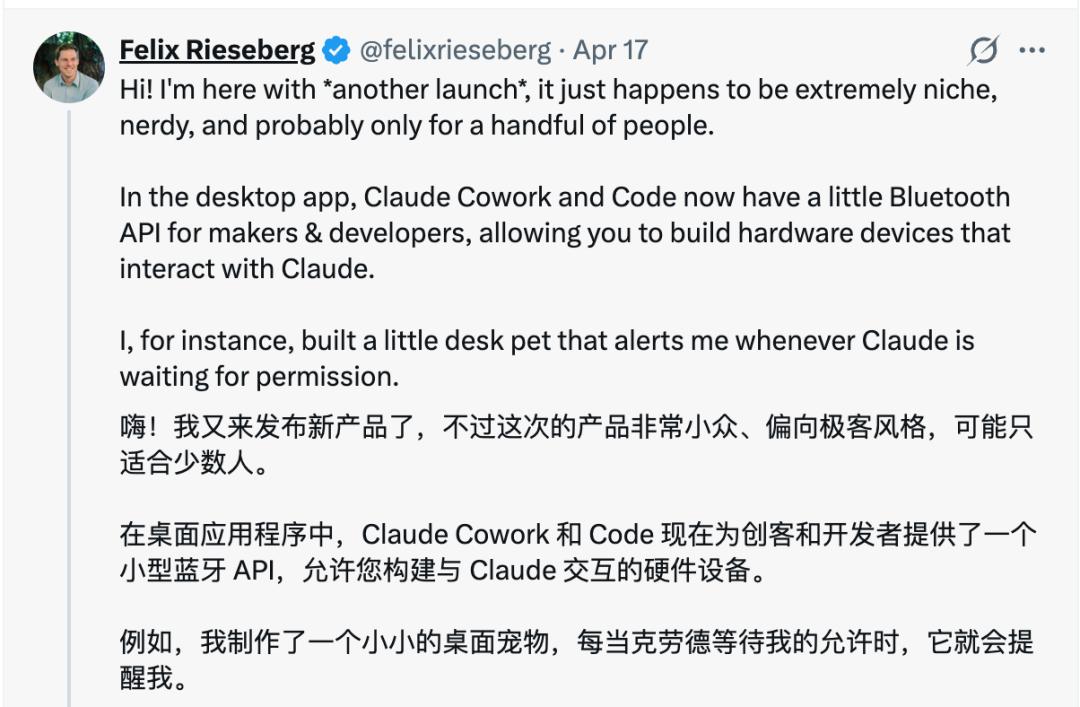
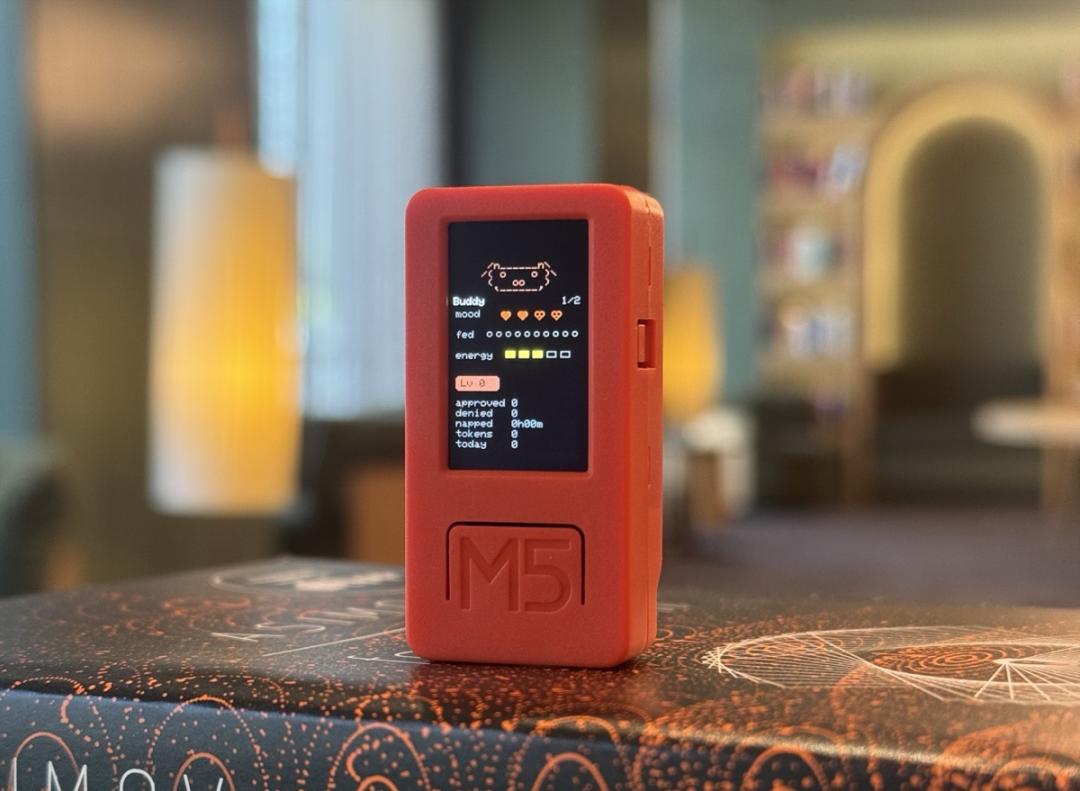
The official reference hardware is M5StickC Plus, from the Shenzhen - based company M5Stack; the chip used is ESP32, from Shanghai Le Xin Technology.
You just need to connect the hardware to your computer via Bluetooth, and it can become your "electronic pet".
It will display Claude's working status, and you can also directly approve or reject the operations performed by Claude with one click on this small board.
It has 18 built - in ASCII animal images, using the same pet system from the previous source code leak of Claude Code, and each has a complete animation:
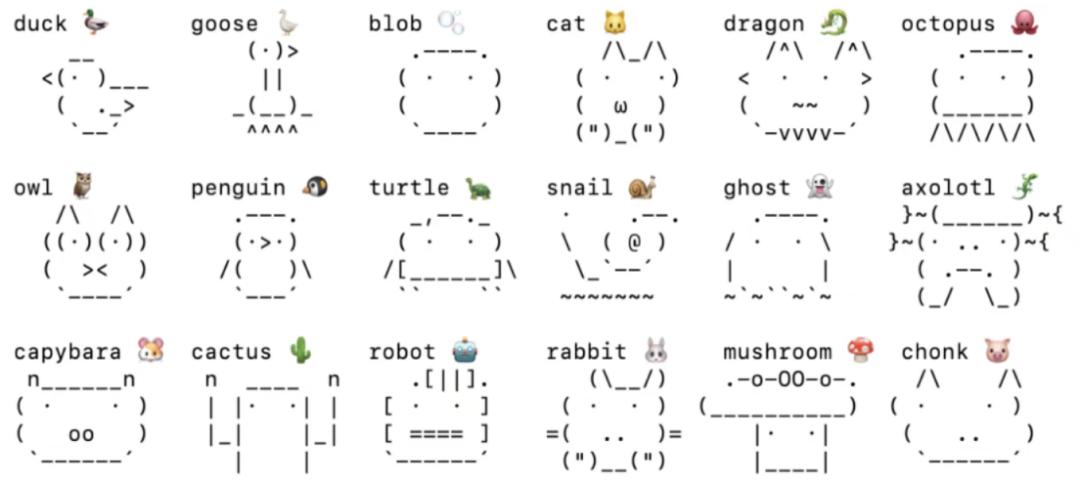
Sleeping, standby, busy, reminding, celebrating, dizzy, having a crush... The animations cycle without repetition.
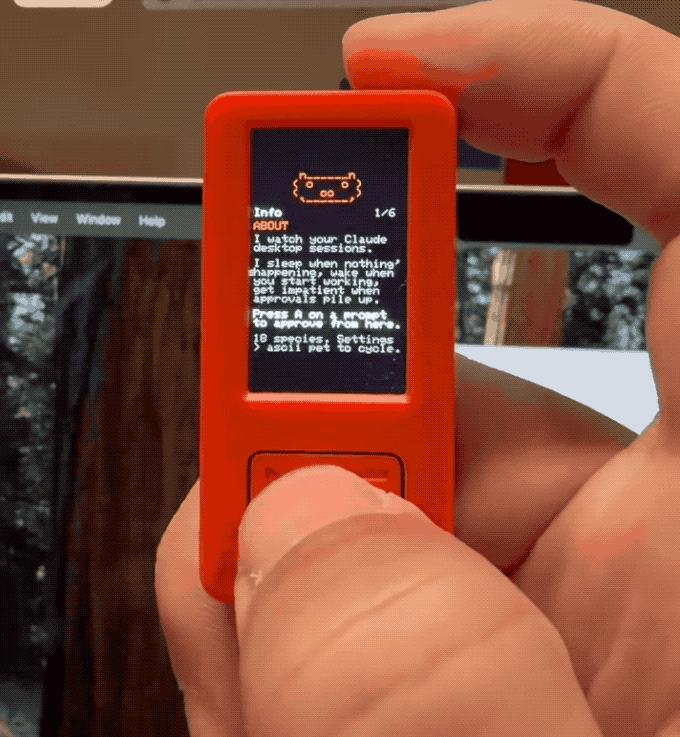
It will enter the sleep state when idle, wake up when a conversation starts, and show obvious impatience when waiting for approval prompts.
Moreover, Buddy is very easy to get started with. You just need to have a development board in hand, and according to the official open - source documentation, let Claude perform the programming. The whole process only takes 10 minutes.
Now, many developers have reproduced Buddy:
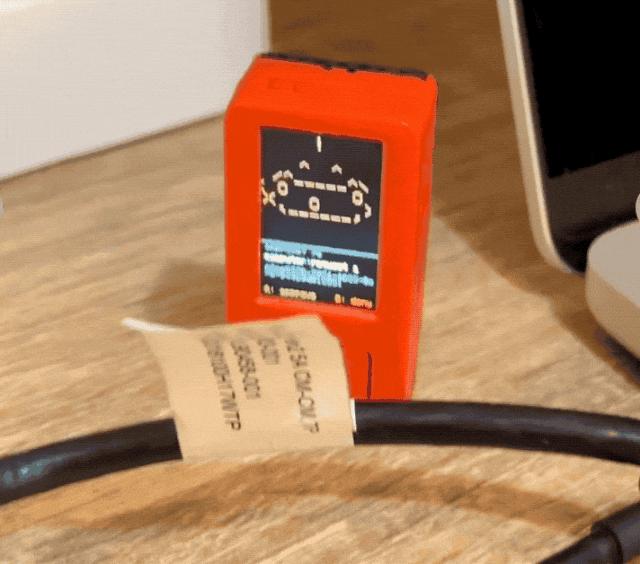
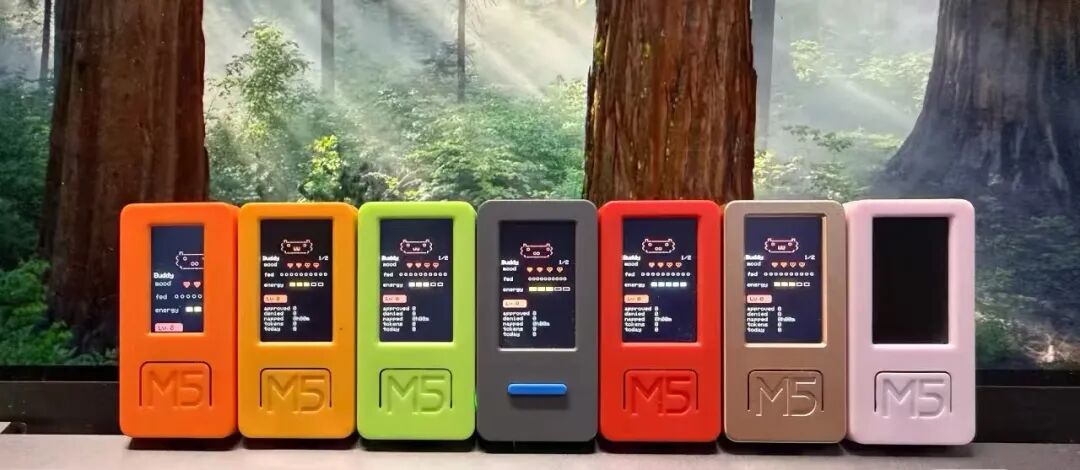
Some people have even collected the seven Dragon Balls and are ready to summon the dragon —
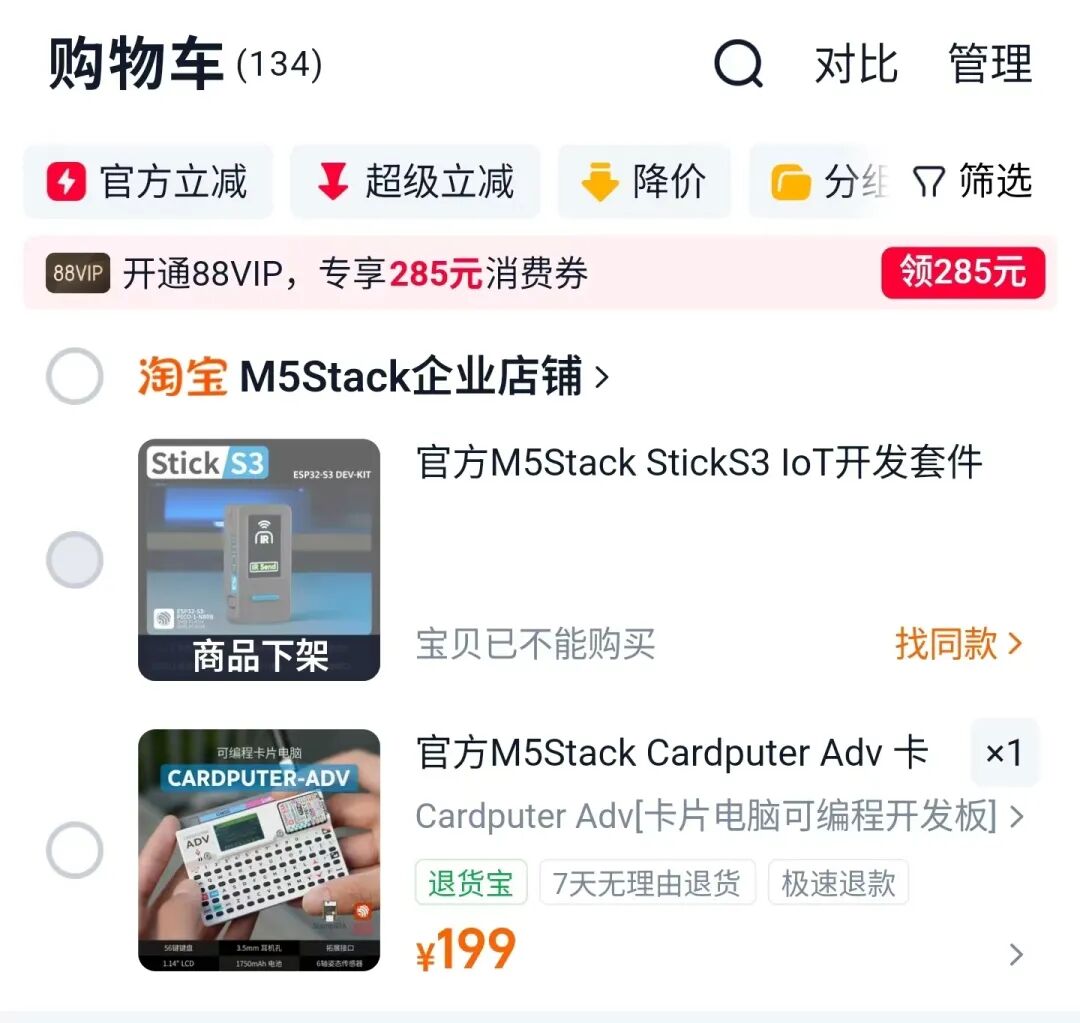
Now, the M5Stick is out of stock on Taobao...
Things are getting interesting: Company A has always been cautious about the Chinese market. Why is it using hardware from Shenzhen?
QbitAI contacted M5Stack immediately and had a chat with CEO Lai Jingming.
Why did Company A choose M5Stack?
M5Stack is an IoT development brand under Shenzhen Mingzhan Technology, focusing on modular hardware R & D. The core of its products uses the ESP32 chip.
Its products are widely used in the circles of IoT development, embedded systems, and network security. The biggest selling points are extreme cost - effectiveness and high - density functionality.
The M5StickC Plus selected this time is one of M5Stack's best - selling products, with about a hundred thousand units sold overseas each year.
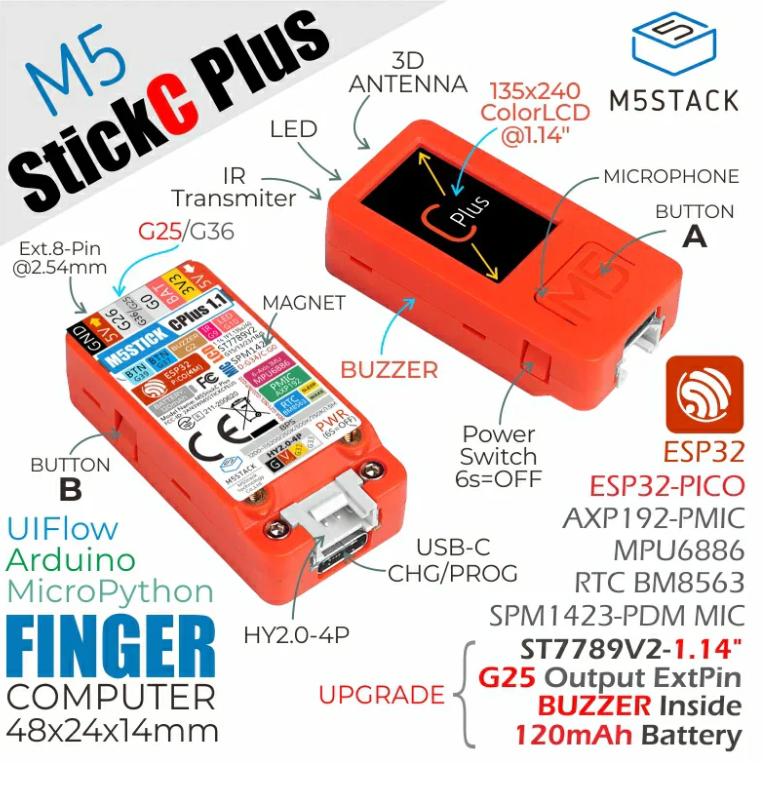
Its early positioning was as a general IoT development board, with the design concept of an "all - in - one" like a Swiss Army knife. It has a screen, microphone, speaker, infrared, gyroscope, and buttons, with all the possible components included, without presupposing any single use.
So, it was never anticipated that it would be used in the "AI peripheral" scenario.
However, Lai Jingming believes that the underlying logic of AI peripherals is actually the same as that of traditional development boards:
The ways for AI to understand the world are nothing more than sound, light, electricity, and sensors. There is no essential difference from the previous hardware "made for humans", except that now AI is imitating humans to perceive the world.
So why did Company A choose it? The reason is actually quite... simple.
Lai Jingming speculates that it's highly likely that there is an engineer within Company A who is already a user of M5Stack. Since they happened to have this board at hand, they just used it for development.
Similarly, the M5StickC Plus is actually an old - model product, and there are new models like Plus 2 and Stick S3 for iteration.
But why was it selected? The reason might be that "the new models are often out of stock", so the engineers continued to use the old - model board at hand for development.
Well... it sounds unexpected, but also seems reasonable.

A developer who has reproduced Buddy also expressed the same judgment to QbitAI: M5Stack is as common in the Maker circle as Coca - Cola, "It's estimated that someone in Company A had it at hand and just used it."
Of course, there is a deeper reason for it to be selected. That is, the high - quality documentation and reliable code accumulated by M5Stack over the years make it less likely to make mistakes when called by AI.
Lai Jingming explained that if the documentation is incomplete and the protocols are not clearly written, AI may "inherently write wrong code" when calling, and the project won't run at all. If you don't operate with a long - term perspective, it's easy to fail.
Forming this "default option" among global developers is also a natural result of the long - term accumulation of the developer ecosystem that M5Stack has always attached great importance to.
The Shenzhen supply chain is really strong
During the conversation, Lai Jingming's attitude actually surprised me.
Although being selected as the official reference hardware by a top - tier global AI company, his view on this matter is just a normal attitude. "This kind of thing happens quite often in a year, and it comes and goes quickly."
However, he also gave a judgment: The reason why Anthropic chose M5Stack is not only due to the product's own reputation but also some practical factors. Currently, foreign countries basically do not have a complete supply chain for this kind of hardware, and China has an absolute advantage in this field.
He personally feels that the cost of making similar hardware overseas is 3 to 4 times that in China, and the supply chain is incomplete, resulting in a congenital lack of product feasibility.
Shenzhen is characterized by extremely strong execution ability. If there is an idea, people will start working on it on the same day. "In Huaqiangbei, if you have an idea, someone will make it happen before 12 p.m."
Taking AI glasses as an example, in Shenzhen, the hundreds of components required for a set of AI glasses can be allocated within 24 hours.
Shenzhen has the world's densest concentration of electronic component suppliers, mold - making manufacturers, and testing institutions. This density brings a reaction speed that is difficult to replicate elsewhere.
It is a common practice in Shenzhen to shorten the product development cycle from several months to a few weeks.
Some media reported that at the 2026 CES, the robot exhibition hall was almost occupied by Chinese companies. An American journalist kept asking all Asian - looking people in the exhibition area: "Is your supply chain in Shenzhen?"
This is not the first time that M5Stack has been selected by an international technology giant. When AWS launched the IoT EduKit project, it also designated M5Stack Core2 as the official reference hardware.
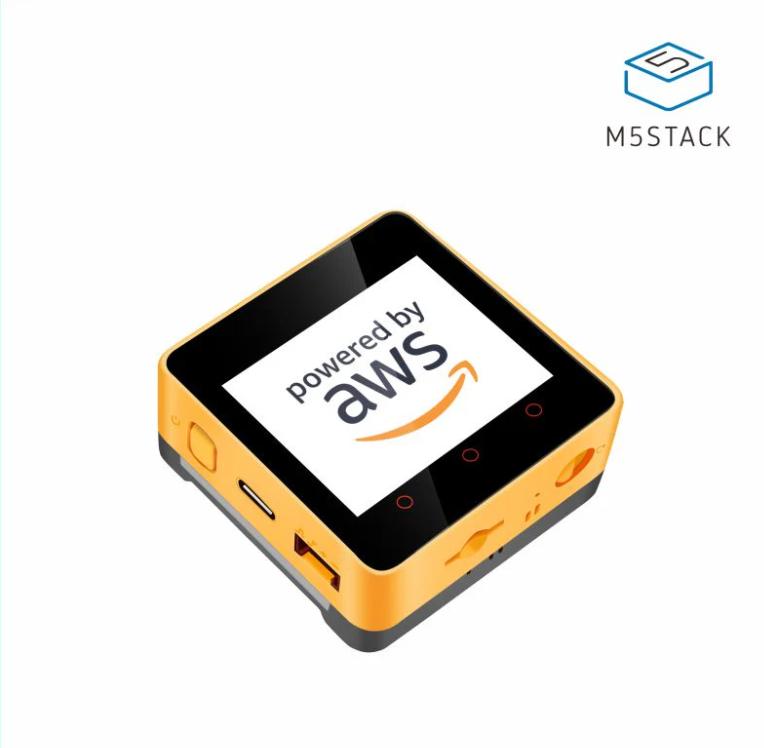
Lai Jingming said that many of M5Stack's ToB projects come in this way: engineers use the products first and then recommend them to the company, and the word - of - mouth spreads.
One More Thing
Speaking of the Buddy project, some people are trying it out, while others have already let it gather dust...
The developer passyear999 told QbitAI frankly that he thought the screen was too small and he didn't usually need the physical buttons for approval. "It's more like a pet sitting there."
However, he didn't put down the board. After running the official version, he modified it:
He added a page to the source code. The button triggers Typeless voice input, and a long - press sends the input. It's equivalent to turning this board into a physical entrance for voice - controlling Claude.
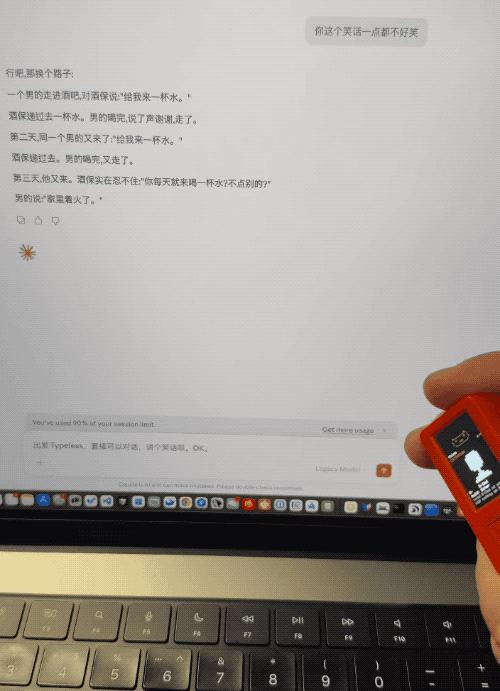
He felt that giving AI a physical form really makes a difference in emotional value when it's right beside you.
Some netizens have also tried to develop on a larger screen:
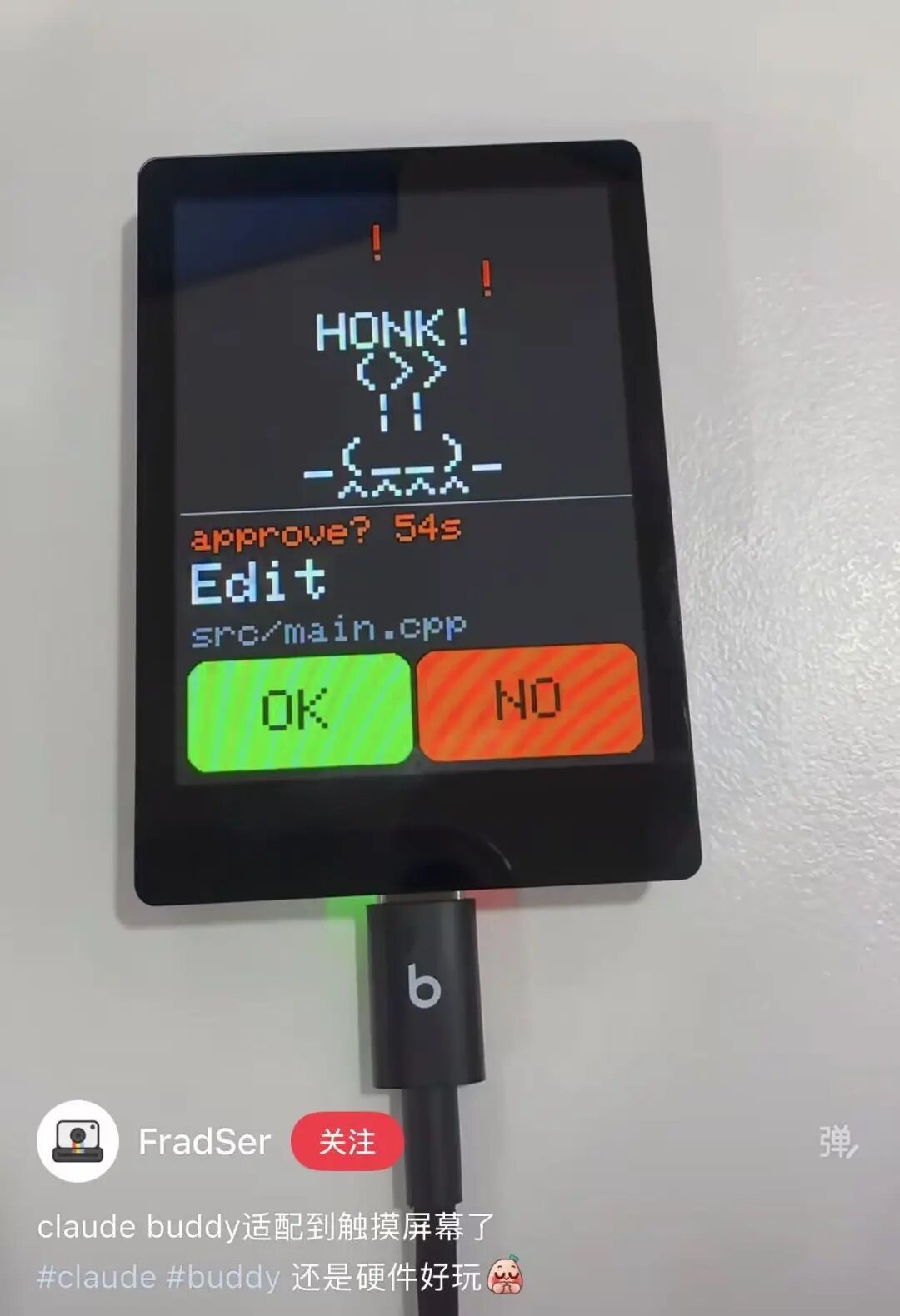
Lai Jingming's view is that Company A's project is more like a starting point. This is just the beginning. Just using a screen and two buttons for notifications and approvals is far from enough, and there will be more ways to play in the future.
As many AI companies start to rush to build hardware, Shenzhen's hardware companies are also re - imagining what they can do.
M5Stack, a company that has been deeply involved in modular hardware for many years and sells its products to the global Maker circle, has officially adjusted its company mission after the Spring Festival to: "Prepare infrastructure for the future AI world".
Project address: https://github.com/anthropics/claude - desktop - buddy
This article is from the WeChat official account "QbitAI" (ID: QbitAI), written by Tingyu, and is published by 36Kr with authorization.