The new battery can be fully charged in just 6 minutes. How long will it take for CATL to maintain its "throne"?
When it comes to charging, which car owners have had their painful memories awakened? Charging anxiety means taking a gamble every time you go to a service area - queuing, encountering broken charging piles, and enduring long waits. Half an hour is considered fast, and an hour is not uncommon.
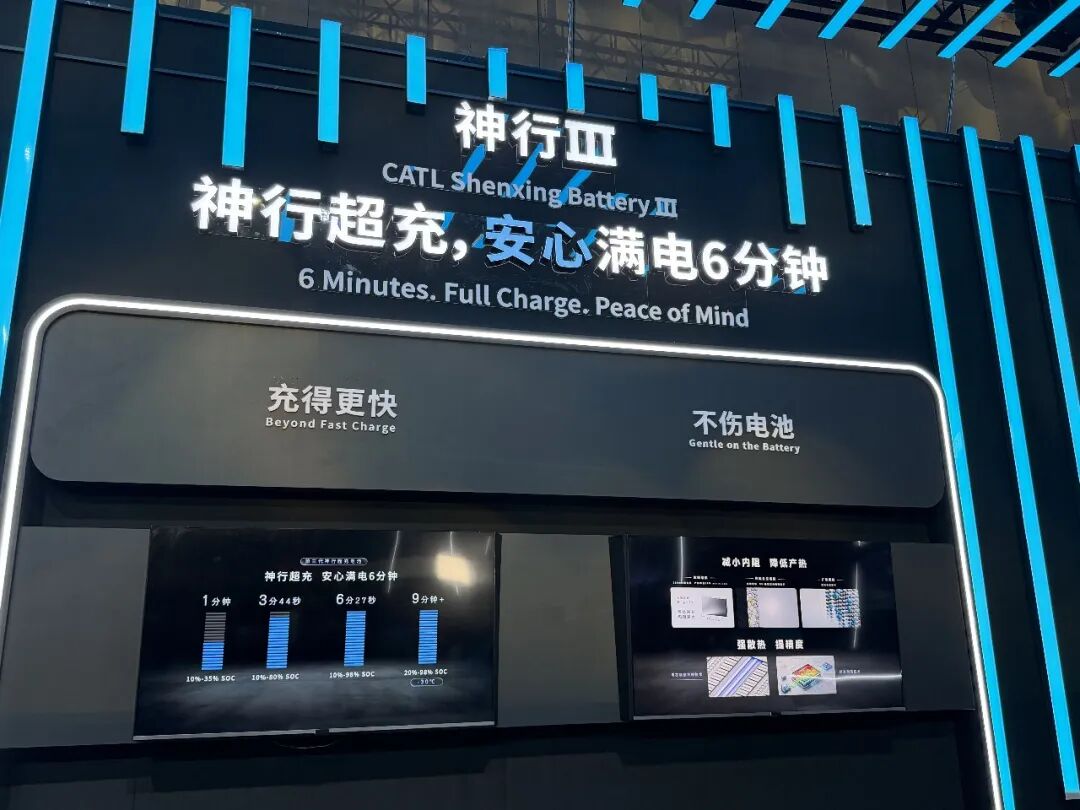
Recently, CATL (300750.SZ) released a significant new technology to address this pain point. On the evening of April 21st, it launched the third - generation Shenxing Ultra - fast Charging Battery, which can charge from 10% to 98% in 6 minutes and 27 seconds, and can complete recharging in about 9 minutes at - 30°C.
CATL's technology made a grand debut. However, within less than a week before and after the press conference, Ningbo United Innovation New Energy Investment Management Partnership (hereinafter referred to as: Ningbo United Innovation), the fourth - largest shareholder of CATL, plans to transfer the company's shares. Sinopec Hong Kong also reduced its holdings of the company's H - shares at the same time. Coupled with the share transfer by co - founder Huang Shilin at the end of 2025 - within less than half a year, the three major shareholders have cashed out (or plan to cash out) nearly 46.2 billion yuan in total.
Analysts believe that when major shareholders reduce their holdings, it depends on the method and the enthusiasm of the transferees. It does not necessarily mean that they are bearish on the company, and it does not reflect problems in the company's fundamentals.
However, considering CATL's current control over upstream lithium resources, CATL has not completely secured its "throne".
As of the close on April 23rd, CATL's A - shares were reported at 438.9 yuan per share, up 0.58%, with a total market value of 2.03 trillion yuan; its H - shares were reported at HK$702.5 per share, up 0.5%, with a total market value of about HK$2.3 trillion.
CATL has "brought down" the charging time
On the evening of April 21st, CATL released six major innovation achievements at the "Super Technology Day" in Beijing. The most attention - grabbing one is the third - generation Shenxing Ultra - fast Charging Battery. At room temperature, it only takes 6 minutes and 27 seconds to charge from 10% to 98%. At - 30°C, it only takes 9 minutes to charge from 20% to 98%. This means that the charging time has been reduced from the half - hour level to the 6 - minute level, and the experience is infinitely close to refueling a gasoline car.
However, the significance of this press conference goes far beyond the technical parameters targeting the pain points of the C - end.
BYD also released ultra - fast charging technology in March this year. Its second - generation Blade Battery can charge from 10% to 70% in 5 minutes and from 10% to 97% in 9 minutes. CATL only took a little over a month to come up with a product that outperforms BYD. It charges 2 minutes and 33 seconds faster at room temperature, and its performance in extremely cold conditions is on par with BYD.
Zhang Xiang, a visiting professor at Huanghe Science and Technology College, said that in the industry, CATL and BYD are the first and the second respectively, constantly vying with each other. Their press conferences often show a "close - range" suppression situation. Lin Shi said that in the field of lithium iron phosphate, CATL's biggest competitor is Fudi. The release of this ultra - fast charging technology not only consolidates the pricing power but also competes for customers.
CATL also released a plan for an integrated ultra - fast charging and battery swapping energy replenishment network. In this regard, Lin Shi, the secretary - general of the China - Europe Association for Intelligent Connected Vehicles, said that on the one hand, this plan lures car manufacturers into the "water" through a full - scenario energy replenishment network to prevent car manufacturers from "excluding CATL". On the other hand, it suppresses second - tier battery suppliers with technological scale and prevents car manufacturers with self - built energy replenishment networks from diverting customers. This idea is completely different from BYD's. BYD builds an energy replenishment network centered around its entire vehicles, while CATL does the opposite, which can be regarded as a hedge.
CATL's newly released Shenxing focuses on ultra - fast charging, Qilin focuses on high energy density, Qilin Condensed Matter focuses on long - range, and Xiaoyao focuses on extended - range hybrid - the four technological routes cover the full - scenario needs from mainstream household use to high - end performance, from pure electric to hybrid. Whenever there is a technological competition in any niche market, CATL has corresponding products to respond.
Yuan Shuai, the co - founding initiator of the New Intelligence and New Productivity Conference Hall of the New Intelligence School, pointed out that CATL is accelerating its transformation from a battery manufacturer to an integrated service provider in the new energy industry, consolidating its industrial discourse power, and countering the impact of competitors across the entire industry chain.
Major shareholders have successively reduced their holdings within half a year
The "Super Technology Day" attracted the attention of the entire industry. However, within less than a week before and after the press conference, the successive reduction of holdings by CATL's major shareholders also attracted market attention.
On the evening of April 17th, CATL announced that Ningbo United Innovation, a shareholder holding more than 5% of the shares, plans to transfer 58 million A - shares through inquiry transfer due to its own capital needs, accounting for 1.27% of the total share capital. Ningbo United Innovation is the fourth - largest shareholder of the company and has held shares before the listing. The final transfer price is 410.34 yuan per share, a discount of about 5% compared with the previous closing price, cashing out about 23.8 billion yuan, and the shares were taken over by 30 institutional investors.
Almost at the same time, according to "Viewpoint Network", another major shareholder of CATL, Sinopec Hong Kong, sold 8.5 million H - shares at HK$708 per share, a discount of about 3.8%, cashing out about US$769 million (equivalent to about 5.256 billion yuan in RMB). Sinopec Hong Kong originally held 14.7 million shares and was its second - largest shareholder. This reduction of holdings exceeded half of its original holdings.
This is not the first time that major shareholders have reduced their holdings recently. At the end of 2025, the large - scale reduction of holdings by co - founder and former "second in command" Huang Shilin shocked the market.

Huang Shilin is the third - largest shareholder and the largest individual shareholder of the company, holding 466 million shares (accounting for 10.21%). In November 2025, he transferred 45.6324 million shares (accounting for 1%) through inquiry transfer at a transfer price of 376.12 yuan per share. He cashed out about 17.163 billion yuan, which was not only the largest single - transaction amount since that year but also refreshed the scale record of inquiry transfer in the A - share history. The transferees were 16 institutional investors, and the shares were locked for 6 months. After the transfer, Huang Shilin remained the third - largest shareholder.
Within less than half a year, the three major shareholders have cashed out (or plan to cash out) nearly 46.2 billion yuan in total.
However, Yuan Shuai believes that the intensive reduction of holdings by major shareholders is often interpreted as "insiders are not optimistic", but if we analyze in depth the reduction methods (inquiry transfer, institutional takeover, non - secondary market selling) and the enthusiasm of institutional over - subscription, the reduction of holdings may just be a normal exit during the fund's term. The company's advantages in technology, cost, and customers remain unchanged, and the short - term adjustment of the shareholder structure has little to do with the fundamentals.
The layout of lithium mines needs to break the deadlock, and CATL's grand plan is still on the way
Since 2017, CATL has ranked first in the global power battery installation volume for many consecutive years.
According to the statistics of South Korean market research institution SNE Research, in the first two months of 2026, CATL's global power battery installation volume market share reached 42.1%, an increase of 3.4 percentage points compared with the same period last year. According to the statistics of domestic institution Gasgoo Auto Research Institute, from January to February 2026, CATL's installation volume market share in the domestic power battery market was 48.3%.
In terms of performance, in the first quarter of 2026, CATL's total revenue was 129.131 billion yuan, a year - on - year increase of 52.45%; its net profit attributable to the parent company was 20.738 billion yuan, a year - on - year increase of 48.52%.
Although the outstanding data have built a solid industry image, CATL has not completely secured its "throne".
On the downstream client side, car manufacturers such as Li Auto and XPeng have introduced other battery suppliers, and CATL is no longer the only battery supplier. In terms of competitors, BYD's global market share has climbed to 13.4%, firmly ranking second globally; its subsidiary Fudi Battery's domestic installation share reached 17% in March 2026. Second - tier manufacturers such as CALB and Guoxuan High - tech are continuously expanding production and catching up.
Among all the external pressures, the lack of control over upstream lithium resources is the most fundamental challenge. Mo Ke, the founder of True Lithium Research, pointed out that the end - game of competition in the global non - renewable resource industry is always resource competition; the technological barriers in the middle stream are easily caught up, and only upstream minerals have natural exclusivity. In the power battery industry where CATL is located, especially the lithium strategy is of particular importance because as long as it is a lithium battery, lithium is needed. The sharp fluctuations in lithium prices in recent years have directly affected the costs of the entire industry chain.
In addition, reviewing the global manufacturing leaders: BHP Billiton controls iron and copper resources; Tongwei Co., Ltd. is rooted in silicon materials; Albemarle builds barriers with its own minerals. Upstream resource sovereignty is the cornerstone of the long - term stability of leaders.
CATL's path of buying mines in the past decade has not been particularly smooth.
In terms of overseas expansion, it started to layout through equity participation in the early stage. For example, it acquired North American Lithium in 2016 and took a stake in Canada's Neo Lithium Corporation in 2020, which owns a salt - lake lithium project in Argentina. In 2021, CATL tried to acquire Canada's Millennial Lithium Corporation in full for C$377 million. Although it defeated Ganfeng Lithium, it was finally "intercepted" by Lithium Americas at a higher price. After the failure to bid for Millennial Lithium, CATL instead invested US$240 million to take a stake in the Manono lithium mine project in the Democratic Republic of the Congo in Africa.
In China, in 2022, CATL won the exploration right of the Jianxiawo mining area in Yichun, Jiangxi, for 865 million yuan. The lithium carbonate supply of this mining area and its supporting smelter is about 10,000 tons per month, accounting for about 12.5% of the domestic total output.
But the biggest problem is that if the ore grade is low, the refining cost will be very high. The average lithium oxide grade of this mine is only 0.27% (far lower than the general industrial grade of 0.8% for lithium deposits), and the cash cost of lithium extraction is as high as 100,000 - 110,000 yuan per ton.
In 2024, when the spot price of lithium carbonate fell below 75,000 yuan per ton, it had already broken through the cost line. In the same period, CATL made an asset impairment loss provision of 6.652 billion yuan, a year - on - year increase of 133.54%, and a considerable part of it was related to the shrinkage of the book value of upstream assets such as lithium mines due to price decline.
Moreover, in August 2025, production was completely suspended due to issues such as the expiration of the mining license, change of the mineral type, and compliance approval. It was previously expected to resume production around the Spring Festival in 2026, with an annual production capacity of 50,000 tons, but the actual progress has been consistently lower than expected. Mo Ke said that the mine will eventually resume production, but many links are not under CATL's control, and it is at least difficult for the outside world to determine the specific time.
More urgently, the global lithium supply and demand continue to tighten. In April, Morgan Stanley lowered its global lithium supply forecast for 2026 from 500,000 tons of lithium carbonate equivalent to 400,000 tons; UBS predicted a supply - demand gap of 22,000 tons in 2026, with a demand growth rate of 14%; Deutsche Bank judged that the industry has entered a stage of tight balance of lithium resources.
Lithium prices are prone to rise and difficult to fall. Coupled with the domestic price war squeezing profits, and at the same time, overseas expansion and energy storage business put forward higher requirements for lithium resources. In the first quarter of 2026, CATL's comprehensive gross profit margin decreased by 3.2 percentage points quarter - on - quarter, and the rise in lithium prices was one of the core reasons.
Facing the resource challenge, CATL launched a major strategic transformation in 2026. On April 22nd, the day after the "Technology Day", Times Resources Group (Xiamen) Co., Ltd. was officially established with a registered capital of 30 billion yuan, covering the entire process of mineral exploration, mining, and trade. CATL made it clear that this platform is a professional investment and operation entity for new energy minerals.
To improve its mining operation, CATL made early personnel arrangements. As early as April 7th, the company officially announced that it had hired "China's King of Gold"