Part two of the 2026 Beijing Auto Show series: A look at the world's largest auto show through seven cutting-edge technologies
The highly anticipated Beijing Auto Show kicked off on April 24, 2026.
According to the data officially released, the total exhibition area of this year's show has reached 380,000 square meters, and its scale has leapt to the top among global auto shows.
In terms of exhibitors, from international giants to local brands, from international luxury and mainstream brands such as BMW, Mercedes - Benz, Audi, Lincoln, and Volvo, to large state - owned automobile groups like FAW, SAIC, and Changan, and even new - force brands like Hongmeng Zhixing, NIO, Li Auto, and Xiaomi that have attracted much attention, they are all competing on the same stage, interpreting the theme of the auto show, "Lead the Era, Intelligent Future".
It is reported that a total of 1,451 vehicles are on display at this Beijing Auto Show, including 181 new cars making their global or domestic debuts and 71 concept cars, truly a veritable automotive feast.
In addition to the dazzling new cars, another highlight of this auto show is a large number of cutting - edge technologies with breakthroughs and scenario - based products close to daily use. For example, the fully active intelligent chassis, i - HEV intelligent hybrid system, and the full - vehicle transparent interactive display, etc., which together showcase the current technological ceiling of the automotive industry.
1. Fully Active Intelligent Chassis: Both Handling and Comfort Can Be Achieved
Whether it is a fuel - powered vehicle or an electric vehicle, the chassis is the key to determining a vehicle's driving feel, handling stability, and riding comfort, and it is also a hard benchmark for measuring a vehicle's core strength.
Some people call 2026 the first year of the "fully active intelligent chassis", and this technology has naturally become one of the synonyms for high - tech at this Beijing Auto Show.
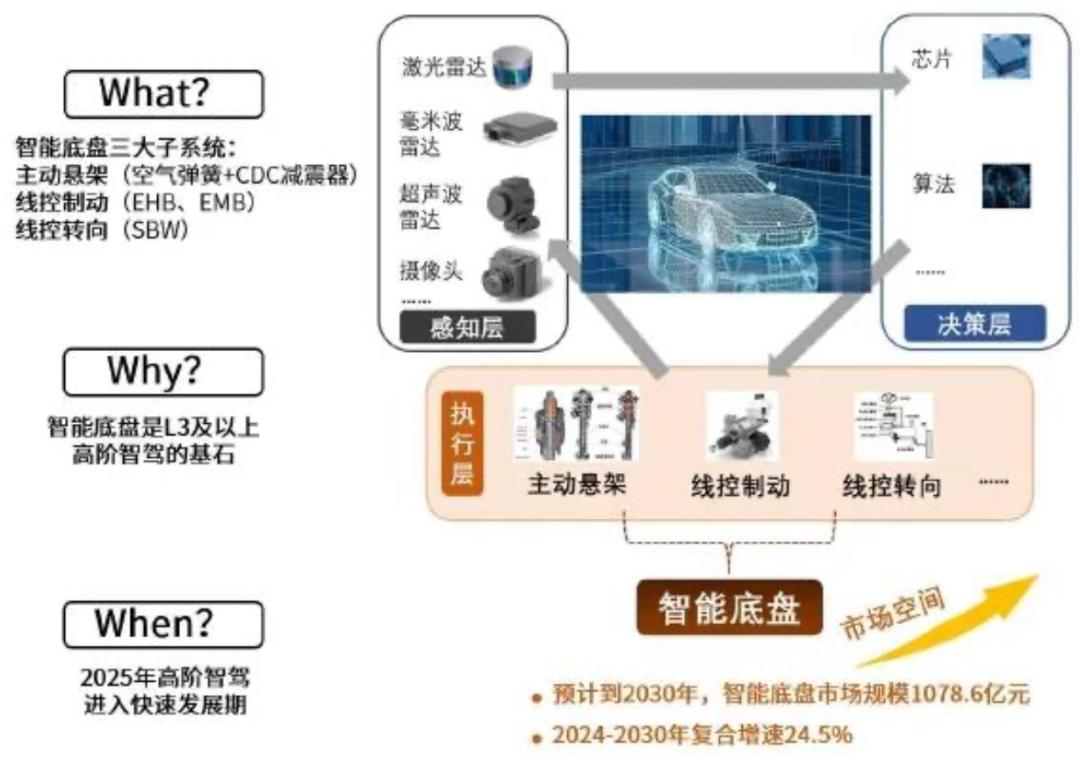
Picture/Explanation and prospect of the intelligent chassis, Source/Screenshot from Internet's New Energy View
What is a fully active intelligent chassis? As the name suggests, it is a high - level and complete form of the wire - controlled chassis. The core is to centrally and uniformly control the structures that "acted" independently in the fuel - vehicle era, such as suspension, steering, and braking, through algorithms and a central domain controller on the hardware basis of the full wire - controlled chassis, forming a system architecture with full - domain synergy.
To put it simply, the fully active intelligent chassis must rely on wire - control technology and is a product of the development of the wire - controlled chassis into the AI integration era.
As the basic technology platform for the fully active intelligent chassis, the wire - controlled chassis has also become a technological hot spot at this Beijing Auto Show. Many star models, including the new Li L9 Lives, XPeng GX, IM LS8, Leapmotor D19, AITO M9, NIO ES9, and Chery Exeed EX7, have almost all bet on the wire - controlled chassis, and some of these models have moved towards the high - level form of the fully active intelligent chassis.
Among them, the "SkyRide · Tianxing" integrated fully active suspension installed on the NIO ES9 has become the world's only mass - produced electro - hydraulic integrated fully active suspension. NIO mentioned that "the suspension is no longer a mechanical component that passively bears the road surface, but an intelligent system with a 'brain' and'muscles'."
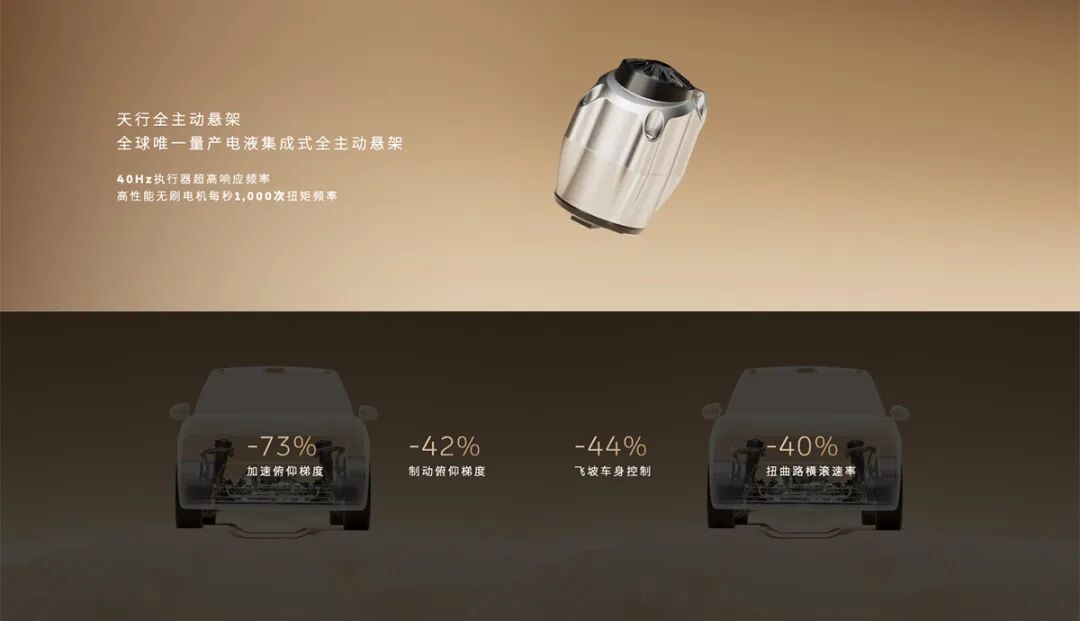
In addition to domestic brands, the newly redesigned Mercedes - Benz EQS and the long - wheelbase version of the BMW iX3 have also joined the wave of large - scale implementation of the wire - controlled chassis.
In fact, wire - control is not a particularly new topic. Previously, NIO's ET9 had already been equipped with the world's first wire - controlled steering. However, at this Beijing Auto Show, the wire - control technology has been comprehensively upgraded, and all four major components of the chassis (steering, braking, transmission, and driving) have been converted to "wire - control". This full wire - control layout is precisely the core prerequisite for the fully active intelligent chassis to achieve full - domain collaborative control.
Industry insiders analyzed that the large - scale implementation of the wire - controlled chassis is essentially the in - depth integration of wire - control technology and the suspension system. It not only lays the foundation for the popularization of the fully active intelligent chassis but also breaks the technological monopoly of luxury brands in the high - level driving control field. It not only allows consumers to experience high - level driving control at a lower cost but also promotes the transformation of China's automotive chassis technology from "following and imitating" to "independent leadership".
2. 896 - line LiDAR: A Higher - Definition "Eye"
In the era when new energy vehicles have entered the second half of the intelligent era, LiDAR has become a standard configuration and is even considered the "core sensing organ" for high - level intelligent driving.
From ordinary LiDAR to 192 - line LiDAR, and now to the 896 - line LiDAR, LiDAR has further become the core bargaining chip for car companies to compete in high - level intelligent driving.
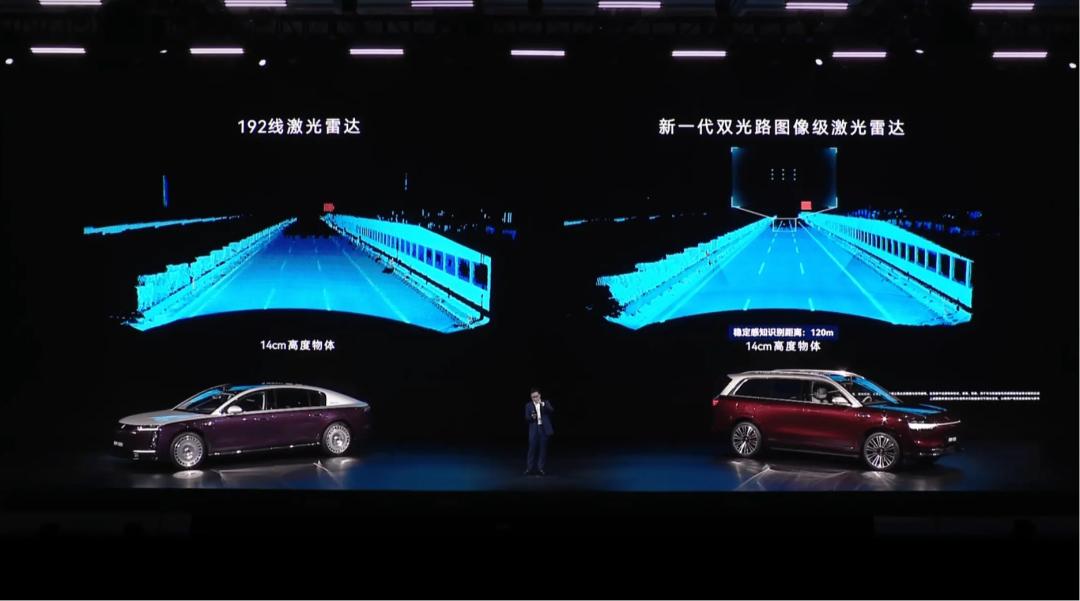
Picture/Comparison of imaging between 192 - line and 896 - line LiDAR, Source/Screenshot from Internet's New Energy View
Whether it is the new AITO M9, AITO M7, AITO M6 at the Hongmeng Zhixing booth, or the Shangjie Z7, Shangjie Z7T, as well as the updated versions of the Xiangjie S9, Xiangjie S9T, Zhijie R7, and the new Zhijie S7, all are equipped with Huawei's 896 - line dual - optical - path image - level LiDAR.
The first - generation flagship six - seat SUV, the Yijing X9, which is also part of the "Huawei family", is also standard - equipped with Huawei's 896 - line LiDAR, which can be seen at the Beijing Auto Show.
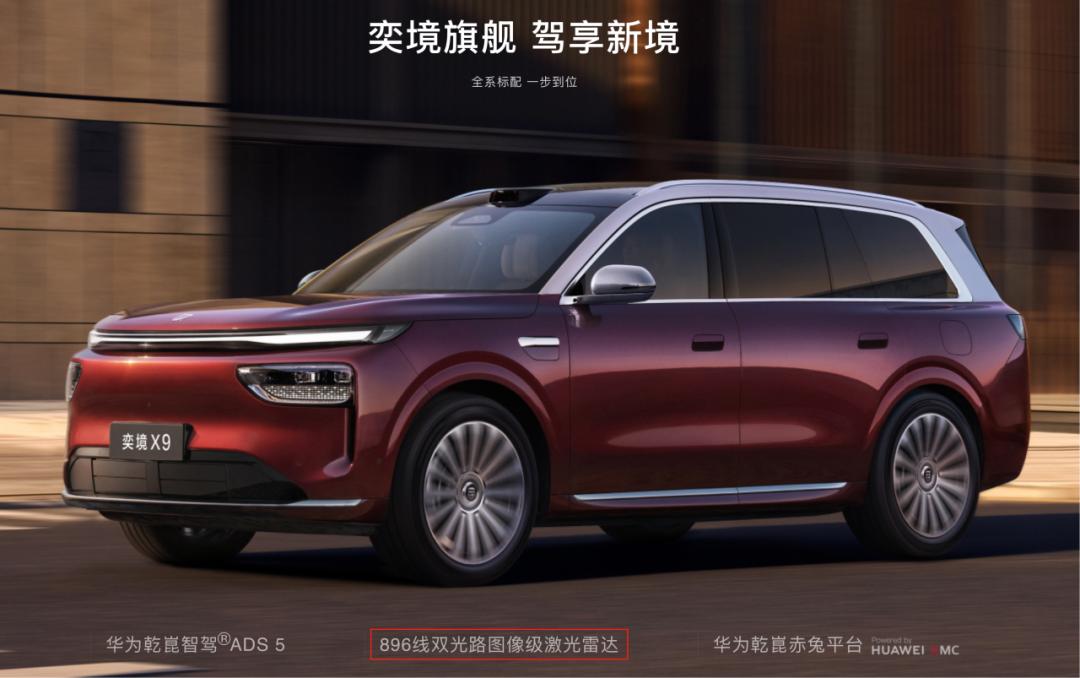
Picture/Yijing X9, Source/Screenshot from Internet's New Energy View
Meanwhile, models such as the Voyah Taishan Ultra under Voyah, Avita 12, and Avita 06T, which cooperate with Huawei Qiankun, have also become the first batch of models equipped with the 896 - line dual - optical - path image - level LiDAR.
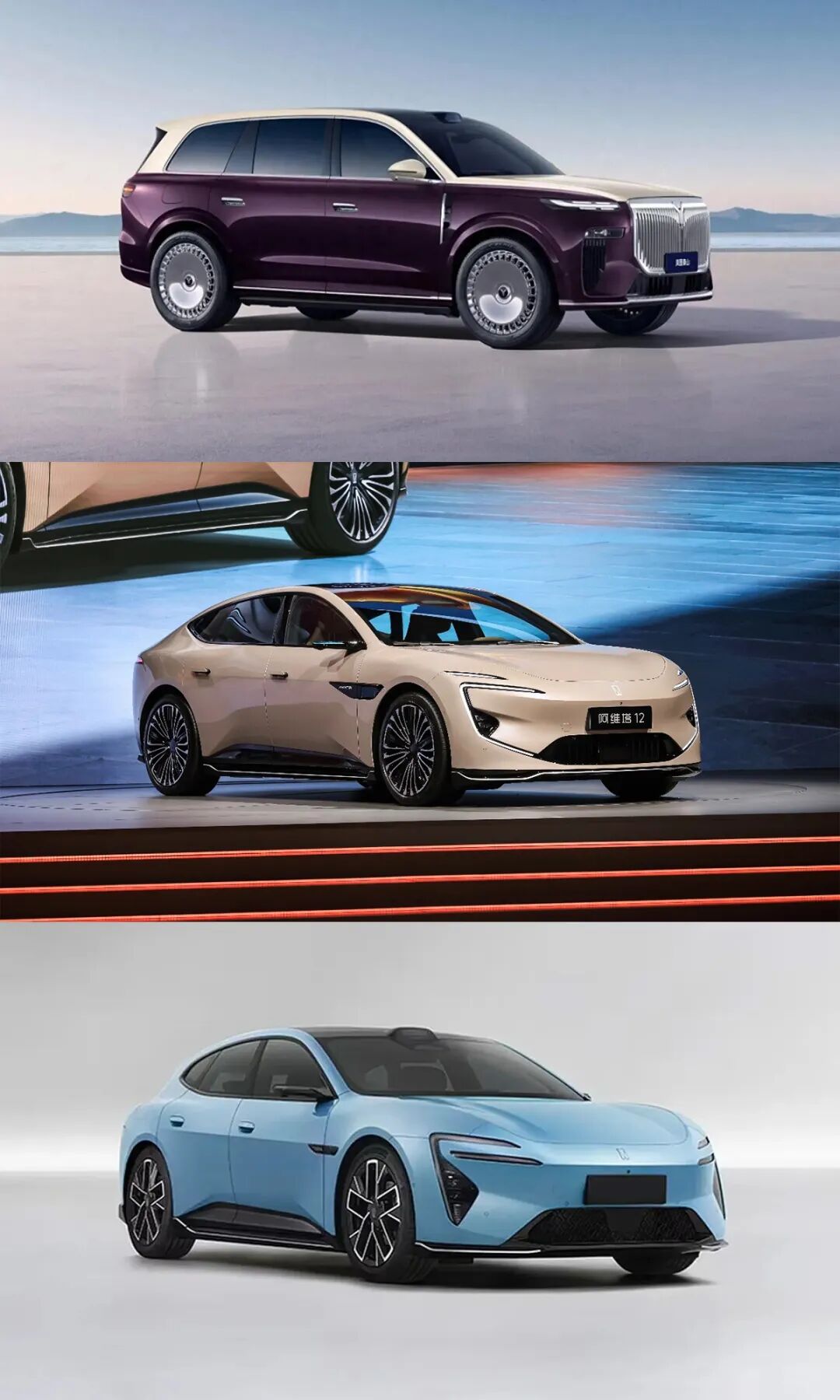
Picture/Voyah Taishan Ultra - Avita 12 - Avita 06T, Source/Screenshot from Hongmeng Zhixing official website's New Energy View
At the auto show, many on - site consumers were also having heated discussions about intelligent driving and LiDAR. Some consumers said directly that the intelligent driving system in their current cars is provided by Huawei Qiankun and it is very smooth. Some consumers emphasized that intelligent driving has become the main factor for their car - buying decisions, but some technical terms are difficult to understand. Of course, some consumers also said directly that even though many car companies are emphasizing intelligent driving, they still prefer "manual driving".
There is no denying that more and more new energy vehicles will have higher - definition and intelligent "eyes", using technological means to build a safety bottom - line for consumers.
3. AI Large Model on Board: Intelligent Adaptation for "Personalized Experience"
In the intelligent era, in addition to hardware intelligence, the intelligence of software such as the intelligent cockpit is also an important factor that consumers pay special attention to when buying a car.
For this reason, this Beijing Auto Show has become the year of the explosion of AI large models on board. Multi - modal interaction and cabin - driving integration have become the intelligent core themes of the entire auto show, marking that in - vehicle intelligence has officially bid farewell to "shallow voice interaction" and entered a new stage of "deep intelligent collaboration".
Car companies are no longer satisfied with simple voice assistant responses. Instead, they have deeply implanted end - to - end large models into the cockpit system, achieving a qualitative change in in - vehicle intelligence from "passively responding to instructions" to "actively predicting needs".
Brands such as AITO, Zhijie, and Avita are all equipped with the Hongmeng Cockpit 5.0 + Pangu In - vehicle Large Model, which can easily achieve continuous dialogue without interruption, accurate understanding of context, and barrier - free recognition of multiple dialects (such as Cantonese and Sichuanese). It even supports multi - person parallel command operations, completely solving the pain points of traditional voice assistants such as "answering irrelevantly" and "complicated instructions".
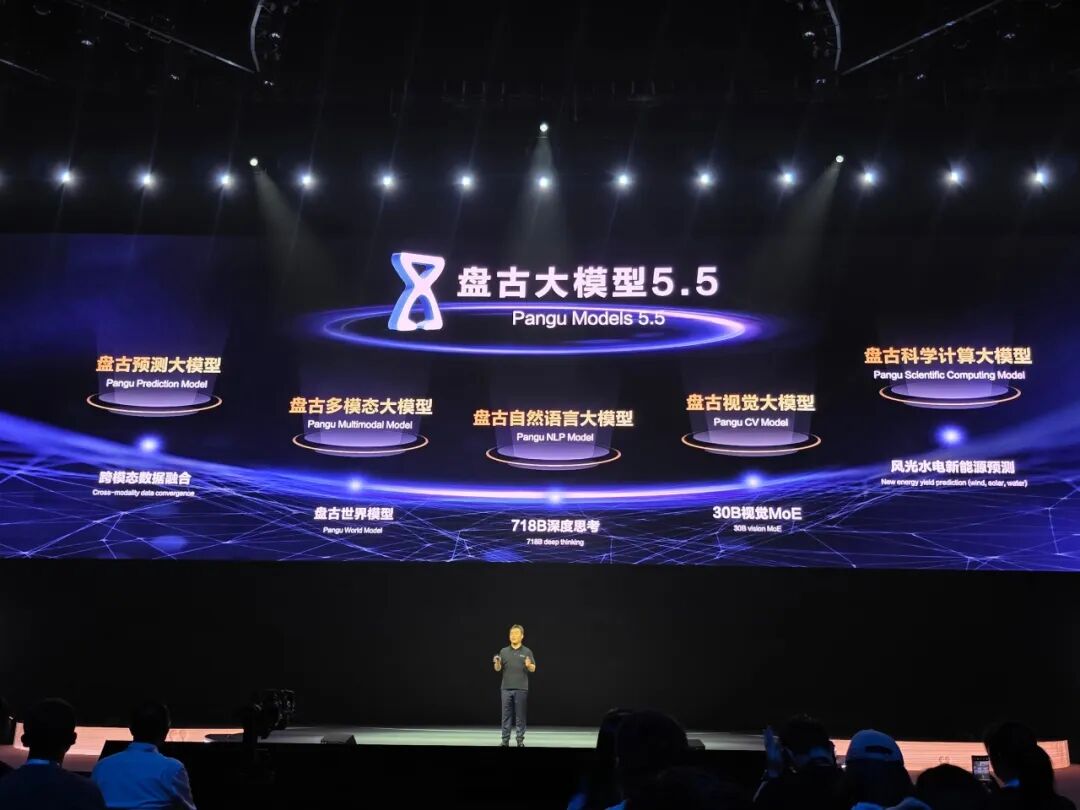
Picture/Pangu Large Model, Source/Screenshot from Internet's New Energy View
XPeng Motors uses the XPeng XNGP4.0 + Tianji Large Model, deeply linking intelligent driving and cockpit interaction to achieve seamless connection between commands and driving scenarios. BMW's new - generation models have jointly developed a customized AI engine with Alibaba and, with the support of DeepSeek technology, achieved the collaboration of AI multi - agents. Li Auto's cabin - driving integrated central computing solution breaks the barrier between the cockpit and driving, deeply binding driving behavior and cockpit experience to achieve personalized intelligent adaptation.
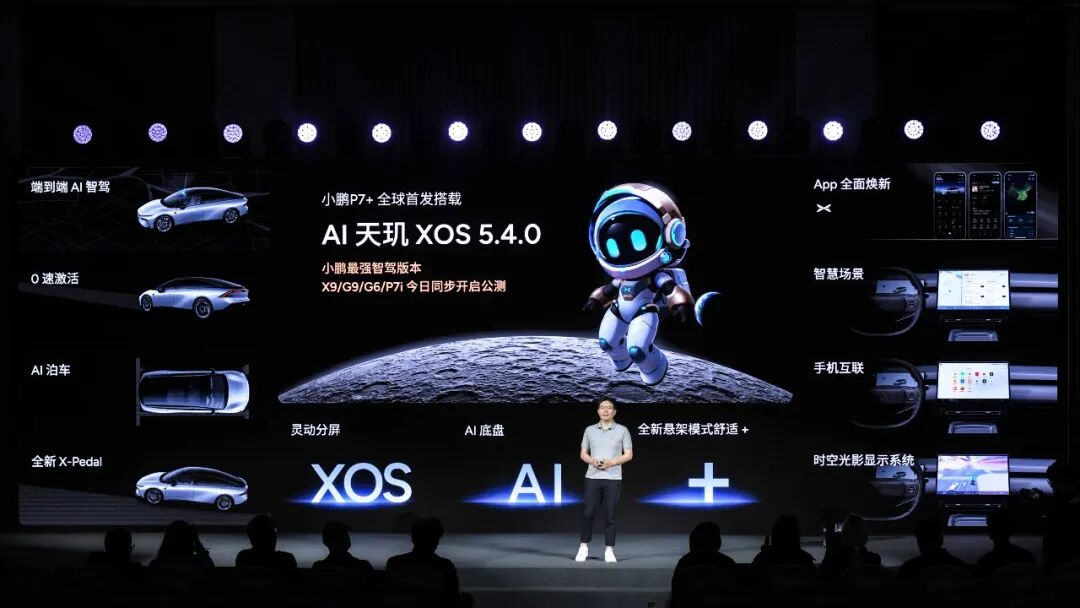
Picture/Tianji Large Model, Source/Screenshot from Internet's New Energy View
Consumers who experienced the new intelligent interaction at the auto show said directly that compared with the previous voice commands that required one - question - one - answer, now they can issue multiple commands to the voice assistant at the same time, such as asking about traffic, weather, waypoints, and restaurants, and the voice assistant can execute them one by one. It's so convenient.
4. Intelligence Changes from "Optional" to "Standard": L4 - level Autonomous Driving on Board
A more intelligent AI assistant can help the car owner execute commands, but it is autonomous driving that takes the AI assistant to complete the commands.
In 2026, the intelligent competition among car companies has entered the deep - water zone. L3 - level autonomous driving has changed from a "high - end configuration" to an "entry ticket" for market competition.
Car companies are increasing their investment in high - level autonomous driving. L4 - level autonomous driving has become the new focus of competition and the most eye - catching "star highlight" at this Beijing Auto Show. Models with L4 - level autonomous driving capabilities are no longer just "technology demonstrations" at the conceptual stage but truly have practical value for implementation.
Among them, the XPeng GX, a Robotaxi prototype vehicle built according to the L4 - level autonomous driving standard and mass - produced for pre - installation, has become the focus of the auto show. The Zhijie V9 is equipped with Huawei Qiankun's assisted driving system and an 896 - line LiDAR, supporting full - scenario L4 - level autonomous driving functions such as urban NOA and high - speed navigation.
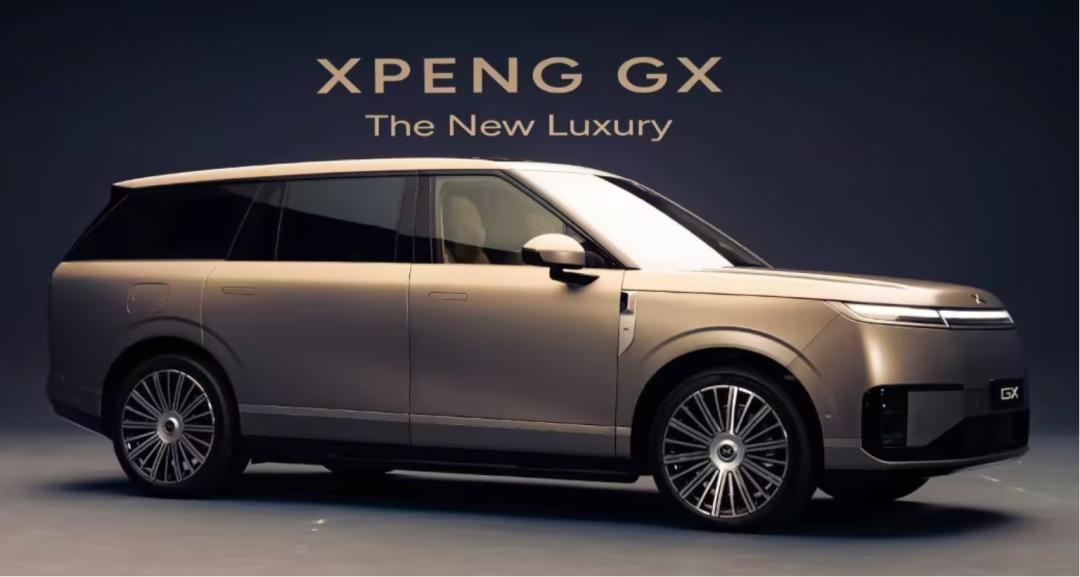
Picture/XPeng GX, Source/Screenshot from Internet's New Energy View
In addition, more and more car companies have also demonstrated the pilot results of L4 - level autonomous driving, covering diverse scenarios such as Robotaxi, park shuttles, and urban sanitation.
What is even more noteworthy is that with the maturity of technology and the optimization of costs, intelligent configurations have completely broken the barrier of being "exclusive to high - end models" and have fully shifted from "optional" to "standard".
Industry insiders believe that the concentrated implementation of L4 - level autonomous driving at this Beijing Auto Show marks that China's automotive intelligence has entered the "explosion period of high - level autonomous driving mass production".
5. i - HEV Intelligent Hybrid Technology: Will the Hybrid Market Change Again?
Recently, at the 2026 Smart Car High - level Forum, Chen Qingquan, an academician of the Chinese Academy of Engineering, mentioned that the global automotive industry is currently in the second half of the electrification transformation. As a key force bridging the past and the future, the choice of hybrid technology route is directly related to the implementation of the "dual - carbon" strategy and the upgrading of industrial competitiveness.
And Geely's recently launched i - HEV intelligent hybrid technology not only implements this concept but also has become one of the core power high - techs at this auto show.
According to Geely's official information, the i - HEV intelligent hybrid technology has a measured comprehensive fuel consumption of 2.22L per 100 kilometers and the world's highest mass - produced engine thermal efficiency of 48.41%. It is first installed on many best - selling models such as the Xingrui, Xingyue L, the fourth - generation Boyue L, and the fifth - generation Emgrand.