Breaking the deadlock of the "two giants in intelligent driving", how can Qianli Technology reshape the industry landscape with the power of AI?
A "dark horse" has emerged in the intelligent driving circle, and the market landscape of intelligent driving is facing variables for reshuffle.
At the AI strategy and product launch event of Qianli Technology held on April 22nd, Qianli Technology announced a set of data: The installation volume of Qianli Intelligent Driving has exceeded 460,000 vehicles, covering 17 models of Zeekr and Lynk & Co, and it is expected to officially enter the "million - level club" in 2026.
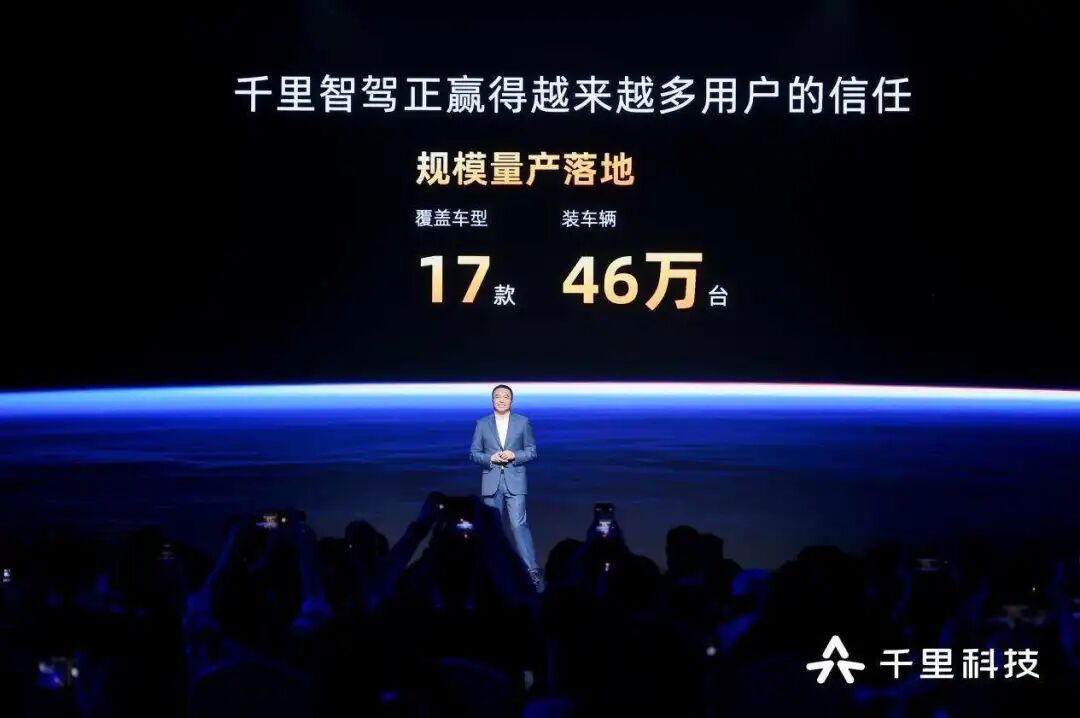
It only took Qianli Technology a little over half a year from brand launch to large - scale mass production of the solution and reaching an installation volume of 460,000 vehicles. At a time when the industry generally believes that the intelligent driving pattern is becoming stable, this expansion speed is unprecedented.
Behind this "unconventional speed" is a change in the growth logic itself. In essence, the Qianli speed is the AI speed. This high - growth has become the second pole outside of Huawei, forming a new industry pattern of "two giants in intelligent driving" in the AI era.
The growth of traditional intelligent driving companies relies on "engineering replication", with a long development cycle and high adaptation costs. Qianli Technology is an "AI - native company". Its capability foundation is different from that of traditional intelligent driving companies. From the very beginning, it has built a capability system around large models, including building AI infrastructure (Infra), a complete data closed - loop, a higher density of algorithm talents, and the ability to quickly engineer and implement models.
This is consistent with the transformation direction of leading new - energy vehicle manufacturers. At the beginning of this year, Li Auto and XPeng both tried to open up the full - chain capabilities of "Infra - model - agent" through organizational adjustments. In essence, they are transforming into AI companies.
The difference of Qianli Technology is that it does not start from automobile manufacturing to make up for AI shortcomings, but enters the automobile industry with AI - native capabilities. This gene determines that it has natural advantages in model training efficiency and data - driven development.
Also based on this capability foundation, Qianli Technology has a more forward - looking technology layout. In intelligent driving assistance, it empowers L2++ with L4 - level technical architecture from top - down. In the cockpit, it reconstructs the intelligent cockpit with super - agent capabilities.
At the intelligent driving level, the traditional industry path often regards L2, L3, and L4 as different system engineering. Each technological generation upgrade means the redevelopment and adaptation of the architecture. Qianli's judgment is that L2+ to L4 must be based on the same set of technology stack. The leap in system capabilities should come from the expansion of model parameters and the continuous feeding of high - quality data, rather than the repeated reconstruction of the architecture.
The advantage of doing this is that when the capabilities of the base model are improved, they can be seamlessly and synchronously released to products at different levels, greatly improving the deployment efficiency and also spreading the overall R & D costs.
Under the same set of technology stack, L2++ is the practical path to obtain large - scale real - road condition data, and Robotaxi is the final verification of its L4 technology stack.
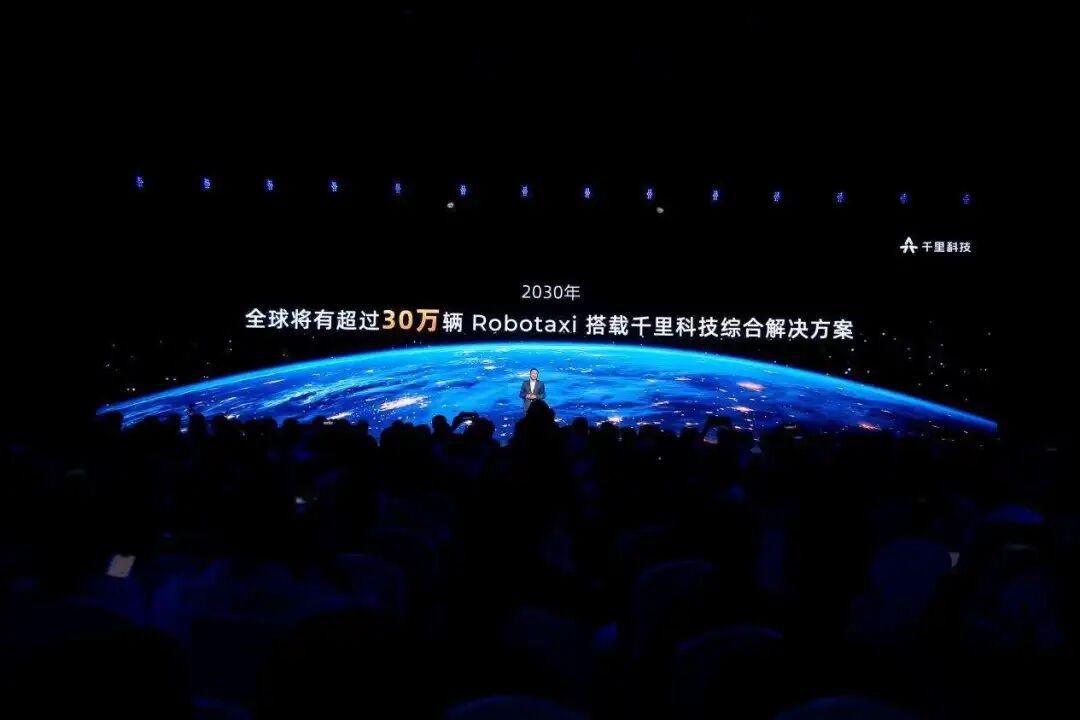
At the press conference, Qianli Technology's Robotaxi business also made new progress: It is expected to launch a comprehensive Robotaxi solution in 2027, and more than 300,000 Robotaxis worldwide will be equipped with Qianli Technology's comprehensive solution by 2030.
How to achieve this plan?
The answer given by Qianli Technology is to form a strategic community with Jieyue Xingchen to create a "native intelligent driving base model", which will also become the foundation of physical AI and embodied intelligence. Qianli Technology will use the L4 architecture for "driving" and the super - agent for the "cockpit", and firmly continue to make intelligent driving technology the industry leader.
This combination of "large model + engineering ability" makes the cockpit no longer just an interactive interface, but begins to become the entrance to the vehicle's intelligence, thus giving birth to the industry's first Chinese - version "Grok + FSD" combination - "Qianli Super Intelligent Agent + Qianli Intelligent Driving ASD 4.0" was first launched on the Zeekr 8X.
In this system, the Qianli Super Intelligent Agent empowers the Super EVA to be responsible for "thinking", and the high - modulus Qianli Intelligent Driving ASD 4.0 is responsible for "acting". This is essentially a reconstruction of the "cognition - action" closed - loop of the vehicle.
Under the traditional vehicle infotainment system architecture, when the user issues an instruction, the system analyzes the semantics and calls different modules to execute. The whole process is full of fragmentation. In the native cockpit - driving integration architecture, vague multi - task instructions such as "go to pick up the kids from school and buy a McDonald's meal on the way" can be directly used as the starting point of a complete process. The Super EVA can independently call the navigation, chassis, and intelligent driving systems to independently complete the planning and execution.
It can be seen that in the AI era, the automobile is no longer just a one - time - sold hardware, but a terminal that continuously generates service value. Navigation, content, travel services, and even more third - party capabilities can be re - organized through the intelligent agent. This model is significantly similar to the application ecosystem in the mobile Internet era.
In this context, the joining of Zhao Ming, the former CEO of Honor, as the co - chairman, fills in the last key piece of the puzzle for Qianli Technology - the ability to close the commercial loop. With his experience in leading major battles in the consumer electronics field and building a huge business ecosystem, Zhao Ming will be responsible for transforming AI technology into large - scale products and promoting the formation of a full - link commercial closed - loop.
Qianli Technology's business map is gradually expanding. Zhao Ming revealed that the installation volume of Qianli Technology's solutions will increase by 3.5 - 4 million in 2028, and the cumulative installation volume will reach 8 million in the next three years.
As an open platform for third - party vehicle manufacturers, Qianli's "circle of friends" is expanding. At this press conference, Zhao Ming also publicly announced that they will help partners create a new brand "Youxin", and two models of this brand were unveiled for the first time. This marks that Qianli Technology's open - platform strategy has made substantial progress.
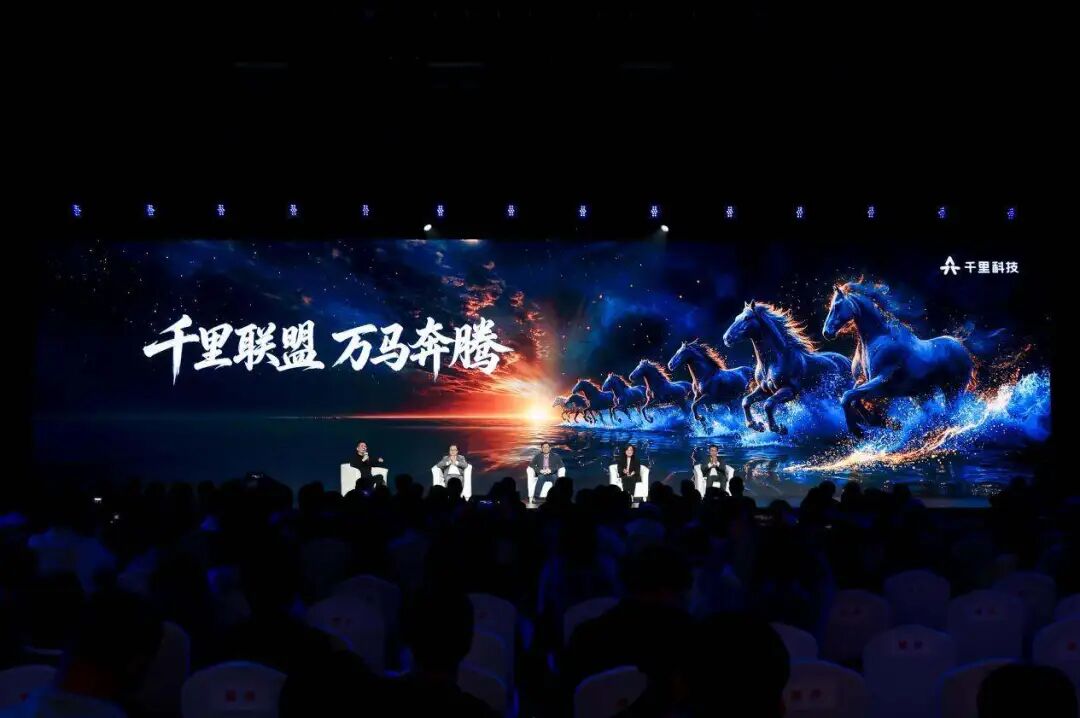
In addition, in terms of the ecosystem, Qianli Technology has joined hands with Jieyue Xingchen, Aixin Yuanzhi, and Tianshu Zhixin to create a new paradigm of "chain - type collaboration" with in - depth collaboration from the model, chips to terminal applications in the upstream and downstream of the industrial chain under the general trend of AGI, driving industrial transformation with the "Qianli speed".
For a long time, the narrative of the Chinese intelligent driving market has mainly revolved around two paths: one is the self - developed model led by automobile manufacturers, and the other is that algorithm companies provide solution outputs to partners. Qianli Technology is trying to build a third form - a "system - level player" with AI at its core and both full - stack capabilities and platform attributes.
This is why it is regarded as one of the few companies that may compete head - on with Huawei.
Intelligent driving is moving from functional competition to vehicle - level intelligent competition, from the competition of engineering capabilities to the comprehensive competition of AI capabilities and business capabilities. At this stage, whoever can master model capabilities, engineering capabilities, and large - scale implementation capabilities at the same time will have a better chance of becoming the leader in the next stage.
The ultimate goal of Qianli Technology is to become the "largest intelligent driving supplier" and one of the "best intelligent driving suppliers".
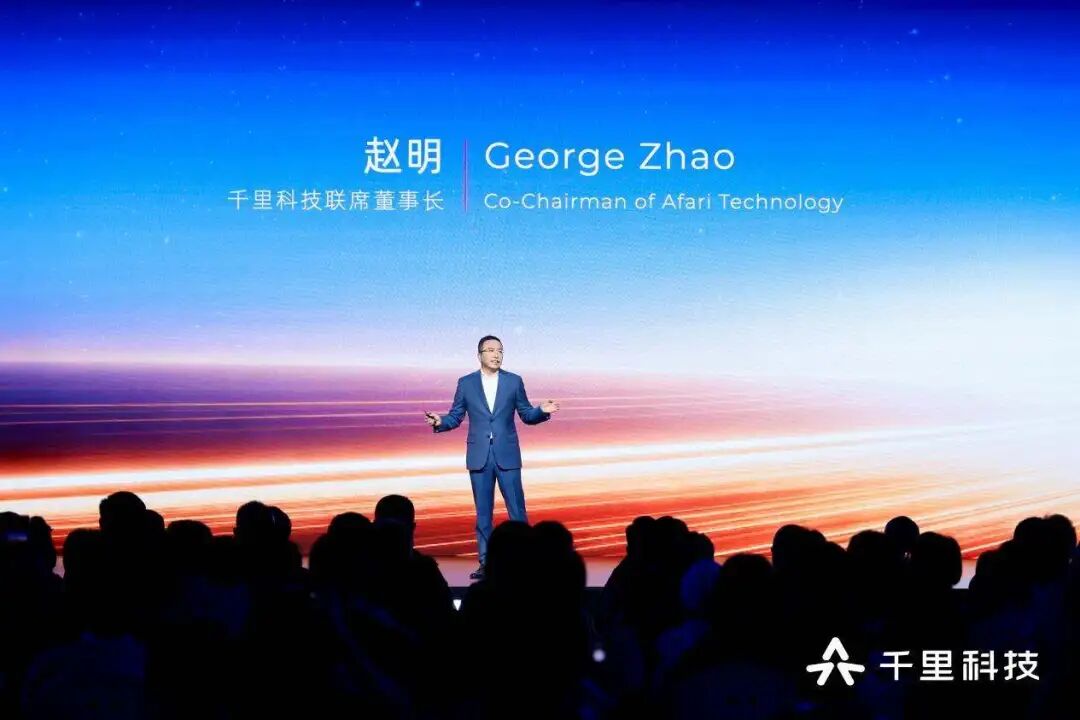
The following is the edited content of the exchange between 36Kr Auto and Yin Qi, the chairman of Qianli Technology, and Zhao Ming, the co - chairman of Qianli Technology:
Question: Qianli's strategy is from L2 to L4, and XPeng and Tesla also have the same strategy. Moreover, these two automobile manufacturers have already started the Robotaxi layout in advance. How will Qianli compete with these two automobile manufacturers in the future, and what are its advantages?
Yin Qi: Different companies have different technical routes. For example, there are the Waymo route and the Tesla route. Now, more and more people recognize the Tesla route, but not every company can follow the Tesla route. Two factors are required:
The first factor is that it has to be an AI company, which needs to have very strong capabilities in the basic models of AI and the underlying layers of various models. There are very few such companies.
Second, it needs to have a huge data flywheel. Qianli's commercialization started with Geely, and there may be more large - scale customers in the future. Qianli has a deep data cooperation relationship with such strategic customers.
In terms of delivery volume, Qianli can successfully deliver more than one million vehicles this year, and it may be one of the largest data flywheel companies in the world. This is the confidence for Qianli to firmly follow the Tesla - like route. At the same time, Qianli has stronger capabilities in the underlying AI models, so it will accelerate learning and iteration through a better learning paradigm.
Question: Is "Youxin" Qianli Technology's own vehicle brand? Where are Qianli Technology's boundaries?
Zhao Ming: First of all, the Youxin brand is not Qianli Technology's own brand. It is a brand that Qianli helps a large automobile manufacturer create, and it will be officially launched in the foreseeable future.
It mainly relies on my own toC capabilities, and we hope to help them integrate the brand - new technologies of the AI era into this vehicle, such as Qianli's L4 - era autonomous driving and related technologies of the super - intelligent agent AI.
For Qianli Technology, we are reducing our own boundaries. The core is to focus on L4 - era autonomous driving, as well as the corresponding capabilities of the super - intelligent agent and super - intelligent cockpit, and help automobile manufacturers build better vehicles in an embodied - intelligence way. This is the core fulcrum of Qianli's announced strategy today.
In addition, Qianli also has automobile and motorcycle - related manufacturing industries. The core strategy of this part is to build intelligent vehicles for the L4 era in the face of the future Robotaxi and Robocar era.
Question: Qianli Technology aims to become the world's largest intelligent driving solution provider. In the intelligent driving solution track, how does it plan to build its moat?
Zhao Ming: The current automobile circle is a bit like the mobile phone circle ten years ago. At that time, there were many competitors, and it was not only a red - ocean competition, but a bloody - ocean competition. AI technology and brand - new designs in this industry are widely used in the automobile circle.
The iteration speed of the automobile circle is becoming more and more like that of the mobile phone circle back then, because in the past, a design and model of a car remained unchanged for several years. Now, automobile manufacturers are accelerating the release of new cars, and even need to iterate every year.
In the past six months, Qianli Technology has developed at an extremely fast pace. To put it simply, Qianli still needs to do a good job in our products. The product is the "1". We use products to interpret the brand and help Qianli's customers win the competition. This is the direction that Qianli Technology will go all out in the next step.
Question: Besides Geely, are there any other companies that have reached cooperation with Qianli Technology in the field of intelligent driving?
Zhao Ming: First of all, Geely is indeed a shareholder of Qianli and a major customer. However, at the same time, Qianli Technology is completely independent in the process of its overall development strategy, business, and customer development.
The PALLADE (Chinese name "Youxin") just announced today is a cooperation with a brand - new customer. Qianli's full - set of intelligent driving and intelligent cockpit solutions and technologies will be mass - produced and applied in the vehicles of this brand. Now, both sides are intensively carrying out pre - development and testing work.
At the same time, we also have brand - new intelligent driving and intelligent cockpit customers who are in the testing process. Qianli is doing customized development according to the customers' needs.
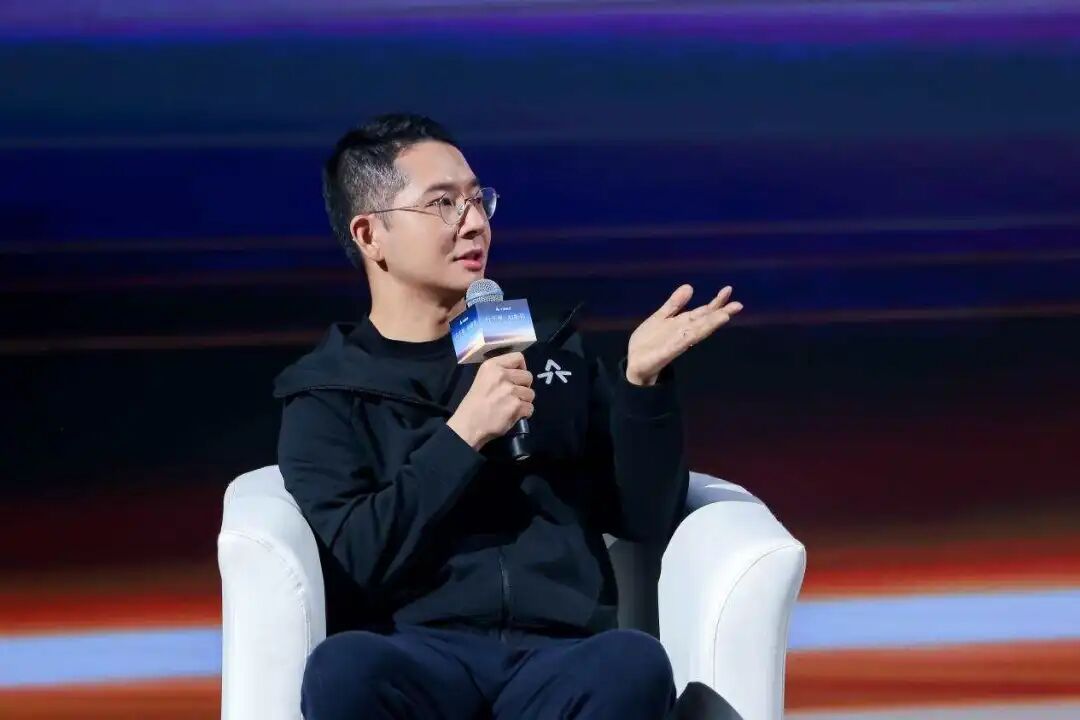
Yin Qi, the chairman of Qianli Technology
Question: The concept of cockpit - driving integration has been around in the industry for many years, but it has not been able to be quickly implemented. This year, the industry has started to talk about cockpit - driving fusion again. How does Qianli Technology view the difficulty of integrating these two systems?
Yin Qi: I think there are two types of cockpit - driving integration. One is to implement cockpit - driving integration on relatively low - cost vehicles, which is essentially to save money. This is not the mainstream. The core of the second type of cockpit - driving integration is experience integration.
The reason why cockpit - driving integration has just emerged is that the "driving" technology is gradually maturing. Because if driving is not truly liberated, there is not much that can be done in the cockpit. Cockpit - driving integration will be an important trend in the next two to three years, and the value of the cockpit in the future will be no less than that of intelligent driving.
Currently, the cockpit that Qianli Technology focuses on is not the interior decoration of the vehicle, such as the in - car screens and speakers. Qianli only focuses on the core entrance of the vehicle, which is the super - intelligent agent, and this can be lightly integrated with the vehicle. The traditional in - car cockpit may also be developed by the vehicle manufacturer itself, as it is a more personalized part.
Question: Since this year, many autonomous driving companies/automobile manufacturers have turned to physical AI. Qianli Technology has a base large model and a powerful computing infrastructure. Why hasn't it transformed into physical AI? How do you think about this issue?
Yin Qi: First, there is no separation in AI, because all industries are driven by basic large models. Recently, there have been concepts such as physical AI and engines in the field of embodiment. However, without the basic model, just like the foundation of the brain does not exist, there can be no vertical models.
Second, the concept of physical AI is a real proposition. In essence, the "car" is a carrier of physical AI. Whether it is about embodiment or physical AI, more attention should be paid to the car, especially the L4 - level system of Robotaxi. This is the only real embodied carrier and system that we will get along with every day in the next three years.