Why does Yu Hao like Wang Chuanfu?
A few days ago, in an interview with Yu Hao, "LatePost" asked him - why do you prefer Wang Chuanfu to Elon Musk?
The question is thought-provoking.
The reporter probably thought that Yu Hao was more like Elon Musk, both belonging to the "tech maniac" camp. And Wang Chuanfu is a self-made tech geek, which is a big contrast to the Yu Hao in her impression.
In fact, as long as you understand this question, you can understand Yu Hao and Dreame. They are not that hard to understand. And you can also get a glimpse of a more important proposition - what kind of world are the new generation of entrepreneurs facing?
Just as Yu Hao himself said: Whether I achieve my ideal or not, it's a good thing for everyone. At least you have one more observation sample.
Who is Yu Hao's kindred spirit?
People usually like someone because they can see themselves in the other person.
Yu Hao's entrepreneurial process probably has four characteristics.
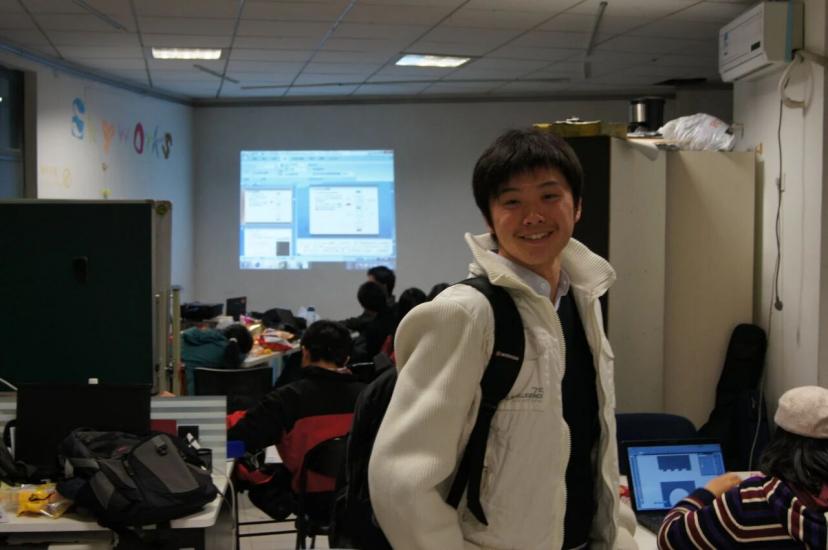
From a technical background. Yu Hao graduated from the School of Aerospace Engineering of Tsinghua University. He invented China's earliest quadcopter drone. The first step of his entrepreneurship was also to perfect the high-speed digital motor;
Starting from a low point. There was no air conditioner in the rented house, so everyone had to work bare-chested. The company first saw the opportunity for large-scale development when it started doing OEM work in the Xiaomi ecosystem;
Strategically focus on the overseas market first. Dreame has maintained a growth rate of over 100% for nearly 8 years, mainly relying on the overseas market. Its products are sold in 120 countries and regions, and it has the No. 1 market share in more than 30 countries and regions;
Being questioned for cross - border expansion. In the process of rising from the bottom to the top in the Xiaomi ecosystem, he kept "crossing borders", from floor sweepers, vacuum cleaners, power banks to a product matrix of hundreds of items now;
Now let's see how Wang Chuanfu started his business.
In 1995, Wang Chuanfu quit his job at the research institute and borrowed 2.5 million yuan to found BYD. A widely - circulated story at that time was that he bought an outdated production line but had no money to maintain the automated equipment. Then he developed his own tooling fixtures, and as a result, he achieved an effect comparable to that of automated equipment at a lower cost.
Relying on extreme cost - effectiveness, he quickly won orders from Philips, Panasonic, Sony and Motorola. Just two years after its establishment, BYD became the world's fourth - largest battery supplier.
Has BYD, now a national pride, faced doubts? The fact is that not only has it faced doubts, but they were also quite severe. In 2003, BYD had become the world's second - largest lithium - battery manufacturer, but this was obviously not Wang Chuanfu's end. He spent 270 million yuan to acquire an automobile company and announced its entry into the automobile industry.
As Yu Hao mentioned in the interview, Wang Chuanfu and Tesla bet on new - energy electric vehicles in the same year - note that it was Tesla, not Elon Musk. Elon Musk joined as an investor the following year.
Later, Tesla quickly became the "father of new - energy vehicles".
However, BYD was met with an uproar in public opinion - "Do you deserve it?" The stock price plummeted by 30%, comparable to a stock market crash. Even though the first car, the F3, was a huge success, the doubts persisted for more than a decade.
The entrepreneurial processes of Yu Hao and Wang Chuanfu are almost the same.
In contrast, Elon Musk's experience is not comparable to Yu Hao's. Yu Hao mentioned a common industry knowledge in the interview - Silicon Valley entrepreneurship is called "take one step and win it all". If you bet right once, you win everything: technology, capital, and narrative are combined to create a miracle. There is no complex decision - making and systematic management pressure, and there is no real resource weighing.
Chinese entrepreneurs, on the other hand, are always facing a "three - dimensional war". They have to compete in various dimensions such as talent, channels, technology, price, and products.
This is not simply a judgment of which is better or worse. But think about it, for an entrepreneur to survive in the most intense business battlefield in China, they must have the superhuman ability to deal with extreme situations.
So Yu Hao said: "On the streets of China, there are people like Rockefeller, Carnegie, Jobs, and Bill Gates walking around at the same time. These characteristics are mixed in the same generation of entrepreneurs."
It's very romantic, but upon closer inspection, it seems a bit sad.
"The Unknowable" and Yu Hao's "Probability Model"
The real situation may be even worse. The war of this generation of Chinese entrepreneurs is extremely fierce.
The main contradiction they face is the disappearance of the opportunity window.
Where did BYD's first pot of gold come from? It was because Japan gave up the production of nickel - cadmium batteries for environmental protection reasons, "giving" up an ecological niche.
I'm not saying that their success came easily. I just want to illustrate that the times make heroes.
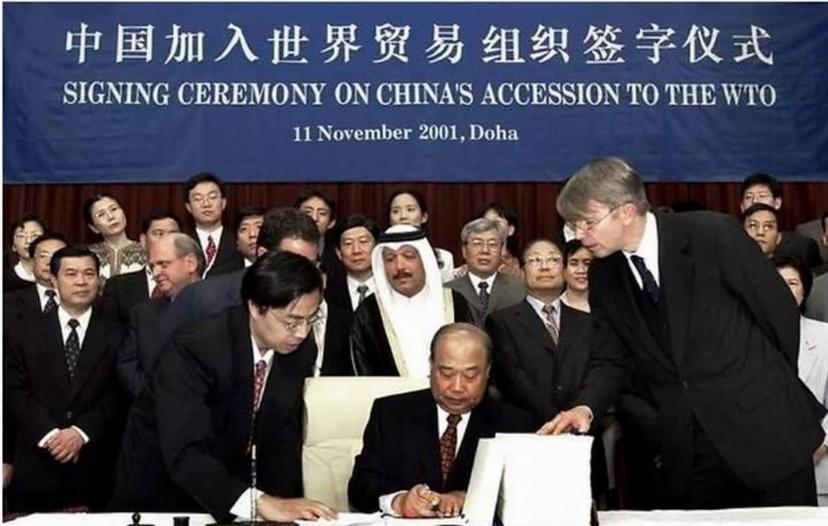
The rapid growth of the previous generation of enterprises had its objective background, such as reform and opening - up, China's accession to the WTO, the introduction of foreign capital, and the demographic dividend.
Although AI, as a platform - level opportunity, surpasses the Internet, at present, the concentration of AI is too high. The R & D threshold remains high. At least in the initial stage, power will be concentrated in the hands of tech giants and state - owned enterprises.
Facing this dilemma, Yu Hao's solution is the business model he mentioned in the interview: "Four - Quadrant", "Left - Right Decision - Making", "N + 1"...
Looking at them independently is quite brain - racking. But there is only one motivation for creating these models - to respect the disappearance of opportunities and respect the fact that 'the world is unknowable'.
Let's start to understand him from here. Facing chaos, Yu Hao chooses to combine several levels of models to increase the probability of entrepreneurial success. So these methodologies can also be collectively called "Probability Model".
From the perspective of "techniques, methods, and principles", the most specific "technique" is the "Four - Quadrant", which can be understood as the sequence of decision - making in entrepreneurship, solving the problem of what to do first and what to do next.
Many decisions are correct when looked at independently, but the sequence is more important. Yu Hao's view is that first, start learning from the leading companies in the "First Quadrant" industry, do what they have done as soon as possible, gather resources and make a quick breakthrough; then study the innovative companies in the "Second Quadrant", learn from them or simply avoid them to avoid making mistakes in innovation; if there is nothing more to learn in the industry, then start cross - industry integration to increase the dimension of innovation; after all that, re - define the problem, that is, the first - principles thinking.
The "method" is the "Left - Right Decision - Making Model", which is the two main lines that a company needs to balance in its daily operations after it has survived.
The left side is about good management, which is easy to understand. The right side is about obtaining social resources - that is, public opinion, capital, government and industrial relations, etc., which is more principled.
Personally, I think Yu Hao's "principle" and soul should be "N + 1".
In the past, the "principle" of most entrepreneurs was to find a blue ocean, a new track with few players and new demands; the "method" was to copy foreign products to China and localize them; the "technique" was extreme cost - effectiveness, lowering the price first.
But going back to the previous question, if the blue - ocean opportunities disappear, how can entrepreneurship continue?
Dreame's "N + 1" solves this problem - I want to have a little more new technology and new functions than the industry leaders (N), and at the same time have a little more profit (+1). That is, use a new technological logic to enter an established industry with clear demand, rather than taking risks to find or even create demands that may not exist at all.
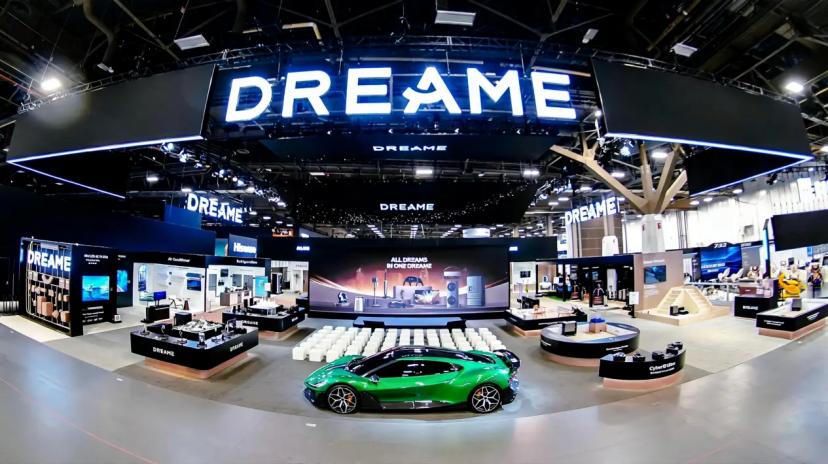
This is the case for floor sweepers, vacuum cleaners, lawn mowers, hot pots, and mobile phones.
It can be understood that Yu Hao tries to minimize the probability of failure through the design of several levels of models. It is said that entrepreneurship is a one - in - ten chance of success. In Yu Hao's mind, the future may be "no chance of success at all", and what he is trying to calculate is a glimmer of certainty in the chaos.
Only by going high - end can Chinese brands live with dignity
"N + 1" is also based on another serious reality - Chinese brands will be "held back" if they don't go high - end.
In the past two years, going global has become the second growth curve for many enterprises. Although the overall situation is prosperous, there are also hidden concerns.
To avoid trouble, I won't give examples of Chinese enterprises. Let's take a predecessor as a reference - Samsung's mobile phone business, whose dilemma is similar to that of domestic enterprises.
The 2025 annual report hasn't been released yet. Let's take a look at Samsung's business data in 2024.
Although Samsung's mobile phones are not separately disclosed, they are included in the MX (Mobile Experience) department and are the mainstay. We can simply attribute all the revenue of MX to mobile phones to see the trend.
Throughout 2024, Samsung sold about 255 million mobile phones globally, with sales of 118.5 billion US dollars and a net profit of 9.4 billion US dollars, with a net profit margin of 7.2%.
Let's take a look at Apple's mobile phone business - in 2024, it sold 235 million mobile phones globally, with sales of about 200 billion US dollars and a business net profit of 68 billion US dollars, with a net profit margin of an astonishing 34%.
Samsung outperformed Apple in terms of sales volume by 20 million, which is not a small number. However, the sales revenue was directly halved, and the profit was less than one - seventh. Even more exaggerated, Apple's profit alone is approximately equivalent to the sum of the main leading players in the industry.
What if most other industries are also facing a similar situation?
This is a bit terrifying when you think about it. More profit means: better treatment = top - notch talent, more R & D investment = more technological innovation, more marketing budget = a more solid market share, a larger profit margin = more room for competition in a fierce battle... until a system ability that cannot be shaken is formed.
When the system ability crushes everyone, a situation will occur where even if your product is better than his, you have to sell it at a lower price.
People often say that the product experience of a high - end brand is really good. But in fact, many insiders know that some domestic products are already as good as those of giants, but they can only choose to sell at a lower price. Because once they sell at a higher price, they will quickly lose the market.
The real pricing power actually never lies in the hands of the "price - cutters", but in the hands of the "industry leaders" with deep pockets.
This is why Yu Hao wants to implement "N + 1". Of course, he is also doing it himself. When others sell lawn - mowing robots at a price of 999 US dollars, Chinese manufacturers have cut the price to 499 US dollars. He added a vehicle - mounted lidar and directly priced it at 1999 US dollars, and it became a best - seller. In March 2026, Dreame's lawn - mowing robots sold 200 million yuan, with a year - on - year increase of 255%, and it topped the market share in many countries.
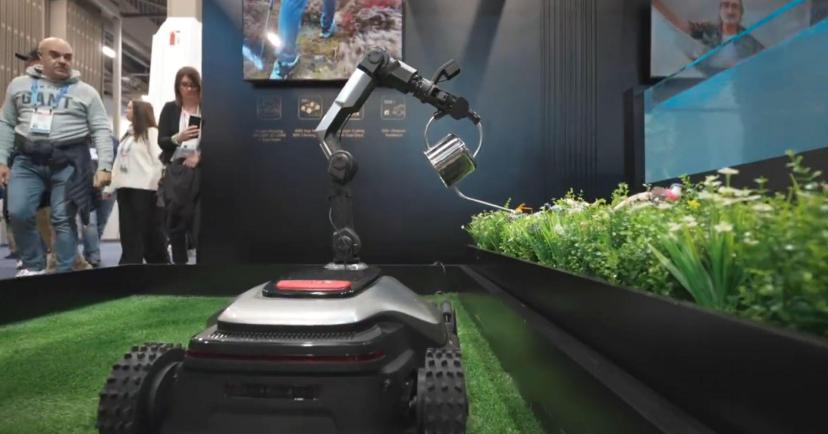
Facts have proved that going high - end may become an opportunity for new Chinese brands. Our strong supply chain can also be used for high - end products.
Shouldn't this be exciting?
I have a hunch that Yu Hao, who invented "N + 1", may not be very lucky in terms of his personal fate. He was even confused for a long time. Otherwise, he wouldn't have summarized or needed to summarize all these things.
Some geniuses are lucky - just to clarify, it's not that they don't have enough accumulation. For example, Steve Jobs saw the prototype concept of the mouse in the Xerox lab. He didn't even invent the thing, but it doesn't matter because only he thought that this thing could make operating a computer easier and put it into practice.
This is like being fed by God.
But a person who has to consider the "Four - Quadrant" in entrepreneurship, weigh the "left and right sides" in business operations, and keep talking about "N + 1" when researching products.
We can only say that he is probably a Chinese entrepreneur.
This article is from the WeChat official account "Baobian" (ID: baobiannews), written by Chen Fashan and edited by Xing Yun. It is published by 36Kr with authorization.