Why can't Elon Musk's $20 billion buy the moat of China's photovoltaic industry?
Recently, China's photovoltaic industry, the world's most competitive "new energy powerhouse", has caught someone's eye.
The one eyeing it is none other than Elon Musk, who claims that solar energy can outperform nuclear fusion.
On March 20th, news spread in the photovoltaic circle that Tesla is in talks with Chinese suppliers and plans to spend $2.9 billion (about 20 billion RMB) to purchase photovoltaic manufacturing equipment. This money is for equipment from Chinese "photovoltaic star enterprises" such as Suzhou Maiwei Technology, Jiejia Weichuang, and Laplace.
Specifically, Musk wants to purchase the HJT heterojunction complete production line equipment from these enterprises - that is, the core production line for manufacturing high - end solar cells. For example, screen printing, coating, and welding equipment, these industrial machines that can turn ordinary silicon wafers into high - efficiency solar cells.
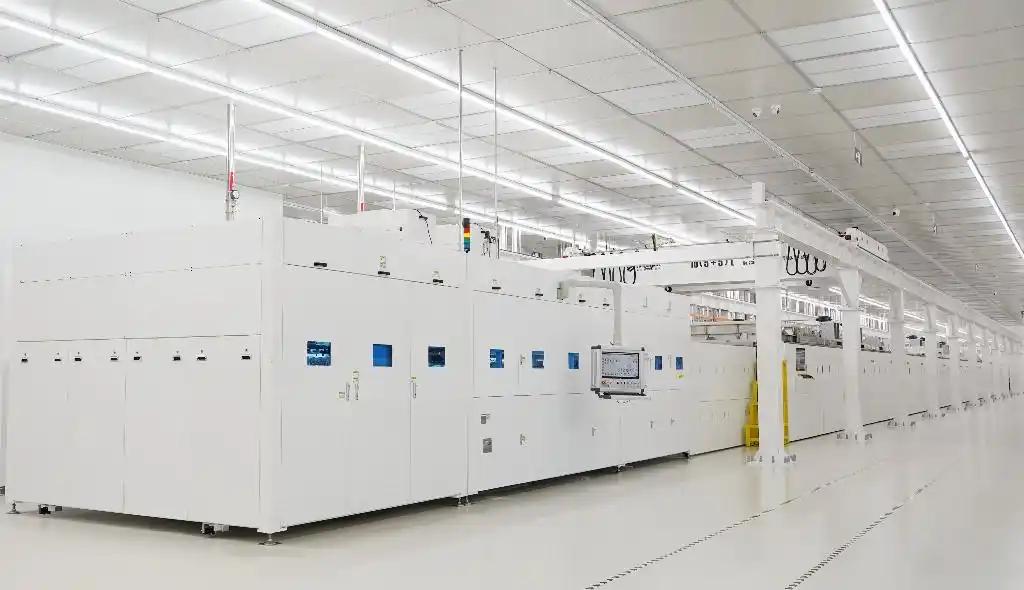
The reason why HJT is so important is that in Musk's energy layout, it undertakes the mission of "space photovoltaic" in the future.
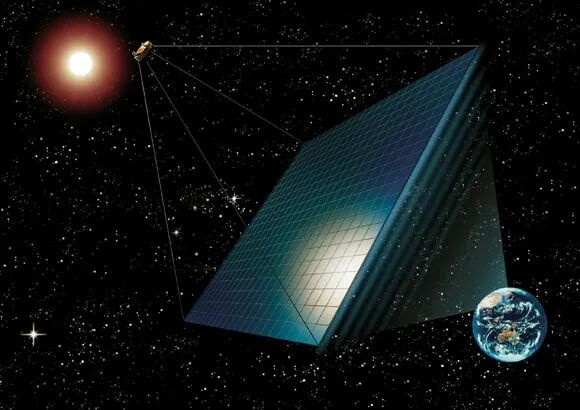
The so - called space photovoltaic is a concept born to solve the pain points of ground - based photovoltaic.
On the ground, solar panels can work at most 8 - 12 hours a day, and their operation depends on the weather. Solar power stations in geosynchronous orbit can be exposed to sunlight for most of the time, unaffected by day and night, weather, and seasonal changes. In space, power can be supplied almost 24 hours a day, and the energy density is much higher than that on the ground.
The problem is that in the extreme environment of space, ordinary photovoltaic panels simply can't withstand it. There are high - energy cosmic rays bombarding in space, with a drastic temperature difference of ±150°C, and heat dissipation needs to be carried out in a high - vacuum environment. Ordinary TOPCon and PERC cells can't survive even a few orbits in such a place.
At this time, HJT heterojunction becomes the ideal choice. It has several hard - core advantages that ordinary cells can't match, such as strong radiation resistance, high conversion efficiency (the theoretical ceiling is as high as 27.5%), extremely thin and light, etc.
In other words, HJT is currently the only technology in the crystalline silicon route that can score high in all three dimensions of "high efficiency, radiation resistance, and light weight".
However, if Musk was only eyeing HJT, it wouldn't be a big deal.
The problem is that this time Musk is also eyeing the HJT complete production line equipment - which is quite thought - provoking. After all, Musk is well - known in the technology circle for his pursuit of "vertical integration". Whether it's building cars at Tesla or rockets at SpaceX, he wants to have full control over the entire manufacturing process and all components.
If Musk really "learns the ropes" of the photovoltaic production line this time, will China's leading position in the photovoltaic industry be shaken?
Dead equipment and living knowledge
Actually, although China's photovoltaic industry is highly competitive in terms of production capacity, with silicon wafers costing just over one yuan each, the real moat of this industry has never been the machines. It is the implicit knowledge accumulated by tens of thousands of on - site engineers on the production line over the past decade.
For example, the PECVD thin - film deposition, the core process of HJT cells, is like putting a nano - level "protective suit" on the silicon wafer - using plasma to evenly coat a few - nanometer - thick amorphous silicon passivation layer on the surface of the ultra - thin silicon wafer. The flatness and compactness of this "suit" directly determine the conversion efficiency of the cell.
However, this process is as sensitive to parameters as making coffee with a difficulty level multiplied by ten thousand. A slight deviation in air pressure will lead to a decline in passivation quality. Excessive power will cause the plasma to damage the silicon wafer surface. Sometimes, a 5°C temperature difference can visibly deteriorate the film uniformity, just like a poorly made milk foam when making coffee.
What's more troublesome is that this equipment will "accumulate dust" after three months of use - the chamber deposits change the airflow, and the parameters need to be recalibrated. This can't be solved by following the instructions. It depends on the engineers' intuitive understanding developed through "running - in" with the machine, just like an experienced driver can sense abnormal vehicle conditions in advance.
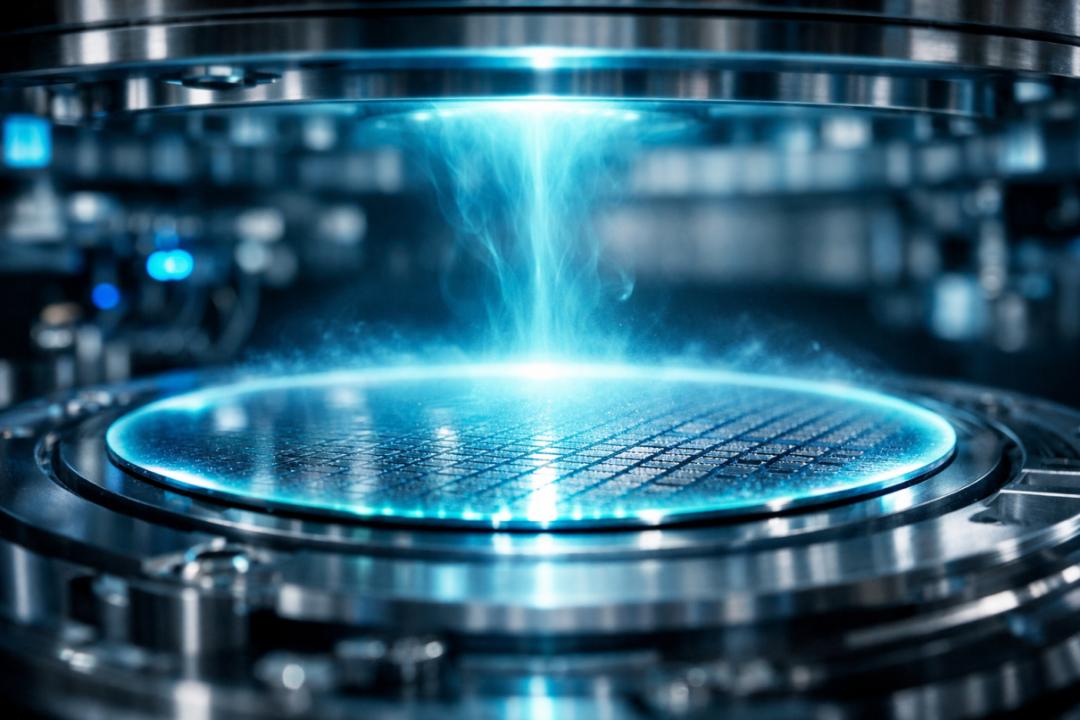
Then look at the PVD magnetron sputtering process of the TCO transparent conductive film. It's like "coating a glass outer layer" on the silicon wafer - using high - speed ions to bombard the target material (a "pigment block" made of materials like ITO or AZO), so that the target atoms are evenly attached to the silicon wafer surface like a spray.
However, this "pigment block" will get smaller and change shape over time, just like a pencil tip getting rounder after long - term use, which causes the thickness and density of the "spray" to change. Engineers have to constantly adjust the power and gas ratio while monitoring real - time data, just like an experienced driver fine - tuning the steering wheel. This kind of "feeling" that follows the state of the target material can't be developed without three to five years of experience; it can't be rushed.
There is also the screen printing of low - temperature silver paste - this step is like "embroidering circuits" on a chip. The amorphous silicon layer of HJT cells is sensitive to high temperatures, so only "low - temperature glue" (low - temperature silver paste) below 200°C can be used, unlike traditional cells that can use high - temperature - resistant "solder" (high - temperature silver paste). This "low - temperature glue" is very delicate: if the printing pressure is too high, it will "smudge"; if the scraper moves too fast, it will "break the line"; if the screen is too loose, it will have "fuzzy edges". As long as one grid line breaks or is not printed firmly, the current will be blocked, just like water in a pinched water pipe, and the yield rate will immediately drop.
It took Chinese engineers nearly ten years to figure out the process window of this step and improve domestic low - temperature silver paste from "barely usable" to "competitive with Japanese imports". How many silicon wafers were scrapped and how much silver paste was wasted during this period is not visible to outsiders.
None of this knowledge is written in the equipment manual.
What's more, this set of implicit knowledge doesn't exist in isolation. It is deeply integrated with China's unique industrial ecosystem, forming a "living system".
Behind the core raw materials of HJT cells, there is an extremely precise local supply chain. ITO target material is a consumable for sputtering TCO conductive films. Its quality directly affects the conductivity and light transmittance of the film. After years of domestic research and development, a number of target material enterprises with mass - production capabilities have emerged in China.
In terms of low - temperature silver paste, high - temperature silver paste was basically domestically replaced around 2020. However, the technical threshold for HJT - specific low - temperature silver paste is higher, and domestic leading enterprises have only recently made breakthroughs. These material enterprises are mostly concentrated in areas like Jiangsu and Zhejiang, and have a high - frequency interactive and co - evolving relationship with HJT cell factories. If a cell factory finds that the rheology of a certain batch of silver paste is unstable, with just a phone call, the engineers from the material factory can come with samples on the same day for a joint investigation. If the target material factory changes the formula, it will send small - batch test pieces to the cell factory, and both sides will conduct process verification together.
This relationship is not a simple buyer - seller relationship between "suppliers and customers", but a process of common technological growth. A large part of the technological progress in China's photovoltaic industry is hidden in these thousands of "joint debugging sessions where material factory engineers go to cell factories".
If you move the equipment to Arizona, these people can't follow. The nearest ITO target material supplier is on the other side of the Pacific Ocean, and the engineer who knows the temper of this PECVD machine best is in Suzhou. The equipment is inanimate and can be packed and transported away. However, the industrial ecosystem woven by people, materials, experience, and relationships is alive. It is deeply rooted in China and can't be uprooted.
The hard - to - catch - up iteration speed
Some people may say that as long as the production line is established, engineers and industry knowledge will gradually accumulate. Given Musk's character as an "engineering maniac", he may really make some breakthroughs.
However, what really makes China's photovoltaic industry despair its opponents is not how strong it is now, but its incredibly fast evolution speed.
For example, before 2015, the mainstay of China's photovoltaic industry was polycrystalline silicon cells, with a conversion efficiency of just over 18%. To be honest, the technology level was not very high, and it could be produced globally. Then, from 2015 to 2020, in just five years, the entire industry completed a major transformation from polycrystalline to single - crystal PERC. The conversion efficiency soared to over 22%, and the cost even decreased. This round of elimination directly sent most of Europe's photovoltaic manufacturing industry to the grave.
But it doesn't end there. Since 2021, N - type technology has exploded. TOPCon has taken over from PERC, pushing the efficiency to 27.79%. At the same time, HJT heterojunction is also advancing rapidly on another track, with the mass - production efficiency generally exceeding 24%. Moreover, it has fewer process steps and better temperature coefficients.
The two technology routes are not a "relay race" but a "parallel sprint". While TOPCon is still expanding production crazily, HJT has already overtaken on the adjacent lane.
Observing this process, you will find that the technological iteration of China's photovoltaic industry is not a linear "queue" but "folded" and almost simultaneous.
What does this mean? It means that by the time Musk transports the HJT production line back to the United States, installs and debugs it, trains the workers, and stabilizes the yield rate, China's technology will have advanced a great deal.
This is not alarmist. In 2025, LONGi Green Energy has achieved a commercial - size efficiency of 33% for crystalline silicon - perovskite tandem cells, and the small - area efficiency has reached an astonishing 34.85% - this figure has far exceeded the theoretical limit of 29.4% for single - crystalline silicon cells. Even more impressively, LONGi has also developed flexible tandem cells, with an efficiency of 29.8% certified by the Fraunhofer Institute for Solar Energy Systems, setting a world record for the efficiency of flexible crystalline silicon - perovskite tandem cells.
Think about this pace: while the United States is still struggling to run the HJT production line smoothly, China is already exploring the next - generation "tandem" technology. It's like you finally learn to drive a manual - transmission car with great effort, only to find that others are already driving self - driving cars.
This is the terrifying part of the "generational time difference". If the United States starts from scratch to catch up with HJT, it is conservatively estimated that it will take 3 to 5 years to establish a complete supply - chain ecosystem - from upstream target materials and slurries, to mid - stream equipment debugging, and then to downstream component packaging. Each link needs time to develop.
Because HJT cells can only use low - temperature silver paste below 200°C, whose rheology and printing adaptability are extremely delicate. It took nearly ten years in China to improve domestic silver paste from "usable" to "comparable to imports".
During this period, the formula needs to be tested repeatedly, and the printing process needs to be adjusted. A large number of silicon wafers and silver paste need to be scrapped to stabilize the quality.
This time difference means that Musk may catch up with today's technology, but he will never catch up with China's future technology.
The leap from "selling by the catty" to "selling by the gram"
At this point, some people may say - you've talked about so many advantages of China's photovoltaic industry, but isn't it still in a highly competitive state? Currently, the photovoltaic industry is suffering widespread losses. The price of components has dropped to rock - bottom, with only a few cents per watt. This doesn't seem like a high - tech industry at all. It's more like a group of people selling consumables "by the catty".
To be honest, this problem can't be avoided. In 2025, the photovoltaic industry was extremely difficult - almost all enterprises in the component segment suffered losses. Nine leading companies collectively predicted losses of 41.5 - 47 billion RMB, and the entire industry's losses exceeded 60 billion RMB. The gross profit margin of the component segment was only 0.67%. The shadow of over - capacity loomed over every enterprise, and they were trapped in the dilemma of "producing means losing money".
However, space photovoltaic has changed everything.
On the ground, photovoltaic energy is sold as "electricity" - a few cents per kilowatt - hour, and the competition is about scale and cost, about who can lower the price the most. But in space, photovoltaic energy is no longer sold as electricity, but as "weight".

Why? Because sending anything into space orbit incurs extremely high launch costs.
Even though SpaceX has reduced the cost to a historical low, and the Starship that Musk has high hopes for, even if it achieves full reusability, the target cost is still around $600 per kilogram, and the long - term vision is to reduce it to below $200.
What does this mean? It means that in space, every gram of weight reduction is equivalent to saving real money.
Therefore, the core indicator of space photovoltaic is no longer "how much per watt" but "how many watts can be generated per kilogram" - that is, the "specific power" (W/kg) in the industry. The one whose cells are lighter, more efficient, and can withstand the bombardment of high - energy cosmic rays and the extreme temperature difference of ±150°C in space will be the king of space energy.
And this is exactly the trump card of China's latest - generation photovoltaic technology.
HJT heterojunction is naturally thinner and lighter than traditional cells. Coupled with its excellent radiation - resistance performance, it is simply born for space. And per