Burning through $185 billion in a year, Google aims to become the "Enterprise Windows" of the agent era.
On April 22nd, in Las Vegas, Google Cloud Next 2026 is in full swing.
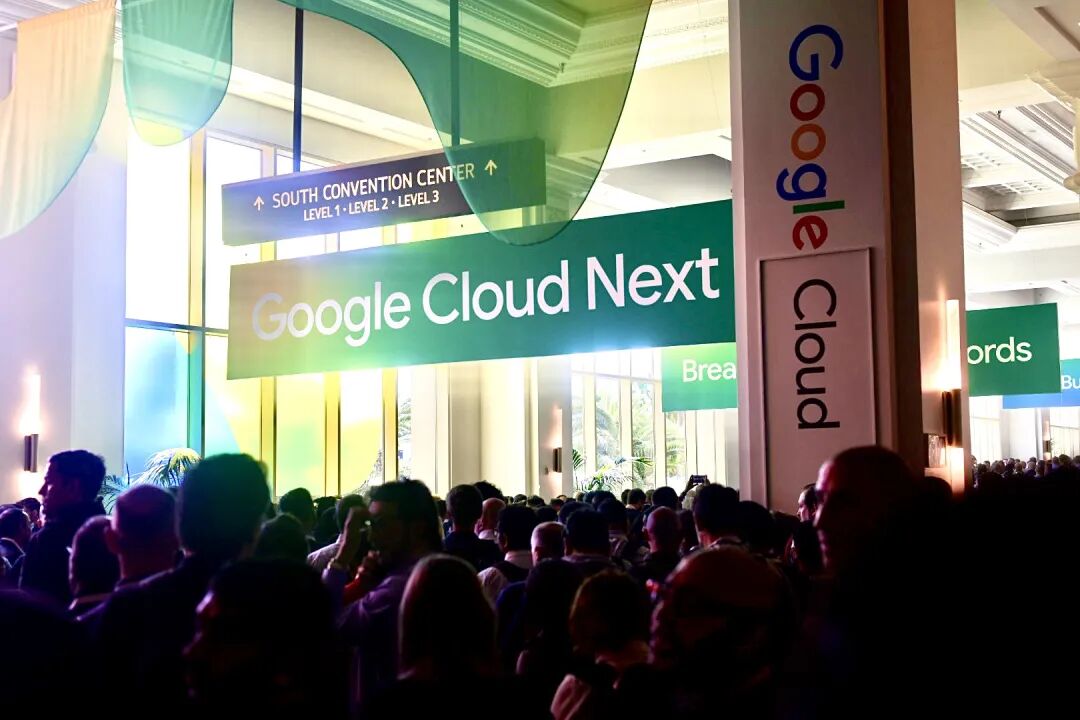
Those who are familiar with Google's annual product release rhythm know that Google I/O focuses on mobile phones, Android, and how various new products can change the world. However, the theme of Next is completely different. It directly targets enterprise customers, focusing on how to build cloud infrastructure and how to implement AI in the production environment.
If you connect the Next conferences of the past four years, you will see a clearer evolution curve of Google Cloud in the AI era:
In 2023, Google Cloud introduced PaLM 2 and Duet AI, with the theme of "embedding large - model capabilities into cloud services". In 2024, Gemini 1.5 Pro made its debut, and Vertex AI began to evolve towards Agent Builder. The theme became "building a platform for developers to create AI applications". In 2025, ADK and A2A protocols were released, and Agentspace was launched. Google Cloud started to build the infrastructure for the collaboration between agents.
This year, all the fragments scattered across different years and product lines have been integrated into a single product - Gemini Enterprise.
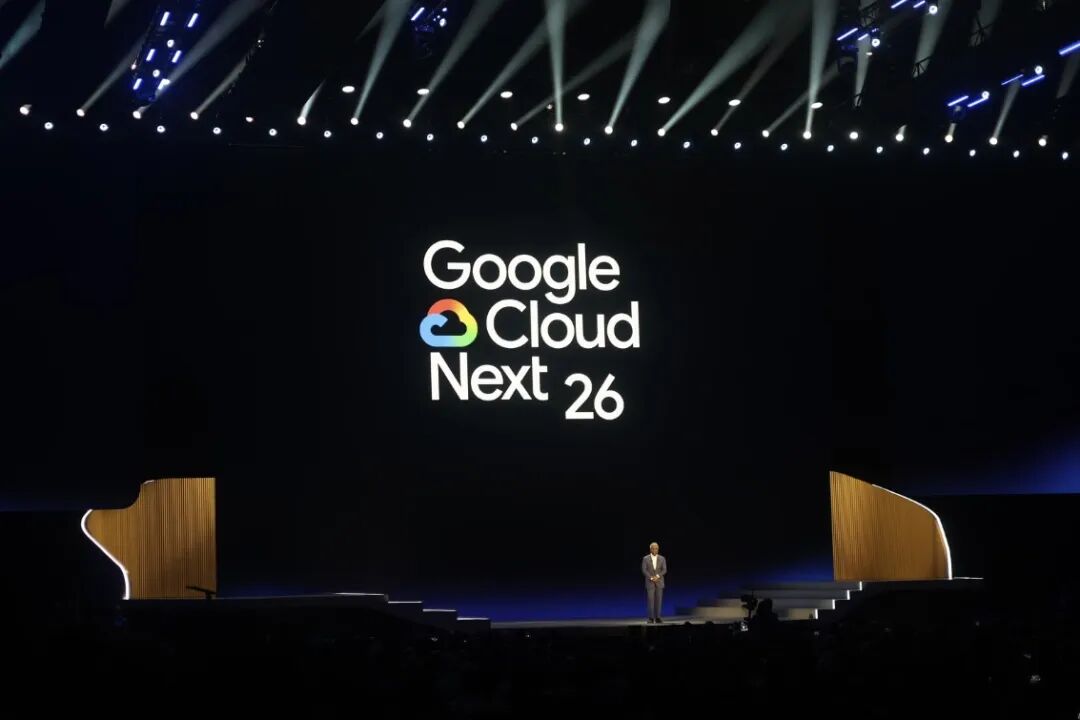
Over the past four years, the theme of Next has evolved from "large models entering enterprises" to "Agent development tools" and then to "Agent ecosystem construction". In 2026, these past accumulations are leading to a greater ambition: defining the operating system for the agent era.
Thomas Kurian, the CEO of Google Cloud, broke down this ambition into a judgment on stage: "You can't create real value by piecing together fragmented chips and disjointed models. You need an architecture where the chips are designed for the models, the models are based on your data, the agents and applications are built with the models, and the infrastructure provides security."
This is what we saw at this Next conference. Google Cloud is not just releasing a set of new products but redefining the enterprise AI technology architecture: In an Agentic era where human employees collaborate with dozens of digital employees, whoever controls the control panel for managing enterprise agents will obtain the operating system for this era.
Gemini Enterprise: From Intelligent Assistant to Agent Operating System
To understand the core release of this Next conference, we first need to clarify a confusing issue - the Gemini Enterprise released this time is not the same as the one released last autumn.

In October last year, when Google Cloud launched Gemini Enterprise, its positioning was to "bring the best capabilities of Google AI to every employee in the enterprise". In essence, it was an enterprise - level AI application entry point at that time, where employees could chat, ask questions, and generate content. In nature, it was still a chatbot.
The Gemini Enterprise Agent Platform released at this Next conference has undergone a fundamental change in nature. It is no longer just a tool for people to use but a complete management platform for building, deploying, orchestrating, governing, and monitoring agents.
This is actually an industry topic that we have been discussing repeatedly in the past few months after products like OpenClaw and Hermes became popular: When enterprises move from "piloting one or two AI projects" to "running countless agents and AI projects in the production environment", what they need is no longer a chat window but an enterprise - level control system. In this process, issues such as who has the right to create agents, what data agents can access, what decisions they make, how to trace problems, and how multiple agents can collaborate and divide labor present new opportunities.
The Gemini Enterprise Agent Platform is built to answer these questions. Its core components include:
Agent Studio, which allows business personnel to define the behavior logic of agents in natural language without writing code;
Agent Registry, which provides a unified index and discovery entry for all agents in the company, equivalent to an "organizational directory" for agents;
Agent Gateway, which acts like an air traffic controller, uniformly enforces security policies and monitors every interaction between agents and data;
Agent Identity, which assigns a unique encrypted identity and an auditable authorization policy to each agent;
Agent Observability, which provides complete execution path visualization and fine - grained telemetry, enabling managers to see what agents have done, how long it took, and which tools were invoked.
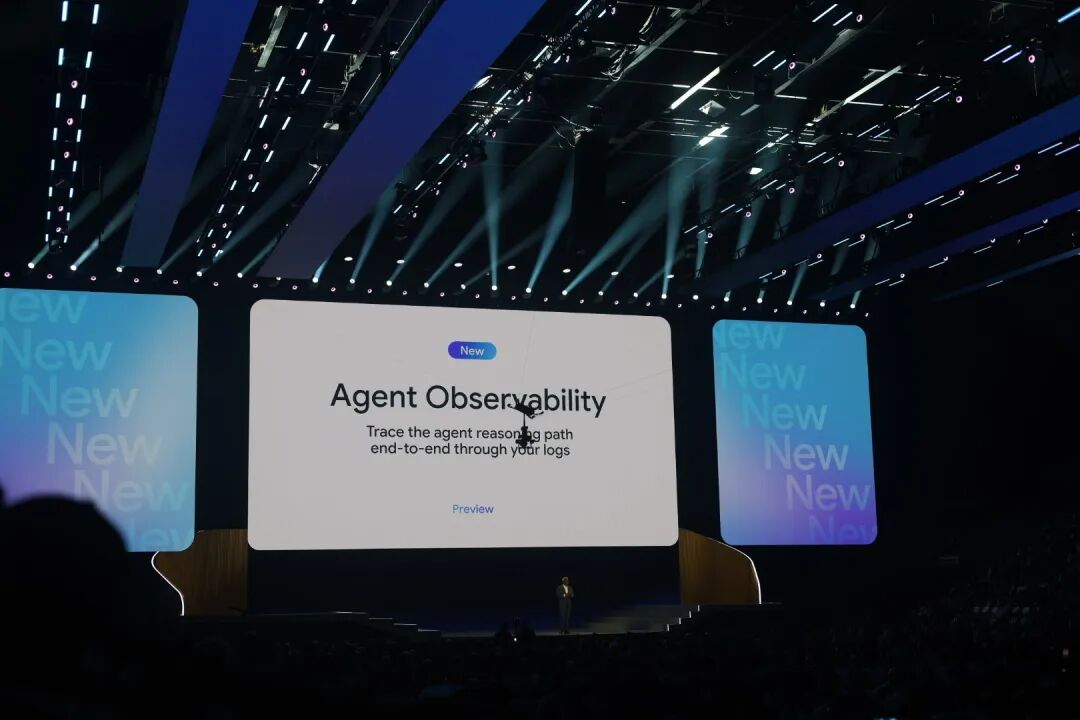
From a product logic perspective, the design concept of this platform is highly consistent with the way enterprise IT management teams used to manage human employees, such as onboarding (creation), assigning permissions (identity and policies), daily management, and performance evaluation... The only difference is that the managed objects have changed from humans to agents.
Why is this important? Because it redefines the "selling point" of enterprise services. For a long time, the narrative framework of cloud providers has hardly changed: competing in computing power at the bottom layer, selling development environments in the middle layer, and packaging SaaS tools at the upper layer. Even with the arrival of the AI wave, most providers are still making incremental improvements within this three - layer framework.
However, Google Cloud has stepped out of this framework this time. It anchors product value with a new question: Can you make enterprises feel confident in entrusting their core business processes to thousands of agents?
Behind this question is a fundamental change in the enterprise procurement logic. In the past, the core question in enterprise IT procurement was "Can this software solve my problem?" Now it has become "Can this agent autonomously complete my tasks, and can I trust, manage, and audit it?" Trust, management, and auditing are becoming the new core competitiveness of enterprise services in the agent era. Models will become commoditized, and computing power will become more affordable, but whoever can help enterprises manage digital employees will win the customers.
This has been verified on Google Cloud's client side. Walmart shared their case at the Next conference. They promoted Gemini Enterprise to store managers and, in combination with Pixel Fold devices, enabled leaders to obtain operational data that originally took hours to organize within seconds. Walmart's logic is simple: the value of store managers lies not in organizing inventory reports but in communicating with customers and motivating the team. Only when AI takes over the former can people focus on the latter.
The German insurance company Signal Iduna achieved an 80% AI adoption rate within a few weeks. 11,000 employees are building professional agents in their respective fields. Among them, the health insurance agent can automatically verify insurance coverage based on a century of complex policy data, and the answer - providing speed has increased by 37%. KPMG achieved a 90% employee adoption rate in the first month and built more than a hundred agents.
The common pattern behind these numbers is that Gemini Enterprise does not replace humans but allows humans to return to more valuable work. However, the prerequisite for this to happen on a large scale is that enterprises have a reliable agent management system. This is exactly the core problem that the Gemini Enterprise Agent Platform aims to solve.
Five - Layer Architecture: The "Foundation" of the Operating System Built by Google Cloud for the Agent Era
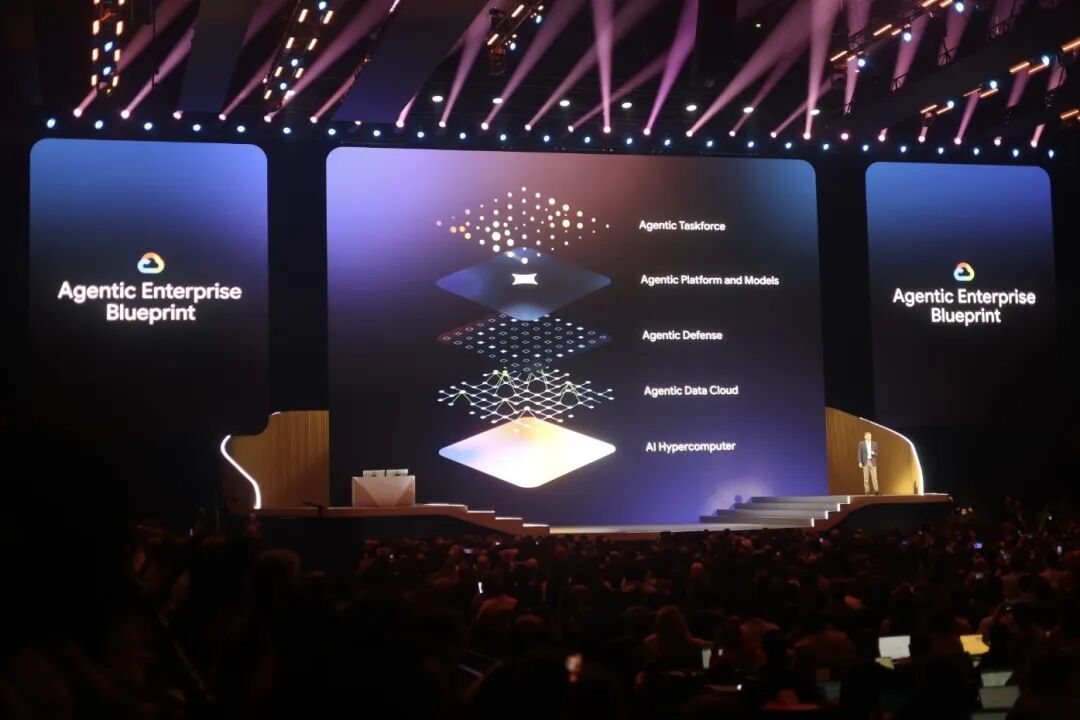
If the Gemini Enterprise Agent Platform is the core product of this conference, then what supports the operation of this platform is a five - layer technical architecture presented by Google Cloud on stage. From the underlying chips to the top - level pre - built agents, Google Cloud is trying to package and deliver all the capabilities required for enterprises to run agents through a vertically integrated solution.
Kurian broke it down into a five - layer architecture on stage: AI Hypercomputer, Agentic Data Cloud, Agentic Defense, Agentic Platform and Models, Agentic Taskforce.
Layer 1: AI Hypercomputer
In the AI era, infrastructure and computing power are always the most important. Therefore, the progress of TPU is undoubtedly one of the highlights of this conference. Google Cloud released the eighth - generation TPU, which is for the first time divided into two specialized platforms for training and inference. The training - version TPU can be scaled to connect 9,600 TPUs through a 3D topology, with a 2.8 - fold increase in computing performance. A single super - computing unit provides 2PB of memory. It is reported that this capacity is enough to hold the digital collection of the US Library of Congress 100 times.
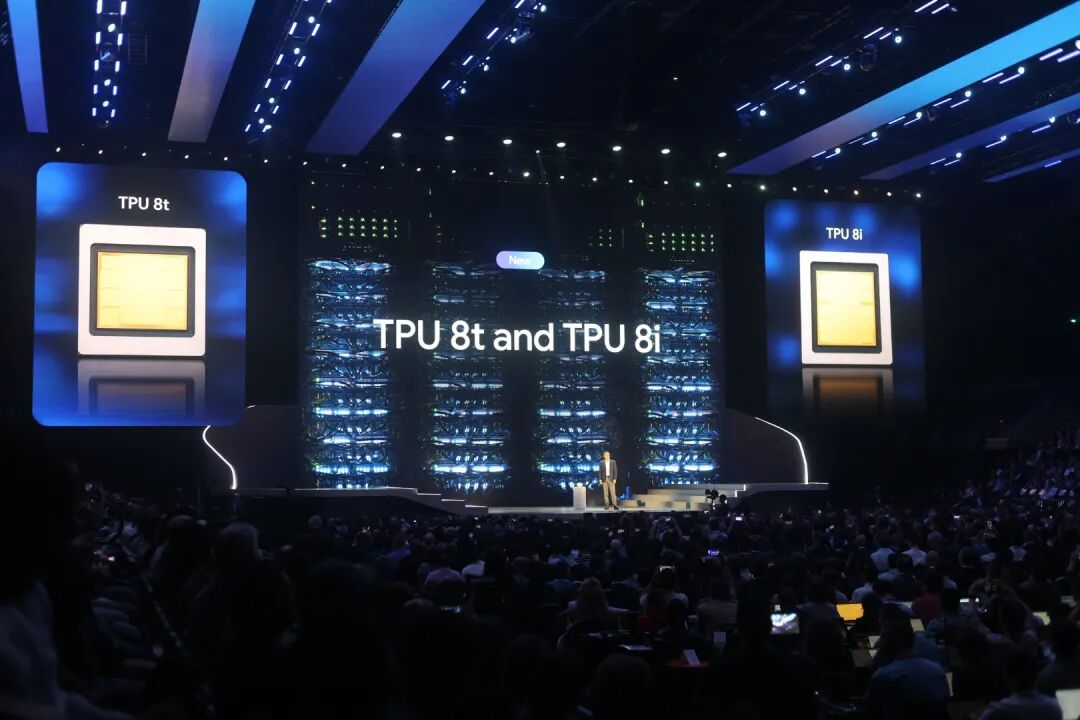
On the inference platform, Google Cloud integrates a dedicated "acceleration engine" at the chip level, further reducing the latency by 5 times. Through the new 4.5 topology, 1,152 TPUs can form a low - latency cluster, concurrently responding to the invocation requests of millions of agents with almost zero waiting.
At the same time, Google Cloud released the Virgo network architecture, doubling the connection bandwidth. A single cluster can support the collaborative work of more than one million TPU chips.
In addition, Google Cloud announced that it will be one of the first cloud service providers to offer NVIDIA Vera Rubin NBL72 instances, which are optimized for high - interactivity and long - context inference, with a 10 - fold increase in performance efficiency.
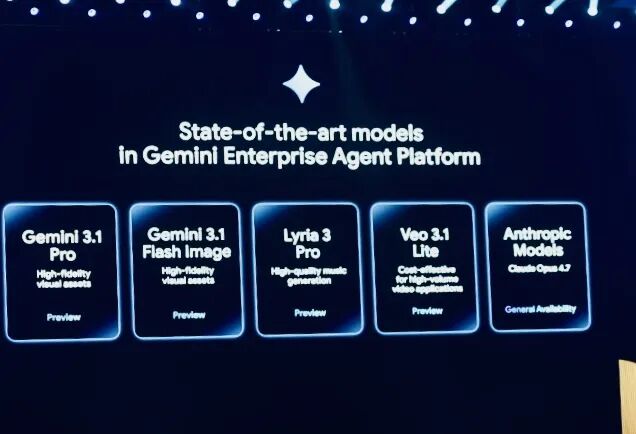
At the model level, the platform continues to support the access of third - party models, including Anthropic Claude Opus 4.7, and opens all GCP services through the Model Context Protocol (MCP), allowing agents to directly invoke cloud resources.
Layer 2: Agentic Data Cloud
This is the "brain" of the entire system built by Google Cloud and the cornerstone for building the "memory and common sense" of agents. It is responsible for transforming the dark data scattered in PDFs, videos, and third - party cloud storage into business semantics that agents can understand. When an agent hears "net income" or "risk", it can understand their exact meanings in your company.
Google Cloud mainly released two core products: Knowledge Catalog and Cross - Cloud Lakehouse.
Among them, the Knowledge Catalog serves as a general enterprise context engine. As soon as a file is written into Google Cloud Storage, Gemini automatically intervenes, extracts entities, maps relationships, and understands business semantics. When an agent hears "net income" or "risk", it can accurately locate their specific definitions in the enterprise data model.
The Cross - Cloud Lakehouse is based on the open Iceberg standard, allowing analysis engines such as BigQuery to directly query data in AWS S3 and Azure without data migration and export fees, enabling agents to obtain complete business context across clouds.
Layer 3: Agentic Defense
Surprisingly, Google Cloud opened up the security part of the space to cooperate with Wiz to build it together. This layer mainly transforms the security system itself into an autonomously running agent. The core release is the AI application protection platform and Agentic SOC formed after the integration with Wiz.
The main approach is to create a red - blue - green security agent team. Among them, the red - team agents continuously scan the exposed surface and actively detect authentication bypass vulnerabilities; the blue - team agents hunt threats based on the global telemetry intelligence from Mandiant, VirusTotal, and Chrome, with an external threat recognition accuracy of 98%; the green - team agents automatically locate specific code lines after a vulnerability is confirmed, generate repair suggestions, and can directly push Pull Requests to the development team or let the coding agents automatically repair them.
According to relevant responsible persons, Google Cloud's internal security team used to spend thousands of hours reviewing massive unstructured threat reports. After automatic classification by agents, the threat mitigation time has been reduced by more than 90%.
Layer 4: Agentic Platform and Models
This is a complete management center built by Google Cloud for agents, integrating models, construction, orchestration, governance, and observability. A series of products have also been launched, including:
Agent Studio: A low - code builder that allows business personnel to define agent behavior in natural language and combine ML models with specific business rules.
Agent Registry and Skills Registry: The former provides a unified index and discovery entry for all agents in the company; the latter encapsulates each service of GCP and Workspace into modular skills and connects to third - party systems (such as Atlassian and Salesforce) through the MCP protocol, allowing agents to dynamically invoke them.
Orchestration Framework: Supports deterministic processes, such as compliance approvals, to ensure predictable results. It also includes generation delegation, where the main agent autonomously assigns sub - tasks to other professional agents.
Agent Identity and Observability: Each agent has a unique encrypted ID and an auditable authorization policy. All actions are uniformly enforced through the Agent Gateway. Fine - grained telemetry can visualize the complete execution path, time consumption, and tool invocation records of agents.
At the model level, Google Cloud simultaneously released Gemini 3.1 Pro optimized for complex workflow orchestration, Gemini 3.1 Flash Image for high - fidelity visual asset generation, Veo 3.1 Light for high - capacity video applications, and the professional - grade audio model Lyria 3 Pro.
Layer 5: Agentic Taskforce
This is the top layer of the five - layer architecture and the "digital employee" layer where agents directly deliver business value. Google Cloud has pre - built a batch of professional agents for specific scenarios, covering core business areas such as customer service, marketing, code development, and security operations.
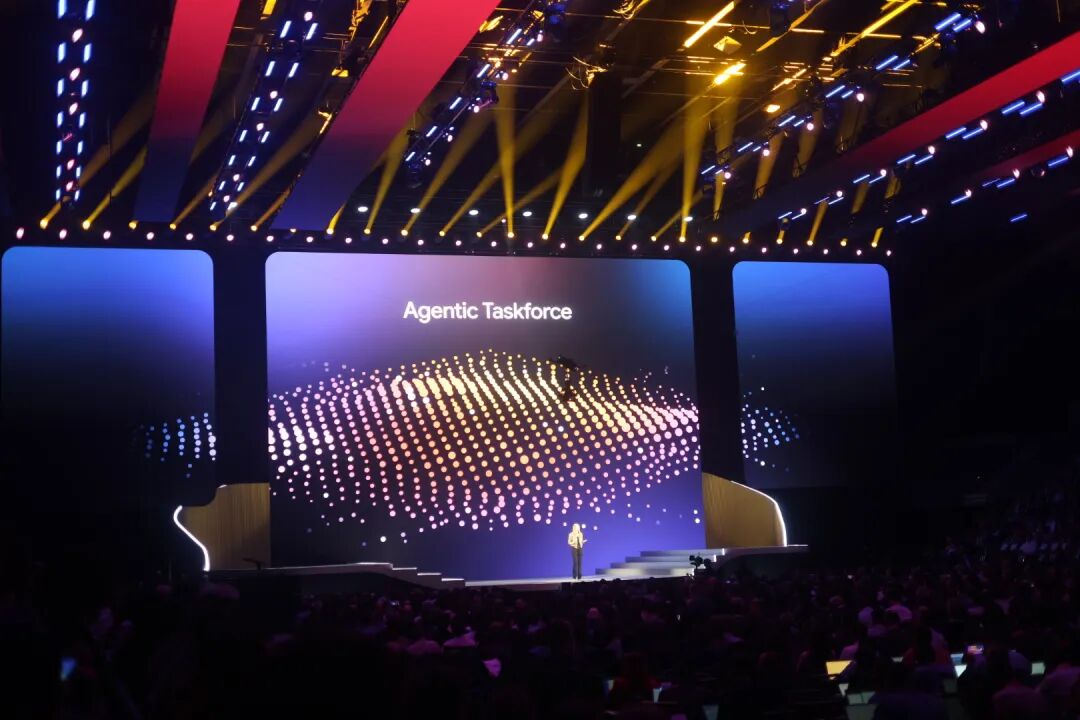
In the customer experience area, the shopping guide agent has been implemented at Best Buy to explain complex product specifications to consumers. Home Depot has packaged it as a "magic apron" assistant, providing path - finding and product - selection support both in - store and online. The food ordering agent helps Papa John's remember each customer's preferences, achieving a highly personalized ordering experience. The omnichannel voice customer service agent launched on YouTube TV covers all users as soon as it