HSG and Hillhouse Capital Rarely Join Forces to Bet $455 Million on a "Brain"
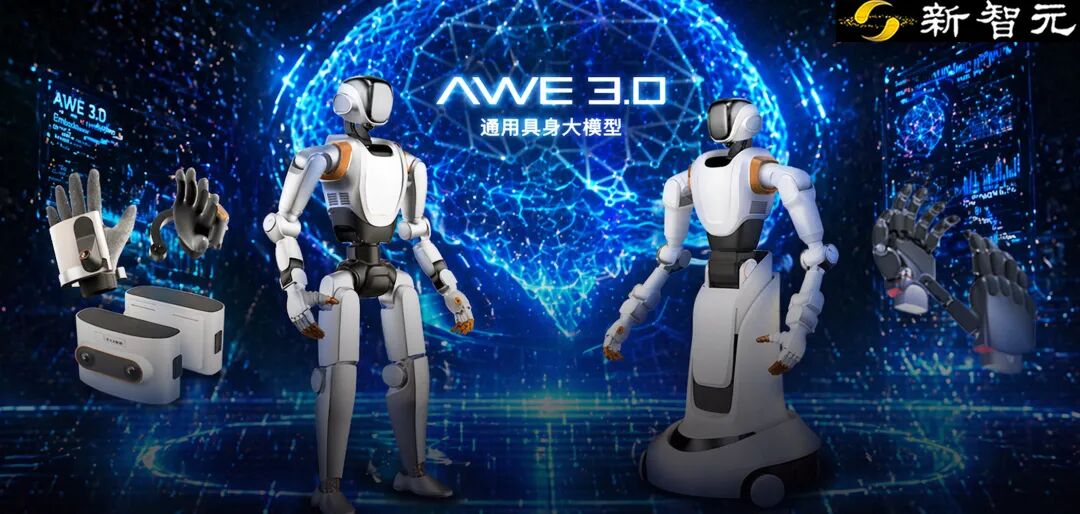
Recently, the largest single-round financing record in the history of China's embodied intelligence was set, and it came from Tashi Zhihang.
On April 16th, Tashi Zhihang, a leading enterprise in embodied intelligence, announced the completion of a Pre-A round of financing worth $455 million (approximately over 3 billion RMB), simultaneously breaking the highest single-round financing record and the largest Pre-A round financing record in the history of China's embodied intelligence.
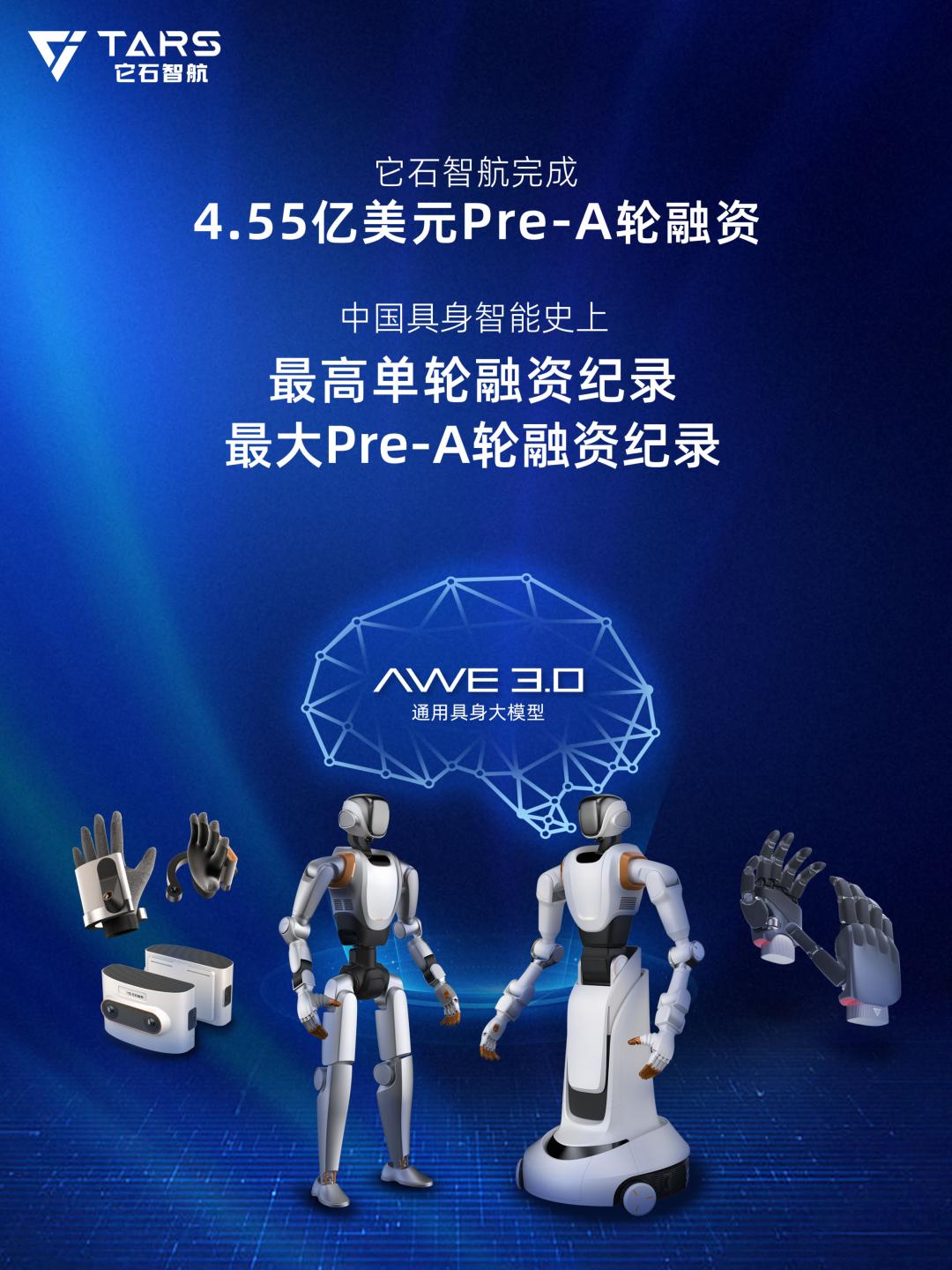
Putting aside the huge financing amount, the configuration of the underlying investment institutions is even more luxurious and astonishing.
On the financial side, Hillhouse Venture Capital and Sequoia Capital China jointly led the investment, which is a rare occurrence.
On the strategic side, Meituan Strategic Investment significantly increased its investment and continued to jointly lead the investment. Old shareholders such as Qiming Venture Partners, Linear Capital, BlueRun Ventures China, Xianghe Capital, and Hongtai Fund made strategic additional investments.
On the industrial side, TCL Venture Capital, Futeng Capital, Shoucheng Holdings, Jianfa Emerging Investment, Hengxu Capital, and Guoji Investment all entered the game.
On the state-owned capital side, Beijing Robot Industry Development Investment Fund and Shanghai Guotou Leading Investment jointly entered the game for the first time, directly positioning Tashi Zhihang as the leading enterprise in the regional industrial chain.
With the injection of top-tier capital and the strong entry of a dark horse, in the current booming era of embodied intelligence, this sky-high financing has once again attracted people's attention to this hot track.
Embodied intelligence has its own "Brain Club"
In 2026, the global embodied intelligence track is undergoing a directional convergence. The technological routes, capital flows, and rankings of players all point to the same conclusion: He who controls the brain controls the world.
Looking back two years ago, the industry narrative was still centered around the robot's physical capabilities. Motion performance, joint flexibility, and the degree of bionics were the main dimensions for capital evaluation.
However, the bottleneck of this path soon emerged: the physical capabilities can be iteratively improved through engineering, but the variables that truly determine whether a robot can enter real scenarios are always understanding, decision-making, and generalization.
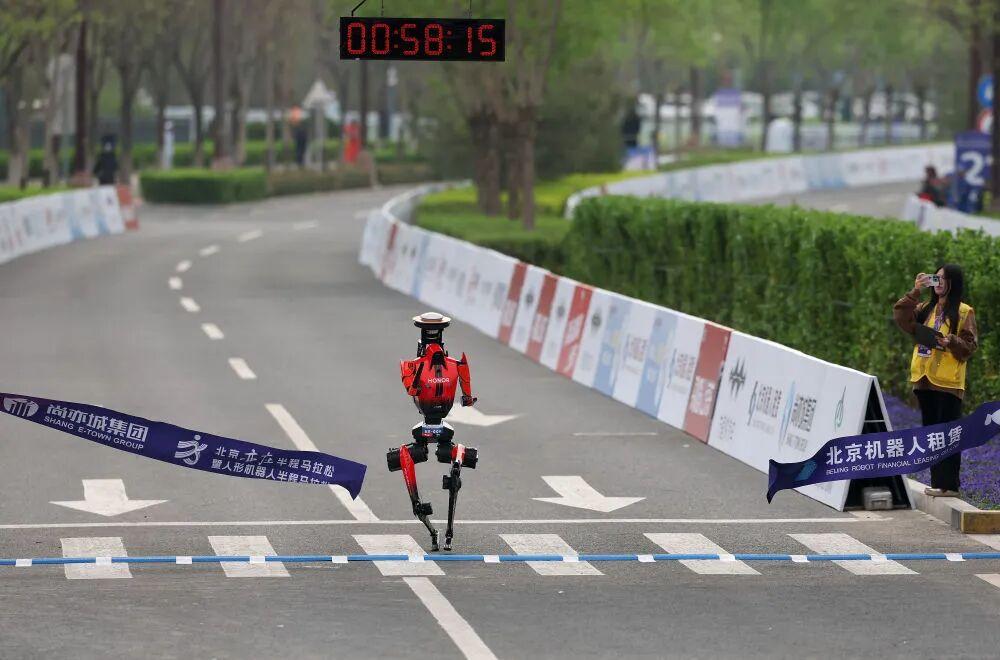
The recently concluded humanoid robot marathon provided the most direct evidence for this judgment.
The Glory Robot, unknown before the race, entered the field less than a year ago and swept the championship, runner-up, and third place in its first participation. The overall performance was compressed to less than one hour for the first time.
Meanwhile, last year's champion, Tiangong Ultra, and the Yushu H1, which refreshed the human 1500-meter record in the qualifying race, did not pose a substantial threat.
Source: Xinhua News Agency
The fact that a latecomer can achieve an overtaking in a short period of time itself indicates one thing: at the current stage, there are no insurmountable barriers in the motion control and hardware of humanoid robots.
The real moat is not on the 21-kilometer track, but outside the track - in the brain, in the data, and in the generalization ability.
This convergence trend is also clearly visible in the flow of capital.
If we rewind the time to the beginning of 2025, Chinese embodied intelligence companies with a valuation of over 10 billion yuan were still rare species.
Back then, Yushu Technology and Zhiyuan Robot were the first to reach the 10-billion-yuan valuation threshold with their mass-production-first strategies. Entering 2026, both enterprises and capital have been on a rapid development path. The number of members in the 10-billion-yuan club has been increasing at a visible rate, and almost all of them have firmly locked their technological focus on the "brain".
The situation in the US market is the same. A group of "brain" players represented by Skild AI and Sunday have frequently completed financing since the beginning of 2026 and have become new favorites of capital.
Among them, Skild AI, with the slogan of "Any robot. Any task. One brain.", raised as much as $1.4 billion in financing, and its post-investment valuation has exceeded $14 billion.
They have all jointly confirmed a fact with real money: Hardware is a zero-sum game, while the brain determines the pricing power for incremental value.
As the world's top capital and leading players are voting with their money, a "Robot Brain Club" defined jointly by top institutions and leading players has taken shape.
And Tashi Zhihang's $455 million in financing is the most significant gathering in the Brain Club.
With a single-round financing scale of $455 million and the first joint investment by Hillhouse and Sequoia, it has become the target with the largest financing volume, the most luxurious and complex capital structure in the Chinese embodied intelligence track to date.
From any perspective, Tashi Zhihang has been pushed to the leading position.
With its ability to attract capital that has repeatedly broken records and a rare top-tier capital matrix - What exactly has this company, which was founded only one year ago, done to make the most shrewd capital stand together?
More low-key than expected,
yet became the top player in the Brain Club
Before the explosive financing news came out, Tashi Zhihang was particularly low-key in the bustling embodied intelligence industry.
Perhaps because this team has extensive engineering experience, they did not choose to frequently appear in public but instead chose to work steadily and silently deliver results since its establishment.
This style is fully reflected in Tashi Zhihang's first version of the business plan.
In early 2025, when hundreds of companies in the embodied intelligence track were depicting grand blueprints of general-purpose humanoids, full-scenario coverage, and entry into households on their PPTs, Tashi Zhihang's first version of the business plan (BP) only talked about three things: Model, data, and implementation scenarios.
There was no grand narrative. Instead, it was more like a construction drawing, yet it was full of a large number of counter-consensus technological judgments and high - difficulty innovation choices.
Among them, the "brain" has been the core module they have been tackling since its establishment.
The direct advantage brought by their rich engineering experience is that their judgment of technological routes relies less on trends and the mainstream and more on the understanding of the complexity of the physical world and first - principles.
When the industry generally followed the VLA route, Tashi Zhihang made a non - mainstream judgment: not relying on teleoperation, not taking the shortcut of pure simulation, and not blindly following the paradigm splicing of VLM + Action.
Instead, it directly aligned with the real physical world, self - developed a real - world model, and self - collected real - world data.
This judgment was not widely recognized at that time. The reason is not complicated: the VLA route can reuse existing large - language models, with low thresholds and quick results; the pure simulation path has almost zero data costs, and the iteration speed is visibly fast; although teleoperation is cumbersome, it can at least get things started.
Self - developing a real - world model requires high investment and has slow returns, which is a thankless task.
However, in 2026, the convergence direction of industry technology began to confirm Tashi Zhihang's initial judgment. The real - world model replaced VLA splicing as the consensus among leading companies. The real - data collection centered around humans was re - evaluated as the key direction of embodied intelligence data engineering, and a large number of companies entered the field.
Tashi Zhihang's "non - mainstream" choice one year ago is becoming the mainstream in the industry.
Based on these forward - looking judgments, Tashi Zhihang has implemented both in terms of models and data, and each step is faster and more solid.
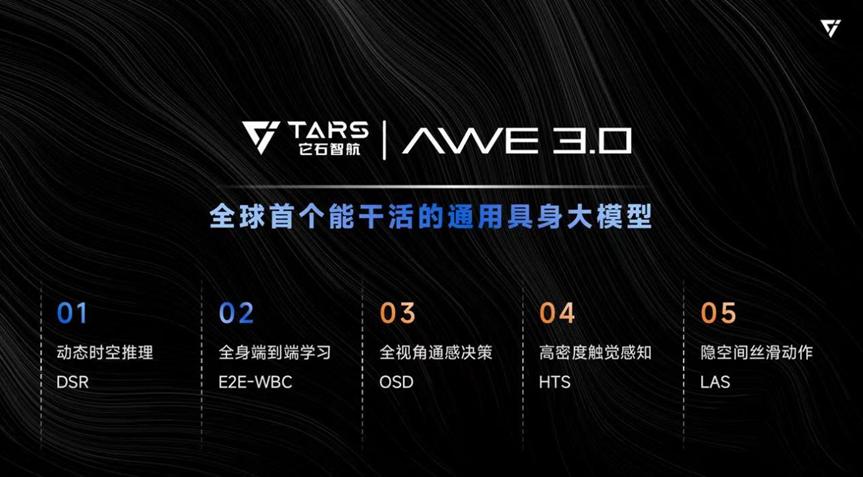
In March 2026, it released the general - purpose embodied large model AWE3.0. This model is a general - purpose embodied large model with unified input of four modalities: vision, language, touch, and action. Its purpose is very practical, that is, to enable robots to truly step out of the "greenhouse", implement tasks, and achieve general - purpose generalization.
Public data shows that based on this model, the task success rate of robots under unseen new perspectives has increased by three times, and the jitter during task execution has been reduced by about 45%. It can not only adapt to complex and changeable real - world environments but also play a practical role in complex scenarios such as precision assembly and flexible manufacturing.
On the data side, Tashi Zhihang established a human - centered data collection paradigm in early 2025, directly collecting the natural behaviors of humans in real environments based on self - developed wearable kits.
Based on this method, Tashi Zhihang has open - sourced the world's first real - world embodied multi - modal dataset WIYH and launched the SenseHub data solution. It is currently the only global manufacturer that provides an industrial - grade human - centered data collection solution, synchronously collecting visual and tactile information.
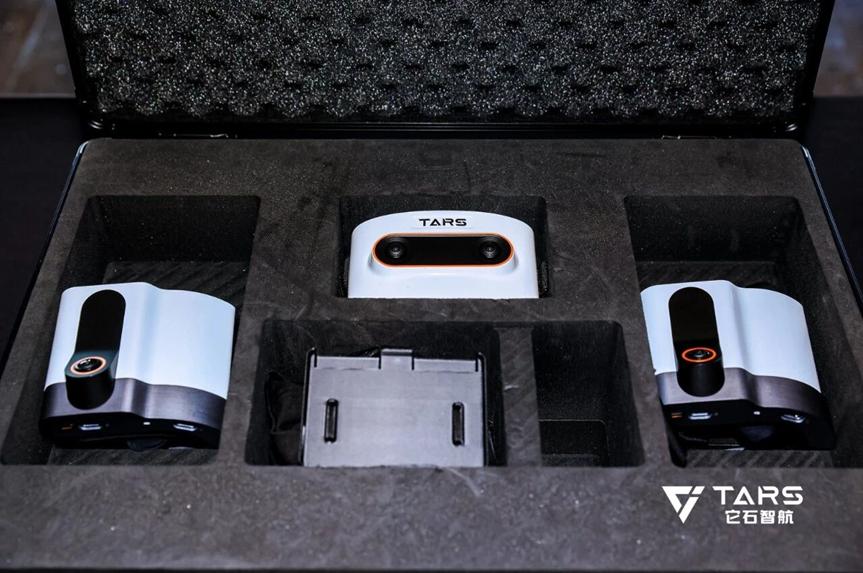
Judgment ultimately needs to be tested by results. Tashi Zhihang chose a scenario that most of its peers avoid - wiring harness assembly.
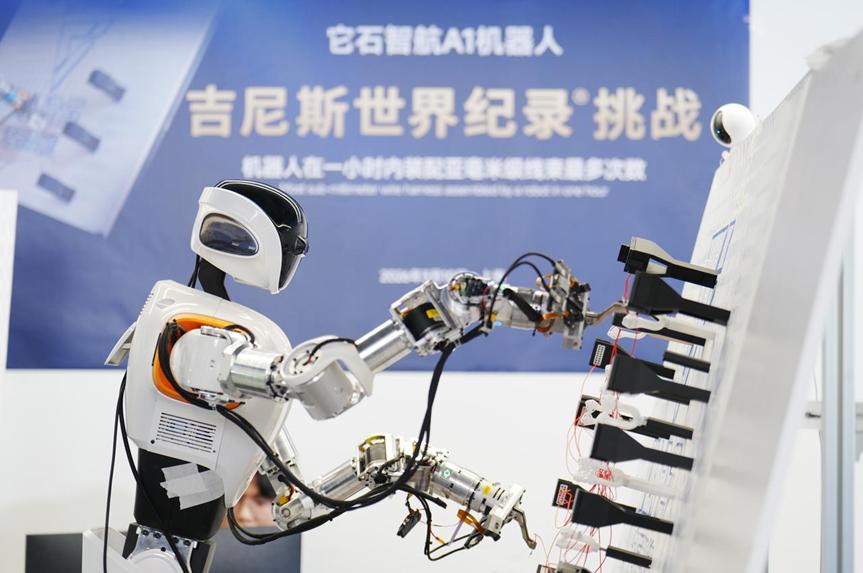
This scenario combines the "impossible triangle" that has long remained unsolved in embodied intelligence: flexibility, long - time sequence, and high precision.
On March 10, 2026, Tashi Zhihang's A1 robot, relying on AWE3.0, set a Guinness World Record for "the most times a robot assembles sub - millimeter - level wiring harnesses in one hour". This is the first world record of a Chinese embodied intelligence enterprise in the field of industrial precision operations.
Currently, this ability has entered the industrial verification stage.
By now, the three things written in the BP one year ago - model, data, and implementation scenarios - have all been delivered.
The reaction of capital is a natural result.
Forward - looking judgment that can withstand the test of the cycle, a technological route far ahead of the industry, the ability to deliver on promises, and world - class technological certification - these four pillars have enabled Tashi Zhihang to steadily reach the leading position in the industry and have also attracted unprecedented capital aggregation.
If the angel - round investment was a bet on the team's background and a blueprint on paper, then one year later, all the old shareholders increased their investments, new shareholders rushed to enter the game, and Hillhouse and Sequoia jointly led the investment in the embodied intelligence track for the first time. What they are paying for is not only who the team is but also every judgment and every delivery verified by the team's achievements in the past year.
And the record - breaking $455 million in financing is just another recognition of the strength of this top player.
10 billion is just the starting line,
The ultimate victory in embodied intelligence belongs to the "brains" that can get things done
The collective bet of capital on the "brain" is revealing an increasingly clear end - game: the deciding factor in this track is not who can build a more flexible body but who can first enable robots to truly understand the physical world, autonomously complete tasks, and continuously evolve and iterate.
The logical basis for this judgment is clear: the hardware capabilities are being leveled by the supply chain, and the motion - control barriers are being quickly penetrated by engineering capabilities.
"Running" on the marathon track is no longer the core competitiveness. A "brain that can get things done" is the truly scarce asset.
Tashi Zhihang's $455 million in financing is another heavy bet on this trend. Capital is making a judgment in the most direct way: on the most core and difficult path of the "brain", Tashi Zhihang has taken the lead and is far ahead.
Regarding this round of financing, Meituan, the cornerstone strategic shareholder of Tashi Zhihang, said that the ultimate victory in embodied intelligence belongs to enterprises that can connect data, models, and the physical world.
Tashi Zhihang has made forward - looking core technological breakthroughs in the field of large embodied models and also has the engineering ability to transform technology into real productivity.
Hillhouse Venture Capital also highly recognized Tashi Zhihang's practical work and ability to deliver results.
The person - in - charge of Hillhouse Venture Capital's project said that the Tashi Zhihang team formed clear and firm judgments on end - to - end models, world models, and reinforcement learning at the early stage of entrepreneurship. Moreover, these judgments are not just staying at the theoretical level but are continuously verified by the progress of products and scenarios.
The team has both cutting - edge AI capabilities, industrial understanding, and the ability to implement complex system engineering. It is steadily advancing towards the long - term goal of general - purpose robots and can also continuously accumulate capabilities and deliver value from real scenarios in the medium and short term.
Regarding this round of financing, Chen Yilun, the founder and CEO of Tashi Zhihang, said that the company has made a series of intensive technological breakthroughs and implementation progress in the full - stack AI layout, the new human - centered data paradigm, and the world's first general - purpose embodied large model AWE3.0 that "can get things done", laying a solid foundation for future development. Tashi Zhihang will be committed to building trustworthy physical AI and take the lead in becoming the new high - quality productivity of Chinese manufacturing.
Li Zhenyu, the chairman of Tashi Zhihang, clearly identified the next direction of focus: this round of financing will be used to accelerate the development of the general - purpose embodied large model AWE and continuously attract top - tier talents in the industry. The next round of financing will be mainly used to build robots that can truly work and be mass - produced. The company will actively participate in global competition and enable Chinese embodied intelligence to stand on the world stage