This time, OpenAI has outperformed 90% of human designers.
The well - known meme about Sam Altman has now come true for everyone.
When promoting GPT - 5 last year, the CEO of OpenAI said a line that later became a widely - circulated meme: "It's like witnessing an atomic bomb explosion. You're left dizzy and slumped in your seat." Since then, every time a new product is launched in the AI circle with an exaggerated description, this meme has been brought up again and again.
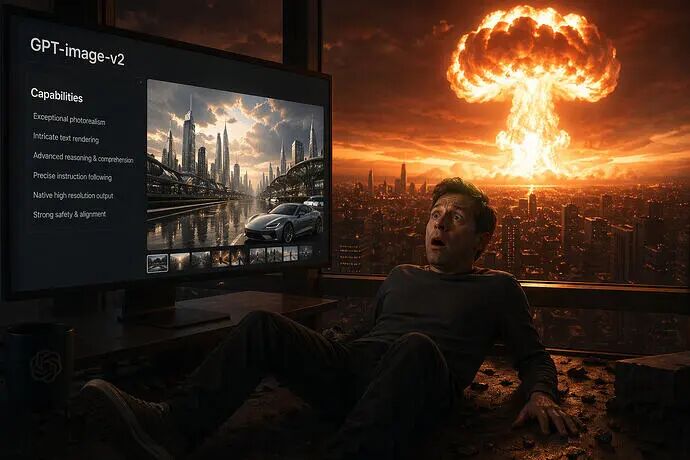
But late the night before last, it wasn't Altman who was left dizzy and slumped. This time, it was all the users staring at their screens, waiting for OpenAI to make a move.
As usual, Altman played it mysterious and posted a tweet: "We've got something interesting in the works."
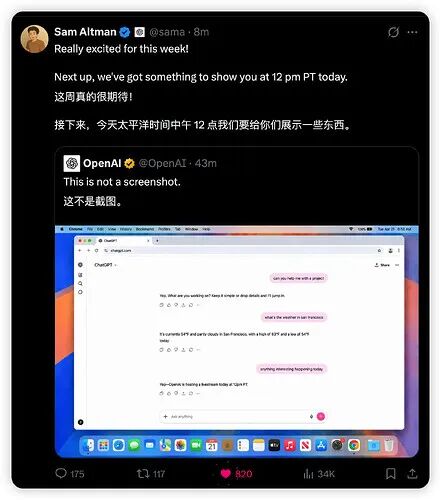
At 3 a.m., GPT - Image 2 was launched. It caused a huge stir in the global AI community.
“Images are a language, not decoration.”
This is the first line OpenAI wrote on the release page. In simple terms, from now on, images are no longer just decorations; they are a form of language. This is a declaration of generational leap for the entire computer vision industry.
Throughout the past year, AI image - generation has been stuck in the aesthetic quagmire of "how realistic it looks". With the arrival of GPT - Image 2, a switch has been flipped - AI image - generation has officially entered the "logical correctness" intelligence arena.
It's not an overstatement to describe the accuracy of this model as "terrifying".
It has topped both the text - to - image and image - editing rankings on Artificial Analysis, and its real - world performance is overwhelming.
It's the same feeling as when Seedance 2.0 arrived in the video - generation field. It's no longer just a human assistant; it's defining new industry standards.
Note: All the images in this article were generated by GPT - Image 2, and the content of the images is purely fictional.
The Awakening of the Thinking Engine
In the past, the first criterion for judging the quality of an image model was how similar it was to a real person or a reference object.
In front of the monster that is GPT - Image 2, this standard is obsolete. Completely obsolete.
The most core breakthrough of the new model lies here: It is an image model that supports a thinking mode.
What does this mean? After the user inputs a prompt, the model doesn't simply denoise and splice pixels. It first conducts a mental modeling in the background and then starts to create.
A real - world test image leaked from the Linux.do community best illustrates this point. The model simulated a live - streaming scene of Lei Jun running:
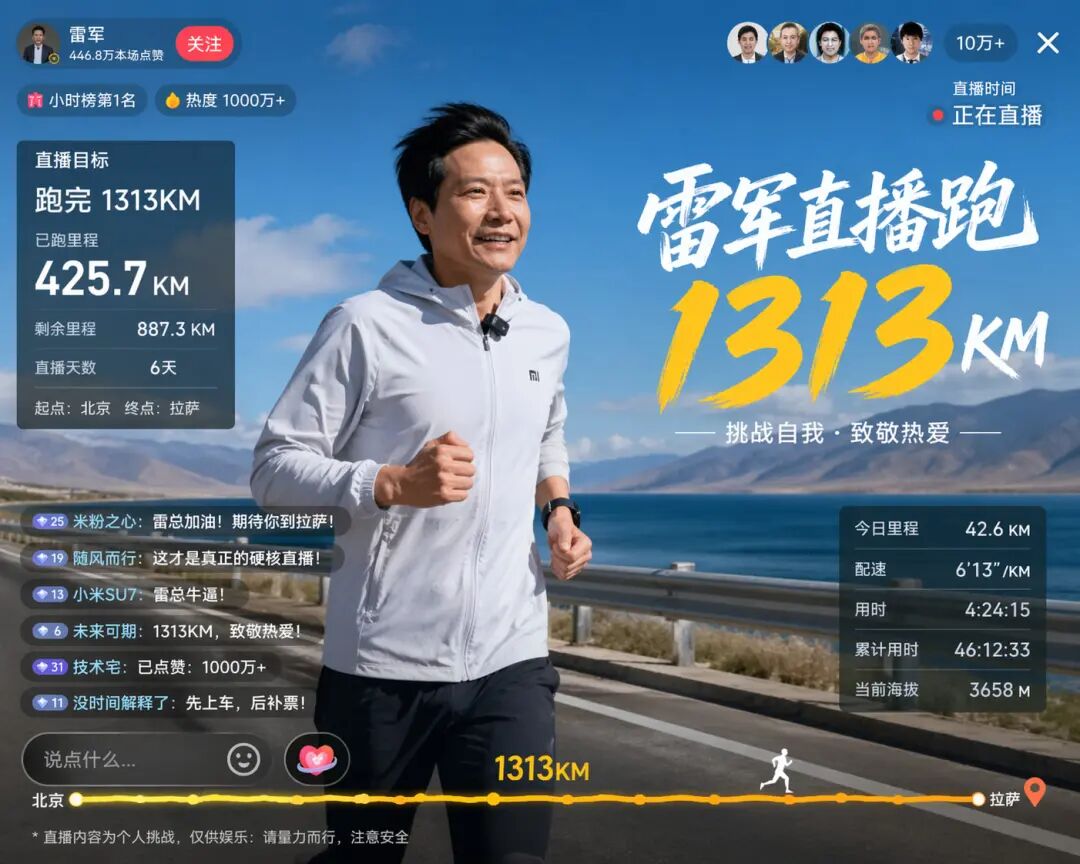
Image source: https://cdn3.linux.do/original/4X/0/f/3/0f37c8bc968e3d563cc6100d8e7f80ee305661ff.jpeg
This image made many developers catch their breath. Lei Jun's facial features were accurately reproduced - it was almost like a photo. The image also clearly showed: the live - streaming goal of 1313 km, the distance already run of 425.7 km, and the remaining distance of 887.3 km. Even more impressively, the current altitude was marked as 3658 m.
What does 3658 m mean? It's the typical altitude when entering the Tibetan area on the way from Beijing to Lhasa.
In human eyes, this is just simple mathematical addition and subtraction and geographical knowledge. But think about it: For an image model, what does the triple unity of mathematical logic, geographical knowledge, and UI norms mean?
The conclusion is straightforward: Before generating the first pixel, GPT - Image 2 has already completed a round of reasoning. It understands the meaning of "mileage", the logical relationship of addition and subtraction, and the visual characteristics of high - altitude areas.
This isn't just drawing. It's thinking.
From Toy to Productivity Tool
In the face of this ability, everyone's attitude towards image models should change.
It's no longer just a toy for you to draw avatars or create wallpapers. It has crossed the "usable" threshold and directly entered the "useful" zone - a tool that can be directly applied in commercial scenarios.
Take poster design as an example. The composition, aesthetic sense, light and shadow processing, and the grasp of brand tone of GPT - Image 2 have undoubtedly reached a level that most ordinary human designers can't achieve.

Image source: https://cdn3.linux.do/original/4X/7/a/1/7a12ccd6b745be5ad8828eb0ac225d218fb43cbc.jpeg
In human society, hiring a senior graphic designer to create a commercial - grade poster often incurs high communication costs, time costs, and design fees of over a thousand yuan, which can be a heavy burden for small and medium - sized enterprises.
However, with GPT - Image 2, even if you need to make dozens of adjustments because you're not satisfied with the result, the cost is only a few dollars.
In fields such as poster design, marketing materials, and illustration, what users really care about is not "realism", but "beauty" and "accuracy". That's why the replacement efficiency of AI is devastating.
In the synchronously updated developer documentation, there's an exciting detail hidden: The example code frequently mentions the model: "gpt - 5.4".
This combination of the thinking mode and the flagship model implies one thing: GPT - Image 2 is not an isolated product. It is a visual terminal designed for the next - generation large - language model.
Through the new Responses API, the image - generation process will interact as naturally as chatting with a large - language model. The model has added a function that allows multi - round dialogue for modification. After the first image is generated, users can issue various instructions that would give human designers a headache for modification.
Through the new Responses API, the image - generation process will interact as naturally as chatting with a large - language model. The model has added a multi - round dialogue modification function. After the first version is generated, users can issue various instructions that would make human designers' blood pressure soar, such as "Make the background a bit darker." "Move the logo a few pixels to the side."
These interactive real - time modification requirements are exactly the most cumbersome and patience - consuming parts of designers' daily work. Now, they can be easily solved.
The Peak of Chinese Character Rendering
Although GPT - Image 2 is a foreign model, domestic users have given it unanimous praise.
There's only one reason: Its support for Chinese characters is almost perfect.
In the real - world test images returned from the community, you can see the famous debate scene between Luo Yonghao and Wang Ziru:
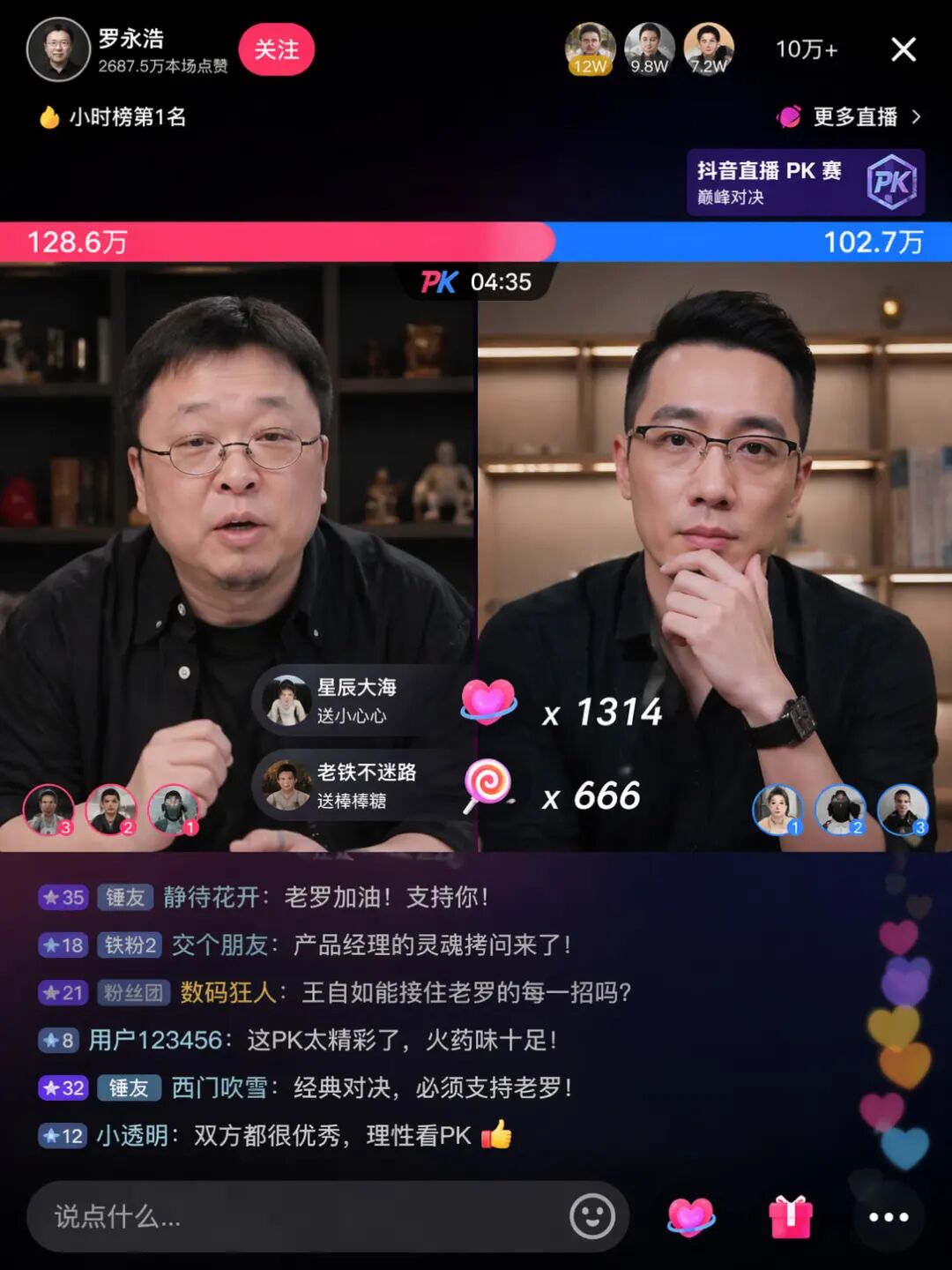
Image source: https://cdn3.linux.do/original/4X/0/9/7/097ed46991d2464442aebc6b1076a292cc839fec.jpeg
You can also see Elon Musk live - streaming to sell Lao Gan Ma:
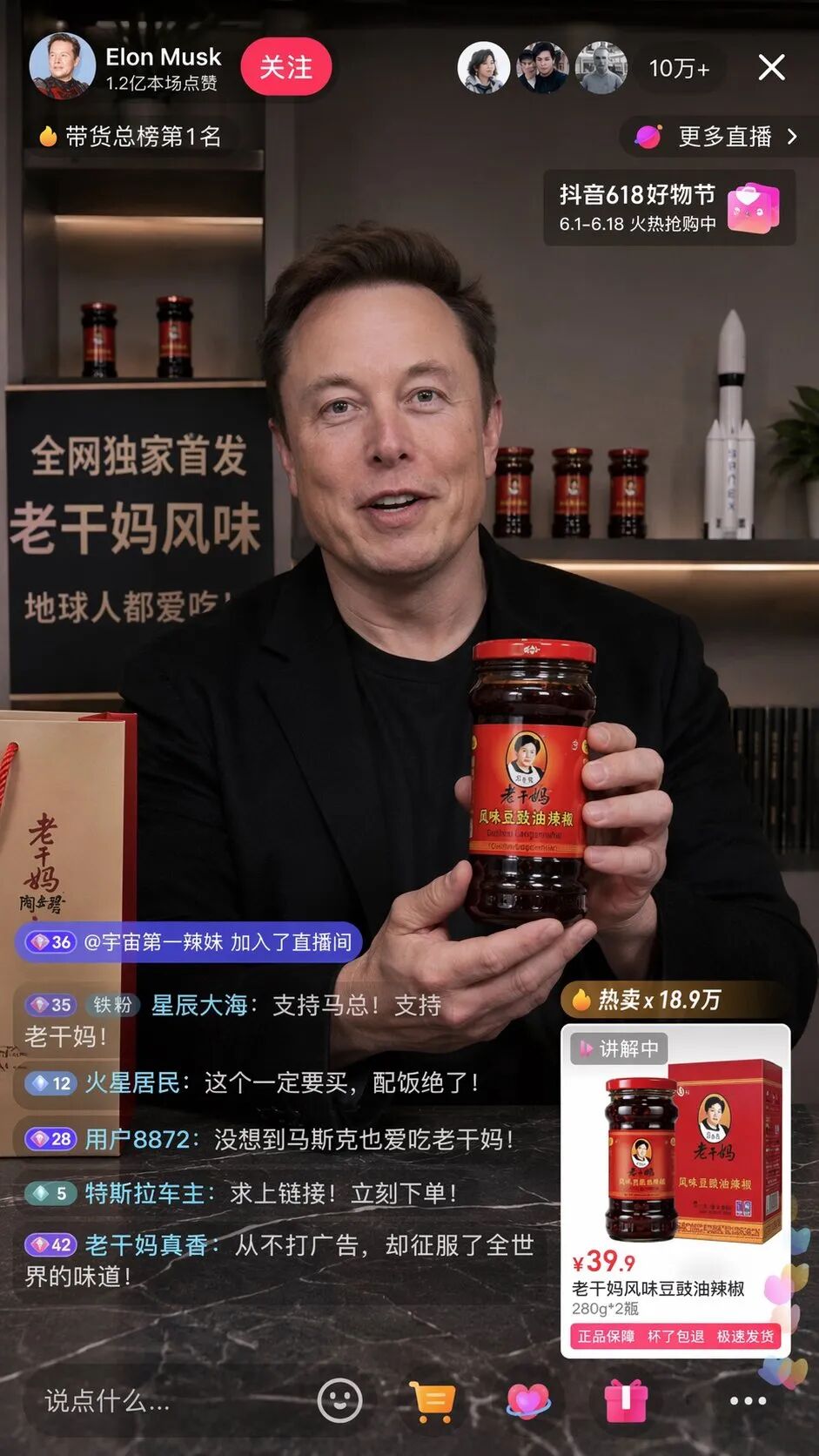
Image source: https://cdn3.linux.do/original/4X/2/f/a/2fa77cf040e6337643829df4ec5ca6467d2866b2.jpeg
You can even see a prescription written by a doctor:
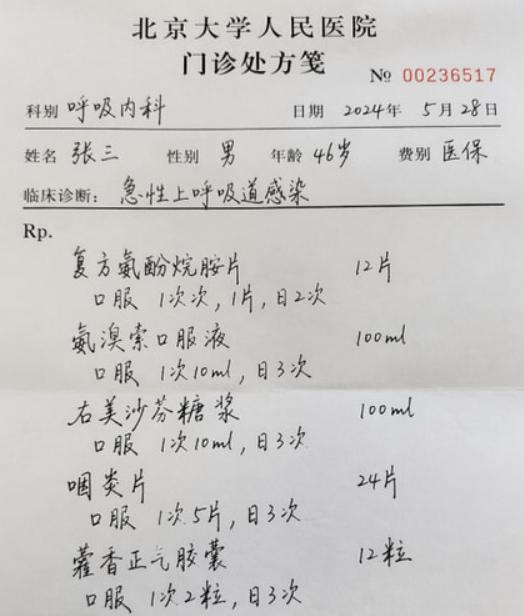
Image source: https://cdn3.linux.do/original/4X/9/f/f/9ffeab83675648b43116cd0763f6c8b560611ae6.jpeg
The characters in these images are no longer the distorted and randomly - pieced - together "pseudo - Chinese characters". Instead, they are mature design drafts with calligraphic charm, font hierarchy, and typesetting art.
Obviously, OpenAI has incorporated a large amount of Chinese language image data into the training set and conducted targeted intensive training.
Compared with the previous - generation model, the power of GPT - Image 2 is more vividly demonstrated.
In a comparison test, although the previous - generation model version 1.5 could generate something that looked like a recipe, on closer inspection, almost all the text was garbled.
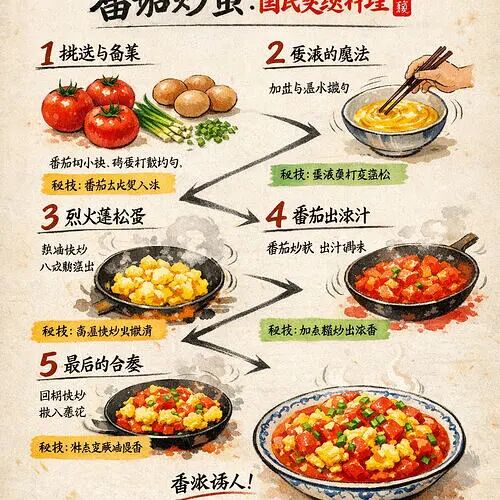
Image source: https://cdn3.linux.do/optimized/4X/2/b/3/2b38f3c1a134515d564f07f81661c0bd9578c6b9_2_750x750.jpeg
However, the same recipe generated by GPT - Image 2 shows a milestone - like breakthrough in text clarity and aesthetics.
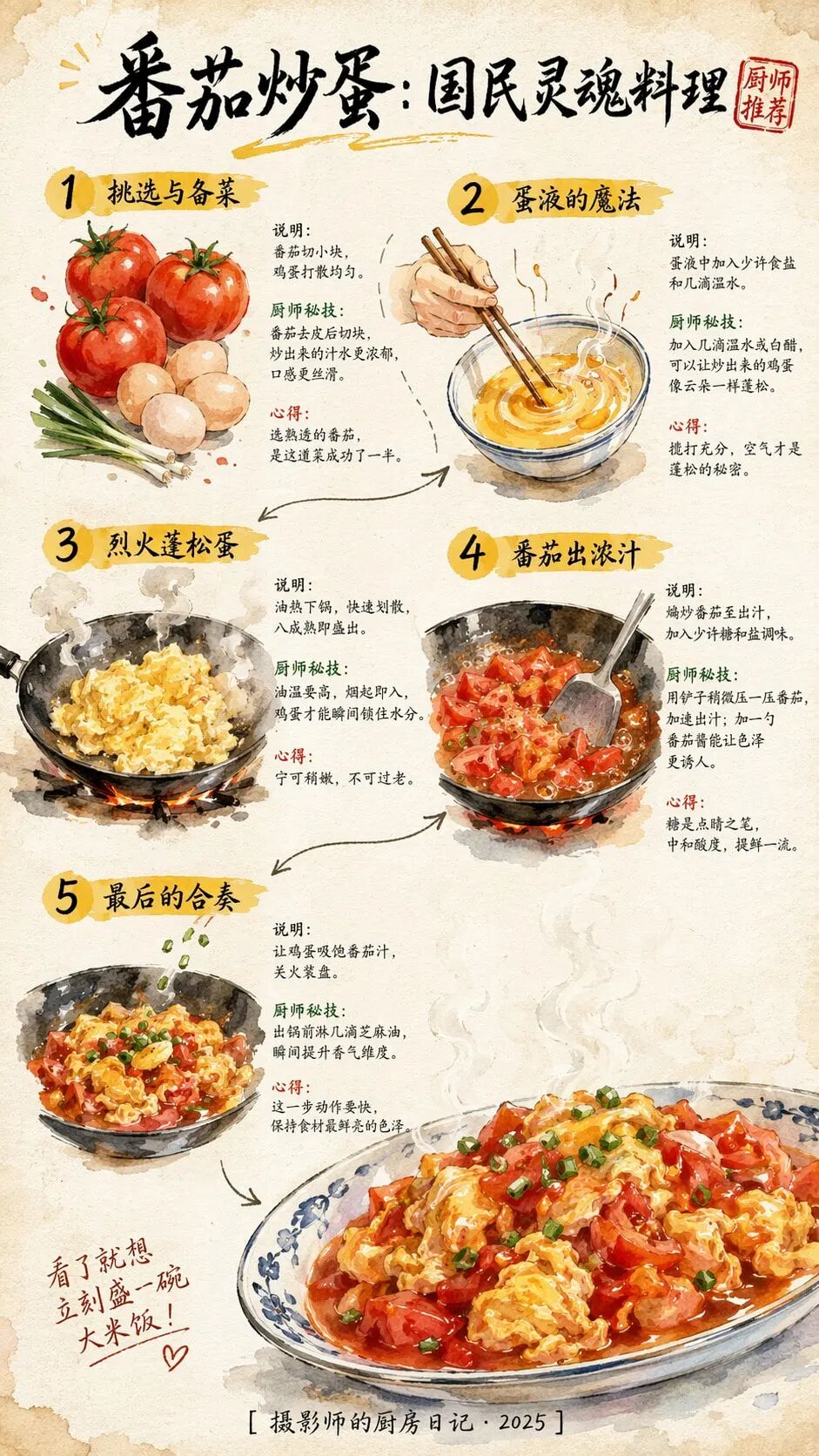
Image source: https://cdn3.linux.do/original/4X/0/2/5/02513b10135d824ccb1c22bd0c7eb441f1e34455.jpeg
For a prompt with over a hundred Chinese characters, the five - step process is still clearly visible, and the consistency between text and image is satisfactory. This is not just an image; it's a reproducible practical solution.
However, this also brings up an interesting technical question: Has the image model really completely solved the problem of garbled characters?
My judgment is: Probably not.
A large - language model generates tokens based on semantic logic. In the reinforcement learning stage, it relies on probability. The more high - quality language data, the more reasonable the logic. However, the essence of an image model is pixel generation. The logical relationship between pixels is fundamentally different from that between characters.
In other words, Even as powerful as GPT - Image 2, it doesn't really "understand" the rules of characters. It just memorizes the appearance of characters at the pixel level.
An image of negotiating business with Altman exposes this point. The large characters "Mengniu" and "Wanglaoji" on the packaging of two boxes of drinks are written extremely well, but the small characters below are still blurry blocks.
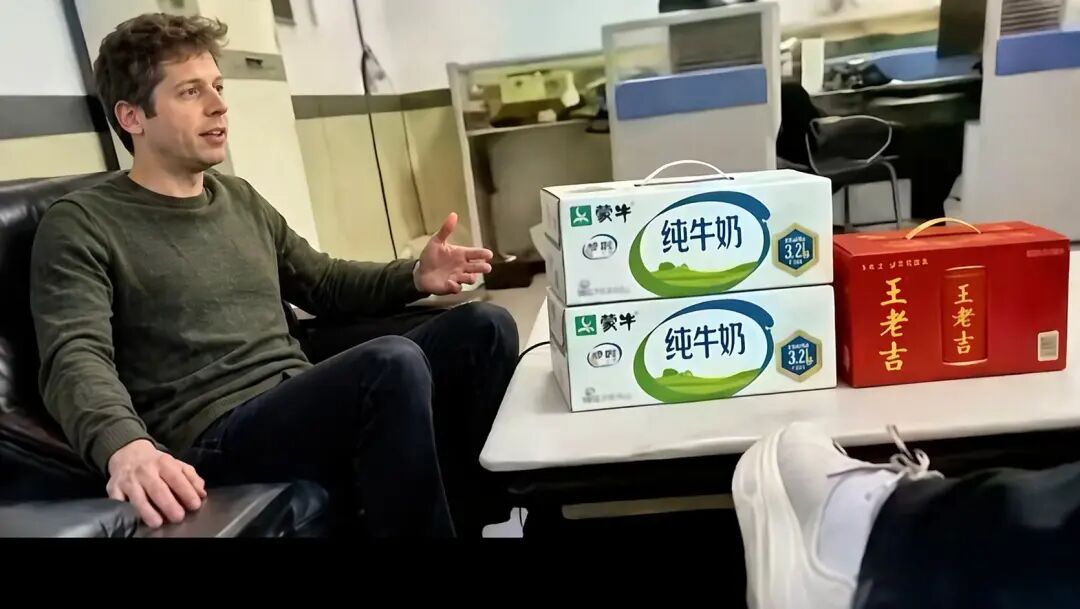
Image source: https://cdn3.linux.do/original/4X/d/7/c/d7c4fb063202bcbf56b9ca0623aa0ce6fc26e542.jpeg
Under the current technological paradigm, the generation logic is still "pixel arrangement", which is fundamentally different from "character - based rendering". The garbled characters in extremely fine details may never be completely eradicated.
But then again, for more than 90% of commercial application scenarios, this is already sufficient.
The Defects and Boundaries of an Uncrowned King
Even though it has taken the top spot in the world, GPT - Image 2 still has its clumsy side.
In real - world tests, it was found that because the thinking mode involves online searching and logical deduction, when dealing with extremely complex fictional tasks, the model may occasionally get trapped in a logical loop - it may still be unable to give an answer after nearly 40