The last problem left for AI is it.
God Translation Bureau is a compilation team under 36Kr, focusing on fields such as technology, business, workplace, and life, and mainly introducing new technologies, new ideas, and new trends from abroad.
Editor's note: When AI fills the value high - ground of software, humanity's last luxury - healthy time - is being reshaped into the growth singularity of the next decade. This article is from a compilation.
Throughout history, there has been only one force that can sustainably improve human living standards and expand the economic pie: that is science and technology.
Everything else is nothing more than wealth redistribution, debt cycles, or over - drafting the future. Only technology can turn the impossible into the possible: technology creates new things, enabling us to make greater leaps with fewer resources.
Think about what this truly means in the long history. Thousands of years ago, almost every living person had to spend most of their waking hours producing food. Today, a tiny fraction of the population feeds the largest number of people in history. The time we once spent in the fields has been transformed. It has become medicine, engineering, art, and leisure.
Every significant technological wave follows this logic: it absorbs menial labor and creates new possibilities. Abundance is the real miracle.
Artificial intelligence follows the same pattern. It allows us to achieve more output with less input and has the great potential to create abundance. In some aspects, it has already achieved this: for example, it is creating extremely rich software code for everyone. But as AI creates abundance in many fields (such as intelligence and software), it will make some severely scarce fields extremely prominent. The largest and most urgent of these fields is health.
In many ways, the field of health and longevity has lagged behind the overall innovation curve. It's true that we've made great progress, but for most people, health and longevity are far from being "abundant" and still await development.
One of the main impacts of AI is to push health and longevity into a larger economic segment. As problems in other fields are successively solved, the remaining major challenges will increasingly concentrate in the biological and health fields.
I think this vision is grand.
Technology Creates Abundance
The power of technology lies in its ability to help us achieve more with less effort - what economists call productivity development. In fact, this includes not only squeezing the efficiency of existing systems but also unlocking entirely new capabilities that were previously unimaginable. As a result, the world has become (generally) better.
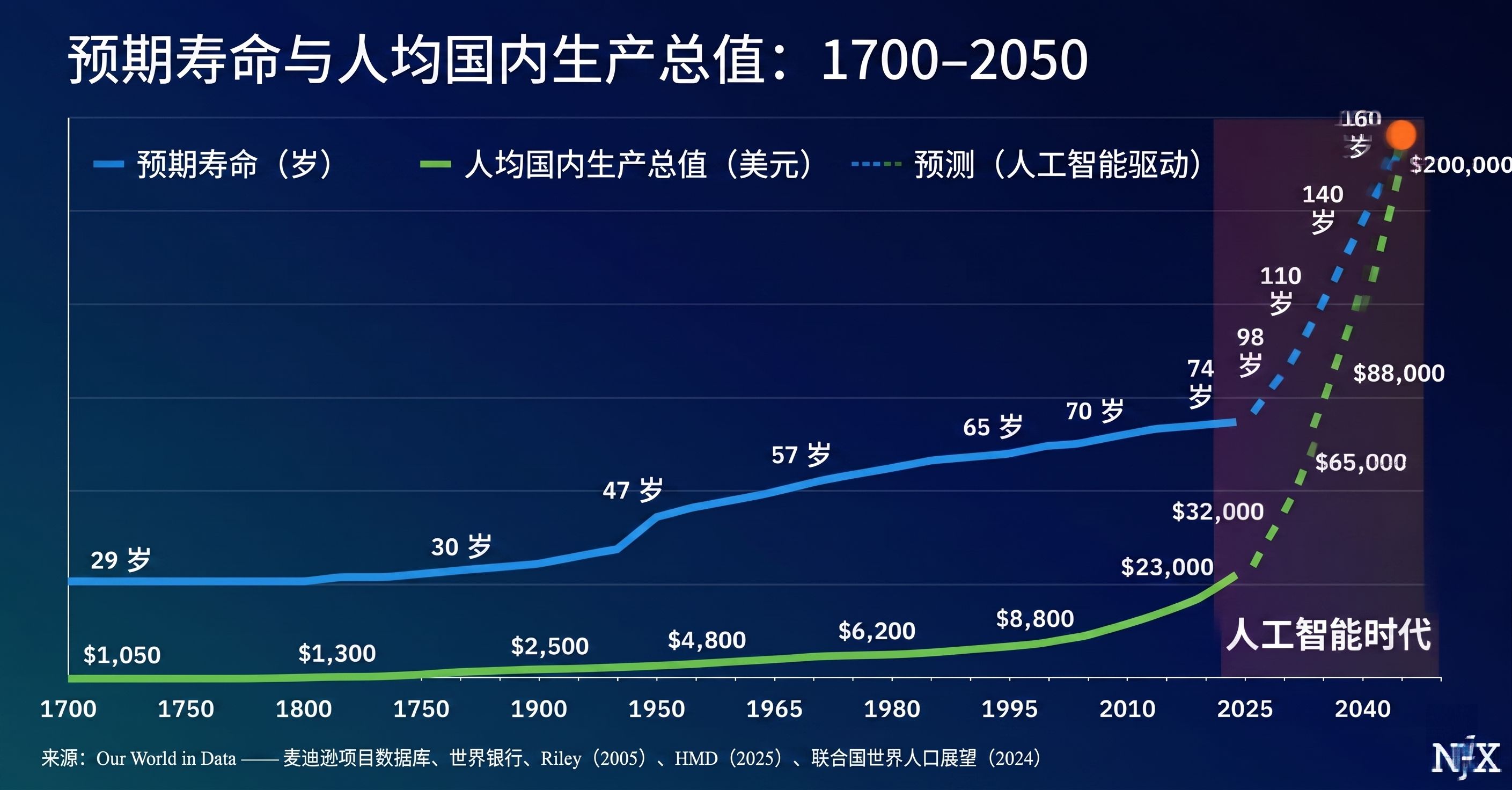
People always like to be nostalgic. But to be realistic, life in the past was actually quite bad. The following table reveals the truth. In terms of life expectancy, living standards, and wealth, there was almost no progress for thousands of years - and then there was a sudden explosion. This started with the Industrial Revolution but truly took off during the Information Revolution.
The power of innovation lies in its ability to continuously improve living standards over time.
Why is this the case? Because technology unlocks far more than just simple efficiency improvements. You can think of it as the technology tree in the game "Civilization". Pottery unlocks writing, writing unlocks commerce, and commerce unlocks exploration. You can evolve all the way to giant robots - and even further. Although it's just a game, this principle is real.
Over time, these innovations will have a compounding effect. New innovations keep emerging, costs become lower, and life has the potential to become better.
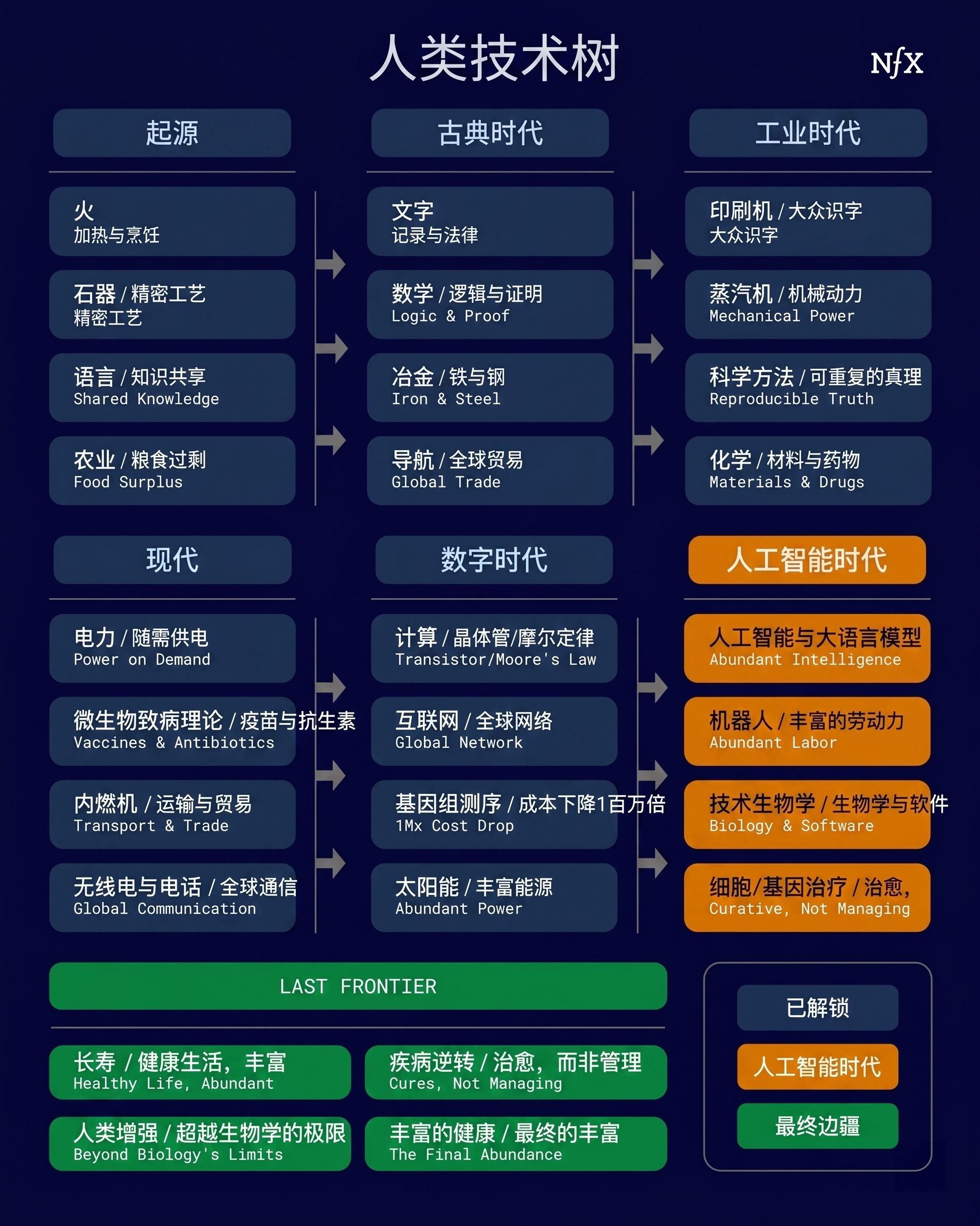
You can see this prospect on a macro - level, but you can also observe examples in your daily life on a micro - level.
The TV on the wall is an example: the first color TV in the 1950s was worth more than $10,000 in today's purchasing power. And it made no sense at that time because there were no programs to watch. Today, flat - panel LCD and OLED TVs have achieved large - scale global production. Since the early 21st century, the price has dropped by more than 90%. The average family has at least one large - screen TV and an endless supply of cheap or even free entertainment content.
Technology has driven down costs and created an extremely rich supply of media, programs, and video games that didn't exist before.
The computer on your desk and the phone in your pocket. These are examples of how technology and innovation benefit the public in daily life. There are many similar examples in the biological field, but most people have never noticed.
Take monoclonal antibodies as an example. They were just experimental laboratory tools in the 1970s. In the following forty years, advancements in cell culture, bioreactors, and antibody engineering have transformed these customized molecules into an industrial platform. Now, more than 100 monoclonal antibody therapies have been approved for use in cancer, autoimmune diseases, cardiovascular diseases, and infectious diseases.
Without this transformation, many people who should have died would still be alive today. For example, Trastuzumab for HER2 - positive breast cancer or Pembrolizumab for melanoma and lung cancer have significantly improved survival rates. This is the innovation curve at work.
Another example we like is genome sequencing. In 25 years, the cost of human genome sequencing has dropped by a million times. This has made an entire class of companies and therapies possible, which was unimaginable a decade ago.
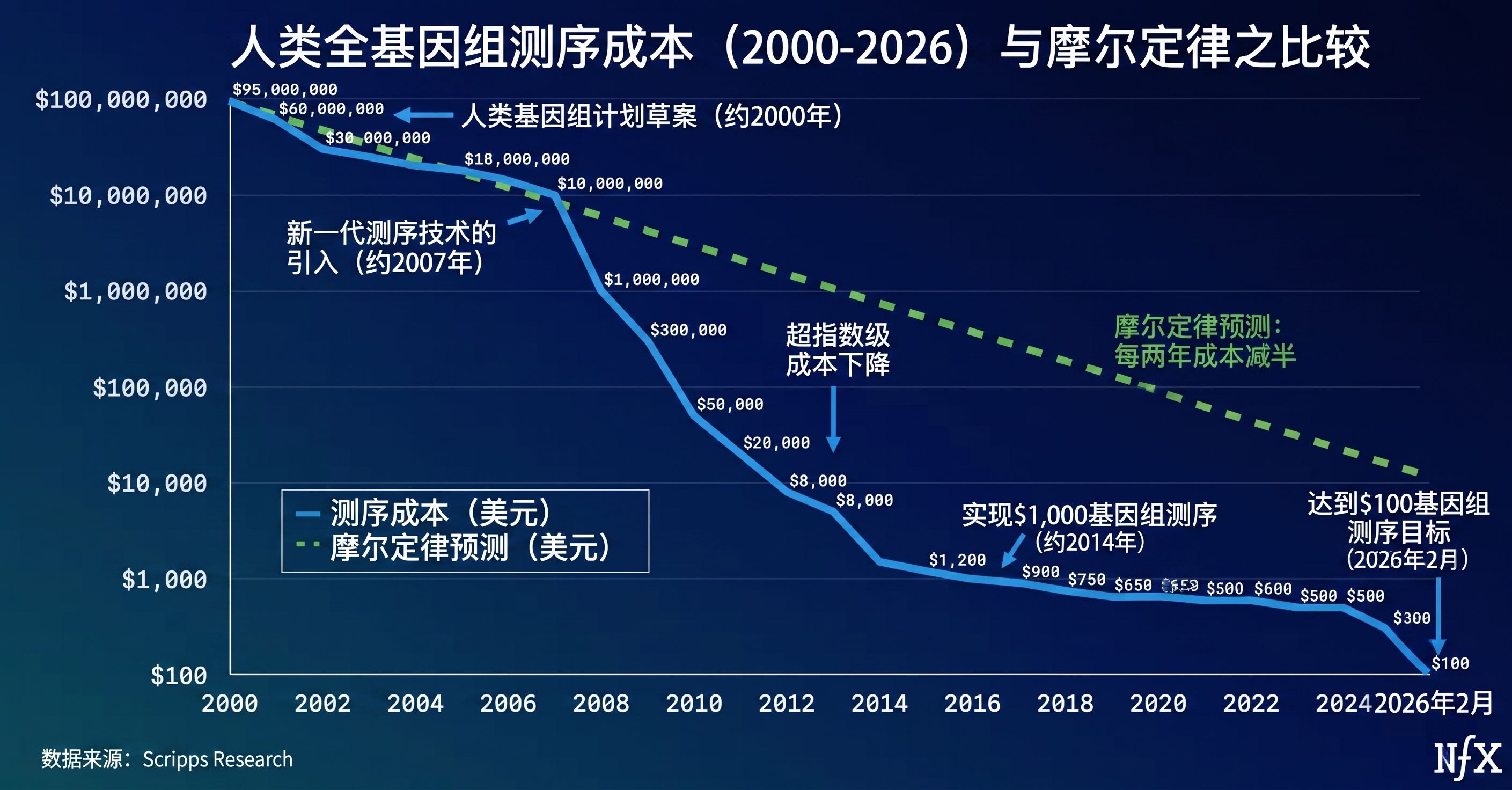
The pattern is always the same: technology first makes something possible, and then over time, it tends to become cheaper. Abundance is created in predictable and unpredictable ways. TVs have created abundant access to media; iPhones have created abundant instant communication and access to the entire human knowledge base; monoclonal antibodies have actually extended the lives of specific populations.
But there's something subtle here. As we progress along this innovation and abundance curve, we often encounter "asymptotes" - that is, when the experience or standard is already good enough, the "premium version" isn't much better.
This happens with TVs - is a super - large screen really much better than a medium - large screen? It also happens with Uber rides - if a car arrives in 2 minutes instead of 4, most users don't really care. The same is true for iPhones: today, the iPhones used by the rich are the same as those used by the general public.
This is also happening with AI models and software products (would you prefer a ChatGPT that scores 100 on the SAT over one that scores 98?).
As AI takes over various fields, this asymptote or optimization challenge is very real for many industries. But in the biological field, we won't experience this change for a long time (and when we do, we'll all celebrate that happy and long - lived life!).
There are still huge challenges to be solved in today's biological field. We haven't even reached the stage of fine - tuning and optimization. Right at this moment, someone somewhere is receiving a diagnosis, and better tools could have detected the disease earlier. Someone is losing their parents to cancer. People who could be cured by existing therapies can't get treatment because the individualized treatment plans are too expensive.
In this sense, the biological field has "lagged behind" on the innovation curve. We haven't entered the optimization stage and are still solving major fundamental problems.
Warren Buffett has a famous quote: "Even if you get nine women pregnant at the same time, you can't have a baby in one month." Interpretation: Some things are just difficult and take time. The biological field is one of them. Although we have more biological data today than ever before, there is still a huge gap. The growth of cells and organisms takes time. No matter how smart AI is, it can't solve all problems without a huge investment in data collection and time.
AI will help us. But it's still difficult. And in this case, "difficult" may be a sign that there are extremely valuable goals worth achieving.
Entrepreneurs, this means there is a huge opportunity here to build a large - scale and highly influential business.
Biology: The Last Frontier of Abundance
Ultimately, what is the most important form of abundance? It's health. Specifically, it's healthy time. Would you rather be an 80 - year - old millionaire or an 18 - year - old with nothing?
Creating an "abundance" of healthy time through innovation sounds like a pipe dream. But humans have actually achieved it.
Today, the typical American's life expectancy has reached 80 years. But 50 years ago, this was far from the case. Although the main reason for the increase in human lifespan is the reduction of child mortality, the situation for adults has also improved significantly. This is largely because vaccines, antibiotics, antihypertensive drugs, and statins have turned once - fatal infections and heart diseases into controllable events.
As a species, thanks to technology, human lifespan has almost tripled.
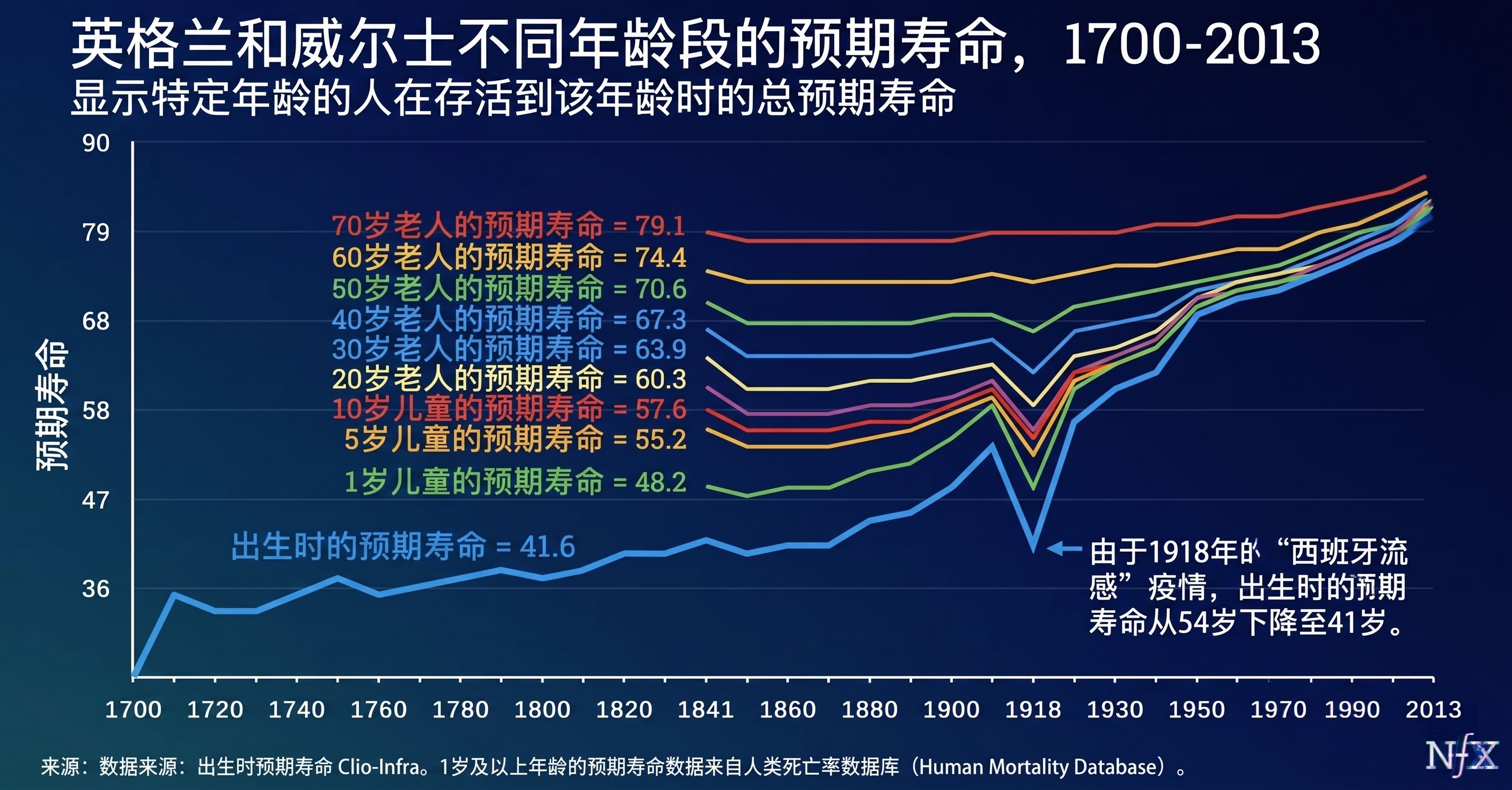
But even today, health is still far from being abundant at many levels.
There is a gap between the rich and the poor. We should use biology and technology to make innovation cheaper and more accessible to more people.
Even in wealthy countries, many people suffer from declining health and aging - related complications in the last 20 years of their lives. We can develop better technologies to make previously incurable diseases curable.
Our current medical model rarely keeps people healthy - it mostly manages diseases. It regards death and pain as inevitable. Maybe we can even keep healthy people healthy and free from diseases from the start.
Diseases that once killed millions of people (such as smallpox) have now been eradicated. This is a miracle. We can use the magic of technology to create more miracles.
The Biology Progress Curve: From Theory to Practice, and Then to Scale
This innovation curve is already at work. The innovation engine that once made TVs and phones popular is now targeting the most difficult problems in human biology.
We are witnessing the emergence of the next - generation therapies, which follow the human progress curve from theory to practice and then to scale.
Here are some examples of technologies that should be unlocked as the progress curve accelerates.
Biologics: Currently, most biologics are still complex and expensive drugs. But we see many companies innovating in these processes to make them easier to scale and even more effective.
Take Trojan Bio as an example. They are developing antibodies that can target tumor cells and label viral peptides, thus initiating a new wave of in - vivo CAR - T cell therapy. This enables patients' own immune cells (which already know how to kill virus - infected cells) to fight cancer from the inside.
Another example is Nanocarry. The company uses an insulin - based nanotechnology to finally guide biotherapies through the blood - brain barrier.
Companies like these represent a model that we hope to accelerate in the future: the ability to create new, complex therapies composed of the amazing power of biology itself and deliver them precisely to the affected areas.
Cell Therapies: This is another area where we expect significant changes. These therapies often have the potential to cure certain cancers, but currently, the cost of treating each patient is as high as millions of dollars.
We believe that ImmuneBridge is one of the companies that can scale this therapy. Their platform has the potential to eliminate the trade - off between cell diversity and scale - which is the main bottleneck in this field. Edity Therapeutics is trying a different cell - therapy approach: using immune cells as carriers to directly deliver optimized therapeutic proteins to diseased tissues.
Gene Therapies: The prospects are well - known - a one - time cure for genetic diseases. Mammoth Biosciences is a platform for identifying and developing precise gene editing based on CRISPR. We believe that this treatment model will become popular one day.
Once these three treatment models are scaled, it will mean something extraordinary: substantially eliminating many diseases that shorten human lifespan. These are the real directions that we see scientists currently working on.
Talent, Capital, and Innovation Will Flow to the Challenges
The software and technology markets are currently in a state of confusion because as the available intelligence grows rapidly, it's really hard to figure out what's worth doing. Simple problems are being solved quickly.
Founders and investors are worried that the software and other industries are losing their monetization ability (but this is good for consumers).
As most economic problems are "solved" by AI, the problems of curing diseases and enabling people to live longer and healthier will become more prominent. More talent than ever will flow into the biological field. It will become the new frontier. Those who seek to create wealth while achieving social value can and should develop their skills there.
To some extent, this has already happened in the AI field. If you ask college students today, those interested in technology are focusing on "hard technology" - aerospace, infrastructure, hardware, and robotics. The most ambitious people - and the ones we as investors should fund - always look for those grand, difficult, and life - changing challenges. They are naturally attracted to these problems.
Biology is a huge target today, but as other fields are gradually "solved", it will become even more important in the future.
Many people have already realized this (and we're investing in them!). But we believe that more people will soon realize this. It will surely become obvious.
With AI's ability to understand biology, analyze data, reduce risks, and accelerate discovery, truly scalable solutions are becoming possible.
Make Health Accessible
True wealth is health. The real magic of technology is to create abundance. In the next decade, the biggest problem our society faces is how to use the existing new tools to make a healthy life accessible.
As AI reduces the cost of solving complex biological problems, the living standards of most of humanity can be improved. What was once "premium" - high - level healthcare, early disease detection, curative therapies - will become more and more accessible.
Translator: boxi.