Transcript of the discussion on computing power policy: What kind of network is the national integrated computing power network exactly?
In March this year, the National Integrated Computing Power Network was listed as one of the 109 major projects in the 15th Five - Year Plan. It is regarded as an important project for building a modern infrastructure system.
How to further build the National Integrated Computing Power Network is becoming an issue of concern for policy - making departments and enterprises.
Caixin learned that China will accelerate the construction of national hub computing power facility clusters, support regions with conditions to moderately develop computing power according to the needs of low - latency scenarios, and promote the coordinated development of cloud, edge, and end. It will strengthen the national integrated computing power monitoring and scheduling, improve the computing power access and precise matching capabilities, enhance the utilization efficiency of computing power resources, and better meet the strong demand for computing power resources from small and medium - sized enterprises and research institutions.
With the support of the National Information Center, Caixin sorted out a discussion on computing power policies and solicitation of opinions in March 2026. The discussion organized by the National Information Center mainly focused on topics such as what the National Integrated Computing Power Network is, how to build and implement it, and the current popular topic of Token going global. Participants in the discussion included experts from telecom operators, large technology companies, research institutes, consulting agencies, and start - up companies.
The National Information Center is a public institution directly under the National Development and Reform Commission. It has long been conducting research on computing power industry policies such as the "Eastern Data and Western Computing" project and the National Integrated Computing Power Network. Over the years, the National Information Center has been continuously organizing special discussions and soliciting opinions in the field of computing power (for details, see "A Record of a Computing Power Policy Seminar: Seven Issues in Computing Power Scheduling").
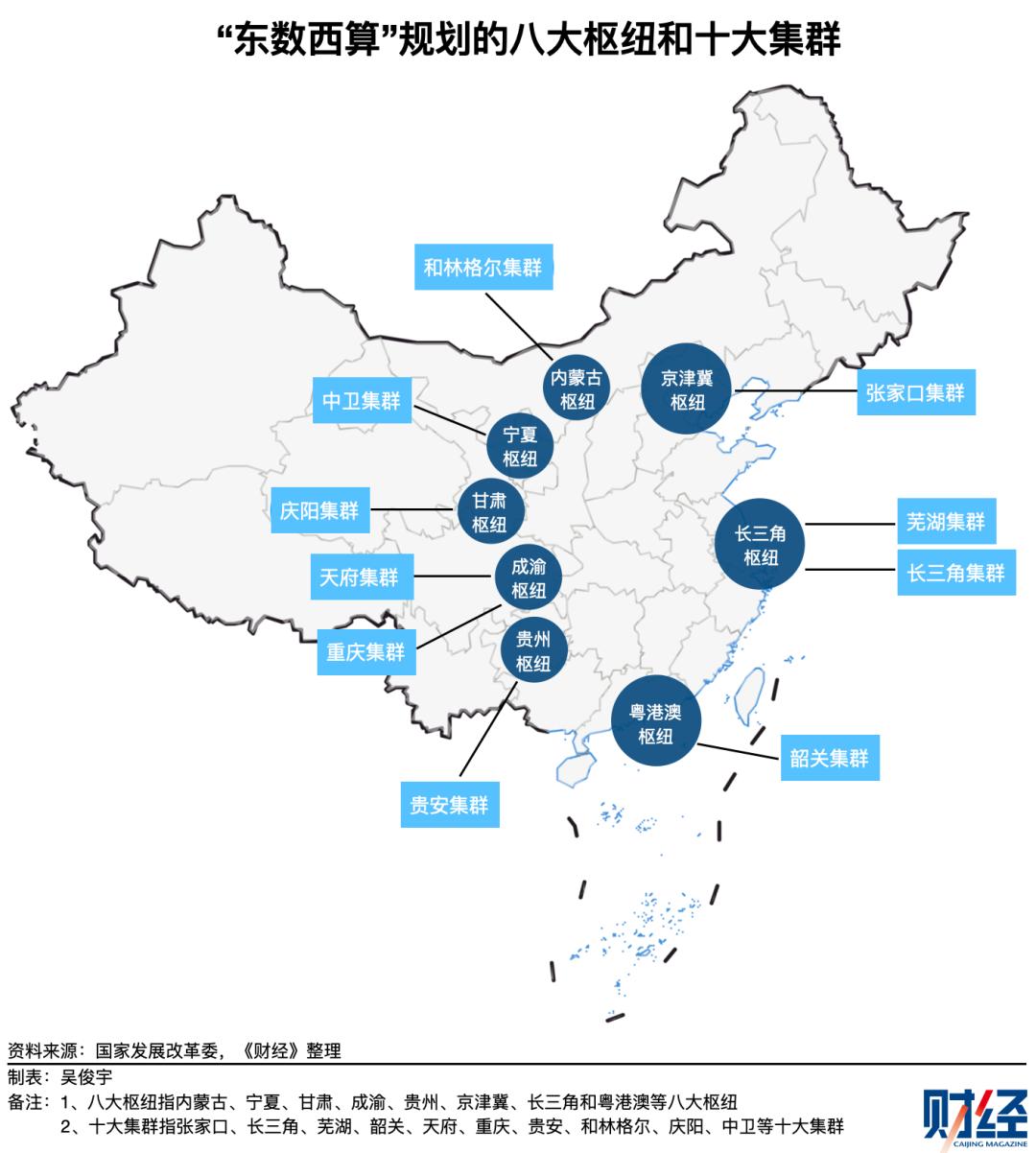
In China's computing power industry layout, industrial policies have always played an important role. There are two key nodes: in February 2022, the "Eastern Data and Western Computing" project was launched; in December 2023, the policy on the National Integrated Computing Power Network was introduced. These two policies are coherent and have promoted the concentration of China's computing power resources in the "Eight Hubs and Ten Clusters" regions.
After years of discussion, all parties have deepened their understanding of the National Integrated Computing Power Network and reached some consensus: in the past three years, it has guided the optimization of the location layout of China's computing power resources and promoted the continuous decline of energy and network costs behind computing power.
By the end of 2025, the total scale of China's intelligent computing reached 1.59 million PFlops (quadrillion floating - point operations per second). The intelligent computing scale built in the "Eight Hubs and Ten Clusters" has reached 1.388 million PFlops, accounting for more than 80% of the national total. In the computing power hub node cities in western China, such as Ulanqab in Inner Mongolia, the price of green electricity is generally lower than 0.4 yuan per kilowatt - hour.
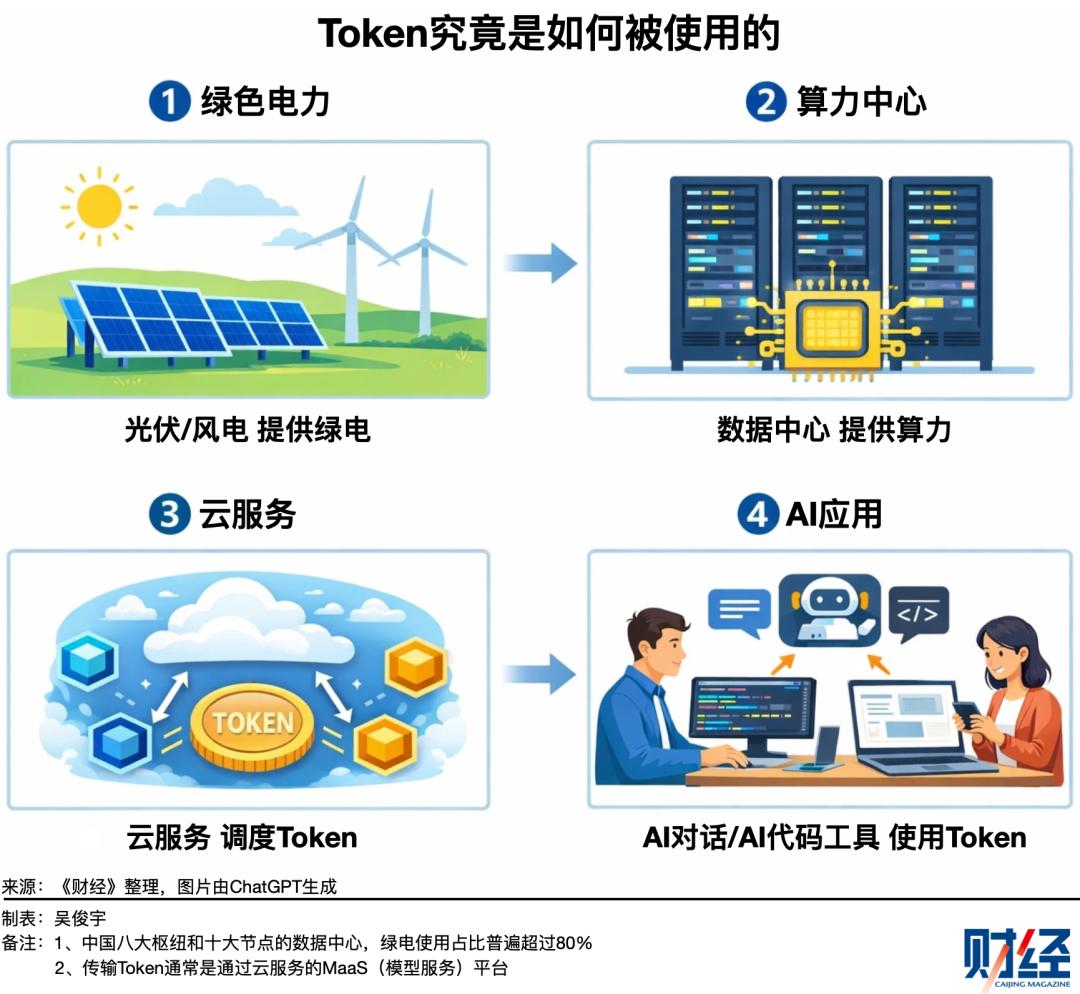
On the intelligent computing consumption side, Token has become the smallest unit. According to the National Data Bureau on March 24, as of March 2026, China's daily average Token call volume exceeded 140 trillion, a more than 1000 - fold increase compared with 100 billion at the beginning of 2024. Compared with 100 trillion at the end of 2025, it increased by more than 40% in three months.
China has even started the "Token going global" (for details, see "Three Facts and Three Misunderstandings about Token Going Global"), and a number of Chinese basic models are being used by overseas developers.
With the rapid growth of Token consumption, some new measurement and pricing issues have begun to enter the scope of policy discussions.
Relevant experts from the National Information Center proposed in the discussion that a more popular expression for the commonly used pricing unit of "1 million Tokens" in the industry could be explored, similar to how kWh (kilowatt - hour) is called "degree" in electricity measurement. This proposal is mainly for the purpose of reducing the public's understanding threshold and unifying policy expressions.
The following is the core content (slightly edited while retaining the original meaning):
What is the National Integrated Computing Power Network?
Experts from the Big Data Development Department of the National Information Center: The National Integrated Computing Power Network is a new - type digital infrastructure that uses information network technology as a carrier to promote the integrated grid - connected scheduling of high - proportion, large - scale, and diversified computing power across the country. Relying on the high - quality computing power supply of the eight national hubs, it links regions rich in renewable energy and regions with strong computing power demand, forming a national - scale computing power "network" that spans the east and west and connects the north and south, providing inclusive, easy - to - use, green, safe, and scalable computing power resources and an environment for integrated innovation for the whole society's production and life.
Tang Hongwei, a senior engineer at the Institute of Computing Technology, Chinese Academy of Sciences: The computing power network is a system that takes computing power infrastructure as the core and is deeply integrated with data infrastructure, IPv6 (Internet Protocol Version 6) and 5G communication infrastructure, and green electricity infrastructure. Among them, the computing power infrastructure should have the characteristics of "low cost, low threshold, and high throughput".
Zhang Hao, a group - level chief expert at China Mobile: The National Integrated Computing Power Network is a digital infrastructure that promotes the large - scale scheduling and operation of various types of computing power across the country. Its key lies not only in establishing physical connections but also in building a comprehensive computing power service system that can achieve "task awareness, resource linkage, and cross - domain collaboration" through various hardware, software, and scheduling platforms, providing a powerful and reliable computing power engine for the innovation of artificial intelligence applications and the development of the digital economy.
Relevant experts from Huawei: The National Integrated Computing Power Network is a digital infrastructure that promotes the large - scale scheduling and operation of various types of computing power across the country. It is a comprehensive computing power service system that achieves "task awareness, resource linkage, and cross - domain collaboration". Its key lies not only in establishing physical connections but also in providing support for the innovation and development of artificial intelligence and the digital economy through various hardware, software, and scheduling platforms.
What are the characteristics of the National Integrated Computing Power Network?
Experts from the Computing Power Economy Section of the Big Data Development Department of the National Information Center: There are mainly four typical characteristics of the National Integrated Computing Power Network.
First, intensification. It promotes the large - scale construction and intensive development of diversified computing power resources such as general computing power (computing power resources centered on CPU central processors), intelligent computing power (computing power resources centered on AI chips such as GPU graphics processors), and supercomputing power (scientific research - related computing power provided by high - performance computing clusters) in national computing power hubs, providing a "reservoir" of computing power supply for the whole country.
Second, integration. It creates a national - integrated computing power monitoring and scheduling platform system, connects regional, provincial, and municipal computing power monitoring and scheduling platforms, and promotes the efficient scheduling of computing power resources across regions and industries.
Third, collaboration. Establish a collaborative promotion mechanism of "government guidance, market - oriented operation, and full - society participation". Strengthen technological innovation and model innovation, promote the grid - connected scheduling of various computing power resources, promote the efficient collaboration of cross - regional computing power resources, and strengthen the collaborative development of computing power and green electricity.
Fourth, value - orientation. Actively promote the transmission, processing, and utilization of data resources, data products, and model algorithms, activate the value of data elements, and achieve high - quality development of the digital economy.
Tang Debing, the chairman of Computing Power Interconnection (Beijing) Technology Co., Ltd.: The main characteristics of the National Integrated Computing Power Network are reflected in three aspects.
First, integration and scheduling. The computing power network integrates various heterogeneous computing power in the eastern, central, and western regions, promoting the scheduling and elastic supply of computing power resources across the country.
Second, intensification and greenness. By optimizing the layout, it promotes the intensive construction of computing power facilities and guides the transfer to the western regions rich in green electricity, strengthening energy conservation and carbon reduction of computing power facilities.
Third, inclusiveness and efficiency. It reduces the cost and threshold of using computing power, making computing power as "ready - to - use" as water and electricity. It can even sense business needs, resource status, and energy costs in real - time, realizing the dynamic scheduling of "cloud, edge, and end".
How to implement the construction of the National Integrated Computing Power Network?
Experts from the Computing Power Economy Section of the Big Data Development Department of the National Information Center: As a key infrastructure to support the high - quality development of the digital economy, the National Integrated Computing Power Network focuses on key links such as optimizing computing power layout, regional collaborative interconnection, green and low - carbon development, and full - dimensional security protection, including a series of construction requirements.
Coordinate the integrated layout of multi - source heterogeneous computing power (AI chips from different domestic and foreign companies with different technical standards, such as NVIDIA and Huawei, are usually called heterogeneous computing power). This is the foundation for building a computing power network. Specifically, it is necessary to promote the coordinated development of general computing power, intelligent computing power, and supercomputing power, and make up for the shortage of high - end computing power supply.
Coordinate the integrated collaboration of computing power in the eastern, central, and western regions. This can improve the utilization efficiency of computing power resources, break regional barriers, and achieve efficient cross - regional linkage of computing power resources.
Coordinate the integrated application of computing power, data, and algorithms. That is, it is necessary to rely on the high - quality computing power of hub nodes to improve data governance and processing capabilities, promote the in - depth integration of computing, data, and intelligence, and empower innovation in various scenarios.
Coordinate the integration of computing power and green electricity, and coordinate the development of computing power and security protection. In short, it is necessary to rely on technological means to promote energy conservation and carbon reduction of computing power facilities and build an all - around security protection system to ensure the stable and reliable operation of the computing power network.
Chunyu Hanzhong from China International Engineering Consulting Corporation: To build the National Integrated Computing Power Network, it is necessary to make good use of the existing multi - source heterogeneous computing power resources and accurately master the distribution of various computing power resources. And it is necessary to guide the new computing power to gather at national hub nodes. This can solve the problems of scattered computing power layout and imbalance between supply and demand.
It is also necessary to coordinate the integrated collaborative development of computing power in the central and western regions. For example, relying on the connection and linkage of computing power platforms, strengthen the cross - regional scheduling and dynamic optimization of computing power resources to achieve efficient allocation of national computing power resources.
In terms of the integrated application of computing power, data, and algorithms, it is necessary to rely on the high - quality computing power of hub nodes to improve data governance and processing capabilities, promote the in - depth integration of computing, data, and intelligence, and enable computing power to be used for innovation in various business scenarios.
Computing power and green electricity should also be coordinated. Enterprises should be encouraged to accelerate the green upgrade of computing power centers, promote energy conservation and carbon reduction in computing power centers, and increase the proportion of green electricity consumption.
Zhang Hao, a group - level chief expert at China Mobile: The implementation of the construction of the National Integrated Computing Power Network can be summarized into the following four aspects.
First, diversification of computing power. Integrate intelligent computing, general computing, and supercomputing resources to form a new - type computing power service system that spans the eastern, central, and western regions and covers cloud, edge, and end.
Second, network intelligence. Through new - generation communication technologies such as all - optical networks and SRV6 (a new - generation network IP bearer protocol), build a network interconnection base with ultra - high bandwidth, ultra - low latency, and intelligent scheduling, so that computing power resources can be accessed as needed like water and electricity.
Third, integration of computing and network. Rely on systems such as the national integrated computing power scheduling platform to achieve the orchestration and scheduling of multiple elements such as computing power, network, and energy. Promote the efficient collaboration of computing power and electricity, and computing power and network at large scales, long periods, and across regions, so as to meet the differentiated computing and network requirements of different business scenarios.
Fourth, internalization of security. Deeply integrate security capabilities such as zero - trust and privacy computing into the system architecture to ensure the credibility and controllability of the whole process of computing power scheduling and data flow.
Yu Yue, the director of the High - Energy Cloud Computing Research Institute of Pengcheng Laboratory: The construction of the National Integrated Computing Power Network should consider building a credible, efficient, and open market - oriented operation system. This system consists of three pillars.
First, a platform - based operation system. Build a computing power trading and scheduling platform to realize the discovery, matching, and collaboration of computing power resources according to application needs.
Second, a full - stack service guarantee system. Provide end - to - end services including access, verification, operation and maintenance, and settlement, reduce the thresholds for both supply and demand sides, and optimize the allocation of computing power resources through market mechanisms.
Third, a market rule and trust system. That is, establish macro - rules, fair value assessment, and a credit foundation to ensure that computing power services can be traded like standardized commodities.
What goals are expected to be achieved in building the National Integrated Computing Power Network?
Experts from the Big Data Development Department of the National Information Center: The essence of building the National Integrated Computing Power Network is to optimize the layout of computing power facilities, improve the utilization rate of computing power resources, and promote the computing power services to be inclusive, easy - to - use, low - cost, green, and secure.
By coordinating the layout of computing power resources such as general computing power, intelligent computing power, and supercomputing power, and accelerating the integrated resource scheduling and operation of computing power across regions, entities, and architectures, it will ultimately become a basic public service that can be accessed on - demand by the whole society, just like water and electricity.
Zhang Hao, a group - level chief expert at China Mobile: The National Integrated Computing Power Network should "weave" distributed computing power resources into a logical "network" to ensure that computing power services can reach enterprises and households with low latency and high reliability, support a variety of application scenarios, and promote the intelligent transformation of the whole society.
Tang Hongwei, a senior engineer at the Institute of Computing Technology, Chinese Academy of Sciences: The goal of the National Integrated Computing Power Network is to make computing power become a convenient, efficient, and economical public service like water and electricity in the future. Enterprises and users can access it anytime, anywhere without caring about the underlying technical details, achieving "one - point access and full - network utilization".
How will the National Integrated Computing Power Network serve social and economic development?
Yao Haipeng, the deputy dean of the Research Institute of Beijing University of Posts and Telecommunications: The National Integrated Computing Power Network can open up the transmission channels between the computing power hubs in the eastern and western regions. Relying on the network foundation, it can achieve millisecond - level direct connections between the eight hub nodes and the computing power facilities in key regions. It can unclog the network bottleneck of computing power scheduling and provide a network base for the "Eastern Data and Western Computing" project.
Yu Yue, the director of the High - Energy Cloud Computing Research Institute of Pengcheng Laboratory: The National Integrated Computing Power Network is an important infrastructure in the digital economy era. By coordinating the layout of computing power resources and building a unified and efficient computing power scheduling and service system, it promotes the in - depth integration of elements such as computing and network, computing and electricity, and model algorithms. This provides strong support for the implementation of major national strategies, the digital transformation of industries, scientific and technological innovation breakthroughs, and the optimization of people's livelihood services. The high - quality development of computing power will also contribute to the high - quality development of the economy and society.