The robot marathon that avenged past humiliation left humans utterly bewildered.
Let the truth come out in the open.
This originally harsh and confrontational saying between people has really put the robots through a lot.
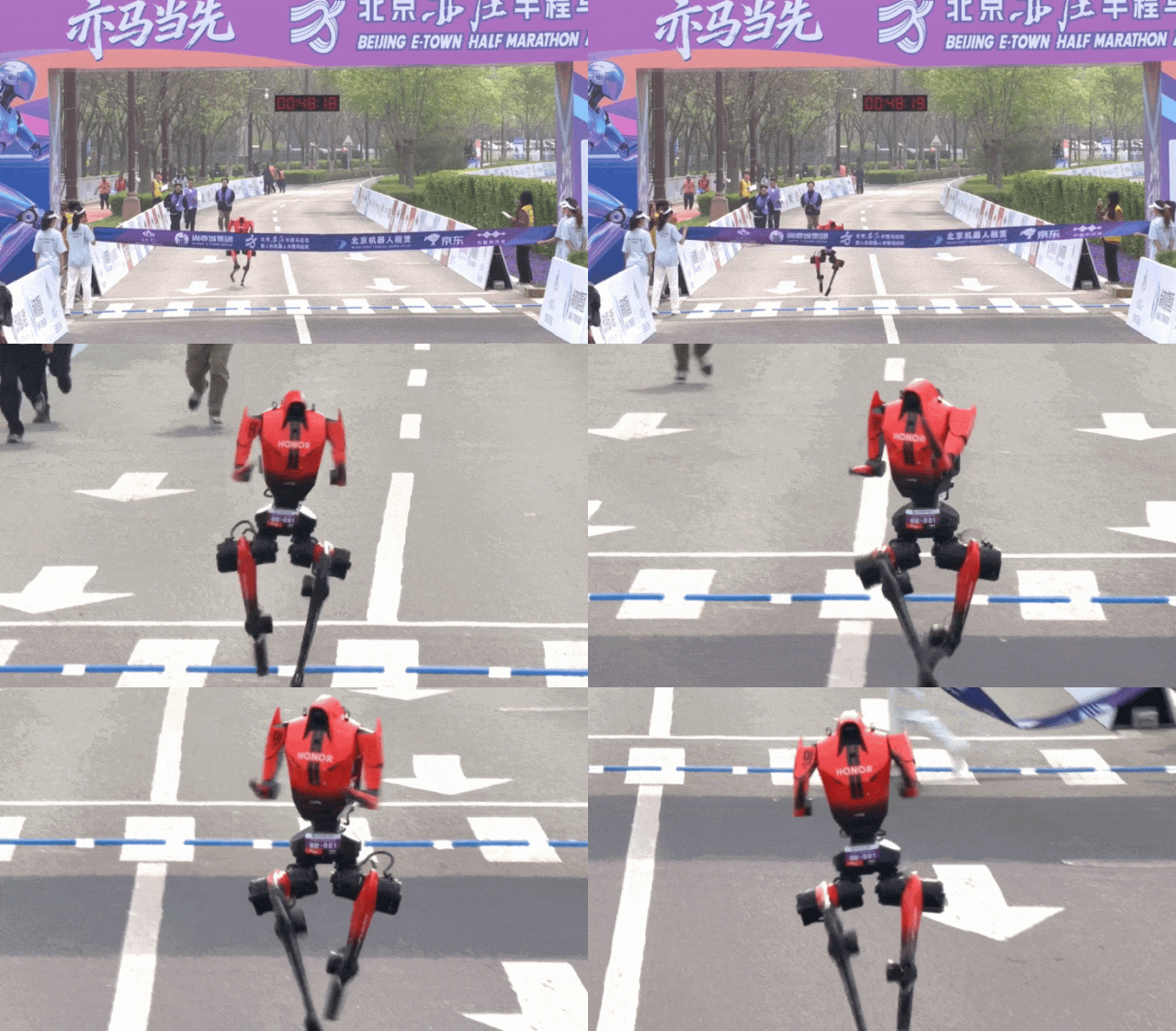
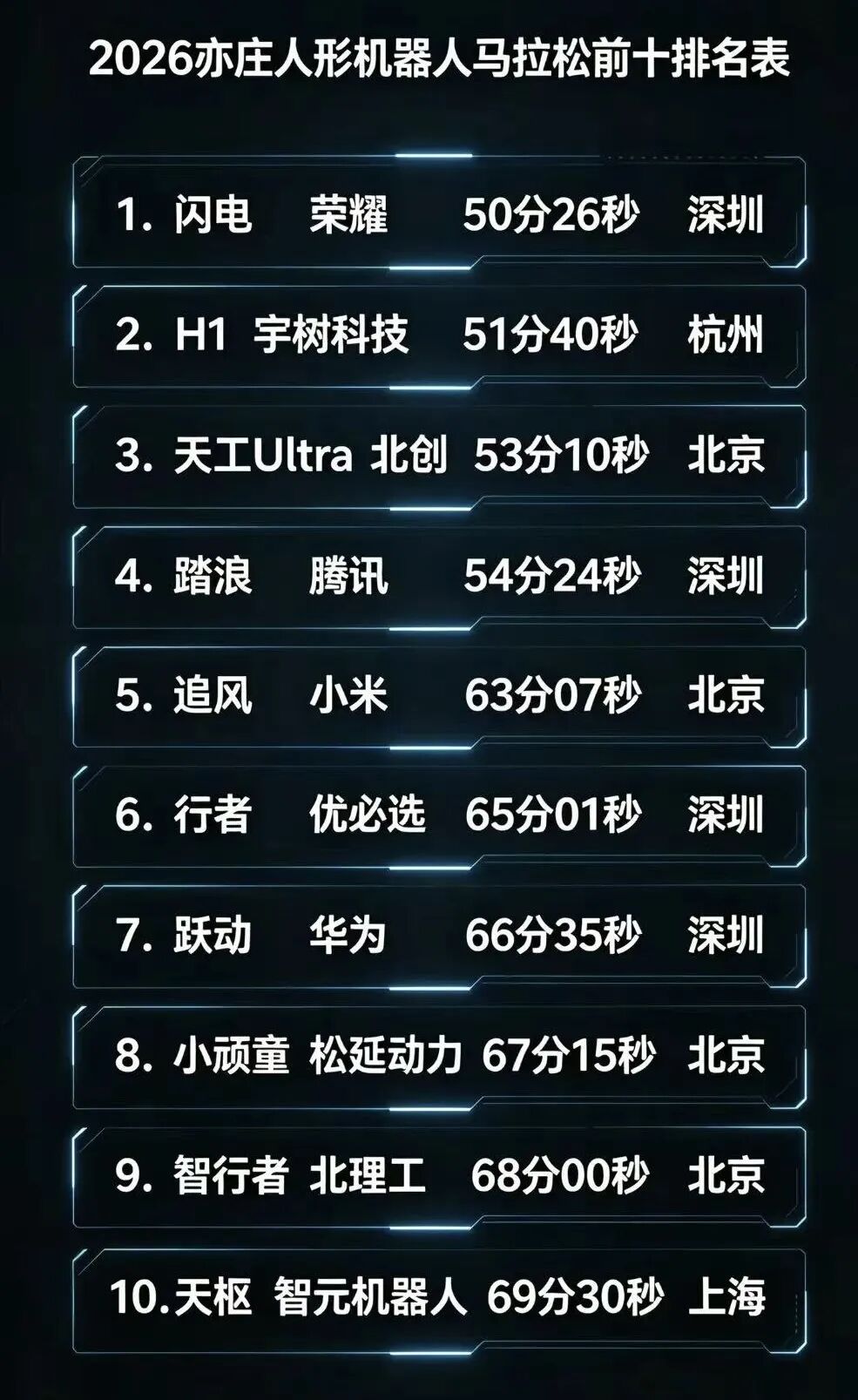
Recently, a robot shattered the human half - marathon record: it took a net time of 50 minutes and 26 seconds to win the championship of the 2026 Beijing Yizhuang Humanoid Robot Half - Marathon.
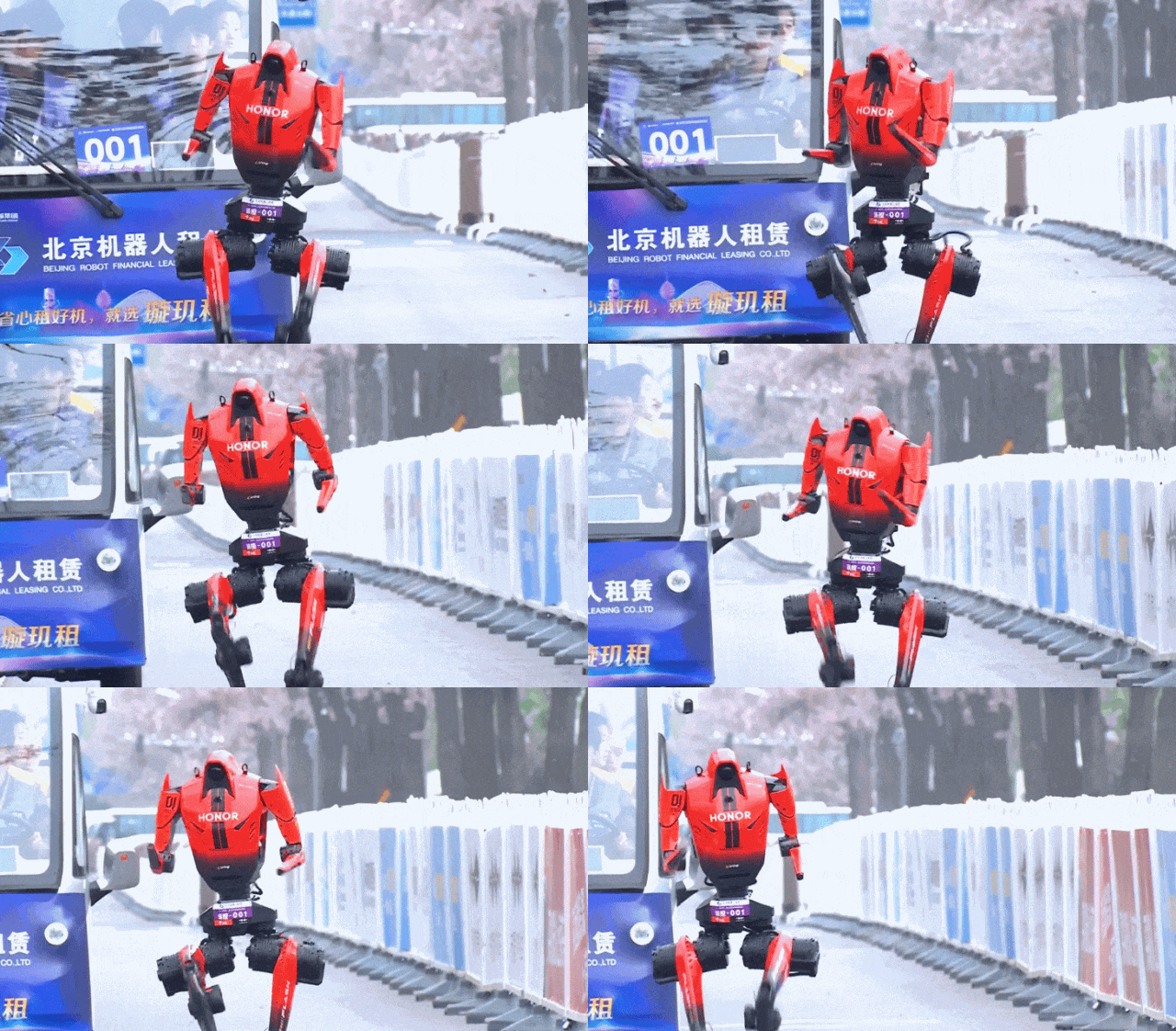
The human world record for the half - marathon is 57 minutes and 31 seconds - this robot was a full 7 minutes faster than the fastest human runner.
This year's Beijing Yizhuang Humanoid Robot Half - Marathon has seen a significant upgrade, and the robots can be regarded as cyber sprinters.
The number of participating robot teams was five times that of the previous session. From 13 provinces, more than 300 robots from over 100 teams participated in the race, aiming to challenge the human half - marathon limit.
Not only leading companies such as Unitree Technology and Honor Robotics were all present, but also teams from Tsinghua University, Peking University, and the University of Science and Technology of China were there. Those running on this track are probably the strongest lineup in China's embodied intelligence field at present.
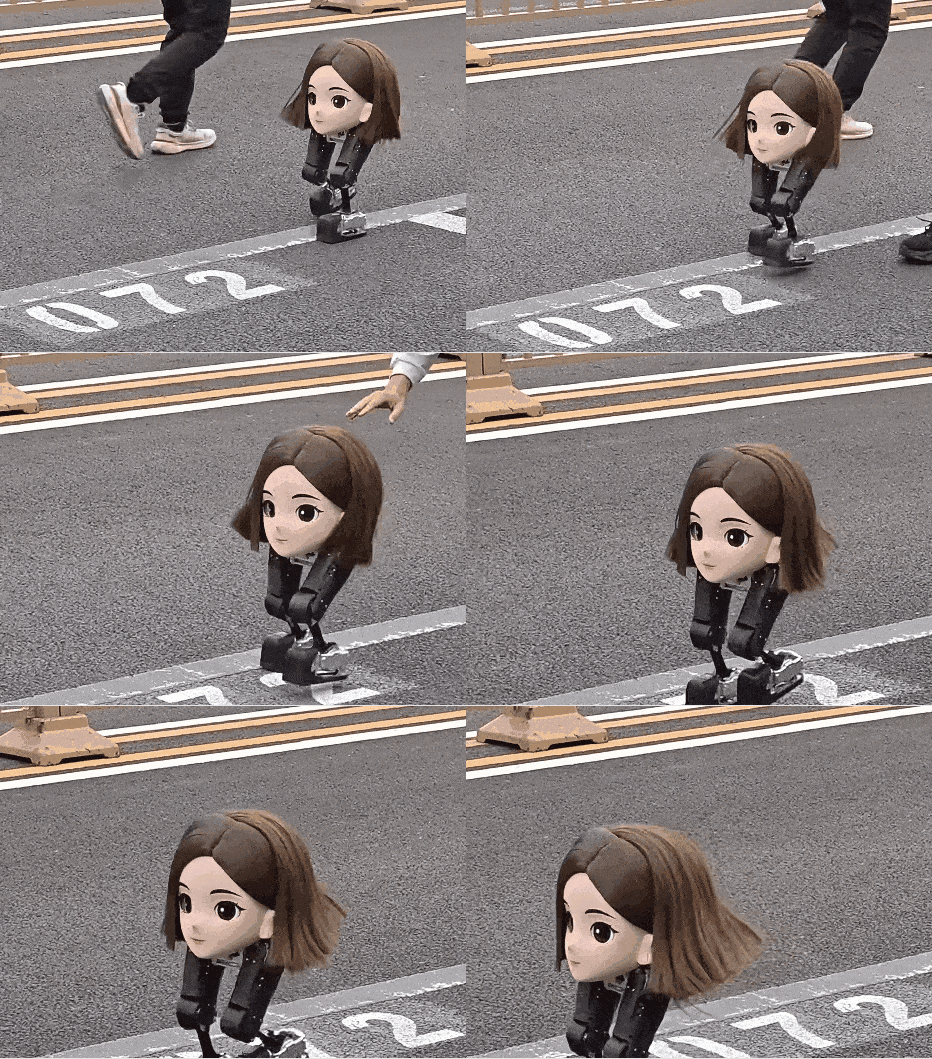
Of course, Doubao was still as "down - to - earth" as ever. There was even a robot with a Doubao - shaped head on the racetrack. Doubao became "Doujiao" (a play on words, similar to having only legs), and this time it truly had long legs below the "neck".
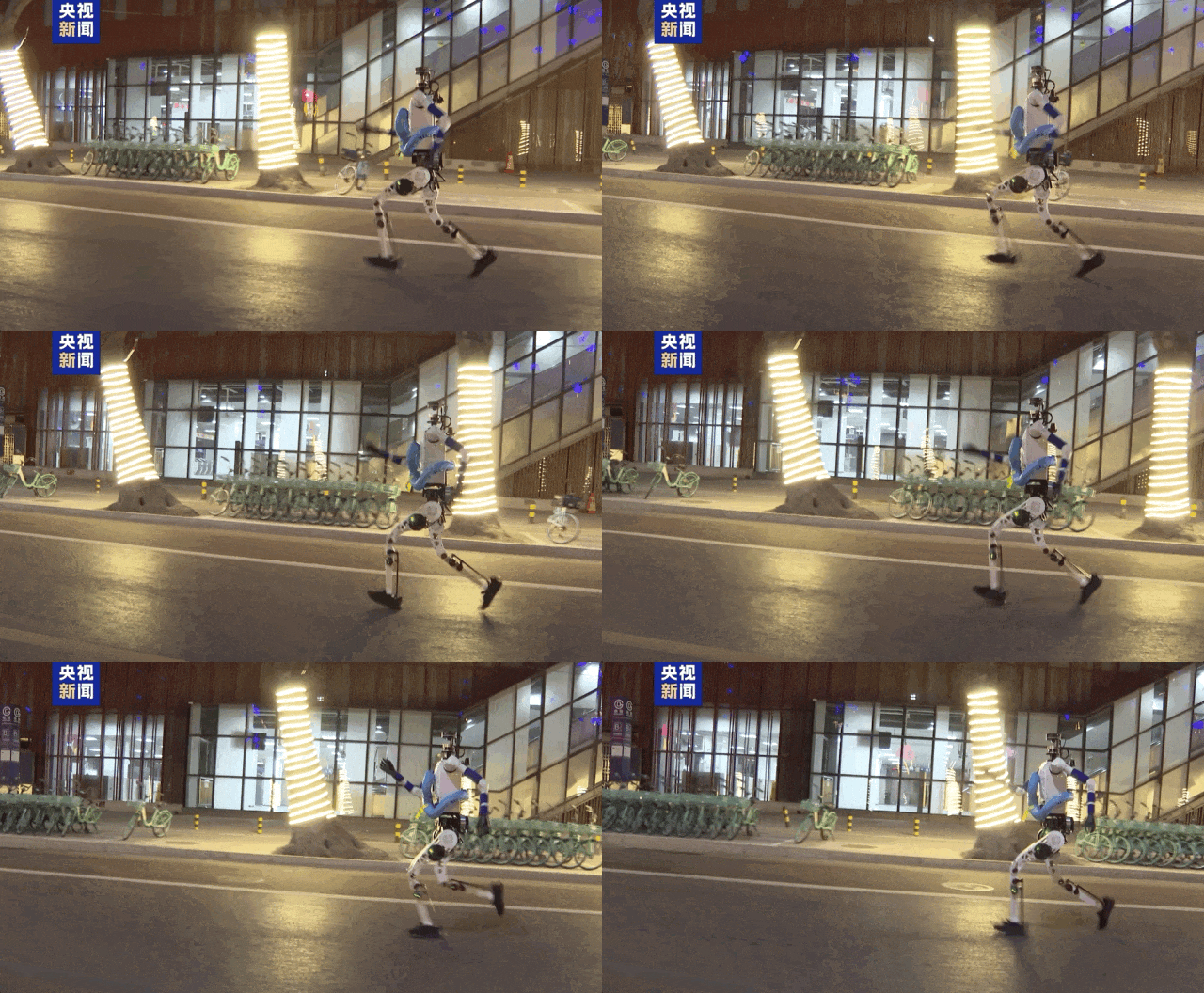
These robot contestants are even more competitive than humans. Many Beijing residents often notice that there are robots secretly training late at night on the streets near Yizhuang.
It seems that this robot marathon is really going to redeem itself this time.
Robot Marathon 2.0: Completely Redeeming Itself
In April last year, the world's first such race was held.
Many tech fans and onlookers had been waiting at the racetrack early. Everyone wanted to see the charm of "future technology". However, after the race started, the performance of the robots really stunned everyone.
Some robots stopped working right at the start and just lay there on the spot.
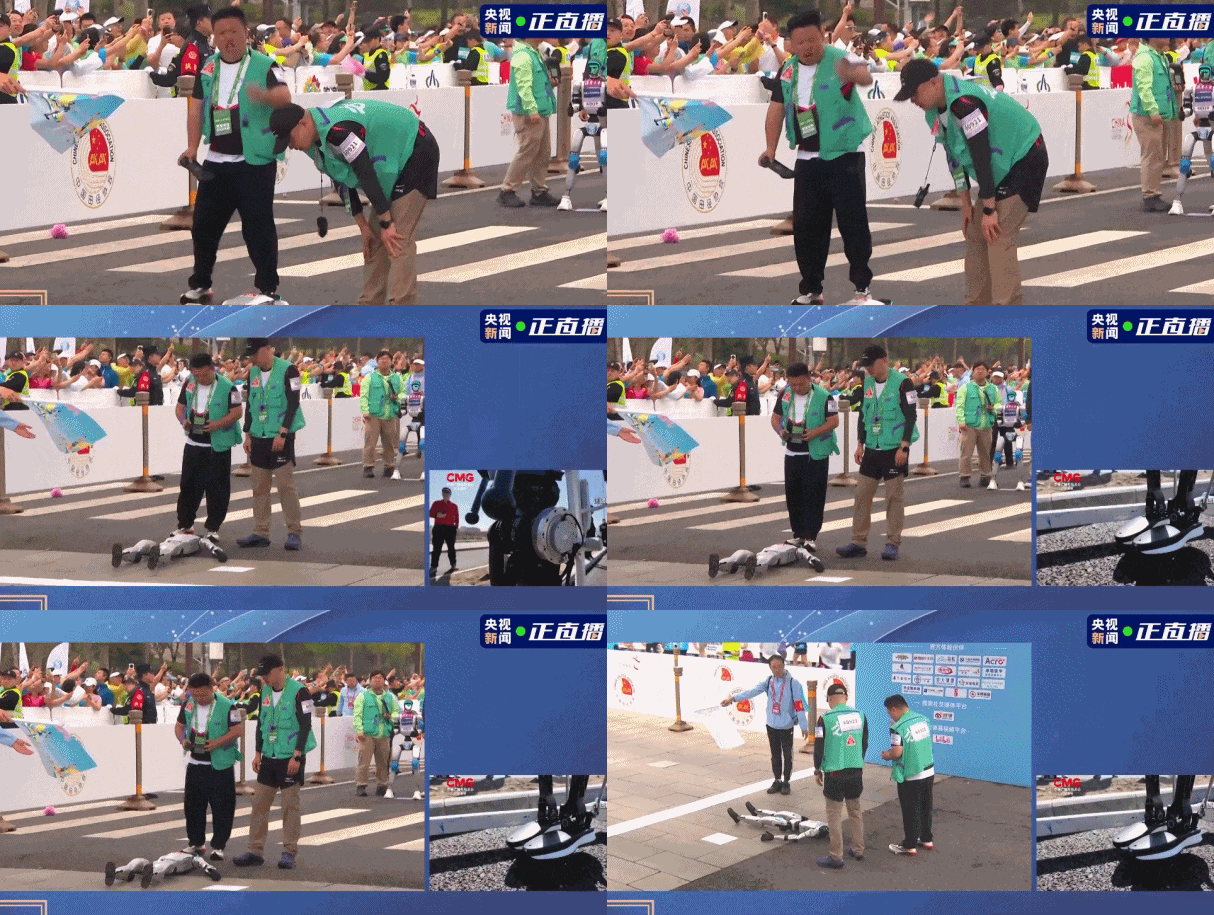
Some "little guys" got tired while running and "fell asleep on the spot". It seemed like they were going to do something big, but actually they just malfunctioned.
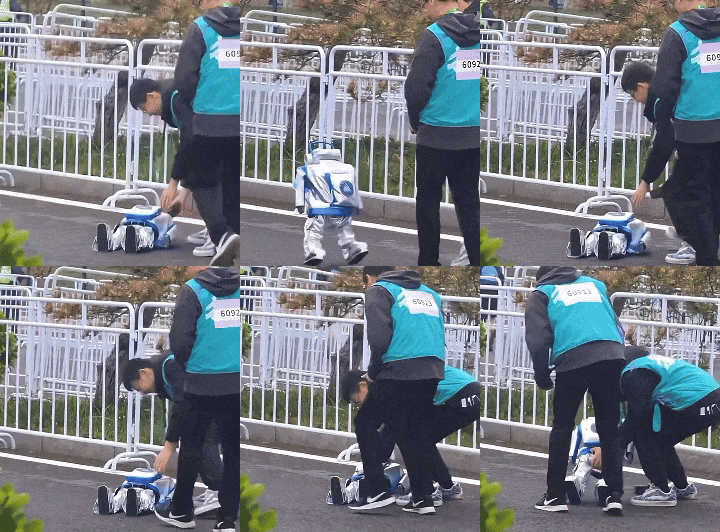
In order to get these "pampered robots" to finish the race, the companies last year almost exhausted all their technical and psychological efforts.
However, there were still some disastrous scenes: for example, a robot's head fell off while running.
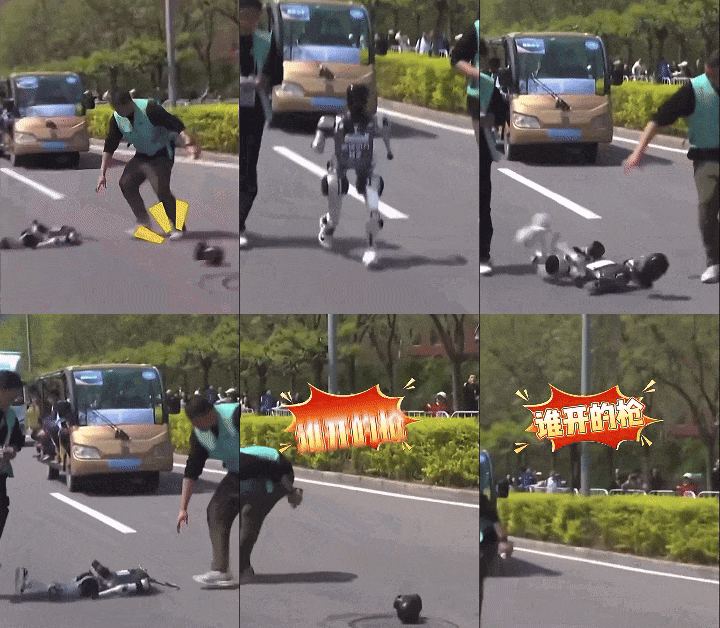
However, not all robots were ineffective. Some robots overcame many difficulties and reached the finish line.
It's just that the process was really slow, and they walked unhurriedly all the way.
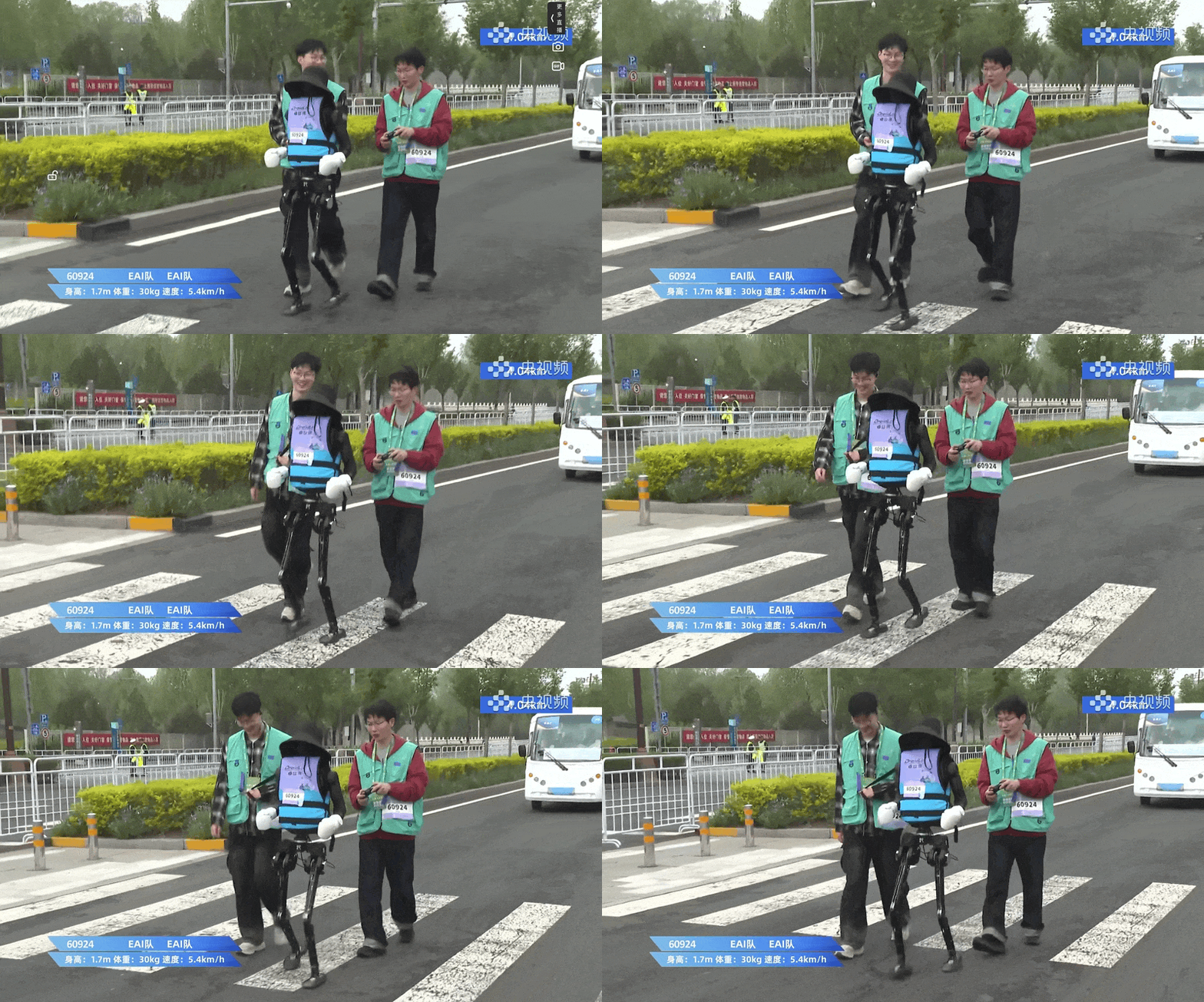
Ultimately, only 6 out of 20 teams completed the race, with a failure rate as high as 70%. It was really a miserable sight and became the biggest joke of last year.
This year, both the organizers and the brands wanted to redeem themselves and were determined to get rid of the label of being unprofessional.
Compared with last year, the total length of this year's track is 21.0975 kilometers. For the first time, an ecological section in Nanhaizi Park was introduced, integrating more than 10 types of terrains such as flat ground, slopes, curves, and narrow sections, including sharp turns close to 90 degrees.
There are two obvious changes:
Firstly, there has indeed been a significant upgrade in scale. The scale of this year's event has expanded nearly five times, and the number of participating teams has increased significantly: more than 80 corporate teams and more than 20 university and training camp teams; bringing together 26 brands and more than 300 humanoid robots.
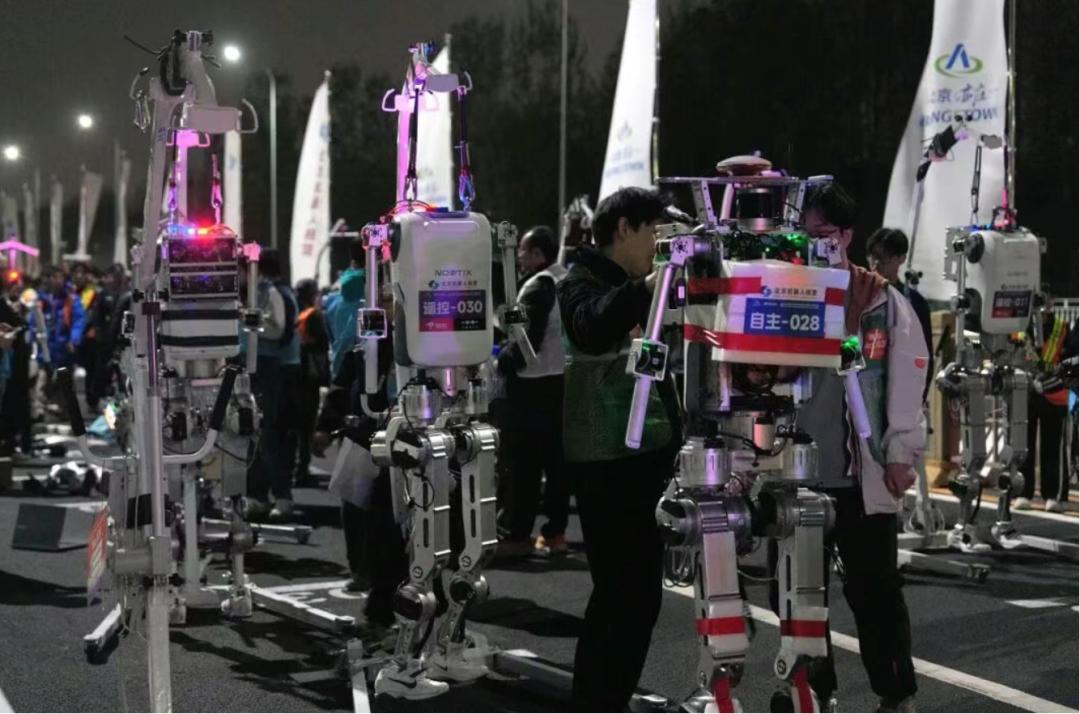
In addition to representative brands such as the Beijing Humanoid Robot Innovation Center, Unitree, and Songyan Power, there were also some unexpected new players.
For example, Honor, a mobile phone manufacturer, and AutoNavi, a navigation company, both participated in the robot marathon for the first time. Among them, Honor brought two humanoid robot products, "Lightning" and "Energetic Boy"; AutoNavi launched its first quadruped robot product.
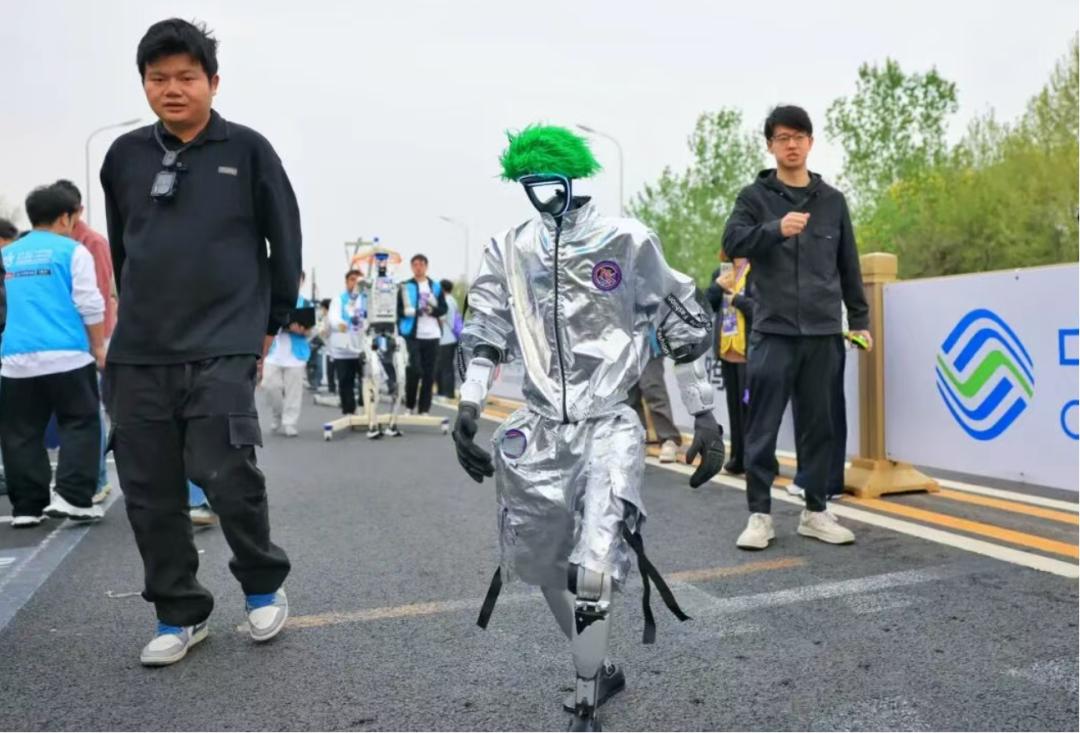
At the race site, there were many strange - looking contestants. Several robots wore funky wigs and were running on the track with the wind.
Secondly, the race system has also been comprehensively upgraded. The organizers actively divided the competition into two groups. If a robot can complete the whole race in the autonomous navigation group by itself, the result will be calculated based on the actual time used.
However, if it is in the remote - controlled operation group, it needs to be controlled on - site, and the final result will be multiplied by 1.2 for calculation.
Compared with last year, this year's robots have completely bid farewell to the stage of "staggering like a toddler". From walking slowly to running at high speed, they have demonstrated the collective breakthrough of the entire industry's technology.
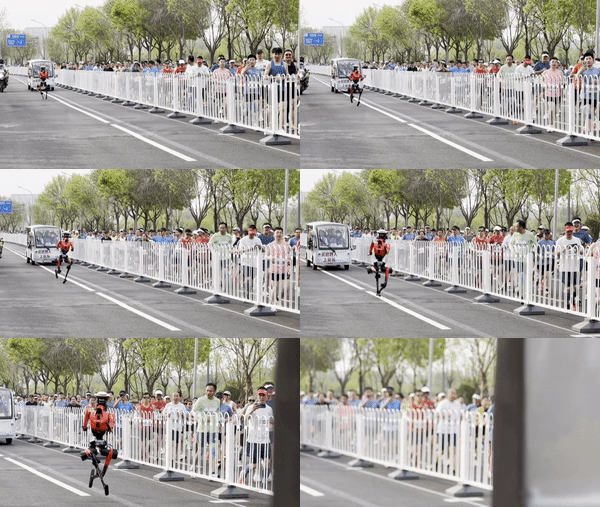
Honor was the biggest dark horse in this year's marathon.
Honor's humanoid robot "Lightning" is less than one - year - old but has made a stunning appearance. It used the autonomous navigation mode throughout the whole process and only had a battery change near the 10.6 - kilometer mark. During the race, it encountered a collision accident, but with its internal dynamic balance algorithm, the robot automatically adjusted to the normal posture and returned to the track.
But the fact that humans "insistently" let robots run marathons and want them to run faster and faster is by no means just a simple show of skills.
What's the obsession with getting robots on the racetrack?
In just one year, these robots have almost transformed from "stumbling old ladies" to "cyber sprinters".
Because in last year's first - ever race, most robots had to rely on engineers for remote control and guidance.
But surprisingly, nearly half of the robots achieved full - autonomous navigation. With just a multi - sensor combination of lidar + binocular vision + millimeter - wave radar, they can perceive the surrounding road conditions in 360 degrees.
Put simply, even when running at high speed, they can accurately turn corners and actively avoid obstacles, truly achieving the goal of "finding their own way and running on their own". Ultimately, 47 teams successfully completed the race, with a completion rate of over 45%.
For a robot, running a marathon is more like an extreme stress test.
Firstly, a key challenge is heat dissipation.
Robots with high - intensity movement have large current and high heat generation, which may even be three to four times that of ordinary solutions.
The heat management problem must be solved to ensure long - term stable operation. In last year's race, some robots had to slow down due to overheating and even "collapsed from heatstroke".
You may even notice that last year, the accompanying engineers would spray coolant on the robots from time to time. When the robots overheated, the accompanying human "nannies" were almost exhausted.
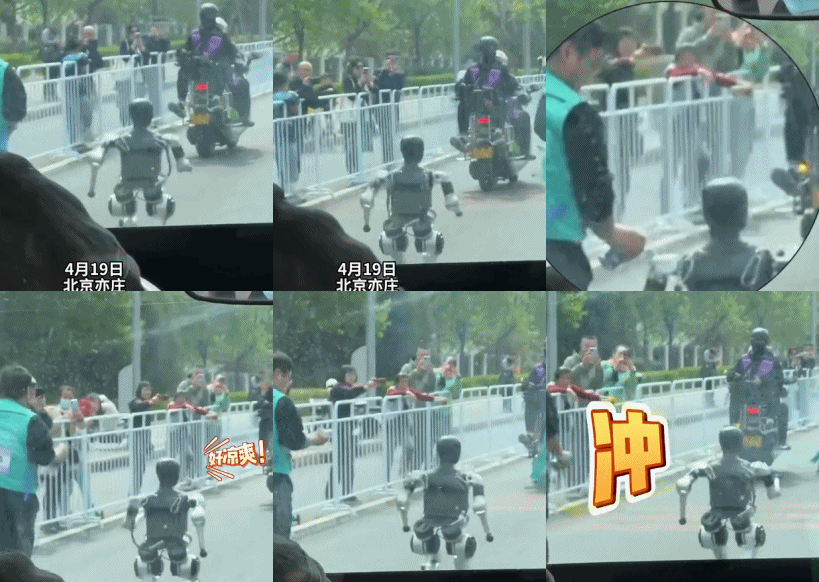
Last year's champion, "Tiangong", changed its battery three times, fell once, and it took a full 2 hours and 40 minutes to reach the finish line, which was a full one and a half hours slower than the human - group champion.
The problems of joint overheating and battery life exposed last year are no longer obstacles this year.
All the leading robots are equipped with hot - swappable battery technology: there is no need to turn off the machine. Just hot - swap the battery, and the energy can be replenished in as fast as 10 seconds, as efficient as an F1 car entering the pit stop. It doesn't affect the race rhythm at all. Some robots can even complete the whole race with one battery.
The coolant can directly reach the core of the joints to keep the temperature stable throughout the whole process. The joint temperature of Honor's robot was only in the thirties degrees Celsius after running the whole race.
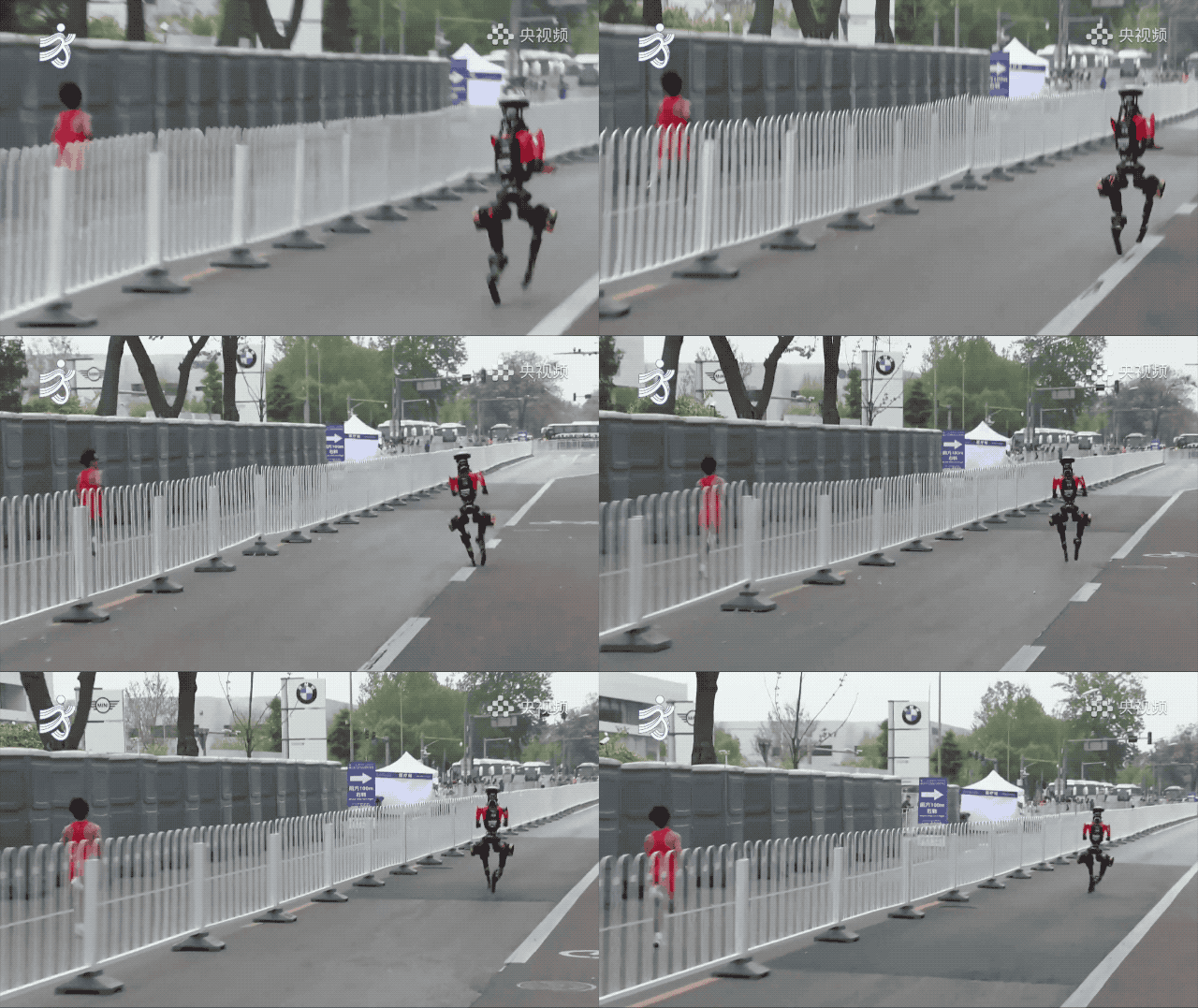
Secondly, it is a test of comprehensive abilities.
If we regard the marathon as a comprehensive ability assessment, then different race modes reflect different abilities.
If it is the remote - control mode, it tests the hardware capabilities, such as joints, motors, energy consumption, and heat dissipation.
If it is the full - autonomous mode, it tests the abilities of environmental perception, path planning, and action decision - making, and the difficulty is significantly increased. If it is the follow - up mode, it tests the robot's ability to accurately follow and quickly respond to the target ahead.
For example, a robot that stops actively during the race to "interact" is a bit off - task. Maybe it has triggered some kind - to - human protocols.
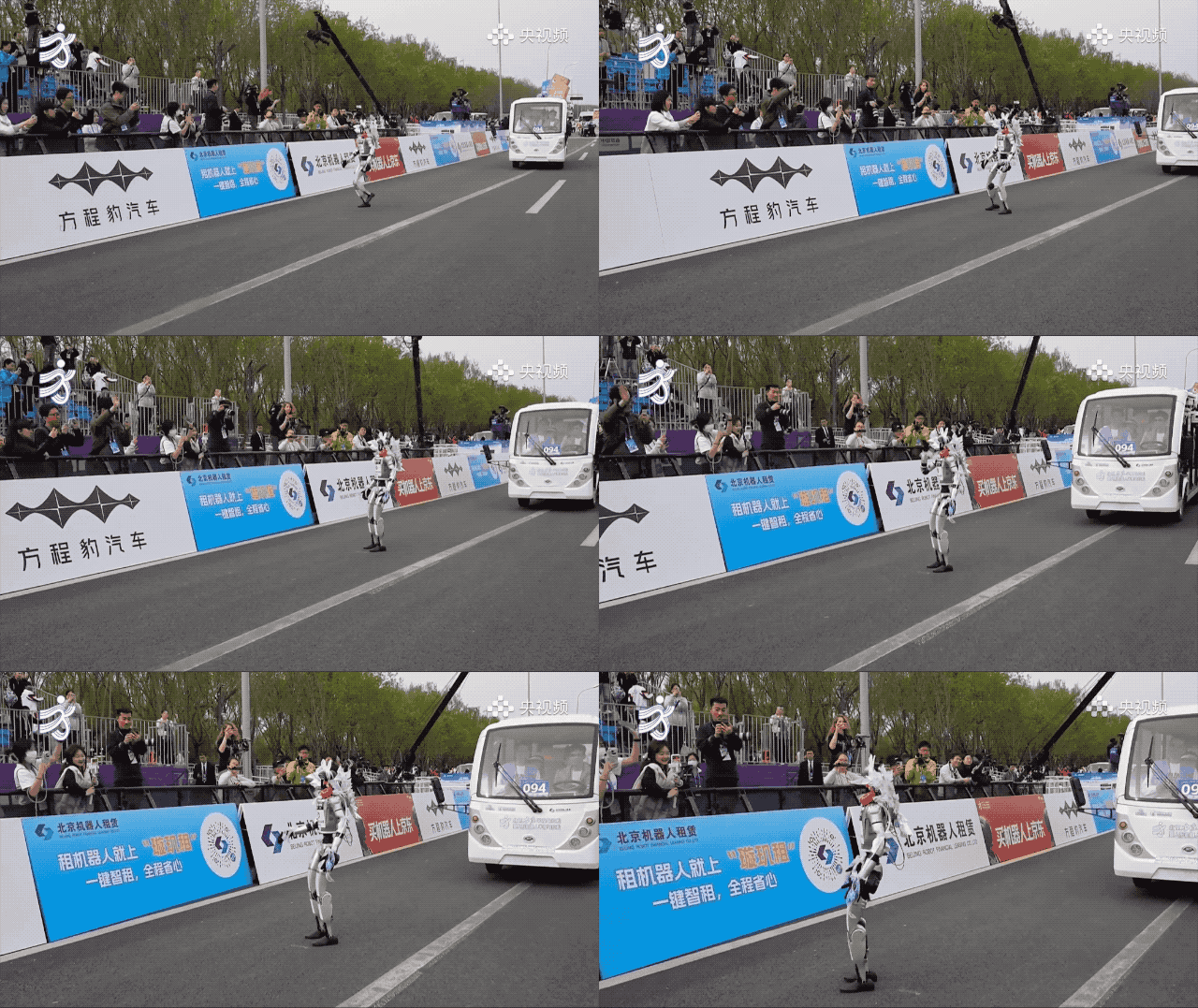
After running a half - marathon, problems such as joint accuracy, heat management, power system, control algorithm, and communication interference are fully exposed.
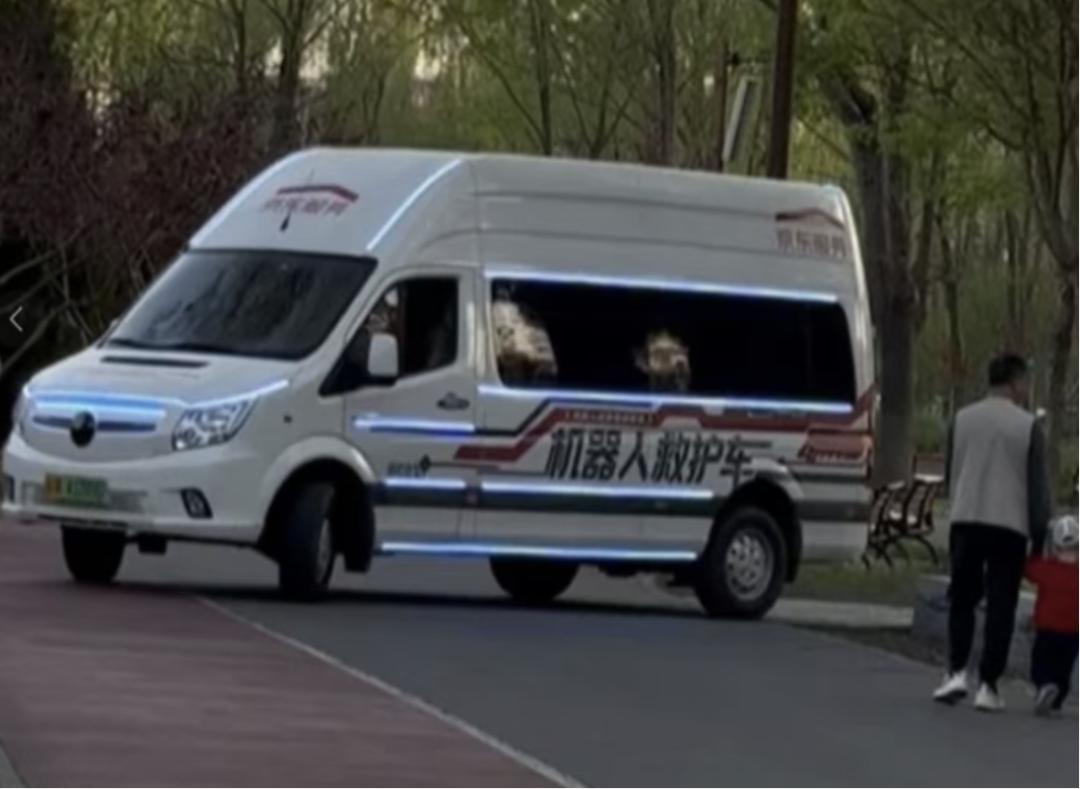
This is an extreme exercise of a systematic project. It not only tests "whether they can run" but also "how long they can last". Robots can only take on more advanced tasks after passing the basic physical fitness test; otherwise, they will have to be embarrassedly taken away by the ambulance.
This year, the robots lived up to expectations. The joint motors have been fully upgraded, with torque maximized. Coupled with a brand - new motion control algorithm, their stride frequency and amplitude are completely comparable to those of professional human runners. Coupled with the carbon - fiber lightweight design