With no room for retreat, Volkswagen launches its largest-scale counterattack.
The global new energy vehicle industry has entered a period of subsidy reduction.
In September last year, the US federal electric vehicle tax credit policy officially expired and was not renewed. Since January 1st this year, China's preferential policy for the purchase tax of new energy vehicles has changed from full exemption to half exemption, and the upper limit of the preferential tax amount per vehicle has been reduced to 15,000 yuan.
After the subsidy reduction, the sales volume of electric vehicles in the US plummeted by 28% in the first quarter of this year, and their share in new cars decreased from 10% to 5%-6%. In China, the sales volume of new energy passenger vehicles also decreased by 23.8% year-on-year in the first quarter, and the penetration rate dropped to about 42%.
Only when the tide recedes can we see who is swimming naked.
According to the data statistics of the Passenger Car Association, in the first quarter of 2026, there were obvious changes in the rankings of traditional automakers. Among them, SAIC Group regained the sales championship from BYD with a sales volume of 972,700 vehicles. Among the top ten traditional automakers in terms of sales volume, BYD's sales volume in the first quarter decreased by 30% year-on-year.
In addition, according to the data of the China Association of Automobile Manufacturers, in March 2026, the domestic sales volume of fuel vehicles was 1.027 million, a month-on-month increase of 38.8%, ending the trend of a significant year-on-year decline for 12 consecutive months.
However, despite the rebound of fuel vehicles, new - force automakers have gradually recovered from the pain of subsidy reduction. Among the top ten new - force automakers in terms of sales volume in the first quarter, except for XPeng Motors and Deepal, whose sales volumes decreased year-on-year, the other eight automakers achieved positive growth. Among them, Tesla ranked first in sales volume with a year-on-year growth of 23.5%. Leapmotor became the number one among domestic new - force automakers with a sales volume of 110,200 vehicles.
Just when self - owned brands are in fierce competition and new - force automakers are accelerating differentiation, a traditional global automotive giant has issued a different voice.
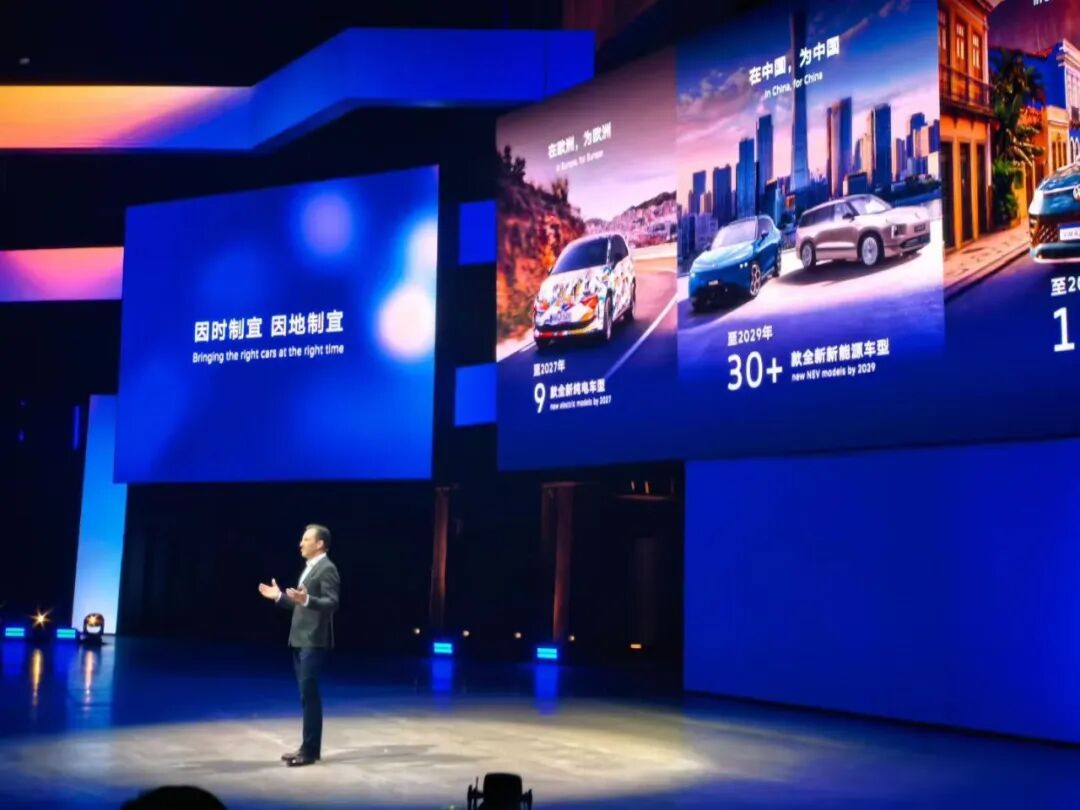
On April 8th, at the Volkswagen brand night, Volkswagen executives stood in the center of the stage and uttered a resounding statement: "Volkswagen has no way back in China."
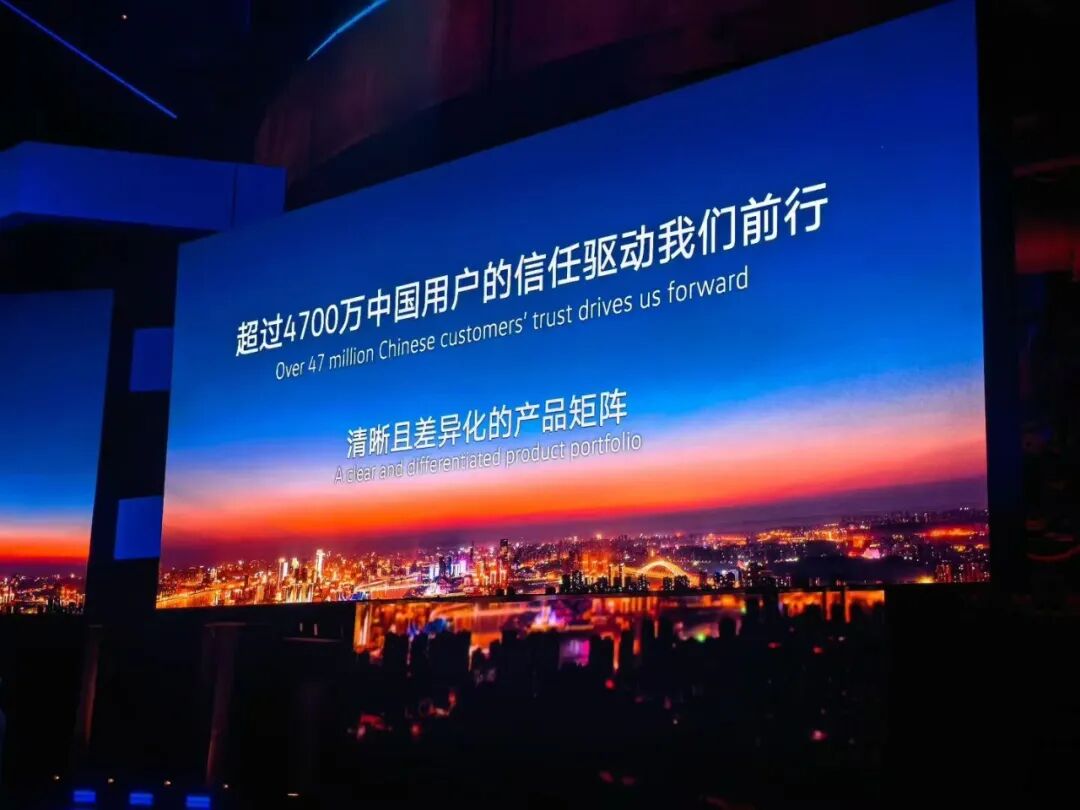
This statement means that this global automotive giant, which has been deeply involved in the Chinese market for more than 40 years and has served over 47 million users in total, simply cannot afford to lose.
The "Achilles' heel" with no room for retreat
Why is it said that Volkswagen simply cannot afford to lose in China?
The most direct reason is that as Volkswagen Group's largest segmented market in the world, the Chinese market has issued continuous alarm signals.
Looking back at the 2025 fiscal year, this century - old company presented a rather dismal report card.
The group's annual operating profit was 887 million euros, a decline of more than half. The net profit after tax was 6.9 billion yuan, hitting a new low in the past decade. The operating return rate was 2.8%, compared with 5.9% in 2025, and its ability to generate profits declined rapidly.
Focusing on the Chinese market, the structural contradictions are more obvious.
In 2025, Volkswagen delivered 2.69 million vehicles in China, a year - on - year decrease of 8.0%, marking the second consecutive year of negative growth. In terms of power, Volkswagen delivered more than 2.57 million fuel vehicles in China, while the number of new energy vehicles was only 120,000, a significant year - on - year decrease of 40%, accounting for only 4.5% of the total sales volume, far lower than the global level of 10.9%.
And this delivery volume is less than one - third of BYD's average monthly sales volume in the domestic market.
Further segmented, Volkswagen has established three joint - venture brands in China: FAW - Volkswagen, SAIC Volkswagen, and Volkswagen Anhui.
Among them, FAW - Volkswagen's sales volume in 2025 was 1.5871 million, a year - on - year decrease of 4.3%. SAIC Volkswagen's sales volume in the same period was 1.024 million, a year - on - year decrease of 10.8%. Volkswagen Anhui did not announce its sales volume, and third - party data showed that it was only about 9,000 vehicles, and it has not yet formed a scale effect.
Last year, the sales volumes of FAW - Volkswagen and SAIC Volkswagen both declined to varying degrees. The former sold 1.587 million vehicles, among which the sales volume of the Volkswagen brand was 902,000, a year - on - year decrease of 4.3% and 2.8% respectively. The latter sold 1.024 million vehicles, a year - on - year decrease of 10.8%, and the sales volume of the Volkswagen brand exceeded one million.
Another joint - venture company, Volkswagen Anhui, did not announce its specific sales volume. Third - party channel data showed that its sales volume last year was only about 10,000 vehicles.
On April 13th, Volkswagen Group also announced its first - quarter data for 2026, and the differentiation of regional markets became more intense.
The data showed that Volkswagen Group delivered 2.0489 million vehicles globally during the reporting period, a year - on - year decrease of 4%. Among them, the delivery volumes in the European and South American markets increased by 4.7% and 7% respectively; while the North American and Chinese markets decreased by 13.3% and 14.8% respectively.
To cope with the downward trend, Volkswagen CEO Oliver Blume said in the company's shareholder letter that by 2030, Volkswagen Group is expected to cut about 50,000 jobs.
And there are signs that this trend is being realized.
On March 26th this year, Volkswagen confirmed that its Skoda brand will withdraw from the Chinese market in the middle of this year. It should be noted that Skoda has been in China for more than 20 years, and its sales volume once reached a peak of 340,000 vehicles, but it had dropped to 15,000 in 2025. With low profits and high operation and maintenance costs, Skoda became the first brand to be eliminated under the goal of "cost - reduction and efficiency - improvement".
The slowdown in the Chinese market is dragging down Volkswagen's global performance in an irresistible way. When the once - stable profit engine is faintly at risk of becoming a "growth black hole", the decision - makers in Wolfsburg, Germany, know better than anyone else that in this arena reshuffled by new energy, compromise and retreat lead only to a dead end. Only by launching a desperate counter - attack with no way back can a glimmer of hope be found on the verge of life and death.
Therefore, before the Beijing Auto Show officially kicked off this month, Volkswagen chose to "get a head start" - a grand Volkswagen brand night launched the largest - scale new energy product offensive in Volkswagen's history.
Volkswagen Anhui, SAIC Volkswagen, and FAW - Volkswagen start to catch up with new - force automakers and launch an all - out counter - attack
In the rapidly evolving Chinese new energy vehicle market, a common problem of traditional automakers is that the speed of launching new models is too slow. New - force automakers update three models a year, while traditional automakers still maintain the habit of making minor changes every four years and major changes every seven years.
But now, Volkswagen is starting to catch up with new - force automakers.
At the evening event, Schwenk, the CEO of Volkswagen Passenger Cars Brand, announced a set of figures that caught the industry's attention: In 2026, Volkswagen will intensively launch 13 new new - energy models in the Chinese market. Among them, Volkswagen Anhui will launch 3 models, SAIC Volkswagen will launch 6 models, and FAW - Volkswagen will launch 4 models.
By 2029, this number will increase to more than 30.
That is to say, in the coming days, Volkswagen will launch new models at a pace of almost one every two weeks. Its goal is to regain its presence in every segmented market by matching the iteration speed of local new - force automakers and launching a saturated attack.
The change is first reflected in the correction of the power belief.
On the night of the event, the three joint - venture brands of Volkswagen in China simultaneously unveiled three new cars - SAIC Volkswagen's ID. ERA 9X, Volkswagen Anhui's ID. Yuzhong 08, and FAW - Volkswagen's ID. AURA T6. These three cars correspond to the three major segments of pure - electric, range - extended, and compact SUV respectively.
It should be noted that Volkswagen was once the most determined proponent of pure - electric transformation globally. To demonstrate its determination for transformation, the group even abandoned the development of internal combustion engines, its old - line business, and pinned all its hopes on the ID family.
Although the ID family was once the sales champion among joint - venture brand pure - electric models, as automakers such as Li Auto and Wenjie have gone further in range - extended and plug - in hybrid technologies, the ID series, which mainly focuses on pure - electric vehicles, has truly hit a wall in reality.
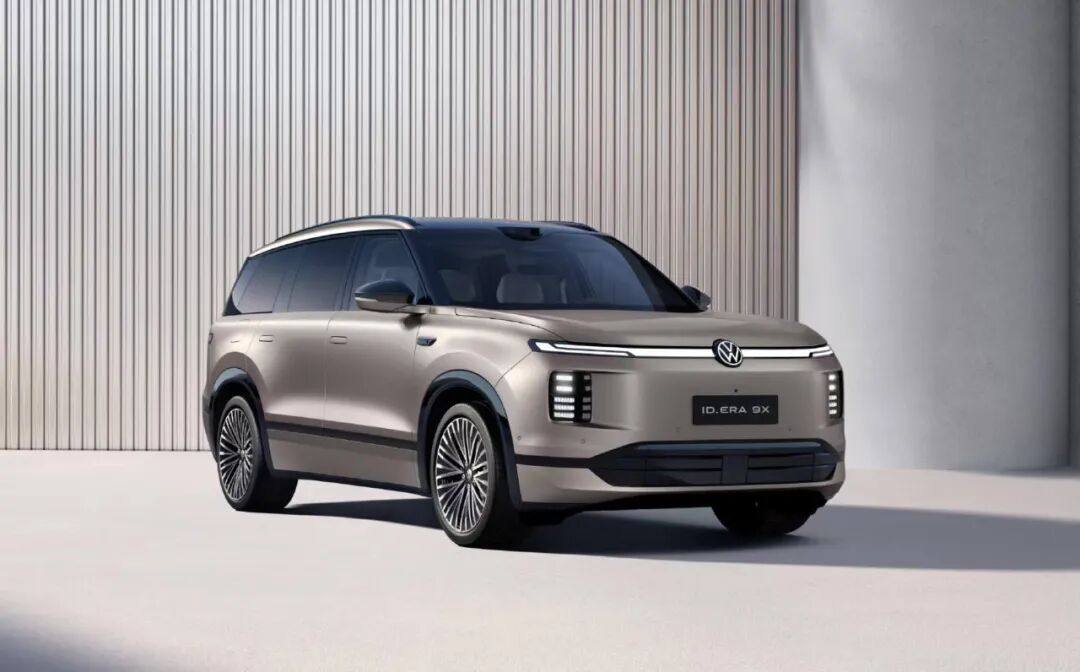
Until now, Volkswagen has become more diversified. It has not only launched three different power forms of pure - electric, plug - in hybrid, and range - extended, but also set the ambitious goal of making the ID. ERA 9X rank among the top three in the segmented market.
Secondly, to support the large - scale product matrix and solve the problem of internal strife and resource consumption caused by the high homogenization of models between "North and South Volkswagen" in the past, Volkswagen has re - defined its three joint - venture enterprises in China in this round of counter - attack.
First, the ID. Yuzhong under Volkswagen Anhui undertakes the transformation mission of "in China, for China" for Volkswagen.
Previously, Volkswagen Anhui only had one model, Yuzhong 06, on sale, and its annual sales volume was less than 10,000. In the annual report of its partner Jianghuai Automobile, there was not much mention of this joint - venture enterprise, only simply stating that the investment loss in Volkswagen Anhui in 2025 was 1.07 billion yuan.
If calculated according to the shareholding ratio, if Jianghuai Automobile lost 1.07 billion yuan, Volkswagen lost 3.25 billion yuan.
To get out of the quagmire, Volkswagen Anhui is fighting a desperate battle starting from the Yuzhong 08.
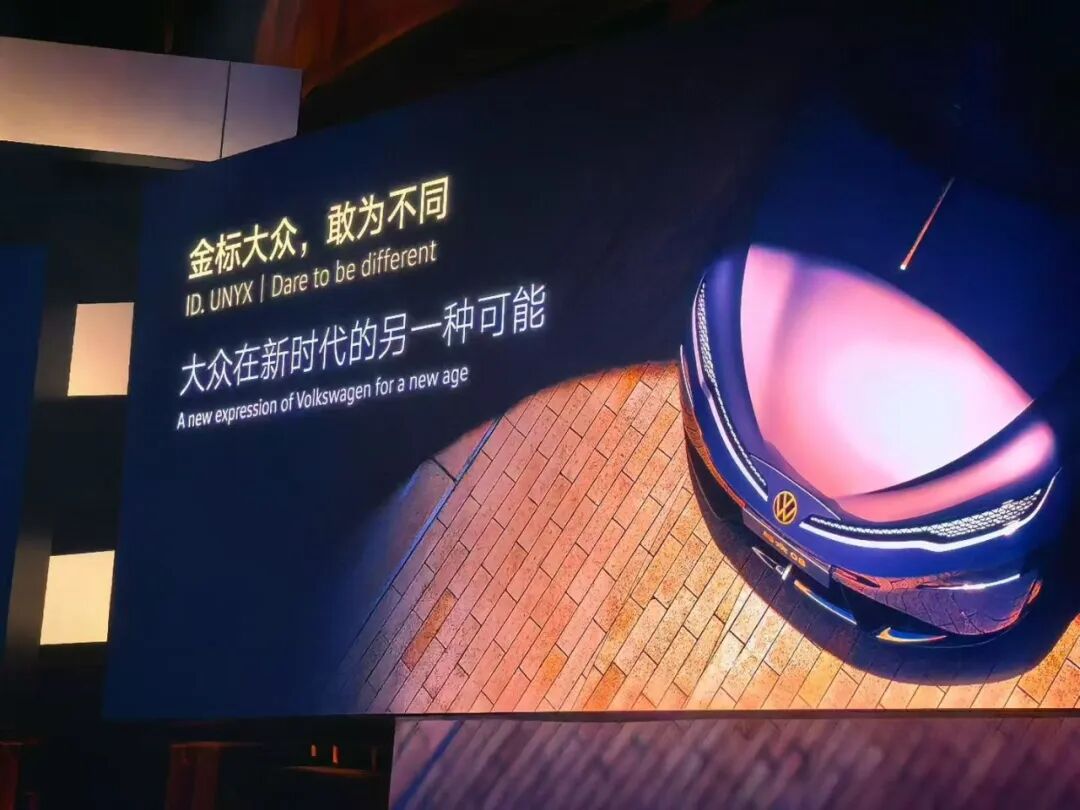
In March this year, Volkswagen Anhui's second mass - produced car, Yuzhong 08, rolled off the production line. The significance of this car lies in that it breaks the model of design in Wolfsburg, Germany, and replication in Chinese factories. As a cooperative model between Volkswagen and XPeng, it only took two years from the signing of the cooperation agreement to the mass production of the new car.
At the same time, the Yuzhong 08 also integrates Volkswagen's German - style manufacturing and China's intelligent driving system. It is not only the first mass - produced car equipped with an 800V high - voltage platform, capable of charging 150 kilometers in 5 minutes, but also comes standard with XPeng's VLA intelligent driving system across the entire range, giving it the confidence in intelligentization to compete head - on with strong competitors such as Tesla Model Y.
On March 26th, the Yuzhong 08 started pre - sales. The pre - sale price is 240,000 - 300,000 yuan, targeting young elites who value the manufacturing quality of traditional large - scale manufacturers and are not willing to compromise on intelligentization.
In addition, Volkswagen Anhui will also launch three other new cars this year, Yuzhong 07, Yuzhong 06, and the new sedan Yuzhong 09.
Second, SAIC Volkswagen has clearly defined three keywords: "aggressive, reliable, and considerate".
The top - notch fighter carrying this mission is the star model that has recently sparked hot discussions in the industry - ID. ERA 9X.
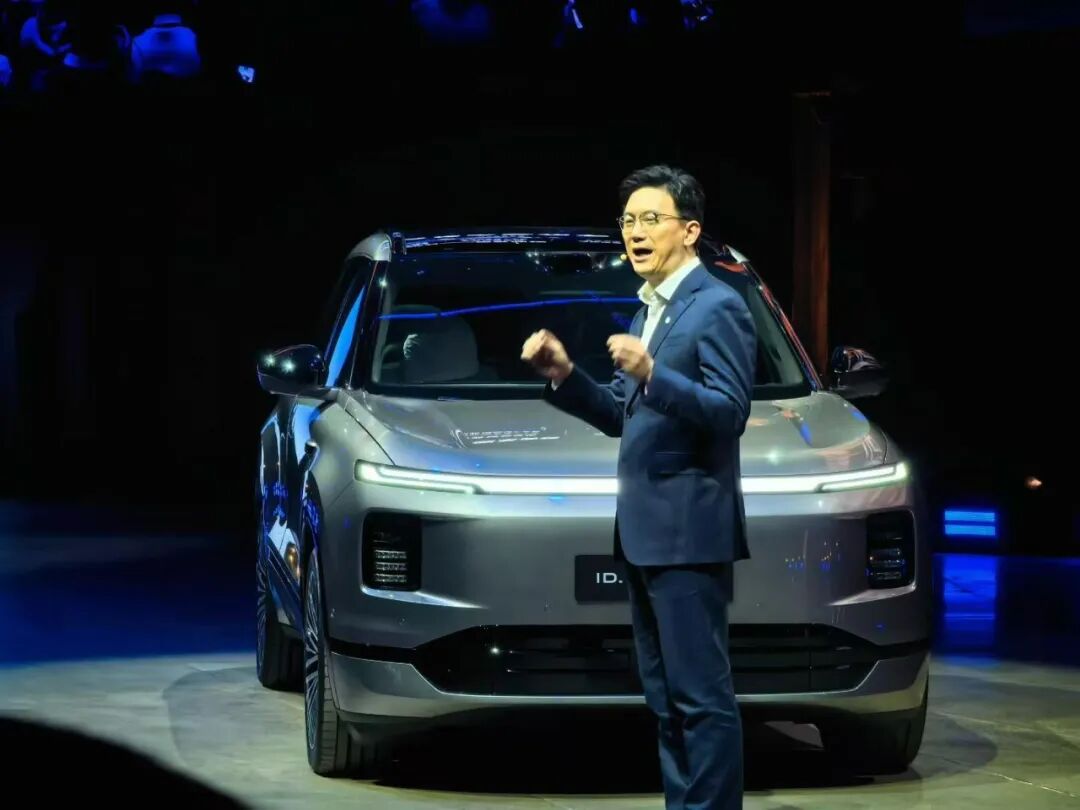
For a long time, the range - extended segment of full - size SUVs in the domestic market has been almost monopolized by local new - force automakers such as Li L9 and Wenjie M9. The appearance of the ID. ERA 9X officially announces Volkswagen's entry into the "9 - series" battlefield.
And this choice is thought - provoking. Joint - venture automakers usually do not choose flagship models as the first step to make a splash in the new energy field. For example, GAC Toyota first launched the mid - to - low - end pure - electric model bZ3X and then the flagship pure - electric sedan bZ7.
But SAIC Volkswagen directly chose the ID. ERA 9X as the entry point. The brand explained that if the 9X can stand firm, it will be easier to launch new models later. However, even so, the 9X still has to face a red - ocean battlefield full of giants.
To gain an advantage by striking later, SAIC Volkswagen did not simply follow the trend but tried to define the 3.0 era of range - extended vehicles.
Previously, range - extended vehicles solved the problem of "whether it can move" in the 1.0 era and the problem of "range anxiety" in the 2.0 era. Now, in the 3.0 era, the industry problem has become whether it can achieve "consistency in all - condition driving".
The ID. ERA 9X aims at this pain point. Equipped with Volkswagen's EA211 engine and a 65.2kWh large - capacity battery, its comprehensive range exceeds 1,600 kilometers. In actual road tests, in the power - deficit state, the 0 - 100km/h acceleration of the ID. ERA 9X is only 0.8 seconds slower than when it is fully charged.
The consistent industrial stability conveys a signal that Volkswagen is using the "range - extended power" and "full - size space" favored by Chinese consumers